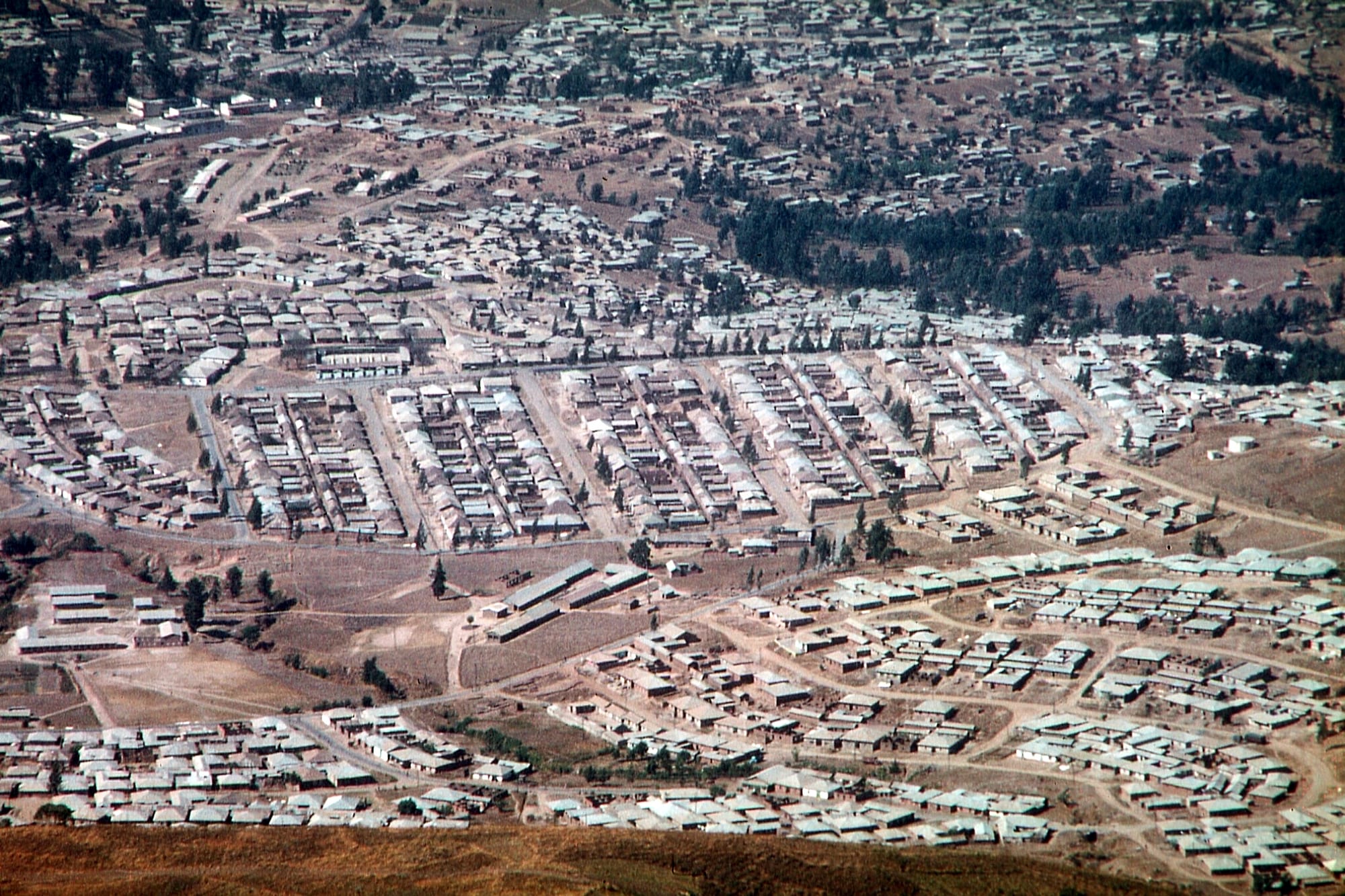
A highland town of low metal-roofed houses in a grid of dirt streets, spreading across a broad brown valley with wooded slopes behind

The Southern Highlands & the South, Tanzania

Mbeya

Mbeya seen from the hills that rise above the city in Tanzania's Southern Highlands. (Michael Dr Gumtau (gumtau) / Wikimedia Commons · CC BY 2.0)

The main city of Tanzania's Southern Highlands, lying at about 1,700 metres in a valley between steep volcanic ridges near the Zambian border. It grew from a 1920s gold rush into a trading and transport centre on the road and railway to Zambia, and it now serves a highland country of coffee, tea, maize and bananas.

Neighbourhoods

  • The city centre
    • First-time visitors
    • Close to public transport
    • Banks and shops

    The grid of streets around the main post office, banks and hotels, laid out below the ridge of Loleza. Offices, guesthouses, bus agents and small restaurants are concentrated in a few walkable blocks, and the slopes rise directly behind them.

    Open in Maps
  • Mwanjelwa
    • Markets
    • Local life
    • Best for food

    The city's main commercial quarter, built around a large daily market of produce, fish, clothes and hardware. Minibuses gather at its edges, and the streets around it hold the busiest shops and cheap eating places in Mbeya.

    Open in Maps
  • Uyole
    • Transport connections
    • Local life

    The junction east of the centre where the highway divides for Dar es Salaam and for Tukuyu and Malawi. A produce market and long-distance transport give it a working, roadside character.

    Open in Maps
  • Iyunga and Mbalizi
    • Quiet and residential
    • Students

    Residential and institutional districts spreading south-west along the road towards Zambia, with university and college campuses, churches, schools and housing on the lower slopes, where the city gradually gives way to farmland.

    Open in Maps
  • Forest and Isanga
    • Quiet and residential
    • Walks and viewpoints

    Older residential areas on the higher ground above the centre, shaded by planted trees and looking over the valley. The paths that climb Loleza start from the streets at their upper edge.

    Open in Maps

Things to do

Hills and crater lakes

  • Loleza Peakviewpoint

    The ridge that rises directly behind the city centre, climbed on a path from the upper streets for a view over the whole valley.

    Open in Maps
  • Mbeya Peakviewpoint

    At 2,895 metres the highest summit of the Mbeya Range north-west of the city, a long day's walk through farmland and grassland to an open top.

    Open in Maps
  • Ngozi Crater Lakeattraction

    A deep crater lake in forested hills south of the city, reached on a steep path that ends at a viewpoint on the rim.

    Open in Maps

In the city

  • Mwanjelwa marketmarket

    The largest market in the city, selling highland produce, dried fish from Lake Nyasa, clothes and hardware, with minibus stands around its edges.

    Open in Maps
  • Songwe Airporttransit hub

    Mbeya's airport, about 20 km west of the city on the Zambia road, the main air link to Dar es Salaam.

    Open in Maps

Short trips from the city

  • Kitulo National Parkpark

    A plateau of montane grassland at about 2,600 metres some 55 km east of Mbeya, gazetted in 2005 to protect its flora, known for wild flowers and ground orchids in the rains and called the Garden of God locally.

    Open in Maps
  • Mbozi meteoritelandmark

    One of the world's largest iron meteorites, lying where it fell in farmland about 50 km west of the city and left partly buried in a small enclosure.

    Open in Maps
  • Tukuyuneighborhood

    A small town in the banana and tea country of the Rungwe highlands south of Mbeya, a base for the crater lakes, waterfalls and volcanic hills nearby.

    Open in Maps
  • Matemabeach

    A fishing village on the northern tip of Lake Nyasa about 90 km south-east of the city, with a sand beach below steep mountains.

    Open in Maps
  • Tundumaneighborhood

    The border town on the Zambian frontier about 100 km south-west, where the highway and the railway both cross and lorry traffic queues day and night.

    Open in Maps

Seasonal events

  • Nane Nane agricultural fairearly August

    The week-long agricultural exhibition held around farmers' day on 8 August; Mbeya hosts the show for the Highlands zone, with displays of crops, livestock, research and machinery.

  • Independence DayDecember

    Parades and public gatherings on 9 December, marked in the city's stadium and along the main streets.

Eat and drink

Long-standing places and food districts in Mbeya. Hours, ratings and directions come from your maps app, always current.

Markets and food streets

  • Mwanjelwa marketmarket

    The city's main market, piled with highland produce — potatoes, avocados, maize, beans and fruit — along with dried fish brought up from Lake Nyasa.

    Open in Maps
  • The city-centre eating housesneighborhood

    Small restaurants and tea rooms around the central streets serving ugali, rice, beans, grilled and stewed meat and chips, with chai and mandazi from early morning.

    Open in Maps
  • Uyole roadside grillsneighborhood

    Grilled meat stalls and bars cluster around the highway junction east of the city, busiest in the evening when buses and lorries stop.

    Open in Maps

Highland produce

  • Mbeya coffeecafe

    Arabica grown on the slopes around Mbeya and Mbozi is the region's best-known export, and a few places in the city serve it rather than the usual instant coffee.

    Open in Maps

Experience Mbeya

History

Mbeya is a young city by Tanzanian standards. The settlement was founded in the 1920s as a gold-mining town serving the rush in the goldfields of the Chunya country north of it, and the site chosen in the valley below the Mbeya Range gave it a cool climate and good water. Prospectors, traders and colonial officials arrived first; when the gold thinned out, the town survived because of its position on the road between the coast, Lake Nyasa and the copper country of Northern Rhodesia.

Independence and the decades that followed turned that position into the town's main asset. The Tanzania–Zambia Highway was built to carry Zambian copper to the sea without crossing white-ruled Rhodesia or South Africa, and the Chinese-built TAZARA railway, constructed between 1970 and 1975, was laid through Mbeya on the same errand. The town became a regional capital, a customs and transport hub and the market for one of the most productive farming areas in the country.

Growth since then has been rapid, driven by the highway, cross-border trade with Zambia and Malawi and the steady movement of people from the surrounding countryside. The city has spread along the valley and up the slopes ever since, with new wards, colleges and a university campus, and the airport at Songwe, opened in December 2012, gave the Southern Highlands a direct air link to Dar es Salaam.

Culture & Customs

Mbeya is a meeting point of highland peoples. The Nyakyusa of the Rungwe hills and the lake shore, the Safwa of the ridges around the city, the Nyiha to the west and the Kinga and Bena from the east all have communities here, and the city's Swahili is spoken with a distinct southern accent. Christianity is strong, with Moravian and Lutheran churches founded by German missions in the nineteenth century, Roman Catholic parishes and a growing number of Pentecostal congregations; choirs are a serious pursuit, and Sunday singing carries across whole neighbourhoods.

Because the city sits on a corridor rather than at the end of one, it has a trading culture — Zambians, Malawians, Congolese and Burundians pass through, and the markets and bus stands work in several languages. Football fills the stadium and the bars, the national clubs from Dar es Salaam draw most of the loyalty, and Bongo Flava plays from the shops as it does everywhere in the country.

Manners are those of highland Tanzania: unhurried greetings, respect for age, modest dress in town, and hospitality that assumes visitors will be fed. Initiation customs, harvest gatherings and funeral observances remain important in the surrounding villages, and many city families keep a plot of land and return to it at planting and harvest.

Daily Life

About 649,000 people lived in the urban area in 2023, making Mbeya the main city of southern Tanzania and one of the fastest-growing in the country. Life is organised around trade and farming. Lorries from Dar es Salaam, Zambia and Malawi keep the highway and the Uyole junction busy; Mwanjelwa's market handles the produce of an unusually fertile hinterland, and much of the maize, potatoes, avocados and beans sold in Dar es Salaam is grown in the highlands around the city. Coffee from the slopes around Mbeya and Mbozi, and tea from Tukuyu, are the main export crops.

Housing climbs the lower slopes in low, iron-roofed blocks, with the older residential quarters shaded by planted trees above the centre and newer, poorer wards spreading along the roads out of town. Offices, banks and colleges cluster near the middle; the university campus and technical colleges have added a large student population.

Mornings begin early and cold, with mist on the ridges and traders setting out before dawn; afternoons in the rainy season are broken by heavy downpours. Current concerns in the city are the pressure of growth on water and housing, road safety on the border highway, and the price of maize and coffee, which swings the whole region's fortunes from one year to the next.

Food

Highland farming shapes what Mbeya eats. Ugali made from local maize is the daily staple, served with beans, greens such as mchicha, and stewed or grilled meat. Potatoes, which grow well in the cool soils around the city, appear as chips with almost everything and in the stew-like chipsi mayai, chips cooked into an omelette. Avocados grow to a size that surprises visitors and are sold by the basket, along with bananas from the Rungwe slopes, which are boiled, fried and stewed rather than eaten as fruit.

Fish comes up from Lake Nyasa, fresh when the road has been quick and more often dried or smoked, and is cooked in tomato and onion or simply fried. Kyela, on the lake plain south of the city, is known across Tanzania for its fragrant rice, which is the rice people ask for by name. Nyama choma — goat or beef grilled over charcoal and eaten with kachumbari, a salad of tomato and onion — is the sociable meal, and the stalls around the Uyole junction and the bus stands do most of it.

Mornings start with chai, brewed strong and sweet and often with ginger, and with mandazi or fried cassava. Arabica coffee is the region's cash crop but is drunk here less than it is exported; in the villages people also make a thin maize beer, and ulanzi, the bamboo wine of the highlands further east, reaches the city in the rainy season.

Planning tools

Budget

Mbeya is one of the cheaper Tanzanian cities for visitors. Guesthouses and local restaurants cost little, minibuses and shared taxis are inexpensive, and the main expenses are hired transport to the mountains, crater lakes and Kitulo, where a vehicle and sometimes a guide or park fee are needed.

Daily Budget Midrange
USD 75–170 (a hotel in the city, restaurant meals and a hired vehicle for day trips)
Daily Budget Shoestring
USD 25–45 (guesthouse, local food, minibuses and the TAZARA train)

Share the cost of a vehicle for Ngozi or Kitulo, and book TAZARA seats at the station well before the train runs.

Best Time to Visit

May to October is dry and clear, the best time for walking in the hills and for road travel. The wild flowers of the Kitulo plateau are at their best in the rains, from about December to March, when the highlands are green but tracks turn to mud and the peaks are often in cloud.

Suggested Number of Days

The city itself is quickly seen, so most visits last a day or two. Four or five days allow the crater lake, the mountain walks, the Rungwe highlands and the lake shore, and longer if travel to the more distant parks or the border is part of the trip.

First Visit
1–2 days
With Surroundings
4–5 days

Transportation

Minibuses, known as dala-dalas, and shared taxis run between the centre, Mwanjelwa, Uyole and the outer wards, and motorcycle taxis cover shorter hops. Long-distance buses use the terminal on the edge of the city for Dar es Salaam, Iringa, Tukuyu and the Zambian and Malawian borders. Reaching the hills and crater lakes generally means hiring a vehicle.

Agree a fare before taking a motorcycle or taxi, and allow extra time in the rains, when unsurfaced roads into the hills become difficult.

Airport & Station Connections

Songwe Airport lies about 20 km west of the city and has flights to Dar es Salaam. The surfaced highway from Dar es Salaam runs through Morogoro and Iringa and takes a long day by bus, and the same road continues to the Zambian border at Tunduma, about 100 km away. The TAZARA railway between Dar es Salaam and Zambia stops at Mbeya, with trains running on a few days of the week.

Walkability

The centre is compact and easily crossed on foot, and the streets are laid out simply enough to find a way around. The ground rises steeply towards the ridge behind the city, so walks north from the centre climb hard. Mwanjelwa and Uyole are too far out to reach comfortably on foot, and pavements give out on the busier roads.

Safety

Mbeya is generally calm, with the usual risks of petty theft around the market, the bus terminal and the railway station, especially at night. The main highway through the region carries heavy lorry traffic to the border and has frequent serious accidents, and walking in the hills is safer in company or with a local guide because of steep ground and poor paths.

Keep well away from the Mozambique border areas of Mtwara and Ruvuma, drive only by day, and follow guides' instructions in the parks. Carry little of value around the market and the bus stands, and take malaria precautions, which the parent country advice recommends nationwide. Check current official travel advice before travelling.

Climate

Altitude makes Mbeya far cooler than most of Tanzania. It stands at about 1,700 metres, and the hills around it are higher still. There is a single long rainy season from about November to April and a dry season in between, when nights can be cold and mornings misty.

Summer
November to March is the warm, wet season, with days around 22–25°C and heavy afternoon rain
Winter
June to August is dry and clear, with days around 20–22°C and nights that can fall close to 5°C in the hills

Local Customs

The Southern Highlands are largely Christian, with Lutheran, Moravian and Catholic congregations dating from German and later mission work, and churches are busy on Sundays. Greetings come before business, and elders are addressed with particular respect. Tipping is not obligatory, though rounding up a restaurant bill or paying a guide for a mountain walk is normal.

Dress modestly in town and at churches, ask before photographing people, markets or official buildings, and expect a slower pace of business than in Dar es Salaam.

Common Payment Methods

The Tanzanian shilling is used for everything local. Banks and ATMs are easy to find in the centre and at Mwanjelwa, and cards work at the larger hotels, but markets, minibuses, guesthouses and rural trips need cash. US dollars are accepted less widely here than in the safari and island resorts, so shillings are the practical currency.