💰 Budget
Paje is cheaper than the north-coast resorts and has a long-stay, kitesurfing-shaped economy: simple bungalows, shared kitchens and monthly rates exist alongside mid-range hotels. Kite lessons and equipment hire are the big expense, followed by transfers from the airport and organised trips to Jozani or Stone Town.
- Daily Budget Midrange
- USD 110–260 (a mid-range beach hotel, restaurant meals, taxis and a boat trip or kite session)
- Daily Budget Shoestring
- USD 40–70 (guesthouse, village food, dala-dalas)
Ask about weekly or monthly rates for a long stay, and agree a transfer price from the airport before setting out.
📅 Best Time to Visit
June to September is the main wind season and the driest stretch of the year, and December to February brings a second, hotter wind season. The long rains from about March to May are wet and quiet, with the lowest prices and the least reliable wind. Tides, not months, decide what the lagoon looks like on any given day.
⏳ Suggested Number of Days
Two or three days are enough for a stay on the beach with a trip inland. Anyone learning to kitesurf should allow a week or more, since lessons depend on wind and tide. Long stays are common here and change the arithmetic completely.
- First Visit
- 2–3 days
- With Surroundings
- 5–7 days
🚆 Transportation
The village is small enough to walk, with the beach and the coast road as the two axes. Dala-dala minibuses run to Stone Town and along the coast to Jambiani and Bwejuu, taxis and hired drivers are easy to arrange through hotels, and bicycles and scooters are hired locally for trips up and down the coast.
Agree taxi fares in advance, and treat the coast road with care on a scooter, as it is narrow and used by minibuses at speed.
🛬 Airport & Station Connections
Paje is about 50 km from Stone Town on the east coast, roughly an hour by road across the middle of the island on a route that passes Jozani. Transfers and taxis run from Abeid Amani Karume International Airport in about the same time, and cheaper dala-dalas leave from the stands beyond Darajani market in Stone Town. Most visitors fly into Zanzibar or take the ferry from Dar es Salaam and continue by road.
🚶 Walkability
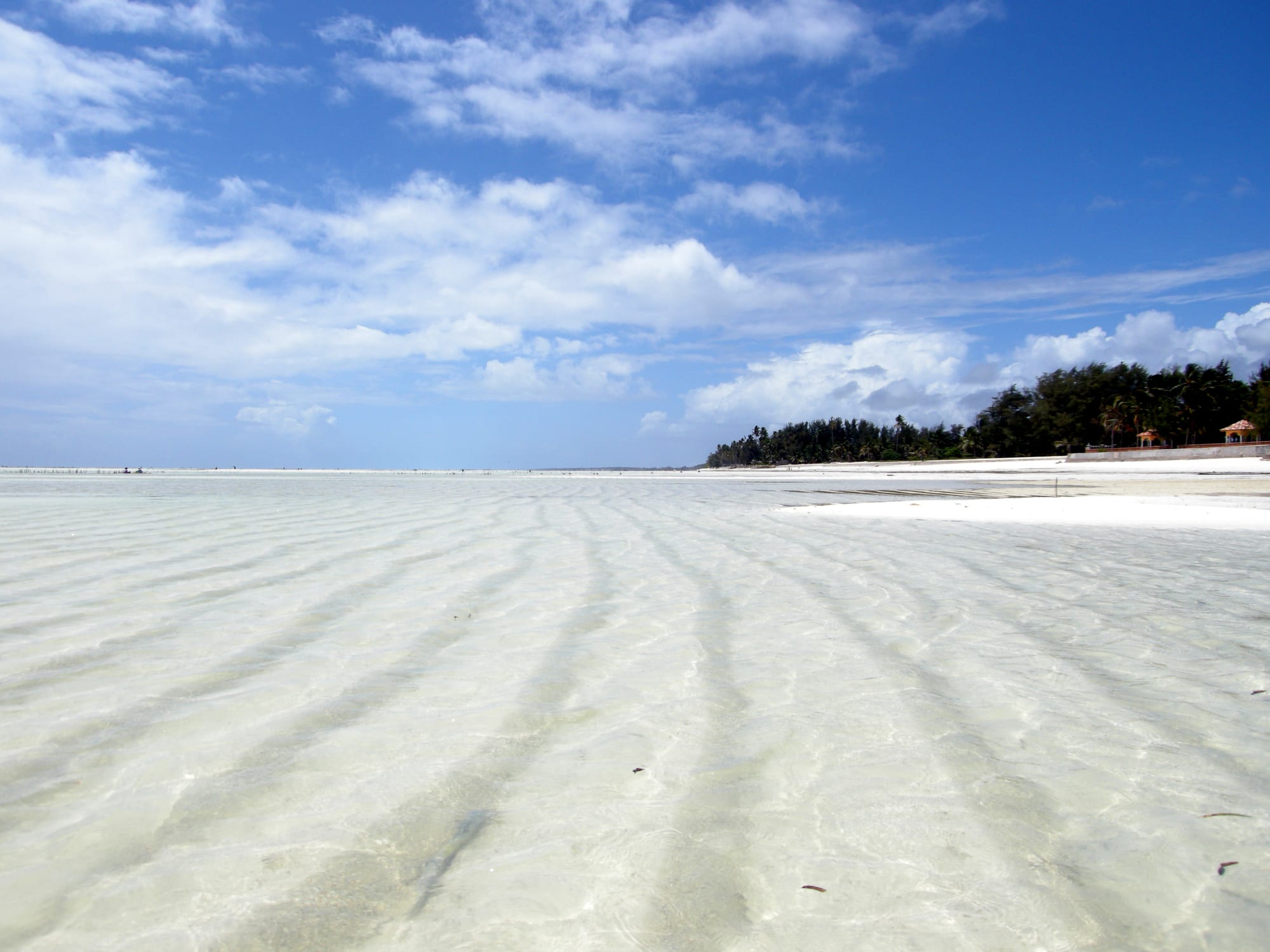
Flat, small and easy: the beach strip takes fifteen or twenty minutes to walk end to end, and at low tide the sand continues for kilometres towards Jambiani and Bwejuu. The coast road behind has no pavement and is dark at night, and sand rather than paving is the surface almost everywhere.
🛡️ Safety
The village is calm, with theft from the beach and from rooms the usual complaint and occasional muggings on unlit stretches of sand after dark. Politics turned violent around the general election of October 2025, when protests in Dar es Salaam and other cities were met with lethal force, a curfew was imposed and internet access was cut for several days; political gatherings are best avoided. The lagoon has sea urchins, sharp coral and, on a falling tide, currents through the reef gaps; kitesurfing injuries and sunburn are the other common problems.
Walk in Stone Town after dark in company or take a taxi, dress modestly away from the beaches, and use reputable boat and dive operators. Wear reef shoes on the flats and take malaria precautions, which the country advice recommends nationwide including Zanzibar. Check current official travel advice before travelling.
🌦️ Climate
Hot and humid all year, with the east coast getting more wind than anywhere else on the island. The long rains fall from about March to May and the short rains around November. The kaskazi blows from the north-east from about December to March and the kusi from the south-east from about June to September.
- Summer
- December to March is hottest, around 31–33°C and humid, with a warm north-easterly wind
- Winter
- June to October is drier and slightly cooler, around 28–30°C, with the strongest winds of the year
🤝 Local Customs
Paje is a Muslim village with a beach resort along its front, and the switch between them is expected to be made at the top of the sand. Swimwear stays on the beach; shoulders and knees are covered in the village and on the road. Greetings come before requests, and during Ramadan public eating and drinking by day is avoided away from the hotels.
Ask before photographing people, especially the women working the seaweed plots, cover up off the beach, and keep drinking to the bars and hotels.
💳 Common Payment Methods
Tanzanian shillings are used for everything local, while hotels, kite schools and trips are often quoted in US dollars, which are accepted if the notes are recent and unmarked. Cash machines are few and unreliable on this coast and cards work only at the larger places, so it is worth arriving with enough cash from Stone Town or the airport.