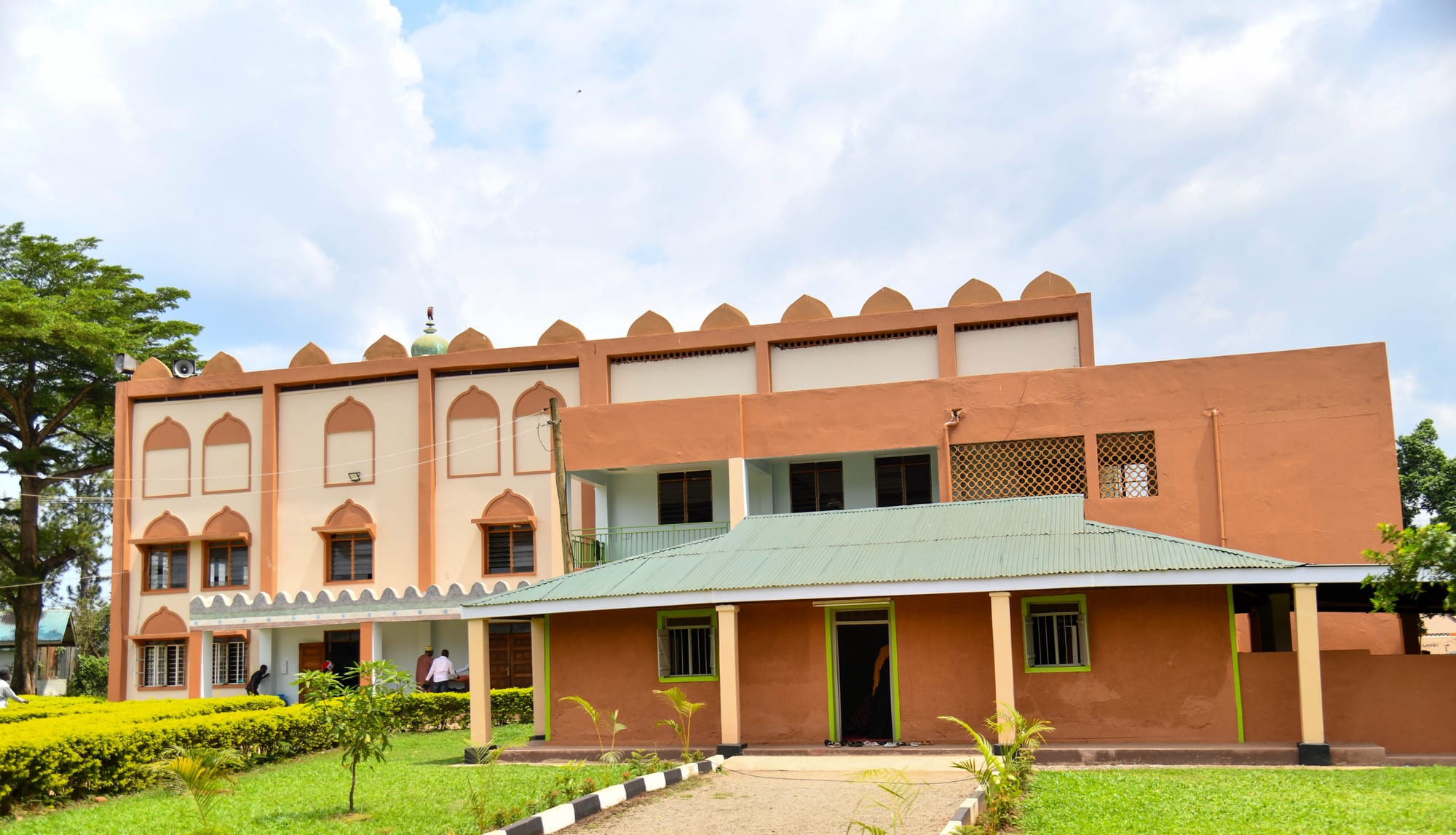
A long two-storey building with arched windows, a crenellated roofline and a green-roofed veranda, on a lawn with young palms

Jinja & Eastern Uganda, Uganda

Mbale

A building on the campus of the Islamic University in Uganda in Mbale. (Ssemmanda will / Wikimedia Commons · CC BY-SA 4.0)

Eastern Uganda's main city, laid out below the cliffs of Mount Elgon on ground the Ugandan general Semei Kakungulu took as his base in 1903. It is the trading and service centre for the Bugisu coffee slopes and the Teso plains, the usual starting point for treks towards the Wagagai summit, and the heart of the Bagisu Imbalu circumcision season.

Neighbourhoods

  • Town centre
    • First-time visitors
    • Markets
    • Close to transport

    The grid of streets around Republic Street and Cathedral Avenue, with the banks, shops, hotels, the central market and the taxi and bus stages. It is flat, busy with boda-bodas, and the cliffs of Wanale rise straight ahead at the end of several streets.

    Open in Maps
  • Nkoma
    • Quiet and residential
    • Universities

    A quarter on the northern side of the city, with churches, schools and the campus of the Islamic University in Uganda among trees and residential plots. It is quieter and greener than the town centre and looks back over the city.

    Open in Maps
  • Namatala
    • Local life
    • Markets

    A large, densely built and poorer suburb on the edge of the city, along the Namatala river. It is crowded and lively, with small workshops, roadside trade and a big local market, and it houses a significant part of Mbale's population.

    Open in Maps
  • The Wanale foothills
    • Views
    • Walks
    • Quiet stays

    The slopes east of town that climb towards the Wanale ridge, a flat-topped spur of Mount Elgon. Farms and villages sit among banana gardens and coffee, footpaths lead up towards the cliff edge, and the city lies spread out below.

    Open in Maps

Things to do

In the city

  • Islamic University in Ugandaattraction

    A university inaugurated in 1988 on a campus north of the centre, set up under the Organisation of Islamic Cooperation, drawing students from across Africa and central to the city's Muslim life.

    Open in Maps
  • Mbale central marketmarket

    The main produce market in the middle of town, where matoke, beans, maize, vegetables and coffee come down from the Elgon slopes and out from the plains.

    Open in Maps
  • Wanale ridgeviewpoint

    The flat-topped cliff that closes the eastern horizon above the city, reached by a steep road and footpaths through farms, with views back over Mbale and the plains.

    Open in Maps

Short trips to Mount Elgon

  • Mount Elgon National Parkpark

    The Ugandan side of the mountain, with montane forest, bamboo zones, caves and high moorland, and the trailheads used for multi-day treks towards the caldera.

    Open in Maps
  • Mount Elgonlandmark

    An extinct shield volcano on the Kenyan border, whose broad caldera and 4,321-metre Wagagai peak are the goal of treks from villages on the western and northern slopes.

    Open in Maps

Short trips from the city

  • Sipi Fallstrail

    Three waterfalls dropping over the cliffs on the mountain's north-western slopes, the tallest about 95 metres, with walks between them through coffee farms.

    Open in Maps
  • Kapchorwaattraction

    The Sebei district town on the northern shoulder of Mount Elgon, a base for the falls, the coffee farms and the ridge roads where Uganda's distance runners train.

    Open in Maps
  • Tororoattraction

    A town on the Kenya road known for its cement works and for Tororo Rock, the volcanic plug that rises above it and can be climbed for wide views over the plains.

    Open in Maps

Seasonal events

  • Imbalu circumcision seasonAugust, in even-numbered years

    The Bagisu initiation of young men, opened with ceremonies at the Mutoto grounds outside Mbale and carried through the villages by kadodi drumming, dancing and processions, filling the city with crowds.

  • Ramadan and Eidvaries with the Islamic lunar calendar

    Mbale has one of Uganda's largest Muslim communities, and the fasting month and the Eid festivals that follow it change the rhythm of the town, with prayers, family visiting and food stalls open late.

Eat and drink

Long-standing places and food districts in Mbale. Hours, ratings and directions come from your maps app, always current.

Mbale classics

  • Malewarestaurant

    Smoked and dried shoots of mountain bamboo from Mount Elgon, boiled and cooked with groundnut paste — the dish most associated with the Bagisu and with this city's ceremonies.

    Open in Maps
  • Matoke with groundnut saucerestaurant

    Steamed green bananas served with binyebwa, a thick groundnut sauce, or with beans, greens, chicken or beef, the standard plate in the small eating houses around the centre.

    Open in Maps

Markets and street food

  • Mbale central marketmarket

    The city's produce market, with mountain vegetables, avocados, matoke, dried fish, beans and sacks of Bugisu coffee beside stalls of cooked food.

    Open in Maps
  • Rolex and roadside grillsneighborhood

    Chapati rolled around a fried egg with tomato and onion, roasted maize, grilled meat and samosas, sold from stalls along the main streets and around the taxi stages in the evening.

    Open in Maps

Coffee and bars

  • Bugisu Arabica coffeeneighborhood

    The washed Arabica grown on the Elgon slopes above the city is traded here and sold abroad under the Bugisu name; a few places in town roast and brew it.

    Open in Maps
  • Bars around the town centreneighborhood

    Bottled lagers, including the Jinja-brewed Nile Special, and waragi, the general name for local spirits, are drunk in small bars and on terraces through the centre.

    Open in Maps

Experience Mbale

History

Mbale is a young city by Ugandan standards. Its beginnings are usually traced to to 1903, when the Ugandan general Semei Kakungulu, working with and then uneasily alongside the British administration, established a base at the foot of Mount Elgon and set out a settlement below Wanale. The colonial government took over the administration of the east from him, and the place grew as a district headquarters, a market for the mountain and plains around it, and a staging post on the route to Kenya.

Cotton and then coffee made it. Arabica from the Bugisu slopes above the town and cotton from the plains were bought, ginned and shipped out through Mbale, and a merchant community of South Asian traders built much of the town centre, its shopfronts and its first industries. The expulsion of Uganda's Asian population in 1972 emptied those businesses, and Mbale, like the rest of the country, went through years of economic collapse, insecurity and decayed infrastructure.

Recovery came slowly from the late 1980s, helped by the coffee trade, by the founding of the Islamic University in Uganda, inaugurated in 1988, and by the town's role as the service centre for a densely populated and fertile region. Mbale was granted city status in 2020, together with several other Ugandan towns, taking in surrounding areas under one city administration. Its modern profile rests on trade, education, health services and the steady traffic of walkers and trekkers heading for Mount Elgon and the Sipi falls.

Culture & Customs

This is the capital of Bugisu, and Bagisu culture defines it. Lumasaba, also called Lugisu, is the first language of the slopes above the city, and the best-known tradition is Imbalu, the circumcision of young men held in even-numbered years. The season opens at the Mutoto grounds outside the city and runs through the villages with kadodi drumming and dancing, processions of candidates and large crowds; enduring the cut without flinching is the point of the rite, and the Umukuka, the Bagisu cultural leader, presides over the season.

Mbale is also one of the most religiously mixed cities in Uganda. Anglican and Catholic churches sit alongside a large Muslim community and the mosques and schools that serve it, with the Islamic University drawing students from several countries. Outside the city, at Nabugoye Hill, live the Abayudaya, Ugandans who have practised Judaism since the early twentieth century, with their own synagogues, schools and choirs whose recordings have been heard well beyond Uganda.

The city sits where Bantu-speaking Bugisu meets the Nilotic-speaking Teso plains and the Sebei highlands, and its markets and stages mix all three. Football and athletics are followed closely, the mountain slopes having produced runners of international standing, and music is a constant presence — kadodi drums in season, church and mosque, and the sound systems of bars in the centre. Greetings, respect for elders and hospitality to visitors are expected everywhere.

Daily Life

The city had roughly 96,000 residents at the 2014 national census, and the wider city area created in 2020 takes in a considerably larger population across its divisions. It functions as the regional capital for eastern Uganda: a referral hospital, courts, banks, secondary schools and the university bring people in from several districts, and the bus and taxi stages are busy from early morning.

Trade is the main business. Coffee from Bugisu, matoke, maize, beans, vegetables and dried fish pass through the markets and warehouses; shops and small workshops line the centre; and services — health, education, transport, NGOs and government offices — provide most of the salaried work. Many households in the outer divisions still farm plots on the slopes or keep livestock.

Daily life runs from an early start, with produce arriving at the markets before dawn and boda-bodas filling the streets through the day, to evenings of street food, football on screens in bars, and church or mosque. The pressing local issues are familiar ones: crowded and poorly drained neighbourhoods such as Namatala, flooding and landslides after heavy rain on the deforested slopes, youth unemployment, and the stretched water and waste services of a city whose boundaries grew faster than its infrastructure.

Food

Mbale eats the food of the mountain. Malewa, the smoked and dried shoots of mountain bamboo cooked into a thick groundnut sauce, is the dish the Bagisu are known for and is served at ceremonies and in the better local restaurants. Alongside it come matoke, steamed and mashed green bananas, kalo, the stiff millet bread of the east often mixed with cassava flour, and posho of maize meal, all eaten with sauces of groundnut paste (binyebwa), simsim, beans, cowpea leaves and other greens.

Meat is grilled as muchomo, goat or beef cut small over charcoal, and chicken is a dish for guests and celebrations. Fish comes up from the Nile and Lake Victoria, fresh or smoked, and tilapia is fried whole. Street eating is cheap and everywhere: the rolex — a chapati wrapped around a fried egg with tomato and onion — roasted maize, boiled cassava, gonja plantain, samosas and mandazi. Avocados, jackfruit, passion fruit and mangoes are sold by the heap in the market.

Coffee grows on the hills above the town and is traded here in quantity, but tea boiled with milk and ginger is the everyday hot drink. Traditional brews include millet and banana beers, drunk communally at gatherings on the slopes, while bottled lager and waragi, the general name for distilled spirits, are the usual order in the city's bars.

Planning tools

Budget

Mbale is an inexpensive city, cheaper than Kampala or Jinja. Simple hotels and guesthouses in and around the centre cost little, local meals still less, and buses and shared taxis are cheap. Costs rise with the mountain: Mount Elgon park fees, ranger-guides and porters for a multi-day trek, and hired vehicles for trips up the escarpment.

Daily Budget Midrange
USD 80–160 (better hotel, restaurant meals, a guided activity or private transfer)
Daily Budget Shoestring
USD 25–45 (guesthouse, local food, buses and shared taxis)

Draw cash in the city before heading up the mountain, and arrange Elgon treks through the wildlife authority office or an established operator so that fees, guides and porters are settled in advance.

Best Time to Visit

June to August and December to February are drier, with firmer trails on Mount Elgon, safer river crossings and clearer views of the ridge. The wet months turn mountain paths to mud and can flood low ground in the city. Imbalu season, in August of even-numbered years, is the busiest and liveliest time in town.

Suggested Number of Days

The city itself is quickly seen, in a day or two. Most visitors use it as a base and stay longer: four to six days allows the escarpment and the waterfalls as well, and a trek to the caldera adds several days more on top of that.

First Visit
1–2 days
With Surroundings
4–6 days

Transportation

The centre is covered on foot, and boda-boda motorbikes are the usual way to cross the city. Shared minibus taxis and buses leave the stages for Kampala, Jinja, Tororo, Soroti, Kapchorwa and Sironko, going when they fill rather than to a timetable. Hired cars with drivers are available for the mountain roads, which are steep and rough beyond the tarmac.

Boda-bodas are quick but account for many injuries — ask for a helmet or use a shared taxi, and travel between towns in daylight.

Airport & Station Connections

Mbale is about 225 kilometres from Kampala, four to five hours by road on the highway through Jinja, with frequent buses and minibus taxis, and about 45 kilometres from the Kenya road junction at Tororo. The nearest international airport is Entebbe, on the far side of Kampala; there is no useful passenger rail service.

Walkability

The centre is flat, compact and easy to walk, with the main shops, banks, market and stages within a few blocks of each other. Pavements are uneven and often taken up by traders and parked motorbikes, and traffic is heavy on the through roads. The suburbs and the foothills are spread out and hilly, and most people cover them by boda-boda.

Safety

Mbale is a calm provincial city, and the common risks are road accidents, especially on motorbikes, and pickpocketing in market crowds and at the taxi stages. Mount Elgon's steep, cleared slopes are prone to landslides after heavy rain, most severely in the districts south-east of the city, and the Namatala river and other channels have flooded parts of the low ground during storms, including in 2022.

Uganda is generally safe for tourists on the main routes, with petty theft, road accidents, and boda-boda crashes the everyday risks. Keep valuables out of sight in the market, walk with care after dark, and trek Mount Elgon with a ranger-guide rather than alone. Check current official travel advice before travelling.

Climate

Warm and green all year at around 1,200 metres, tempered by the mountain behind it, with rain spread across much of the year and two wetter peaks in roughly March to May and August to October. Afternoon storms build over the ridge and can be heavy.

Summer
June to August is mild and showery, roughly 16–28°C, with cloud on the mountain
Winter
December to February is the drier, warmer season, often around 30°C by day and pleasant at night

Local Customs

Lumasaba, the language of the Bagisu, is spoken alongside English, Swahili and the languages of the plains, and greetings come before any request or purchase. Christianity and Islam are both strongly present, and dress is modest, particularly near mosques and churches. Imbalu ceremonies are public but serious occasions, not entertainment.

Tipping is not expected in local eating houses; ask before photographing people, ceremonies or mosques, and dress modestly. Public criticism of politics or of the law on same-sex relations is unwise.

Common Payment Methods

The currency is the Ugandan shilling. Banks and ATMs are easy to find in the centre, and mobile money agents are everywhere, but cash is what the market, taxis, boda-bodas and small hotels use. Cards are accepted only at a few larger hotels, and US dollars are useful mainly for park fees.