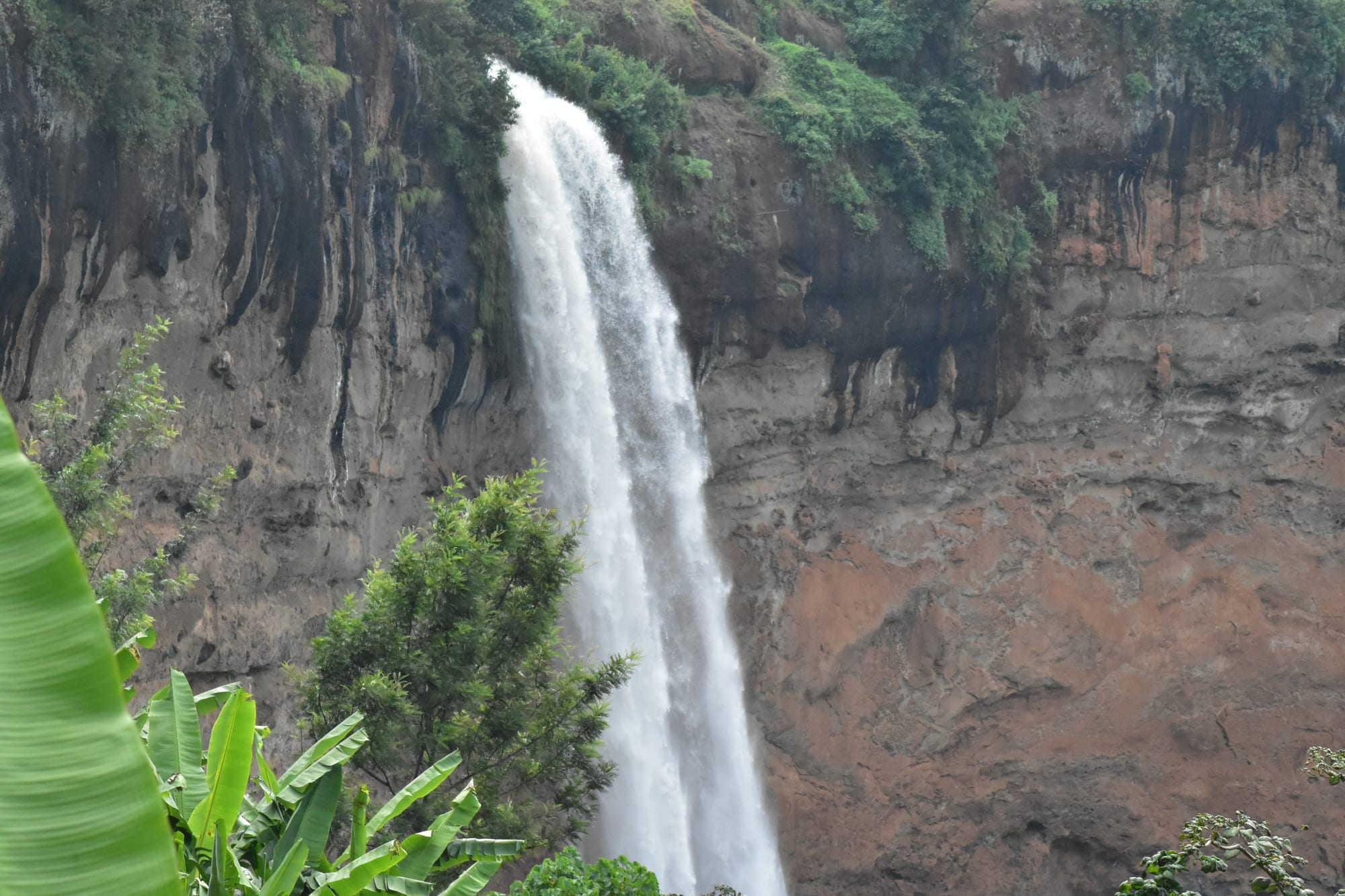
A tall white waterfall dropping down a sheer brown cliff, framed by green banana leaves and trees

Uganda

Jinja & Eastern Uganda

One of the Sipi Falls, dropping over the cliffs on the north-western slopes of Mount Elgon near Kapchorwa. (Sandra Aceng / Wikimedia Commons · CC BY-SA 4.0)

Uganda's eastern region runs from Jinja, where the White Nile leaves Lake Victoria, across the sugar country of Busoga and the Teso plains to the Kenyan border and the slopes of Mount Elgon — a densely farmed land of rafting rapids, waterfalls, coffee terraces and the Bagisu circumcision season.

Explore Jinja & Eastern Uganda

History

Before colonial rule the land between the Nile and Mount Elgon was divided among many peoples. Busoga, just east of the river, was a patchwork of small Bantu-speaking chiefdoms under the influence of Bunyoro and later Buganda; on the mountain the Bagisu farmed the fertile southern slopes and the Sabiny the north; and the Nilotic Iteso had spread across the plains around Lake Kyoga by the 19th century. The explorer John Hanning Speke reached the outflow of Lake Victoria in 1862 and identified it as the source of the Nile.

In the 1890s and 1900s the British, often through the Ganda general Semei Kakungulu, who established Mbale as his base, extended control over the east. Cotton became the region's cash crop, and Jinja grew as a lakeside railhead and port. The Owen Falls Dam, completed in 1954, drew factories to Jinja for its power, and the Kakira sugar works nearby grew into the town's largest employer.

Idi Amin's expulsion of Uganda's Asian minority in 1972 was followed by a steep fall in national manufacturing output, and Jinja's factories declined. In the 1980s cattle raids by armed Karimojong herders decimated Teso's herds, and an insurgency against the new government lasted from 1987 to 1992. Since the 2000s Jinja has recovered as a river-tourism centre, although the Bujagali dam, finished in 2012, drowned the falls that gave the rafting scene its name, and the Isimba dam further downstream followed in 2019. Jinja and Mbale are both now cities, Jinja since 2020.

Culture & Customs

The east is linguistically the most varied part of Uganda. Lusoga, close to Luganda, is spoken in Busoga; Lugisu (Lumasaba) on the southern slopes of Elgon; and Nilotic Ateso across the Teso plains, with Kupsabiny around Kapchorwa and Jopadhola around Tororo. Busoga has its own restored cultural kingdom, headed by the Kyabazinga, whose seat is at Bugembe near Jinja.

The best-known tradition is Imbalu, the Bagisu circumcision of boys aged 16 and over, held in even-numbered years. Initiates are accompanied through the season by kadodi music and dance before the public cut, which they must endure without showing fear or pain; the season opens near Mbale, at the Mutoto cultural grounds, where the cultural leader, the Umukuka, plays a ceremonial role.

The Iteso are a cattle-keeping people whose culture centres on herds, marriage cattle and communal beer drinking. Across the region Christianity dominates, while Mbale has a notable Muslim community and is also known for the Abayudaya, a small community of Ugandans practising Judaism since the early 20th century. Jinja hosts the Nyege Nyege festival of electronic and African music on the Nile.

Daily Life

Jinja and Mbale are the two main cities, followed by Tororo, Soroti, Iganga, Busia and Kapchorwa. The region is densely populated and heavily rural, and Busoga in particular is one of the poorer parts of southern Uganda despite its fertile land.

Farming is the base: sugar cane around Jinja and Kamuli, rice around Pallisa and Butaleja, maize, cassava and millet on the plains, and Arabica coffee on the slopes of Elgon, where Bugisu coffee is known abroad. Jinja keeps some industry, including sugar milling, steel and palm-oil refining, and its riverside strip now lives largely on tourism — rafting, kayaking, backpacker camps and bars. Tororo produces cement, and Malaba and Busia are major transit points for the lorries carrying Kenyan-port cargo to Uganda, Rwanda and eastern Congo.

Daily life follows the market day, the harvest and, around the borders, the queues of trucks. Land pressure on Elgon, where villages have pushed up into the forest and then suffered landslides, and conflict between farmers and the national park over its boundary, are recurring issues, as is the long-running decline of Busoga's sugar-dependent economy.

Food

The east shares matooke with the centre but leans more on millet, cassava and maize. Kalo, a stiff millet bread that in the east often includes cassava flour, is eaten with groundnut sauce, greens or chicken. Busoga is proud of its cooking of fish from the Nile and Lake Victoria, with tilapia and Nile perch fried or stewed at landing sites around Jinja.

The most distinctive dish comes from Elgon: malewa, the young shoots of mountain bamboo, which are smoked and dried, then boiled and cooked with groundnut paste into a savoury sauce that is a major part of Bagisu ceremonies. The Elgon slopes also grow bananas, beans and fine Arabica coffee, not least around Sipi.

Jinja's riverside bars pour Nile Special, the lager named after the river. Home brews include beers made from millet or bananas, and waragi, the local distilled gin, is widely drunk.

Attractions & Natural Wonders

Jinja is the region's centre for visitors. Boats from the Jinja side take visitors out to the point where the Nile leaves Lake Victoria, and a memorial recalls that some of Gandhi's ashes were scattered here. Downstream, the rafting companies launch around Bujagali for full-day runs through big grade-five rapids, and bungee jumping, kayaking, quad-biking and sunset cruises fill the rest of the riverbank.

The east's great mountain is Mount Elgon, an extinct shield volcano shared with Kenya, whose vast caldera and 4,321-metre Wagagai peak are reached on multi-day treks through montane forest, bamboo and giant groundsel moorland. On its north-western slopes, near Kapchorwa, the three Sipi Falls tumble over cliffs, the highest dropping about 95 metres, with coffee farms and views across the Karamoja plains below. Mbale, the base for the park, lies in the mountain's foothills.

Out on the plains, Tororo Rock gives a steep climb and wide views, and the Nyero rock paintings in Kumi district, geometric circles and figures in red and white, are among the most important rock-art sites in the country. Lake Kyoga's papyrus swamps and Lake Bisina are good for water birds.

Cities in Jinja & Eastern Uganda

Planning basics

Budget

The east is cheaper than Kampala and much cheaper than the gorilla country of the west. Jinja has a full range from riverside backpacker camps to upmarket lodges, and the main cost is activities: a day's rafting or a bungee jump is priced in US dollars. Sipi and Mbale have simple guesthouses and campsites at low prices, and Mount Elgon's park fees and guided treks are modest by Ugandan standards.

Daily Budget Midrange
USD 80–160 (riverside lodge, restaurant meals, a guided activity or private transfer)
Daily Budget Shoestring
USD 25–45 (backpacker camp or guesthouse, local food, buses and shared taxis)

Book rafting through an established Jinja operator that includes safety kayakers, and carry cash shillings for Sipi and the Elgon villages.

Safety

The east is generally safe and relaxed, and Jinja is used to visitors. The main risks are road accidents on the busy highway to Kenya, petty theft in towns, and the hazards of adventure activities on the Nile. On Mount Elgon's steep, deforested slopes, heavy rain has caused deadly landslides, notably in Bududa district, and trails become slippery and streams dangerous after storms. The lake and still waters carry bilharzia.

Choose rafting and bungee operators with a strong safety record, trek Elgon with a ranger-guide, and avoid the upper slopes in heavy rain. Check current official travel advice before travelling.

Climate

Jinja and the lake shore share Kampala's warm, humid climate, with two rainy seasons. The Teso plains to the north are hotter and drier, with a more pronounced dry season around December to February. Mount Elgon is cool and very wet on its slopes, and the high moorland can drop close to freezing at night; its southern and western slopes receive more rain than the northern side around Sipi.

Summer
June to August is mild, about 16–27°C in Jinja and Mbale, cooler at Sipi
Winter
December to February is the main dry season, warm by day and hot on the Teso plains, often above 30°C

Transportation

Jinja is about two hours from Kampala by road, traffic permitting, on the main highway to Kenya, which continues through Iganga and Tororo to the busy border crossings at Malaba and Busia. Buses and minibus taxis link Jinja, Mbale, Tororo and Soroti; Sipi is about an hour up the mountain road beyond Mbale. There is no useful passenger rail, and the rafting companies generally run their own transfers from Kampala and Jinja.

Travel by day on the Kampala–Jinja–Mbale highway, which is heavily used by trucks, and allow extra time for the Kampala end.

Best Time to Visit

Rafting runs all year, and the river is warm. For Mount Elgon and the Sipi walks, the drier months of June to August and December to February bring firmer trails and clearer views. Imbalu season falls in even-numbered years, mainly in August, when Mbale and the Bugisu villages are crowded and lively.