History
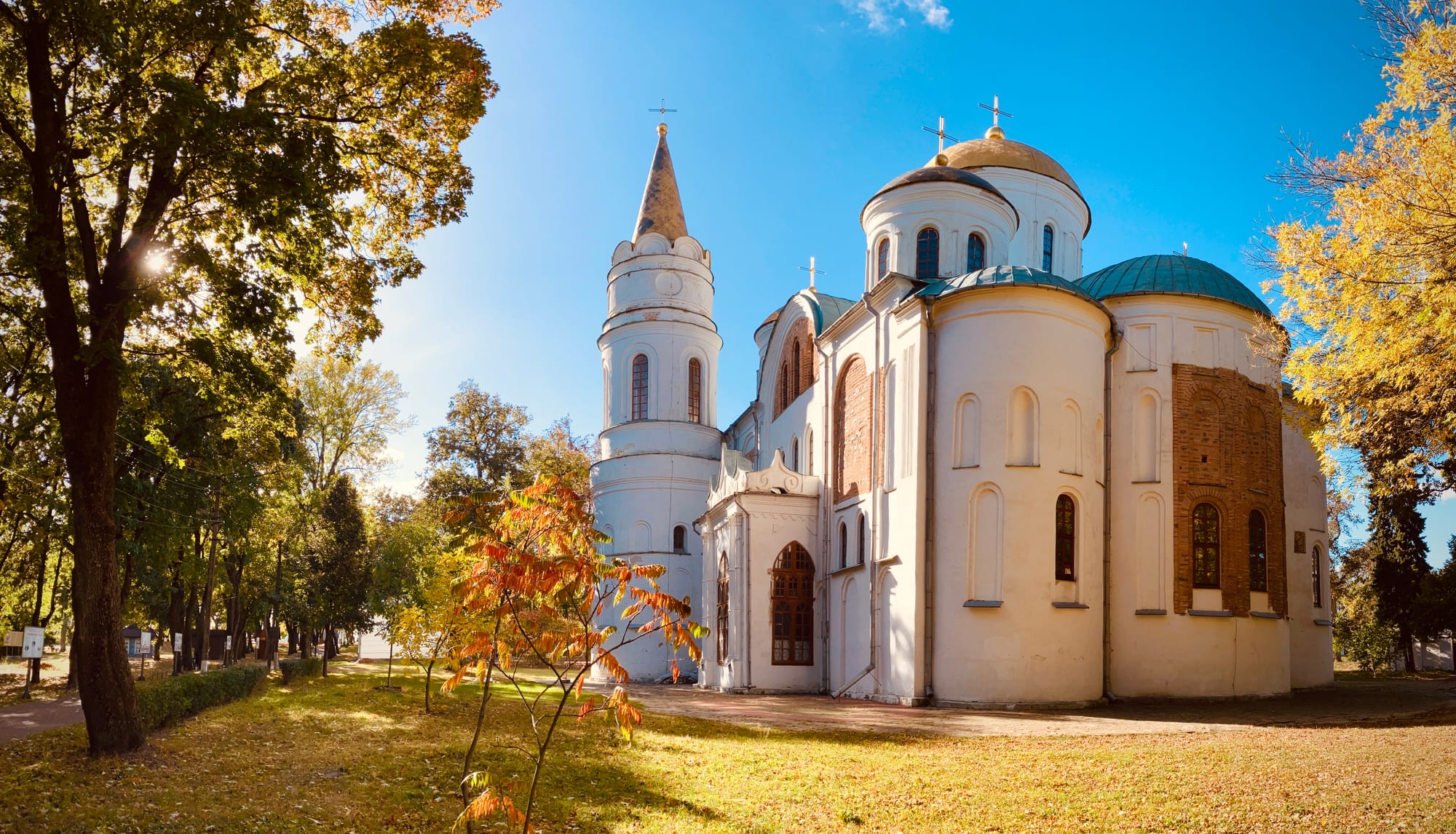
Chernihiv was first mentioned in the Rus'–Byzantine Treaty of 907, though when it was founded is unknown. Originally a tribal centre of the Siverians, it was absorbed into Rus' in the 9th century and became its second most important city after Kyiv. The Black Grave, one of the largest and earliest royal burial mounds in Eastern Europe, was excavated here in the 19th century. The Transfiguration Cathedral was begun in the early 1030s by Prince Mstislav and completed by his brother Yaroslav the Wise, and the city's golden age, when it had about 25,000 inhabitants, lasted until Batu Khan's forces sacked it in 1239.
A long period of obscurity followed until Chernihiv rose again inside the Cossack Hetmanate, as the base of the Chernihiv regiment. Under the Treaty of Andrusovo in 1667 the area passed under the suzerainty of the Tsardom of Russia, though the city remained an important centre of the autonomous Hetmanate. A collegium was founded in 1700, and the Cossack elite built the Baroque churches and residences that make up the city's second great layer of architecture. When the Hetmanate was abolished, Chernihiv became an ordinary provincial capital of the Russian Empire; in 1897 some 11,000 of its 27,006 people were Jewish.
The Second World War destroyed much of the old city, including the Piatnytska Church in 1943, and the medieval churches were restored afterwards. On 24 February 2022 Russian forces besieged Chernihiv, encircling it completely by 10 March; they withdrew from the oblast in early April, leaving mines behind. The government named it a Hero City of Ukraine, and Russian missile strikes killed seven people in August 2023 and about 18 in April 2024.