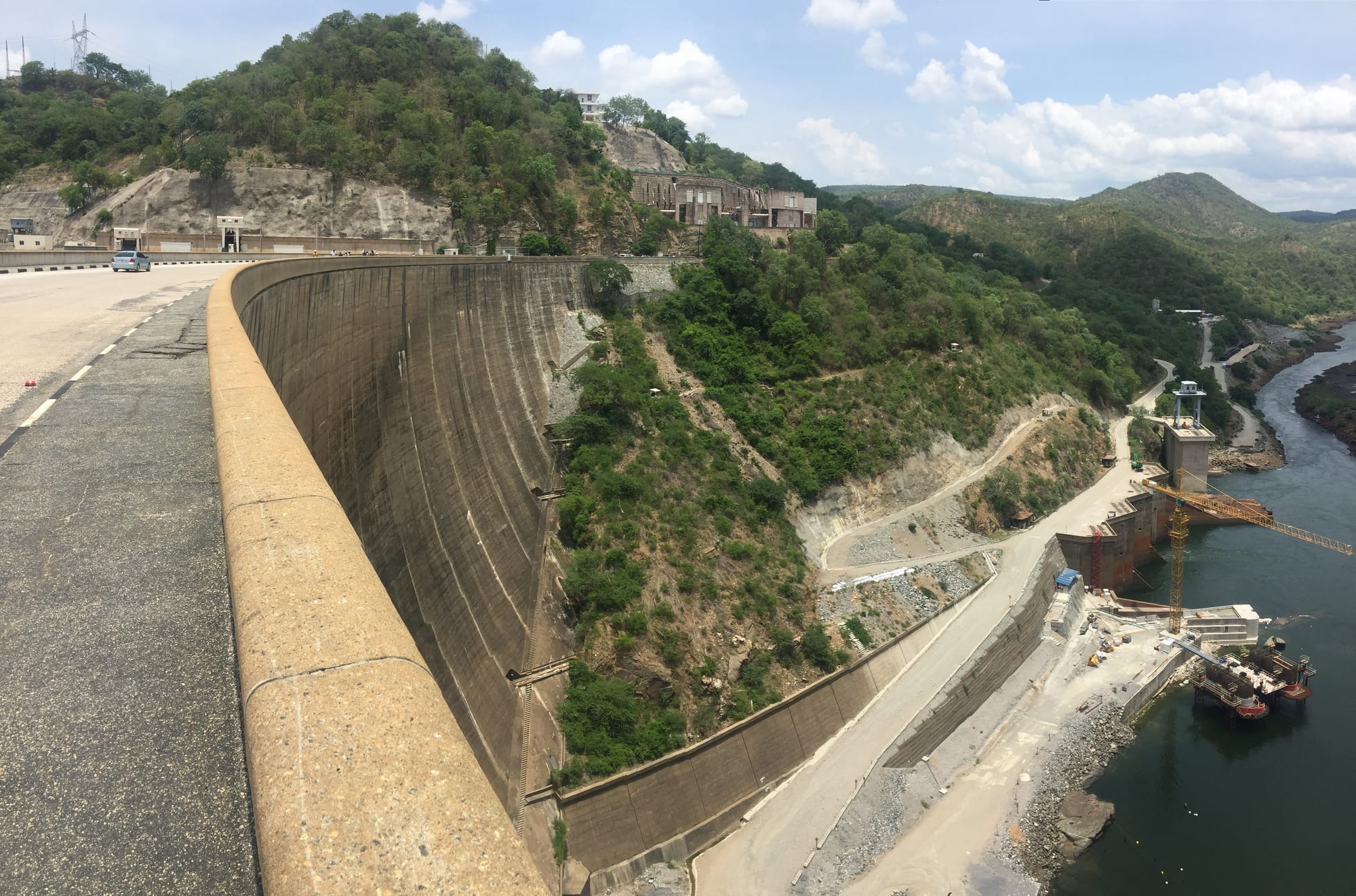
A curved concrete dam wall seen along its top, with a road on the crest, wooded hills around it and the river gorge below

Harare & Mashonaland, Zimbabwe

Kariba

The crest of the Kariba Dam wall, looking along the arch towards the gorge below. (JonGT / Wikimedia Commons · CC BY-SA 4.0)

A small town in the Zambezi valley built for the construction of the Kariba Dam in the 1950s, spread over hills above the dam wall at the eastern end of Lake Kariba. It lives on hydroelectricity, kapenta fishing and tourism, and is the usual base for houseboats, lake fishing and flights into the Zambezi valley parks.

Neighbourhoods

  • Kariba Heights
    • Views
    • Quiet and residential

    The highest part of the town, several hundred metres above the water on the hills behind the dam, built for engineers and managers during construction. It is cooler than the lakeshore, holds the Catholic church of St Barbara and the Operation Noah monument, and gives long views over the lake and the gorge.

    Open in Maps
  • The lakeshore and harbour
    • First-time visitors
    • Boats and fishing

    The strip along the water below the Heights, where the jetties, boat moorings, houseboat operators and most lodges are found. Everything on the lake starts here, and hippos and crocodiles are a genuine presence along the shore.

    Open in Maps
  • Mahombekombe and Nyamhunga
    • Local life
    • Markets

    The residential townships where most of Kariba's people live, laid out for dam workers and later for fishing and power-station families. They hold the markets, shops, churches and bus stops, and little is aimed at visitors.

    Open in Maps

Things to do

The dam and the town

  • Kariba Damlandmark

    The double-curvature concrete arch dam across the Zambezi gorge, 128 metres tall and 579 metres long and completed in 1959, whose crest carries the road to the Zambian border post and gives views down to the river below.

    Open in Maps
  • Kariba Airporttransit hub

    The small airport above the town, used by light aircraft and by charter flights into the Zambezi valley.

    Open in Maps

The lake

  • Lake Karibaattraction

    The world's largest reservoir by volume, filled between 1958 and 1963 behind the dam, with drowned forests, fishing for tigerfish and bream, kapenta rigs working at night and houseboats moving along the shore.

    Open in Maps

Short trips from the town

  • Matusadona National Parkpark

    A national park on the southern shore of Lake Kariba, between the water and the Matusadona escarpment, known for elephant, buffalo and shoreline birdlife.

    Open in Maps

Eat and drink

Long-standing places and food districts in Kariba. Hours, ratings and directions come from your maps app, always current.

Kariba classics

  • Bream from the lakerestaurant

    Lake bream, usually tilapia, grilled or fried whole and served with sadza and greens, is the dish the town is known for, cooked at lodges and at plain local eating houses alike.

    Open in Maps
  • Kapentarestaurant

    The small sardine-like fish netted at night on the lake, dried in the sun and then fried with onion and tomato — an everyday relish across Zimbabwe that comes from these waters.

    Open in Maps

Markets and shops

  • Mahombekombe marketmarket

    The township market for vegetables, dried kapenta, groceries and household goods, where most of the town does its shopping.

    Open in Maps
  • Lakeshore supply shopsneighborhood

    Supermarkets and small shops near the harbour where houseboat parties stock up on food, water and ice before going out on the lake.

    Open in Maps

Experience Kariba

History

The Zambezi gorge at Kariba — the name comes from a Tonga word meaning trap, after a rock jutting from the gorge where the wall was to be built — was chosen in the early 1950s as the site of a dam for the Federation of Rhodesia and Nyasaland. The work was carried out between 1955 and 1959 by the Italian firm Cogefar-Impresit, producing a double-curvature concrete arch wall 128 metres tall, with the power station cut into rock on the southern bank. Around 86 workers died during the construction, and floods in 1957 and again the following rainy season washed away much of the partly built works. The town grew from the construction camps: offices and senior housing on the cool hills above, labour compounds and the harbour below.

The lake that filled behind the wall drowned the valley floor and forced the relocation of about 57,000 Tonga people from both banks, moved to drier land away from the river, a displacement still remembered as a grievance in the valley. Nyaminyami, the Zambezi river spirit of Tonga belief, is said in local accounts to have been angered by the dam and separated from his consort by it. As the water rose, Operation Noah rescued thousands of animals stranded on shrinking islands and released them on the new shores.

After independence the town settled into three roles: generating power, fishing, and tourism built on houseboats and the parks. Kapenta, a small fish introduced from Lake Tanganyika, became a major industry with rigs working the lake at night. Kariba's fortunes now track the water level: prolonged drought in the region has repeatedly cut the lake low enough to reduce generation sharply, contributing to the power cuts felt across Zimbabwe and Zambia, and rehabilitation of the plunge pool and the spillway gates has been under way at the wall since 2017.

Culture & Customs

Kariba is a made town with a mixed population — Tonga families from the valley, Shona-speaking workers who came for the dam and the power station, fishing crews and lodge staff — and its culture is closer to a frontier settlement than to the older towns of the plateau. Most people are connected in some way to water: to the lake's fish, to the boats, or to the turbines inside the gorge.

Nyaminyami is the figure the town is best known for. In Tonga tradition the Zambezi river spirit, often shown with a fish's body and a snake's head, guarded the valley and its people; the floods of the construction years were widely read as his anger, and carved Nyaminyami walking sticks and pendants are the standard craft sold on the lakeshore. The Catholic church of St Barbara at Kariba Heights, raised with the other monuments of the early 1960s once the dam was finished, is the other emblem of that era, standing beside the Operation Noah memorial above the water.

Fishing shapes the social calendar: competitive tigerfish angling has a long tradition on the lake and draws teams from around the country, and the kapenta rigs go out at dusk with their lights, which is one of the sights of a Kariba evening. Life is otherwise informal and slow in the heat, with early starts, long middays indoors and evenings outside. Churches are well attended, funerals are major community occasions, and visitors are expected to greet properly before asking for anything.

Daily Life

About 27,600 people lived in Kariba at the 2022 census, most of them in the townships of Mahombekombe and Nyamhunga rather than in the hillside areas built for dam staff. The town's employers are the power station, the kapenta fishing companies, the national parks service, the border post and the lodges and houseboat operators, and between them they account for much of the formal work in this part of the valley.

The rhythm of the day is set by heat and water. Work starts early, the middle of the day is quiet, and activity returns in the late afternoon when boats go out and the lake cools. Kapenta rigs leave at dusk and fish through the night under lamps, returning at dawn to dry the catch on racks in the sun. Domestic water, supplies and fuel all have to come down the escarpment road from Makuti, so shortages are felt quickly, and the lake's level is followed closely because it governs both generation at the station and the fishing.

Wildlife is part of ordinary life rather than an excursion. Elephants cross roads in town, hippos graze on verges at night, crocodiles patrol the shoreline, and householders and lodges plan around them. The town also serves the Zambian side: the road over the dam wall links to Siavonga, and cross-border trade and family ties run both ways. Tourism, power and fish are the three things Kariba's prosperity depends on, and all three have been unsettled by drought.

Food

Fish is the first thing to eat here. Bream from the lake — tilapia species, usually grilled over coals or fried whole — is the local speciality, served with sadza, the thick maize porridge that is the national staple, and a relish of greens or tomato and onion. Tigerfish, prized by anglers for the fight rather than the plate, is bonier and eaten less often. Fresh fish is sold at the harbour and at the township markets in the morning.

Kapenta, the small fish that made the lake's fishing industry, is the everyday protein: netted at night, dried on racks in the sun, then fried hard with onion and tomato and eaten with sadza. Sacks of dried kapenta leave Kariba for markets across the country, and it is one of the few Zimbabwean staple foods that is identified with a single place.

Beyond the fish, the food is standard Zimbabwean: sadza with beef or goat stew or with muriwo, greens cooked with tomato and often peanut butter; bota, a thinner maize porridge, at breakfast; roasted maize and maputi, puffed maize, sold at roadsides. Meat grilled over coals is the food of weekends. Chibuku, the opaque sorghum-and-maize beer sold in cartons, and maheu, a non-alcoholic fermented maize drink, are drunk alongside bottled lager, and cold drinks matter more here than almost anywhere else in the country.

Planning tools

Budget

Costs split sharply. A bed in a small guesthouse in the townships or a campsite by the water is cheap, and local food costs little. Lakeside lodges and houseboats are priced in US dollars, and a houseboat makes sense only when a group shares it, with fuel, a crew and park fees on top.

Daily Budget Midrange
USD 120–300 (lakeside lodge, a share of a houseboat, boat trips and park entry)
Daily Budget Shoestring
USD 40–70 (guesthouse or campsite, local meals, shared transport)

Carry small, clean US dollar notes; card payment is unreliable and there are few working ATMs, so bring cash from Harare.

Best Time to Visit

The cooler dry months from May to August are the most comfortable, with calm mornings for boating and game gathering on the shoreline. September to November is very hot in the valley, often above 35°C. The rains from December to March bring storms and green hills, and some lake operators are quieter then.

Suggested Number of Days

Two days are enough for the dam, the hills above it and a boat trip on the lake. Three to five suit a houseboat or a stay in the parks reached from the town. Heat, boat schedules and the long drive from Harare all argue for a slower pace.

First Visit
2 days
With Surroundings
3–5 days

Transportation

The town is strung along hillside roads over several kilometres, with the Heights, the harbour and the townships far apart and steep climbs between them, so a vehicle or a taxi is needed. Local minibuses run between the townships and the shops. On the lake, boats replace roads: transfers, fishing trips and houseboats all leave from the harbour area.

Wildlife moves through the town, so walking between areas after dark is unwise; arrange a lift or a taxi instead.

Airport & Station Connections

Kariba lies roughly 350 km north-west of Harare by road, a drive of about five hours on the highway through Chinhoyi and Makuti and then down the escarpment. Buses and minibuses run from Harare to the town. Kariba Airport above the town handles light aircraft, including charters into the Zambezi valley parks such as Mana Pools, a World Heritage Site inscribed in 1984, and the road across the dam wall leads to the Zambian border post and the town of Siavonga.

Walkability

Not a walking town. The distances between the Heights, the harbour and the townships are several kilometres on hilly roads with little shade, the heat is intense for much of the year, and hippos, elephants and crocodiles move through the shoreline areas, which makes walking at dusk and after dark genuinely risky.

Safety

Crime levels are low compared with the cities, and the main dangers are natural: crocodiles and hippos along the whole shoreline, elephants in the town, strong heat, and sudden squalls that can make the open lake rough for small boats. A ferry running from Kariba across the lake capsized in August 2026 with the loss of at least 72 lives. Malaria is present in the valley year-round. Power and water cuts occur despite the power station next door.

Take malaria precautions in the low-lying areas, avoid political gatherings, don't drive at night, keep documents and small change ready for roadblocks, and don't swim in still fresh water outside managed sites. Boat operators' instructions about hippos and shoreline landings are worth following exactly. Check current official travel advice before travelling.

Climate

Kariba sits low in the Zambezi valley and is one of the hotter places in Zimbabwe. Winters are warm and dry, the weeks before the rains in October and November are extremely hot, and the wet season from December to March is humid with heavy storms. Summer here falls in December to February.

Summer
hot and humid, often above 35°C, with afternoon and night storms
Winter
dry and warm, with days around 26–30°C and mild nights

Local Customs

The valley is home to Tonga communities displaced by the lake as well as Shona-speaking incomers, and Nyaminyami, the river spirit of the Zambezi, is part of local belief and appears carved on walking sticks sold in the town. Greetings come before business, dress is modest away from lodge pools, and tipping boat crews and guides is customary.

Ask before photographing people or fishing crews, and do not photograph the dam wall's security areas or the border post.

Common Payment Methods

The ZiG is the official currency, but US dollars are used for almost everything a visitor pays for here, including lodges, boats, fuel and park fees. Small, clean notes are essential because change is scarce. Cards are accepted at a few lodges only, mobile money is common among residents, and ATMs cannot be relied on, so cash should be brought in.