History
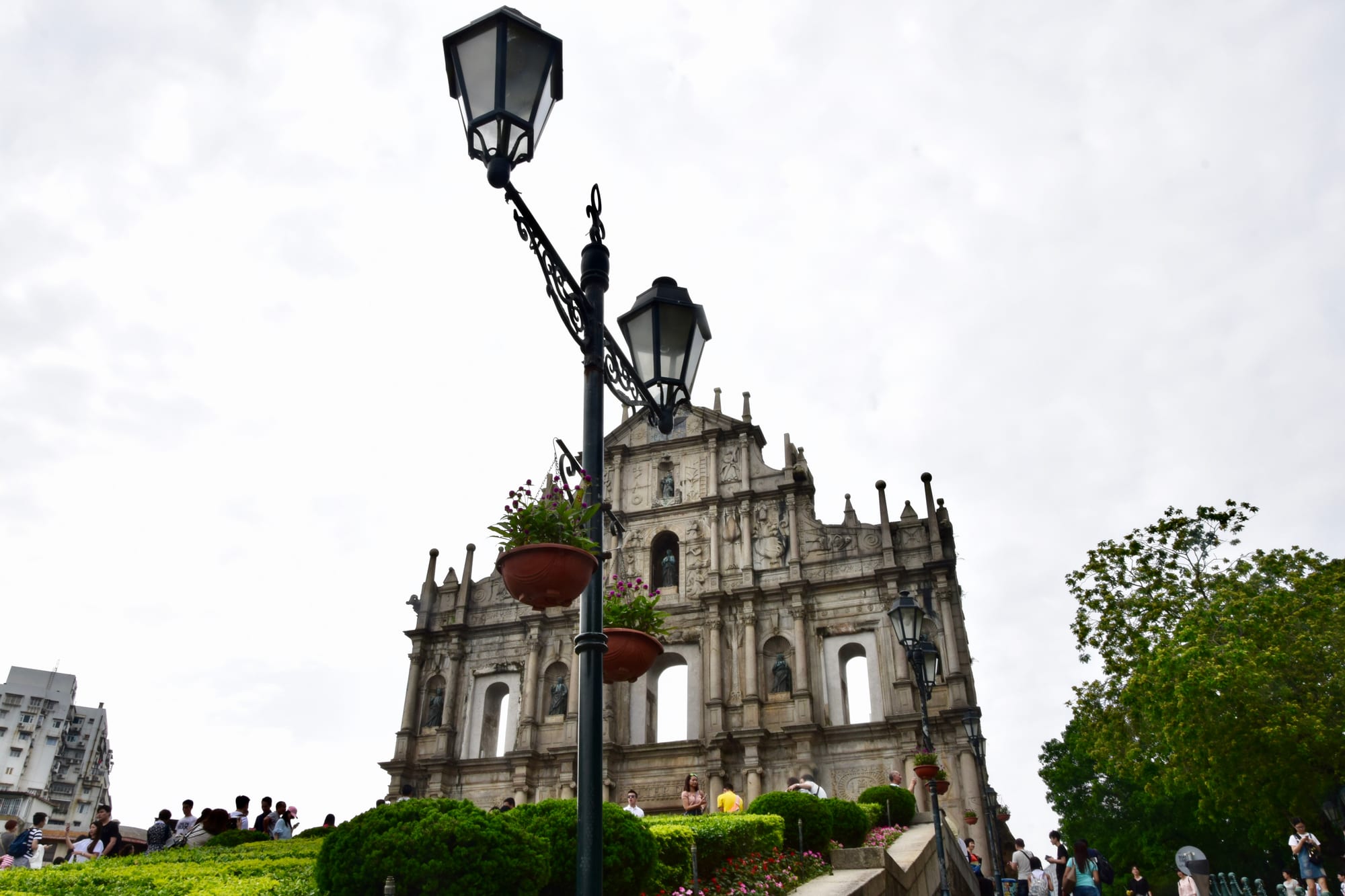
Portuguese traders settled the peninsula around 1557 with the tolerance of Ming officials, paying an annual ground rent, and Macau became the hub of Portugal's trade with China and Japan and a base for the Jesuit mission to East Asia — the Church of St Paul and its college were built in this period. As Guangzhou opened and Hong Kong and the treaty ports rose in the nineteenth century, Macau's commercial importance faded, and it leaned on gambling, which the Portuguese administration legalised in 1849.
The 1887 Sino-Portuguese Treaty of Peking formalised perpetual occupation rights for Portugal. After Portugal's 1974 revolution it offered to return the territory; China preferred to wait, and Macau was redefined as "Chinese territory under Portuguese administration". The 1987 Sino-Portuguese Joint Declaration set the terms, and Macau was handed over on 20 December 1999 as a Special Administrative Region with its own Basic Law and a 50-year guarantee of its system, on the "one country, two systems" model.
In 2002 the government ended the decades-old gaming monopoly and licensed new operators, including American casino companies. Gaming revenue overtook the Las Vegas Strip in 2007 and grew to several times its size, funding an annual cash handout to residents and a vast building boom on reclaimed land between Taipa and Coloane, the Cotai Strip. The pandemic shut the border and collapsed tourism in 2020–22; visitors and gaming revenue have since recovered — takings in August 2025 were the highest since the start of 2020 — and Beijing is pressing Macau to diversify away from its heavy dependence on gambling.
- How did Macau come to make more money from gambling than Las Vegas? — A legal monopoly, a fast ferry, the end of Portuguese rule and a door opened to mainland Chinese tourists turned a fading port into the world's casino capital.
- Macau: The First and Last Colony — China's first and last European colony — a Portuguese trading post from 1557, a decaying backwater in Hong Kong's shadow, the last colonial territory returned to China, and now the largest gambling centre on Earth