History
One of North Jutland's great monuments lies on a hillside above the Limfjord at Nørresundby: Lindholm Høje, a burial ground of about 700 Iron Age and Viking graves, many outlined with stones in the shape of ships, that was buried by drifting sand in the Middle Ages and excavated only in the 1950s. Harald Bluetooth built two of his ring fortresses here around 980 — Fyrkat near Hobro and Aggersborg on the fjord's north shore, the largest of them all. Aalborg grew up at the fjord's narrowest crossing and became rich on Limfjord herring. In 1534 the peasants of Vendsyssel rose under Skipper Clement and beat a noble army at Svenstrup; that December Johan Rantzau's troops stormed Aalborg and killed some 2,000 people.
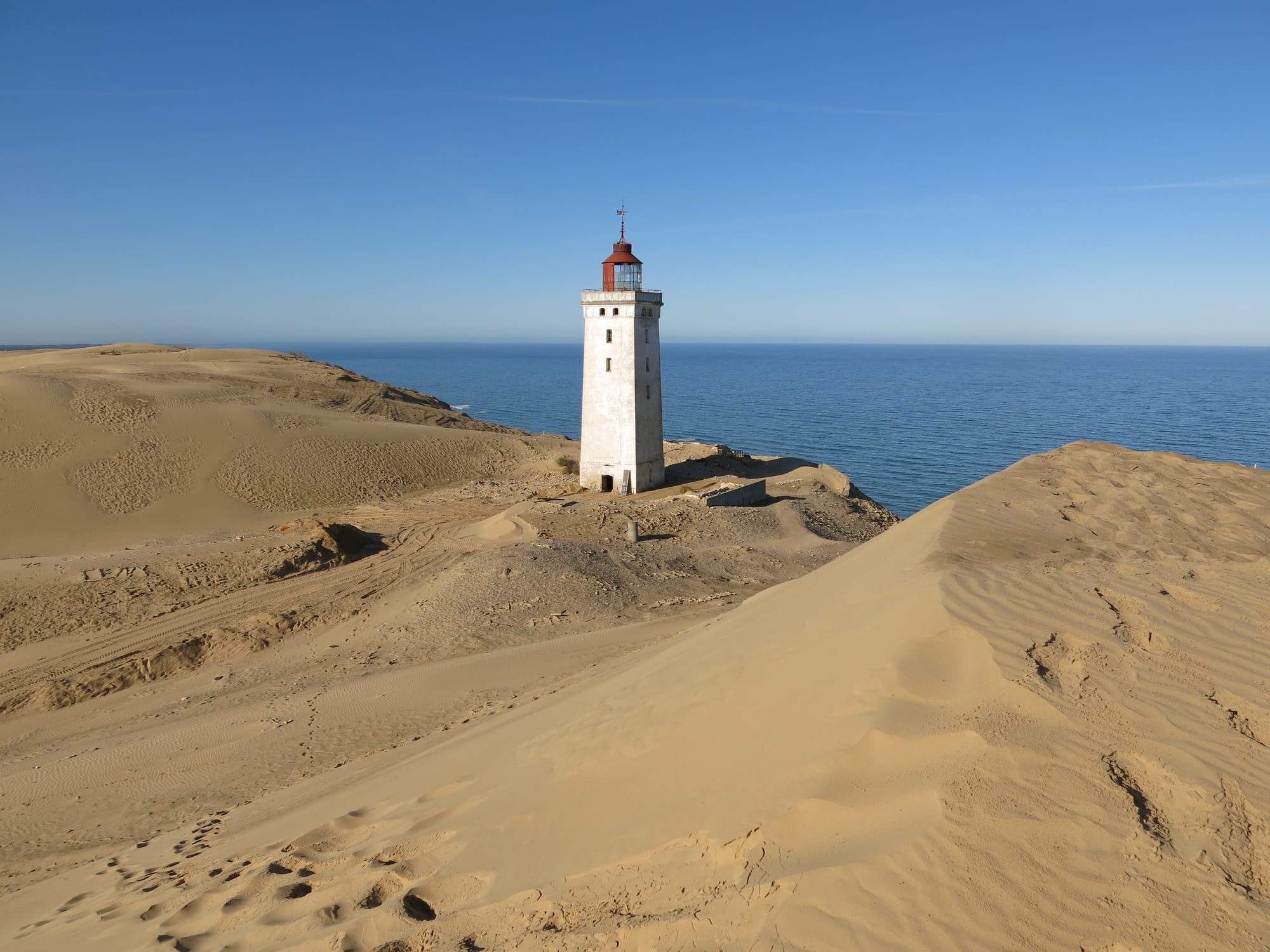
Sand is the region's other history. From the 16th century drifting dunes buried farms and fields along the whole coast; Skagen's medieval church was abandoned to them in 1795, and only state planting of marram grass and conifers in the 19th century brought them to a halt. Læsø boiled salt from its briny groundwater until the pans had consumed the island's forests and the trade collapsed in the 17th century. In 1825 a storm surge broke through the Agger isthmus, turning Vendsyssel and Thy into an island and the Limfjord into a salt-water sound.
The railway reached Skagen in 1890 and its harbour opened in 1907, by which time the painters had made the town famous. Aalborg became an industrial city of cement, tobacco and spirits. On 9 April 1940 German paratroopers seized its airfield in one of the first airborne assaults in history, to cover the invasion of Norway. Aalborg's shipyard closed in 1988; a university founded in 1974 and a rebuilt waterfront have taken its place.