History
The Danube gorge has some of the oldest settled sites in Europe. At Lepenski Vir, Mesolithic fishers settled from around 9500 BC and, in about 6300–6000 BC, built trapezoid houses and carved boulder heads with fish-like faces; the site was discovered in the 1960s and moved uphill before the Iron Gate dam flooded its original location. Rome later fortified the river as its frontier: Viminacium near Kostolac was the capital of Moesia Superior and a legionary base, Trajan cut a road into the gorge cliffs and commemorated it with a carved tablet, and his great bridge crossed the Danube near Kladovo. Galerius, born in the area, built the palace of Felix Romuliana at Gamzigrad at the turn of the 4th century.
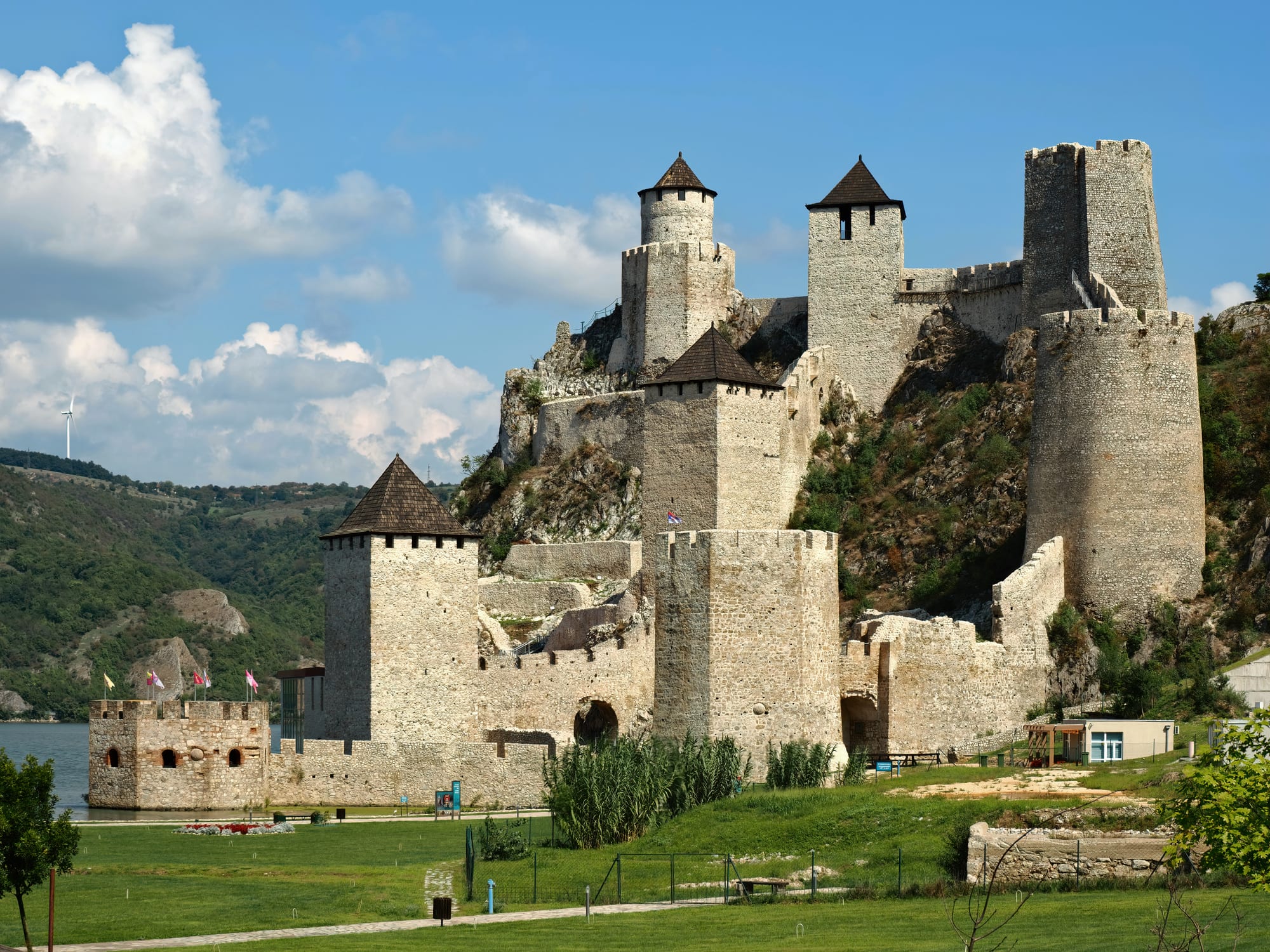
In the Middle Ages the region became the last refuge of the Serbian state. After Kosovo, Despot Stefan Lazarević founded Manasija in the Resava valley, a fortified monastery whose copyists kept Serbian letters alive, and his successor Đurađ Branković built Smederevo as his capital from 1427. Smederevo's fall to the Ottomans in 1459 ended medieval Serbia. The Treaty of Passarowitz was signed at Požarevac in 1718, briefly handing the area to the Habsburgs.
The region joined the autonomous Serbian principality in the 19th century, and in 1883 the Timok area around Zaječar rose against the government in the Timok Rebellion. Under Yugoslavia, the copper mines of Bor and Majdanpek and the Iron Gate hydroelectric dam, built jointly with Romania and opened in 1972, turned the region into an industrial base.