History · Anguilla
Anguilla: The Island That Seceded
A poor salt-and-fishing island in the northern Caribbean that fought, in 1967, to stay British rather than be governed from St Kitts
By Worldlore Editorial · 30 September 2026
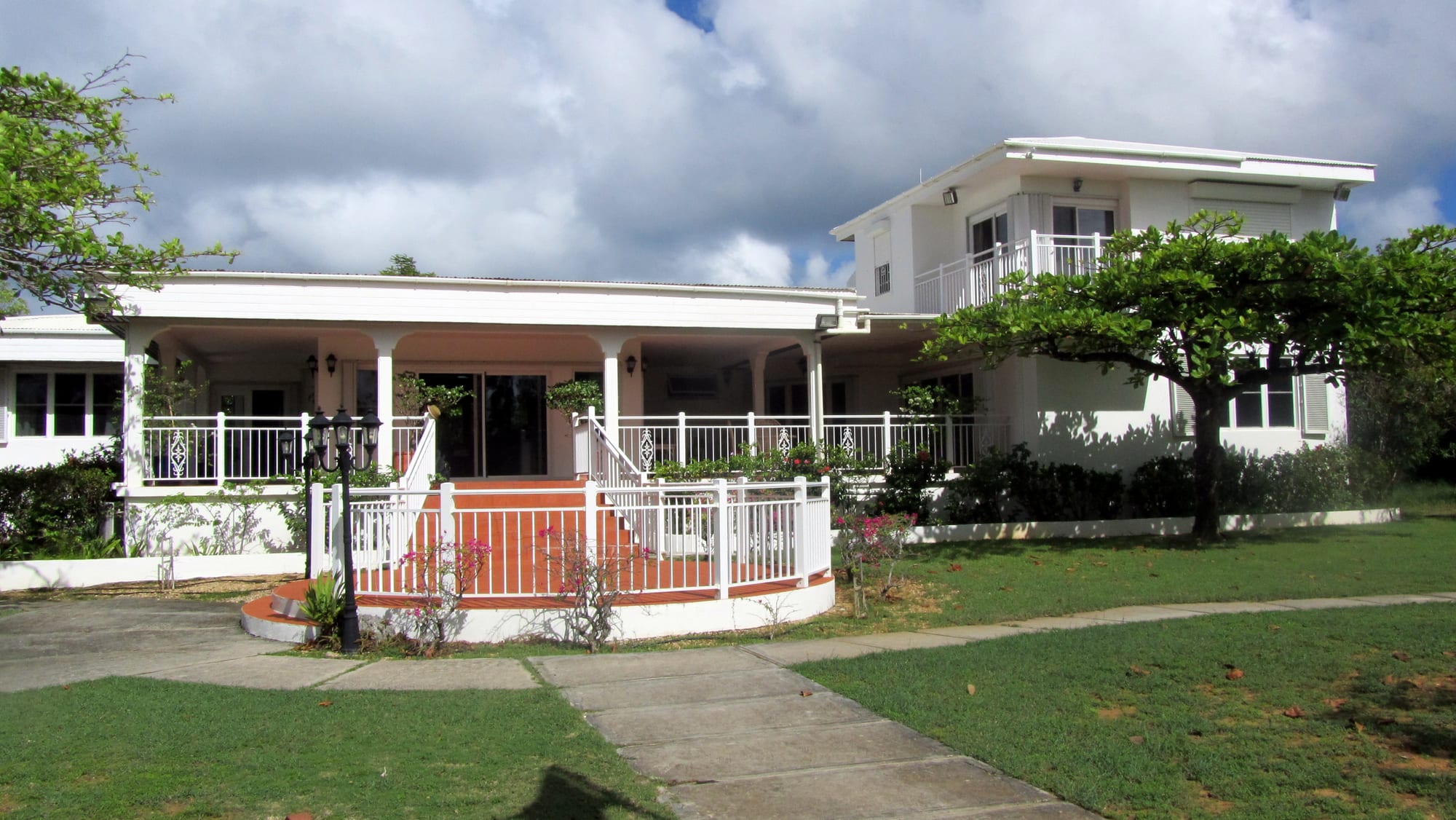
A low island in the north
Anguilla is one of the northernmost of the Leeward Islands: a flat sliver of coral limestone about 16 miles long, with no rivers, thin soil and a dry climate. Around 15,000 people live there, most within reach of the small capital, The Valley. The poverty of the land is the key to the island's history. Anguilla was never fertile enough to carry the sugar-and-slavery economy that made other Caribbean islands rich and important, so for three centuries it was governed as an afterthought — and it was that neglect, in the end, that it rose up against.
A short history
- from c. 1300 BCE
Malliouhana
Indigenous peoples from South America reach the island; settlements date from about 600 CE.
- 1650
English settlement
Colonists arrive from St Kitts; the land proves too arid for large plantations.
- 1834–1838
Emancipation
Slavery ends; freed people turn to smallholding, fishing and boatbuilding.
- late 1800s onward
The age of leaving
Recurrent drought drives seasonal labour migration abroad.
- 1882
Ruled from St Kitts
Anguilla is bracketed into the colony of St Christopher-Nevis-Anguilla.
- 1967
The revolution
Anguillians expel the St Kitts police and vote overwhelmingly to break away.
- 1969
"The Bay of Piglets"
Britain lands paratroopers and London police to restore order.
- 1980
Separation
Anguilla is formally detached from St Kitts and Nevis as a British dependency.
Malliouhana
Indigenous peoples from South America, commonly called Arawaks, left artefacts on Anguilla around 3,300 years ago, and settlements survive from about 600 CE, when their descendants were farming, fishing and trading along the island chain. Their name for the island was Malliouhana. The clearest trace they left is the cavern at The Fountain, near Shoal Bay, where petroglyphs and the remains of ceremonies suggest an important religious site. The name "Anguilla", meaning eel, is a later European tag for the island's long, thin shape.
Salt, cotton, and a marginal slavery
English settlers came over from St Kitts in 1650 and found the island stubborn. There was not enough water or good land for the great sugar estates, so Anguilla developed a patchwork economy instead: salt raked from coastal ponds, cotton and tobacco on small plots, livestock, boatbuilding, and fishing. Enslaved Africans were brought in, and by the early 18th century they were a majority of the population, but the holdings were small and poor and the plantation system never fully took hold. The French raided the island repeatedly — in 1666, 1745 and 1796 — and each time the settlers drove them off or waited them out.
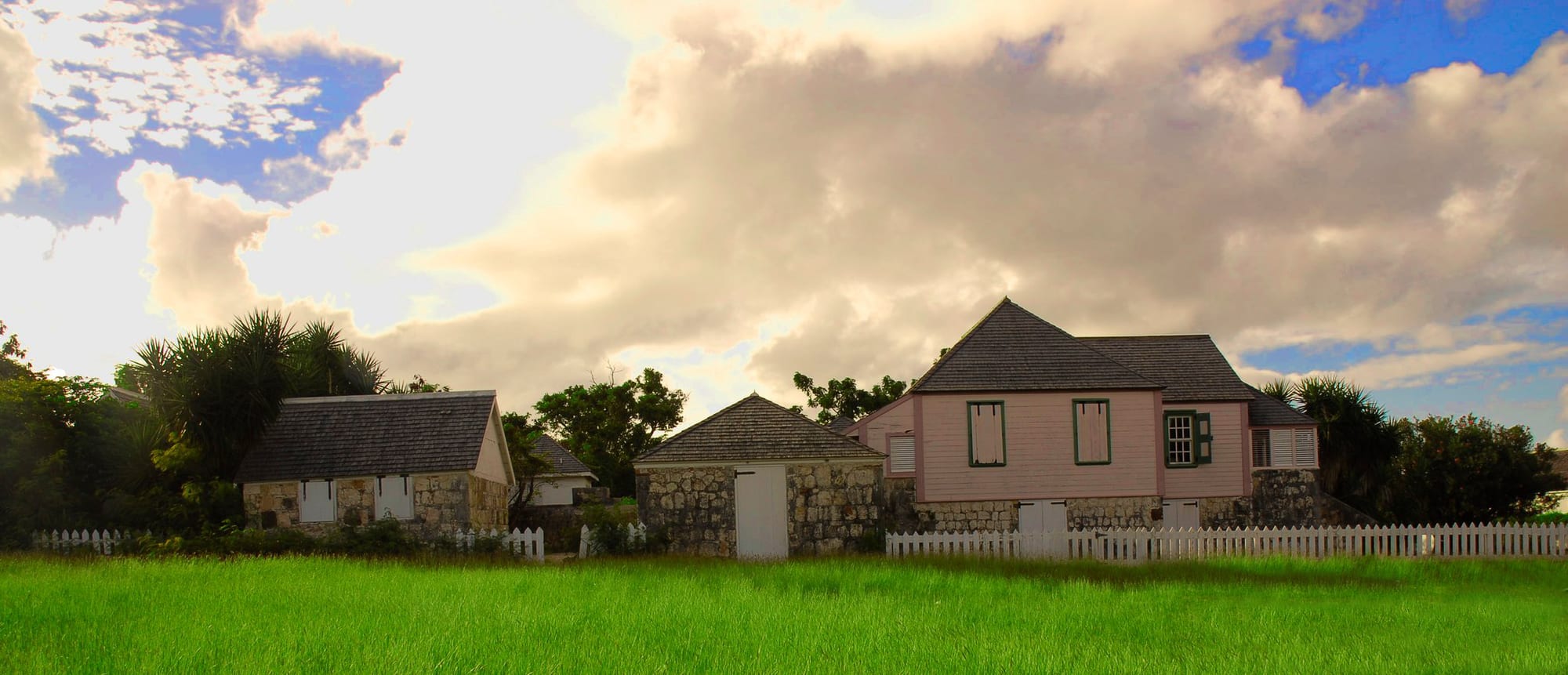
Because the estates were marginal, so was the wealth. Anguilla produced no fortune and no ruling class of any size, and its white and enslaved populations lived closer to the same hard subsistence than on the sugar islands to the south.
Emancipation and the age of leaving
Slavery was abolished across the British Caribbean in 1834, with a transitional "apprenticeship" ending in 1838. On Anguilla, where estates were already failing, many former slaves simply took up land as smallholders and fishermen, and by the later 19th century the island was a society of peasant proprietors. But drought returned again and again, and from the 1890s Anguillians went abroad to earn: cutting sugar cane in the Dominican Republic, then working the oil refineries of Aruba and Curaçao, then migrating to Britain after the Second World War. The money they sent back kept the island alive.
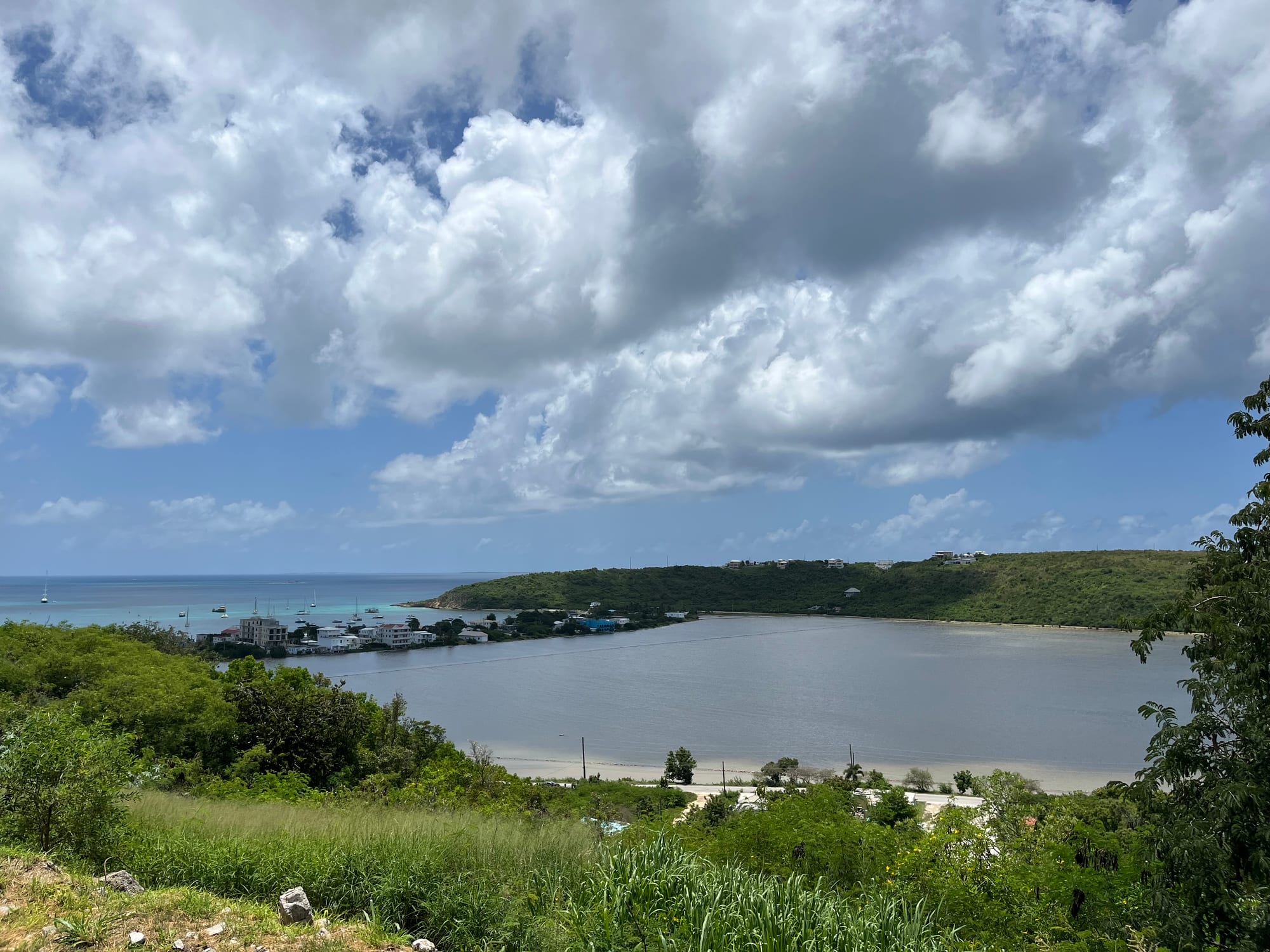
Salt was the island's one reliable export: raked from ponds like this in the dry season, dried, and shipped north to the United States.
Ruled from St Kitts
From 1825 Anguilla was administered together with St Kitts, and in 1882 the two islands and Nevis were bundled into a single colony run from Basseterre, the St Kitts capital. Anguillians disliked the arrangement from the start. They felt they were taxed for services they never saw, represented by a government that did not know them, and left without a proper road, a pier, a hospital or a secondary school. Petitions asking to be governed directly from London went unanswered for decades.
The Anguilla Revolution
The break came with decolonisation. In February 1967 the three islands became an "Associated State" with full internal self-government, under a premier, Robert Bradshaw, based in St Kitts and deeply distrusted on Anguilla. Within months Anguillians had disarmed and expelled the St Kitts police force, declared that they were leaving the union, and voted in a referendum — by 1,813 to 5 — to separate. A second vote in 1969 rejected any link to St Kitts and declared a republic, with a local leader, Ronald Webster, at its head.
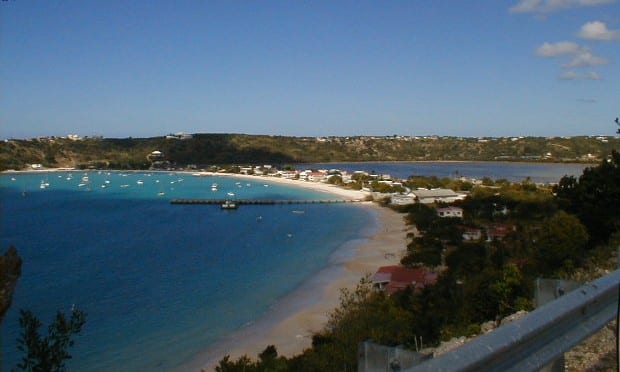
The revolt was run largely by the island's boatmen and its overseas workers, who came home to defend it, and it held: for two years Anguilla governed itself while Britain and St Kitts argued over what to do.
The Bay of Piglets
In March 1969, its patience gone, Britain acted. It landed a force of paratroopers and a contingent of London's Metropolitan Police on the beach at Anguilla to restore order and depose the "republic". There was no resistance — the invaders were met by journalists and curious islanders — and the world press, delighted, called it the "Bay of Piglets". British troops, army engineers and police stayed on while a British administrator ran the island's affairs alongside the local council. London quietly gave up the idea of sending Anguilla back to St Kitts.
A territory of its own
Anguilla was allowed to drift free. It was formally separated from St Kitts and Nevis in 1980 and became a British dependent territory in its own right — today a British Overseas Territory with an elected government and a governor appointed from London. From the 1980s, low-rise luxury tourism and offshore financial services replaced salt and labour migration as the mainstays of the economy. Hurricanes have been the recurring disaster of the modern era; Irma, in 2017, the most powerful storm ever to hit the island, caused severe damage.
What Anguilla keeps
Anguilla is the rare place that revolted in order to stay a colony. Its rebellion in 1967 was not for independence but against being ruled by neighbours it had not chosen, and it worked: the flat, dry island that could never grow sugar ended up with the thing the sugar islands had lost — obscurity, and control of its own small affairs.