Attractions & Natural Wonders · Antigua and Barbuda
Antigua and Barbuda: Eight Attractions and Natural Wonders
A Georgian naval dockyard, a beach for every day of the year, and a sister island with a lagoon full of frigatebirds
By Worldlore Editorial · 30 September 2026
A beach for every day of the year
Antigua likes to say it has 365 beaches, one for each day. The number is marketing, but the impression is right: a fairly small, low, dry island with a deeply crinkled coastline and calm Caribbean water, plus a long history as a British naval base that left it with the only continuously working Georgian dockyard in the world. Barbuda, its flat, sandy, almost empty sister island about 30 miles north, is a different experience again — pink beaches, a huge bird colony, and only around 1,600 people at the 2011 census.
The eight places below cover both islands. Antigua is easy to get around by hire car; Barbuda is a short flight or a fast ferry, and best given an overnight.
1. Nelson's Dockyard and Shirley Heights
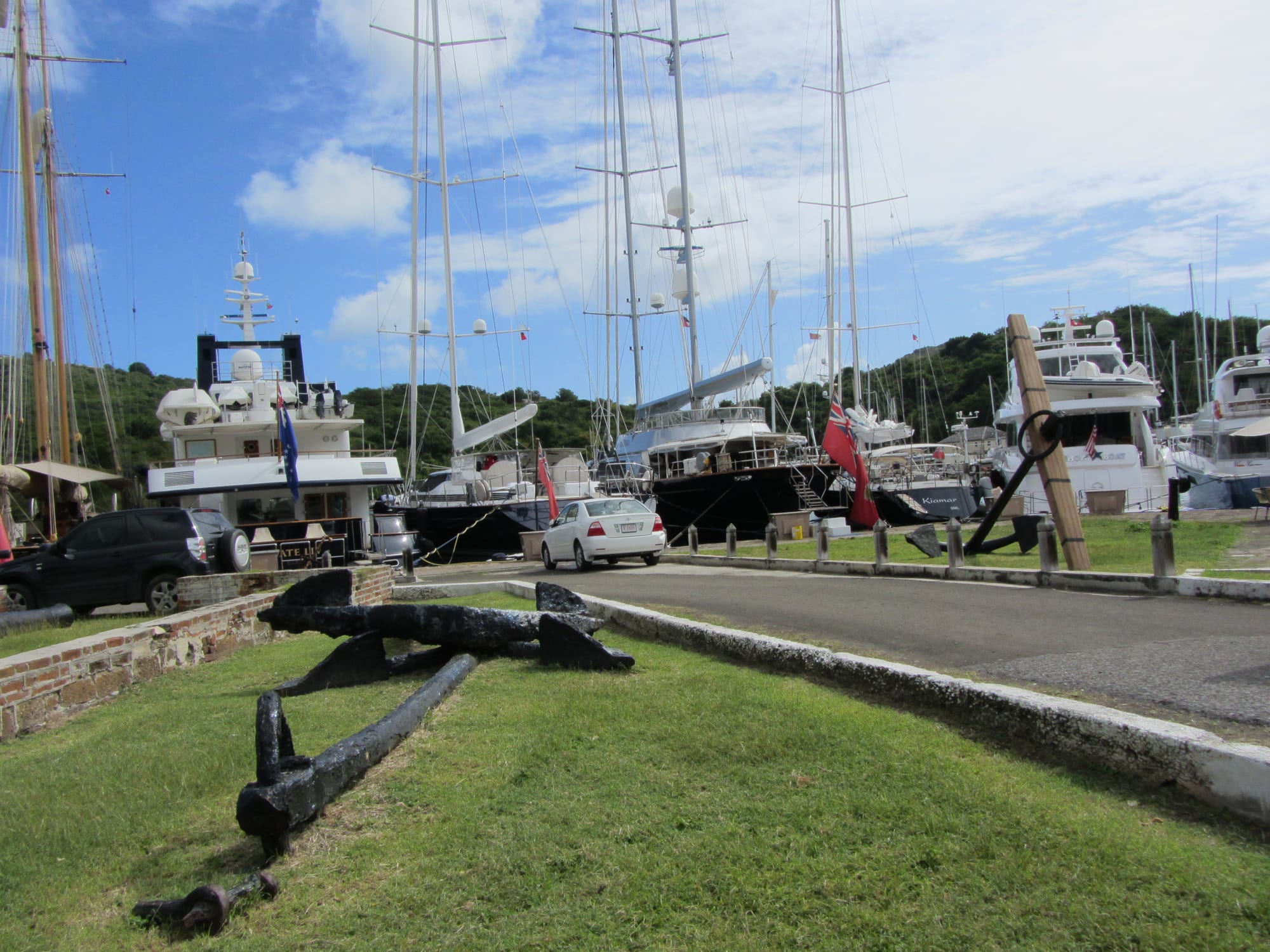
English Harbour, on the south coast, is a near-landlocked bay that the Royal Navy turned into its base for the region in the 18th century. At its head, Nelson's Dockyard — named for Horatio Nelson, who lived here from 1784 to 1787 — was restored and reopened in 1961, and its Georgian buildings now house hotels, a museum, shops and a large marina. It is the centrepiece of the Antigua Naval Dockyard and Related Archaeological Sites, inscribed as a UNESCO World Heritage Site in 2016.
On the ridge above, the military compound of Shirley Heights, built from the 1780s to guard the dockyard, gives the classic view down over the harbours. Its restored lookout hosts a Sunday gathering with live music, food and drinks, an island institution.
2. Dickenson Bay and the northwest beaches
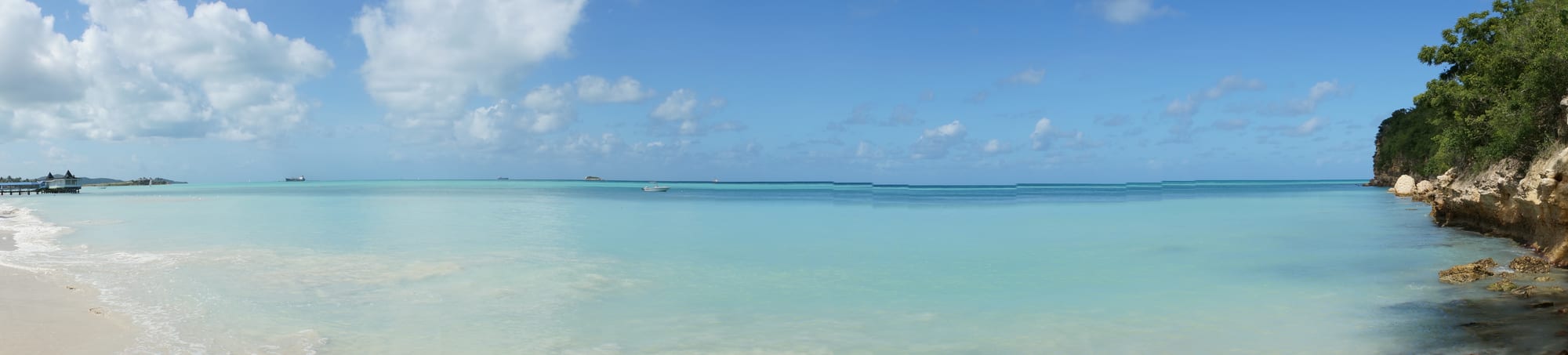
The northwest corner of Antigua, near the capital, holds the island's most developed run of coast: Dickenson Bay, a long sheltered strip of calm water and resorts, with Runaway Bay next door. This is where to go for jet-skis, paddleboards, catamaran trips, and beach bars, and where the package hotels cluster.
For something quieter, the west coast has Ffryes Beach, Darkwood, and Jolly Beach; further southwest, the beaches grow emptier. Almost every beach on the island is open to the public by law.
3. Devil's Bridge
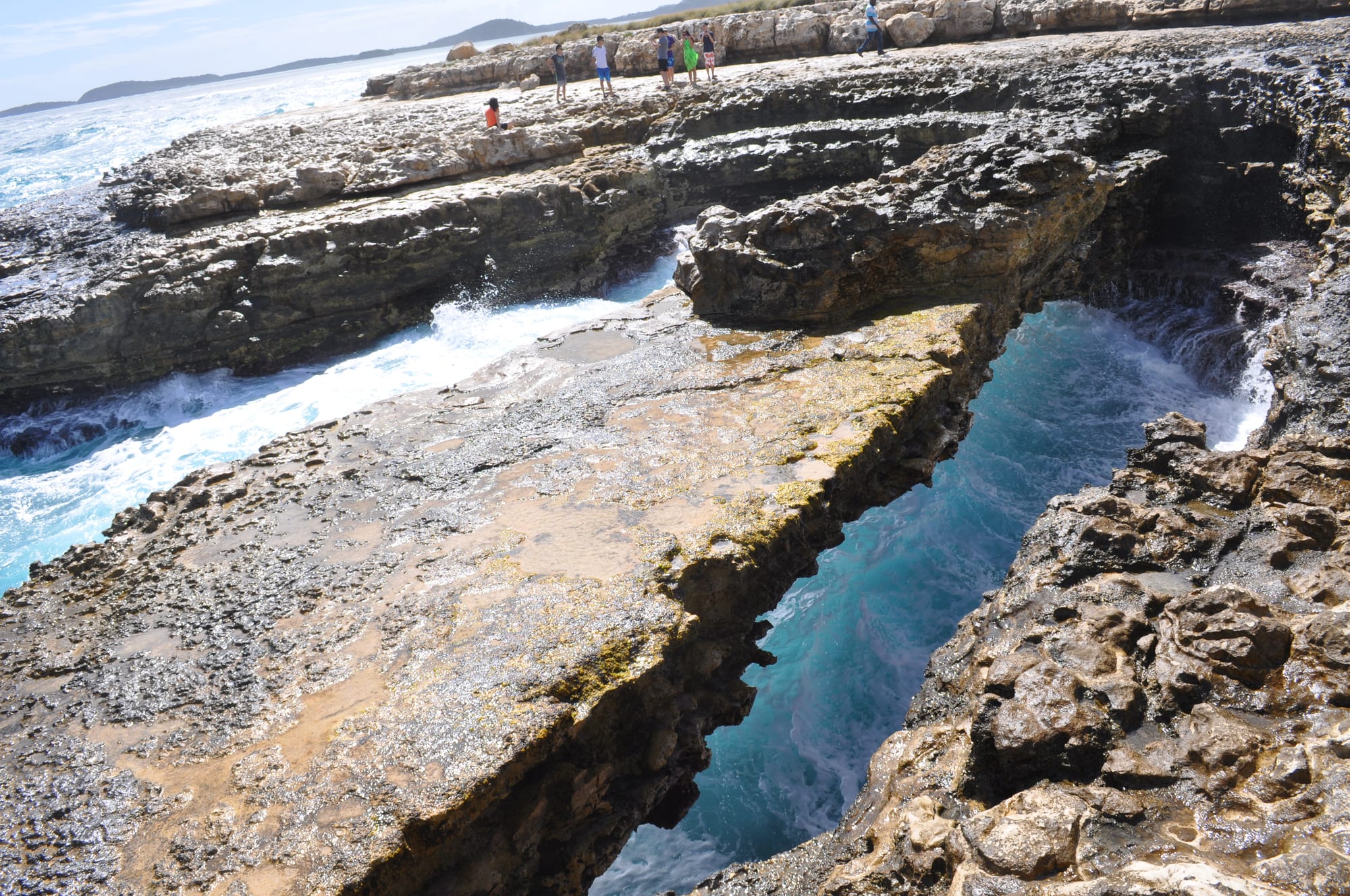
On the windward eastern tip of the island, in a national park declared in 2008, the Atlantic has cut the rock into a natural bridge, with blowholes that spout spray when a swell comes through. The water here is rough and the rock is slick — it is a place to watch the sea, not swim in it, with nothing between this shore and Europe but open ocean.
It is an easy stop on a drive around the east of the island, combined with the sheltered swimming at Long Bay and the old sugar plantation of Betty's Hope.
4. Half Moon Bay
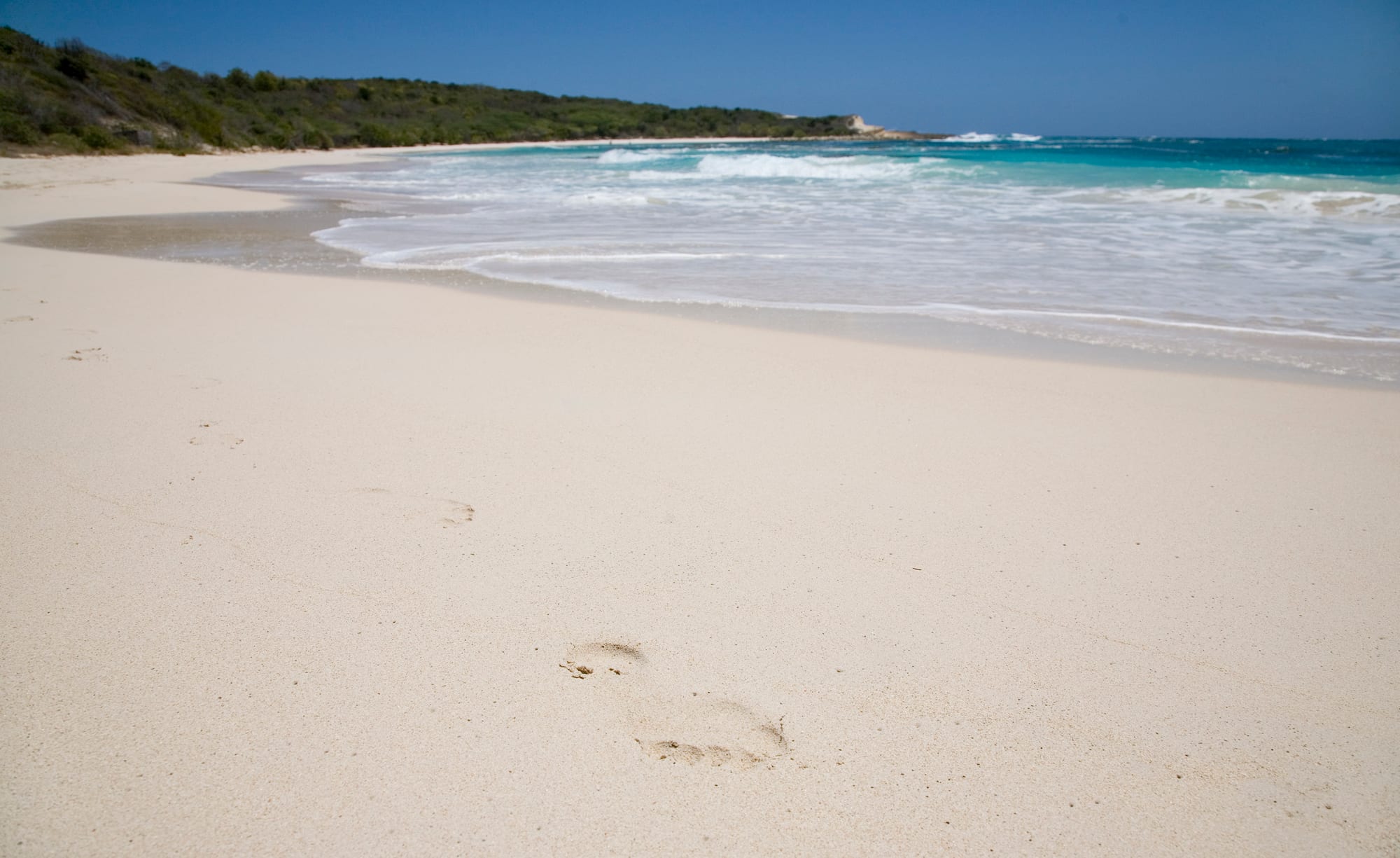
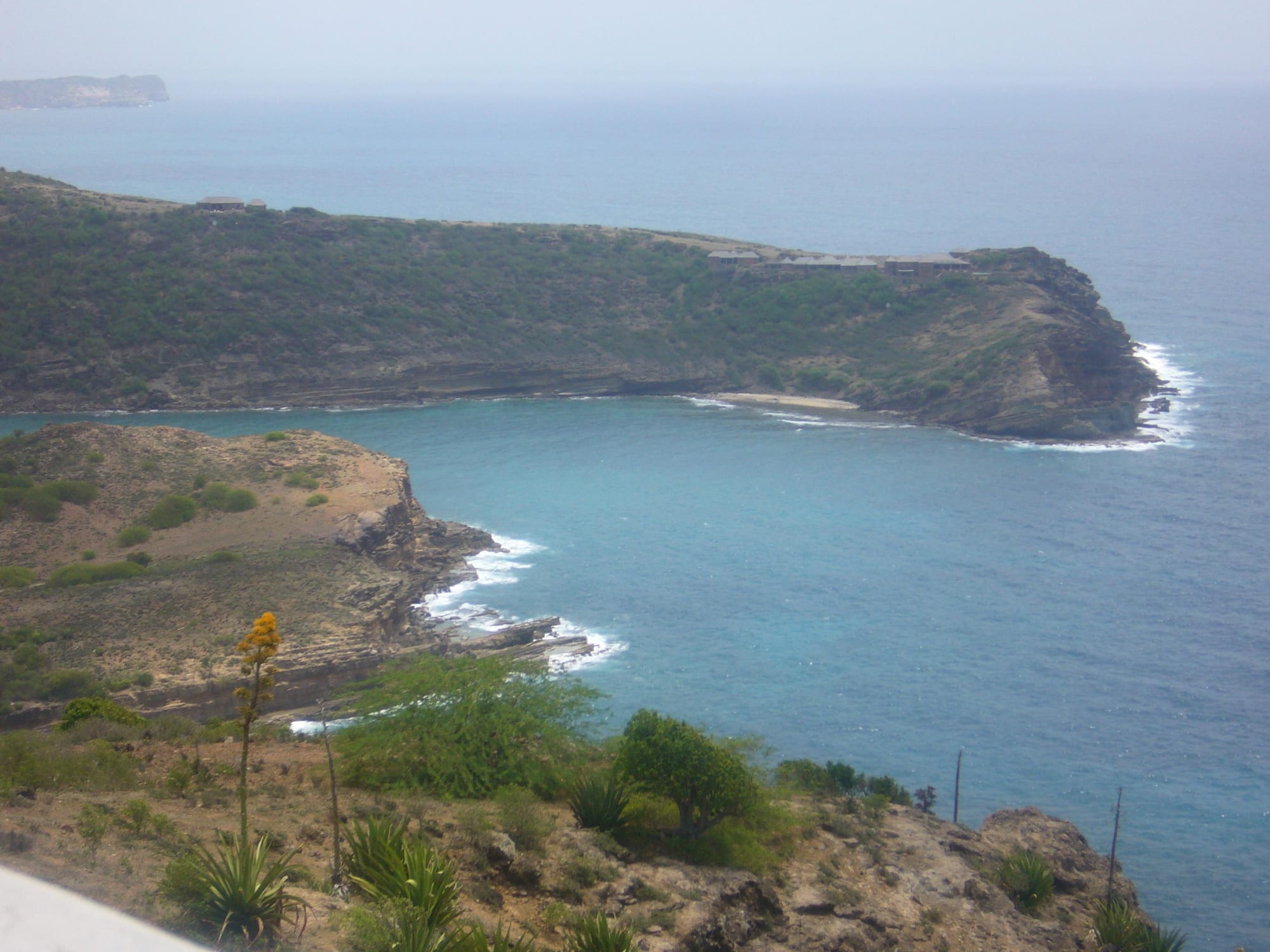
Half Moon Bay is counted among the most famous beaches in Antigua: a broad crescent on the southeast coast, open to the Atlantic, backed by low headlands and greenery.
It lies within Half Moon National Park, with no big development, and it takes a bit of driving to reach, which keeps the numbers down.
5. St John's and the cathedral
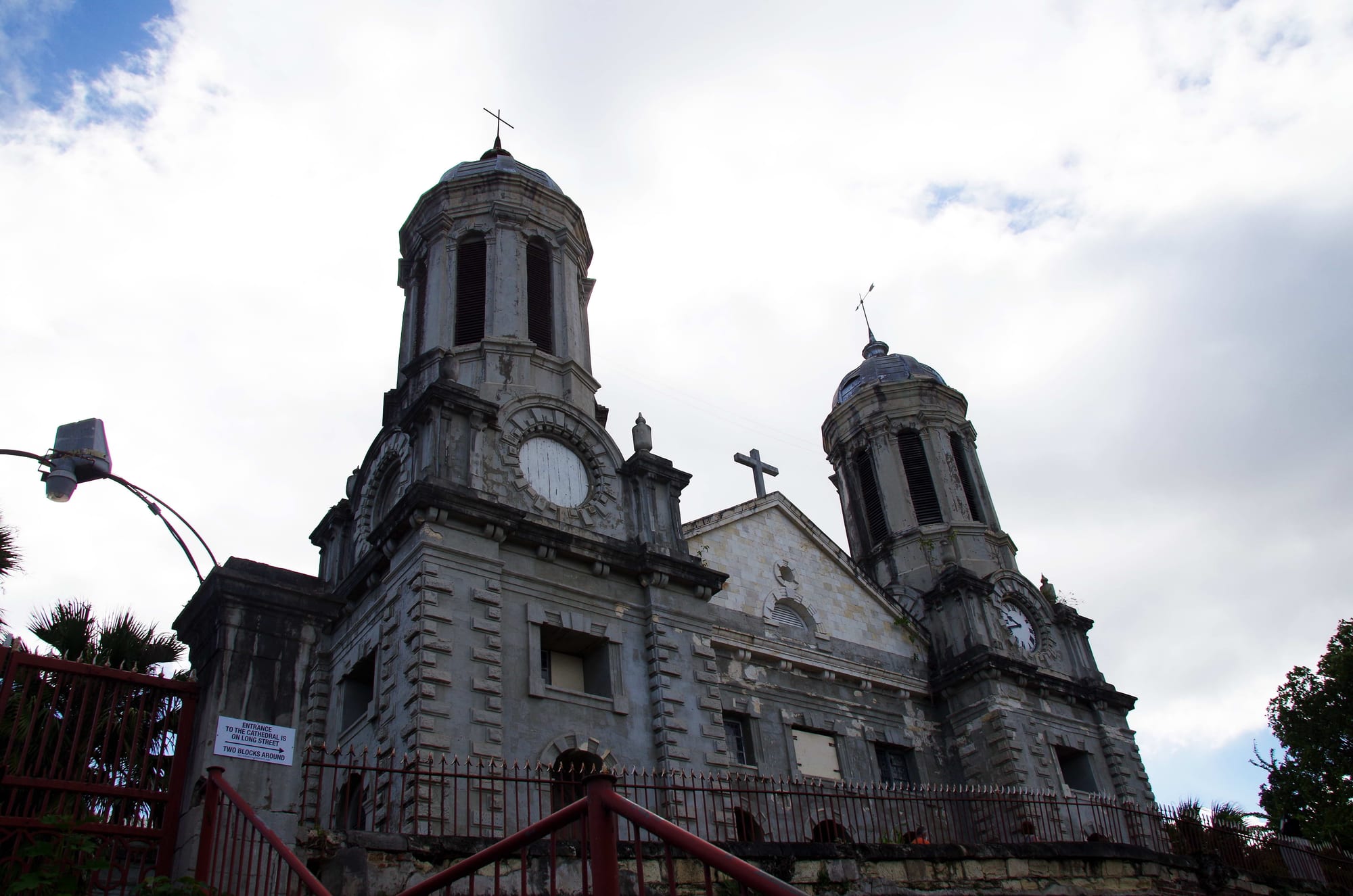
The capital, St John's, is a low grid of streets around a harbour where the cruise ships tie up. Its landmark is the Anglican cathedral, with twin 70-foot baroque towers; the current building was begun in 1845, the third on the site after earthquakes damaged the earlier churches.
The town has the small Museum of Antigua and Barbuda in the 1747 Court House, the city's oldest building still in use; the shopping quays by the water, Heritage Quay and Redcliffe Quay; and a daily produce market on the southwestern edge of town. It is a morning's wander rather than a destination in itself.
6. Codrington and the Frigate Bird Sanctuary, Barbuda
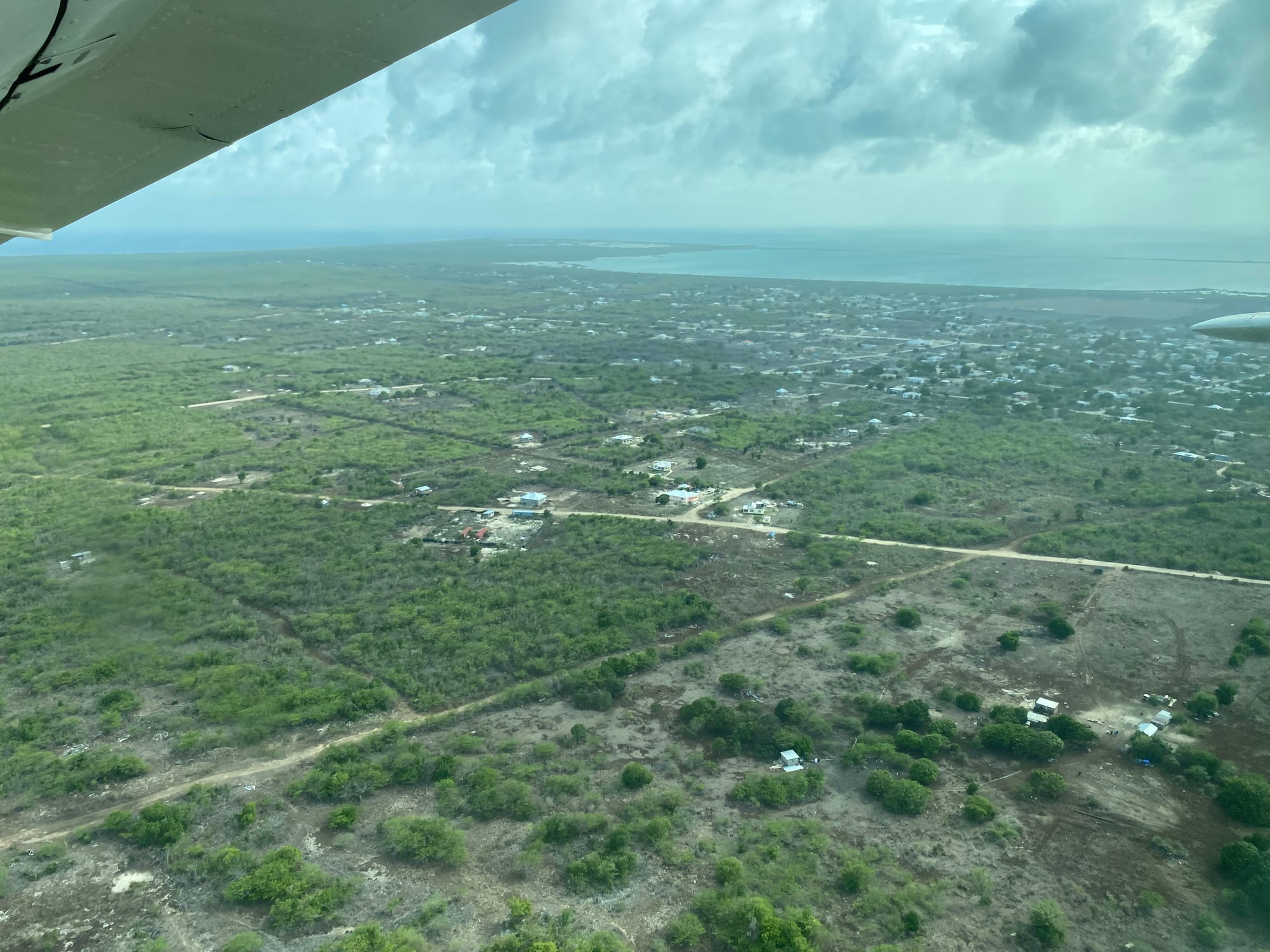
Barbuda is flat, scrubby, and almost undeveloped, with one small town — Codrington — on the shore of a large brackish lagoon. In the mangroves of Man of War Island at the north end of that lagoon is the largest colony of magnificent frigatebirds in the world — 2,500 to 5,000 nesting pairs before 2017 — the males inflating scarlet throat pouches in the breeding season. Visits are by local boat from Codrington.
Barbuda was hit hard by Hurricane Irma in 2017, which destroyed more than 90 percent of its buildings and forced a total evacuation; most residents had returned by 2019, and the frigatebird colony survived.
7. Barbuda's beaches
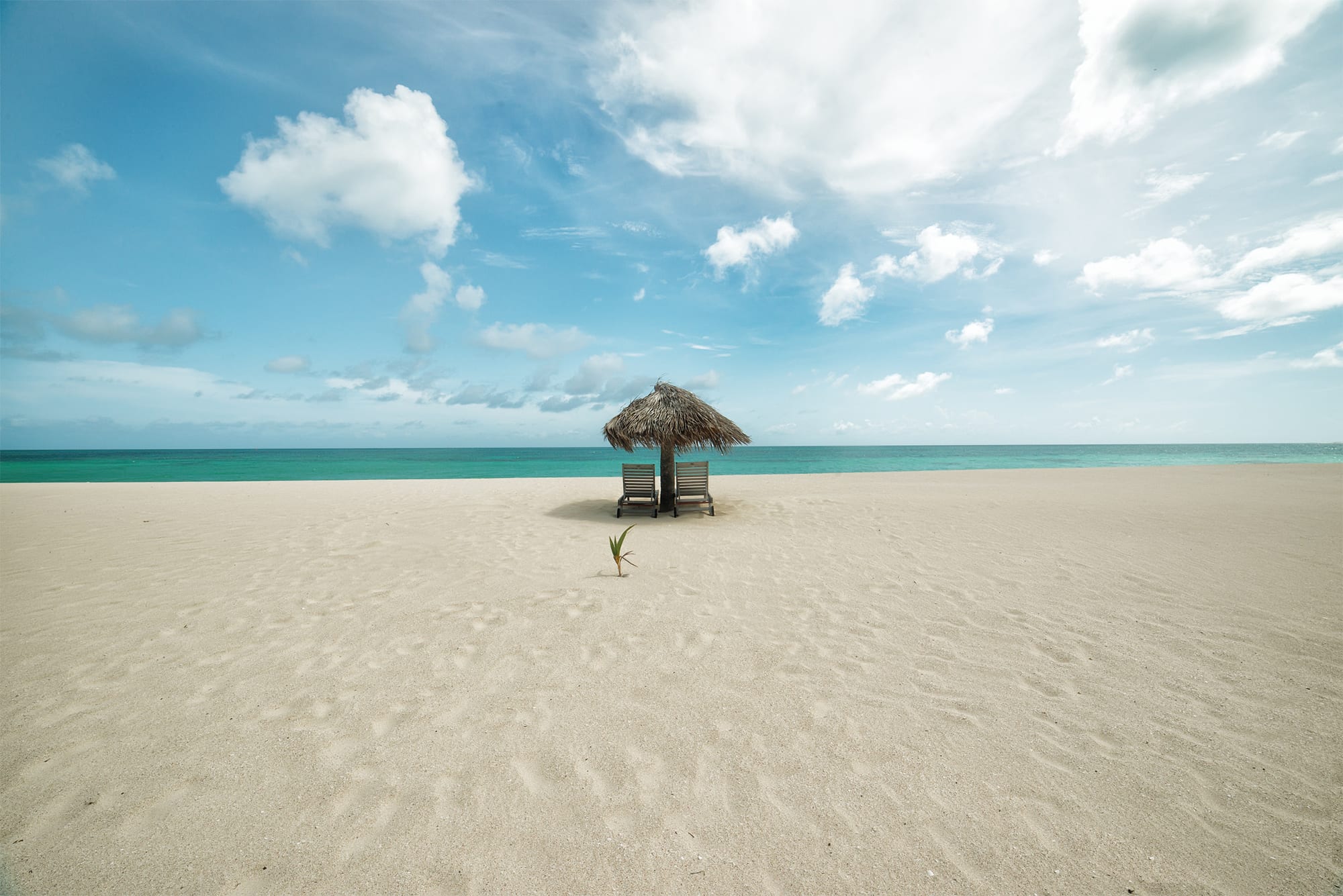
Barbuda's coasts are lined with long beaches, with stretches where the sand is genuinely pink, from Pink Sand Beach to Coco Point. There is almost no one on them. A few small resorts and day-trip operators serve visitors; otherwise there is little but sand, sea and frigatebirds.
This emptiness has made Barbuda a target for resort developers, which is a live and contested issue on an island where land has traditionally been held in common — a right written into law in 2007 and disputed since Hurricane Irma.
8. English Harbour and the sailing scene
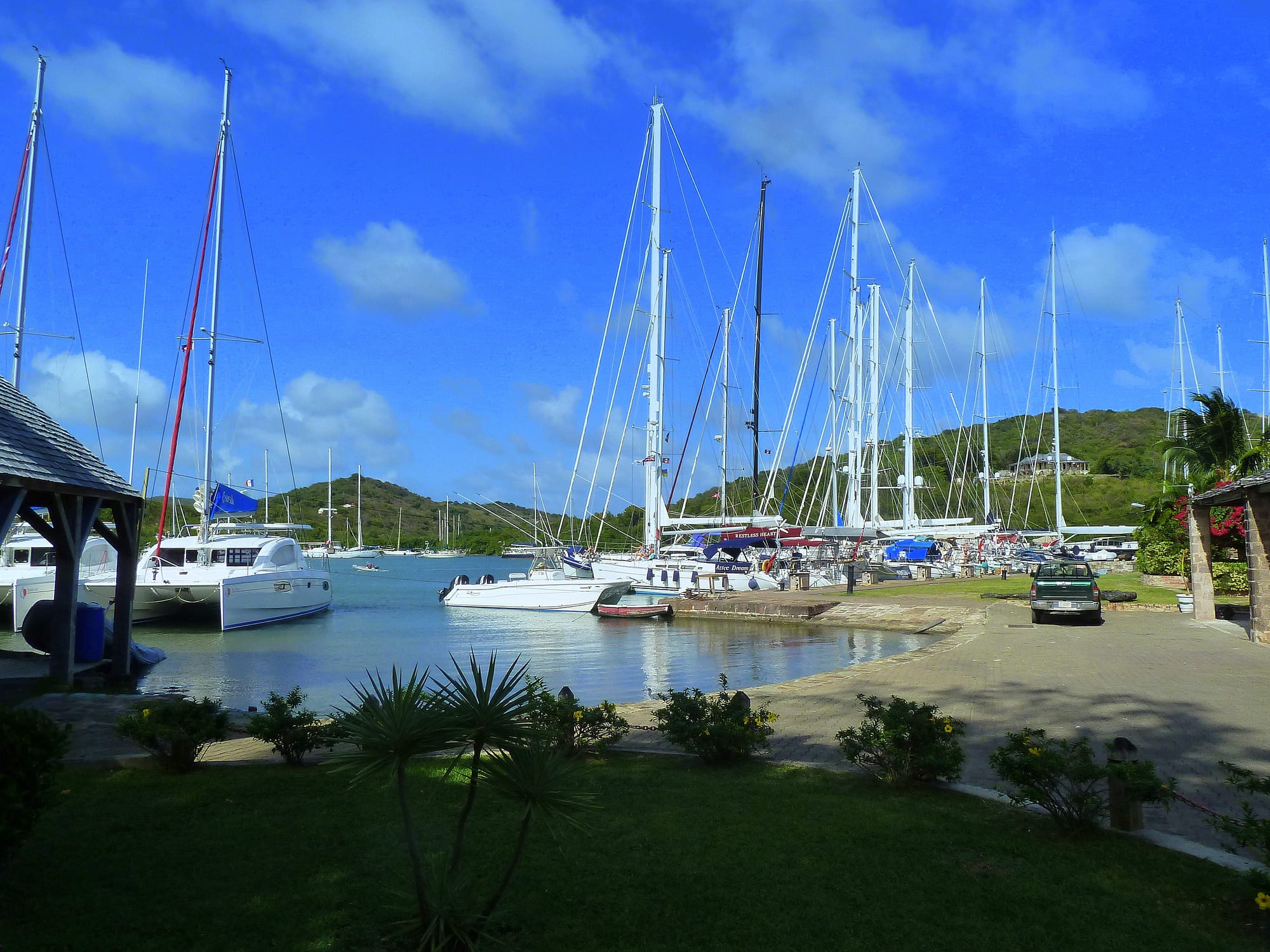
Beyond the museum-piece dockyard, English Harbour and neighbouring Falmouth Harbour are the heart of Caribbean yachting. The sheltered water fills with masts in the winter season, and events such as Antigua Sailing Week, founded in 1967 and held each spring, and the Antigua Classic Yacht Regatta draw crews and spectators from around the world.
Even without a boat it is a good place to spend an evening: the old naval buildings hold bars and restaurants, and the boatyard bustle, with superyachts alongside wooden classics, is a sight in itself.
Antigua works as a straightforward flop-and-drop beach holiday, but a hire car and two or three days of driving — the dockyard, the east coast, a Barbuda day trip — turn it into something more interesting.