Food · Aruba
Aruba: Food and the National Dish
A cheese rind turned into a feast, fried turnovers sold on every corner, and a Dutch-Caribbean-Venezuelan kitchen shaped by a dry desert island
By Worldlore Editorial · 30 September 2026
A small, dry island's own creole kitchen
Aruba's indigenous heritage is unusually visible for a Caribbean island: the Caquetío, an Arawakan-speaking people, lived on the island long before Spanish contact, and indigenous people remained well into the colonial period. Their maize and cassava, grown on ground too dry for much else, laid down habits — cornmeal as the everyday starch above all — that Dutch and later Venezuelan influence built on rather than replaced. Spanish contact came in 1499 and the Spanish found little to exploit; the Dutch took over in 1636, and in the 19th century the economy turned on gold, phosphate and aloe vera, which Aruba exported on a large scale from 1890, becoming the world's largest aloe exporter, before oil refining (from 1924) and then tourism became the economy. None of that history produced the wealth of a sugar island, and the food has stayed correspondingly modest and resourceful.
Aruba is arid rather than lush — too dry for the sugar plantations that shaped much of the rest of the Caribbean — and sits close enough to Venezuela that its food carries a Latin American accent alongside its Dutch colonial and West African-Caribbean influences. The result, cooked and named in Papiamento, the Portuguese-based creole language, strongly influenced by Dutch and Spanish, shared with the neighbouring islands of Curaçao and Bonaire, is a small but distinct cuisine: cornmeal, cheese, dried and salted fish, goat and plenty of frying, built for an island that historically had to make do with what a boat could bring in.
The national dish: keshi yena
Keshi yena means "stuffed cheese" in Papiamento, and it is believed to have begun as a way of using up what would otherwise have been discarded: enslaved people in the Dutch West Indies are said to have stuffed the leftover rinds of Gouda or Edam cheeses with scraps of meat. Today a hollowed-out Edam is filled with a spiced mix of meat (often chicken) or fish with raisins, olives and capers, and baked until the cheese softens around the filling — turning a discard into what is often called Aruba's (and Curaçao's) national dish.
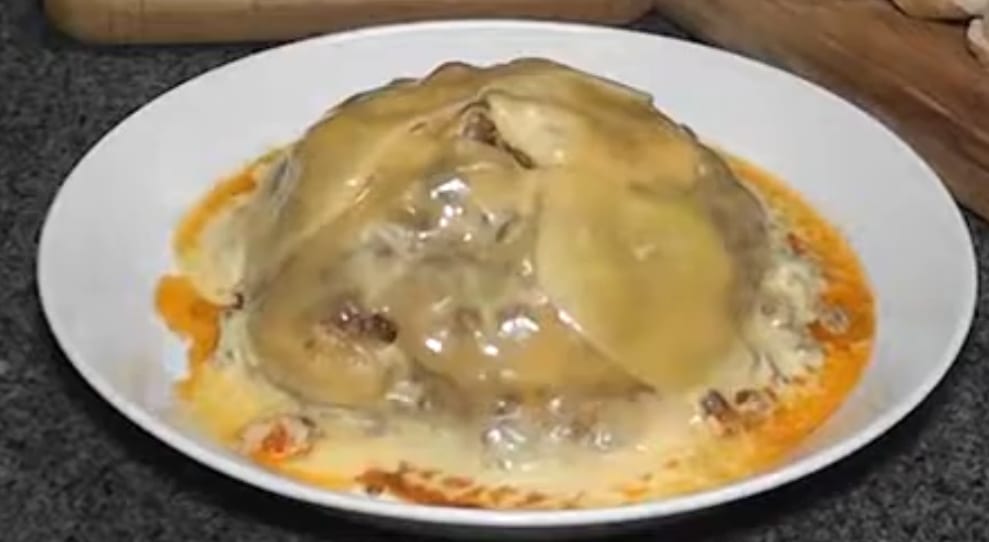
Modern versions often line a baking tin with slices of Gouda instead of hollowing out a whole Edam, but the principle — savoury stuffing wrapped in and baked with cheese — has stayed the same. It is often served as an hors d'oeuvre as well as a main course.
What an Aruban kitchen runs on
Funchi, a firm cornmeal paste close cousin to Italian polenta, brought by enslaved Africans (the name echoes Angola's funge) and made with the corn adopted from indigenous cooking, is the default starch, served alongside stews rather than eaten alone. Pan bati, a savoury cornmeal flatbread cooked on a griddle, plays a similar role at breakfast. Stoba — the Papiamento word for stew — covers slow-cooked goat, beef or fish dishes built on tomato, onion and local seasoning, and dried salted fish and conch both appear regularly, a legacy of the years before refrigeration when preserved food had to see an isolated island through. Dutch imports never disappeared either: Gouda and Edam cheese still turn up on Aruban tables, sitting alongside the funchi and stoba with none of the sense of contradiction an outsider might expect.
Dishes to know
Five to recognise on any Aruban table:
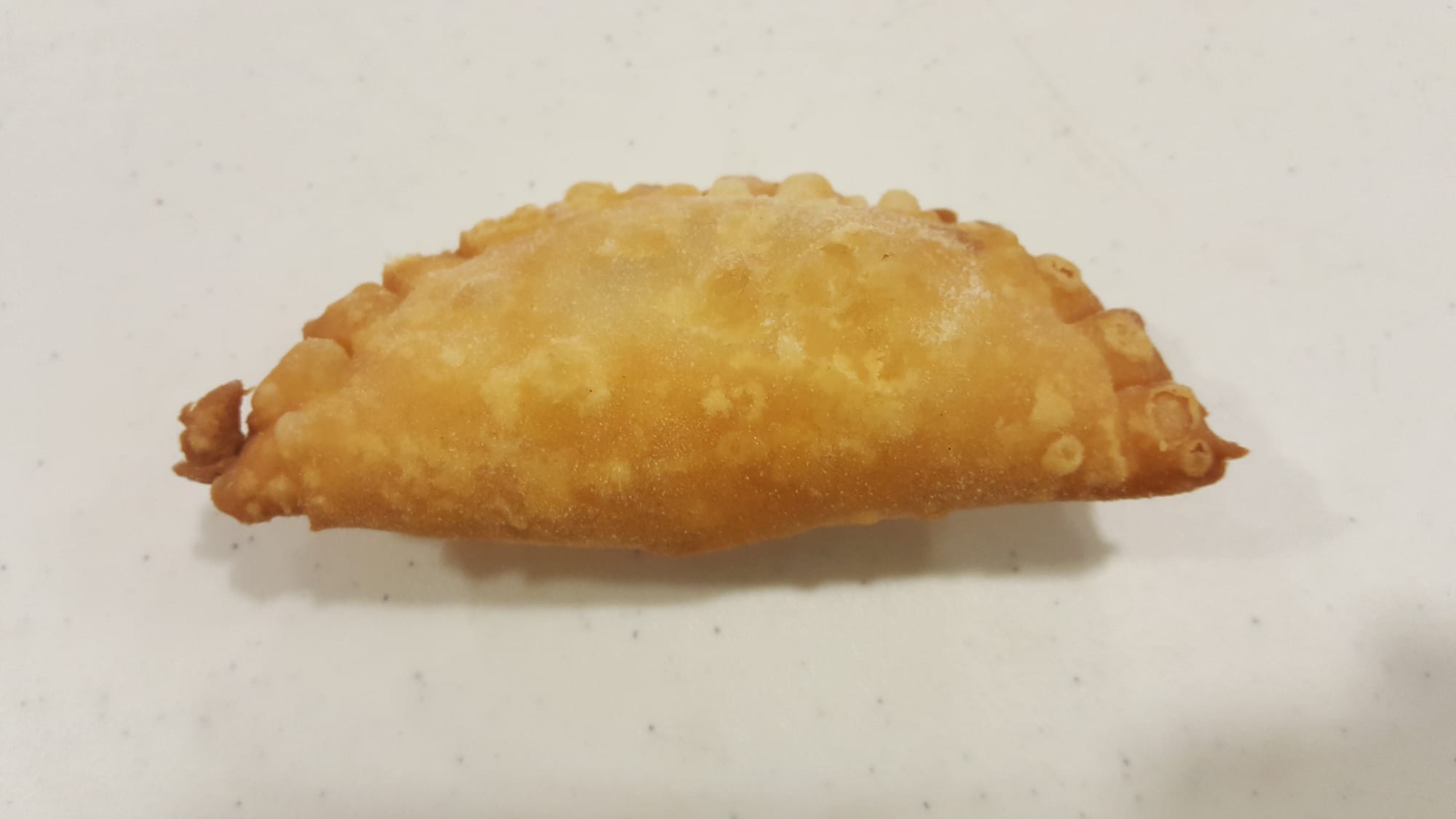
- Pastechi — a crescent-shaped, deep-fried turnover filled with cheese,
meat, seafood or vegetables, sold from bakeries and roadside stands and eaten at any time of day, especially breakfast.
- Funchi — firm cornmeal paste, the standard starchy side to a stew.
- Stoba — a slow-cooked stew, most often goat (stoba di cabritu) or fish
(stoba di piska), built on tomato and local seasoning.
- Pan bati — a savoury cornmeal flatbread cooked on a griddle.
- Ayaca — a thin layer of corn dough with a filling, wrapped in banana leaf,
made especially at Christmas and New Year and related to neighbouring Venezuela's hallaca.
Drinks and celebrations
Balashi and its sister brand Chill, from the same brewery, are the local beers, and rum is the standard spirit, often mixed into fruit-forward cocktails developed for the tourist trade. Ponche crema, a cream liqueur of milk, eggs, sugar and rum close to eggnog, is a Christmas fixture that originated in Venezuela, alongside ayaca and pan dushi, a sweet bread. Dera Gai, a harvest festival held around St John's Day on 24 June, and Dande, the traditional New Year's custom in which musicians move house to house, are the island's best-known folk celebrations.
Eating as a traveller
Vegetarians will find pastechi and funchi manageable but should expect a meat- and fish-heavy menu overall, since stoba and keshi yena are both built around animal protein. Tap water is safe to drink, produced by the island's own desalination plants. Because Aruba imports most of its food, eating out can be pricey, and local, family-run spots serving stoba and pastechi are generally both cheaper and more authentic than resort dining.
What to take from the table
Keshi yena is worth trying for the story as much as the dish — a whole national cuisine's talent for turning limited, imported ingredients into something worth celebrating, on an island that never had the luxury of abundance.