Attractions & Natural Wonders · Bahrain
Bahrain: Seven Attractions and Natural Wonders
Four thousand years of trade condensed onto one small island — a Bronze Age harbour city, ancient burial fields, a lone desert tree, and a sail-shaped skyscraper that makes some of its own power
By Worldlore Editorial · 30 September 2026
A small island with a very long history
Bahrain is a flat, low archipelago in the Persian Gulf, joined to Saudi Arabia by a causeway. It is tiny — about an hour's drive from end to end — but it has been inhabited and traded through for four millennia, first as the centre of the Dilmun civilisation, later as a great pearling ground, and now on oil, finance, and a Formula 1 race.
The seven places below sit close together around the capital, Manama, and the neighbouring island of Muharraq. October to April is the pleasant season; the summer is brutally hot and humid. Since February 2026 Bahrain has been drawn into the war involving Iran, with Iranian missile and drone strikes hitting Manama and Muharraq, so official travel advice is worth checking before a visit.
1. Qal'at al-Bahrain (the Bahrain Fort)
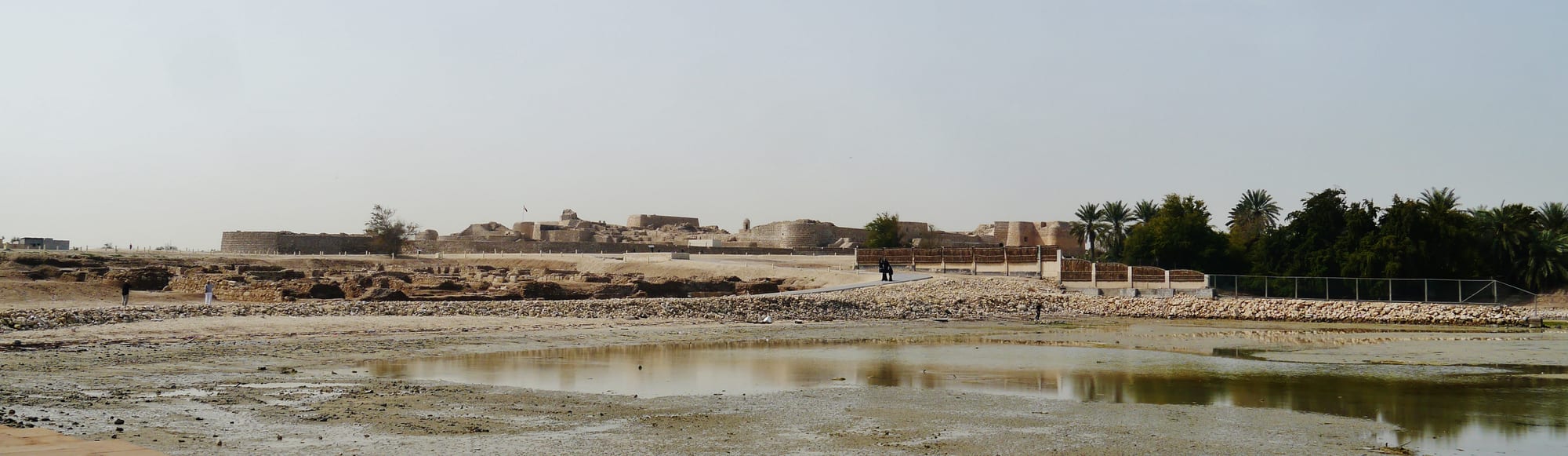
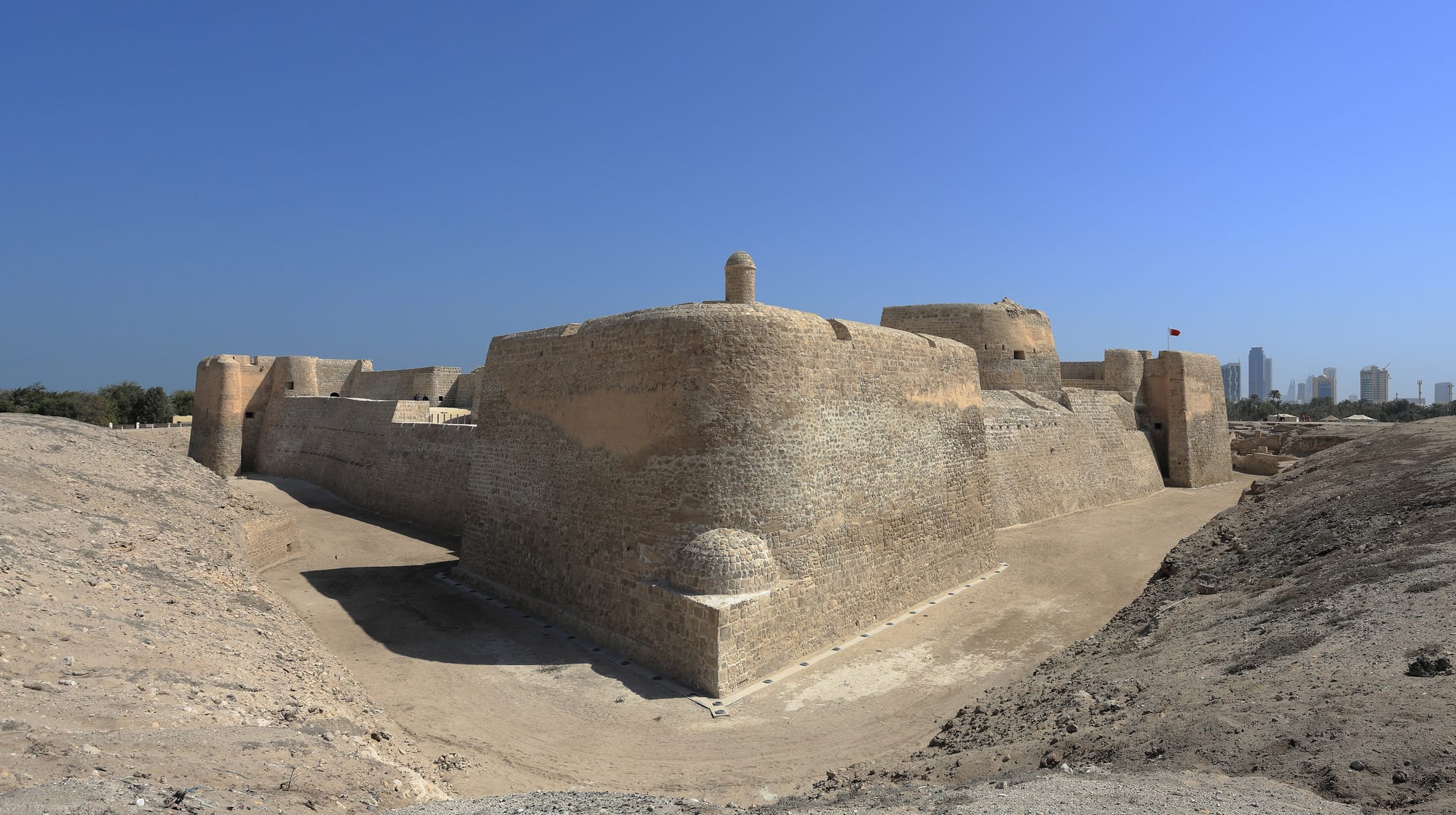
This artificial mound on the north coast is the country's single most important site: a 12-metre-high tell of seven stratified layers, built up from about 2300 BC to the 18th century — from the capital of Dilmun through Kassite, Greek, Portuguese, and Persian periods, with the Portuguese-era fort on top. It was inscribed as a UNESCO World Heritage Site in 2005.
A site museum displays the finds — Dilmun stamp seals, pottery, and more — and puts the layers in order. The site is pleasant to walk at dusk.
2. The Tree of Life
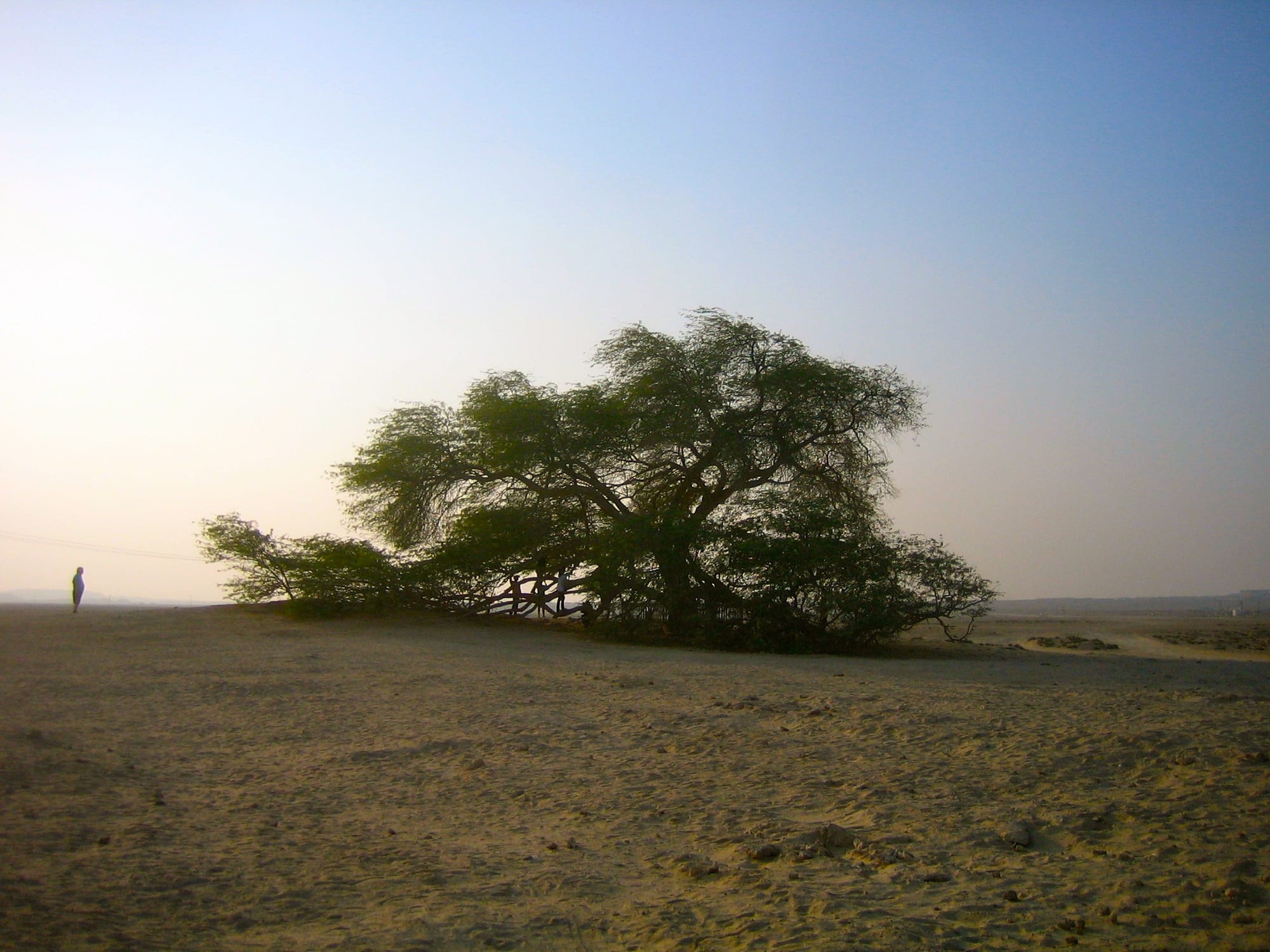
In the empty south of the island, a single mesquite tree about 10 metres high and over 400 years old grows on a low rise with no obvious water source and nothing else around it for kilometres. Its roots, said to run some 50 metres deep, may reach groundwater. Some claim it stands where the Garden of Eden once was.
It is a simple stop: a lone tree and a lot of desert. It combines well with the First Oil Well below Jabal al Dukhan, where Bahrain's oil was struck in 1932.
3. The Al Fateh Grand Mosque
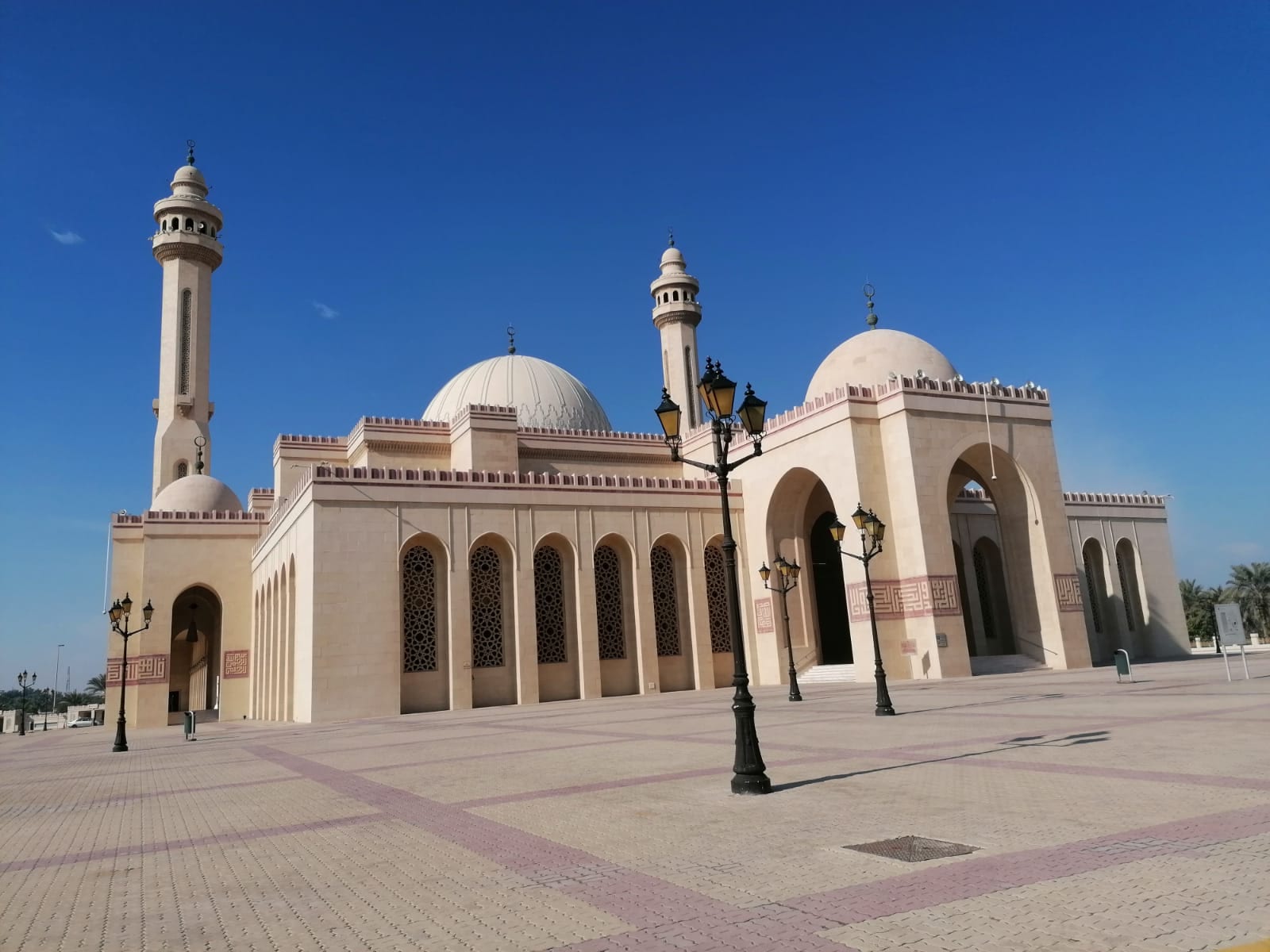
Bahrain's largest mosque, built in 1987, can hold more than 7,000 worshippers. Its enormous 54-tonne dome is made entirely of fibreglass — once the largest of its kind in the world — and the interior has Italian marble and an Austrian chandelier. Since 2006 it has also housed the National Library of Bahrain.
It is one of Bahrain's leading visitor attractions and welcomes non-Muslim visitors, with guided tours in many languages (it closes to tourists on Fridays) that explain the building.
4. Bab Al Bahrain and the Manama Souq
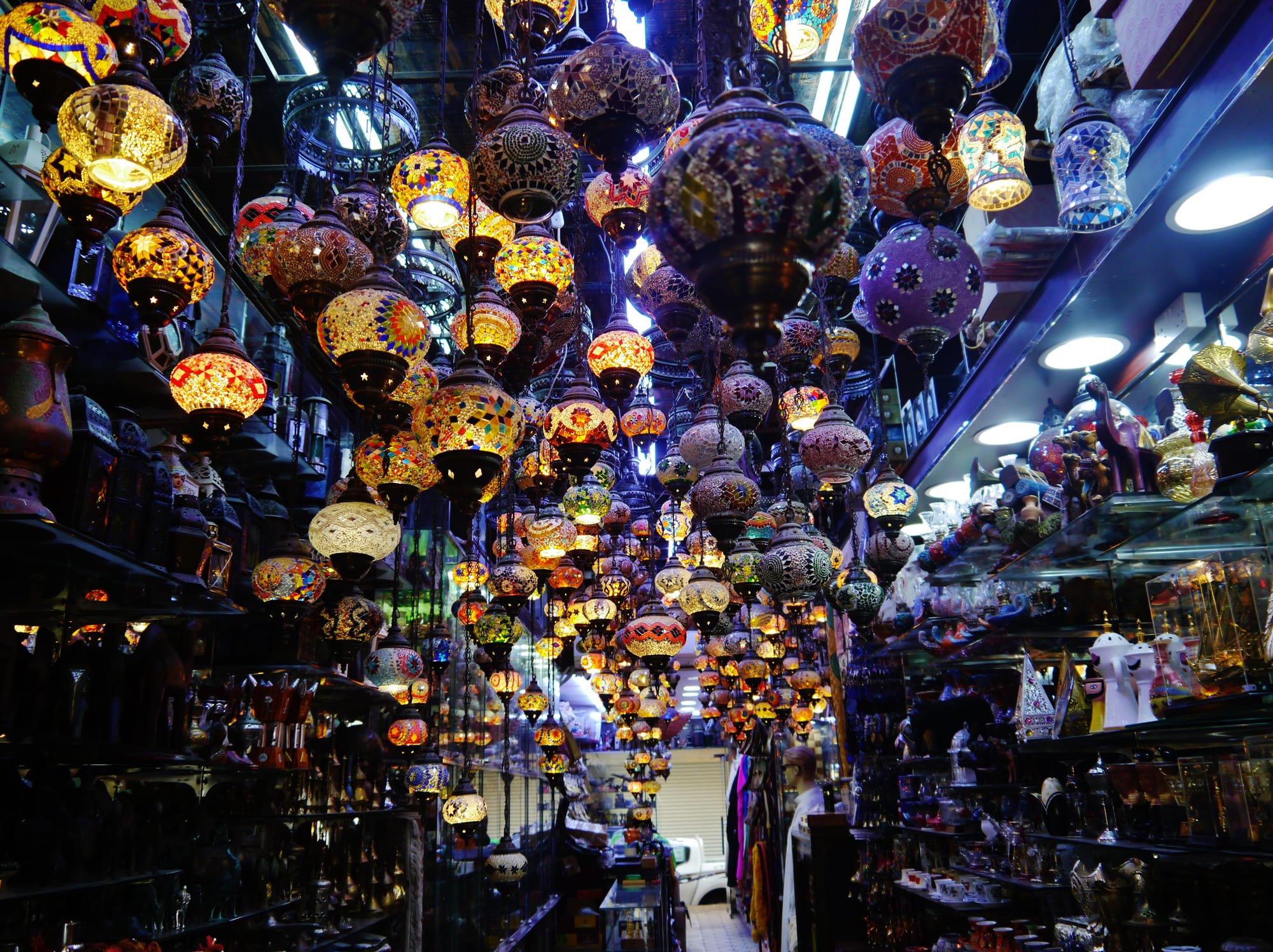
Bab Al Bahrain, the "Gateway of Bahrain," is a gateway opened in 1949 and designed by Charles Belgrave, the British adviser to the ruler; it once stood on the waterfront, but land reclamation has since put it several kilometres inland. Behind it spreads the old Manama souq: a warren of lanes of small shops selling gold, fabric, spices, electronics, and much more.
It is liveliest in the evening, and the surrounding streets are some of the oldest in the capital.
5. The Dilmun Burial Mounds
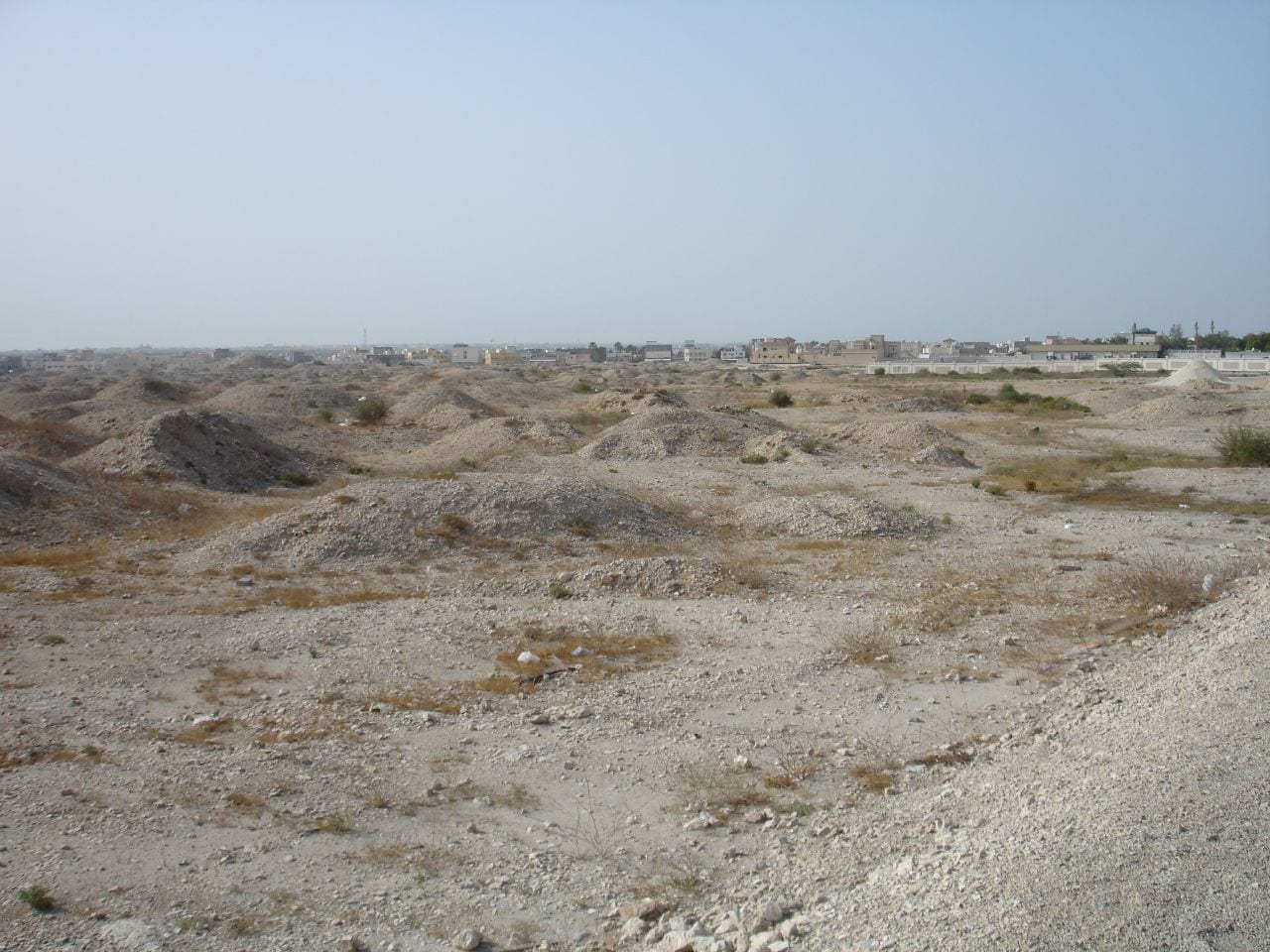
Across the north of the island, and especially around the village of A'ali, are the remains of one of the largest cemeteries of the ancient world: originally tens of thousands of burial mounds, raised by the Dilmun civilisation over several centuries. Many have been lost to building, but large protected fields survive, including 17 oversized "royal" mounds at A'ali. In 2019, 21 sites holding some 11,774 mounds were inscribed together as a UNESCO World Heritage Site.
A'ali is also known for its traditional handmade pottery, sold by potters and workshops across the town.
6. Arad Fort and Muharraq
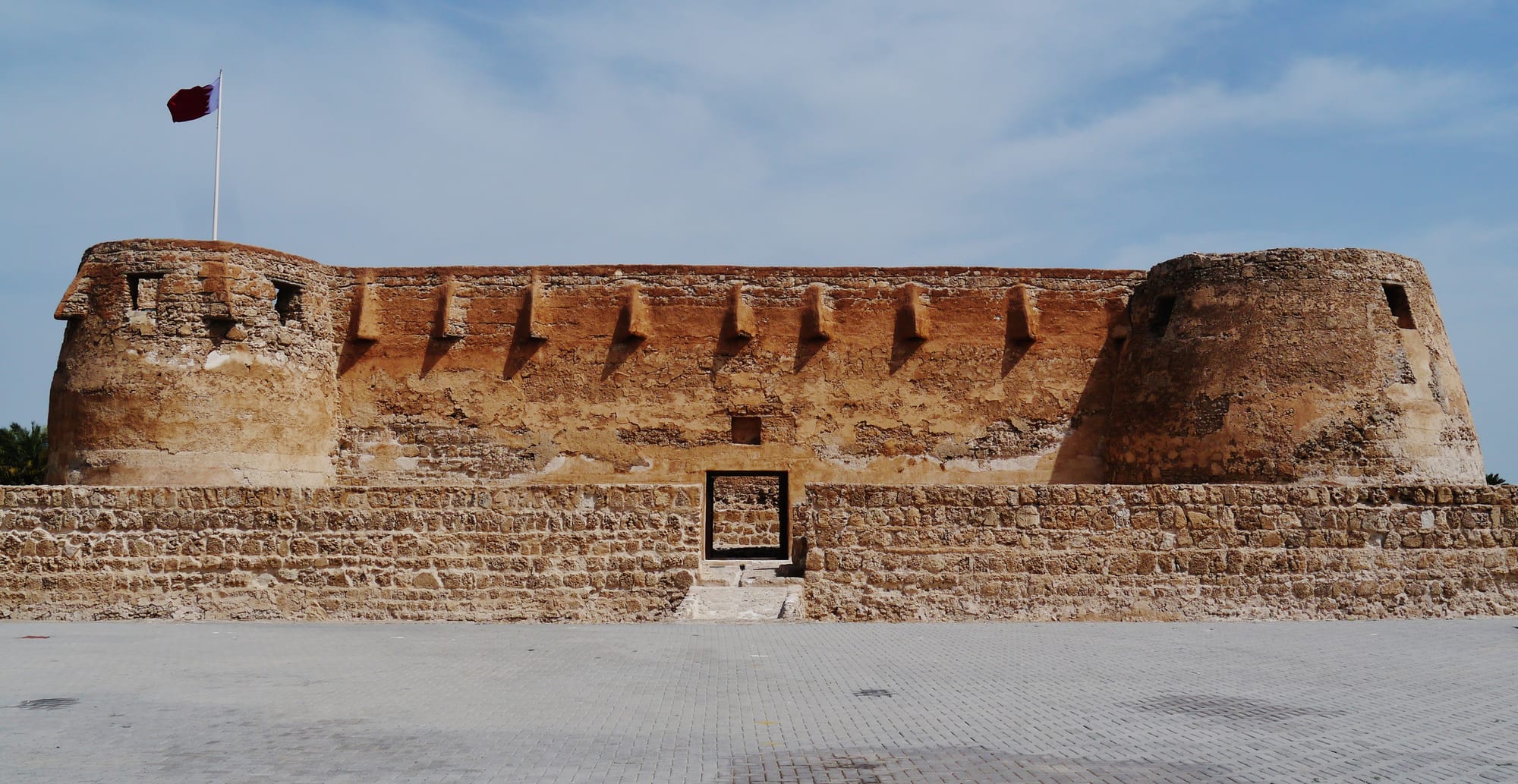
Muharraq, across the water from Manama and home to the airport, was the capital until 1932 and is the heart of Bahrain's pearling history. Arad Fort, a neat square stronghold with corner towers built before the Portuguese arrived, stands near the airport and is illuminated at night.
The island's old core holds the Pearling Path — inscribed by UNESCO in 2012, a 3.5-kilometre trail linking 17 merchants' and divers' buildings, with a seafront fort and three offshore oyster beds also part of the site, telling the story of the industry that sustained the Gulf before oil.
7. The Bahrain World Trade Center
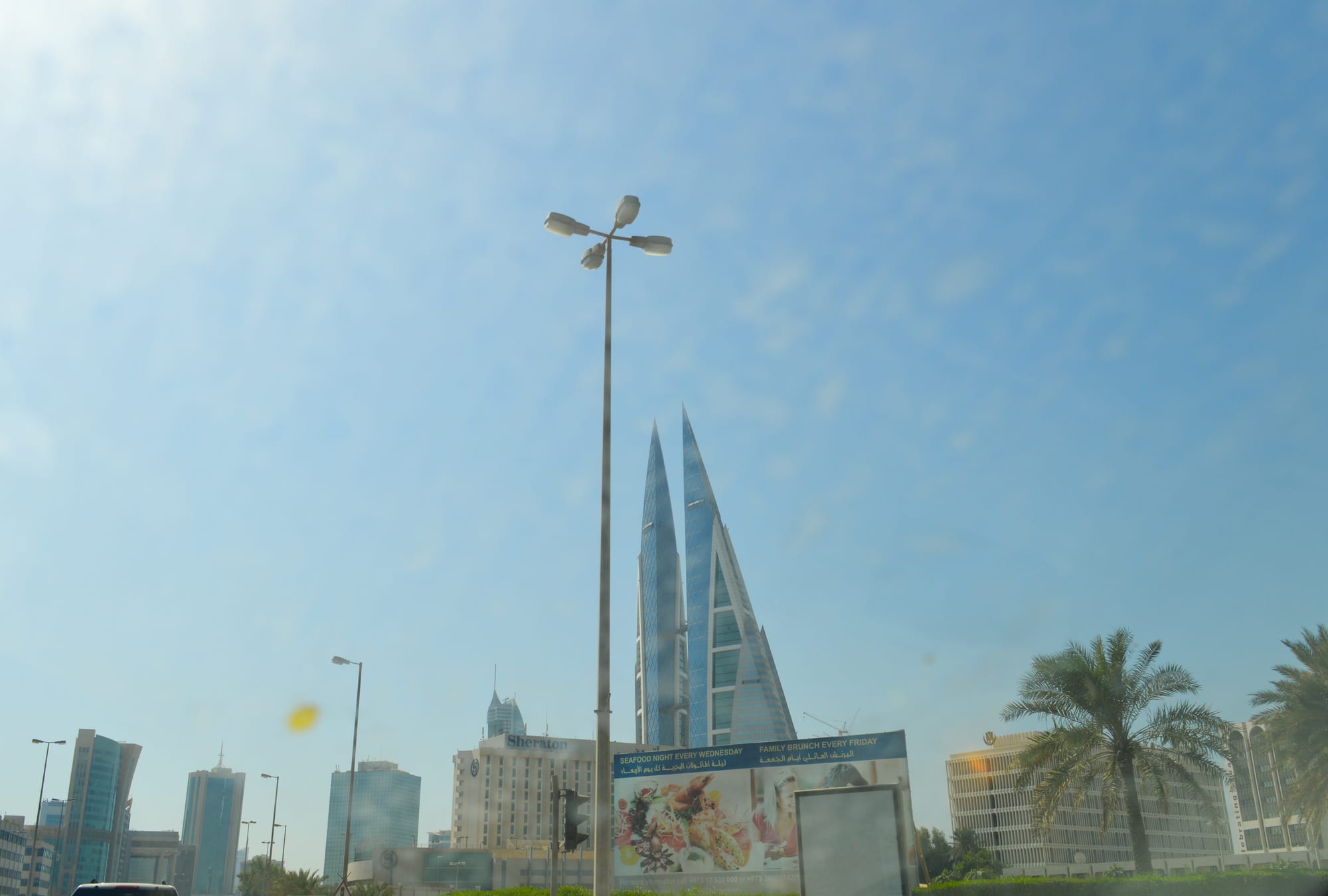
Manama's modern skyline has one genuine landmark: the twin 240-metre towers of the World Trade Center, shaped like boat sails and joined by three sky bridges, each carrying a large wind turbine. The sail forms funnel the constant Gulf breeze between the towers and through the blades; it was the first skyscraper in the world to integrate wind turbines into its design.
The towers stand in the Manama business district, and they are the image most associated with the contemporary city.
Bahrain is a short trip — two or three days covers this list comfortably — and it is one of the more relaxed and open countries in the Gulf for a visitor.