Food · Bahrain
Bahrain: Food and the National Dish
Spiced rice piled with meat, a sweet-and-savoury breakfast eaten side by side, and a halwa still stirred for hours in copper pots in the old pearling town of Muharraq
By Worldlore Editorial · 30 September 2026
An island trading post's table
Bahrain's food reflects what the country has always been: a small archipelago sitting on old trade and pearling routes between Arabia, Persia and India. Rice, dried lime, saffron and warm spice blends point toward Persian and wider Gulf cooking; a large South Asian population, some long-settled and some recent, has left a real mark through dishes like karak tea; and the sea — once the source of pearls — still supplies much-loved fish and shrimp, even though Bahrain now imports most of its food.
The national dish: machboos
Machboos is spiced rice cooked with meat — chicken, lamb or fish — seasoned with baharat spice blend, dried lime (loomi) and often a little tomato, and often finished with a scattering of fried onions, nuts and raisins. It is the dish most associated with Bahraini hospitality and celebration, cooked in large quantities for gatherings.
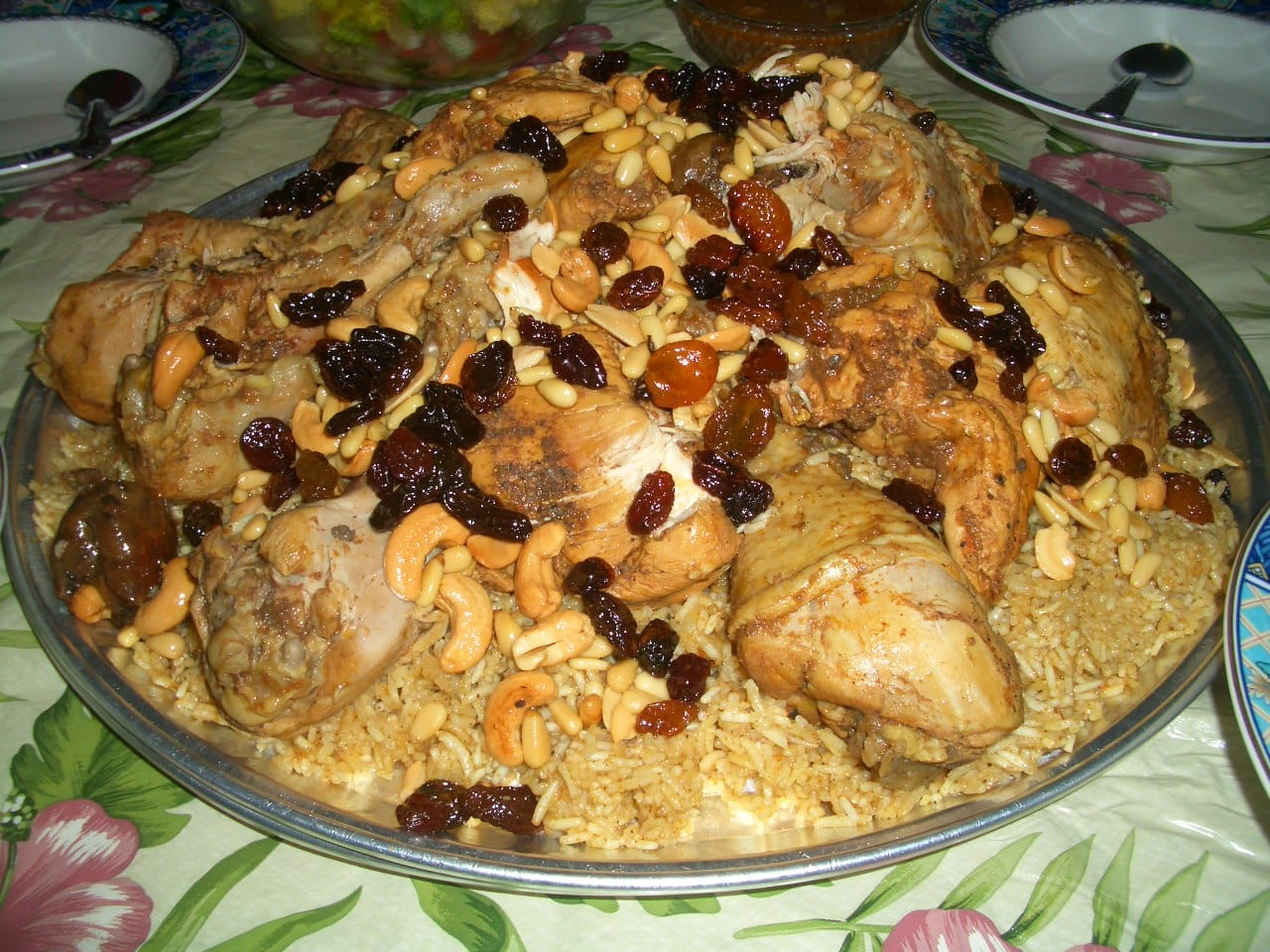
It is worth being upfront that machboos is not uniquely Bahraini — very similar dishes under names like kabsa and majboos are cooked the same way across the whole Gulf, each country claiming its own version as the true one. Kabsa is commonly regarded as a national dish in every country of the Gulf Cooperation Council, so the dish is really a shared regional inheritance rather than a Bahraini invention alone.
Breakfast, Ramadan, and the everyday table
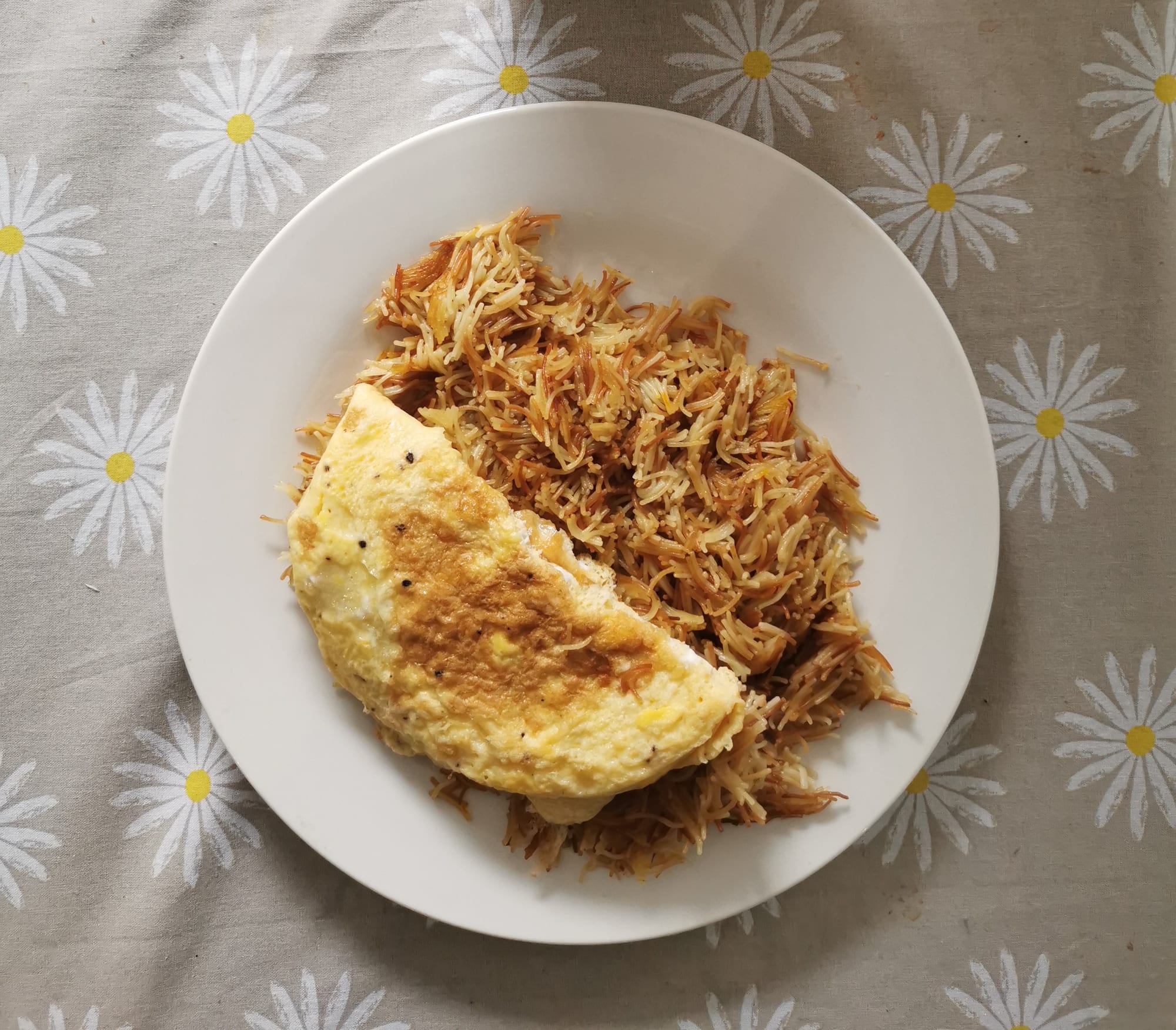
Balaleet, sweet vermicelli noodles cooked with sugar, saffron and cardamom and topped with a savoury omelette, is one of the more distinctive dishes in the Gulf precisely because it puts sweet and savoury on the same plate rather than keeping them apart — a popular breakfast, and often the first meal of the day at Eid al-Fitr.
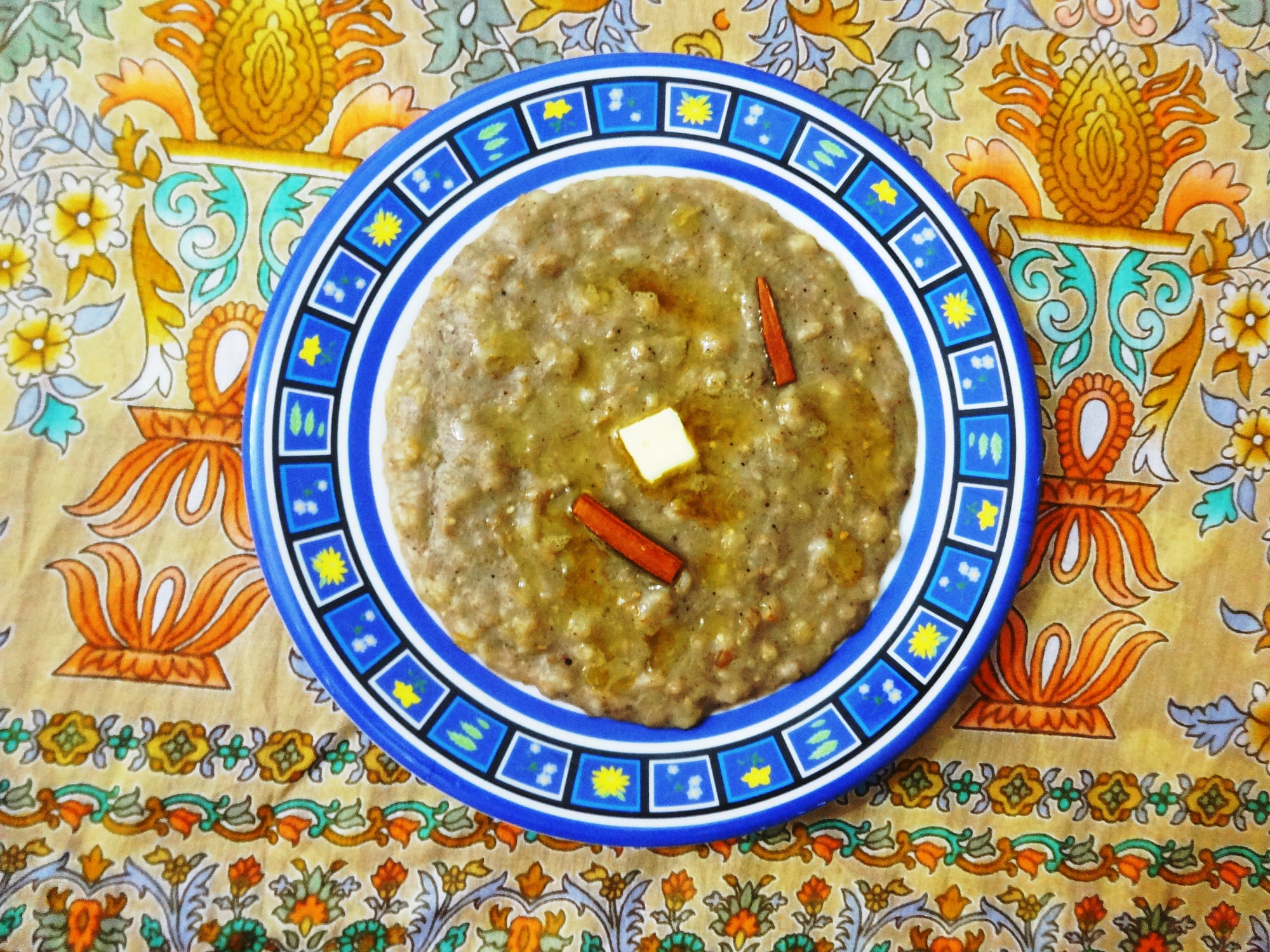
Harees, wheat and meat cooked for hours and pounded together into a smooth, thick porridge, is a Ramadan favourite across the Gulf (and in Bahrain is also cooked by Shia Muslims for Ashura), alongside fried samboosa pastries served at iftar. Ghouzi — roasted lamb stuffed with rice, meat, eggs and spices — is celebration food for weddings and large family occasions, in the same tradition as similar whole-animal feasts found right across the Gulf and the wider Arab world.
Dishes to know
Five to recognise on any Bahraini table:
- Harees — pounded wheat and meat cooked into a thick porridge, a Ramadan
staple.
- Balaleet — sweet saffron vermicelli topped with a savoury omelette.
- Ghouzi — roasted lamb stuffed with rice, meat and eggs, for weddings and large
gatherings.
- Samboosa — fried pastry triangles filled with meat, cheese or vegetables,
especially common during Ramadan.
- Bahraini halwa — a dense, glossy, saffron-and-rosewater-scented sweet,
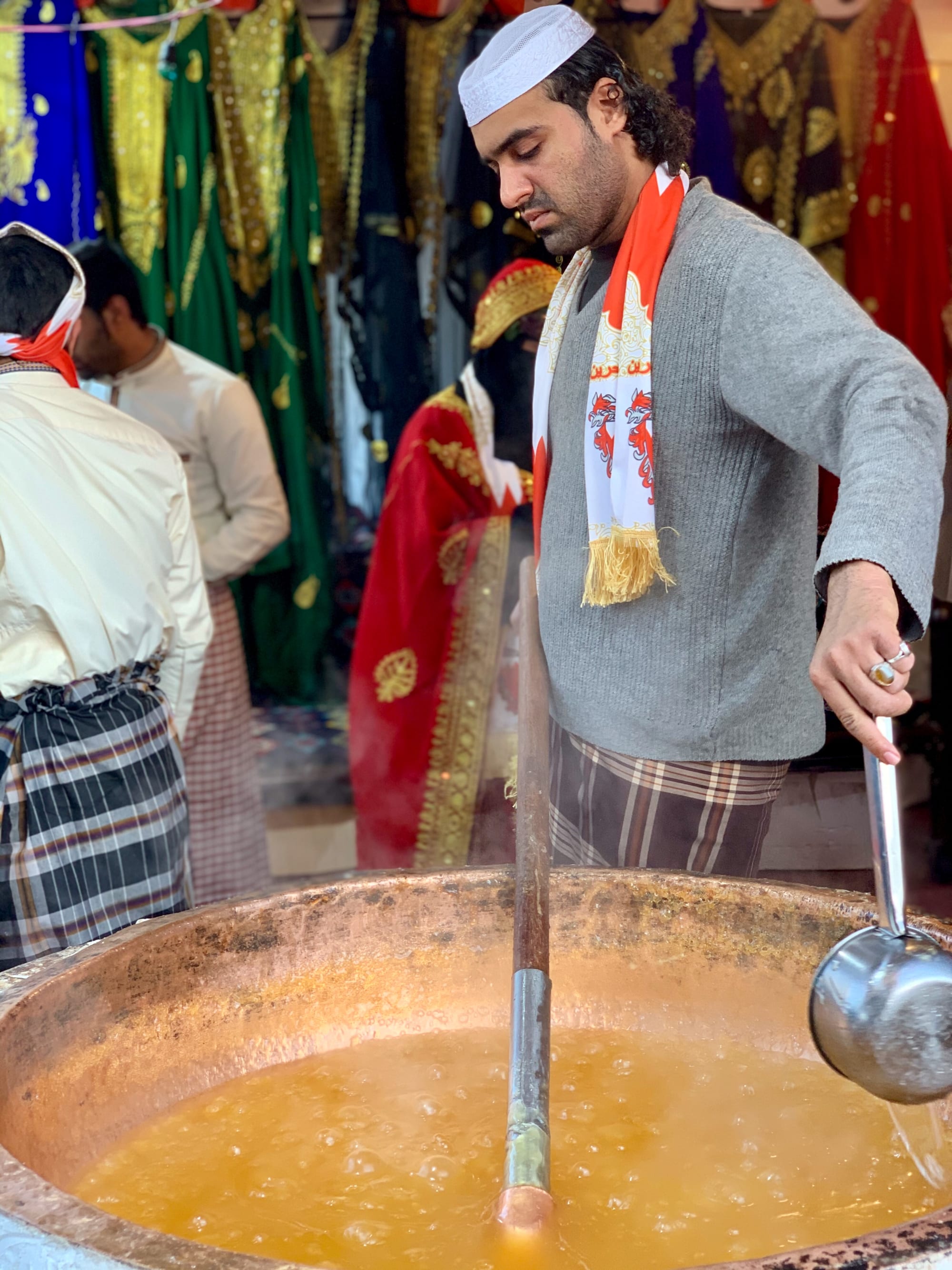
made with starch, sugar, nuts and cardamom and closely associated with the old pearling town of Muharraq.
Coffee, tea and hospitality
Arabic coffee, gahwa, very lightly roasted and scented with cardamom and often saffron, is the backbone of Bahraini hospitality: poured from a long-spouted dallah pot into small handleless cups, refilled without asking, and accompanied by dates. Shaking the empty cup gently signals that a guest has had enough — otherwise it will simply be refilled again. Karak tea, strong black tea boiled with milk, cardamom and plenty of sugar, reflects Bahrain's South Asian population and has become an everyday drink of its own, widely sold from small cafés and roadside stalls.
Eating as a traveller
Bahrain is comparatively liberal for the Gulf, and alcohol is legally served in hotels and licensed restaurants, unlike in neighbouring Saudi Arabia. Most food is halal and pork is rarely on the menu. Vegetarians can rely on rice, bread, vegetable stews and lentil dishes, though machboos and harees are both built around meat. Bottled water is the norm. Bahrain's seafood, especially shrimp and hammour (a Gulf grouper), is excellent and worth prioritising.
What to take from the table
Machboos is the dish to try, but it is worth remembering it belongs to the whole Gulf; Bahraini halwa, made famous by a Muharraq family and named for the island, is the one thing on this list most closely tied to Bahrain itself.