History · Benin
Benin: Dahomey and the Slave Coast
The militarised kingdom of Dahomey, the port of Ouidah at the centre of the Atlantic slave trade, French conquest, a Marxist experiment, and an African model of democracy
By Worldlore Editorial · 30 September 2026
A narrow country with a heavy past
Benin is a thin strip of West Africa, a few hundred kilometres of Atlantic coast widening as it runs north to the Niger River. Its roughly 15 million people are divided among many groups — Fon and Adja in the south, Yoruba in the south-east, Bariba and others in the north — and it is a heartland of Vodun, the religion carried across the Atlantic by enslaved people that shaped Vodou in Haiti and Candomblé in Brazil. The country was called Dahomey until 1975, after the kingdom that once dominated it — a state whose power and wealth were built on selling captives to Europe.
A short history
- 16th–17th c.
The Aja kingdoms
Allada, Whydah and Dahomey take shape on and behind the coast.
- c. 1600–1894
The Kingdom of Dahomey
A centralised military monarchy on the Abomey plateau, with a standing army and a female corps.
- 1720s
Reaching the sea
Dahomey conquers Allada and Whydah and takes over the coastal slave trade.
- 18th–19th c.
The Slave Coast
Around a million people are shipped from Ouidah, mostly to Brazil and the Caribbean.
- 1890–1894
Franco-Dahomean Wars
France defeats King Béhanzin and annexes the kingdom.
- 1 August 1960
Independence
The Republic of Dahomey, followed by a decade of coups.
- 1975
The People's Republic of Benin
Mathieu Kérékou declares a Marxist-Leninist state.
- 1990
The National Conference
A sovereign assembly ends one-party rule; Benin becomes a democracy.
The rise of Dahomey
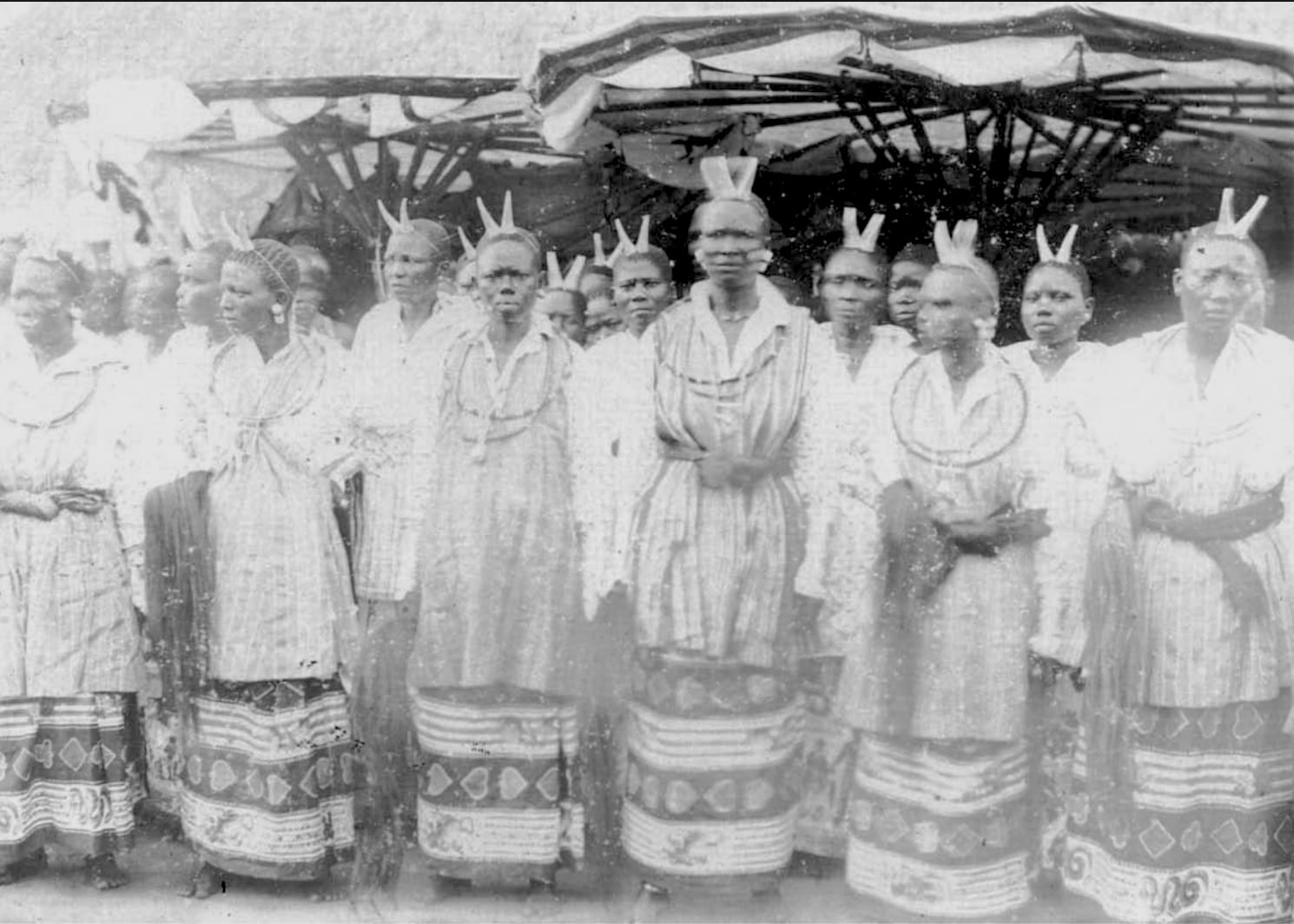
Behind the coast, on the plateau around Abomey, the Fon people built a kingdom in the early 17th century that would become one of the most formidable states in West Africa. Dahomey was an absolute monarchy with a permanent professional army — most strikingly a corps of women soldiers, the Agojie, numbering between 1,000 and 6,000 by visitors' reports in the mid-19th century, whom Europeans called the Dahomey Amazons. Under a line of ambitious kings it expanded by conquest, and in the 1720s it broke through to the Atlantic by conquering the coastal kingdoms of Allada and Whydah.
The kings ruled from the Royal Palaces of Abomey, a great walled compound whose earthen bas-reliefs recorded their victories. Each king was expected to enlarge the kingdom and to honour his ancestors at the Annual Customs, ceremonies that included the sacrifice of war captives — a practice central to the state's ideology and endlessly dwelt on by European visitors.
The slave port
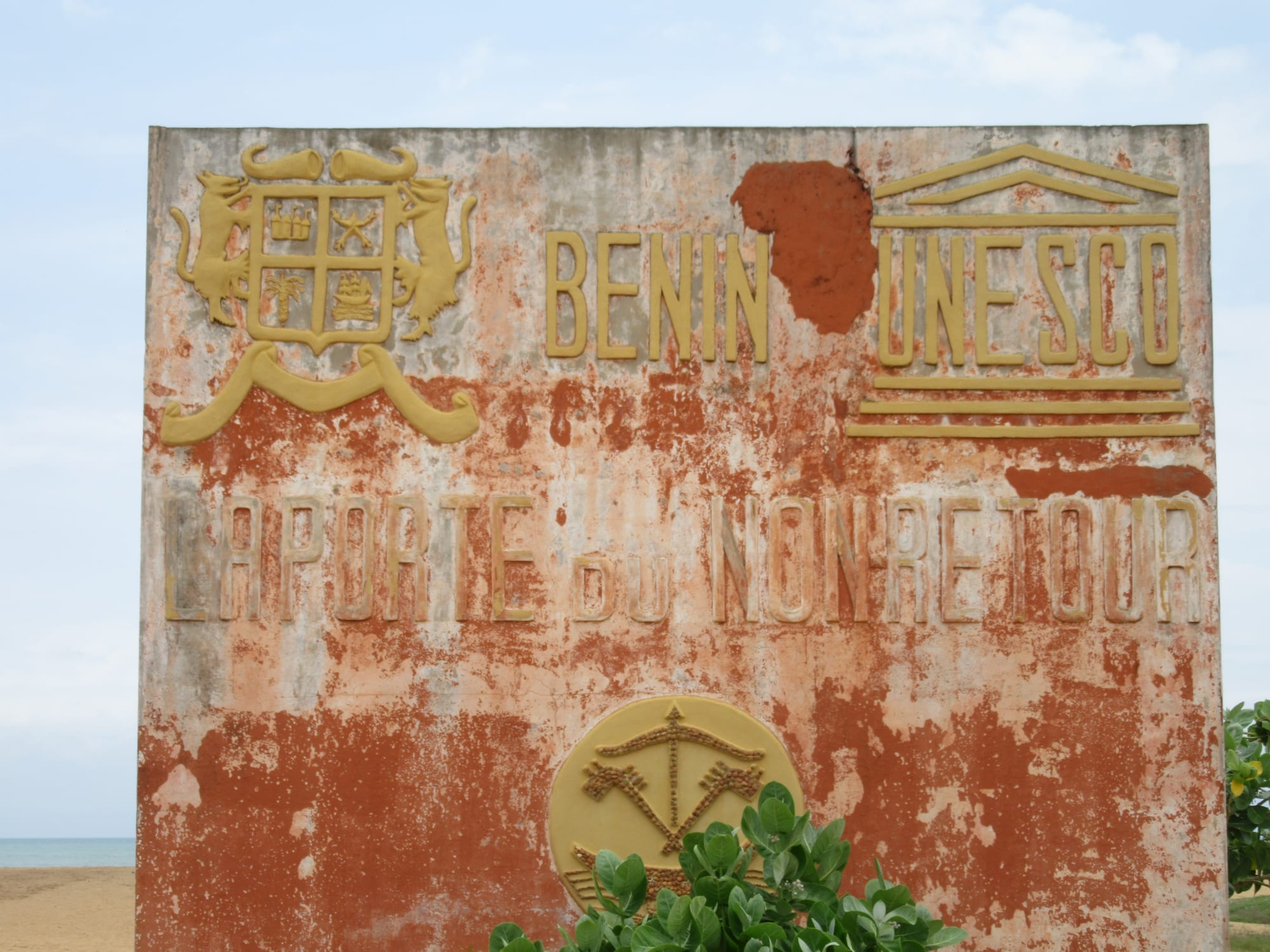
Dahomey's wealth and its firearms came from the Atlantic trade. This stretch of coast was known to Europeans simply as the Slave Coast, and its principal outlet, Ouidah, was the second-busiest slave-trading port on the continent after Luanda. Portuguese, French, English and Dutch forts stood there; the king held a monopoly on the trade; and the army's campaigns against neighbouring peoples doubled as slave raids. Over the course of the trade, perhaps a million people were marched down to the beach at Ouidah and shipped away across the Atlantic, many of them to Bahia in Brazil and to the Caribbean.
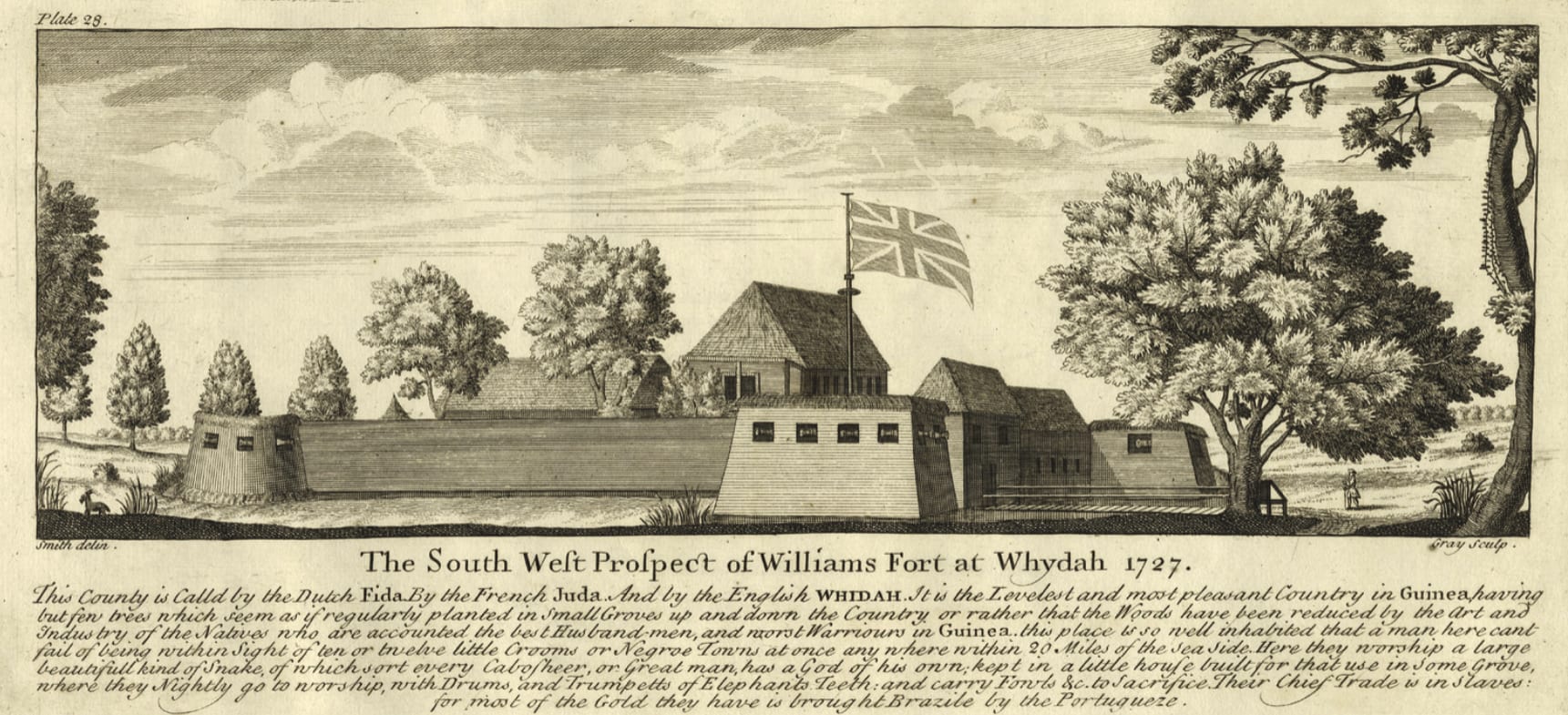
When Britain outlawed the slave trade in 1807 and its navy began blockading the coast, King Ghezo tried to shift Dahomey to exporting palm oil instead; a British blockade forced him to sign a treaty ending slave exports in 1852, but the trade revived under his successor Glele. The trade also left a lasting human trace in both directions: Vodun and Fon culture crossed the Atlantic with the enslaved, and Brazilian traders left their mark on Ouidah, where a restored Brazilian mansion still stands.
Conquest and colony
France, established at Porto-Novo and Cotonou on the coast, came into conflict with King Béhanzin over control of the shoreline. In two Franco-Dahomean wars, in 1890 and 1892–94, French columns with modern rifles and artillery and Senegalese troops defeated the Dahomean army and took Abomey, which Béhanzin burned rather than surrender; he was captured and exiled to Martinique. Dahomey became a French colony and was folded into French West Africa.
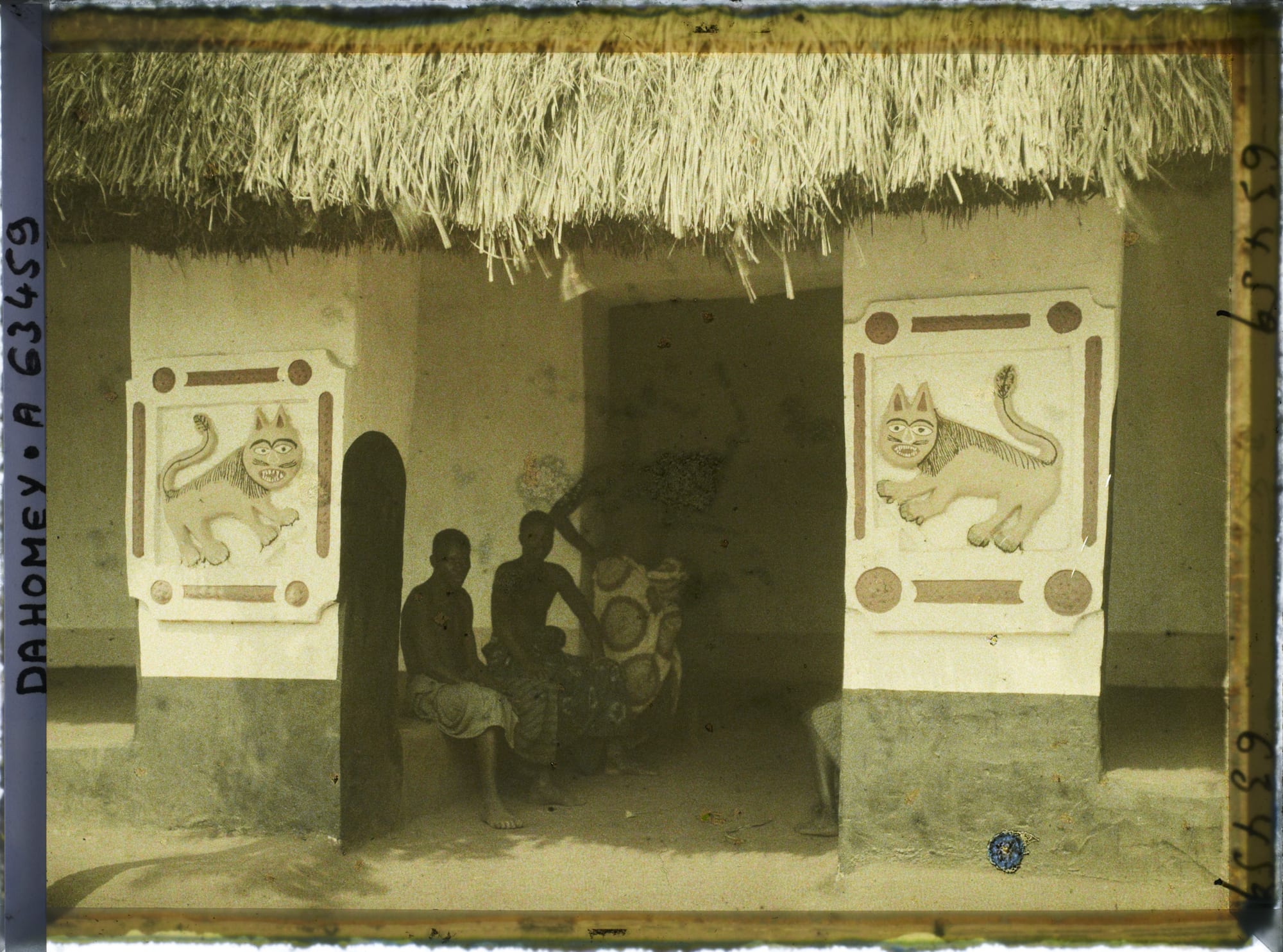
Colonial Dahomey was small and poor, and it was governed from Dakar as one of the territories of French West Africa until the late 1950s.
Coups, and a Marxist republic
Dahomey became independent on 1 August 1960, and then spent 12 years as one of the most politically unstable countries in Africa — repeated coups, and finally a presidency rotated among three regional leaders. The turmoil ended in October 1972 when Major Mathieu Kérékou seized power in the country's fifth coup. In 1974 he declared the state Marxist-Leninist, and in 1975 he renamed the country the People's Republic of Benin, nationalised the economy, and aligned it with the Soviet bloc. By the late 1980s the experiment had failed: the economy was in crisis and unrest was spreading, and in December 1989 Marxism-Leninism was dropped as the state ideology.
The National Conference
Bankrupt and besieged by protest, Kérékou did something unexpected. In February 1990 he convened a "national conference of the active forces of the nation" — a broad assembly of political, religious, union and civic figures — and it seized the initiative: it declared itself sovereign, stripped the president of power, and mapped out a transition to multiparty democracy. Kérékou accepted the verdict. A free election in 1991 made Nicéphore Soglo president, one of the first times an authoritarian ruler in mainland Africa had been voted out and had stepped aside peacefully.
Benin's conference was widely held up as an example elsewhere in French-speaking Africa, and for two decades the country was held up as a model of democratic stability, with power changing hands repeatedly at the ballot box — Kérékou himself returned as an elected president in 1996, then retired when his terms were up. Under President Patrice Talon, from 2016, the space narrowed: electoral rules kept most of the opposition off the ballot, leading opponents were given long prison sentences, and international ratings of Benin's democracy fell sharply. A coup attempt in December 2025 was foiled, and in April 2026 Talon's chosen successor, Romuald Wadagni, was declared elected with more than 94 per cent of the vote in a contest international observers said was neither free nor fair; he was sworn in in May 2026.
What Benin carries
Benin's history turns on Dahomey — a kingdom powerful and organised enough to be remembered with pride, and whose power rested on capturing and selling other Africans on a scale matched almost nowhere else. That past is now openly marked, on the beach at Ouidah and in the restored palaces of Abomey, to which France began returning looted royal treasures in 2021. The democratic breakthrough of 1990 gave the country a second thing to be known for; whether it holds is now an open question.