Attractions & Natural Wonders · Bermuda
Bermuda: Eight Attractions and Natural Wonders
Pink-sand coves on a coral hook in the mid-Atlantic, England's oldest continuously inhabited town in the New World, and a cave of glass-clear underground pools
By Globeway Editorial · 30 September 2026
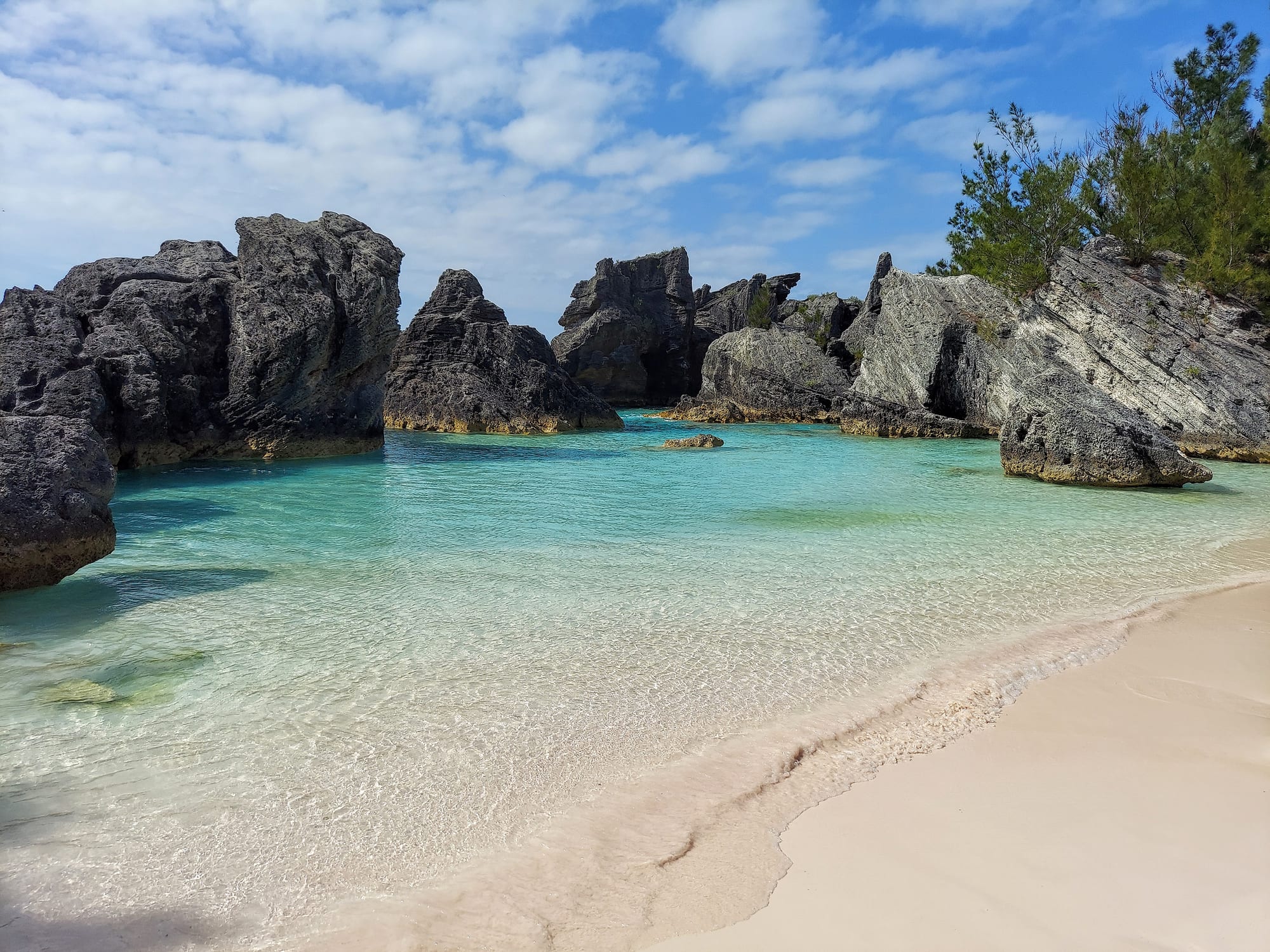
A speck of coral in the open ocean
Bermuda is not in the Caribbean — it sits far out in the Atlantic, some 640 miles east-southeast of North Carolina, and it is much cooler and more English than the tropics. It is a small chain of islands joined into a fishhook shape, built on an ancient volcanic seamount capped with limestone. It has no rivers and few natural resources; its history has been about the sea — shipwrecks, the Royal Navy, and, latterly, tourism and offshore finance.
The eight below are strung along the length of the hook, linked by one main road. Distances are short but the speed limit is low (about 22 mph) and visitors cannot rent cars — they use buses, ferries, taxis, or a rented two-seat electric car or scooter. Late spring to autumn is the season.
1. The Town of St George
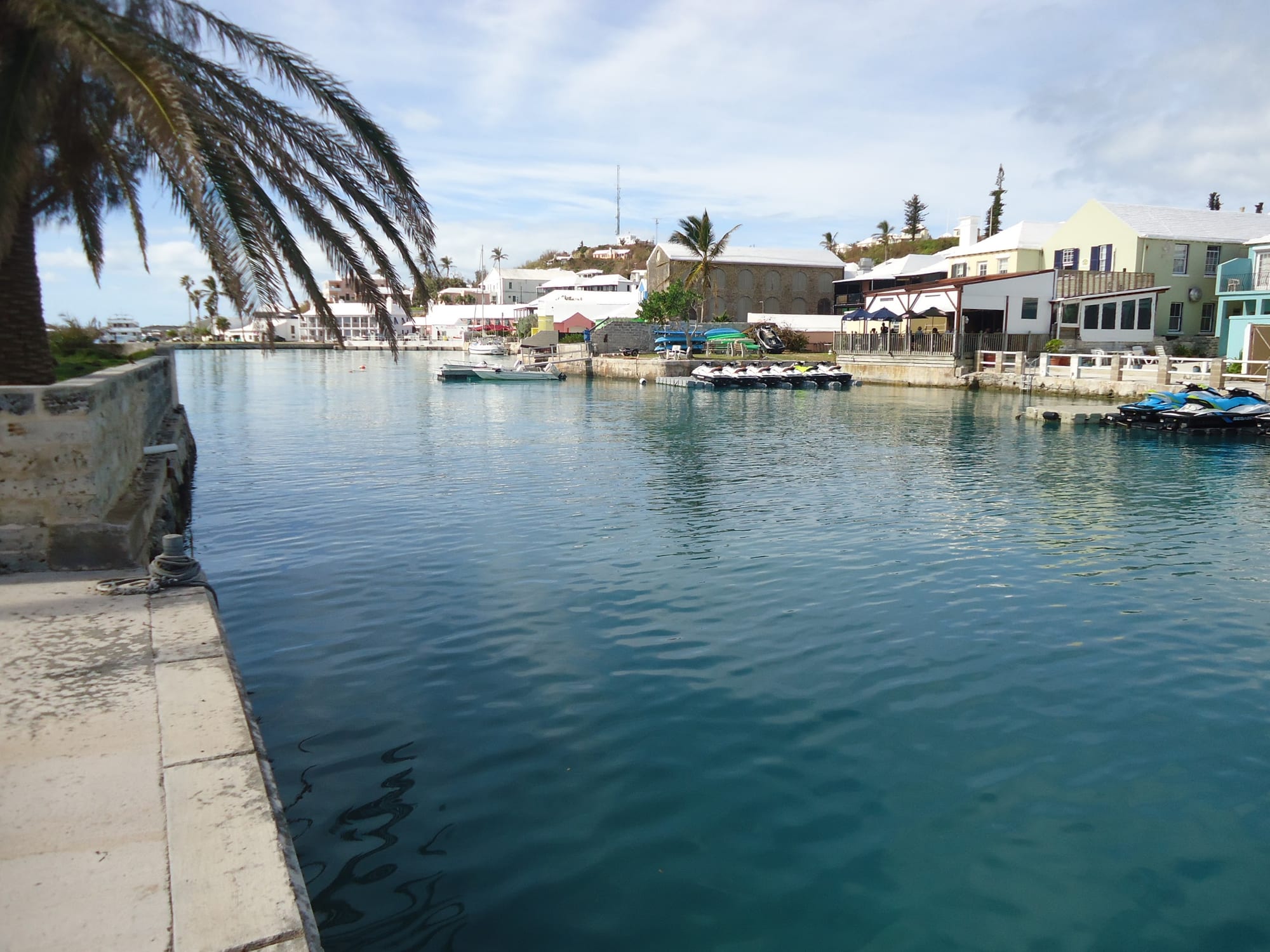
St George's, at the eastern end, was the island's first settlement and capital until 1815, and it has kept its 17th- and 18th-century street plan and much of its building stock — a UNESCO World Heritage Site (with its ring of forts). Highlights are King's Square with its stocks and pillory, the State House (Bermuda's oldest building), St Peter's Church (the oldest Anglican church in continuous use outside the British Isles), and the tiny, crooked lanes with their old names.
Costumed re-enactments of 17th-century life are staged in the square through the year.
2. The Unfinished Church
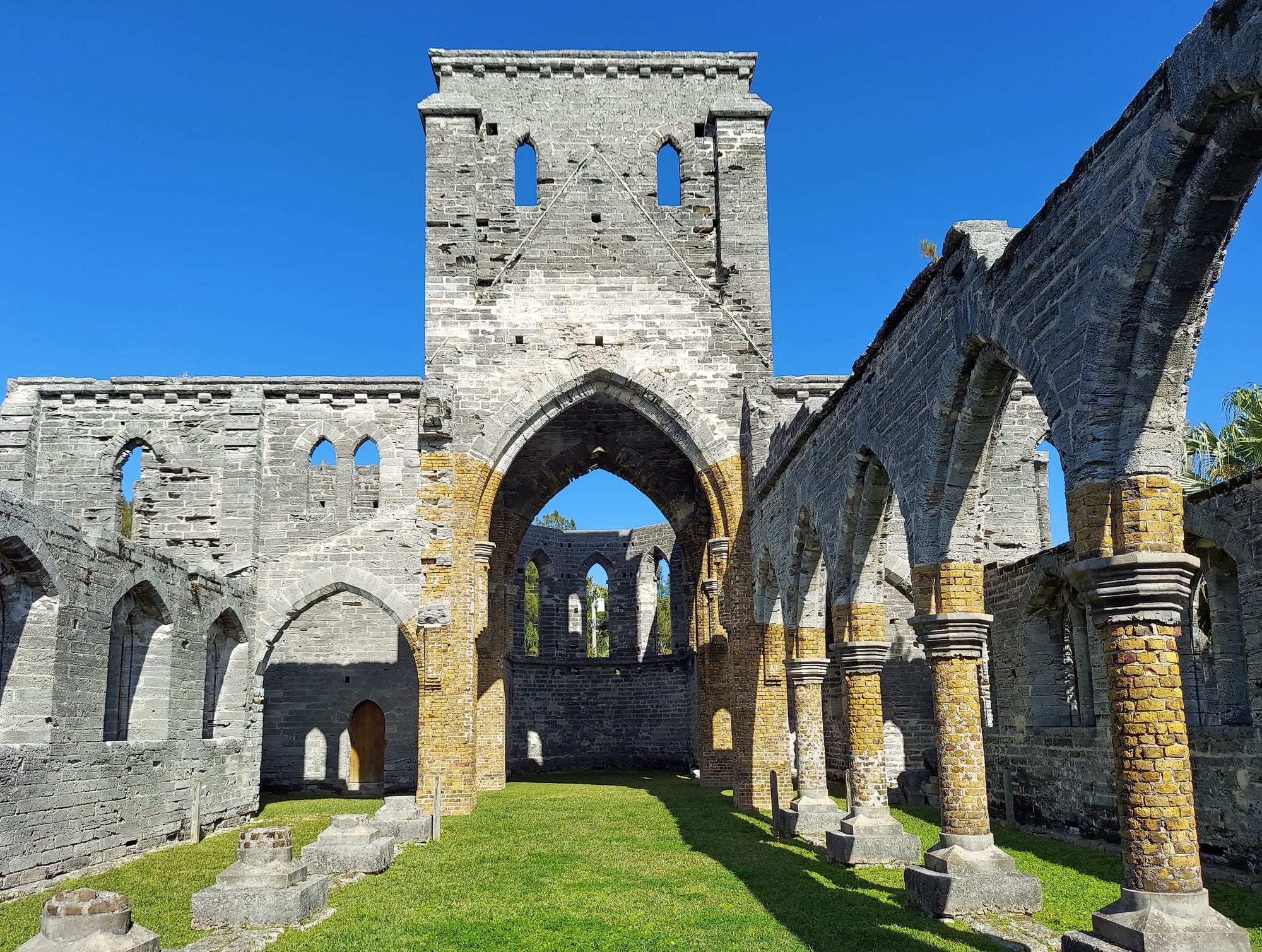
On a rise just north of St George's stands a would-be replacement for St Peter's: a full-scale Gothic Revival church begun in 1874 that was never finished. A congregation split, storm damage, money diverted after Hamilton's church burned, and finally a 1926 storm left it a picturesque ruin, its arches and empty windows open to the sky.
It has been looked after by the Bermuda National Trust since 1992 and is a popular spot for photographs and weddings.
3. Fort St Catherine
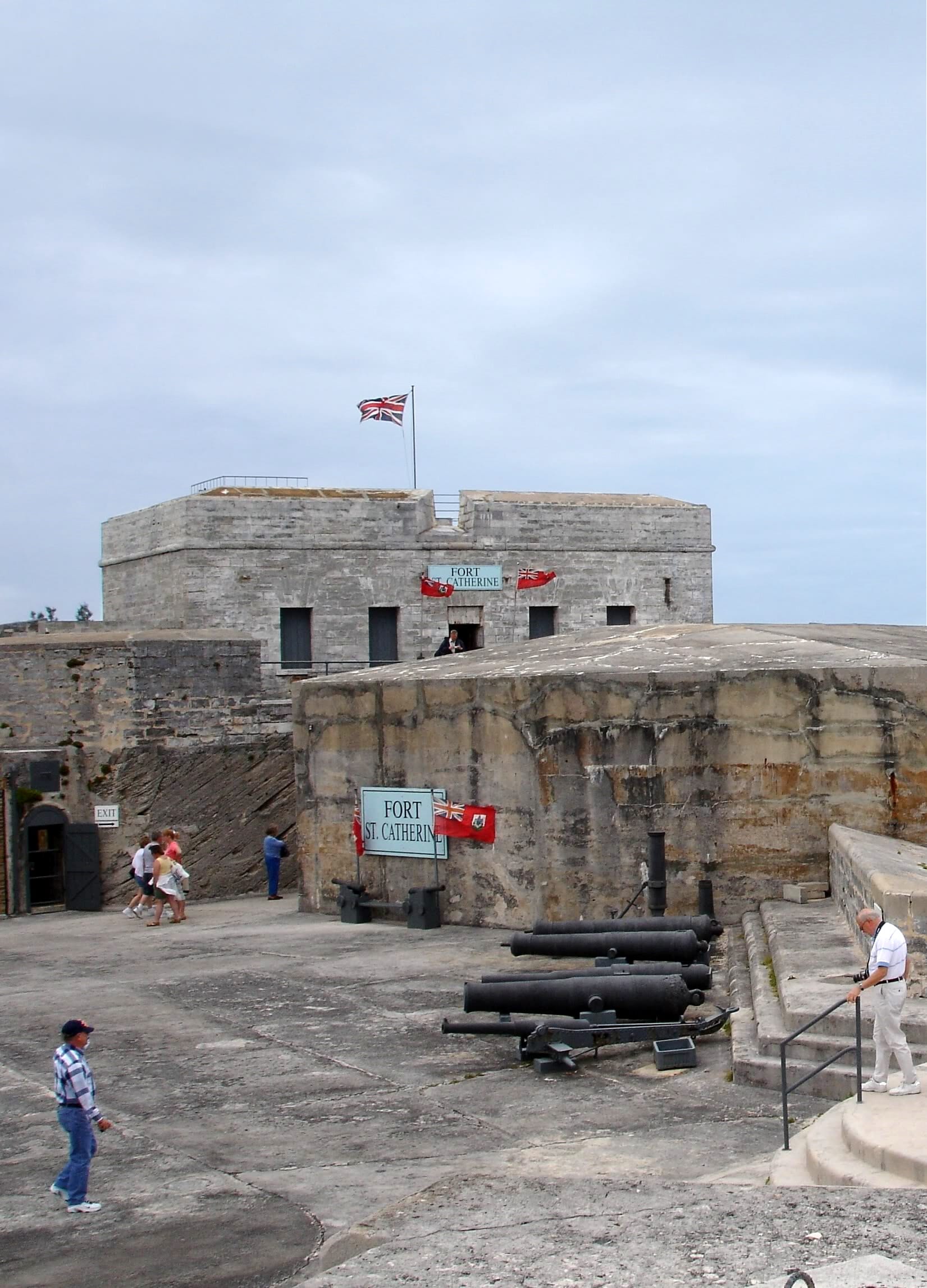
Bermuda was fortified heavily for three centuries, and Fort St Catherine, near the beach where the Sea Venture castaways came ashore in 1609, is one of the most impressive. First built in 1612 and rebuilt five times, the last at the end of the 19th century, it now has tunnels, magazines, dioramas of its history, and replicas of the Crown Jewels.
The beaches around it, including neighbouring Tobacco Bay, are among the best swimming spots on the island.
4. Tobacco Bay
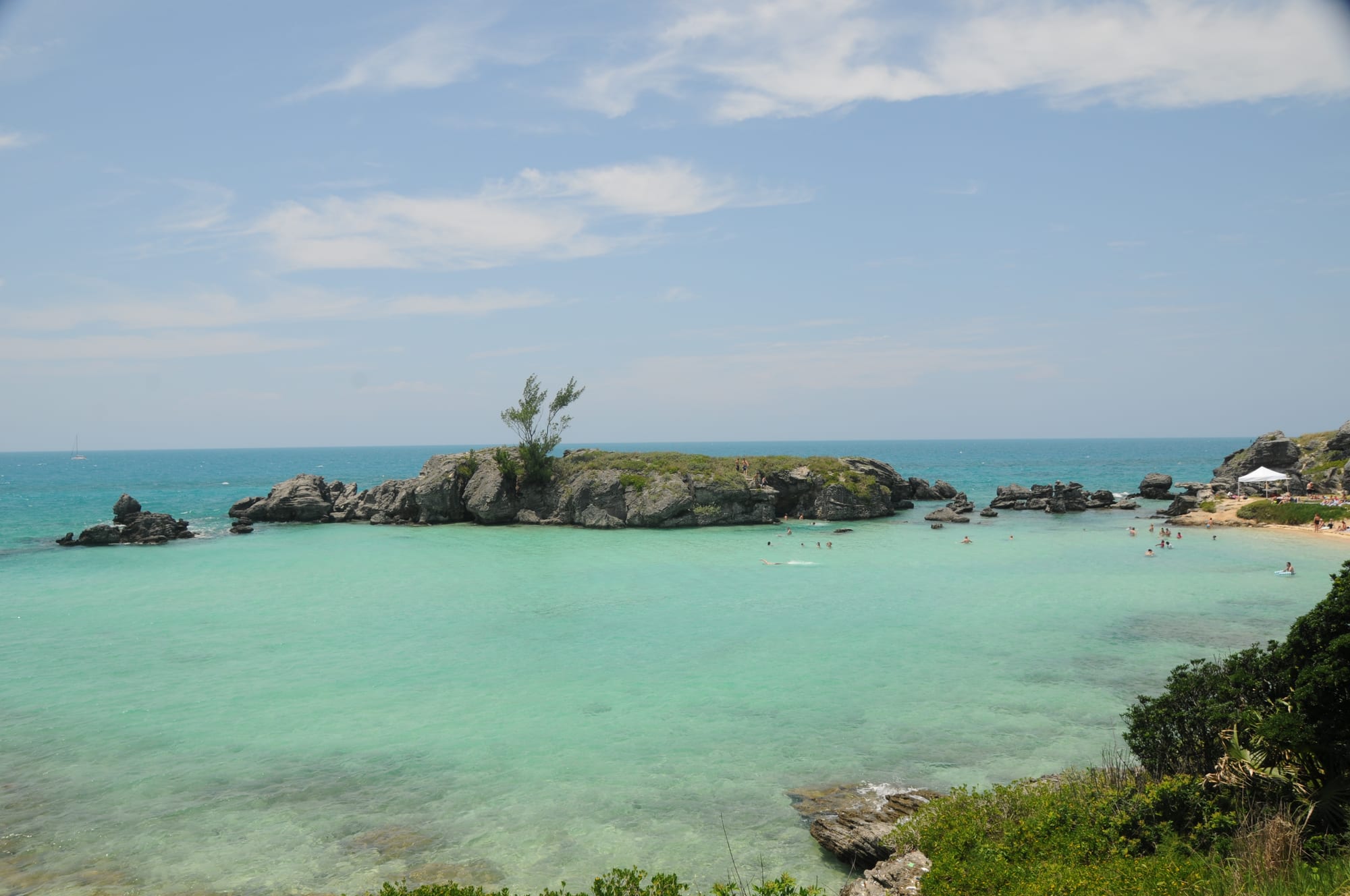
Tobacco Bay is a small, sheltered cove ringed by weathered limestone stacks that break the swell and shelter a shallow reef close to shore — easy, protected snorkelling with parrotfish and the occasional turtle. There are beach facilities, and it gets busy when a cruise ship is in St George's.
It also has a footnote in history: during the American Revolution, sympathisers rolled around 100 barrels of stolen British gunpowder down to this beach in 1775 to ship to George Washington's army.
5. Crystal Cave
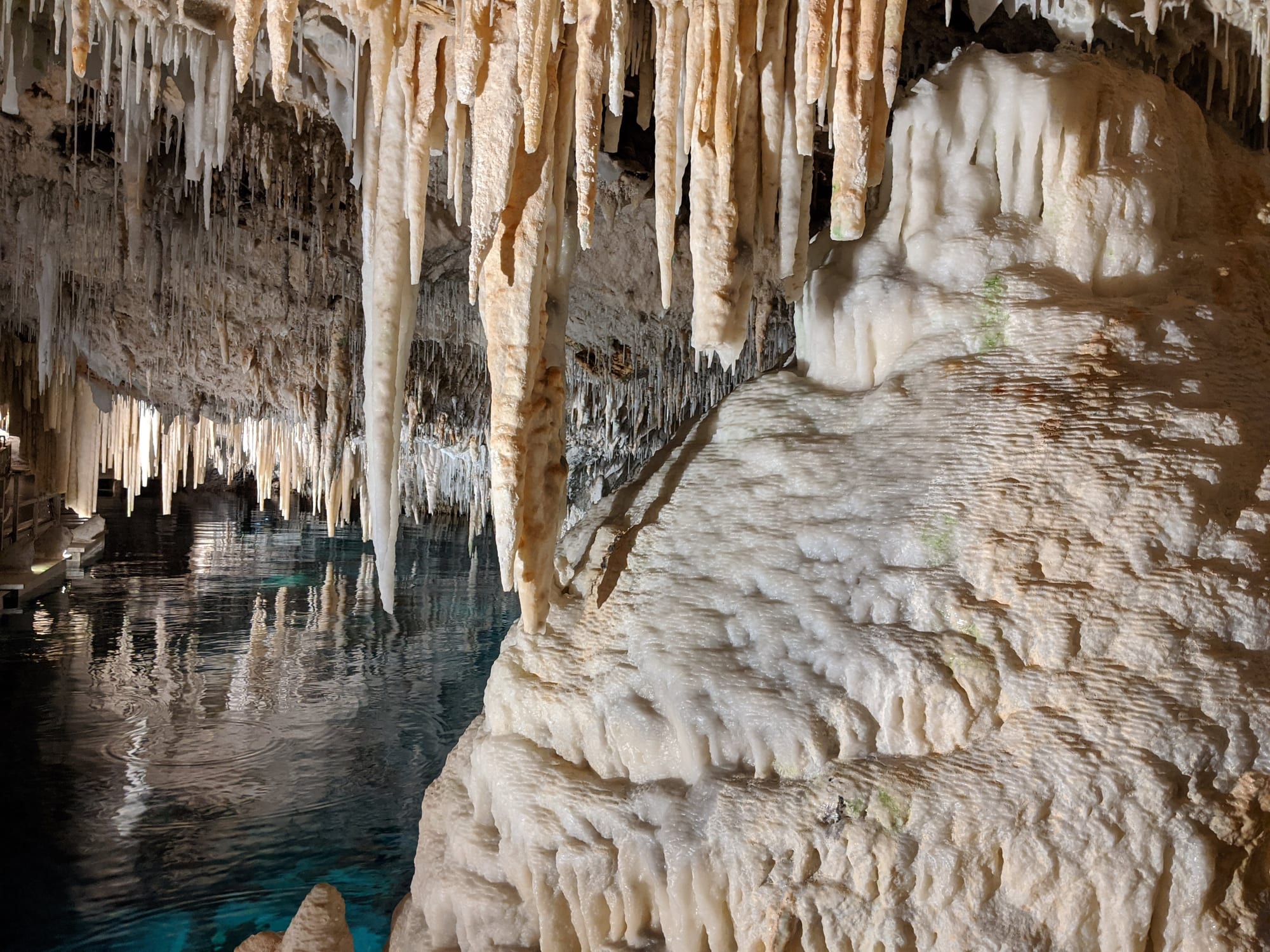
Bermuda's coral limestone is riddled with caves, and Crystal Cave is the show cave: a chamber of white stalactites and stalagmites above pools of seawater so clear that the floating pontoon bridge across it seems to hover. The lowest 60 feet or so of the cave lie underwater, and the bottom is plainly visible.
A visit also takes in the neighbouring, deeper Fantasy Cave. Both lie in the limestone between Castle Harbour and Harrington Sound.
6. Horseshoe Bay and the south-shore beaches
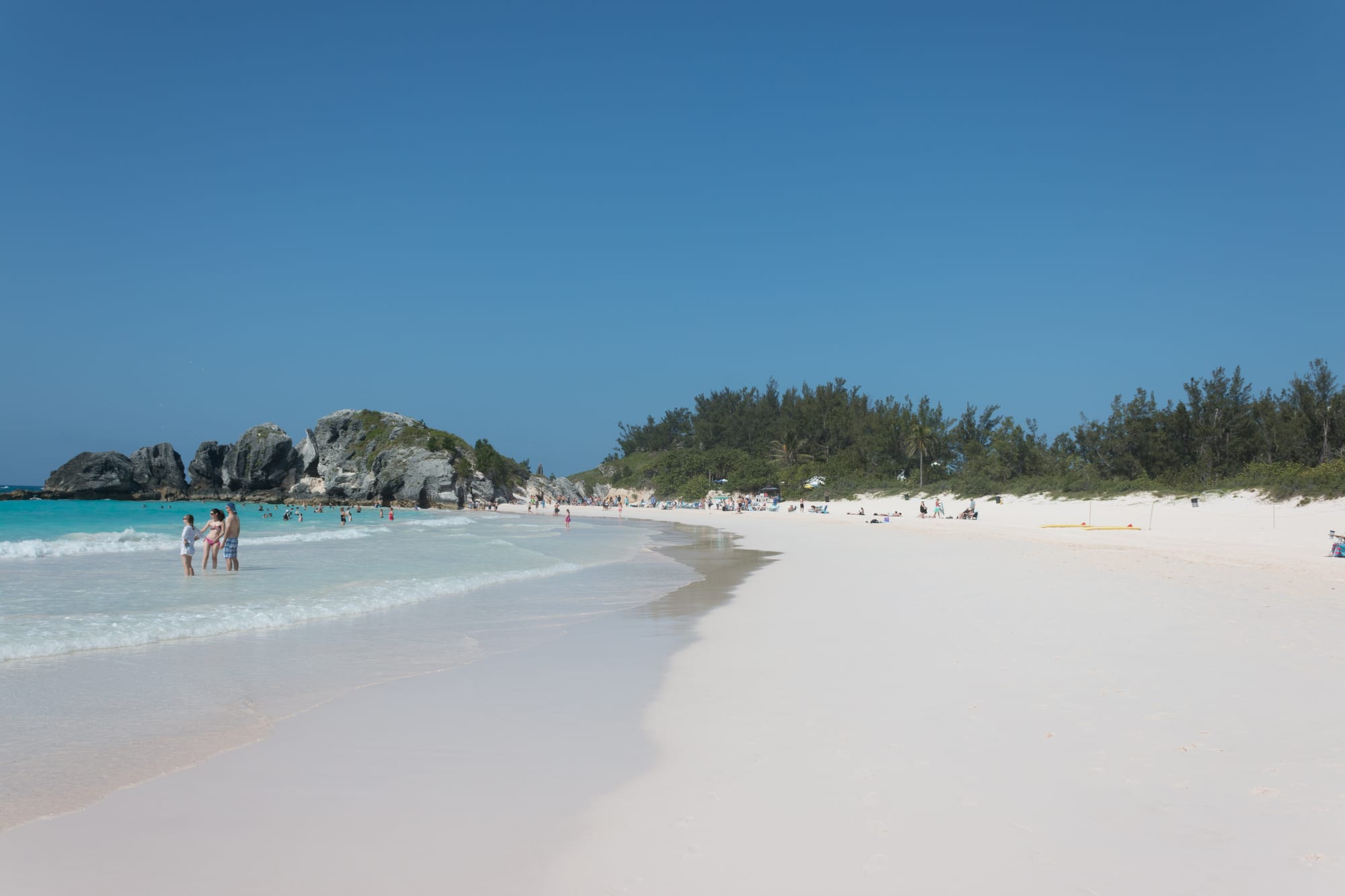
Bermuda's south shore, along the outer curve of the hook, is a run of pink-sand coves separated by limestone headlands. Horseshoe Bay is the famous one — a broad crescent with a summer lifeguard station, and beyond it a chain of smaller coves along the shore towards Warwick Long Bay, linked on foot.
The colour is real: red pigment from a shelled organism called Homotrema rubrum, washed off the reef and mixed into the white coral sand.
7. Gibbs Hill Lighthouse
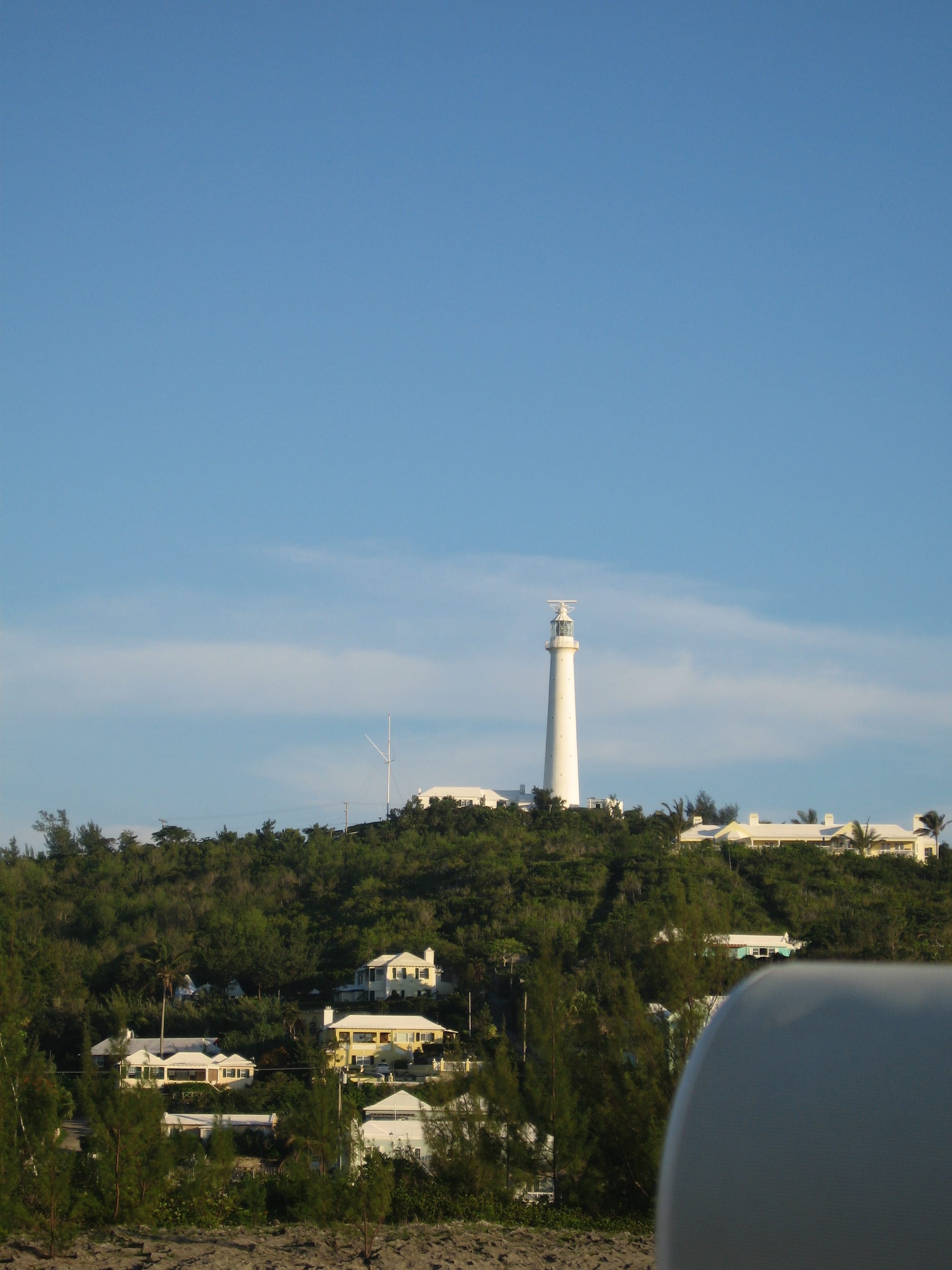
On one of the highest hills on the island, in Southampton parish, this 117-foot cast-iron tower has warned ships off Bermuda's encircling reefs since 1846. Visitors can climb the 185 steps for a 360-degree view over the island, and there is a tea room in the former keeper's quarters at the base.
The reefs it guards have sunk many ships over the centuries, and wreck diving is one of Bermuda's specialities.
8. Hamilton
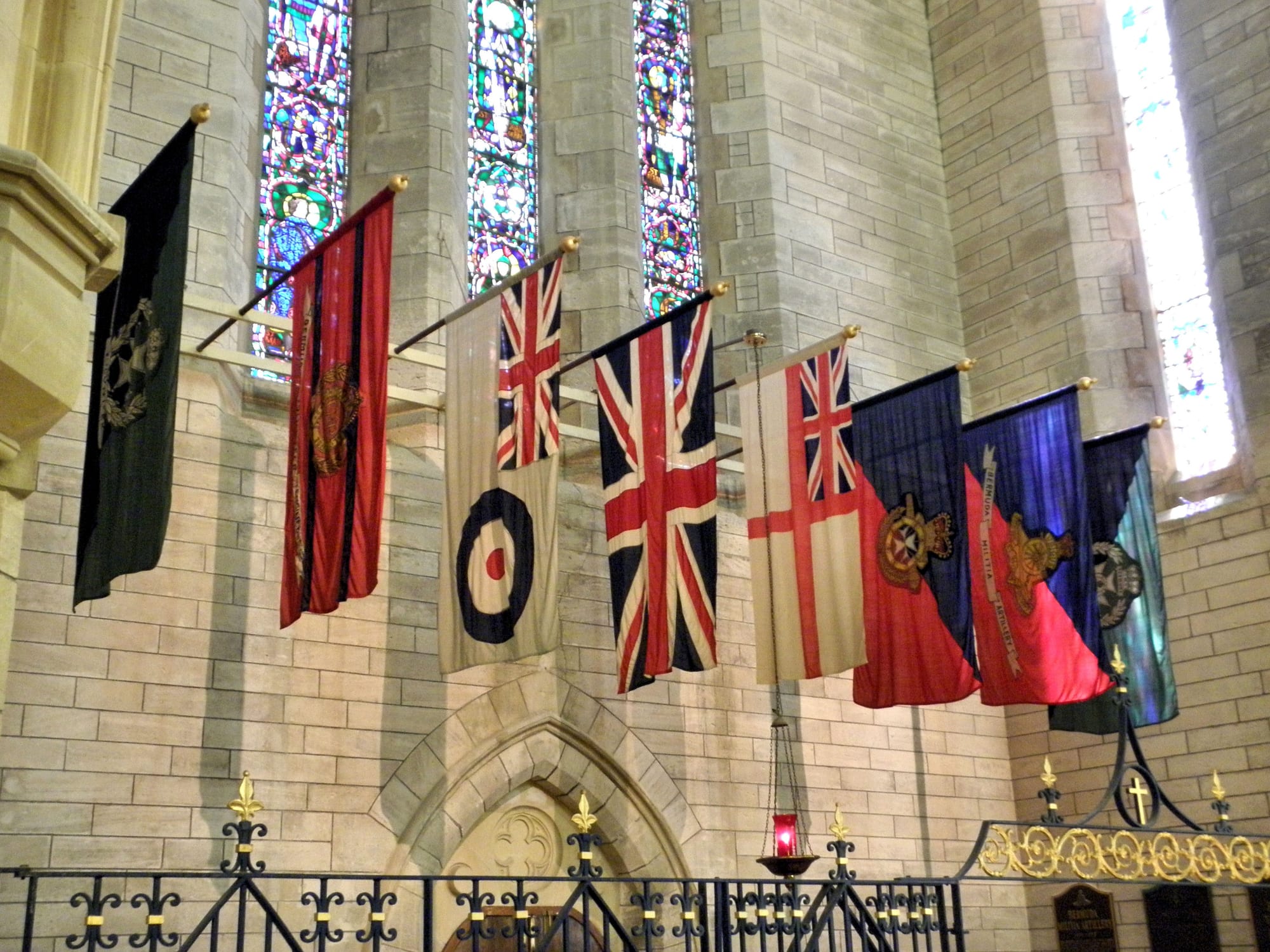
Hamilton, the capital, is a compact pastel harbour town — the seat of government, the cruise dock, and the shopping street of Front Street. The Gothic Revival cathedral has a climbable tower; Fort Hamilton above town has a moat garden and has hosted a winter skirling ceremony of pipers; and the Bermuda Underwater Exploration Institute covers the island's marine history.
At the far western tip, the former Royal Naval Dockyard — now a complex of museums, shops, and the National Museum of Bermuda in the old keep — is the other main hub, linked to Hamilton by a fast ferry.
Bermuda is a short trip built around the water: a few days is enough for the town of St George, the caves, the dockyard, and a slow working along the south-shore beaches.