History · Bermuda
Bermuda: The Shipwreck Colony
A remote Atlantic island settled by accident in 1609 — one of Britain's oldest overseas territories, a naval fortress, and a modern centre of global finance
By Worldlore Editorial · 30 September 2026
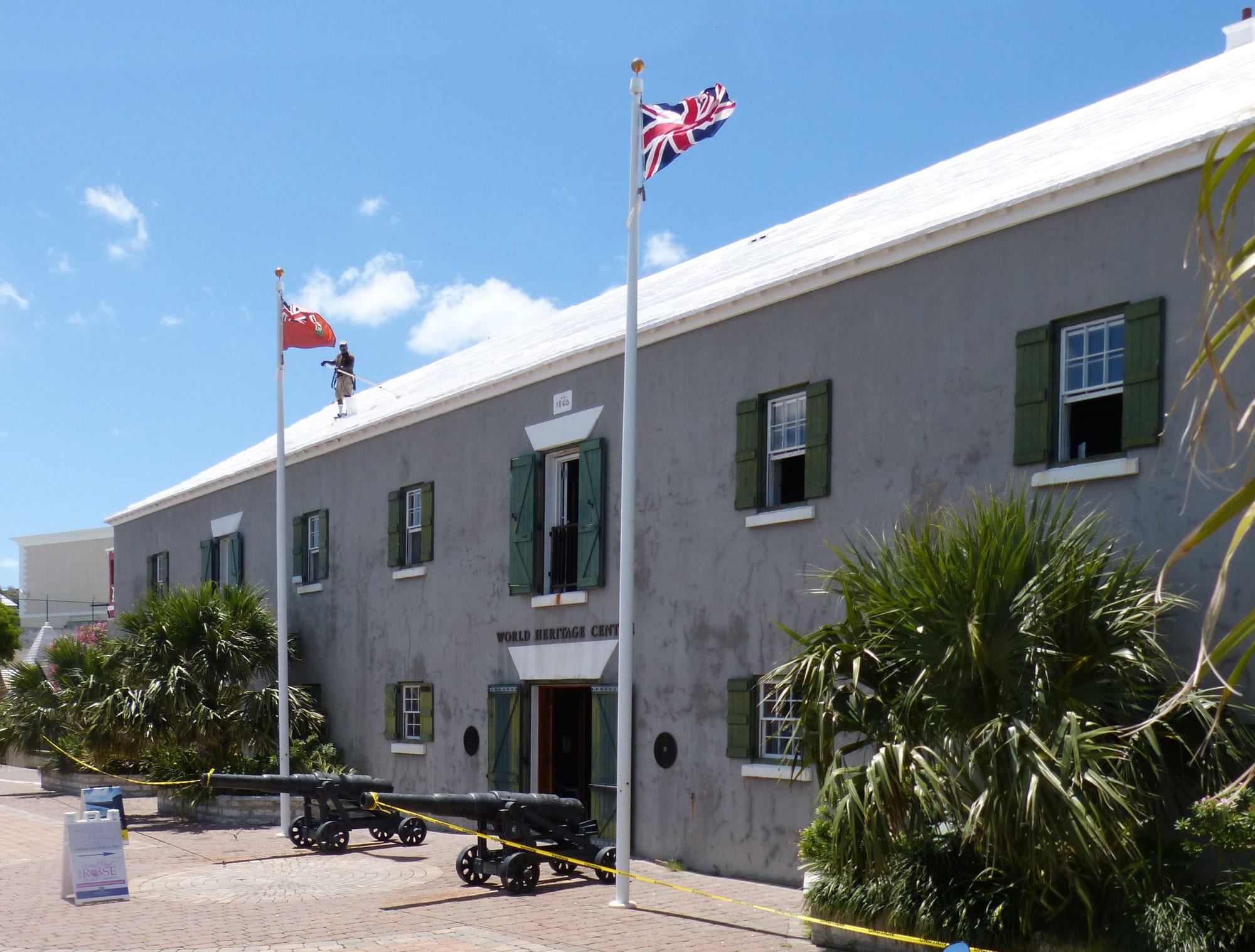
A rock in the North Atlantic
Bermuda is not in the Caribbean, though it is often filed there. It is a cluster of small islands on an old volcano in the North Atlantic, about 1,000 kilometres off North Carolina, ringed by coral reefs. It covers only 54 square kilometres and holds around 64,000 people. It has no indigenous history: no one lived there before Europeans, who for a century avoided it as the "Isle of Devils" — a reef-fringed trap for sailing ships. Bermuda was settled by one of those wrecks.
A short history
- c. 1503
Sighted
The Spaniard Juan de Bermúdez names the uninhabited islands.
- 1609
The Sea Venture
An English ship bound for Virginia is wrecked on the reefs; the survivors settle.
- 1612
St George's
The Virginia Company sends colonists; Bermuda's parliament first meets in 1620.
- 17th–18th c.
A maritime society
Bermudians live by shipbuilding, salt, whaling and Atlantic trade.
- early 19th c.
The Dockyard
Britain builds a great fortified naval base at the western end.
- 1834
Emancipation
Slavery is abolished outright, without an apprenticeship period.
- late 19th c. onward
Tourism
Bermuda becomes an exclusive resort for wealthy Americans.
- 1960s
The vote
Universal adult suffrage arrives; race and politics realign.
- 1995
Referendum
Bermudians vote against independence.
The wreck that founded a colony
In 1609 the Sea Venture, flagship of a supply fleet sailing to the struggling English colony at Jamestown, was caught in a hurricane and deliberately driven onto Bermuda's reefs by its admiral, Sir George Somers, to save the roughly 150 people aboard. They lived on the island for some nine months, built two new vessels from Bermuda cedar and the wreckage, and sailed on to Virginia in 1610, bringing them to a Jamestown colony threatened by starvation and disease. Accounts of the storm and the enchanted island are generally thought to have shaped Shakespeare's The Tempest.
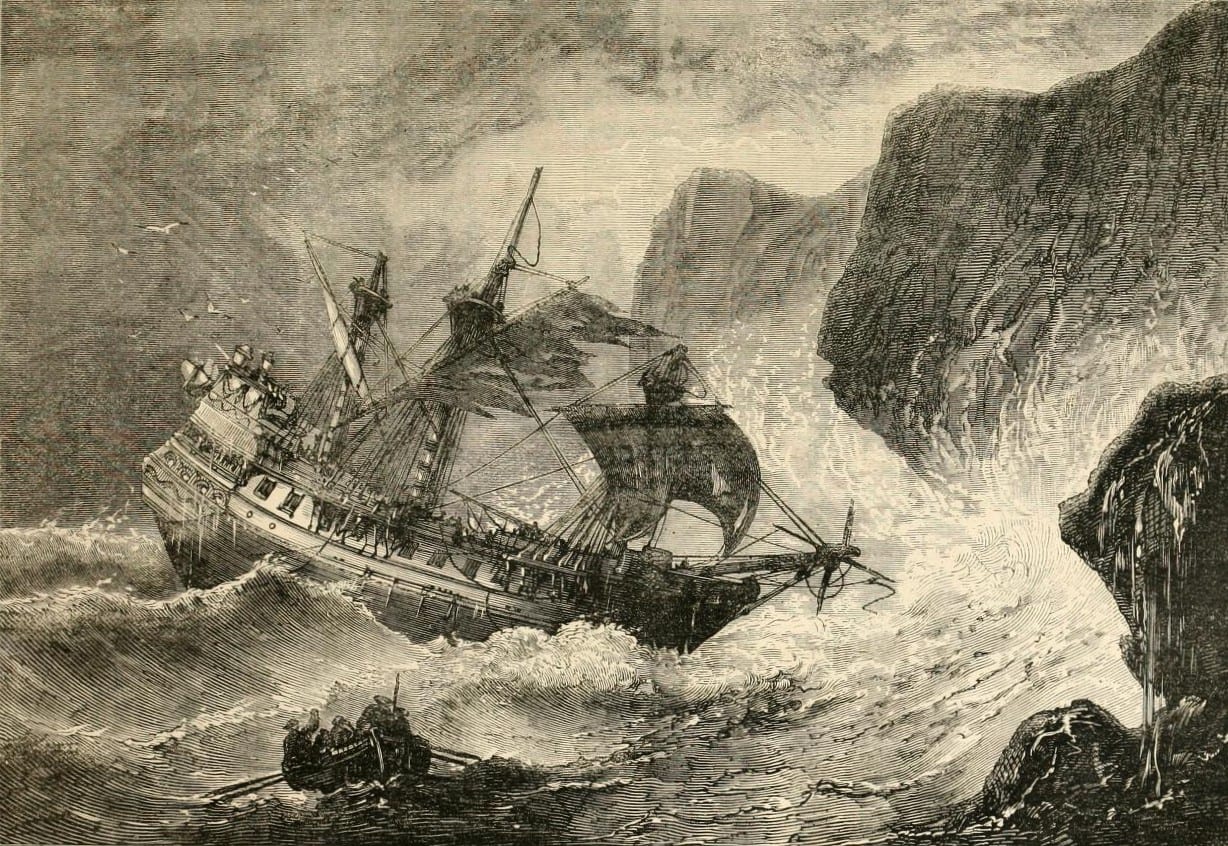
England claimed the islands, and in 1612 the Virginia Company sent 60 settlers to found St George's. A dedicated company, the Somers Isles Company, ran the colony until 1684, when it passed to the Crown as a royal colony. Its House of Assembly, first meeting in 1620, is among the oldest parliaments in the world.
A nation of sailors
Bermuda had too little land for plantations, and its early tobacco crop failed, so the islanders turned to the sea. They built fast sloops from rot-resistant cedar, controlled the salt ponds of the distant Turks Islands for well over a century, hunted whales, and traded and privateered across the whole Atlantic world. Bermudian society was made of shipwrights, pilots and mariners rather than field hands. Slavery existed from the beginning — enslaved Africans, and enslaved Native Americans shipped over in the 17th century, worked as sailors, whalers, and craftsmen — and by the 18th century enslaved people made up a large part of the population. Emancipation came in 1834, without the "apprenticeship" imposed on the plantation colonies.
The Gibraltar of the West
The American Revolution changed Bermuda's strategic value. Cut off from American food, Bermudians in 1775 stole the Crown's gunpowder and shipped it to George Washington's army in exchange for trade. After the war, having lost its ports on the mainland, Britain decided it needed a naval base in the western Atlantic, and in the early 19th century it built one at Bermuda's western tip — a vast fortified dockyard, constructed by enslaved and free Black labourers and, from 1823, largely by convicts shipped from Britain and Ireland.
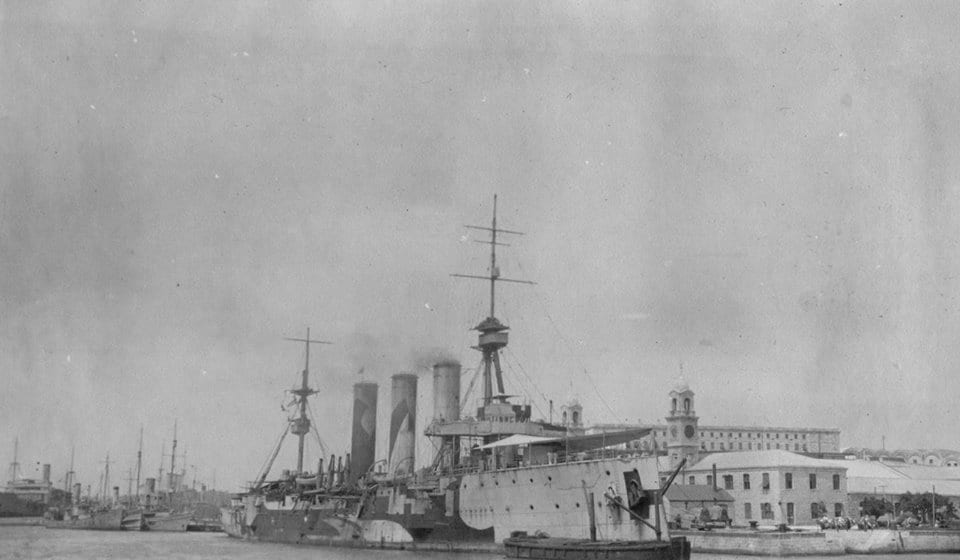
From Bermuda the Royal Navy blockaded the American coast in the War of 1812 — the force that burned Washington in 1814 sailed from here — and during the American Civil War the island grew rich as a transfer point for Confederate blockade-runners.
Onions, lilies, and tourists
From the 1840s Bermuda drew Portuguese immigrants from the Atlantic islands, and for a time exported onions and Easter lilies to New York. Then it found its lasting business: tourism. From the late 1800s, and on a large scale after the First World War, Bermuda marketed itself as a genteel, exclusive resort for wealthy Americans — banning billboards, keeping motor vehicles off the roads until the late 1940s, and capping the speed limit.
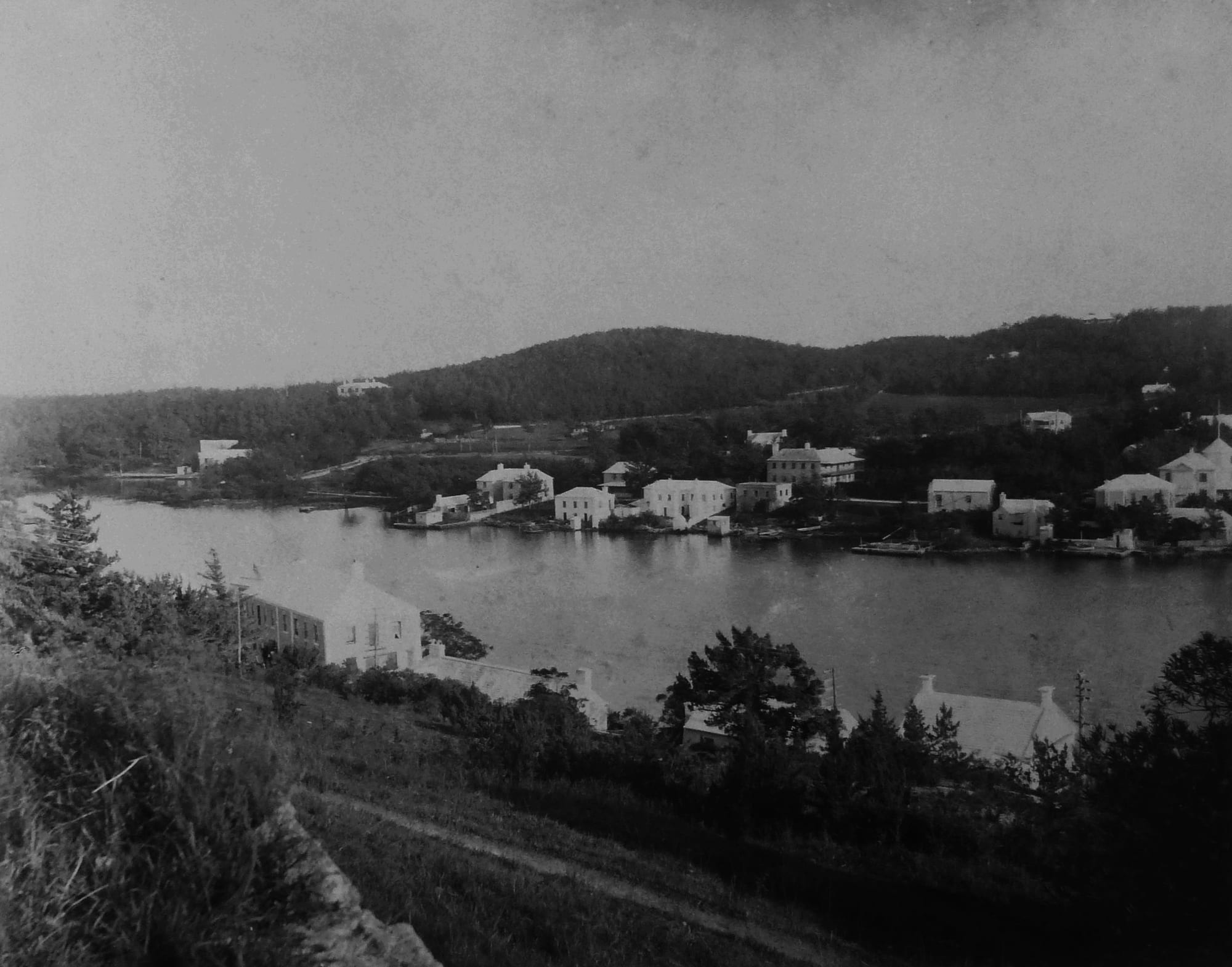
The Second World War brought American air and naval bases, leased for 99 years. After the war the dockyard was reduced to a naval base in 1951, and the last British, Canadian and US bases closed in 1995. Bermuda replaced them with international business — above all insurance and reinsurance, in which it became one of the largest centres in the world — helped by having no income tax.
Race, politics, and independence
For most of its history Bermuda was run by a small white merchant class through a property-based vote. Universal adult suffrage came only in the 1960s, and a formal constitution in 1968. Racial tension broke into rioting in 1977, after the hanging of two Black men convicted of assassinating the Governor in 1973 — the last executions carried out under British rule anywhere. The mainly Black Progressive Labour Party, founded in 1963, finally won government in 1998, and has governed again since 2017. A 1995 referendum rejected independence by a wide margin, and Bermuda remains a British Overseas Territory.
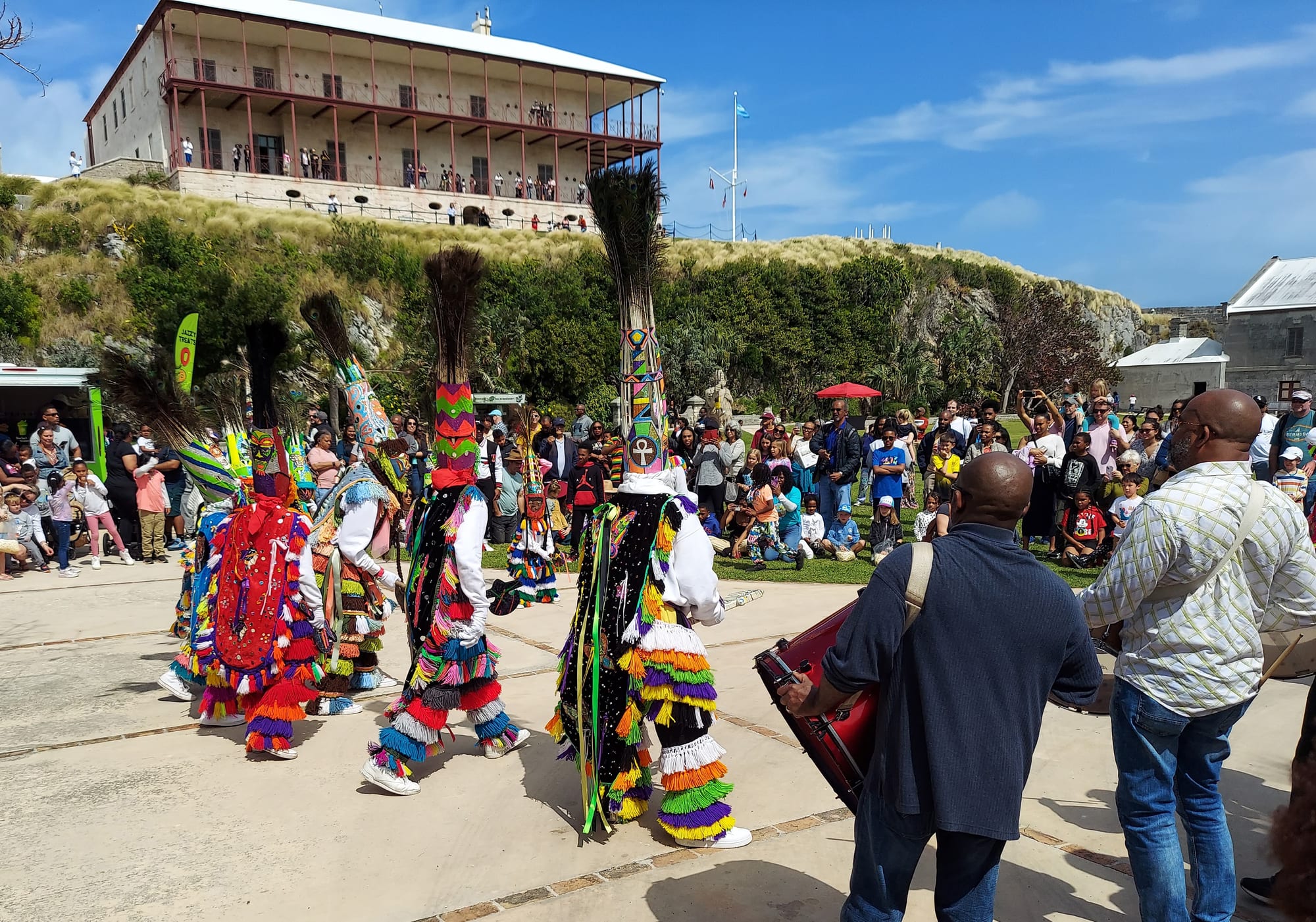
Troupes perform through the streets on Boxing Day and New Year's Day, the costumes and drum rhythms passed down within families and neighbourhoods.
What Bermuda keeps
Bermuda began with a shipwreck and has spent four centuries turning its isolation into an asset: first as a base for sailors trading across the Atlantic, then as a fortress guarding it, then as a discreet resort, and now as a place to register insurance risk. It has one of the highest incomes per head in the world, an old parliament, and an unresolved gap between the descendants of the merchant class and the descendants of the people they enslaved.