Food · Bosnia and Herzegovina
Bosnia and Herzegovina: Food and the National Dish
Grilled minced-meat fingers stuffed into fresh flatbread, a filo pie with strict rules about what it may be called, and a coffee ritual that takes real time to do properly
By Globeway Editorial · 30 September 2026
Four centuries of Ottoman cooking
Bosnia and Herzegovina's food is Ottoman at its core — more than 400 years of Ottoman rule, which ended in 1878, left grilled meat, filo pastry, strong coffee and a whole vocabulary of sweets that the country never gave up — laid over a Slavic base and, since the late 19th century, a layer of Austro- Hungarian café and pastry culture. The country's mixed Bosniak Muslim, Serb Orthodox and Croat Catholic population means the cuisine is genuinely shared but not identical everywhere: pork is common in some areas and absent in others, following religious lines as much as regional ones.
The national dish: ćevapi
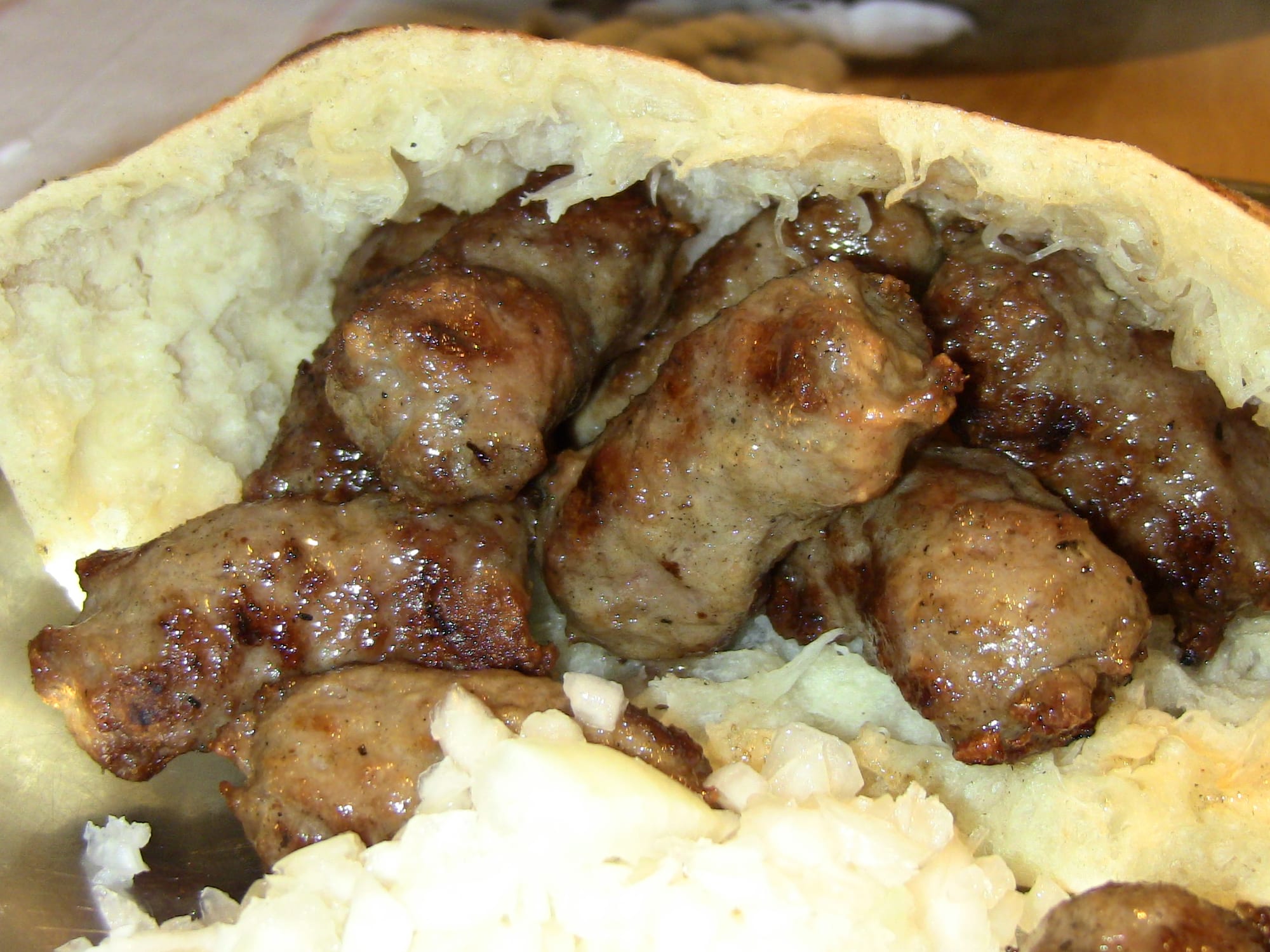
Ćevapi are small, seasoned grilled fingers of minced meat, served stuffed into a round, fresh flatbread called somun with raw chopped onion and a dollop of kajmak, a rich clotted cream. Bosnian ćevapi are made from minced beef, and the Sarajevo style keeps it simple — protected since 2024 as a product of fresh beef and salt — served in dry somun, while Banja Luka joins the rolls into a flat block in a softened lepinja.
It's worth being honest that ćevapi belong to the wider Balkan region as much as to Bosnia specifically — the dish is considered a national dish of both Bosnia and Herzegovina and Serbia, and versions are eaten across the former Yugoslavia; historians note that its modern regional styles largely took shape in the 20th century. In August 2024 "Sarajevski ćevapi" received a protected geographical indication.
Burek and the pita family
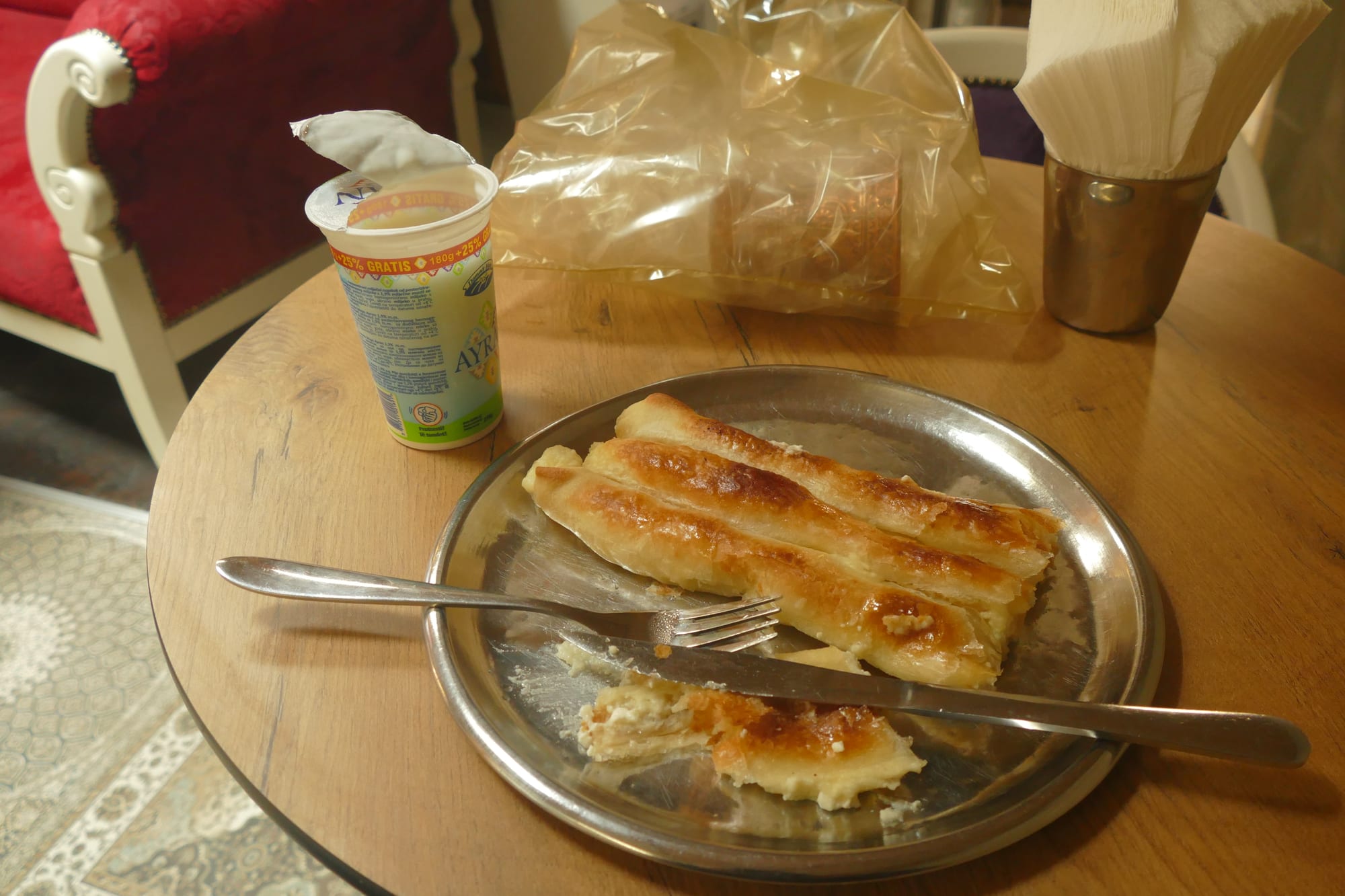
Burek and its relatives are eaten at any time of day, often with yoghurt or a yoghurt drink to cut the richness of the pastry.
Dishes to know
Five more to recognise across Bosnia and Herzegovina:
- Sarma — cabbage or sauerkraut leaves rolled around rice and minced meat,
slow-simmered, a fixture of family gatherings and holidays.
- Bosanski lonac ("Bosnian pot") — a mixed meat and vegetable stew, layered
in a deep pot, originally a ceramic one cooked in a fireplace or pit.
- Klepe — small meat-filled dumplings, the Bosnian name for manti, served
with a yoghurt-and-garlic sauce.
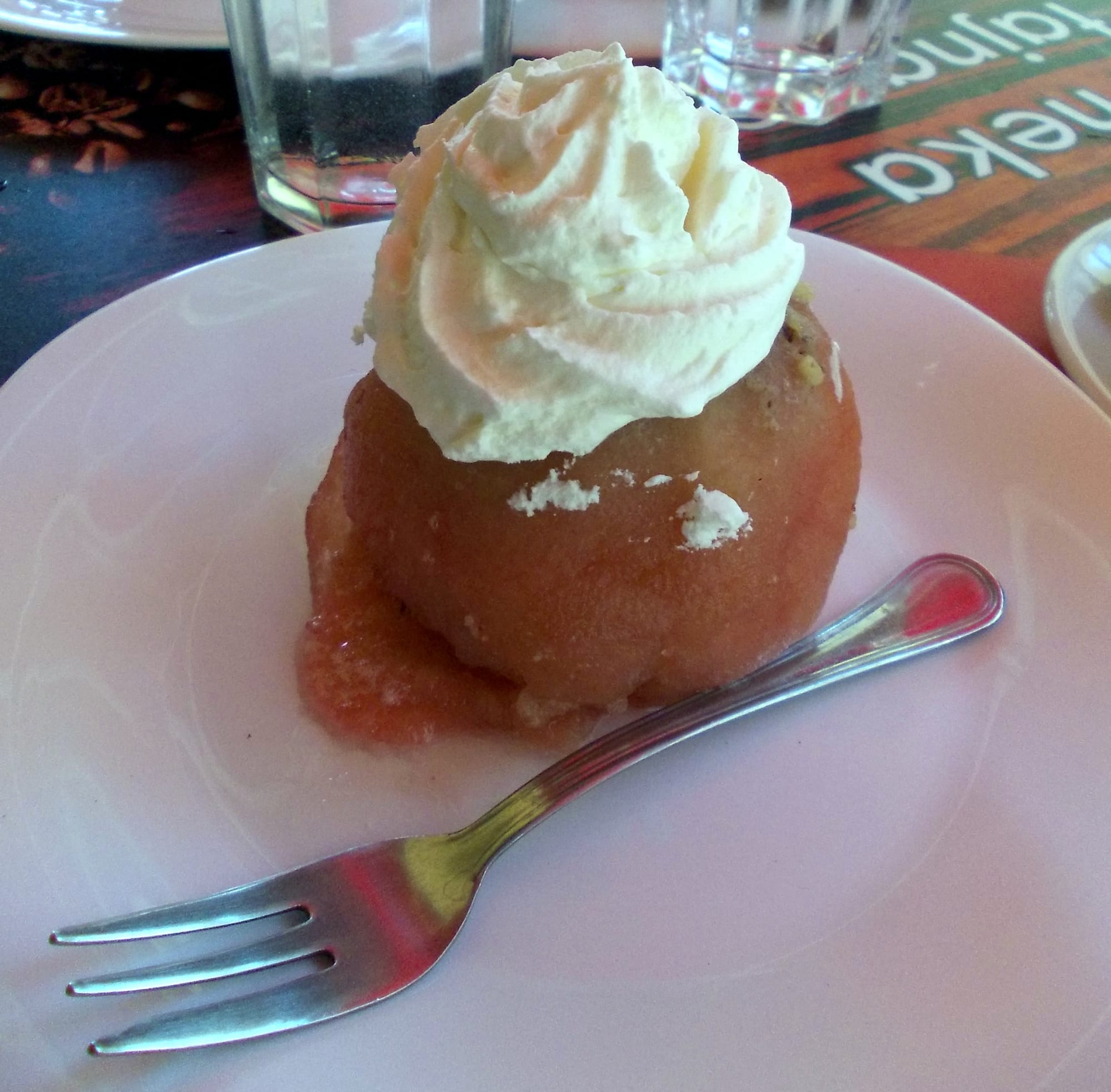
- Tufahija — a whole apple, poached and stuffed with a walnut filling,
served in its syrup with whipped cream; a favourite dessert also popular in neighbouring countries.
- Baklava — the shared Ottoman-heritage syrup pastry, made and eaten across
the whole former Ottoman world.
Bosnian coffee
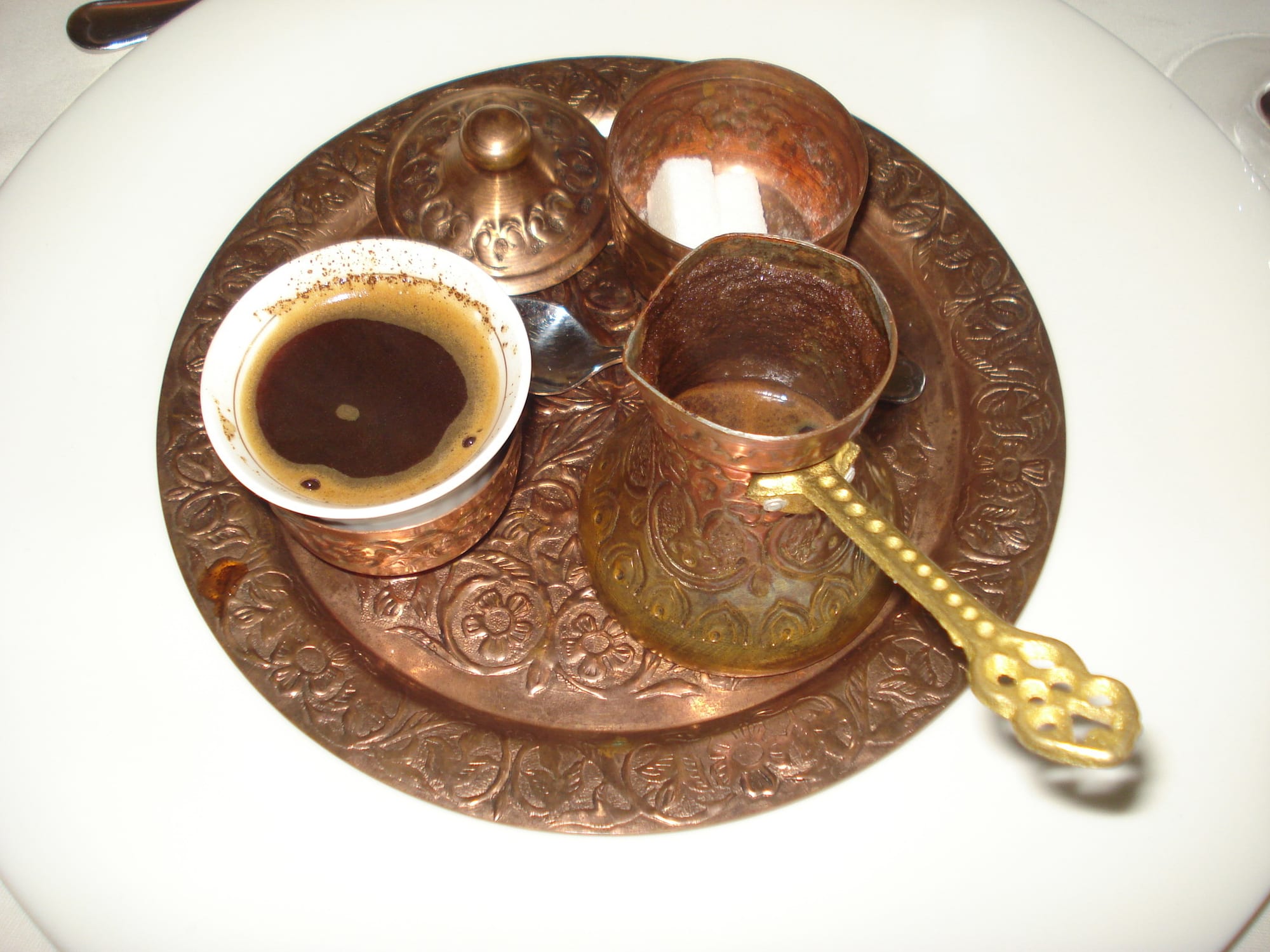
Bosnian coffee, bosanska kafa, is brewed finely ground in a long-handled copper pot called a džezva and served in a small handleless cup, or fildžan, often with a cube of sugar and a piece of Turkish delight on the side. It is made slightly differently from Turkish coffee, and drinking it is a daily custom and a central part of social gatherings and hospitality.
Rakija, a strong fruit brandy most often distilled from plums (šljivovica), is the standard spirit, shared across the wider Balkan region, and Herzegovina's warmer climate supports its own wine industry, built around the local Žilavka (white) and Blatina (red) grapes.
Eating as a traveller
Vegetarians can rely on cheese and potato pita, vegetable-based sarma, and bean stews, though ćevapi and Bosanski lonac are both built around meat. In Bosniak-majority areas most food is halal and pork is uncommon; in Croat and Serb areas pork appears freely. Tap water is widely drunk in towns and cities, and bottled water is easy to find. Sarajevo's old town, Baščaršija, is the best-known place to eat ćevapi and drink coffee the way locals actually do.
What to take from the table
Ćevapi in fresh somun, and a slow, properly made cup of Bosnian coffee afterward, cover the two things this cuisine does best: good grilled meat, and unhurried hospitality.