Attractions & Natural Wonders · Brunei
Brunei: Nine Attractions and Natural Wonders
A gold-domed mosque reflected in its own lagoon, a water village of some 10,000 people on stilts, the largest residential palace on Earth, and untouched rainforest across the bay
By Worldlore Editorial · 30 September 2026
A small, quiet, very wealthy sultanate
Brunei is a small oil-rich sultanate on the north coast of Borneo, split into two wedges by a slice of Malaysia. It is calm, orderly, and conservative — an Islamic monarchy where alcohol is banned and the pace is slow. It has kept much of its rainforest (about 72 per cent of the land is still forested), and its capital is a low-rise city of mosques, ministries, and a huge village built over the river.
The nine below are nearly all in or near the capital, Bandar Seri Begawan, with one — Ulu Temburong — across the bay in the eastern exclave. It is hot and humid year-round.
1. The Omar Ali Saifuddien Mosque
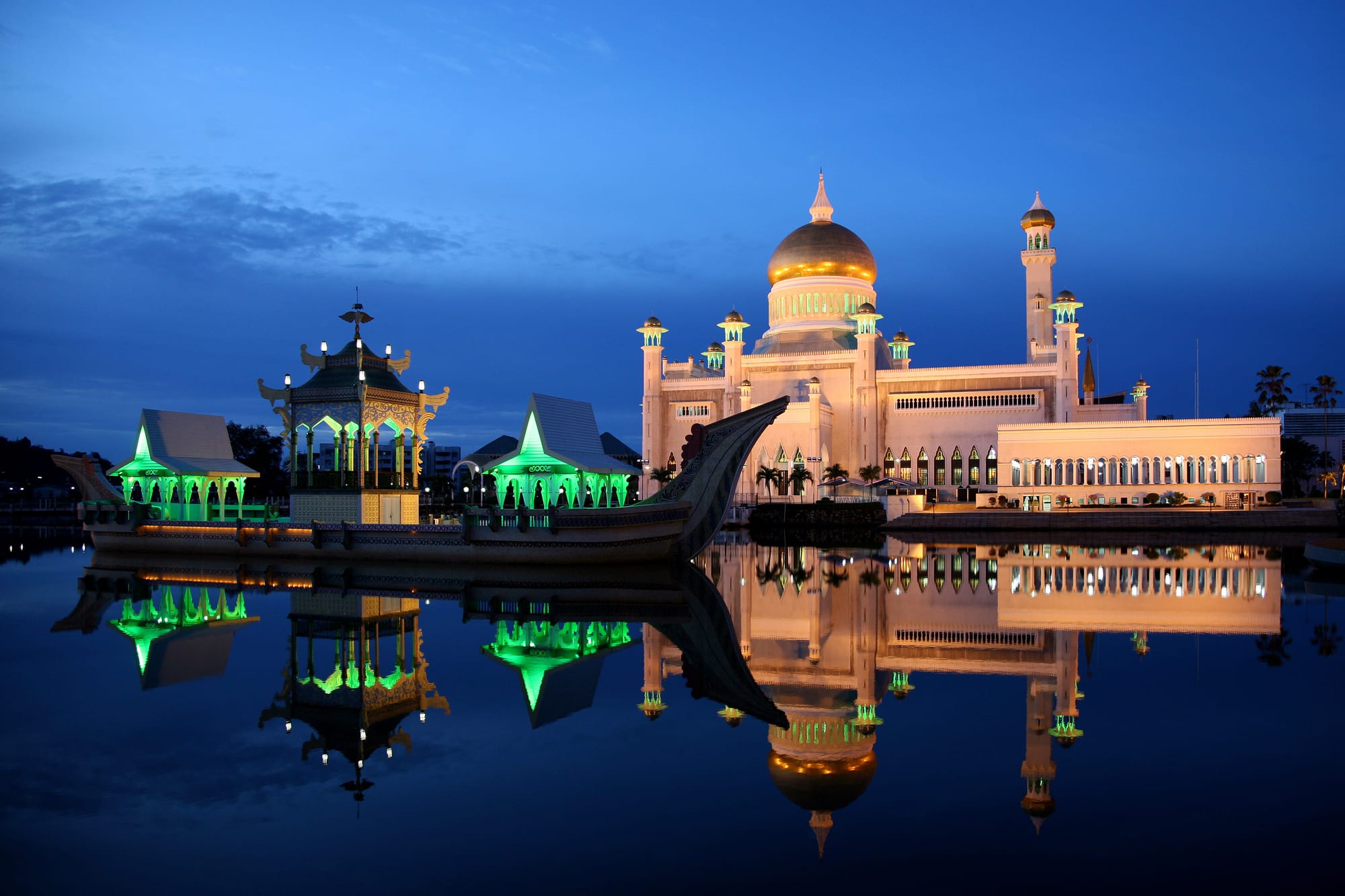
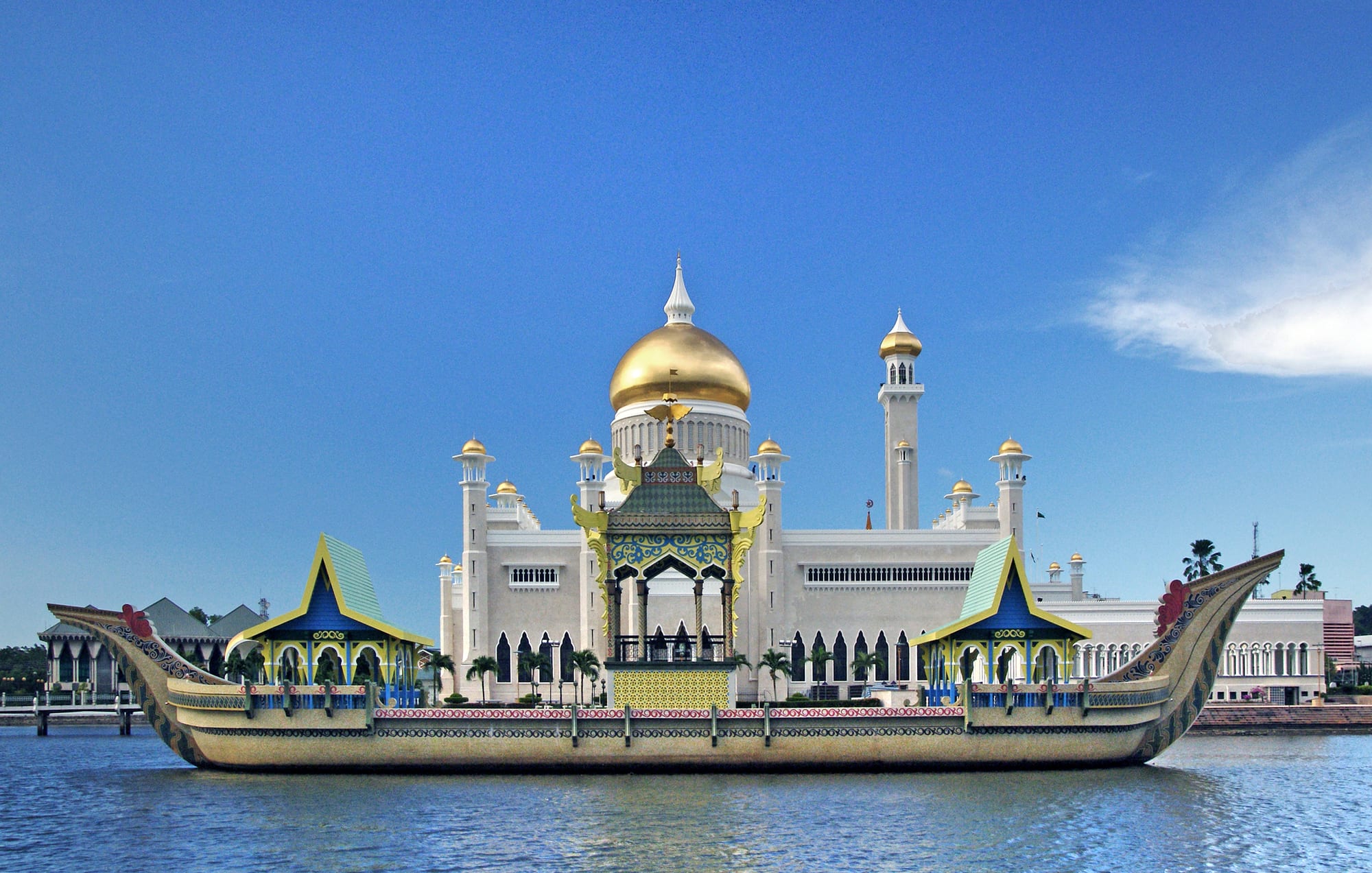
Named for the 28th sultan (the father of the current ruler) and finished in 1958, this is the capital's landmark: Italian marble, a 52-metre gold dome, stained glass, carpets from Saudi Arabia and Belgium, and a man-made lagoon holding a concrete replica of a 16th-century royal barge. It sits beside the Kedayan River near the old centre, close to Kampong Ayer.
It is a working place of worship first and a sight second; non-Muslim visitors are expected to dress modestly and keep clear of prayer times.
2. The Jame' Asr Hassanil Bolkiah Mosque
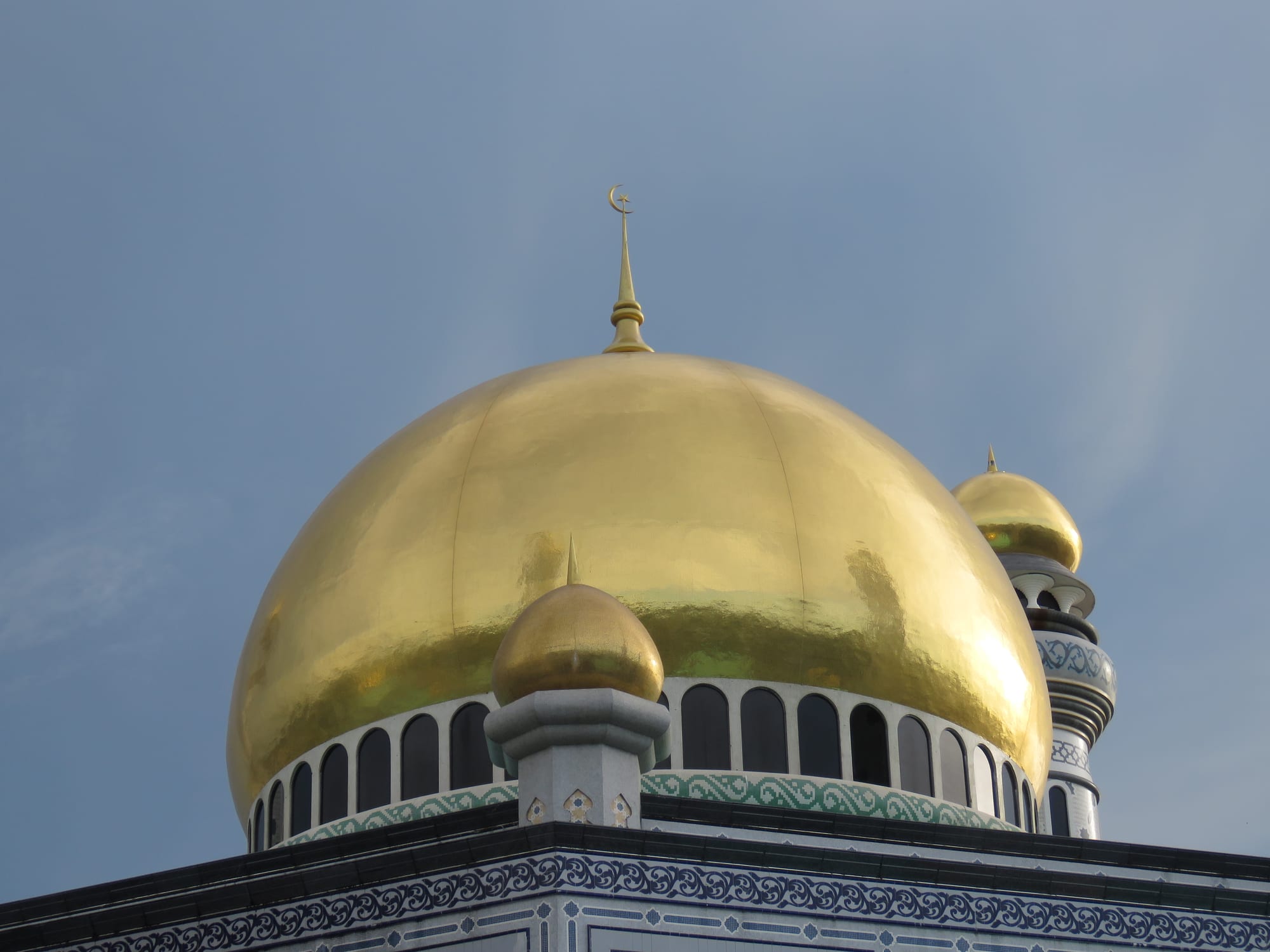
The largest mosque in Brunei, in the Kiarong area a few kilometres from the centre, was opened in 1994 to honour the silver jubilee of the current sultan's reign. It has 29 gold domes (one for each sultan to date), four 58-metre minarets, and a lavish interior, on a 20-acre site.
It was first officially called the Kiarong Mosque, and many still use the name. Like the older one, it is one of Brunei's two state mosques.
3. Kampong Ayer
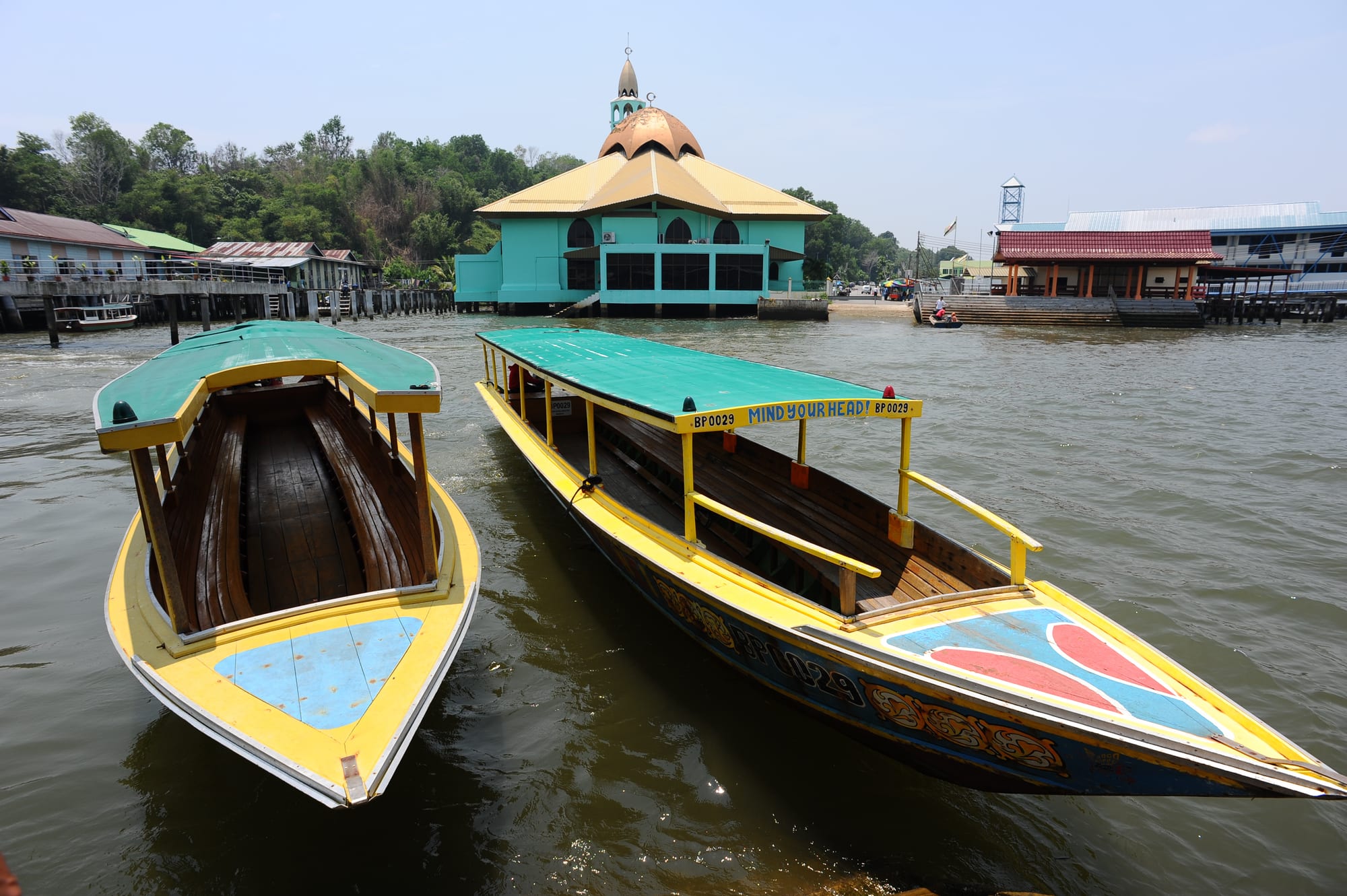
Kampong Ayer is a cluster of villages built entirely on stilts over the river, lived in continuously for centuries — Antonio Pigafetta, sailing with Magellan, described it in 1521. Today it still houses around 10,000 people (down from some 28,000 in 1981), with its own schools, mosques, police and fire stations, all connected by a web of wooden and concrete walkways, and reached by darting water taxis.
The water taxis, known as perahu tambang, are the way in; the boardwalks give a close look at a way of life built entirely over water.
4. The Royal Regalia Museum
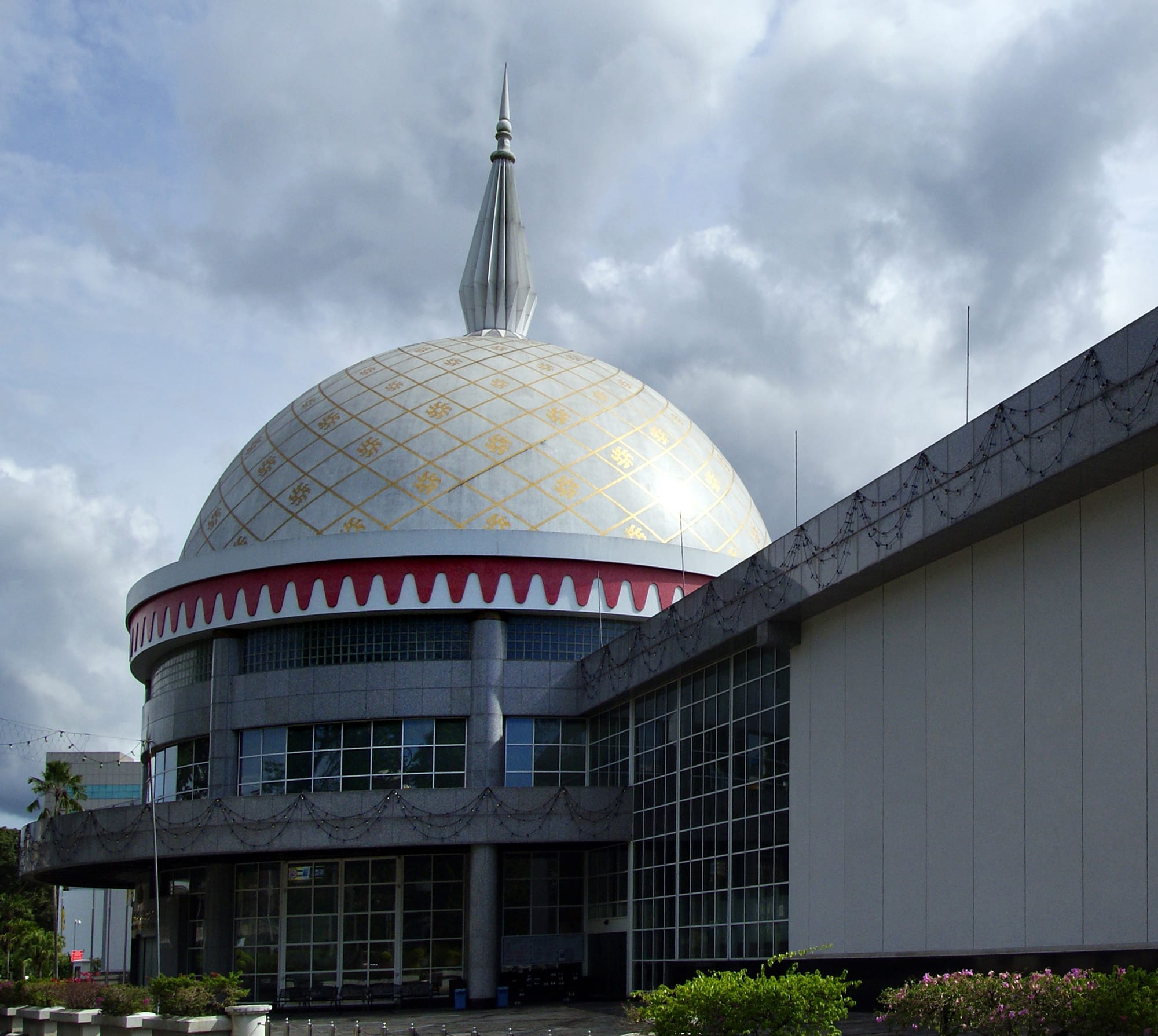
Converted in 1992 from the old Churchill Memorial Building in the centre of town, this museum displays the paraphernalia of the monarchy: the royal chariots of the 1968 coronation and the 1992 silver jubilee, jewelled crowns and gold and silver ceremonial weapons. Replicas of the throne room fill the main gallery.
It is the best single place to understand how central the sultan is to Bruneian identity.
5. Istana Nurul Iman
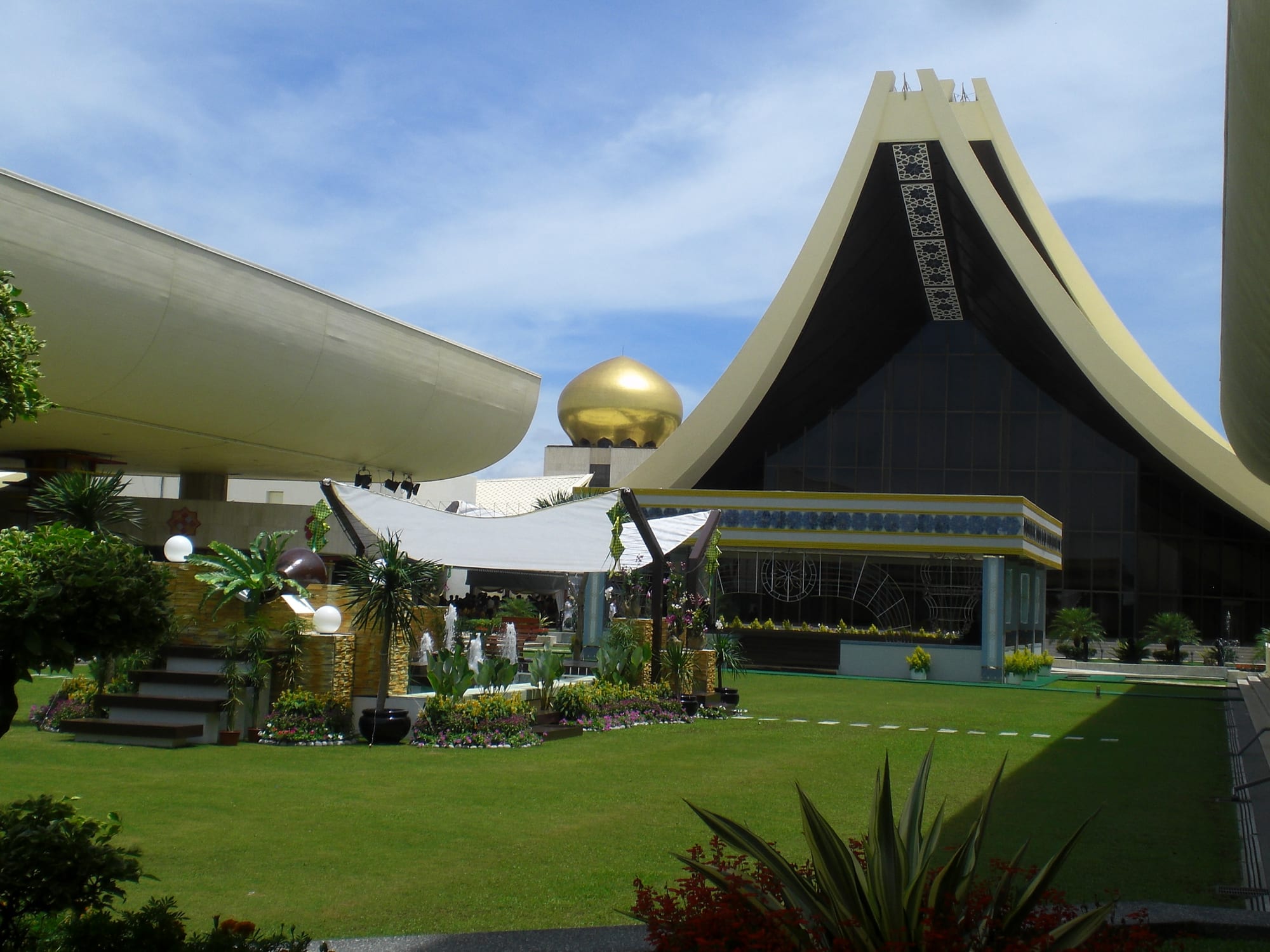
The sultan's palace, on a rise above the river a few kilometres south-west of the capital, has around 1,800 rooms and some 200,000 square metres of floor space — rated by Guinness World Records the largest residential palace on Earth. Designed by the architect of Manila's cultural centre and completed in 1984, it holds the throne room, the seat of government, and a mosque, garages for the royal car collection, and a banquet hall for 5,000.
It is closed to the public except for three days of Hari Raya (Eid al-Fitr) at the end of Ramadan, when the palace receives about 110,000 visitors. The rest of the year it is seen from the road or a boat.
6. The Empire Brunei
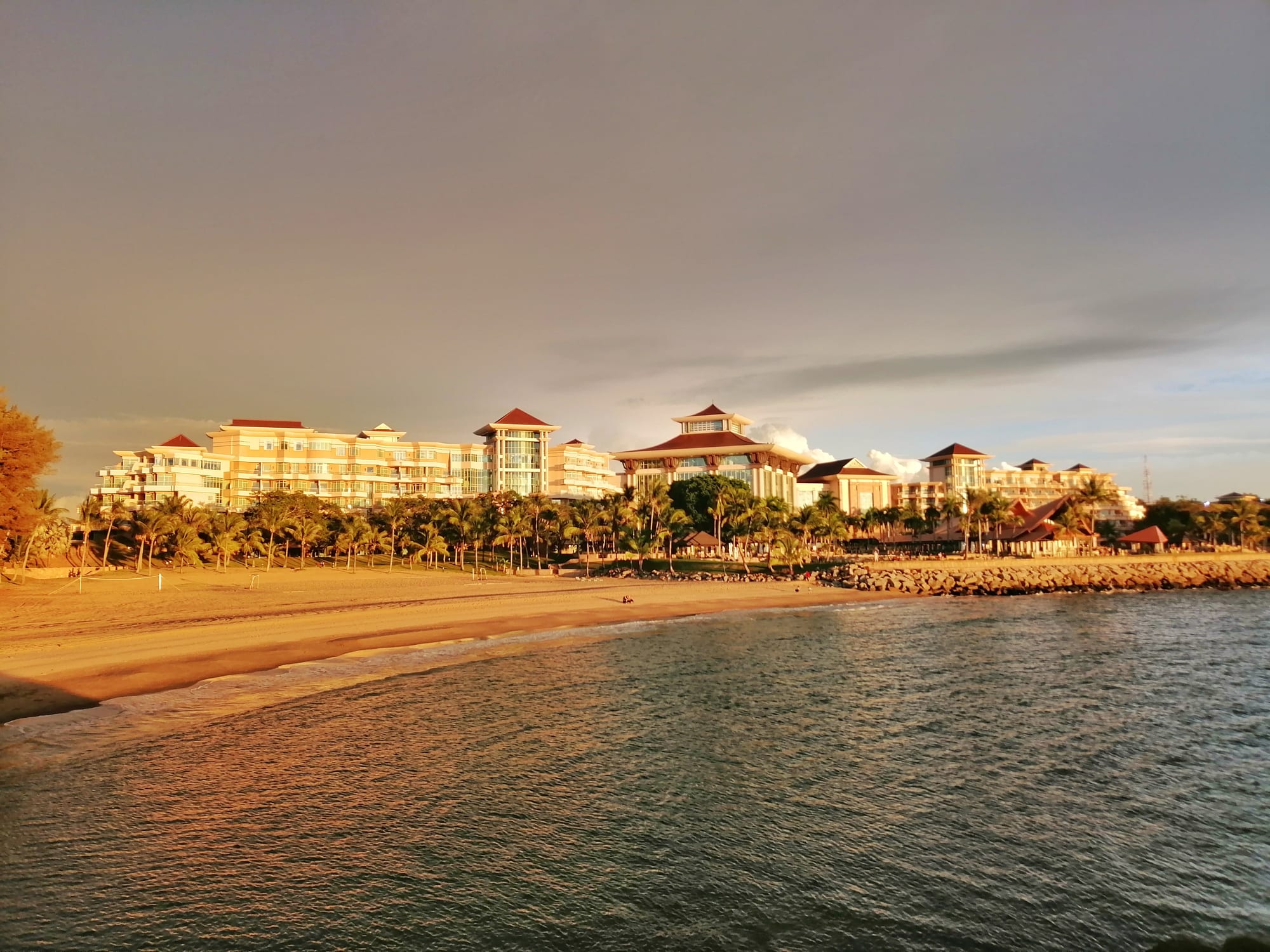
Financed in the 1990s by the sultan's brother Prince Jefri Bolkiah — at a reported cost of about 1.1 billion US dollars — the Empire opened in 2000 as a hotel and country club on the coast at Jerudong. Its scale is the attraction: an opulent atrium, private beaches, a Jack Nicklaus golf course, and a cinema.
Its restaurants are open to non-guests; it is the clearest example of Brunei's oil-boom-era spending.
7. Tasek Lama
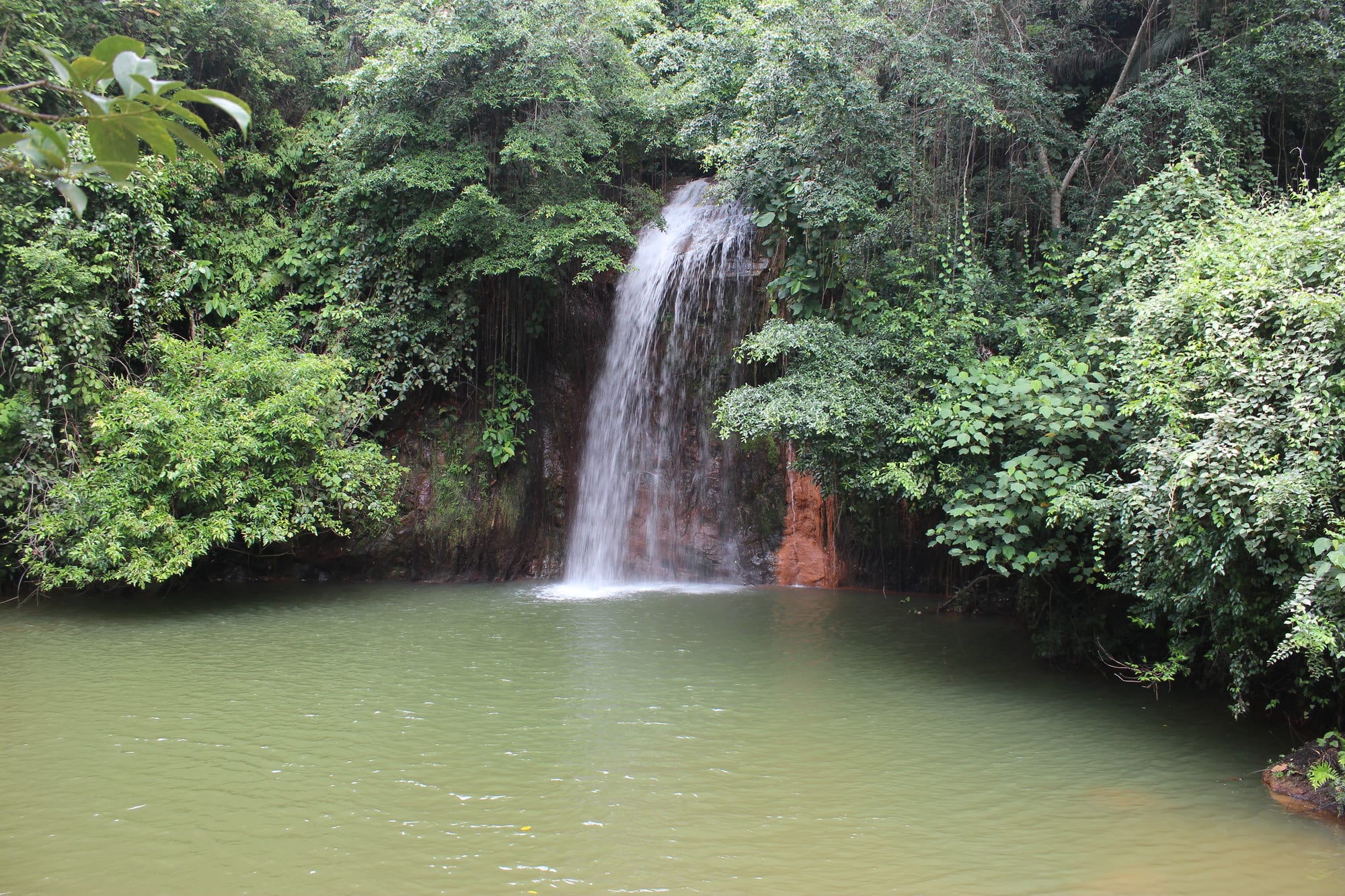
In the heart of the capital, Tasek Lama is a green lung of jogging paths, forest trails, an artificial lake, and a small waterfall with a plunge pool — an easy introduction to Borneo rainforest without leaving town, and a popular spot for a morning walk. Longer trails climb nearby hills to an observation tower.
For a bigger dose of forest closer to the capital than Temburong, the Bukit Shahbandar forest park near the coast at Jerudong has marked hill trails and observation towers.
8. Ulu Temburong National Park
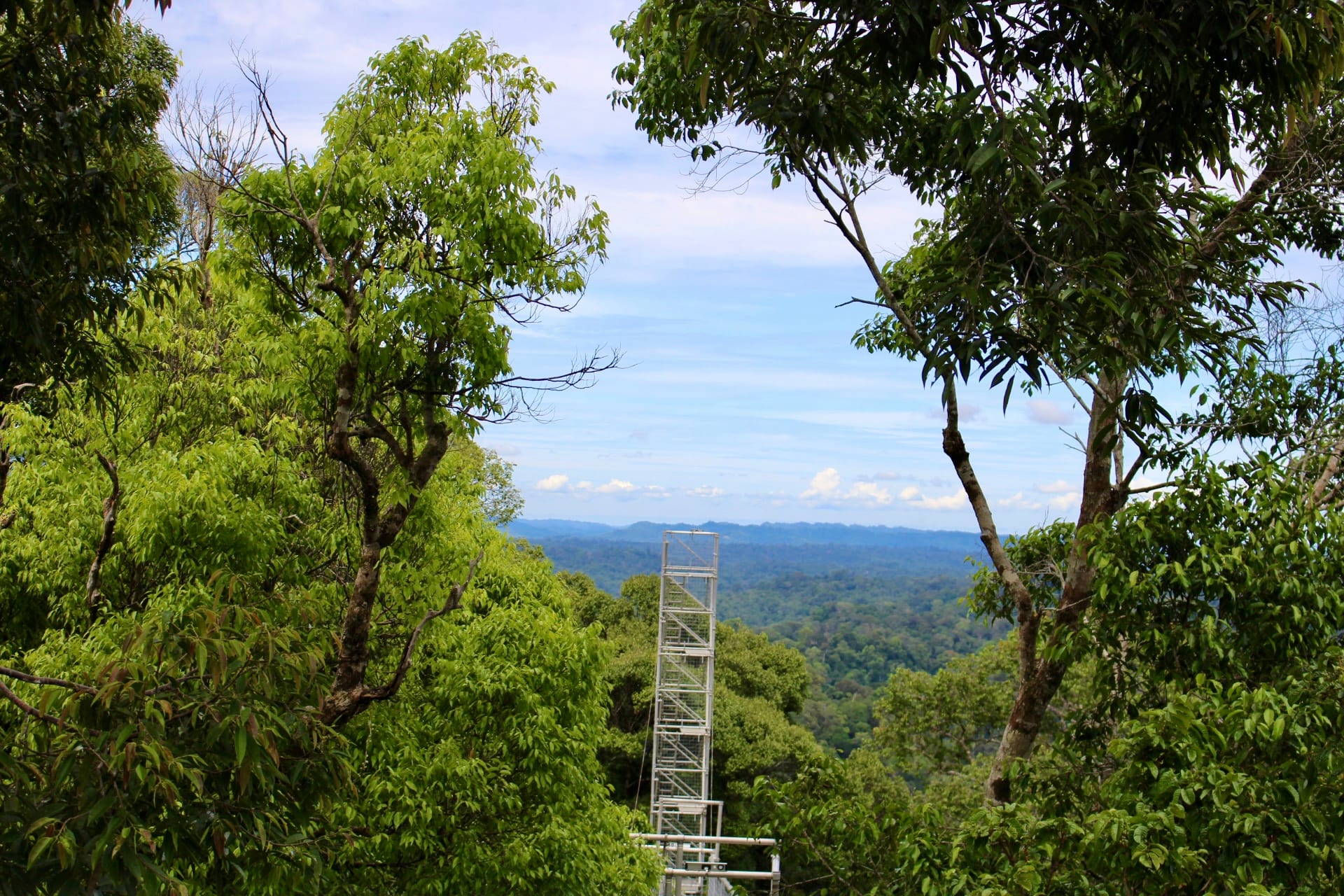
In the mountainous Temburong district — Brunei's eastern exclave, cut off by Brunei Bay and Malaysian territory — this park protects about 550 square kilometres of primary rainforest. A canopy walkway on steel towers, reached by a steep climb, rises some 50 metres above the forest floor for a view over unbroken jungle, and 7 kilometres of boardwalks, bridges and stairways thread the park.
Access is part of the experience: the 30-kilometre bridge or a speedboat to Bangar, a road to Batang Duri, then a narrow longboat up the Temburong River to the park. Most people go on an organised day or overnight trip from the capital.
9. Bandar Seri Begawan
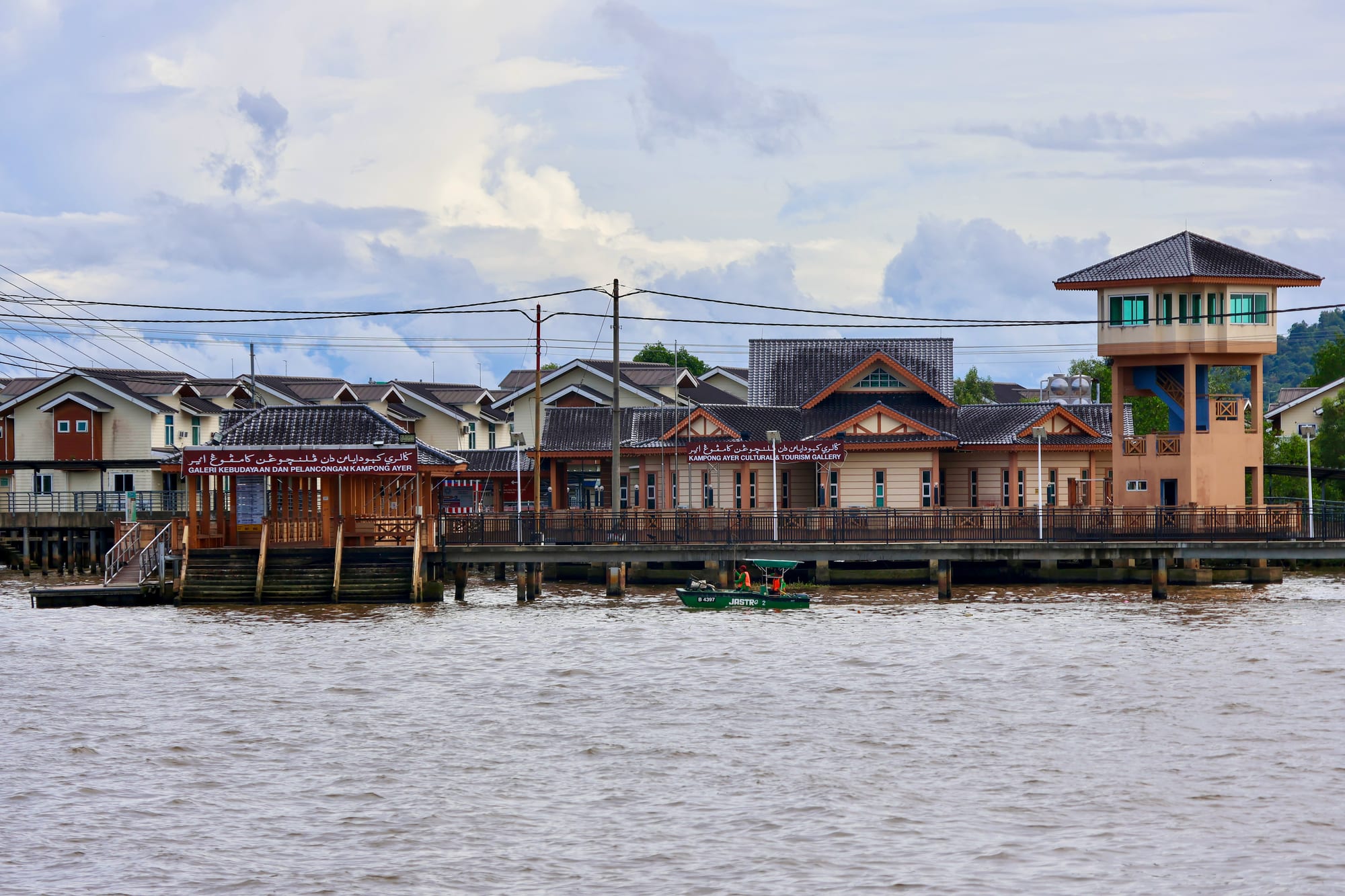
Brunei's capital is small and walkable: a tidied waterfront promenade, the domed mosque, the shops of the Gadong area and its night market for local food, and the Brunei Museum and Malay Technology Museum at Kota Batu, a little way out of town, covering the sultanate's history, Islamic art, and traditional life.
It has almost no nightlife by design, but it is safe, clean, and easy, and it works as a one- or two-day stop — often on the way between Malaysian Borneo's Sabah and Sarawak.
Brunei is a short, easy stop: two or three days covers the mosques, the water village, and a day trip to the Temburong rainforest, and it slots naturally into a wider tour of Borneo.