Food · Brunei
Brunei: Food and the National Dish
A sago starch eaten by twirling it onto a bamboo fork, cheap rice parcels named for knocking on a vendor's door, and a country where no restaurant serves alcohol at all
By Globeway Editorial · 30 September 2026
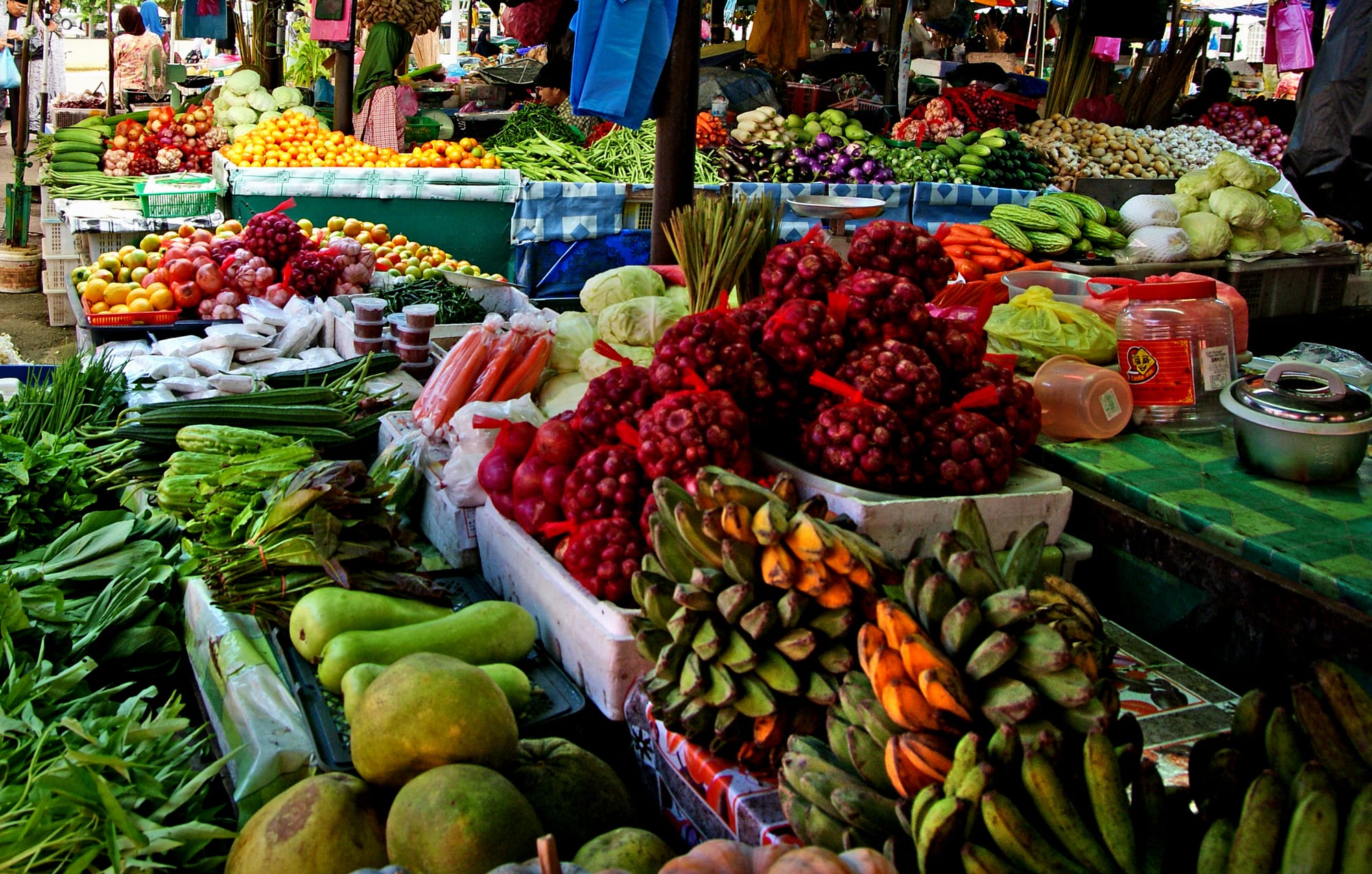
A small, wealthy sultanate on Borneo
Brunei's food shares deep roots with Malaysia and Indonesia — rice, satay, coconut-based curries, and a Malay Muslim culinary tradition — but the country's position on the island of Borneo has also kept alive a genuinely distinct, older indigenous staple. Islam and Sharia law shape the food culture strictly here: food is halal, pork is avoided, and the sale and public consumption of alcohol are banned.
The national dish: ambuyat
Ambuyat is a thick, glue-like paste made from the starch of the sago palm, almost flavourless on its own, eaten by twirling a portion onto a special pair of linked bamboo prongs called chandas and dipping it into a sour, often chilli-spiked sauce called cacah, then usually swallowing it without chewing. It is served alongside a spread of side dishes — grilled or fried fish, vegetables, sambal — that provide most of the actual flavour in the meal, with the ambuyat itself acting mainly as a neutral, filling base.
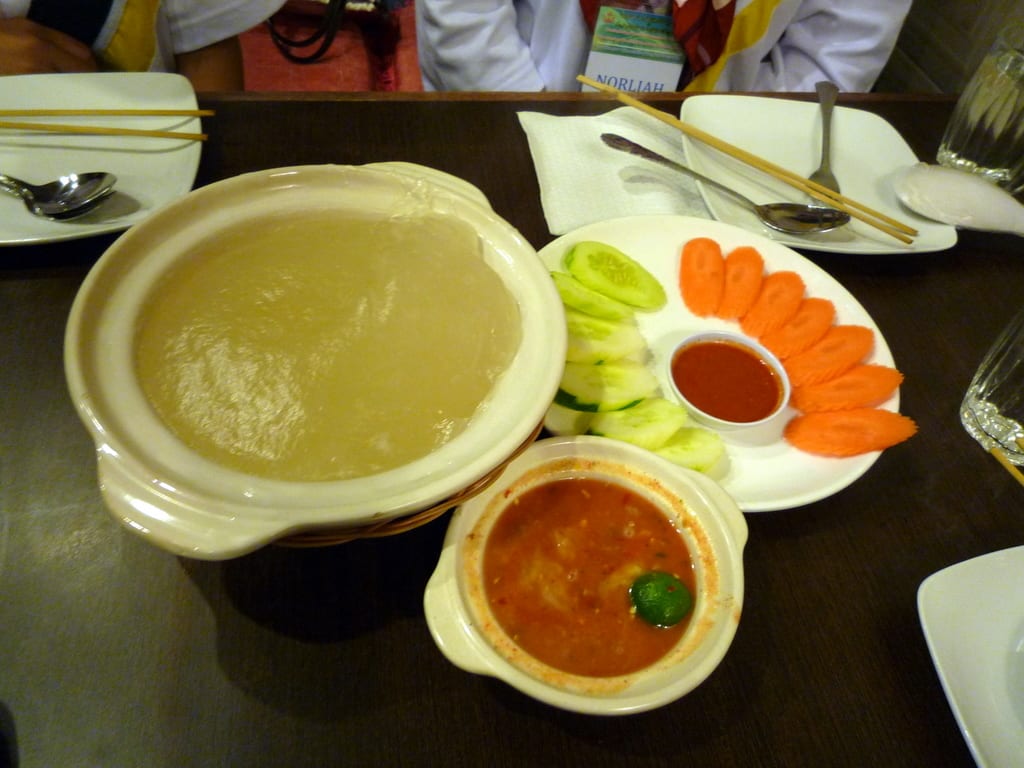
Ambuyat is also eaten in the neighbouring Malaysian states of Sarawak and Sabah and the federal territory of Labuan, where it is sometimes called linut, reflecting a shared indigenous Bornean food tradition older than the modern national borders — but in Brunei it is the national dish.
Dishes to know
Five more to recognise in Brunei:
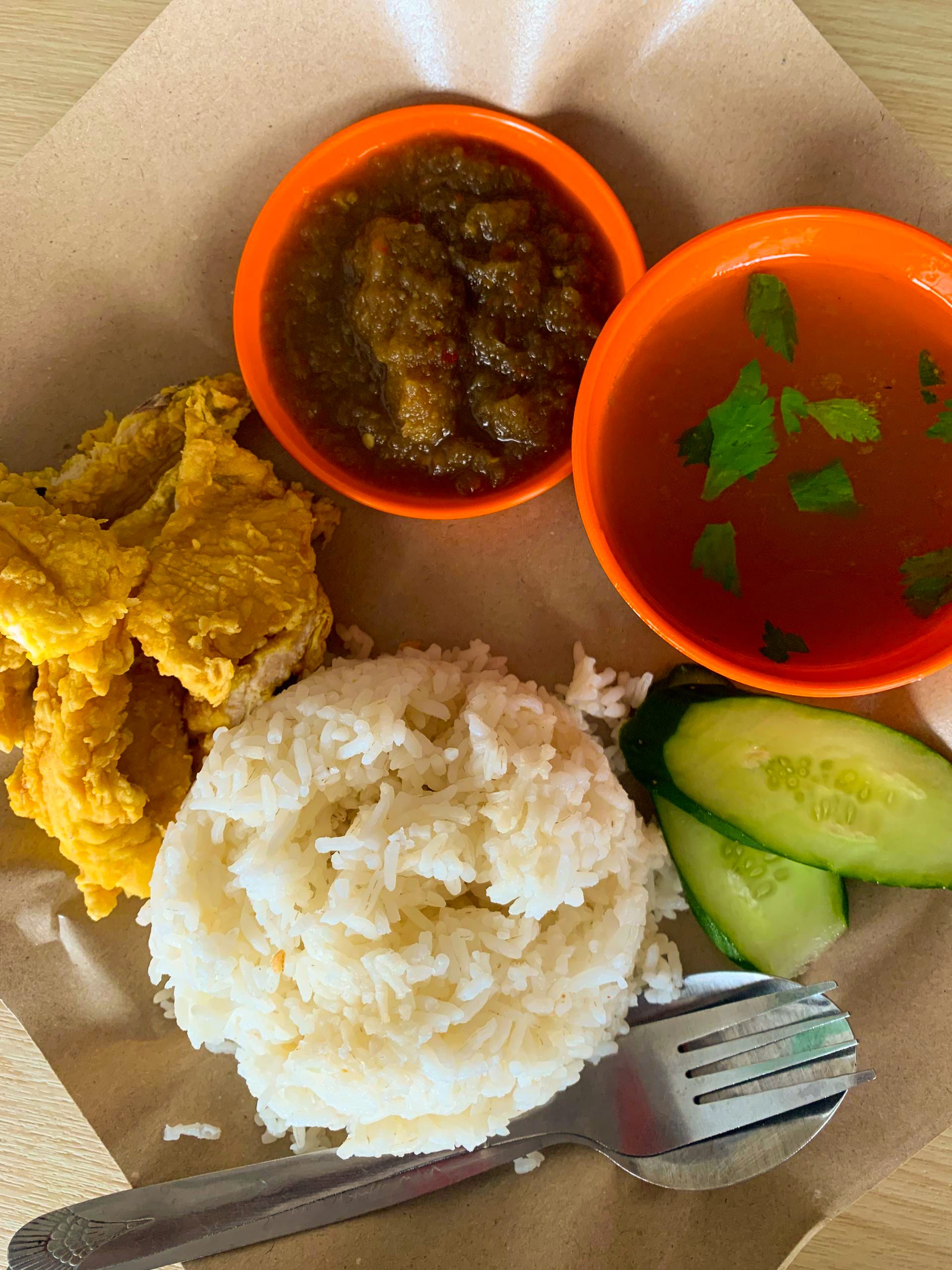
- Nasi katok — a simple serving of rice, fried chicken and sambal,
traditionally wrapped in brown paper and sold cheaply; the name literally means "knock rice", from customers once knocking on a seller's door to place an order.
- Satay — grilled skewered meat with peanut sauce, shared across the wider
Malay world.
- Beef rendang — beef slowly cooked in spiced coconut milk until the sauce
reduces to a rich glaze, a dish shared across the Malay world.
- Nasi lemak — rice cooked in coconut milk with pandan, served with
sambal and garnishes such as fried anchovies, peanuts and egg.
- Kelupis — glutinous rice cooked with coconut milk and wrapped in leaves,
recognised in Brunei as national cultural heritage.
Wealth, imports and the everyday diet
Brunei's oil and gas wealth means the country can afford to import heavily, and much of what fills its supermarkets and restaurants beyond the traditional dishes above comes from abroad. That mix of an older, subsistence-based Bornean tradition (sago, jungle produce, river and coastal fish) sitting alongside imported convenience and international dining options is a genuine, visible feature of how Brunei eats today, especially in the capital, Bandar Seri Begawan.
Eating as a traveller
Alcohol cannot be bought or sold anywhere in Brunei and there are no bars; non-Muslim visitors over 17 may bring in a limited amount from abroad, which must be declared to customs on arrival and drunk only in private. Food is halal and pork is avoided. Vegetarians can rely on vegetable and tofu-based side dishes alongside rice, though ambuyat is traditionally served with fish or meat sides. Nasi katok stalls are the best way to eat well and very cheaply, and are a genuine part of everyday Bruneian life rather than a tourist novelty.
What to take from the table
Ambuyat is worth trying at least once for the experience of eating it properly — twirled, dipped, swallowed without chewing — and nasi katok is the dish that shows how Bruneians actually eat on an ordinary day.