Food · Colombia
Colombia: Food and the National Dish
A combination plate large enough to feed a hard day's work, a Bogotá chicken soup thickened with three kinds of potato, and a coffee-growing country that long exported its best beans
By Globeway Editorial · 30 September 2026
A cuisine as varied as the geography
Colombia has Caribbean and Pacific coastlines, Andean highlands, Amazon rainforest and open plains all within one country, and its food follows that variety closely — coconut rice and seafood on the coast, potato and corn dishes in the mountains, beef and open-fire cooking on the eastern plains. Corn, in the form of the arepa, is the one thing that shows up almost everywhere in some version, alongside a wide variety of tropical fruit.
The national dish: bandeja paisa
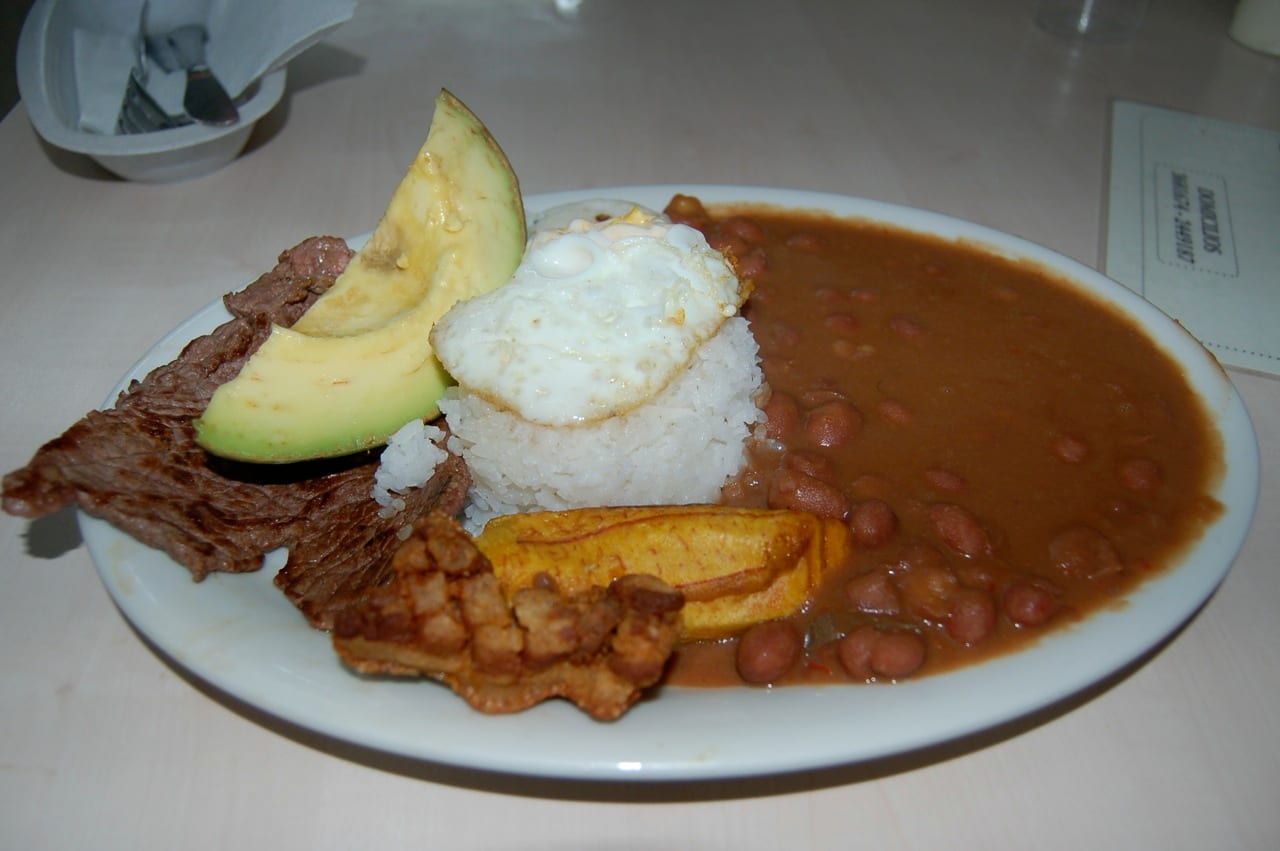
Bandeja paisa, from the Antioquia region around Medellín, is the dish most often put forward as Colombia's national one, though ajiaco and sancocho have their own claims and a 2005 government plan to make it official met opposition from outside the Paisa region: a large platter combining red beans, rice, ground beef, chicharrón (crisp pork belly), chorizo, morcilla (blood sausage), a fried egg, fried plantain, avocado and an arepa, all served together. It probably grew out of simpler peasant dishes and has become the dish visitors are told to order at least once, portion size included.
Ajiaco and the everyday table
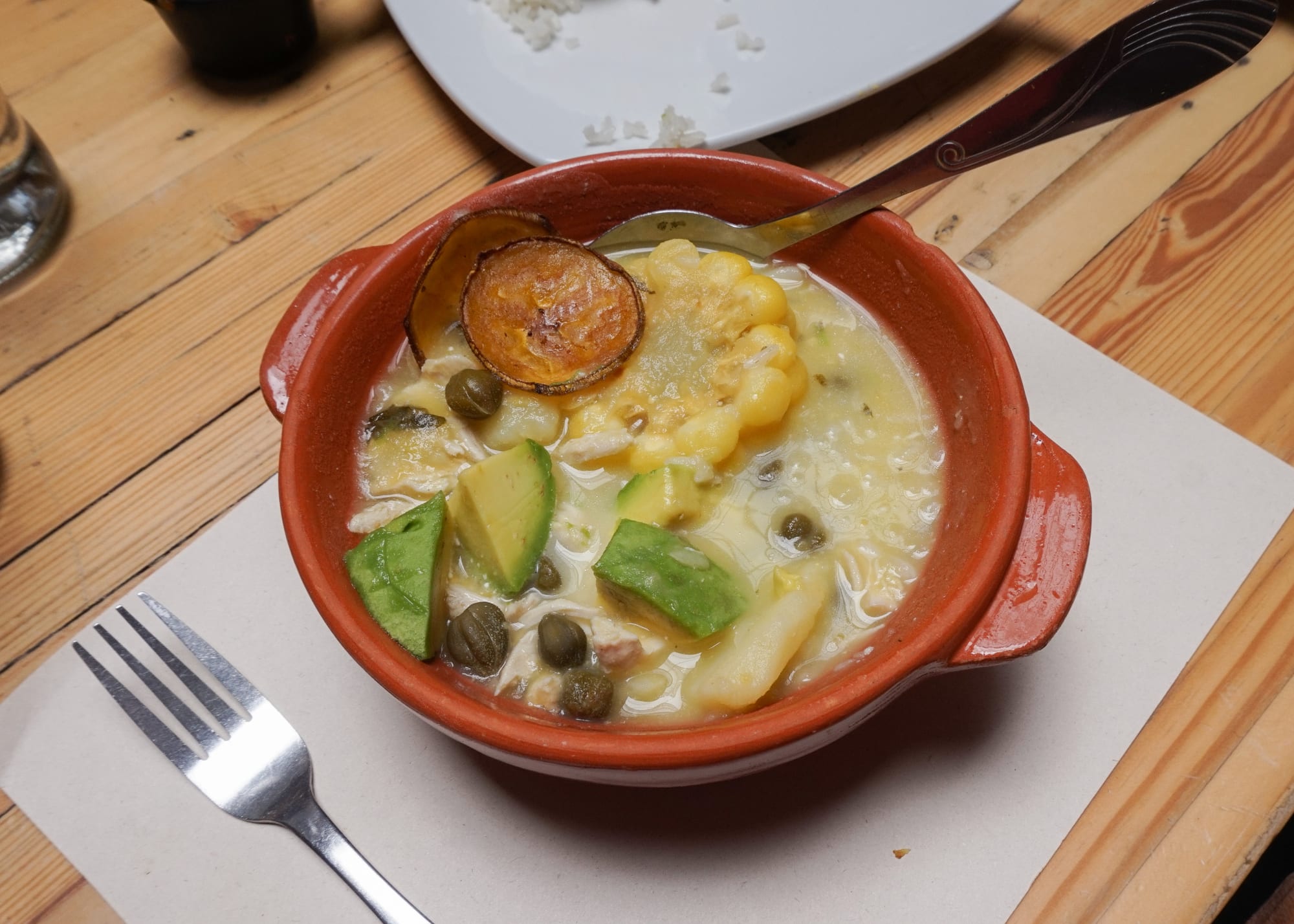
Ajiaco, a thick chicken soup made with three different varieties of potato and a herb called guasca, finished with cream, capers and avocado, is Bogotá's signature dish and a genuine piece of home cooking rather than a restaurant showpiece.
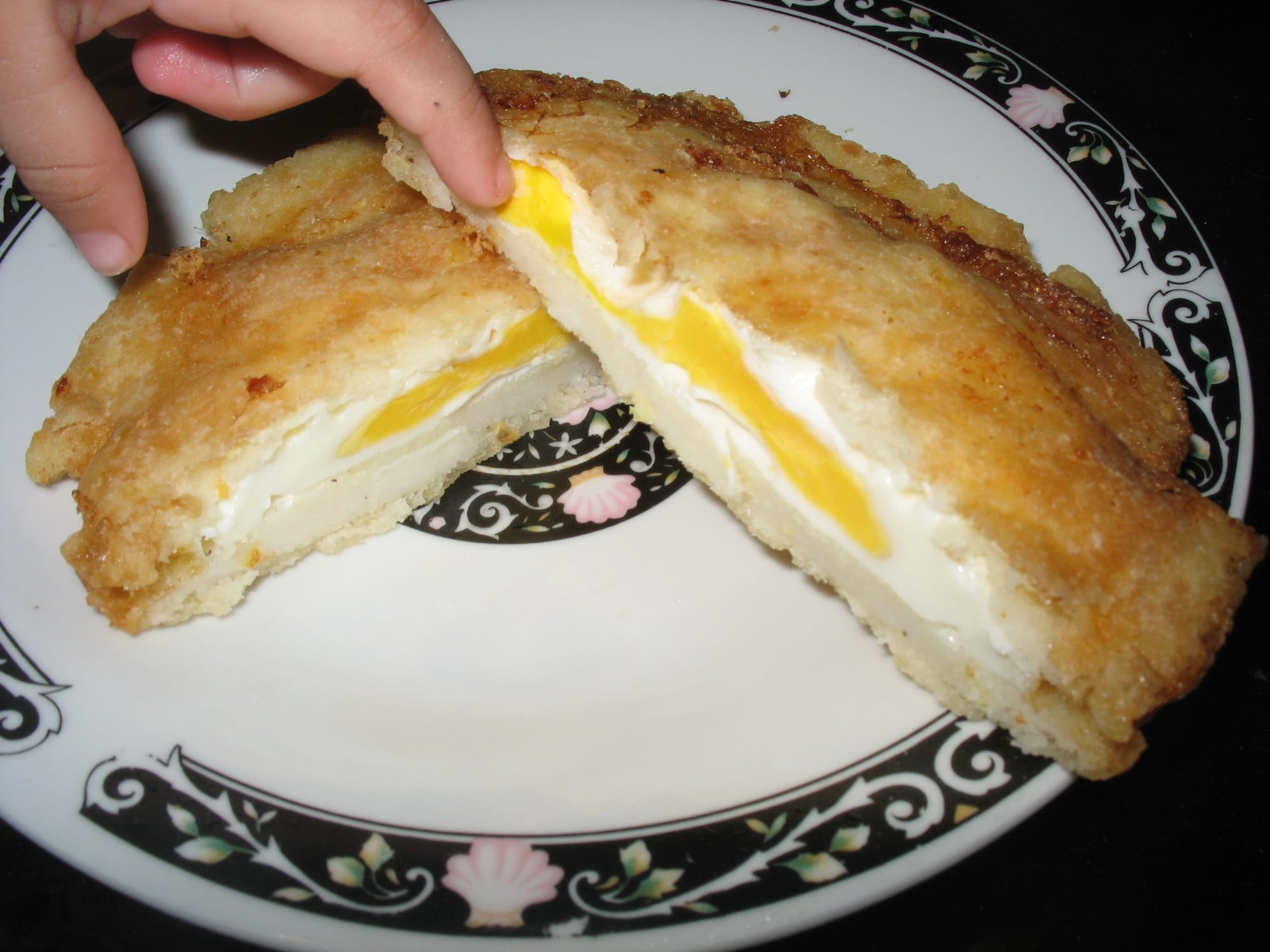
Arepas, grilled or fried corn cakes, appear in dozens of regional forms across the country; arepa de huevo, a corn dough fried with a whole egg sealed inside, is a Caribbean coast speciality particularly associated with the town of Luruaco, which holds its own festival celebrating it.
Dishes to know
Five more to recognise across Colombia:
- Ajiaco — a thick chicken and three-potato soup, Bogotá's signature dish.
- Arepas — grilled or fried corn cakes, eaten in dozens of regional
varieties across the country.
- Sancocho — a hearty stew, with regional versions built on chicken, fish
or beef, treated as a national comfort food.
- Lechona — a whole pig stuffed with pork and yellow peas and slow
roasted, a festive dish especially associated with the Tolima department.
- Empanadas colombianas — fried corn-dough pastries with savoury fillings
that vary by region, sold everywhere as a snack.
Coffee, aguardiente and drinks
Tinto, a small, strong black coffee, is drunk constantly throughout the day. Aguardiente, an anise-flavoured sugarcane spirit, is the most popular alcoholic drink in the Andean regions (rum is preferred on the Caribbean coast), and Colombiana, a sweet kola champagne soda, is one of the country's best-known soft drinks.
Eating as a traveller
Vegetarians can rely on arepas, beans, rice and Colombia's exceptional fresh fruit, though bandeja paisa and most traditional dishes are built heavily around meat. Tap water is generally safe in Bogotá and other major cities. Colombia's fruit markets are worth a visit on their own terms — the range of tropical fruit available, much of it barely known outside the country, is one of the more understated highlights of eating here.
What to take from the table
Bandeja paisa is the dish to try for scale and ambition, but ajiaco, eaten the way a Bogotá family actually makes it, shows Colombian food at its most comforting and least performative.