Attractions & Natural Wonders · Gabon
Gabon: Seven Attractions and Natural Wonders
Forest elephants on Atlantic surf beaches, gorillas and mandrills in rainforest that covers most of the country, and waterfalls thundering through untouched jungle
By Worldlore Editorial · 30 September 2026

The last Eden on the Atlantic
Gabon straddles the equator on the west coast of Central Africa, a country the size of the United Kingdom with only about 2.6 million people, many of them in Libreville. Nearly 90 percent of it is forested, and in 2002 the government turned roughly 10 percent of the national territory into 13 national parks in one stroke — an unusual bet on conservation and eco-tourism. It is one of the best places to see lowland gorillas, forest elephants, and mandrills, and where elephants and hippos wander onto ocean beaches.
The seven below are almost all wilderness. Gabon is hot and humid year-round; the long dry season (roughly June to August) is the easiest for travel and coincides with the whale-watching season.
1. Loango National Park
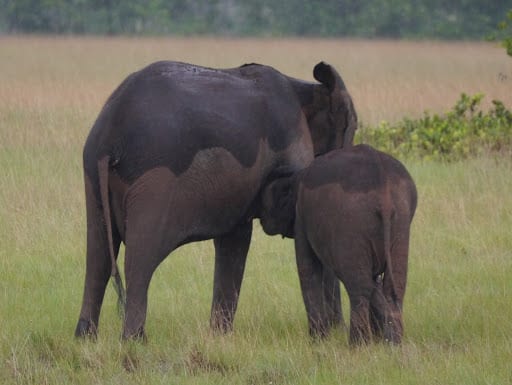
Loango, on the central coast, is Gabon's showpiece — the place made famous by photographs of elephants and buffalo on the surf line. A mosaic of beach, lagoon, papyrus swamp, savanna, and forest, it holds forest elephants, buffalo, western lowland gorillas, leopards, and hippos that surf in the ocean, while humpback whales and dolphins gather offshore in one of the richest concentrations of cetaceans anywhere off Africa.
Visits are based at a small number of lodges and camps, reached by air, road and boat.
2. Lopé National Park
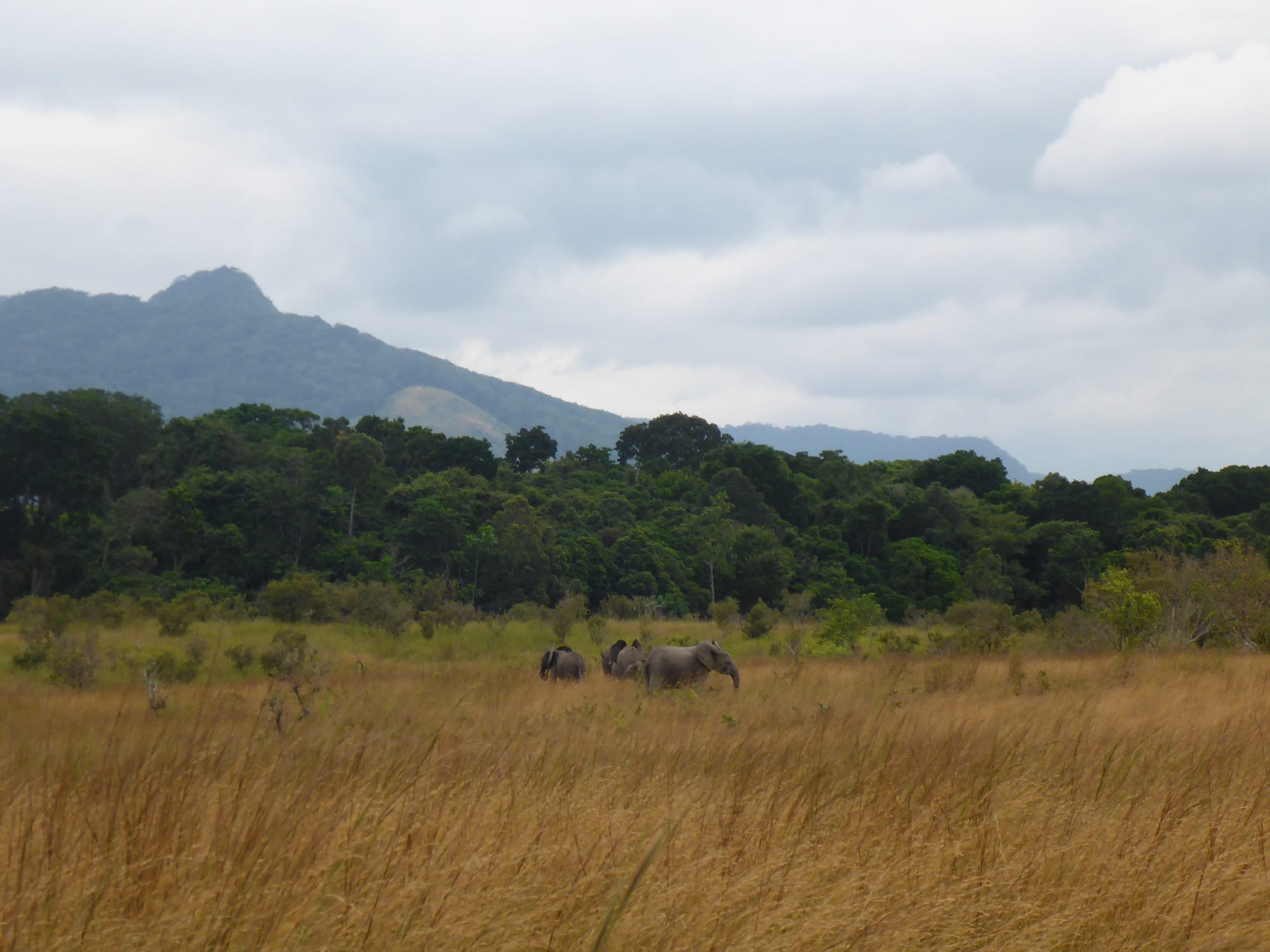
Lopé, in the centre of the country, is the most accessible park — reached by the Trans-Gabon railway from Libreville. It protects a rare meeting of rainforest and grassy savanna left over from the last Ice Age, along with Stone Age and Iron Age archaeological sites and more than 1,600 rock engravings; the mix earned it UNESCO World Heritage status in 2007. Wildlife includes mandrills in enormous troops, forest elephants, buffalo, and sun-tailed monkeys.
Its station on the railway makes Lopé the easiest park for a first, shorter visit.
3. Ivindo National Park and Kongou Falls
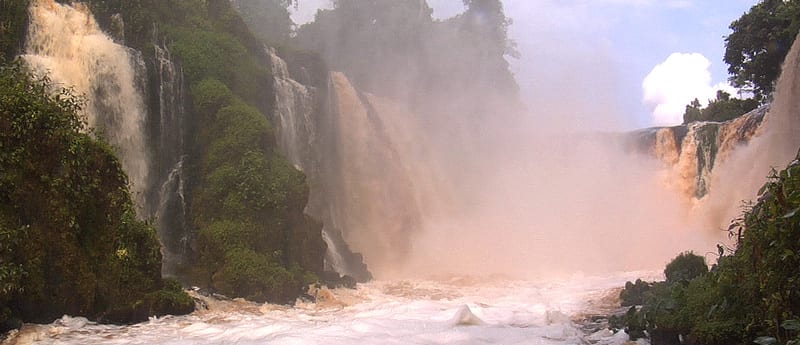
Ivindo, in east-central Gabon, is a park of black-water rivers and near-pristine rainforest, inscribed by UNESCO in 2021. Its centrepiece is Kongou Falls, a broad cataract about 3 kilometres wide and up to 56 metres high, where the Ivindo river breaks up and drops through the forest in a roar of white water — remote, hard to reach, and all the more impressive for it.
Reaching the falls involves a long overland and river journey, organised with park staff.
4. Langoué Baï and the forest clearings
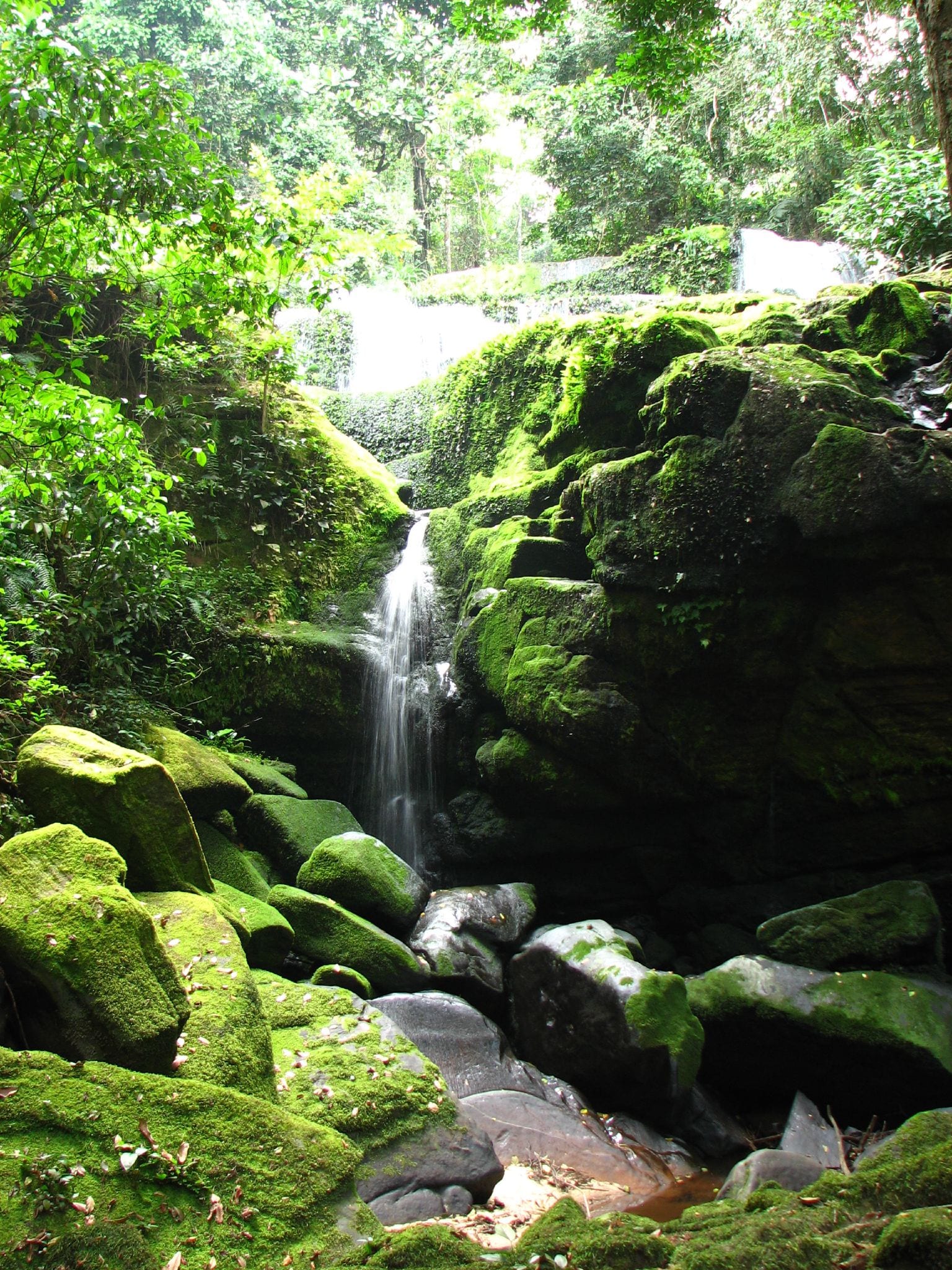
In the south of Ivindo lies Langoué Baï, the largest baï in Gabon — a marshy forest clearing rediscovered by the conservationist Mike Fay in 2001, where forest elephants, lowland gorillas, sitatunga antelope, and forest buffalo come out of the trees to feed on its mineral-rich ground. It is counted among the five most important forest clearings in Central Africa. The park's rivers also carry the Mingouli Falls, pictured here.
The clearing is now used mainly for research, and any visit must be arranged through the park authority.
5. Gorilla and mandrill tracking
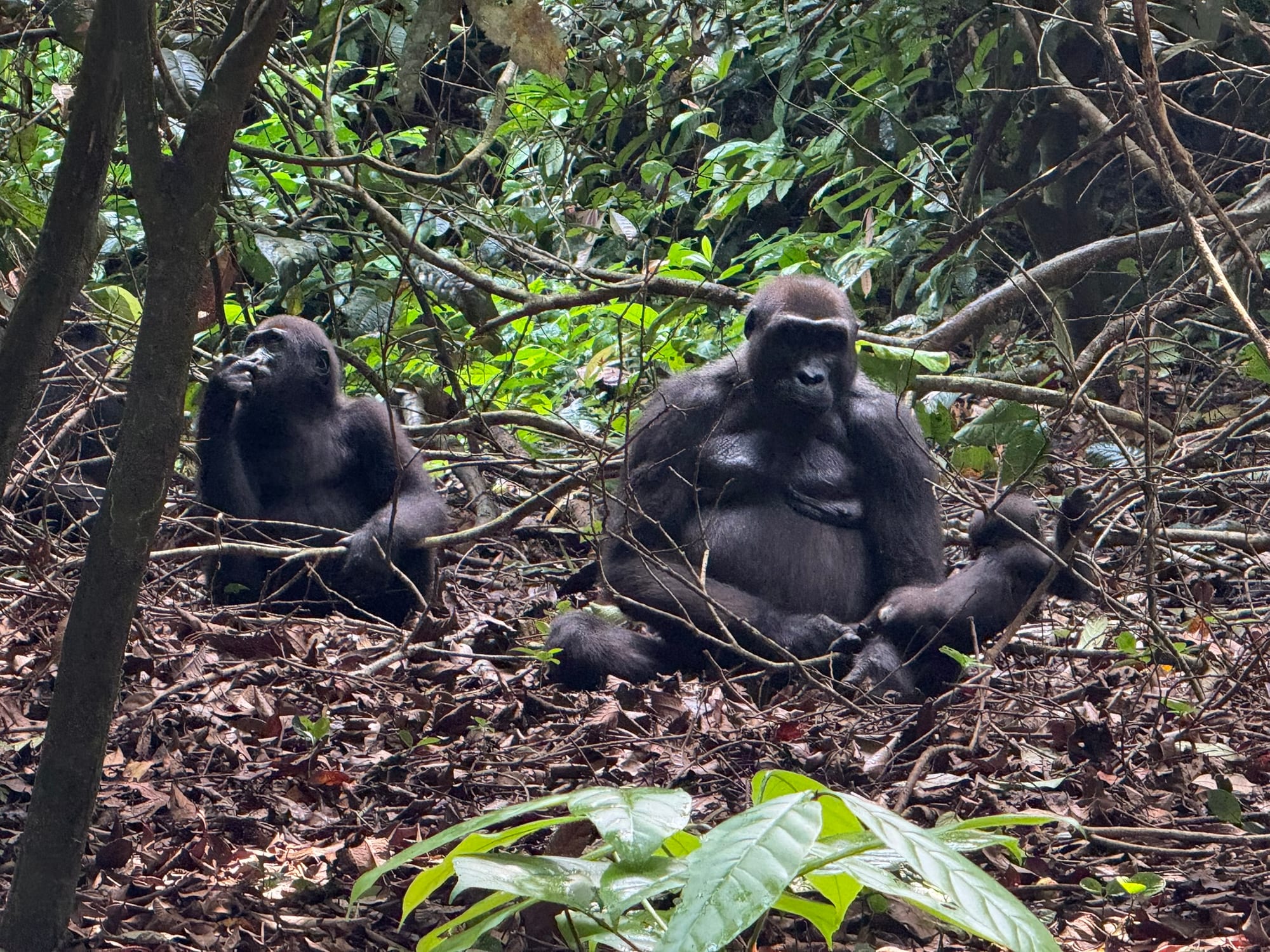
Gabon offers one of the few places on earth to track western lowland gorillas — subtly different from the mountain gorillas of Rwanda and Uganda — with a group habituated for research and tourism in Loango National Park. The country is also the great stronghold of the mandrill, the huge, blue-and-red-faced forest monkey that moves in "hordes" of several hundred, studied for decades in the Lopé area.
Both are strenuous, weather-dependent forest treks, arranged through lodges and the park service.
6. Libreville
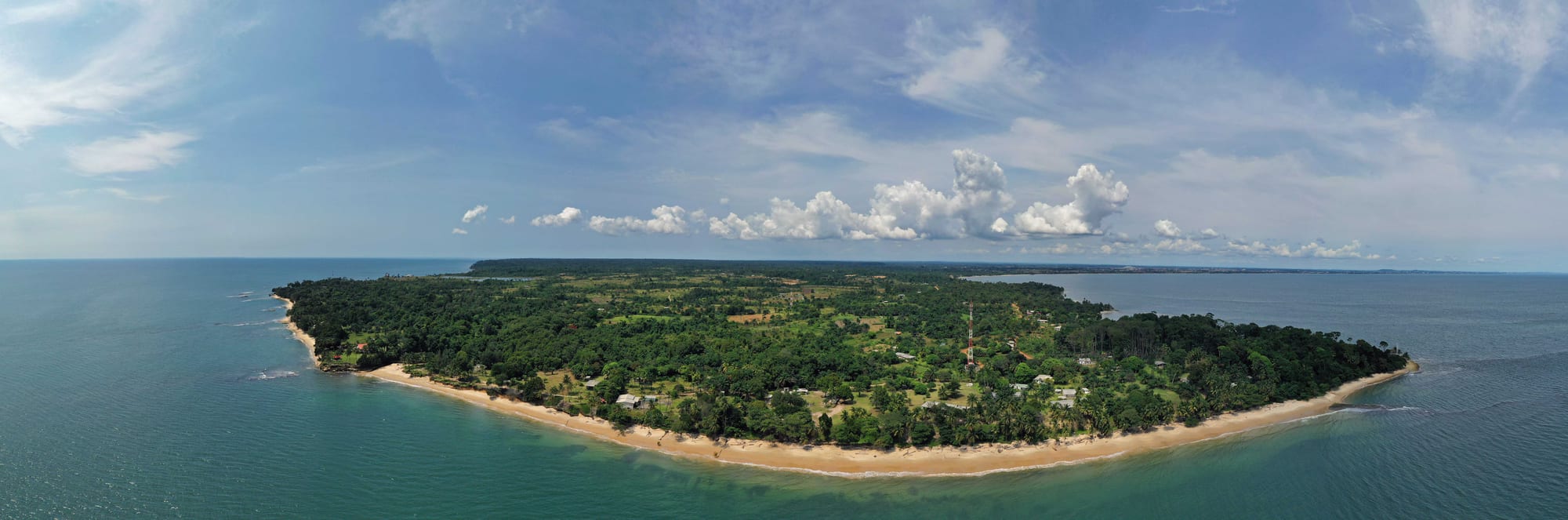
Libreville, founded in 1849 as a settlement for people freed from a captured slave ship — hence the name — is a spread-out, humid capital along the Komo estuary. The draws are low-key: the National Museum of Arts, Rites and Traditions with its traditional masks and carvings, the Marché du Mont-Bouët, the seafront boulevard, the Saint-Michel church at Nkembo, and the Arboretum de Sibang, a patch of forest inside the city.
It is the arrival point and the base for onward flights to the parks.
7. Pointe Denis and Pongara National Park
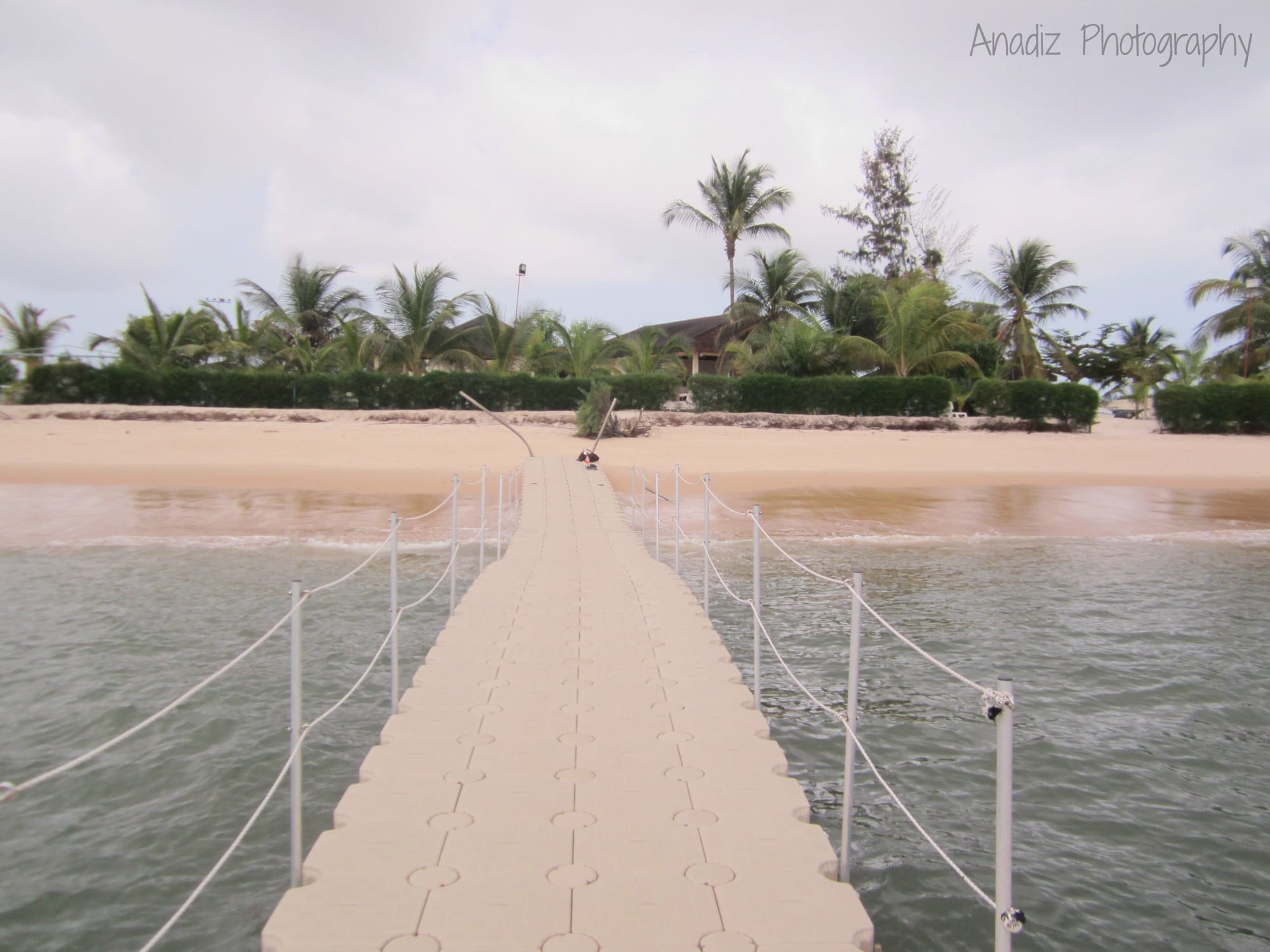
Directly across the estuary from Libreville, a short ferry ride away, the south shore carries the weekend beaches of Pointe Denis and, beside them, Pongara National Park — mangroves, coastal forest, and beaches where leatherback turtles come ashore to nest. Elephants, buffalo, gorillas and chimpanzees live in its forests.
It is the easiest nature escape from the capital, with a handful of lodges.
Gabon is a specialist wildlife destination: expensive, logistically demanding, and reliant on light aircraft and boats. A typical trip is 10 days to two weeks combining Loango with Lopé or Ivindo, arranged in advance through the parks agency or a specialist operator, with a night or two in Libreville at each end.