History · Qatar
How did a land of pearl divers become one of the richest countries on Earth?
Qatar's pearl trade collapsed and its people scattered; then came oil, and beneath the sea the largest gas field on the planet.
By Globeway Editorial · 2 November 2026
The short answer
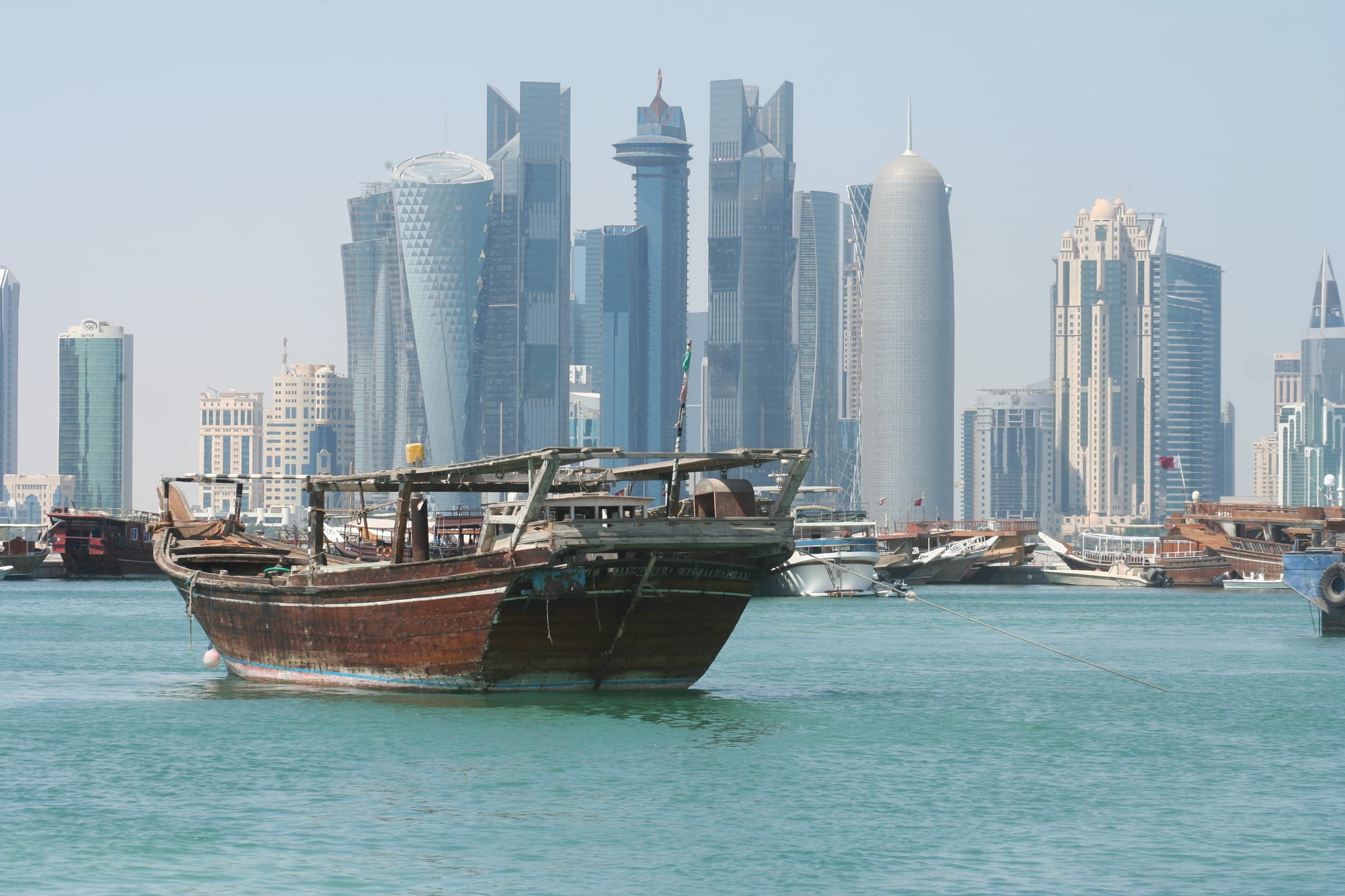
Qatar was never quite a single village, but it was close: a dry peninsula of small pearling and fishing towns, the largest of them Doha, with about 12,000 people in 1908. Pearls were the mainstay of its economy, and when the pearl trade collapsed in the 1920s and 1930s, crushed by cheap cultured pearls and the Great Depression, whole families left and villages emptied.
Two discoveries changed everything. Oil was struck at Dukhan at the end of the 1930s and exported from 1949, which paid for a modern state. Then, in 1971, the year of independence, drillers found the North Field, the Qatari part of the largest natural gas field on Earth. From the 1990s Qatar learned to chill that gas into liquid and ship it worldwide, and because the proceeds are shared among only a small number of citizens, it became one of the richest countries per person in the world.
A town that lived by the oyster beds
People on the Qatari peninsula were diving for pearls in the Persian Gulf as early as around 2100 to 1700 BC, and by the 8th century AD Qatar was a centre of the pearl trade. By the early 20th century the trade dominated everything. In 1907 Doha's harbour held 350 pearling boats with a combined crew of 6,300 men. A British official observed that if the supply of pearls dropped, Qatar would "practically cease to exist".
The work was hard and the money precarious. A season's catch could take up to a year to sell, so captains and divers lived on advances and loans, and the merchants who lent the money took a disproportionate share of the profits. Many divers were enslaved men; slavery was abolished in the Gulf states only between 1937 and 1971. The ruling Al Thani family were themselves merchant princes, reliant on trade and above all on pearls.
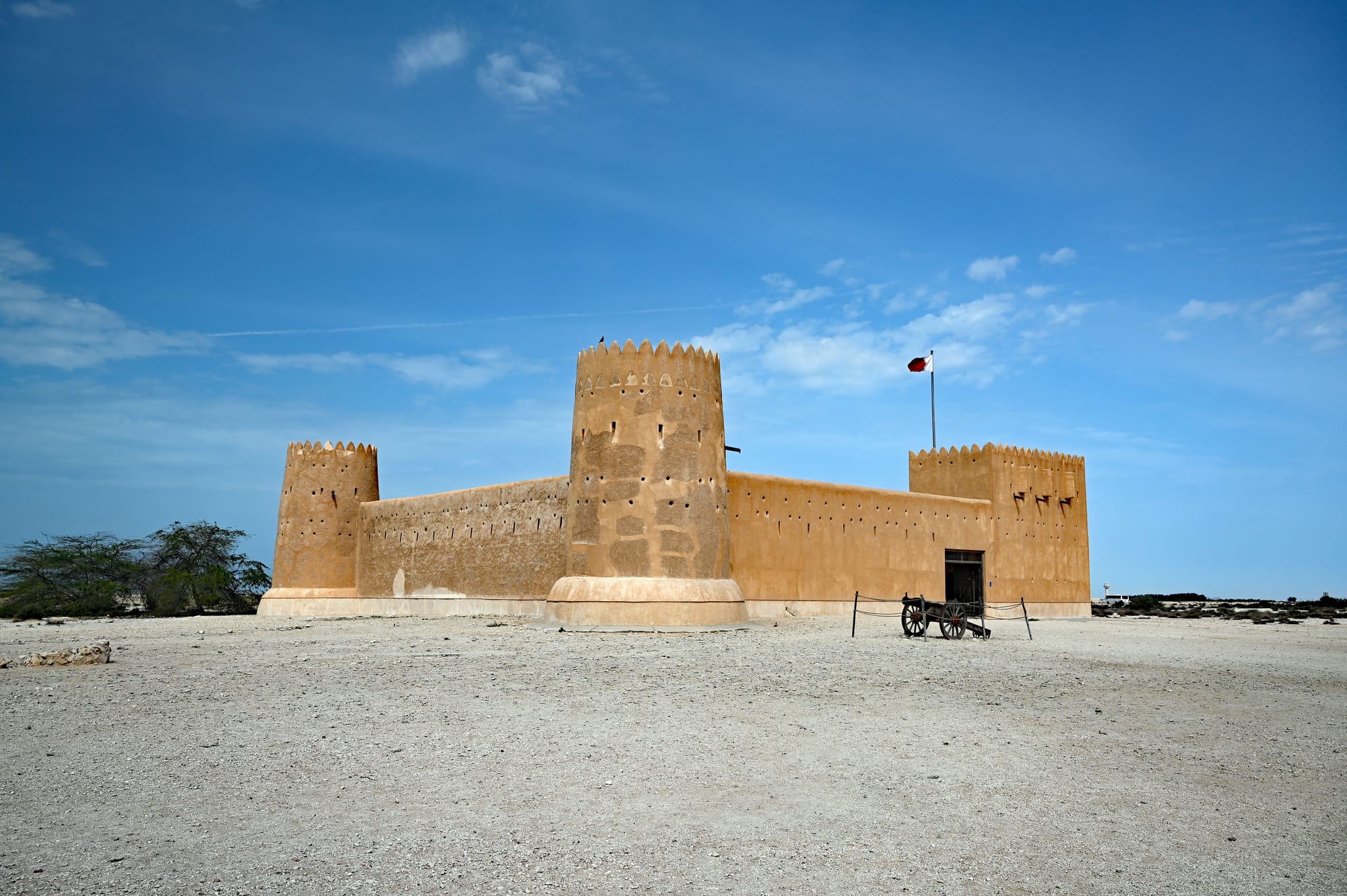
The ruined town around the fort became a UNESCO World Heritage Site in 2013.
The lean years
The first shock came in 1907 itself, when the pearl market crashed and the ruler, Jassim Al Thani, had to sell the year's harvest at half its value. Worse followed. From the 1920s the pearl trade collapsed under pressure from the cultured pearl, grown in farms by a method popularised by the Japanese entrepreneur Kōkichi Mikimoto. The Great Depression hit in the early 1930s, and in 1937 a quarrel with Bahrain over the old town of Zubarah led the Bahraini ruler to impose a crushing embargo on trade and travel to Qatar.
The result was real hardship. As in earlier hard times, entire families and tribes moved elsewhere in the Gulf, leaving many Qatari villages deserted. During the food shortages of the 1940s, people around the Gulf even fell back on eating dried, salted pearl oyster meat.
Oil buys a state
Oil offered a way out, though slowly. In 1935 the ruler, Abdullah bin Jassim Al Thani, signed a 75-year concession with the Anglo-Persian Oil Company. Drilling began at Dukhan, on the west coast, in October 1938, and more than a year later the well struck oil. The Second World War halted production between 1942 and 1947, prolonging the misery, but in 1949 oil exports began, and that year marked a turning point.
Through the 1950s and 1960s oil revenue paid for government departments, schools and public services, and workers arrived from abroad. Doha grew from about 14,000 people to more than 83,000 between the 1950s and the 1970s, with immigrants making up about two-thirds of the population. On 3 September 1971 Qatar declared independence, having chosen not to join its neighbours in what became the United Arab Emirates, and it went on to nationalise its oil industry.
- 1907
Doha's pearling fleet numbers 350 boats; the pearl market crashes.
- 1935
A 75-year oil concession is signed.
- 1949
The first oil exports leave Qatar.
- 1971
Independence, and discovery of the North Field.
- 1996
The first liquefied gas plant at Ras Laffan is completed and exports to Japan begin.
- 2005
The Qatar Investment Authority is founded.
- 2022
Qatar hosts the FIFA World Cup.
The gas field under the sea
Oil made Qatar comfortable; gas made it extraordinarily rich. In 1971 a Shell well found the North Field, also called the North Dome, beneath the waters of the Gulf. It turned out to be the Qatari part of a single enormous reservoir shared with Iran, by far the largest natural gas field in the world, with almost as much recoverable gas as all other gas fields combined. The Qatari section alone holds about 900 trillion cubic feet (25 trillion cubic metres) of recoverable gas, some 14 per cent of the world's proven reserves.
Gas is hard to sell across oceans, so Qatar invested in liquefaction. Cooled to about −162 °C, natural gas becomes a liquid taking up roughly a six-hundredth of its original volume, and can be carried by tanker. The first phase of North Field development came online in 1991. Ras Laffan, 80 kilometres north of Doha, opened its first liquefied natural gas plant in 1996, the year exports to Japan began. By 2007 Qatar had the largest liquefaction capacity in the world, and by 2025 the North Field was supplying 77 million tonnes of liquefied gas a year.
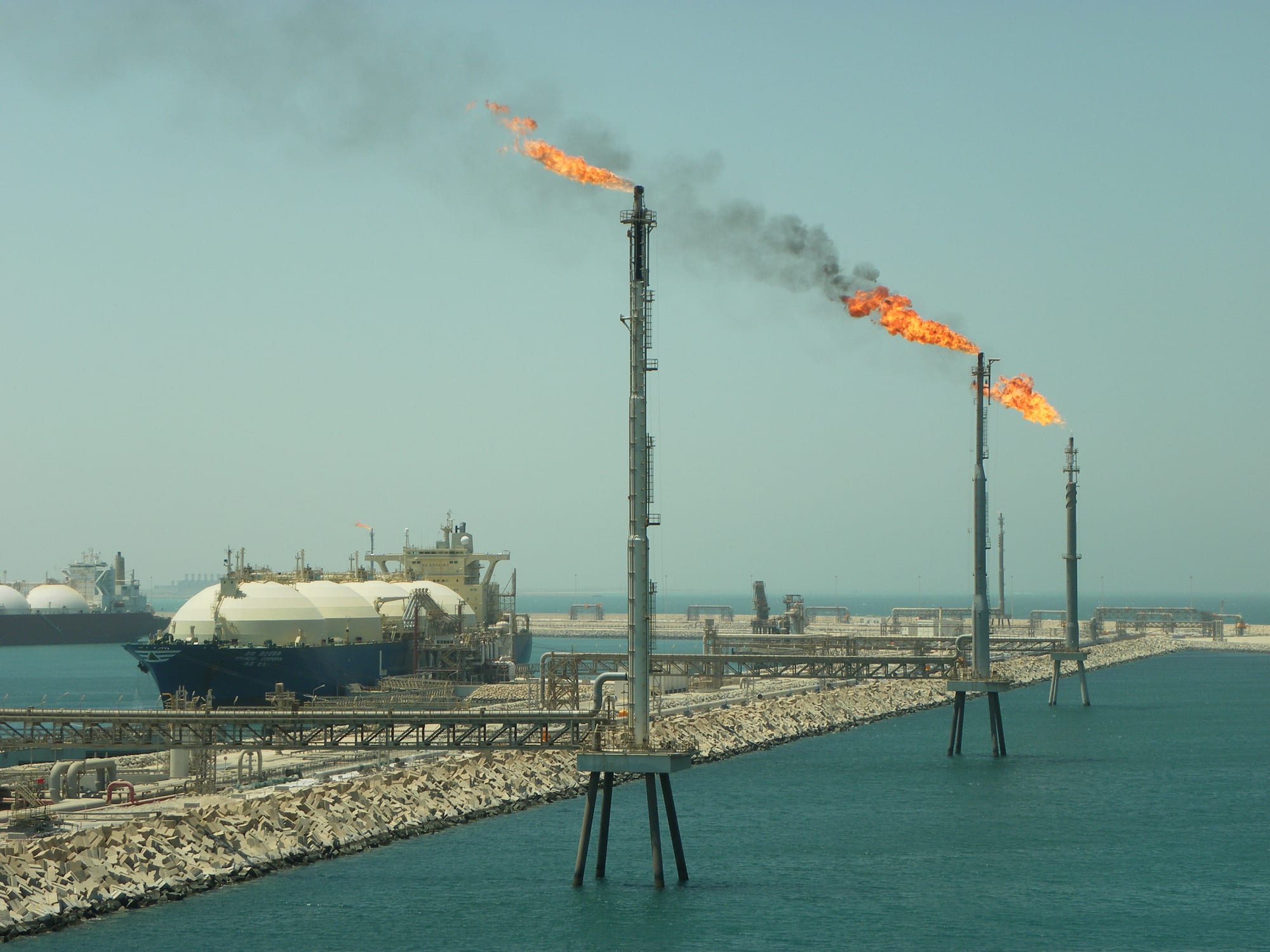
Ras Laffan's port is the largest artificial harbour in the world.
Great wealth, few citizens
What turns a big gas industry into one of the highest incomes on Earth is arithmetic. Of the roughly 3.2 million people living in Qatar in June 2026, about 3 million were foreign residents and migrant workers; Qatari citizens are a small minority. Before 2026, oil and gas provided at least 80 per cent of government revenue. Qatar has the fourth-highest GDP per capita in the world when measured by purchasing power, and since 2005 the Qatar Investment Authority has invested the surpluses abroad; by 2026 it managed an estimated $600 billion.
The money has transformed the country and drawn scrutiny. Hosting the 2022 FIFA World Cup, the first in the Arab world, brought a vast building programme and intense criticism of the treatment of the migrant workers who built it. The gas also ties Qatar to its region's dangers: on 2 March 2026, during the war involving the United States, Israel and Iran, Iranian strikes on Ras Laffan and Mesaieed forced a halt to all of Qatar's liquefied gas production.
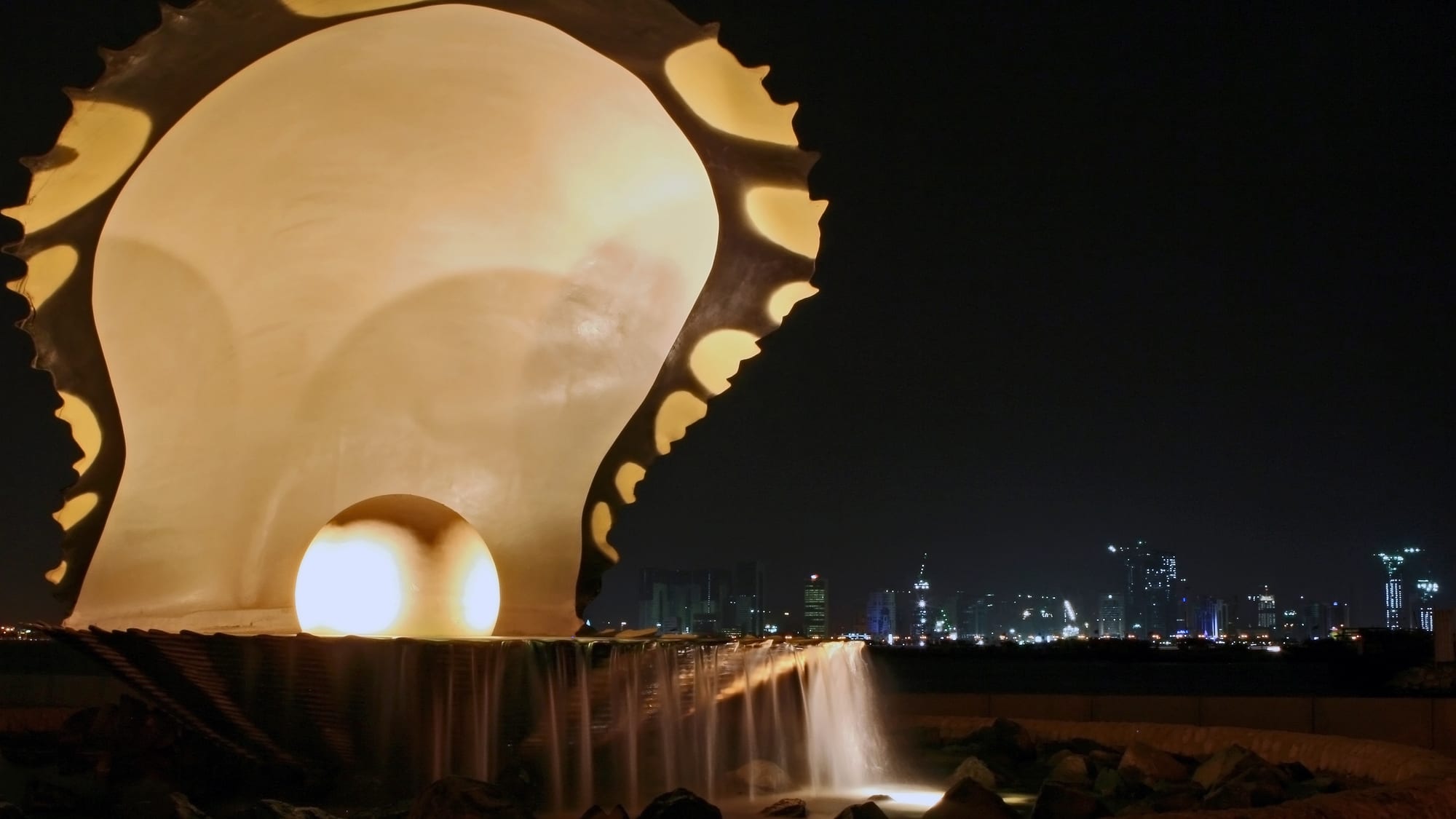
It stands at the entrance to Doha Port.