Attractions & Natural Wonders · Iran
Iran: Eleven Attractions and Natural Wonders
The blue-tiled mosques of Isfahan, the ceremonial capital of the Persian kings, mud-brick desert cities, and a desert of wind-sculpted sand towers — set against a country most governments advise against visiting
By Worldlore Editorial · 30 September 2026
Persia, ancient and modern
Iran is a large, mountainous country between the Caspian Sea and the Persian Gulf, heir to one of the world's oldest civilisations — the Persian empires of Cyrus and Darius, and later the Islamic dynasties whose architecture in Isfahan and Yazd is among the most beautiful anywhere. It has more than 92 million people, a mostly young population, and 30 UNESCO World Heritage Sites. Since 1979 it has been an Islamic republic, and since 28 February 2026 it has been at war with the United States and Israel.
The eleven below are the country's landmark sights, spread from Tehran through the central desert cities to Shiraz. Read the note at the end: at the time of writing foreign governments advise against all travel to Iran, and this article is offered as background. Spring (April–May) and autumn (October–November) are the mild seasons.
1. Isfahan and Naqsh-e Jahan Square
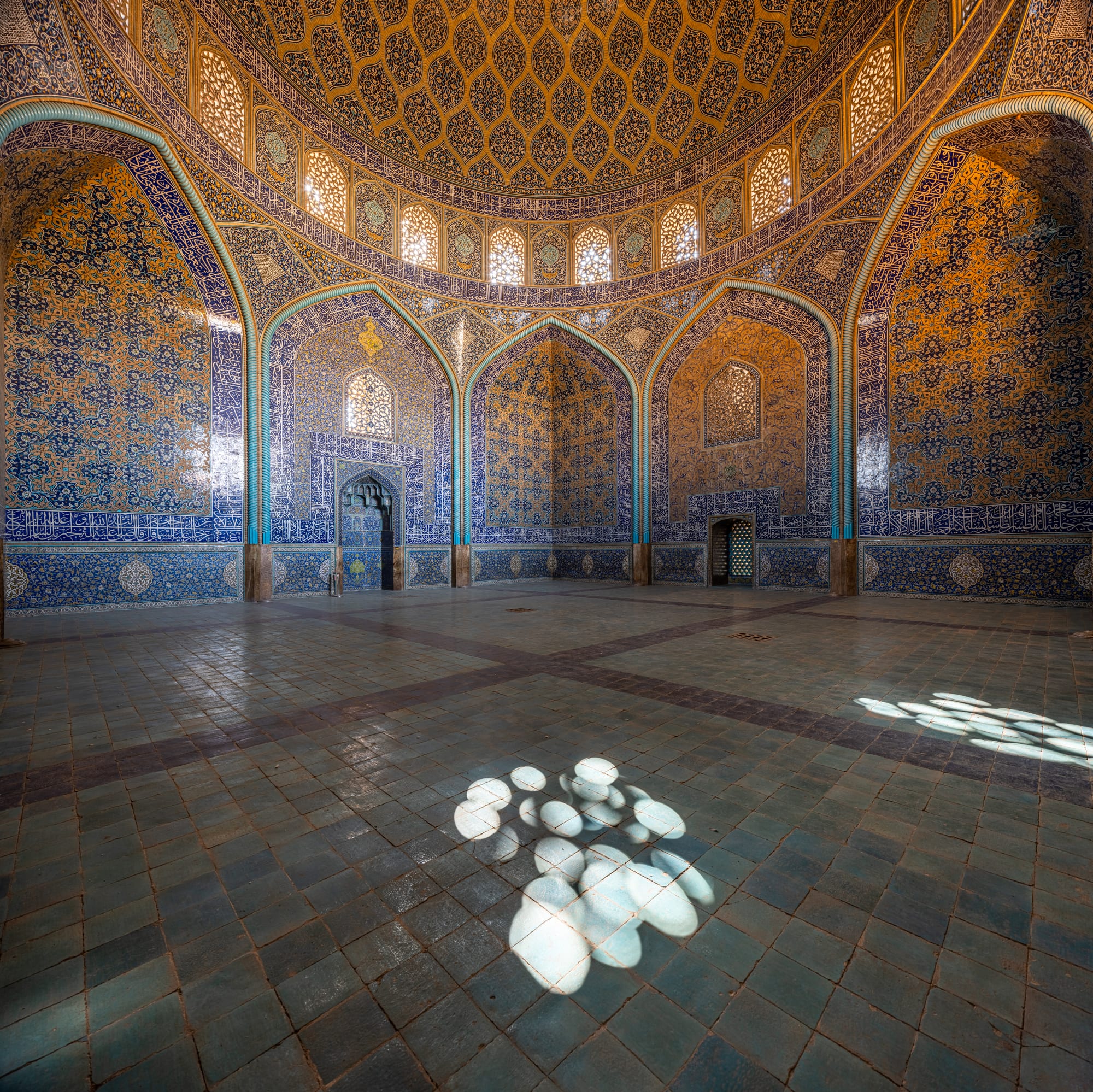
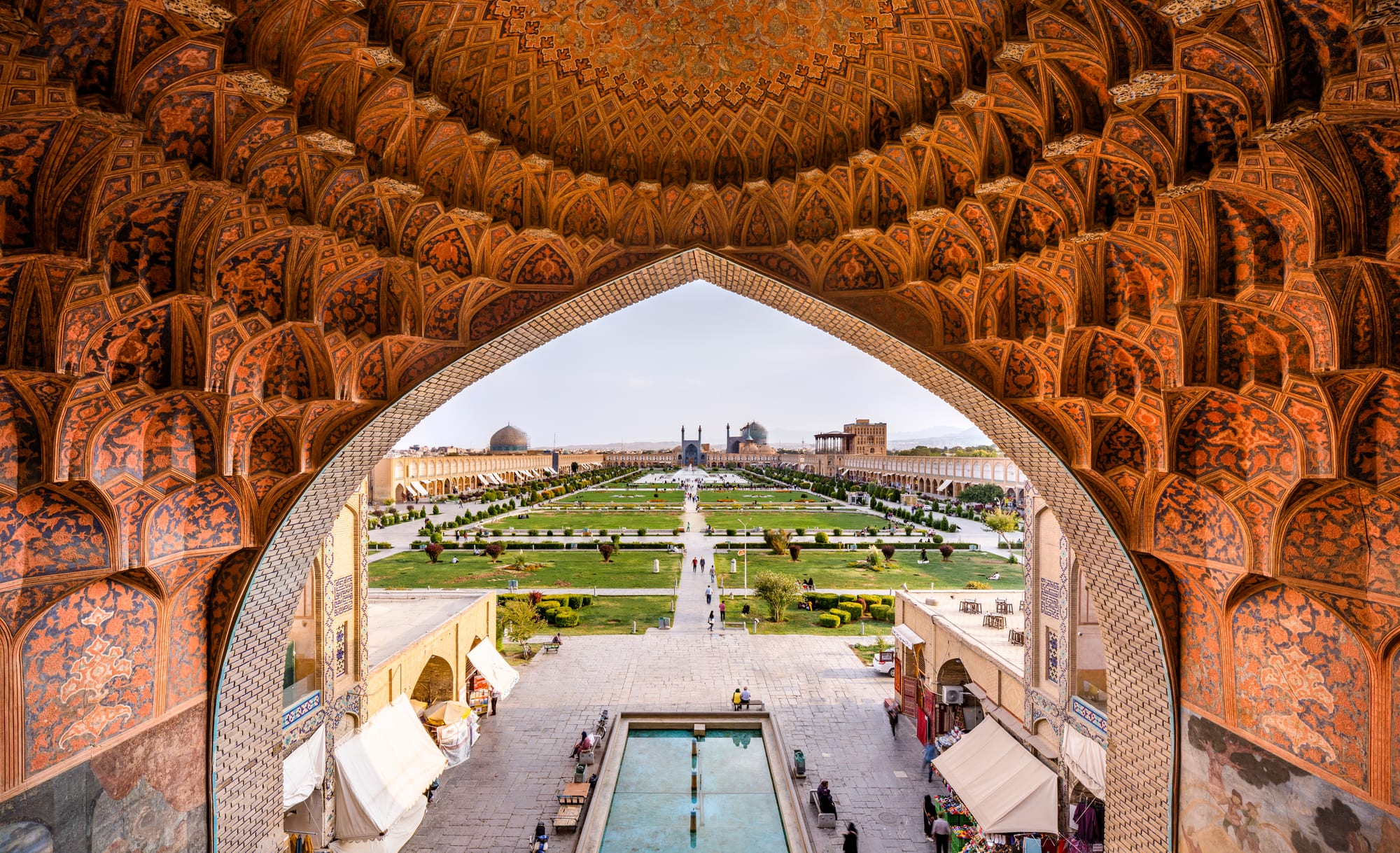
Isfahan was the Safavid capital from 1598, and the great square its rulers built — Naqsh-e Jahan, "Image of the World" — is ringed by the towering Shah (Imam) Mosque, the more intimate Sheikh Lotfollah Mosque, the Ali Qapu palace with its music room, and the entrance to the vast covered bazaar. It is a UNESCO World Heritage Site and traditionally an evening picnic ground for local families.
The old Jameh Mosque, a museum of a thousand years of Iranian architecture, stands nearby in the old city. Strikes on Isfahan on 9 March 2026 damaged the square, the Shah Mosque, Ali Qapu and the Jameh Mosque.
2. Isfahan's bridges and the Armenian quarter
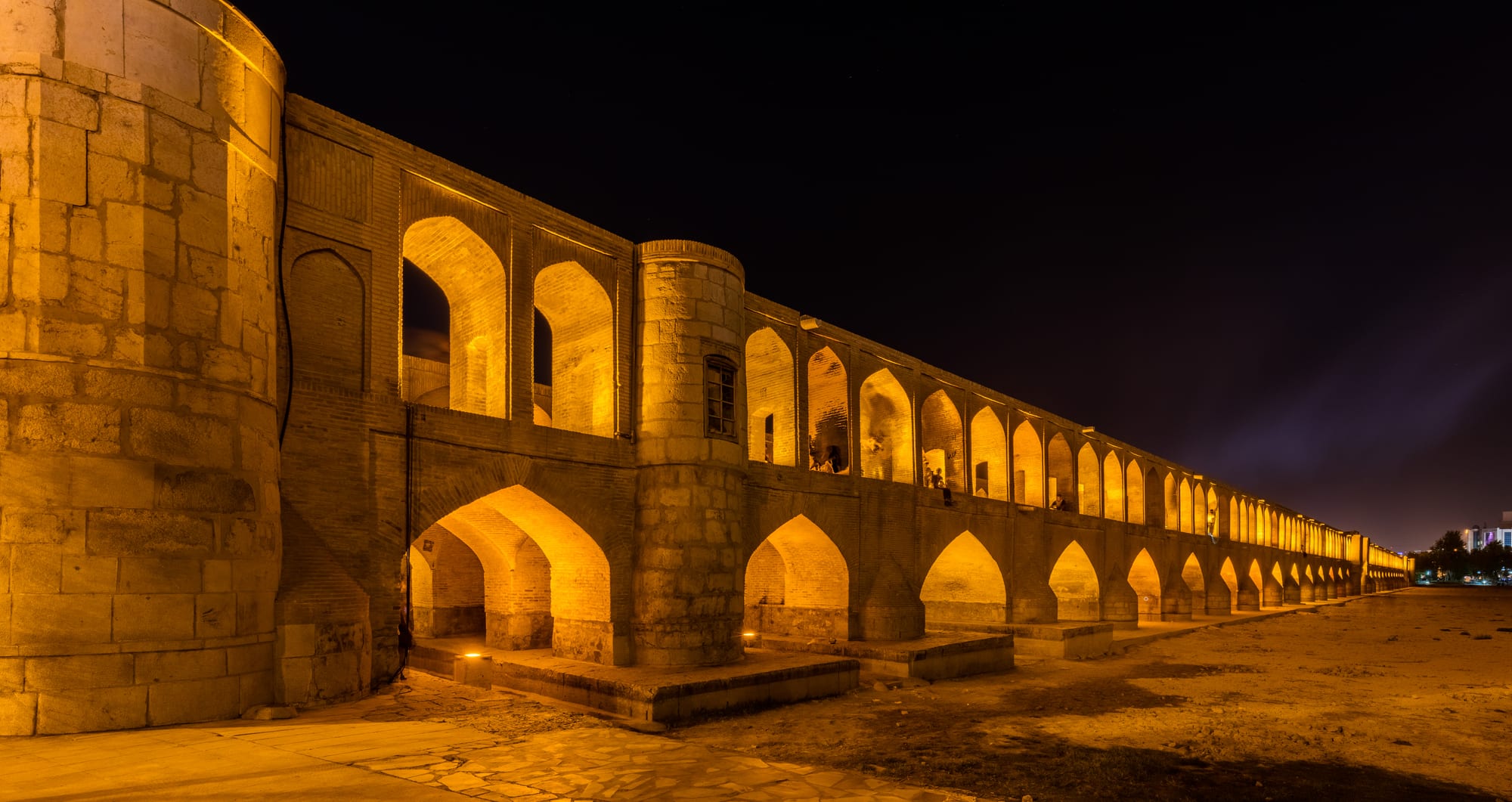
The Zayanderud river, though often dry now, is spanned by a series of graceful 17th-century bridges built as much for strolling as for crossing — the 33-arched Si-o-se-pol and the arcaded Khaju bridge. Across the river, the Jolfa quarter is home to the Armenian Christian community and the richly frescoed Vank Cathedral.
An evening walk between the bridges is one of the pleasures of the city.
3. Persepolis
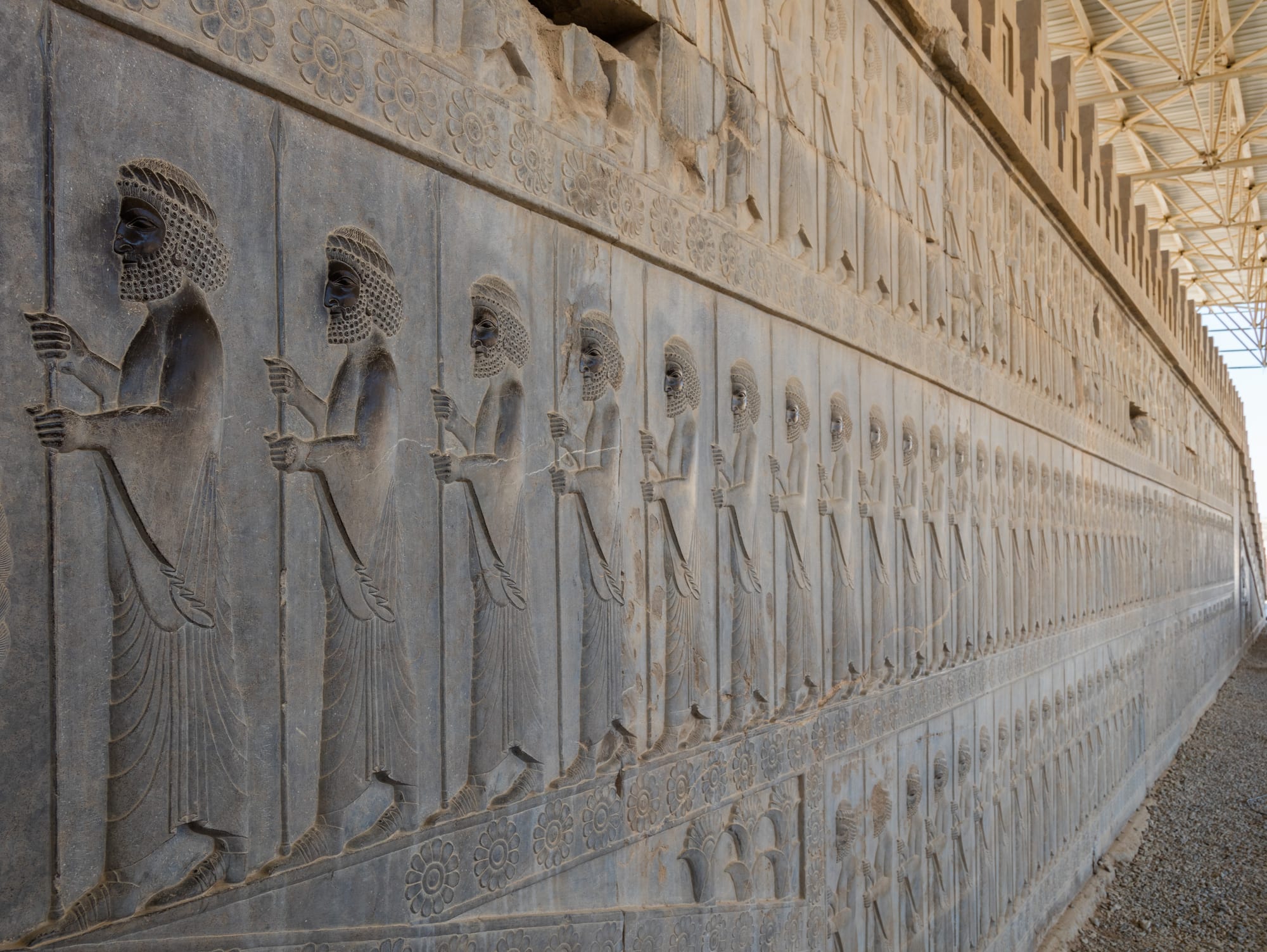
Persepolis, on a terrace against a mountain north-east of Shiraz, was the ceremonial heart of the Achaemenid Empire — the palaces where the "King of Kings" received tribute from across the ancient world, its stairways carved with processions of delegations from the subject nations. Alexander the Great burned it in 330 BC; what survives — the Apadana, the Gate of All Nations, the huge bull capitals — is a UNESCO World Heritage Site.
Go early or late to avoid the midday heat and light.
4. Pasargadae and Naqsh-e Rostam
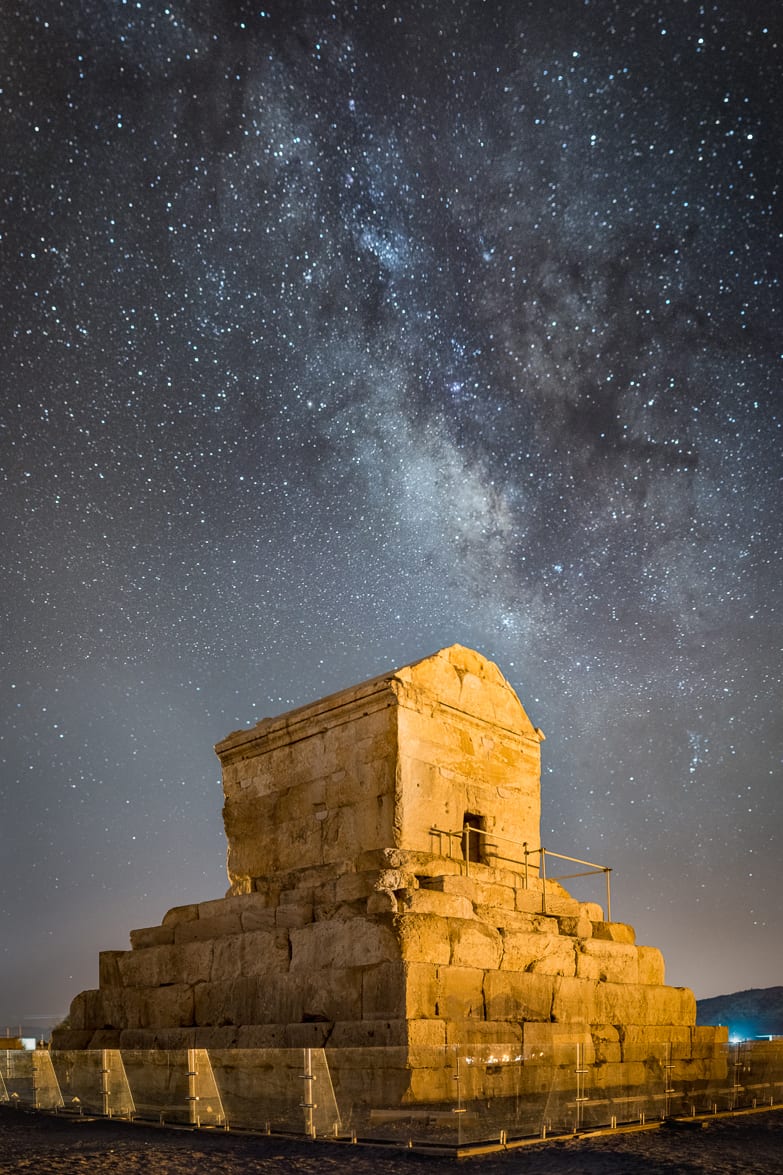
Pasargadae, the first Achaemenid capital, holds the austere stepped tomb of Cyrus the Great, founder of the empire, whose Cyrus Cylinder was promoted in the 20th century as the "first charter of human rights", a reading most historians call anachronistic. Nearby Naqsh-e Rostam, close to Persepolis, has four huge cross-shaped royal tombs cut high into a cliff, below them dramatic Sasanian battle reliefs.
Both are usually visited on the same day as Persepolis, from Shiraz.
5. Shiraz
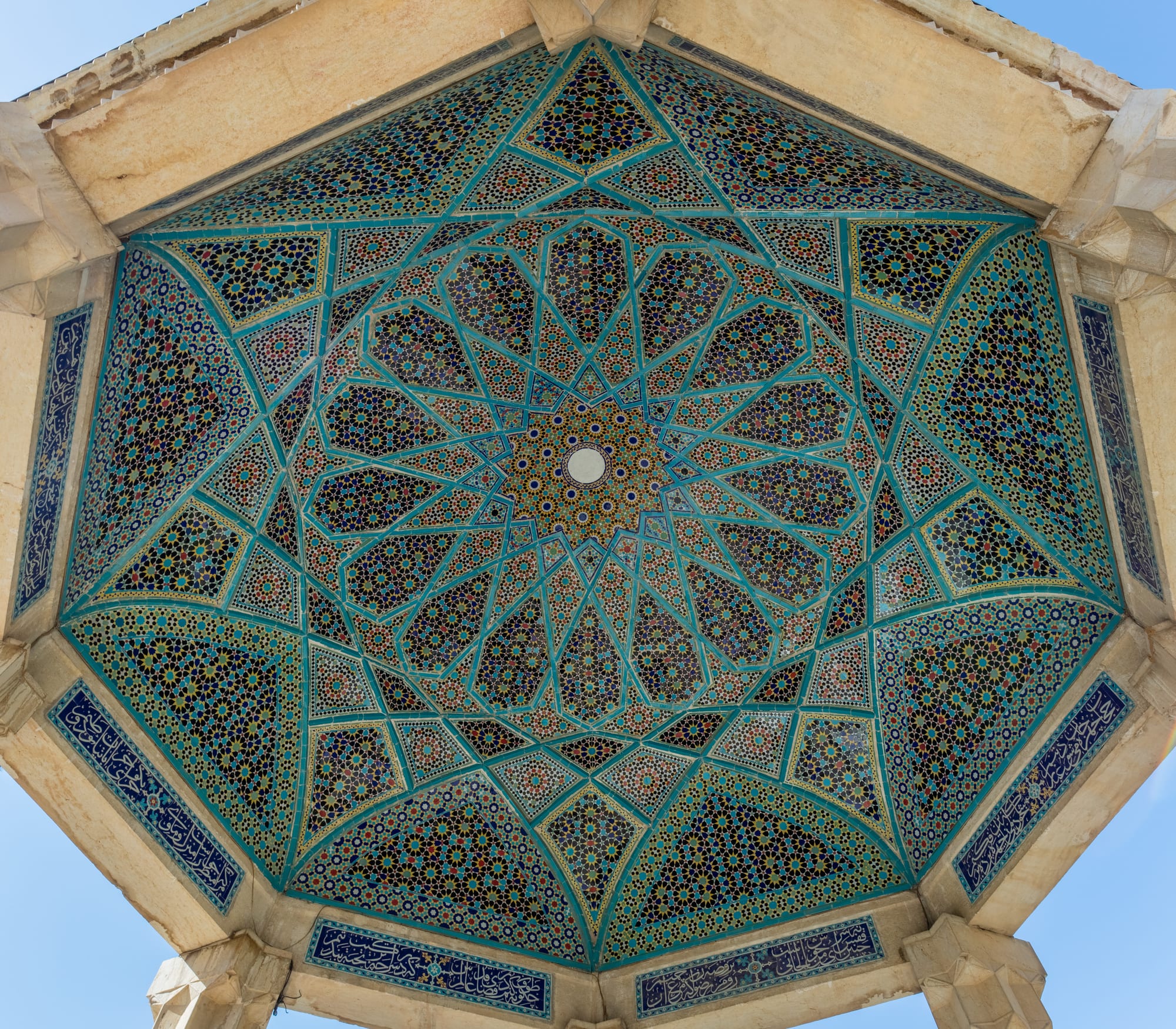
Shiraz, in the south, is the city of poets, wine (historically), roses, and gardens. Iranians come to sit at the garden tombs of Hafez and Saadi and read their verse aloud; other highlights are the mirror-tiled Shah Cheragh shrine, the Eram and Narenjestan gardens, the citadel, and the Vakil bazaar and mosque.
It is the base for Persepolis and Pasargadae, and has an international airport.
6. The Nasir al-Mulk Mosque
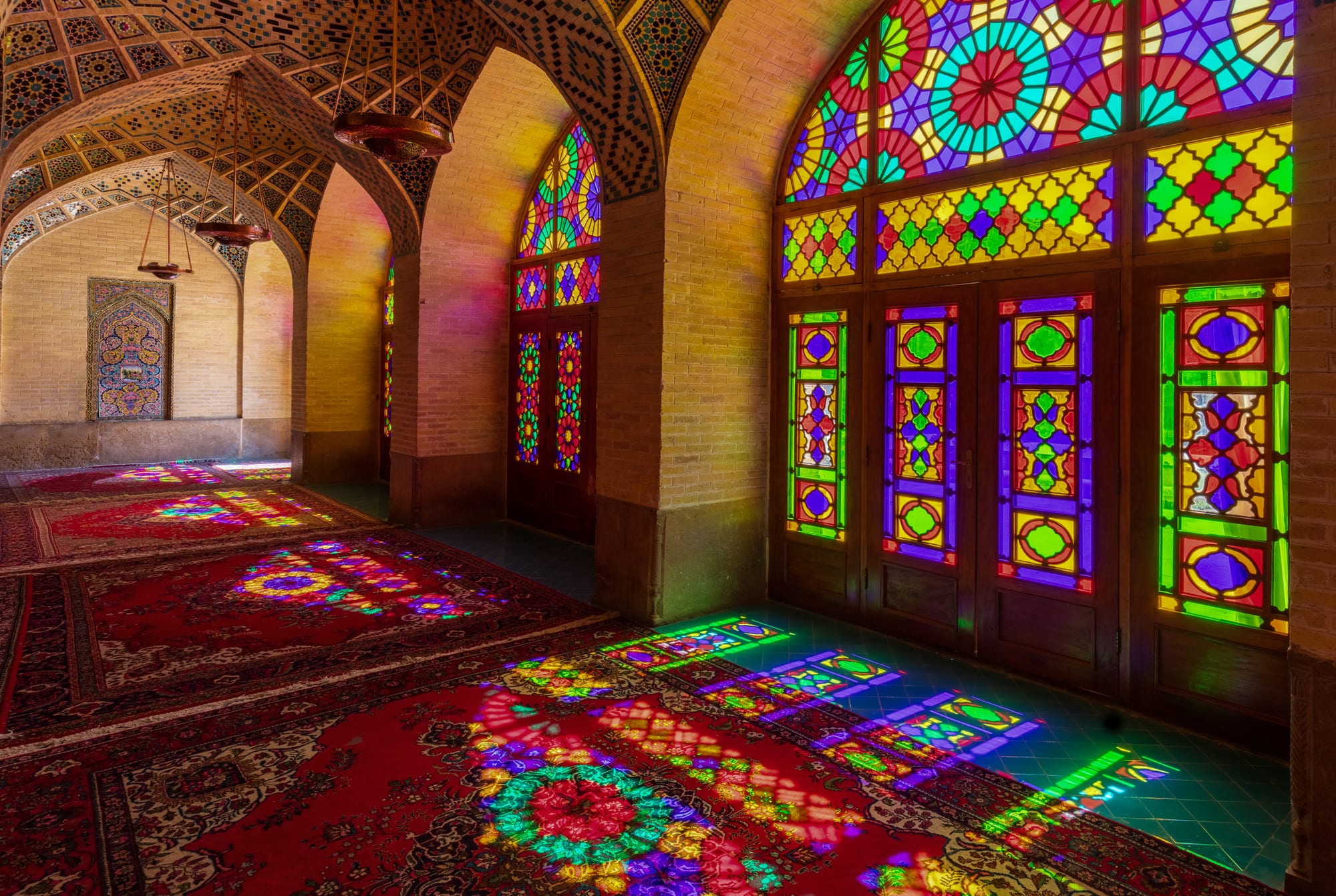
The Nasir al-Mulk Mosque in Shiraz, built in the 1880s, is famous for one effect: in the hour or so after sunrise, low sun pours through its stained-glass windows and scatters pools of red, blue, and gold across the carpets and columns of the winter prayer hall. It has become one of the most photographed interiors in the country.
The effect is strongest in the early morning; by mid-morning it is gone.
7. Yazd
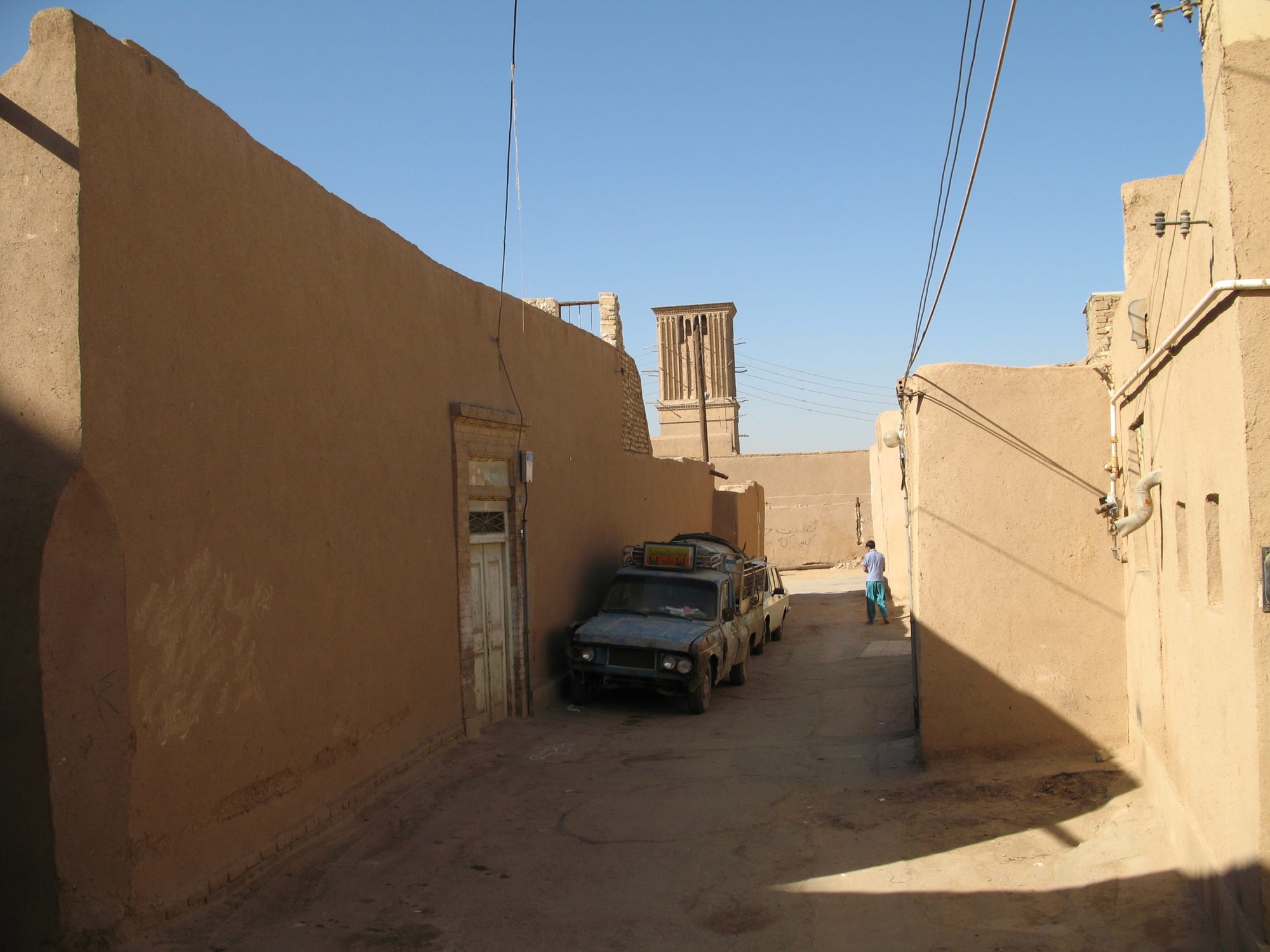
Yazd, on the edge of the central desert, is an ancient city and a masterclass in desert living — a UNESCO-listed warren of mud-brick lanes, domed roofs, and badgir wind-catchers that funnel breezes into the houses below. It is also the centre of Iranian Zoroastrianism, with a fire said to have burned since AD 470 and two hilltop "towers of silence" outside town.
Its rooftop cafés at sunset are a highlight.
8. Kashan and the desert villages
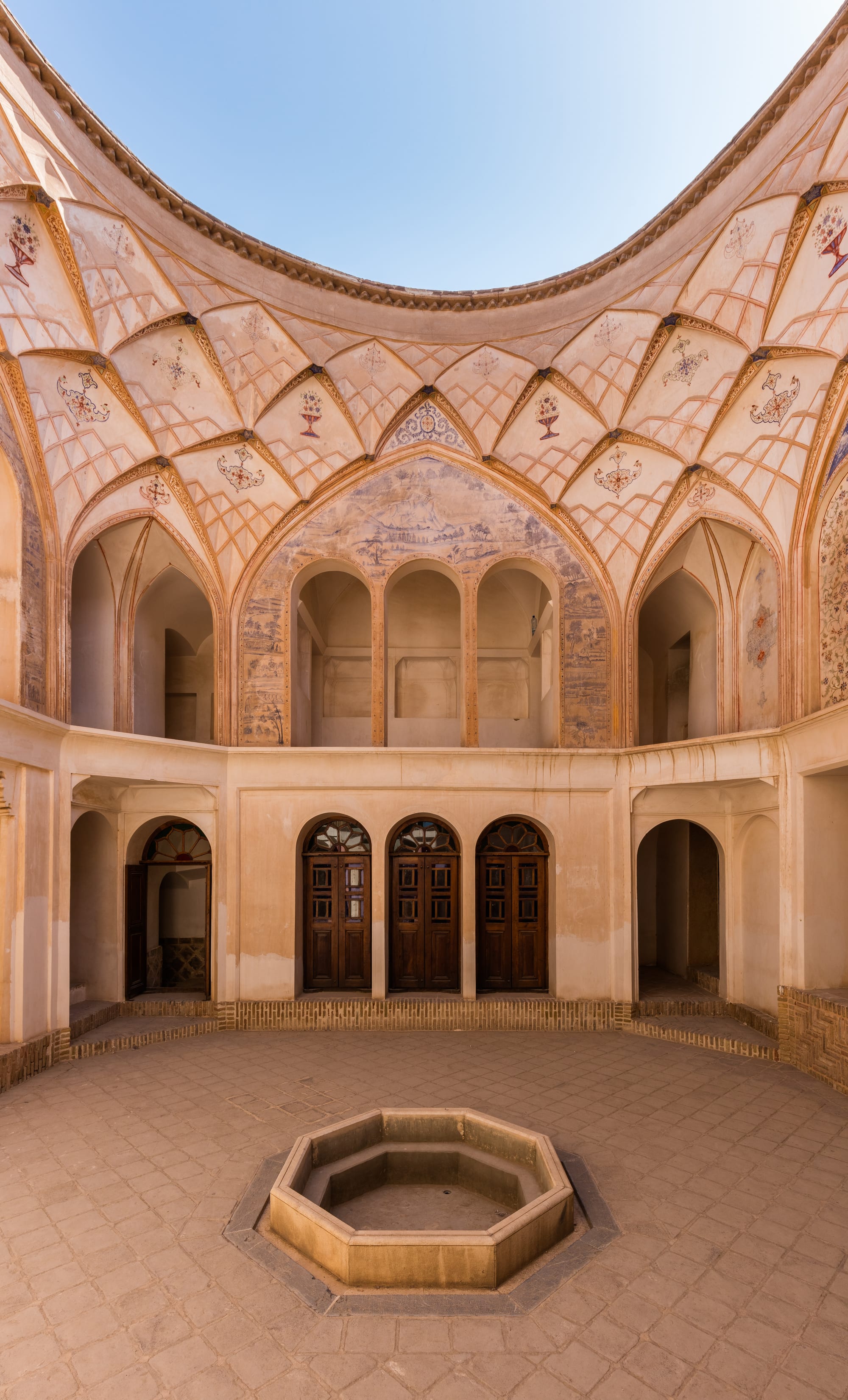
Kashan, between Tehran and Isfahan, is known for grand courtyard houses of Qajar-era merchants (Tabatabaei, Borujerdi), and the Fin Garden with its spring-fed channels, part of the Persian Garden World Heritage Site. It is also the gateway to Abyaneh, a red mud-brick village of wooden balconies and lattice windows clinging to a mountainside, and to overnight stays in the Maranjab desert.
Kashan makes an easy overnight stop on the main north–south route.
9. Tehran
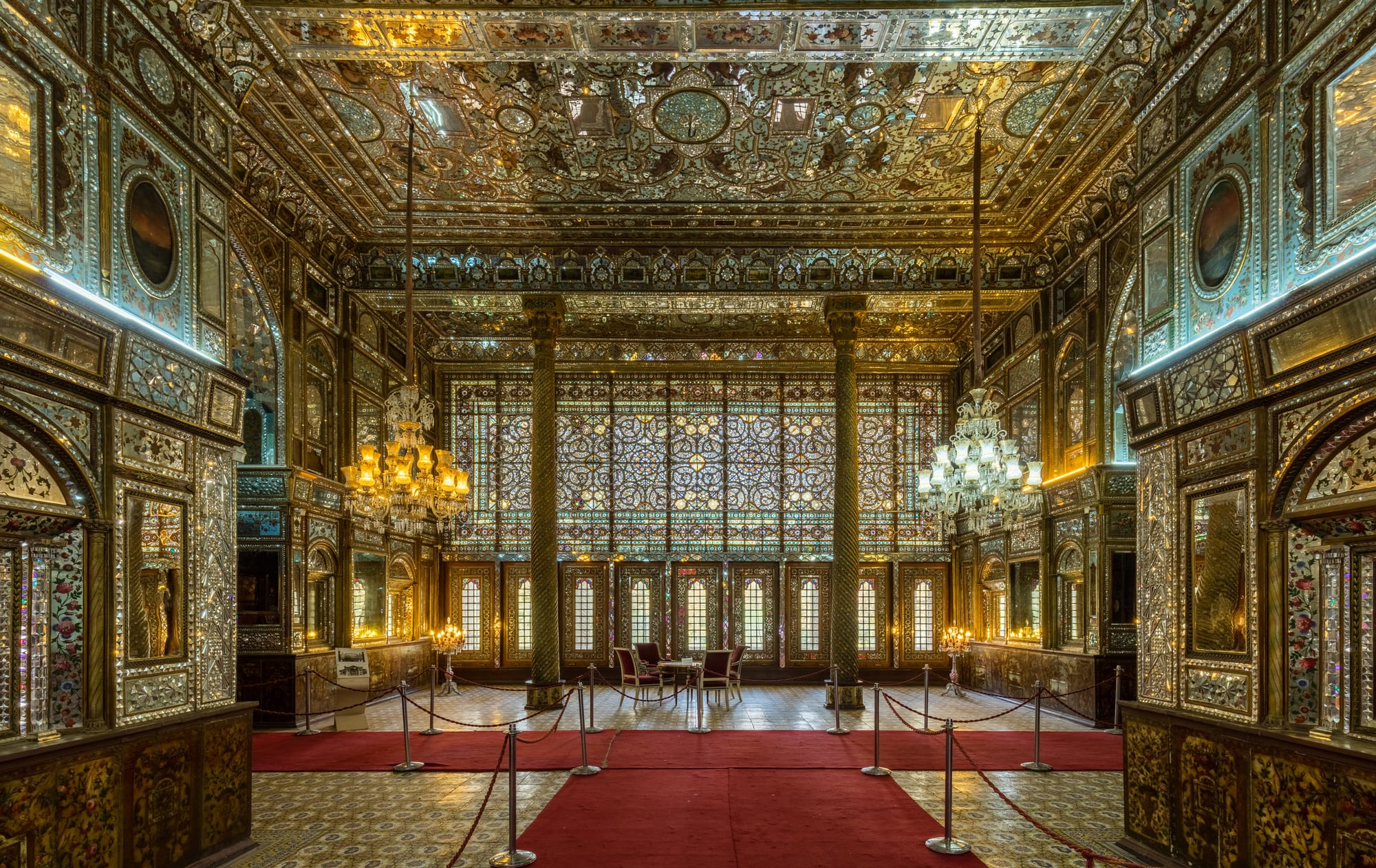
Tehran, the sprawling capital of some nine million people, sits below the Alborz mountains. Its museums are its best-known sights: the National Museum of Iran, the dazzling treasury of the National Jewels, the Golestan Palace, the Carpet Museum, and the contemporary art collection. The Grand Bazaar, the Milad Tower, and the Sa'dabad and Niavaran palace complexes are other landmarks. The city has been struck repeatedly in the war that began in February 2026; a strike on 2 March damaged the Golestan Palace.
In the Alborz, the ski resort of Dizin lies about 70 kilometres north of the city.
10. The Dasht-e Lut
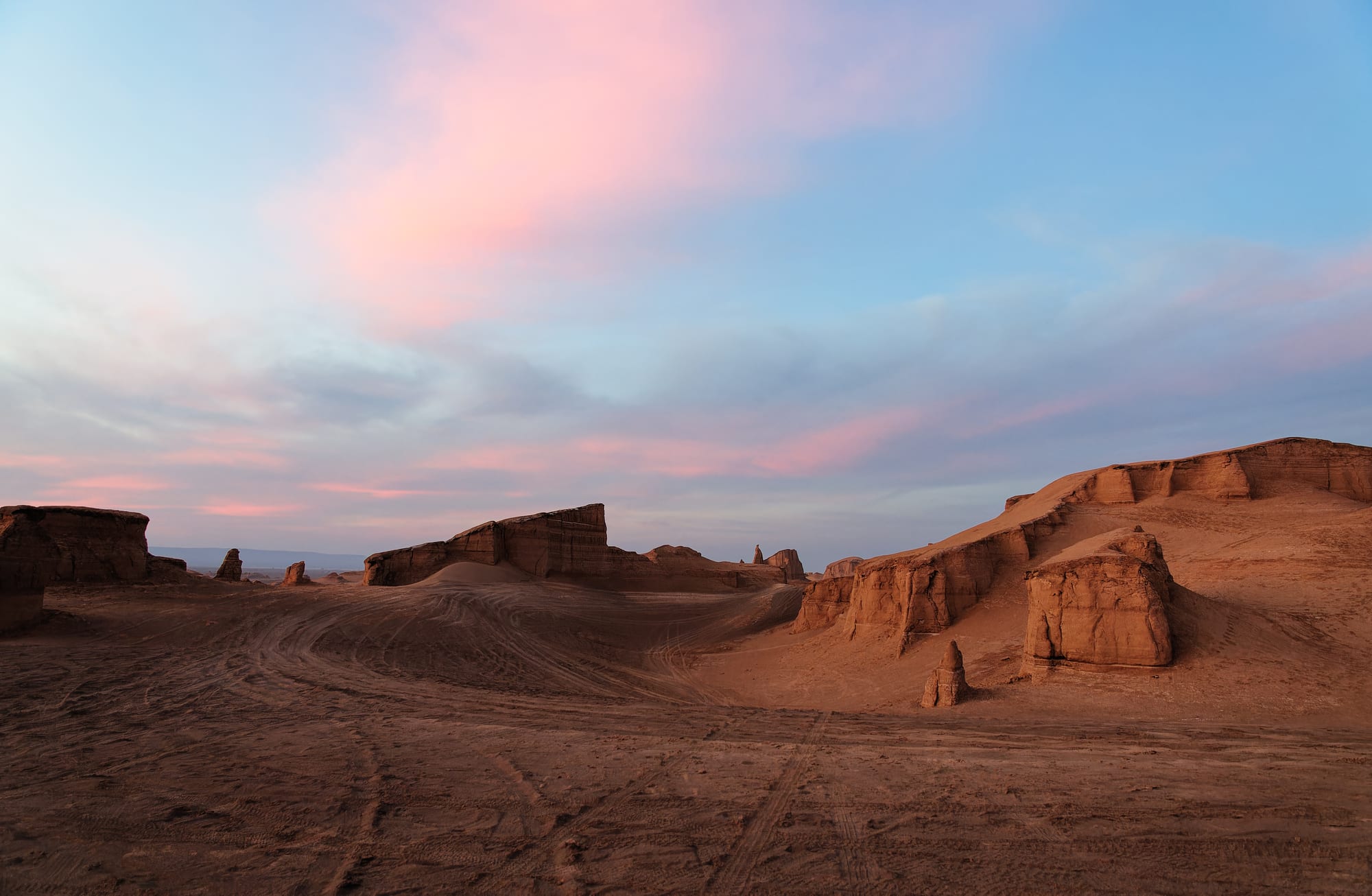
The Lut Desert, in the southeast near Kerman, has recorded some of the highest land-surface temperatures ever measured. Its most striking feature is the kaluts — a vast field of parallel ridges up to 75 metres high, sculpted by centuries of wind into what looks like a ruined city. It is a UNESCO World Heritage Site, visited on desert tours from Kerman, often with a night camping among the formations.
Kerman itself has a fine bazaar, the Safavid Ganjali bathhouse (now a museum), and, about 100 kilometres south, the mud-brick citadel of Rayen.
11. The northwest: Tabriz and Kandovan
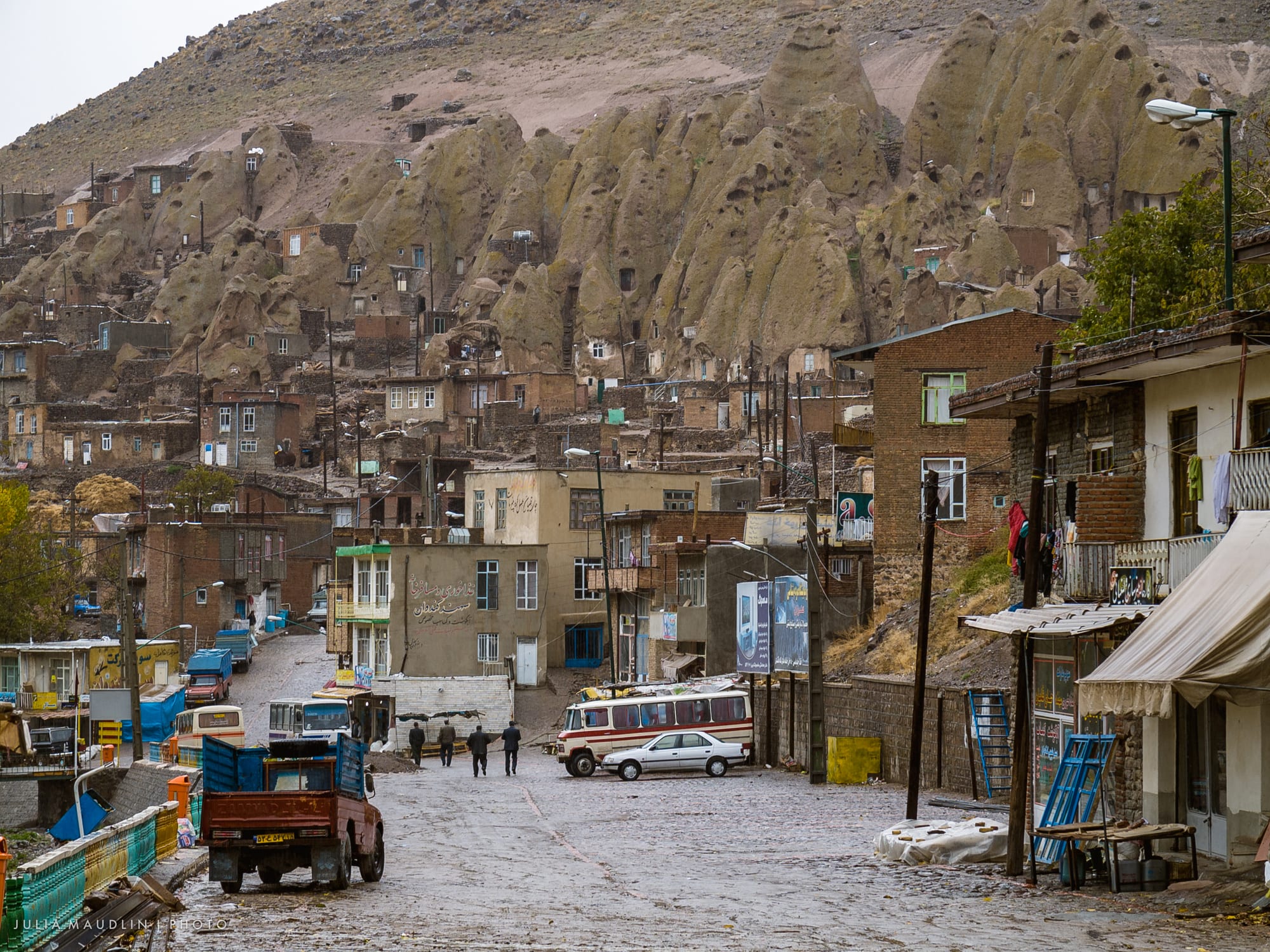
Northwestern Iran, around Tabriz, has a character of its own — Azeri-speaking, greener, cooler. Tabriz has one of the largest covered bazaars in the world (a UNESCO site) and the blue-tiled ruin of a 15th-century mosque; nearby Kandovan is a village of cave homes carved into eroded rock cones, and the Kaleybar area holds the ruined fortress of Babak. To the north are the Armenian monasteries of the border region, also UNESCO-listed.
The lush Caspian coast and the Alborz forests lie to the east.
Before you go: a serious note
At the time of writing, Iran is a war zone. Since 28 February 2026 the United States and Israel have been at war with Iran; strikes have hit targets across the country and damaged several World Heritage Sites, and a ceasefire agreed in April 2026 collapsed in July. Foreign governments, including those of the United States, United Kingdom and Canada, advise against all travel to Iran, citing the war, the risk of arbitrary arrest and detention (particularly of dual nationals and people with Western ties), and very limited consular assistance. Dual nationals of Iran and certain other countries can face particular danger and are not always recognised as foreign citizens.
The war has disrupted aviation and tourism, though visitors in earlier years generally reported warm personal hospitality. This is a destination that requires reading current, specific government advice as decisive, understanding the legal environment (including a strict dress code for women, which is enforced and has been the subject of major protests), and accepting a real level of risk. This article describes the sights; the decision to travel is a separate and serious one.