Attractions & Natural Wonders · Israel
Israel: Eleven Attractions and Natural Wonders
The walled Old City of Jerusalem, a desert fortress above the Dead Sea, a Bauhaus city by the Mediterranean, and a crater in the Negev — layered with several thousand years of history
By Worldlore Editorial · 30 September 2026
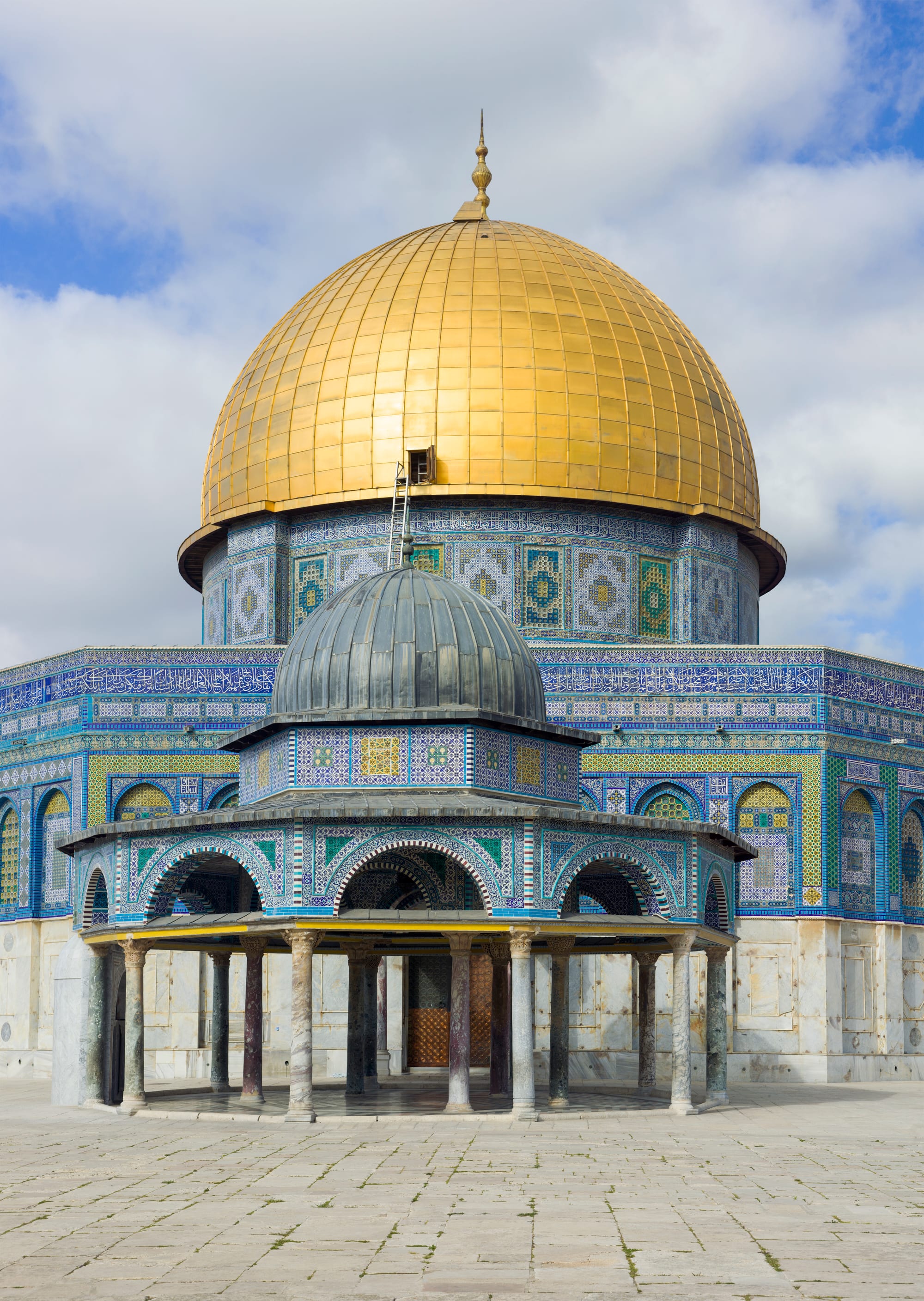
A small country, densely layered
Israel is a small country on the eastern shore of the Mediterranean, about 400 kilometres from top to bottom, with roughly 9.8 million people. Within it sit places central to Judaism, Christianity, and Islam, layers of Canaanite, Roman, Byzantine, Crusader, and Ottoman building, and a modern state founded in 1948 whose borders and control of adjacent territories remain disputed and contested. Landscapes range from the green Galilee hills to the Judean Desert and the arid Negev, ending at the Red Sea.
The eleven below run from Jerusalem to the coast and south into the desert. Spring (March–May) and autumn (September–November) are the pleasant seasons; read the note at the end regarding current conditions and travel advice.
1. The Old City of Jerusalem
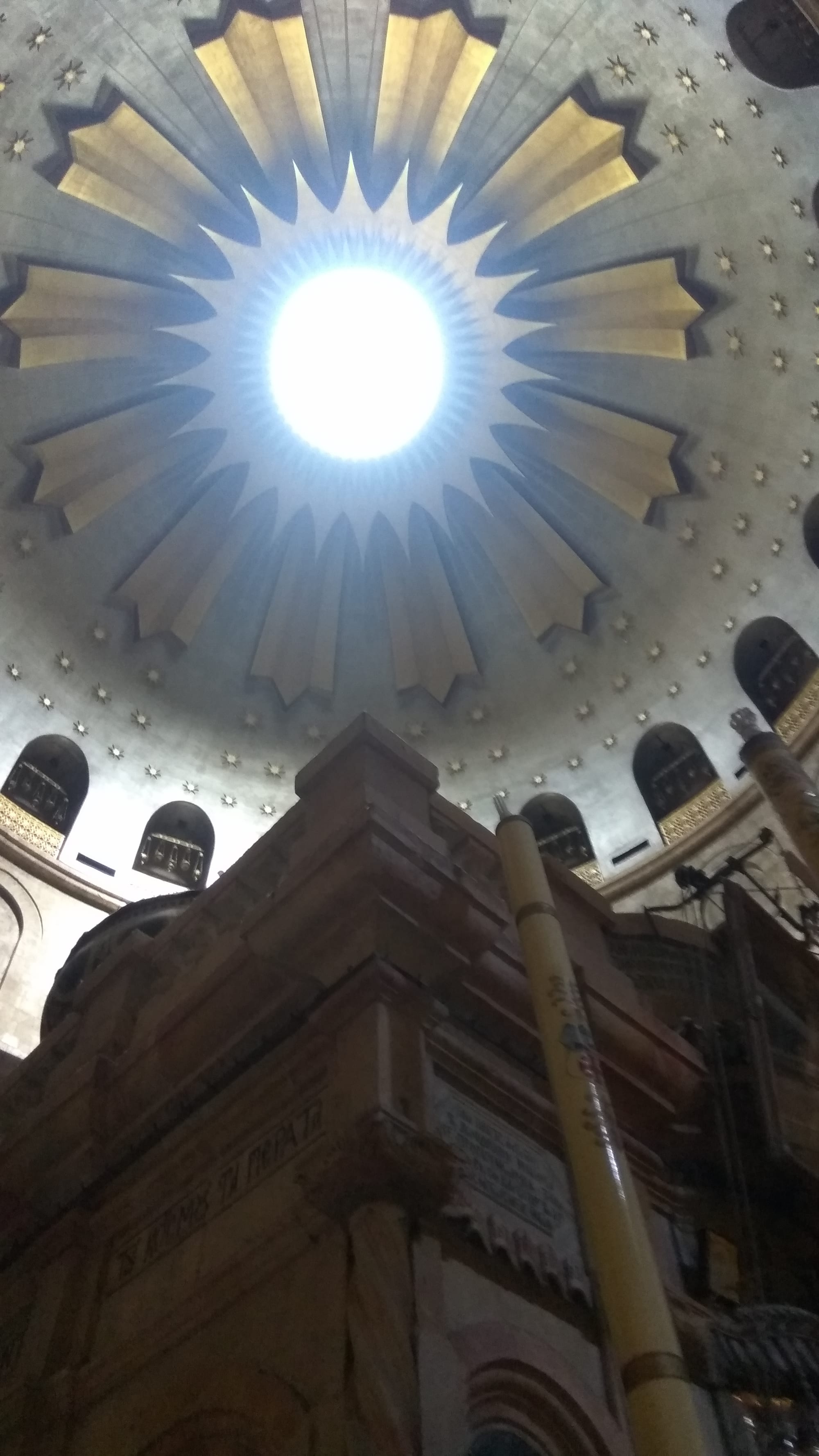
The walled Old City, less than a square kilometre, is divided into Jewish, Muslim, Christian, and Armenian quarters and packed with sacred sites: the Church of the Holy Sepulchre (Christianity's holiest church), the Via Dolorosa, the covered souk, the ramparts walk, and the Tower of David museum. It is a UNESCO World Heritage Site and a living, crowded city, not a monument.
Dress modestly, expect security checks, and note that access to some sites varies by day and by faith.
2. The Western Wall and the Temple Mount
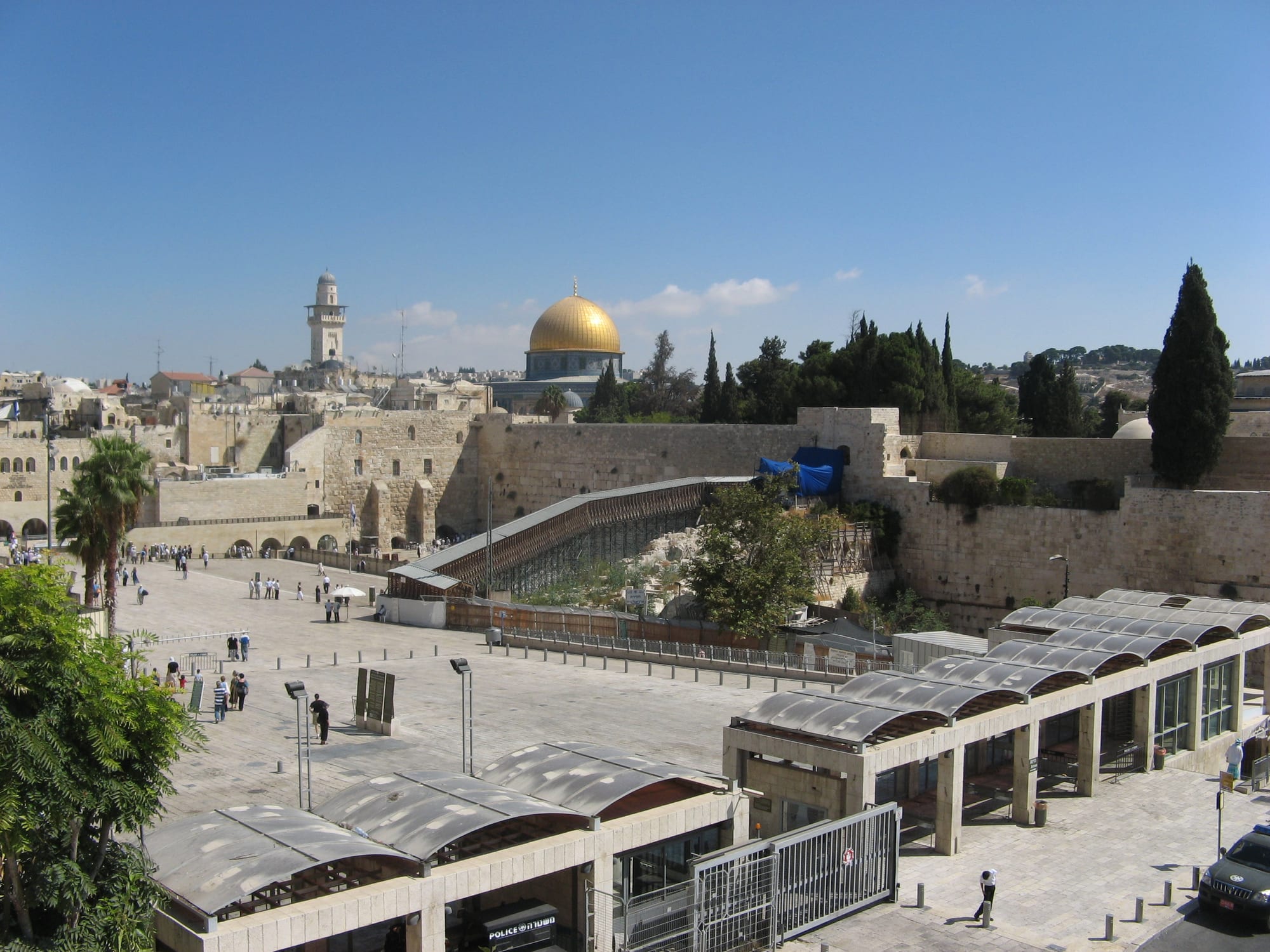
The Western Wall (Kotel) is a surviving retaining wall of the Second Temple complex and the holiest place where Jews can pray; visitors of any faith can approach the plaza, with separate men's and women's sections. Above it, the Temple Mount / Haram al-Sharif holds the Dome of the Rock and Al-Aqsa Mosque, the third-holiest site in Islam. Non-Muslims can visit the platform only at restricted hours and cannot enter the shrines.
Tensions here run high; check current access and follow instructions from security staff.
3. Masada
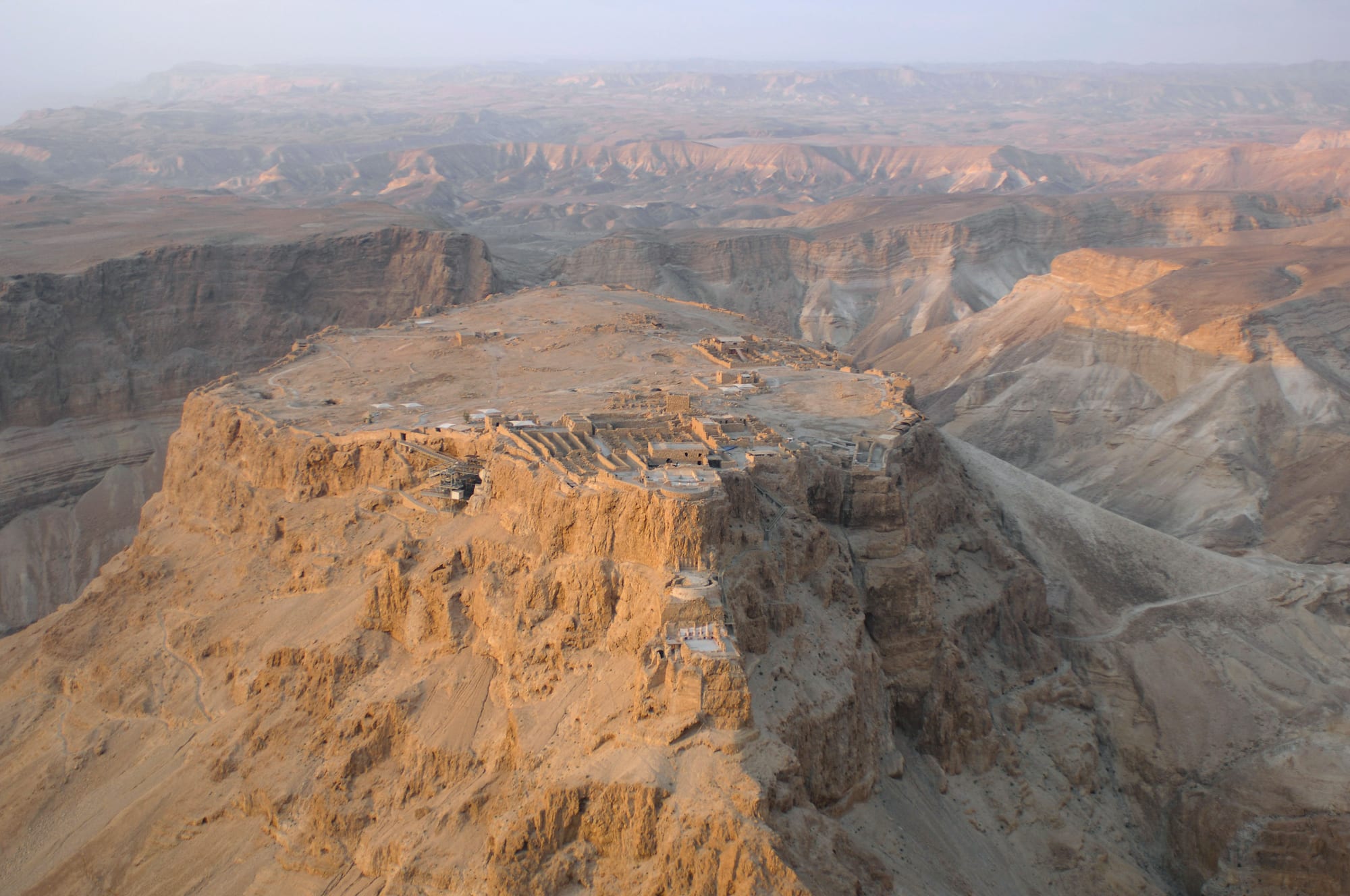
Masada, a mesa on the desert's edge, was fortified and palatially built up by Herod the Great, then held by Jewish rebels in a siege against Rome that ended, according to Josephus, in the mass suicide of the defenders in AD 73 or 74. The ruins — palaces, bathhouse, storerooms, the Roman siege ramp — sit above a huge drop, and the site has become a symbol in Israeli national identity. It is a UNESCO World Heritage Site.
A cable car or the "Snake Path" (best climbed before dawn for sunrise) reaches the top.
4. The Dead Sea
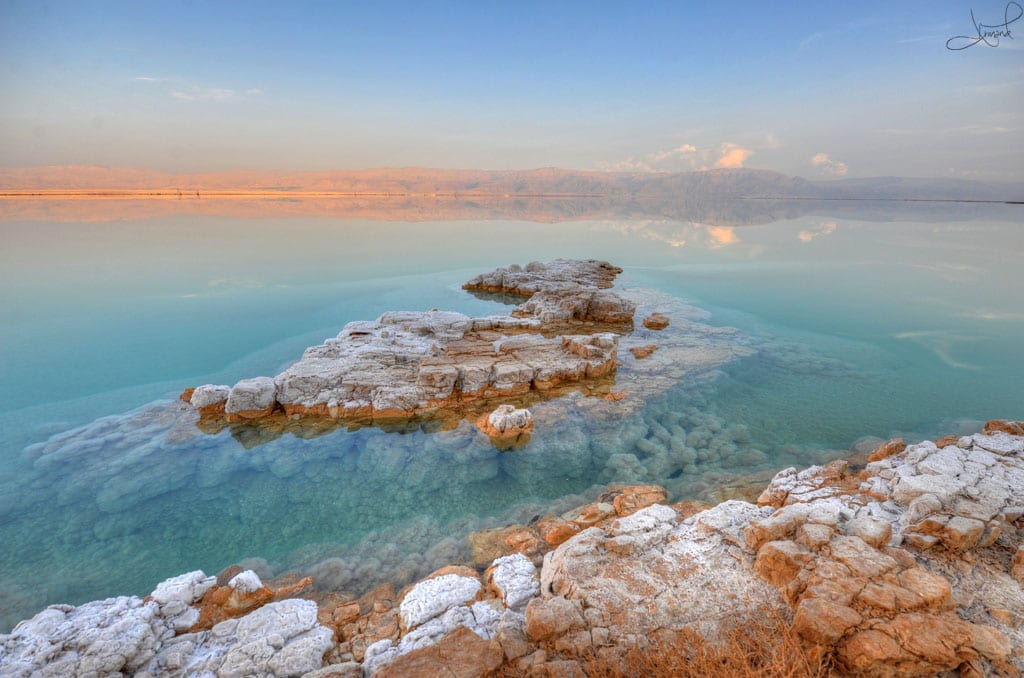
The Dead Sea, shared with Jordan and the West Bank, is a hypersaline lake so dense that bathers float without effort; its black mud is sold worldwide as a skincare product. The Israeli shore has beach resorts, spas, and the freshwater oasis of Ein Gedi nearby, with waterfalls and ibex. The sea is shrinking fast — its level drops about a metre a year — and sinkholes have closed some old beaches.
Shaving beforehand is unwise, the water should be kept away from the eyes, and the freshwater showers on the beaches rinse off the salt.
5. Tel Aviv and Jaffa
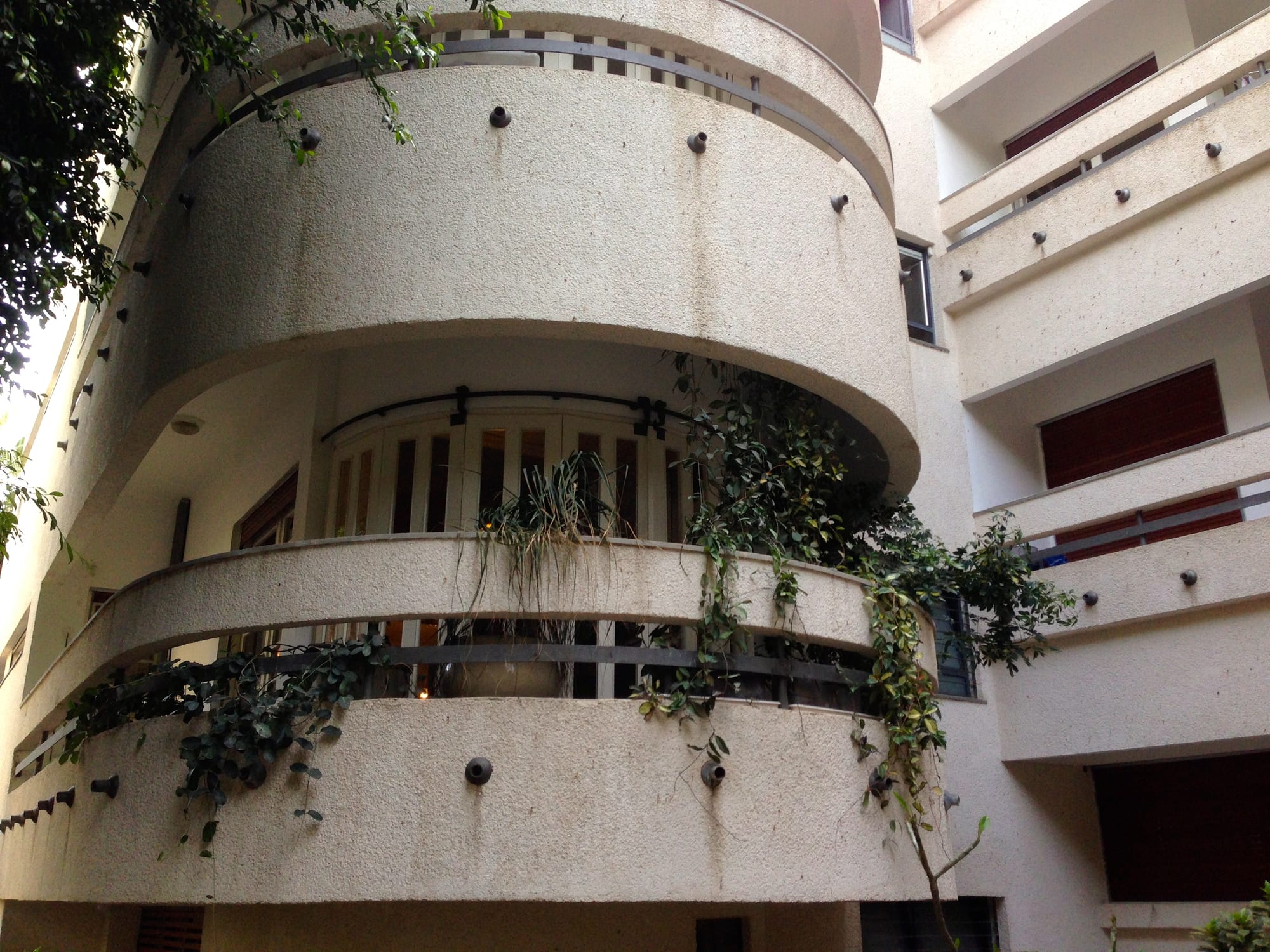
Tel Aviv is Israel's secular, cosmopolitan hub — a beach city with a strong café, restaurant, gallery, and nightlife scene, and about 4,000 Bauhaus-era buildings put up largely by German Jewish architects in the 1930s, a UNESCO-listed "White City". At its southern end, ancient Jaffa (Yafo) is an Arab-Jewish port town of restored stone lanes, a flea market, and a fishing harbour.
The Mediterranean promenade links the two, and the Carmel Market and Sarona food hall are the eating hubs.
6. The Sea of Galilee and the Galilee
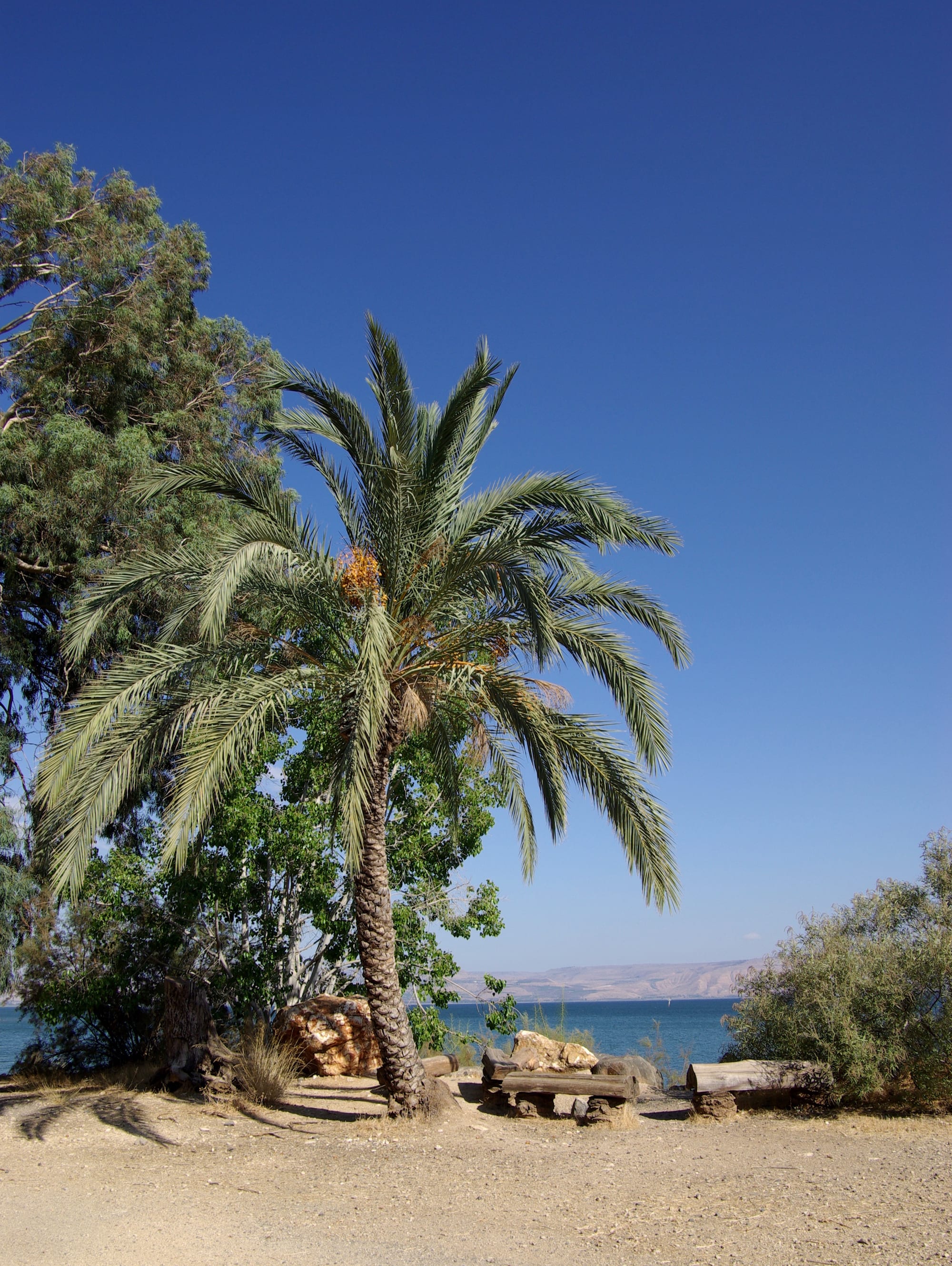
The Sea of Galilee is central to the Christian gospels — Capernaum, the Mount of Beatitudes, Tabgha, and the baptism site at the Jordan's outflow ring its shore — and is also a swimming and kayaking lake and a farming region. The wider Galilee has the mystical hill town of Safed (Tsfat), the Roman-era synagogues and Talmudic sites, Nazareth, the largest Arab city in Israel, with its Basilica of the Annunciation, and hiking on Mount Meron and in the Golan Heights to the northeast, which Israel captured from Syria in 1967.
Tiberias, on the lakeshore, is the usual base.
7. Haifa and the Bahá'í Gardens
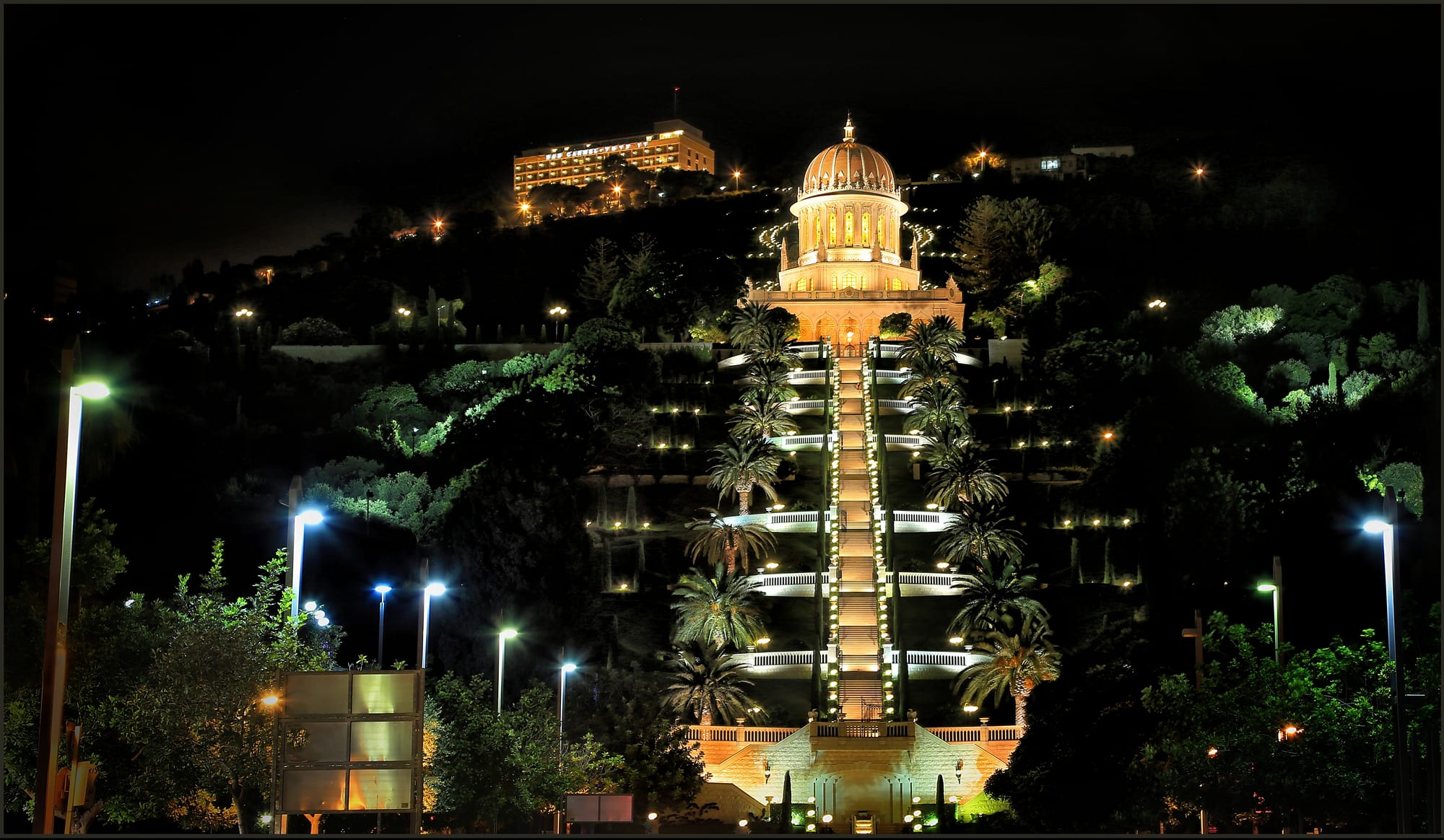
Haifa, Israel's third city, climbs Mount Carmel above a working port. Its centrepiece is the Bahá'í Gardens — 19 immaculate terraces stepping down the hillside to the gold-domed Shrine of the Báb, the spiritual and administrative heart of the Bahá'í faith and a UNESCO World Heritage Site. The German Colony below, the Stella Maris monastery, and the Druze villages of the Carmel round out a visit.
The terraces are among the most visited sights in Israel.
8. Akko (Acre)
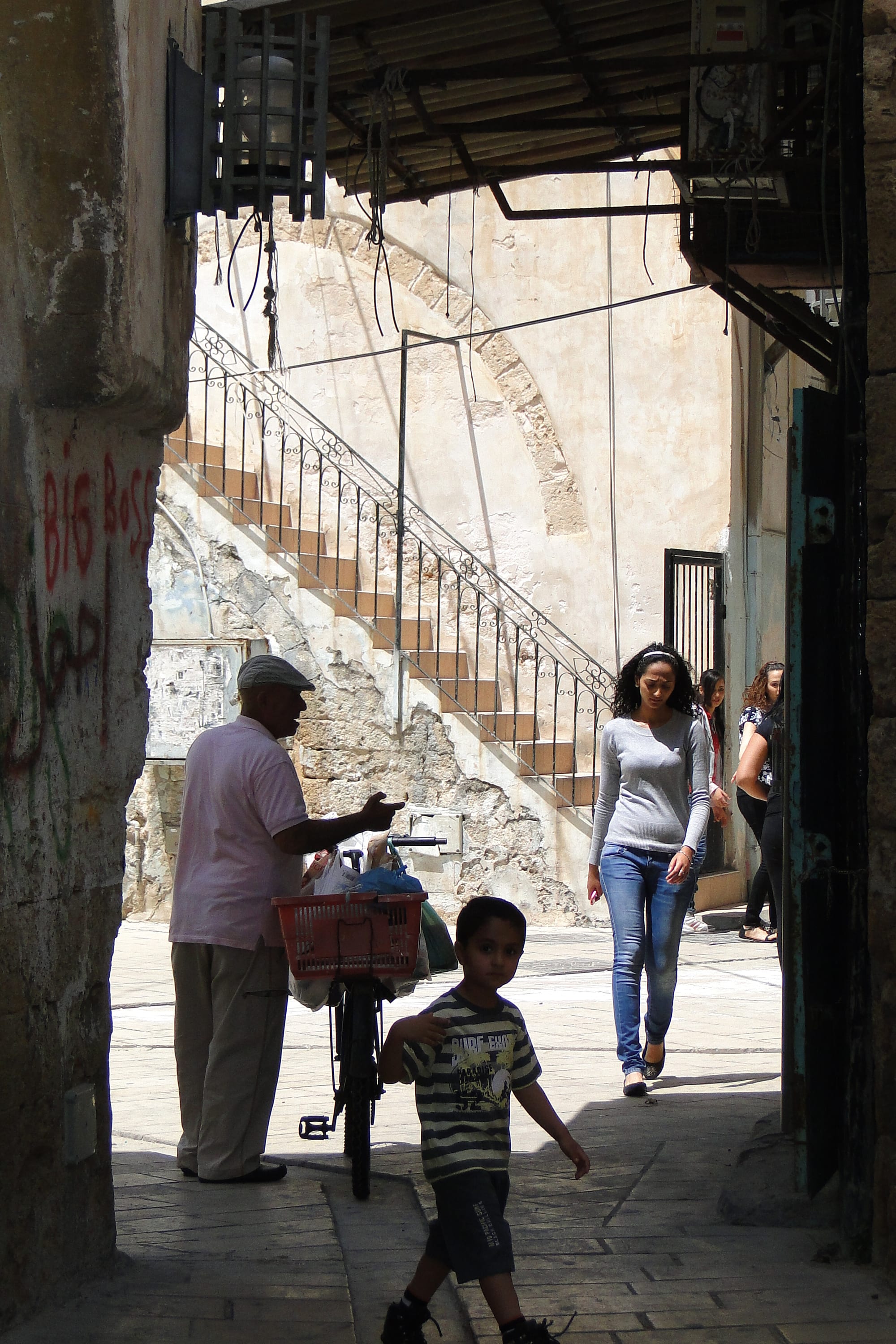
Akko, north of Haifa, is a walled Ottoman port town built directly over a remarkably intact Crusader city — vast vaulted halls, a knights' refectory, and tunnels run beneath the present streets. Above ground are the Ottoman Al-Jazzar Mosque, a Turkish bath, a covered market, and a working fishing harbour, in an old city whose residents are almost all Arab. It is a UNESCO World Heritage Site.
It combines well with Haifa; the Rosh HaNikra sea grottoes further north lie on the Lebanese border, an area covered by government travel warnings.
9. Caesarea Maritima
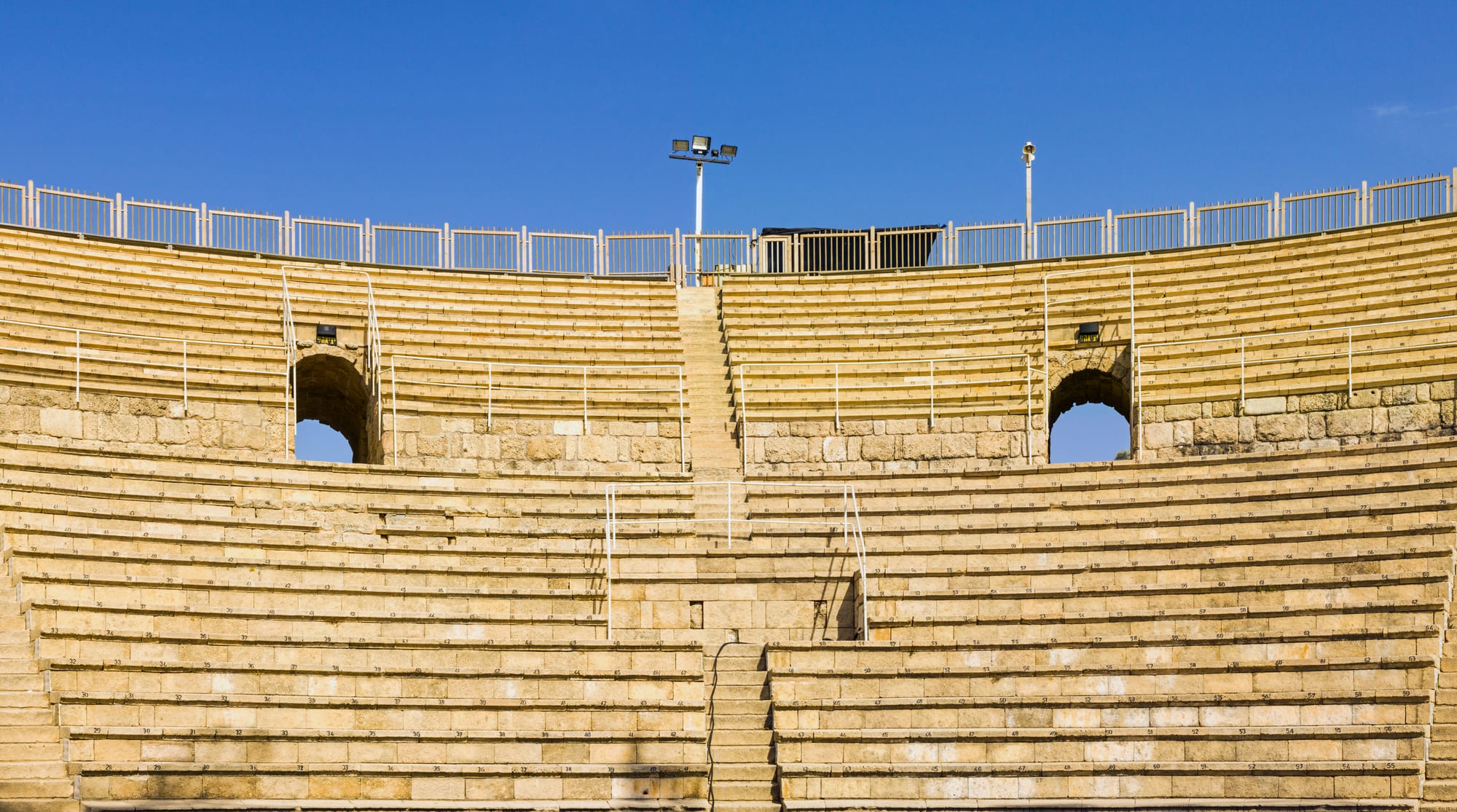
Caesarea, on the coast between Tel Aviv and Haifa, was Herod's grand port city and later the Roman capital of Judea. The national park on the shore has a restored theatre (still used for concerts), a hippodrome, a Crusader fortress and moat, an aqueduct running along the beach, and mosaics — an easy, scenic stop with swimming and seafront restaurants.
It is under an hour's drive from Tel Aviv.
10. The Negev: Makhtesh Ramon and Timna
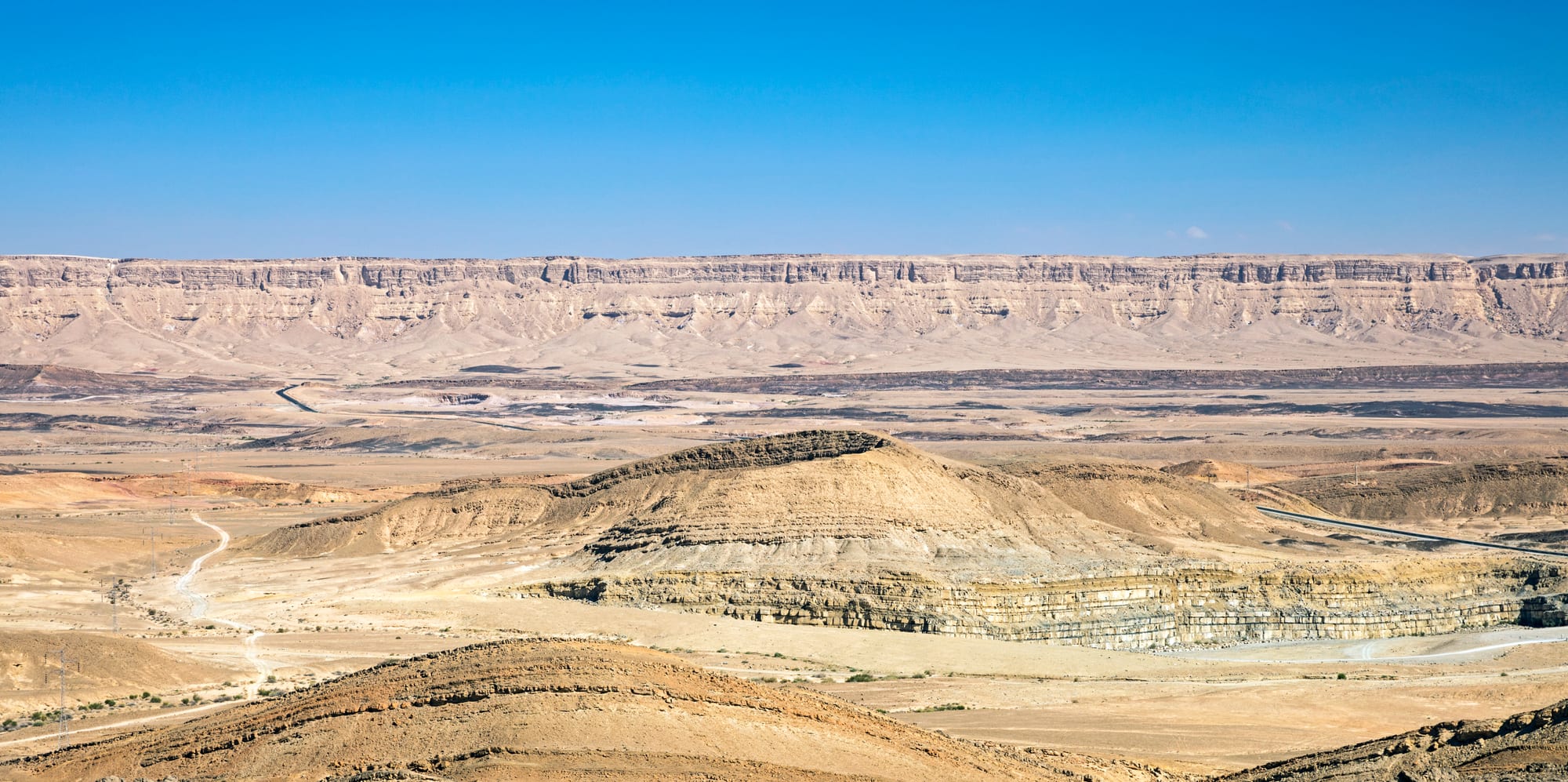
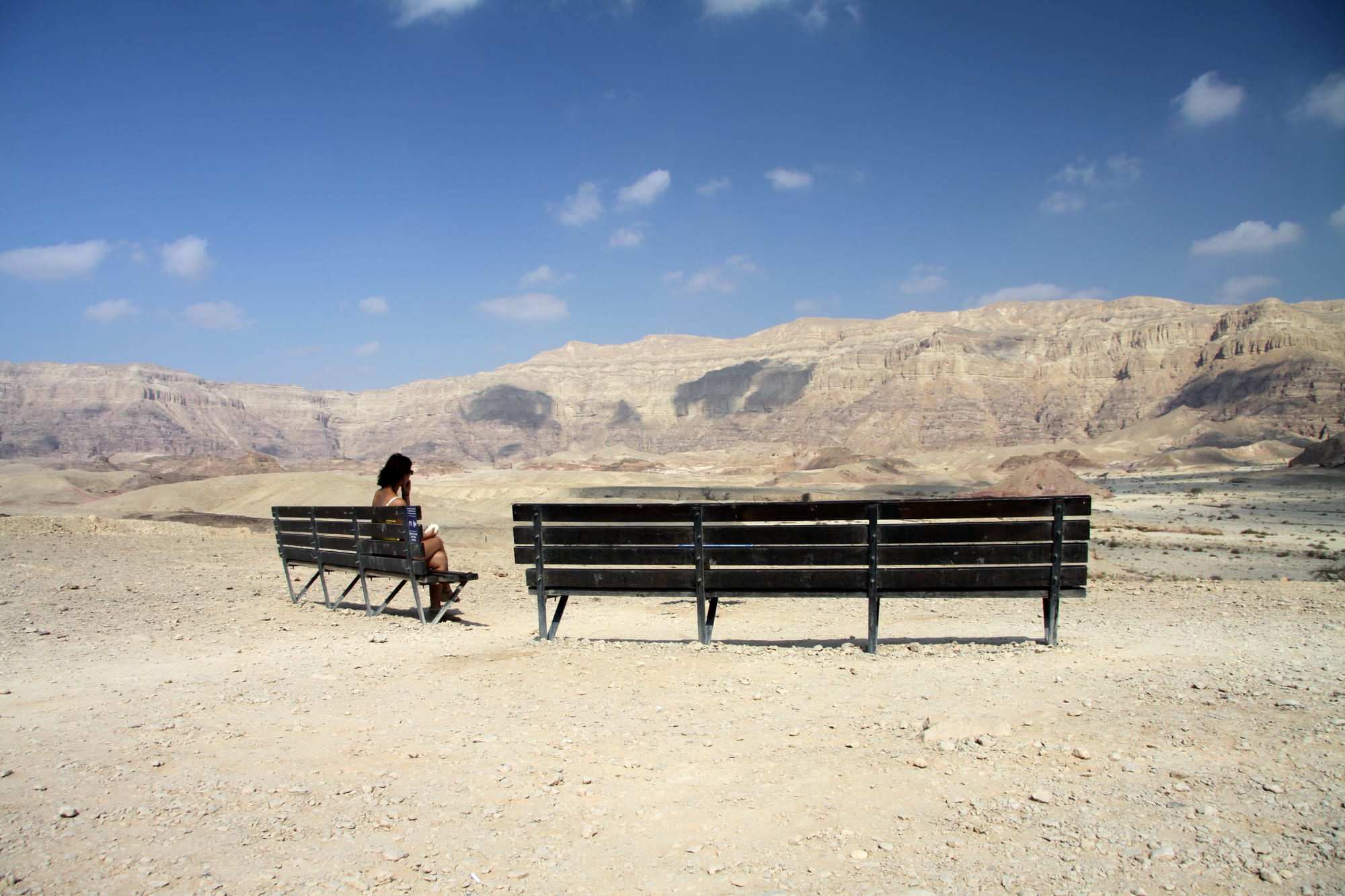
The Negev, the desert south, is more than half the country's land and holds its biggest natural wonders: Makhtesh Ramon, a 40-kilometre-long "erosion crater" of multicoloured rock with hiking, jeep routes, and a clifftop town at Mitzpe Ramon; Timna Park near Eilat, with ancient copper mines, natural arches, and the "Solomon's Pillars"; and the Nabataean desert cities on the old Incense Route (Avdat, Mamshit), a UNESCO site.
The desert is best in spring and autumn, and superb for stargazing.
11. Eilat and the Red Sea
At the country's southern tip, Eilat sits on a short strip of Red Sea coast between Egypt and Jordan — a resort town with year-round sun, an underwater observatory, and coral reefs at the Coral Beach Nature Reserve that are the northernmost in the world and easily snorkelled from shore. It lies beside the border crossing into Jordan, the usual route to Petra when it is open, and is the base for hiking in the Eilat Mountains.
It is a four-hour drive or a short flight from the centre of the country.
Before you go: a practical note
Israel has been at war since the Hamas-led attack of 7 October 2023, and since 28 February 2026, when Israel and the United States launched airstrikes on Iran, Iran has fired missiles and drones at Israeli cities, including Eilat; fighting with Hezbollah in Lebanon resumed in March 2026, and a nationwide state of emergency was declared. Ceasefires in April and June 2026 interrupted the fighting without ending it, and air travel across the region has been disrupted. Governments advise against all travel to Gaza and its surroundings and give specific warnings for parts of the West Bank and the borders with Lebanon and Syria; air-raid sirens and shelters are part of daily life. Security procedures at the airport and at sites are extensive.
Some sites associated with this itinerary — Bethlehem, Jericho, Hebron — are in the Palestinian territories and reached through checkpoints; access and conditions there vary independently. Check current, specific government advice before planning a trip, and be prepared for itineraries to change at short notice.