Attractions & Natural Wonders · Kuwait
Kuwait: Eight Attractions and Natural Wonders
The blue-globed water towers on the Gulf, one of the last living traditional souqs in Arabia, a green park built over old defensive lines, and an island layered with Bronze Age and Greek ruins
By Globeway Editorial · 30 September 2026
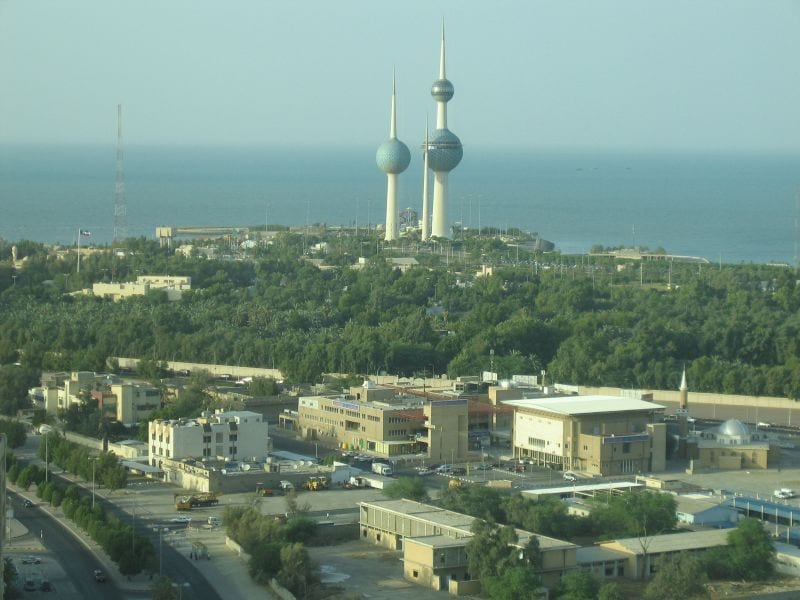
A small, rich country at the head of the Gulf
Kuwait is a small, flat, oil-rich country wedged between Iraq and Saudi Arabia at the northwestern corner of the Persian Gulf, with about 4.8 million people — most of them foreign nationals — and one of the world's highest incomes per head. It has almost no natural relief or vegetation: the landscape is desert and coast. Its history turns on pearl-diving and trade before oil, and on the Iraqi invasion of 1990 and the war that expelled it. It has strict laws (alcohol is banned). Since 28 February 2026 Kuwait has come under aerial attack in the wider Iran war, and its airspace has been closed and flights suspended.
The eight below are almost all in and around Kuwait City. The bearable months are November to March; its summers are some of the hottest on earth, with a record of 54°C at Mitribah in 2016.
1. The Kuwait Towers
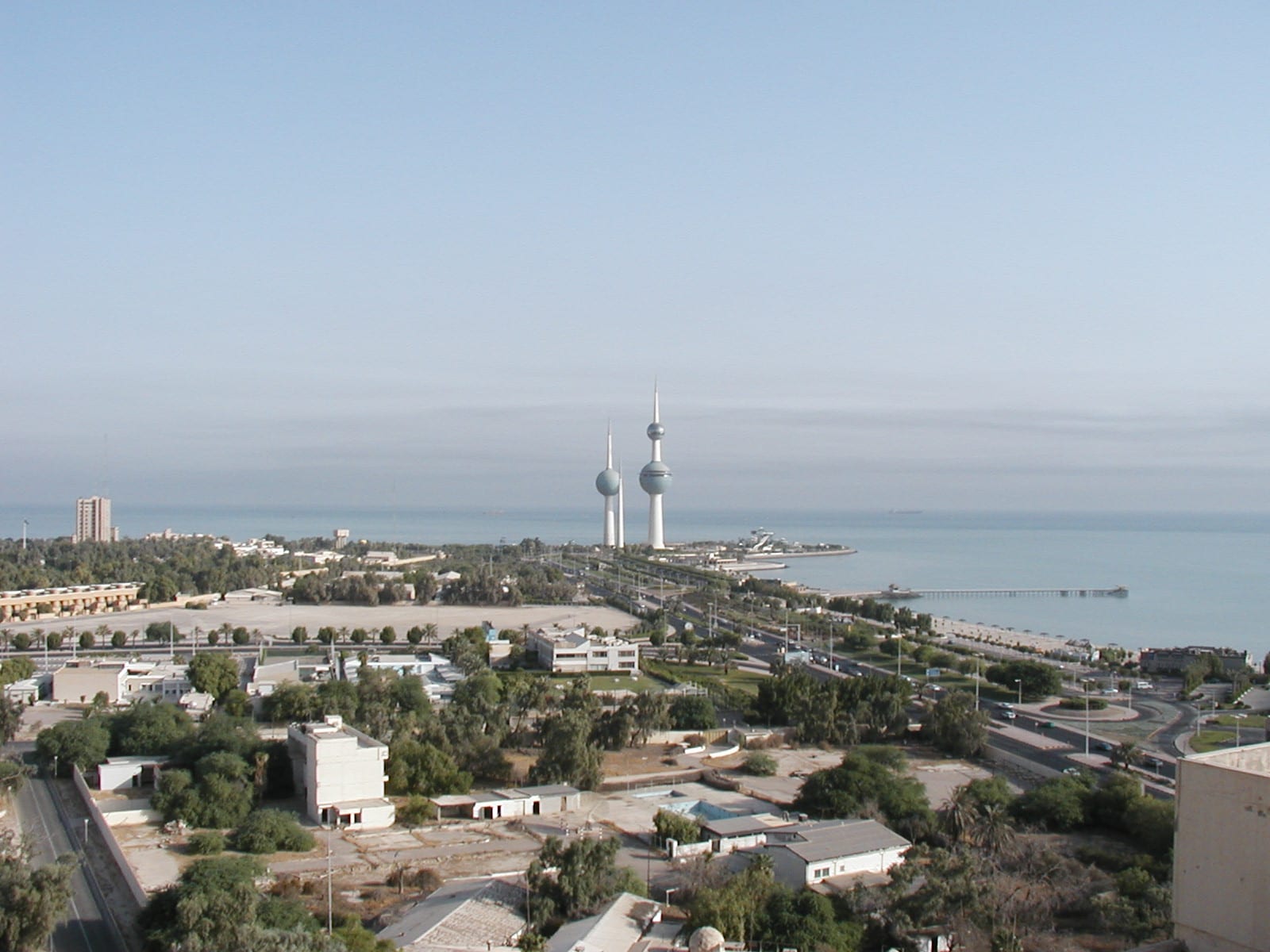
The three Kuwait Towers, on a promontory on the Gulf, are the country's icon — tapering concrete columns, two carrying spheres covered in blue-green steel discs (the main tower's lower sphere holds a water tank and restaurant, its upper sphere a revolving café). Designed by the Danish architect Malene Bjørn for a Swedish engineering firm and opened in 1979, they were heavily damaged during the Iraqi occupation of 1990–91, and later closed for renovation from 2012 to 2016. The view takes in the whole city and coast.
They stand on the seafront Gulf Road.
2. Kuwait City and the Corniche
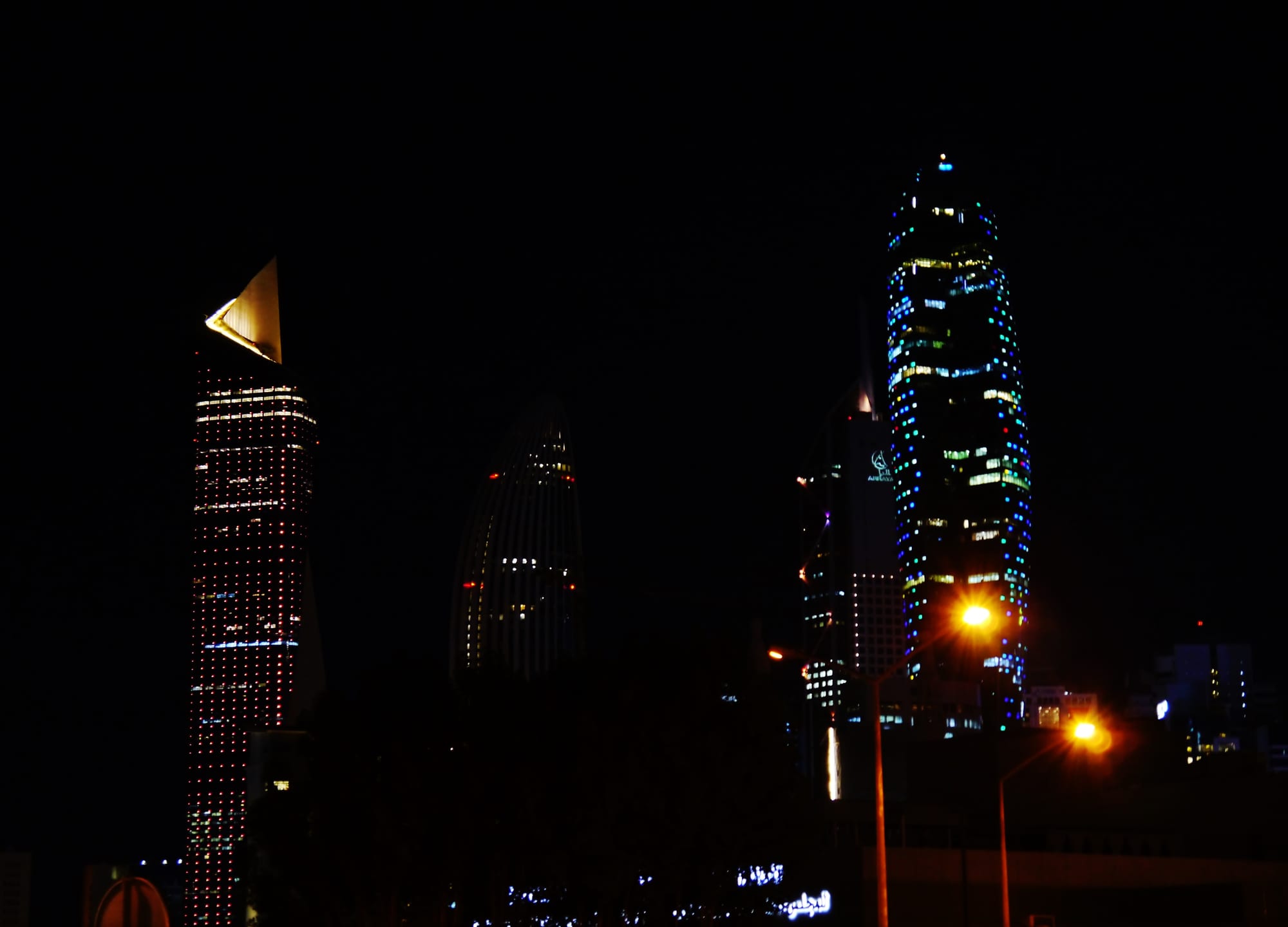
Kuwait City is a modern, low-rise-becoming-high-rise capital along the water. The Gulf Road (Corniche) runs for kilometres past beaches, marinas, and parks; the sculpturally twisted Al Hamra Tower is the tallest building; and the Scientific Center on the waterfront has the largest aquarium in the Middle East after Dubai's and a harbour of historic dhows. Green Island, the first artificial island in the Gulf region, lies just offshore.
Evenings on the Corniche, when the heat drops, are when the city comes out.
3. Souq Al-Mubarakiya
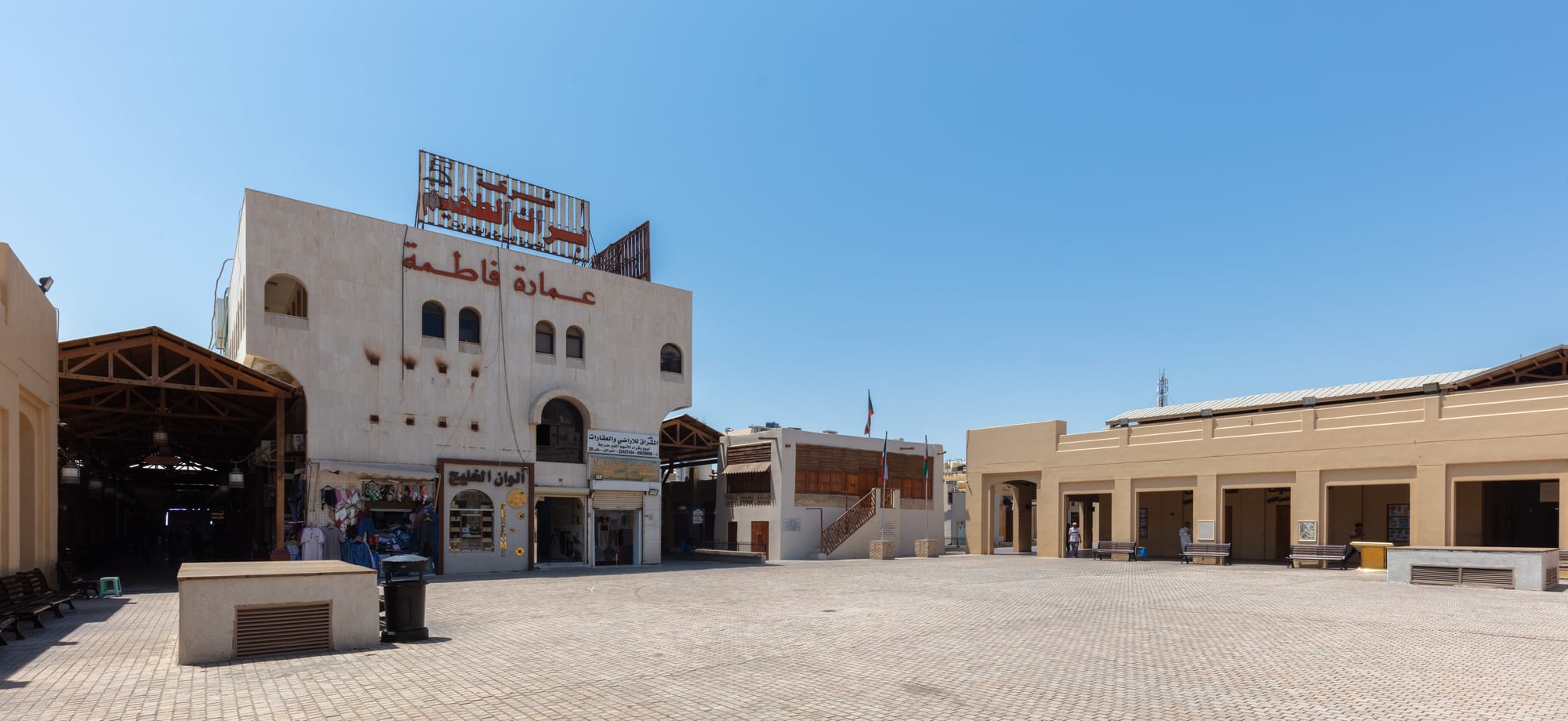
Al-Mubarakiya is the historic heart of the city — a partly covered warren of alleys selling spices, dates, gold, oud, dried fish, textiles, and household goods, with old-style coffee houses and restaurants tucked among them. It was a centre of trade before oil; it was damaged in the 1990 invasion and renovated, and a section destroyed by fire in 2022 has been under reconstruction since.
It is liveliest in the evening and on weekends.
4. The Grand Mosque
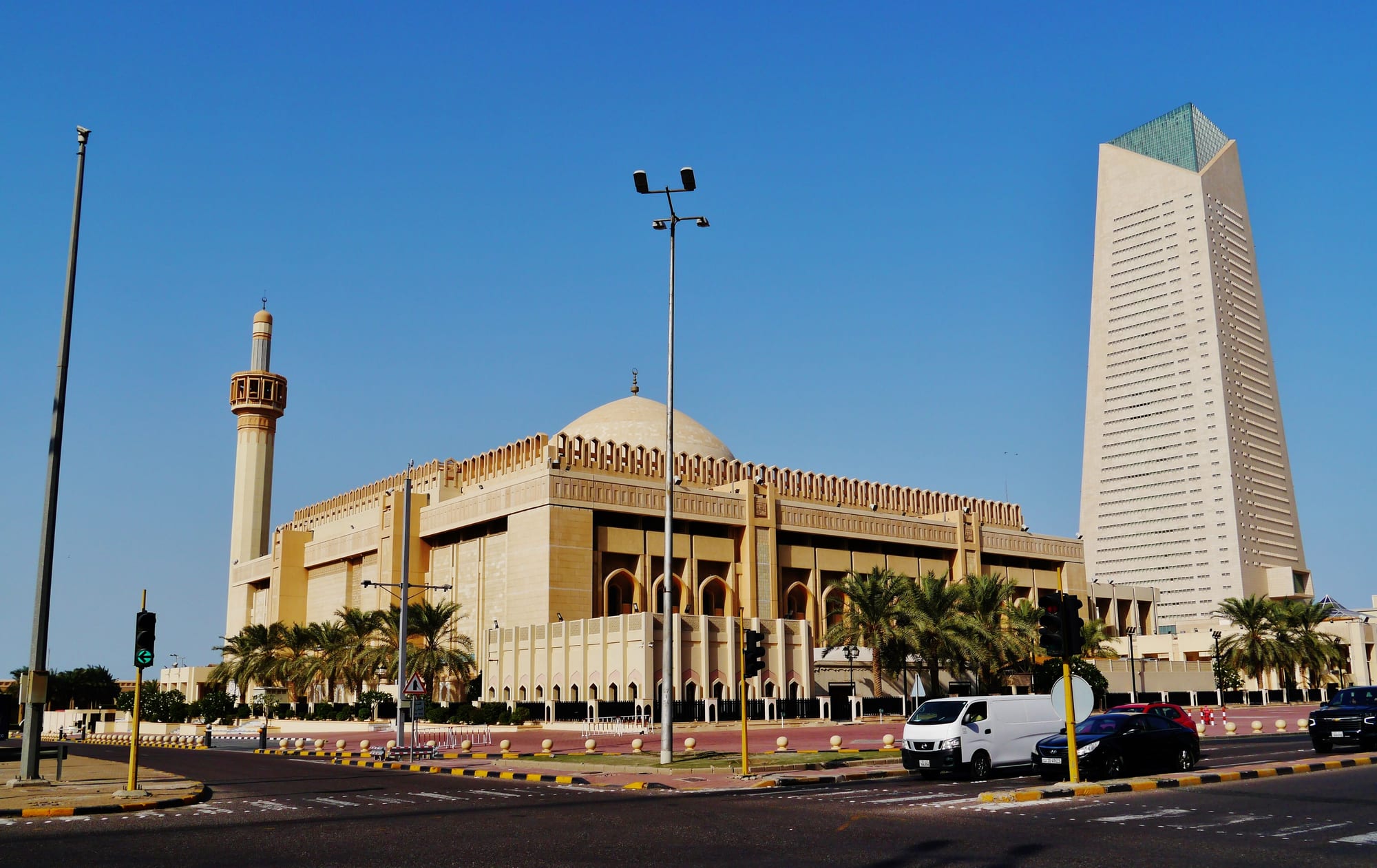
Kuwait's Grand Mosque, opposite the Seif Palace, holds up to 10,000 men in its main prayer hall beneath a dome 26 metres across, decorated with the 99 names of God. Visitors are expected to dress modestly.
Across the road rises the Seif Palace clock tower, covered in blue tiles with a gold-plated roof.
5. Al Shaheed Park and the museums
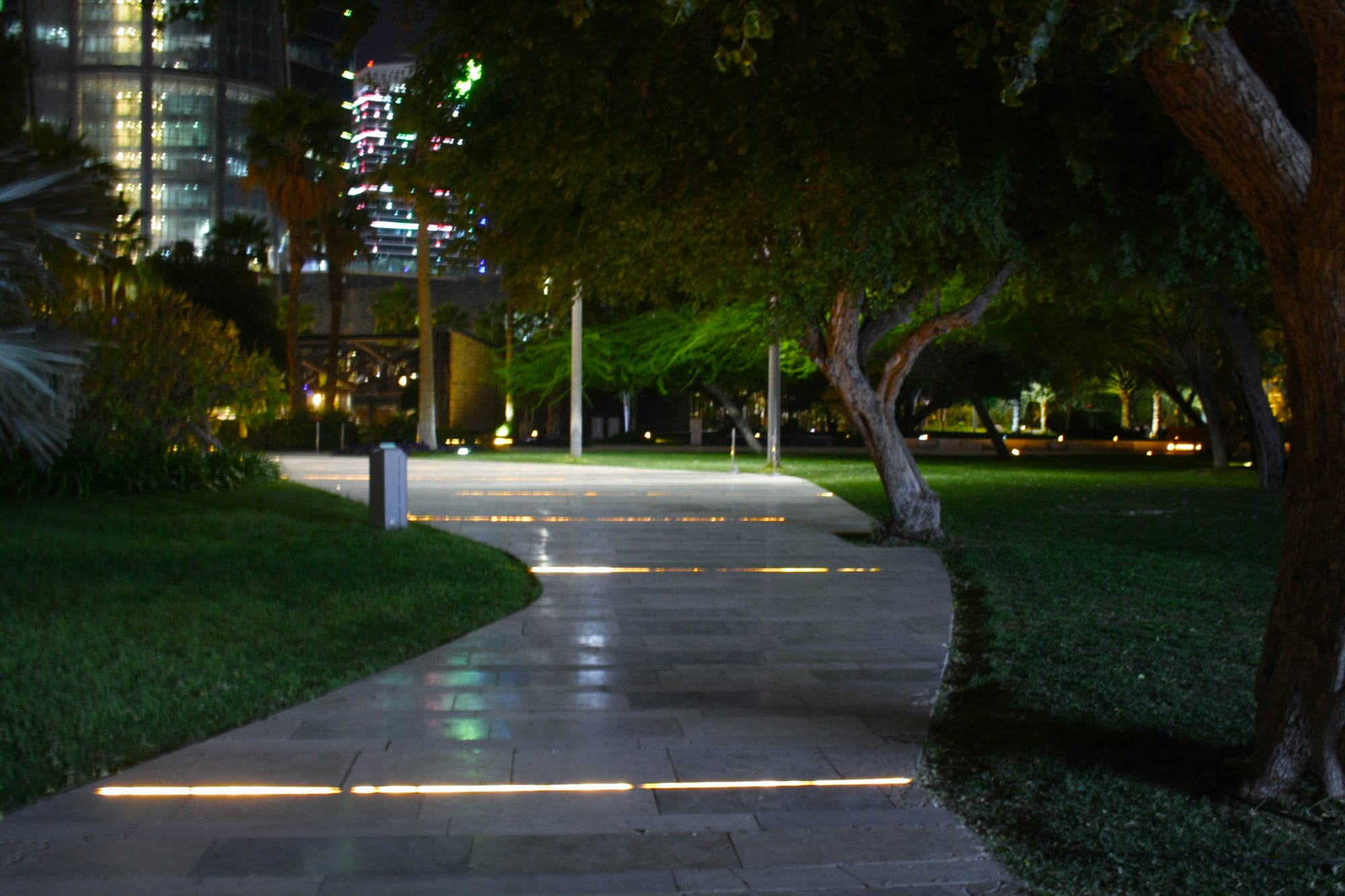
Al Shaheed ("Martyr") Park, opened in phases since the mid-2010s, is the largest urban park in Kuwait, with gardens, walkways, one of the world's largest green roofs, and two museums — the Remembrance Museum on Kuwait's history and the Habitat Museum on its natural environments. Nearby, the Kuwait National Museum (looted in 1990 and set on fire by retreating troops in 1991) and the adjacent Sadu House, with the Bait Al-Othman heritage museum in Hawalli, fill out the cultural picture, along with the private Tareq Rajab museums of Islamic art and calligraphy.
Together these make a good half-day out of the sun.
6. Failaka Island
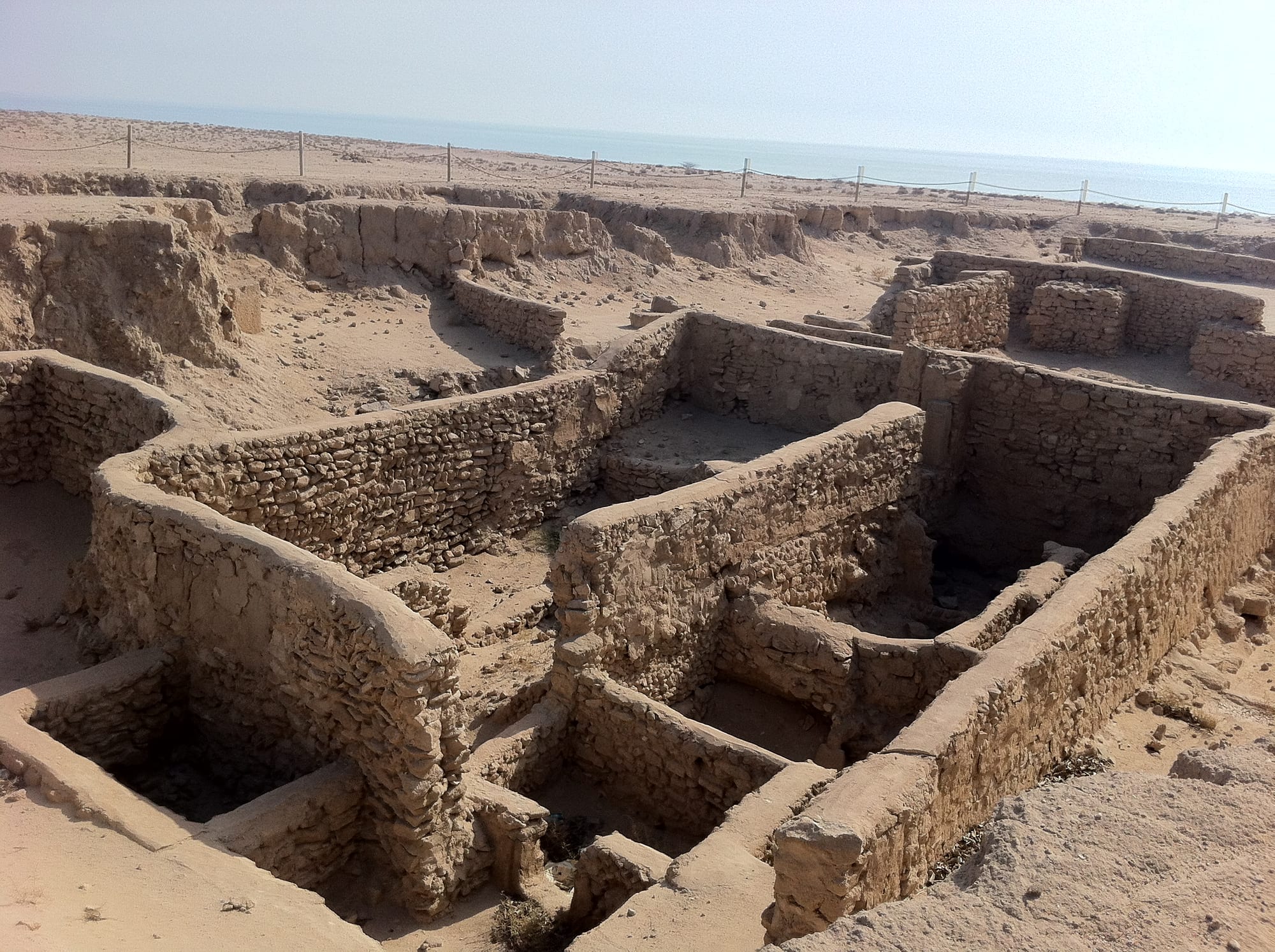
Failaka, an island in Kuwait Bay about 20 kilometres offshore, has the country's richest archaeology — a Bronze Age Dilmun temple and settlement, a Greek fort and temple from Alexander the Great's successors (who called it Ikaros), and later Islamic remains. Until the Gulf War it was the longest continuously inhabited place in Kuwait, but Iraqi forces expelled all its residents to the mainland in 1990–91.
It is reached by boat from the mainland.
7. Sadu House and the Bedouin heritage
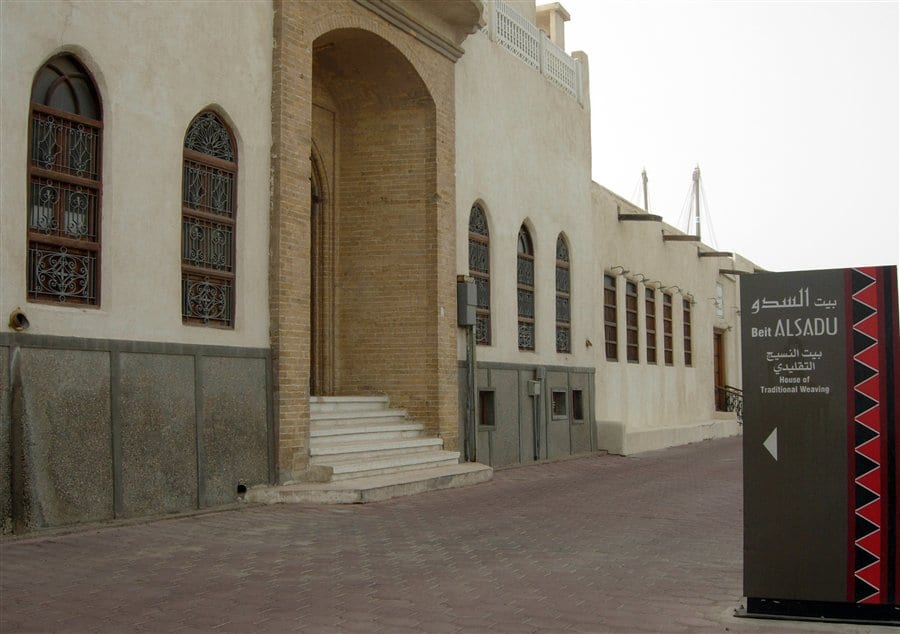
Sadu House, a building near the National Museum set up by the Al Sadu Society in 1980, preserves and promotes al-sadu — the geometric woven textiles Bedouin women make from sheep, goat, and camel wool, used for tents and camel gear, and inscribed in 2020 on UNESCO's intangible heritage list (jointly with Saudi Arabia). It works as both a museum and a weaving centre. It is a window on the pre-oil, desert side of Kuwaiti life.
The desert and its Bedouin traditions remain part of Kuwaiti identity.
8. The memory of the invasion
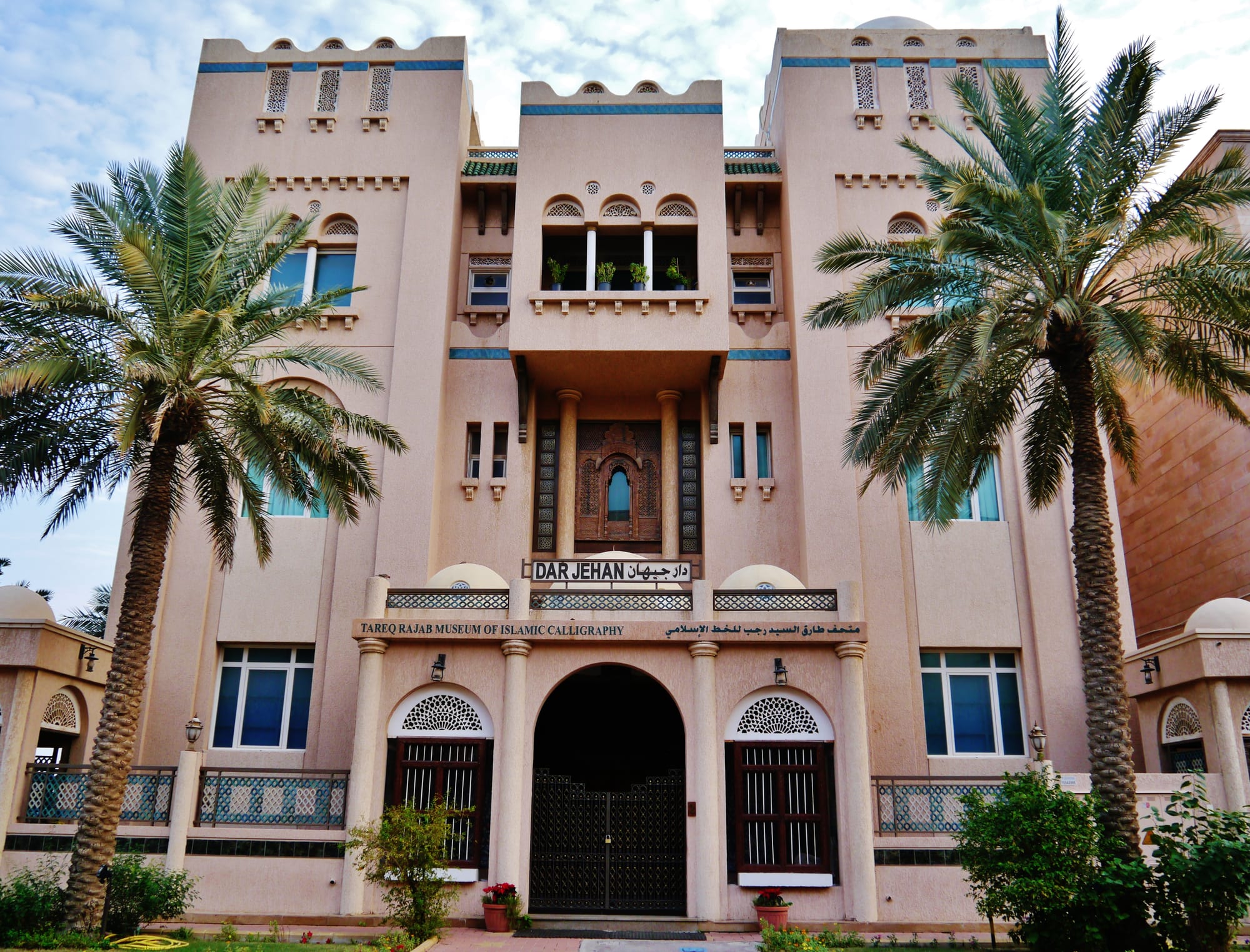
Kuwait's recent history is inescapable. Iraq invaded and annexed the country in August 1990; a US-led coalition drove its forces out in February 1991, during which retreating troops set more than 600 oil wells alight; the last was capped in November 1991. The Al Qurain Martyrs' Museum preserves a house where 19 resistance fighters fought a ten-hour battle in February 1991, in which twelve of them were killed, and the National Museum tells the wider story. The private Tareq Rajab collection survived because the family bolted its doors and disguised them behind painted wooden panels.
Kuwaitis mark Liberation Day on 26 February each year.
Kuwait is a short trip — two or three days covers the city, the souq, the mosque, the museums, and a day on Failaka. It is often combined with a wider Gulf itinerary.