Attractions & Natural Wonders · Laos
Laos: Nine Attractions and Natural Wonders
A saffron-robed alms procession at dawn, turquoise waterfalls in the jungle, a plain scattered with giant stone jars, and the slow, brown Mekong running through it all
By Globeway Editorial · 30 September 2026
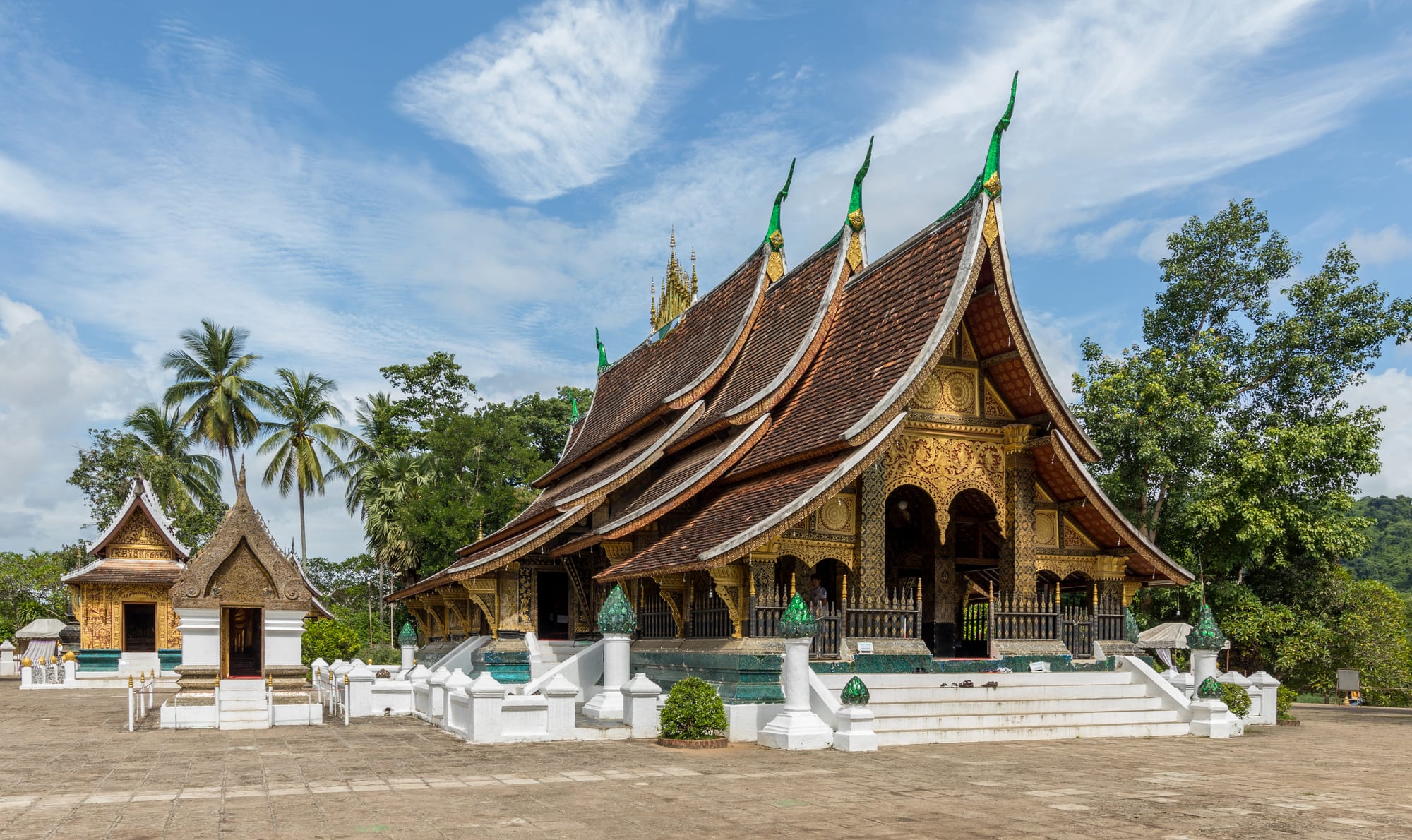
The land of a million elephants
Laos is Southeast Asia's only landlocked country, a long, mountainous, sparsely populated nation strung along the Mekong between Thailand, Vietnam, China, Myanmar, and Cambodia. It has about 7.7 million people, a slow pace of life, a strong Theravada Buddhist culture, and, still, some of the least-developed landscape in the region — forested mountains, few roads, and a Mekong that remains the country's main highway in many places.
The nine below run from the old royal capital in the north down the Mekong to the Cambodian border. The cool, dry season (November to February) is the best time to visit; March–April is hot and hazy from agricultural burning, and the rains run May to October.
1. Luang Prabang
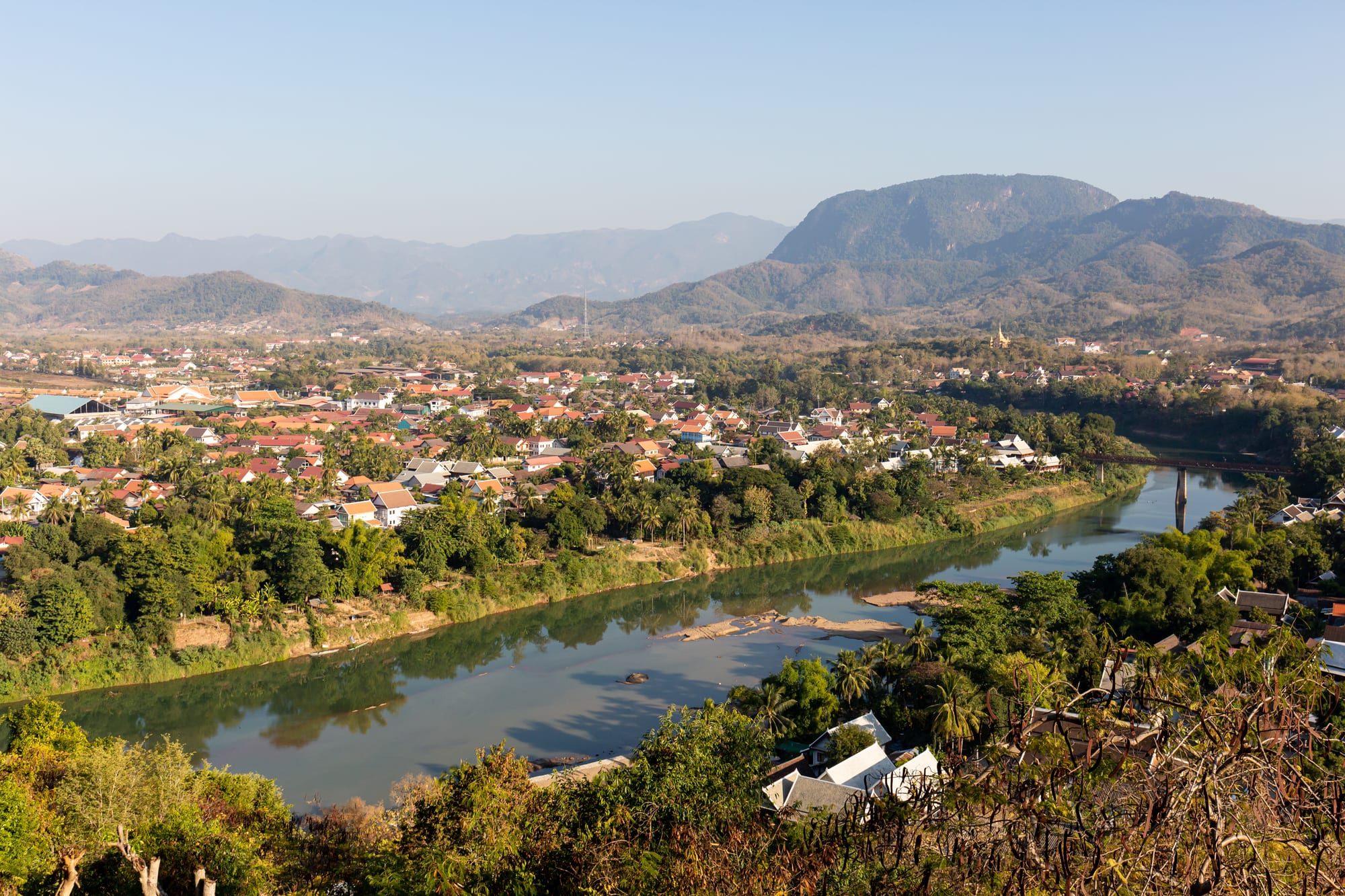
Luang Prabang, the former royal capital, is one of the best-preserved towns in Southeast Asia — a UNESCO World Heritage Site of gilded temples, French colonial shophouses, and saffron-robed monks, set on a peninsula between two rivers. The former Royal Palace (now a museum), the night market, the climb up Mount Phousi for sunset, and a boat trip on the Mekong to the Buddha-filled Pak Ou caves are the essentials.
It has its own small airport and is Laos's best-known highlight.
2. The tak bat alms procession
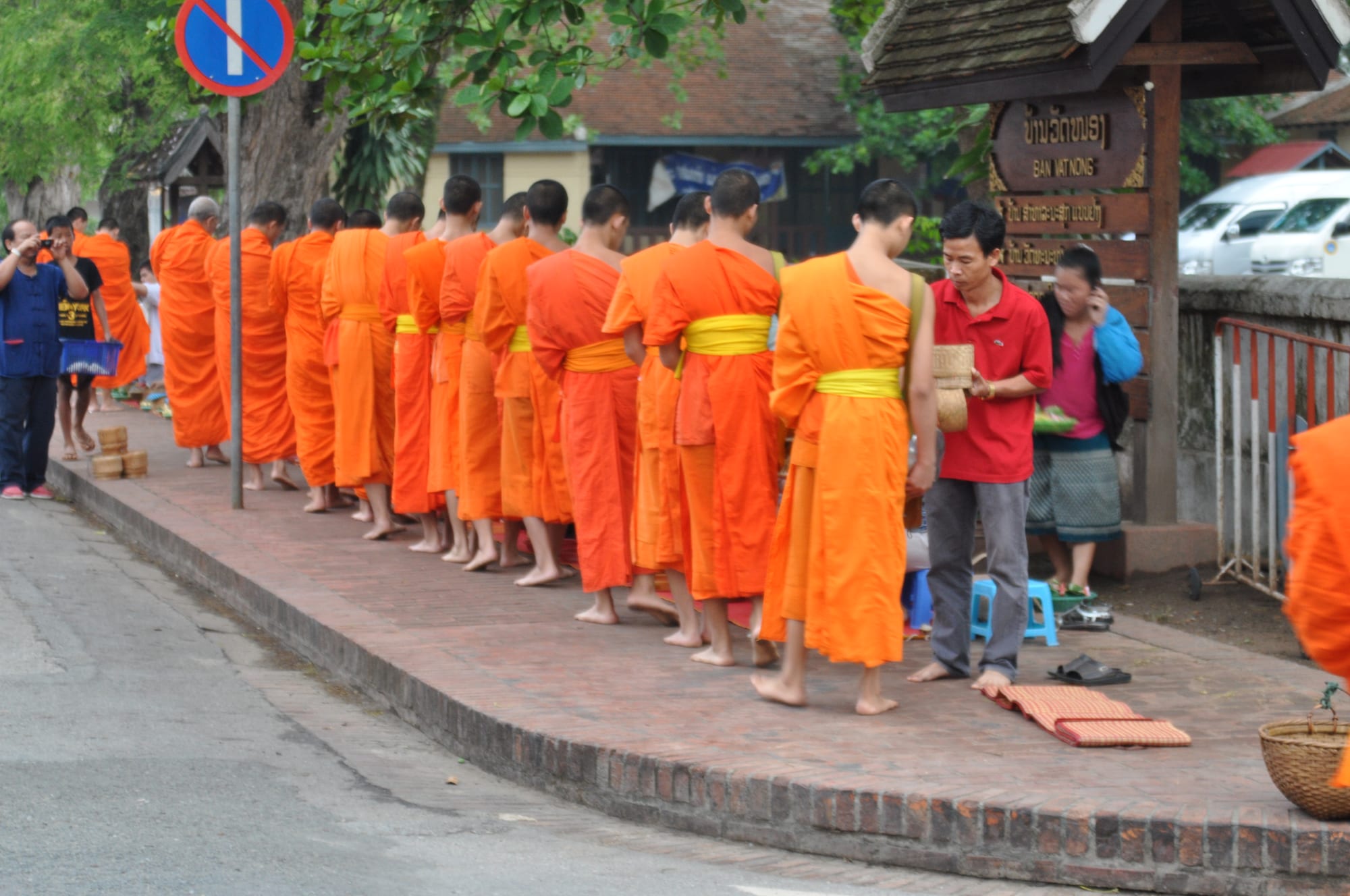
Every morning at first light, long lines of monks from the town's monasteries walk in single file along the main street to receive rice and food from kneeling residents — an unbroken daily ritual, not a show, though it has become one of Luang Prabang's best-known sights. Guides ask visitors to give quietly if they choose to participate, keep a respectful distance otherwise, and avoid flash photography and crowding.
Visitors who watch are asked to stay back and unobtrusive.
3. Kuang Si Falls
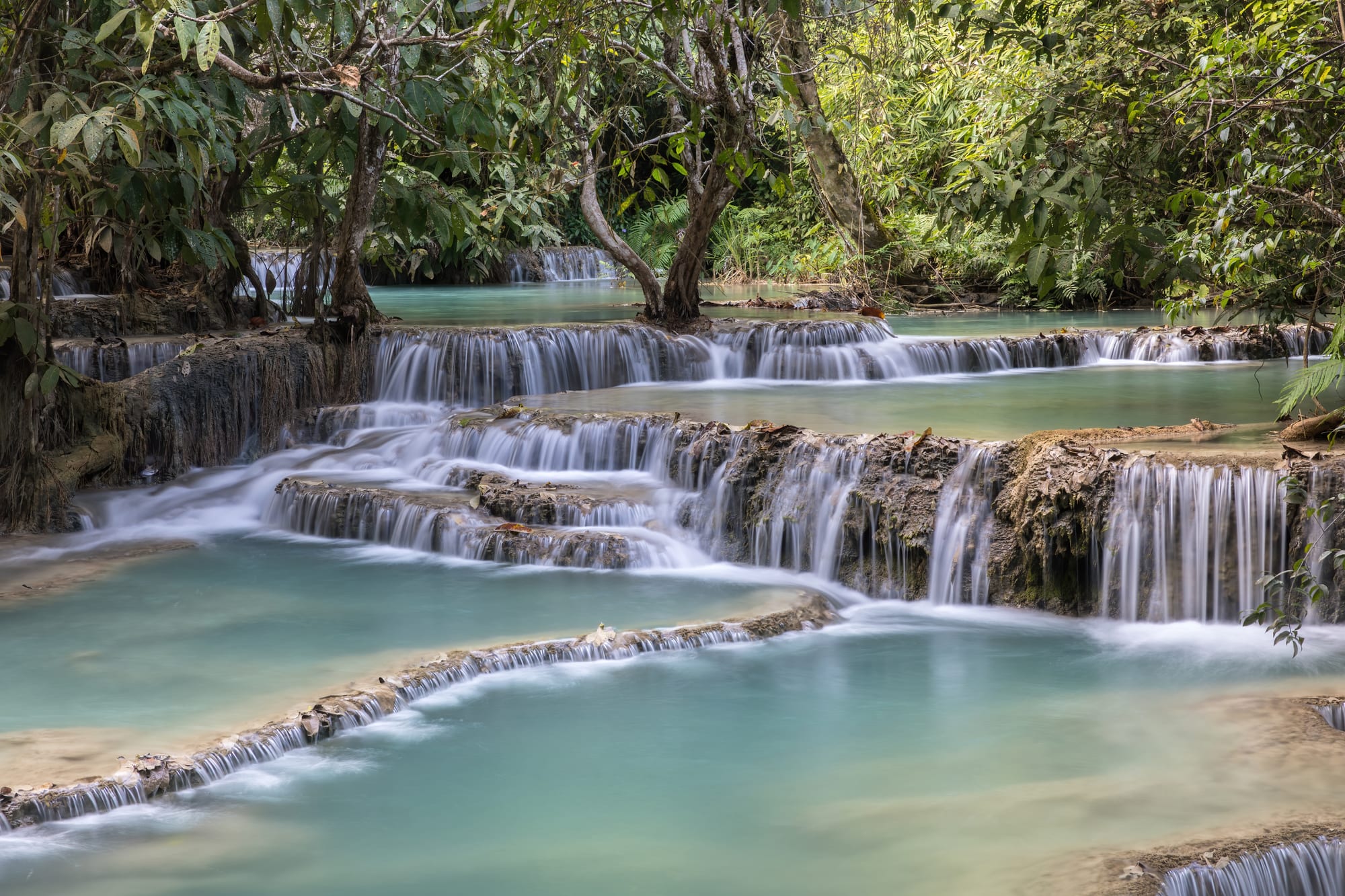
Kuang Si, about 30 kilometres from Luang Prabang, is a multi-tiered limestone waterfall dropping through a series of impossibly turquoise swimming pools in the forest. It is the classic half-day trip from town, by tuk-tuk or bicycle.
Go early to beat the crowds and the afternoon tour buses.
4. Vientiane and Pha That Luang
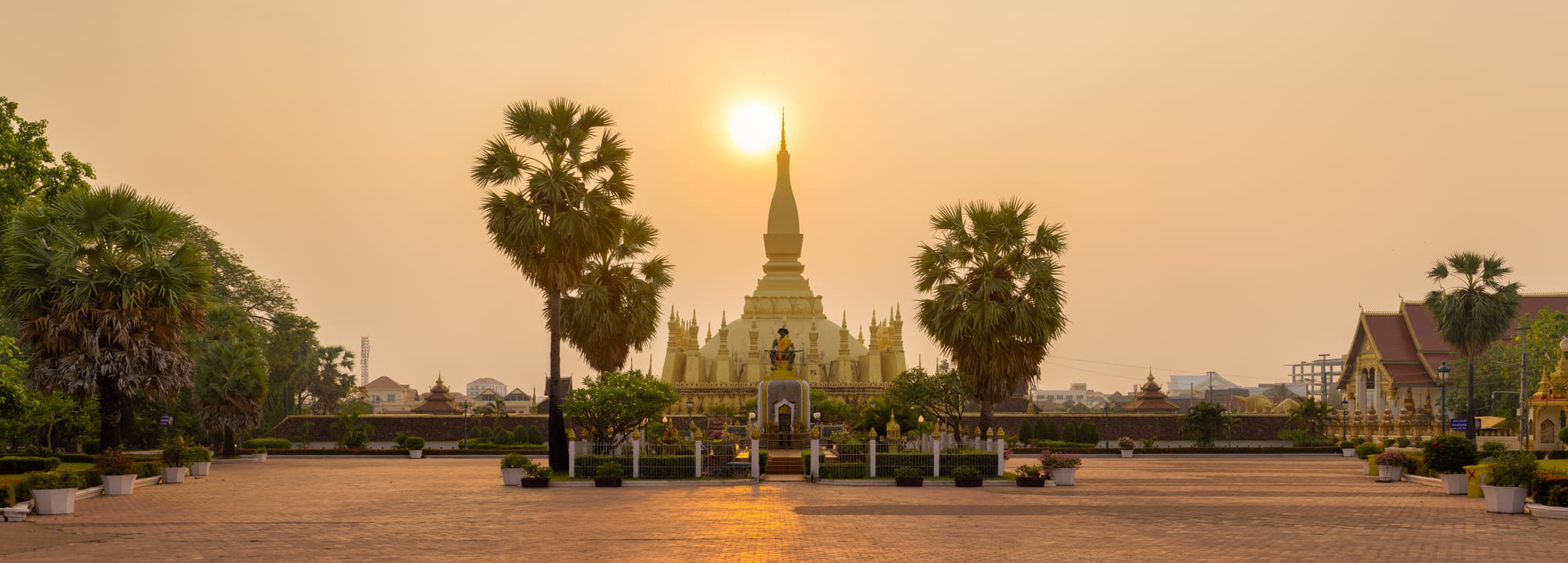
Vientiane, the low-rise, unhurried capital on the Mekong, is easy to underrate — it has none of Luang Prabang's set-piece charm, but its Pha That Luang, a 45-metre gold-covered stupa said to enshrine a relic of the Buddha, is one of the country's most important monuments. Nearby are Wat Sisaket, perhaps the city's oldest surviving temple, with a museum, the Patuxai victory arch, and a growing café and riverside-bar scene along the Mekong.
Most visitors pass through rather than linger, but it rewards a day or two.
5. Vang Vieng
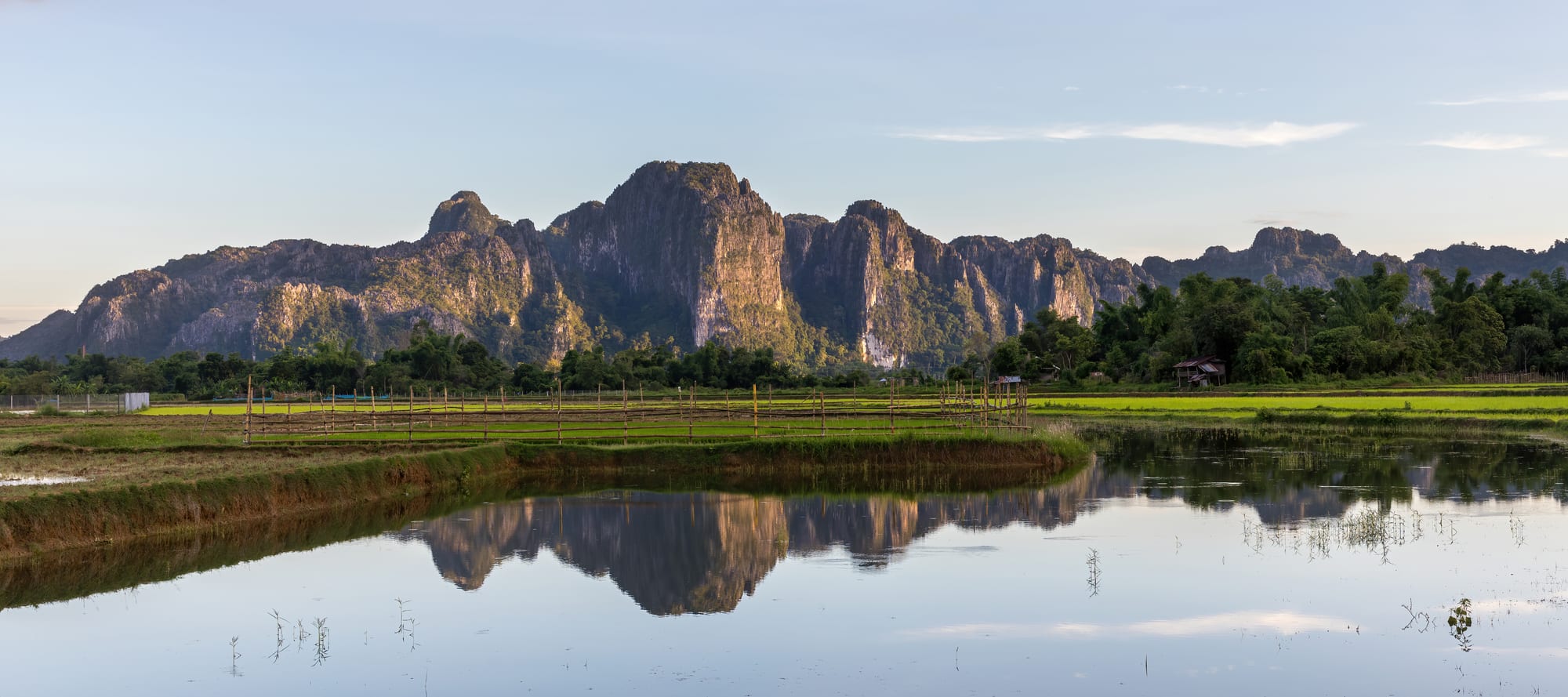
Vang Vieng, between Vientiane and Luang Prabang, sits among dramatic limestone karst towers along the Nam Song river. Once known mainly for a wild tubing and party scene, it has cleaned up and diversified: cave exploring (Tham Jang, Tham Phu Kham and others), climbing, mountain biking, and kayaking on the river.
It is a popular overnight stop for those doing the Vientiane–Luang Prabang road.
6. The Plain of Jars
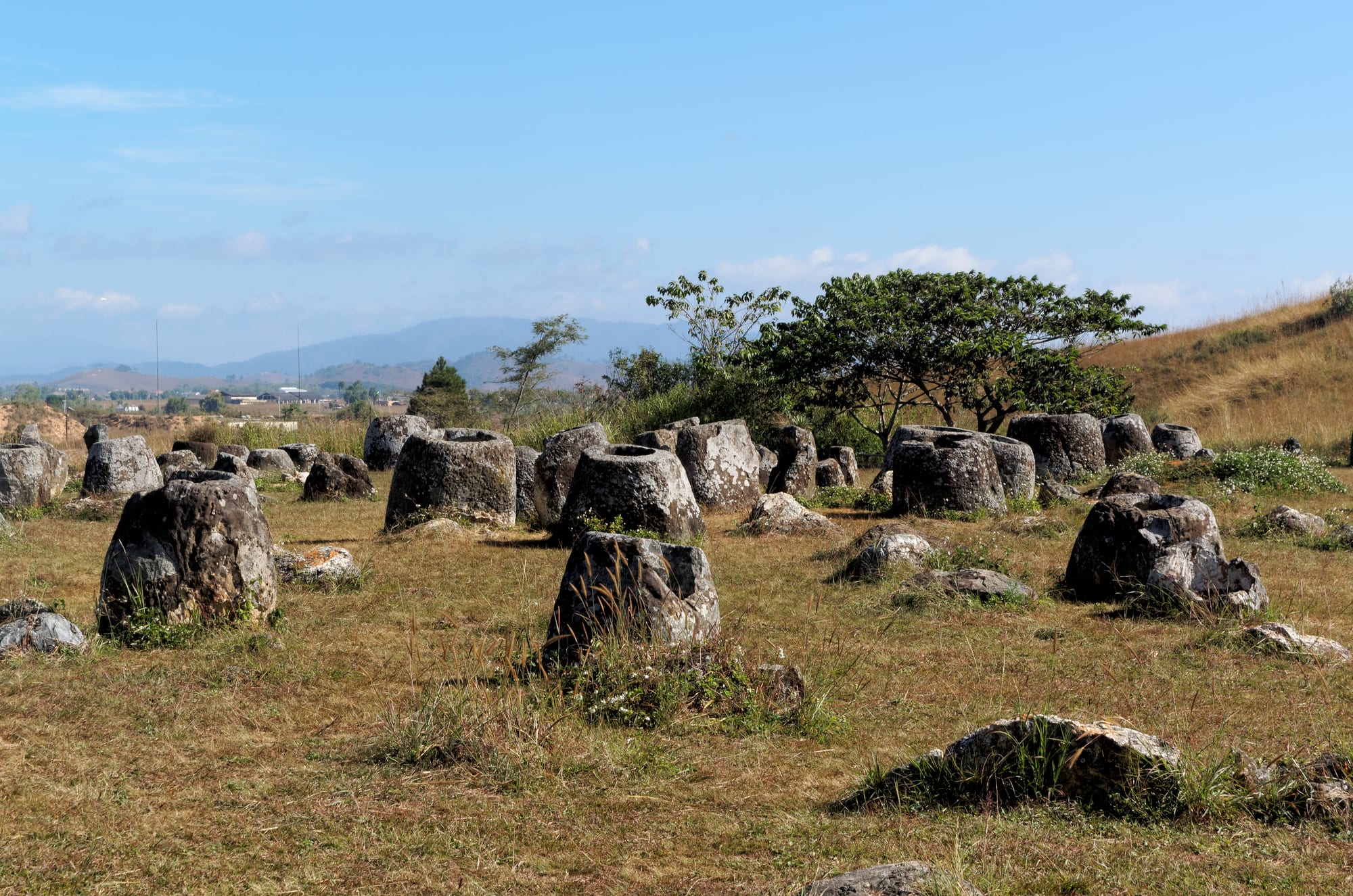
Around Phonsavan in the northeast, more than 2,000 massive carved stone jars — some over 2,000 years old, their purpose still debated (most likely mortuary vessels) — are scattered across more than 120 sites; a group of them was inscribed as a UNESCO World Heritage Site in 2019. The region was also among the most heavily bombed in history during the "Secret War" of the 1960s–70s; craters pit the landscape, and the jar sites open to visitors are ones cleared of unexploded bombs by the Mines Advisory Group (MAG), with marked paths.
Never step off the marked paths — unexploded ordnance remains a real danger across this whole province.
7. Wat Phou
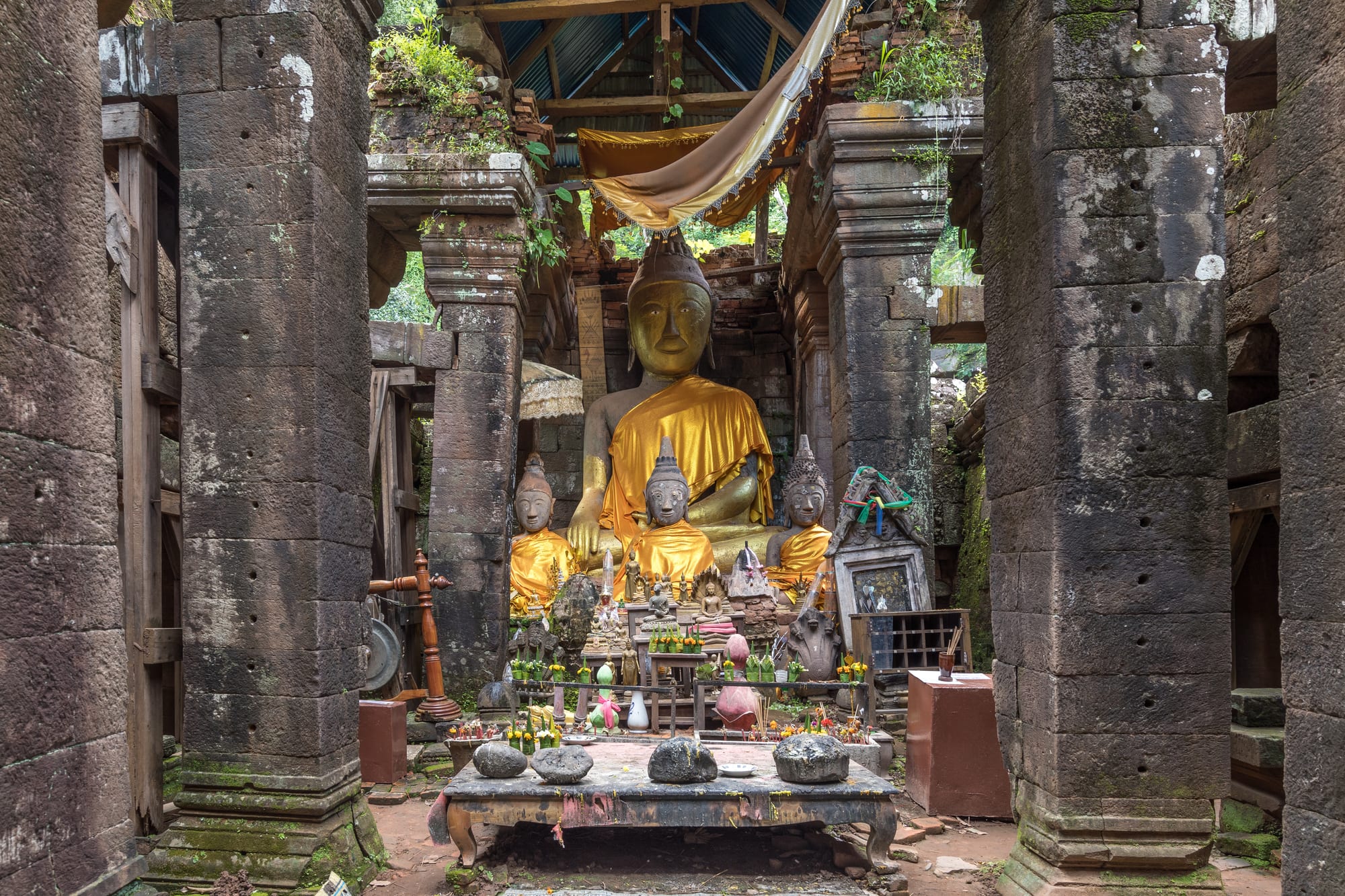
Wat Phou, near Champasak in the far south, is a ruined Khmer Hindu temple complex whose first buildings predate Angkor — a stepped sanctuary climbing a hillside to a shrine by a sacred spring. It has been a UNESCO World Heritage Site since 2001, far quieter than Angkor, and set in a striking riverside landscape.
It is usually visited from Pakse, the main southern city.
8. The Bolaven Plateau
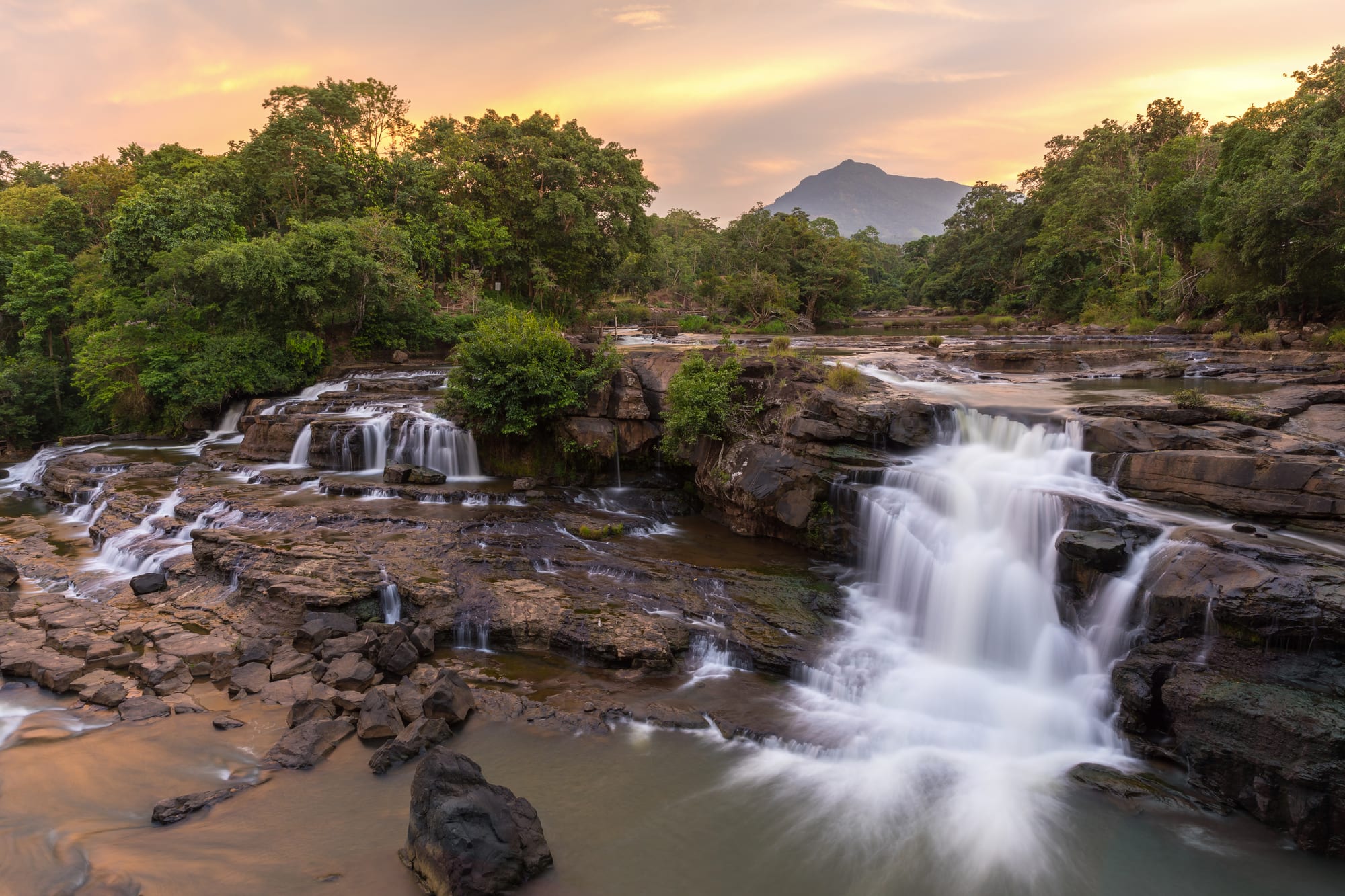
The Bolaven Plateau, above Pakse, is cool volcanic highland, some 1,000 to 1,350 metres high, where almost all of Laos's coffee is grown, known also for its waterfalls — Tad Fan beyond Paksong, and Tad Lo — and ethnic minority villages. Roads link the falls, plantations, and homestays, and many visitors tour them over two or three days.
The plateau's altitude gives relief from the lowland heat.
9. Si Phan Don (Four Thousand Islands)
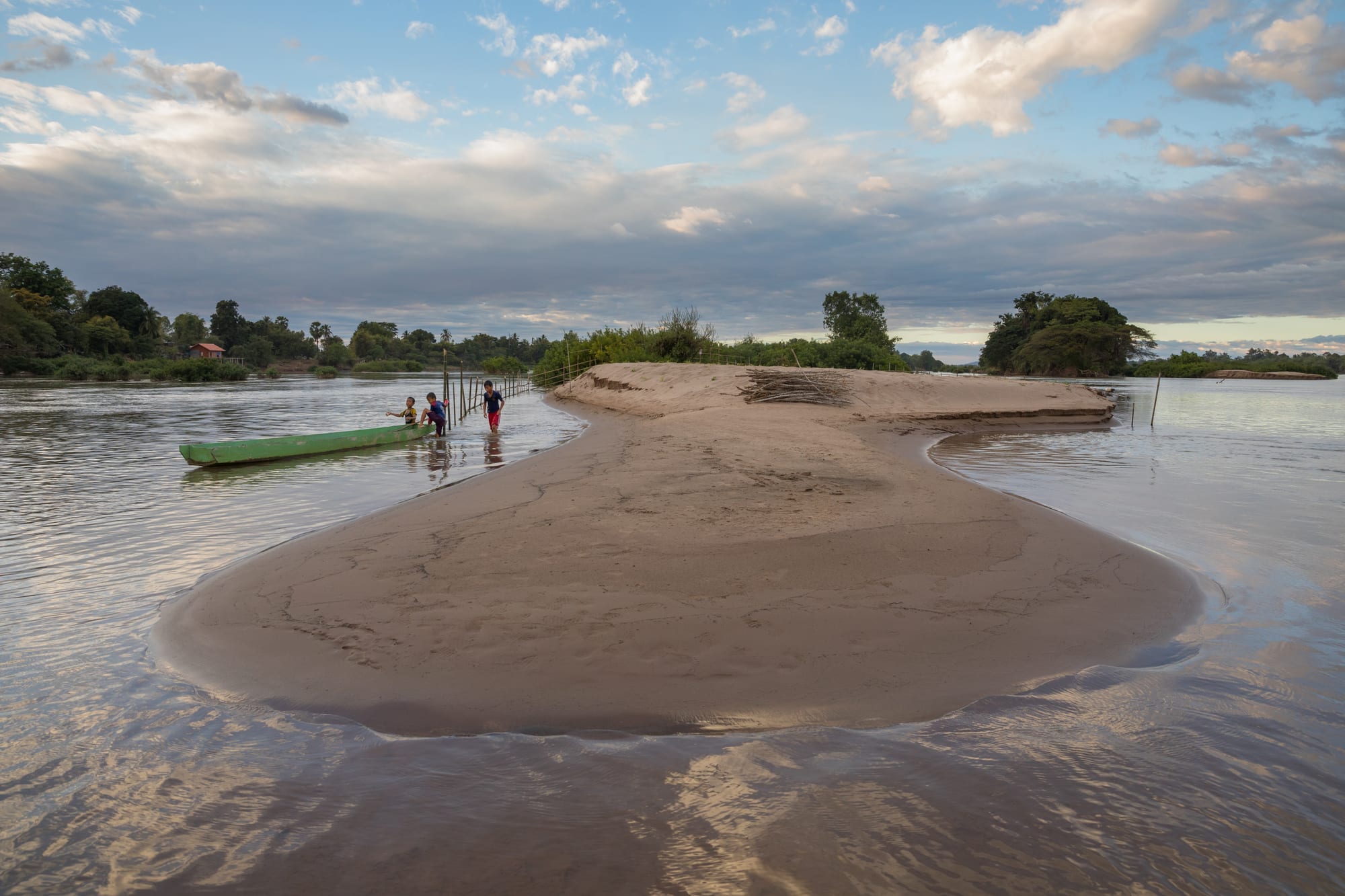
At the southern tip of Laos, the Mekong spreads wide and splits around thousands of islands and islets, half of them submerged when the river floods, a few of them inhabited. Don Det and Don Khon are the backpacker bases — hammocks, sunsets, and bicycle rides past the dramatic Khone Phapheng falls, the largest in Southeast Asia. The river's Irrawaddy dolphins, once a draw here, died out on the Lao side in 2022.
It lies right on the border with Cambodia.
Before you go: a practical note
Unexploded ordnance from the 1964–73 bombing campaign remains in the ground across much of eastern and northern Laos, most seriously around the Plain of Jars and the Ho Chi Minh Trail region. Stay strictly on marked paths and roads in rural areas and never touch anything that looks like military hardware. Road travel elsewhere is generally straightforward, though mountain roads are slow and sometimes affected by landslides in the wet season.
A first trip usually links Luang Prabang, Vang Vieng, and Vientiane over 10 days to two weeks; the south (Wat Phou, the Bolaven Plateau, Si Phan Don) is a separate, quieter leg, often combined with onward travel to Cambodia.