Food · Laos
Laos: Food and the National Dish
A bright, herb-heavy minced meat salad eaten with sticky rice by hand, in the country that eats more glutinous rice per person than anywhere else on Earth
By Worldlore Editorial · 30 September 2026
A cuisine built around sticky rice
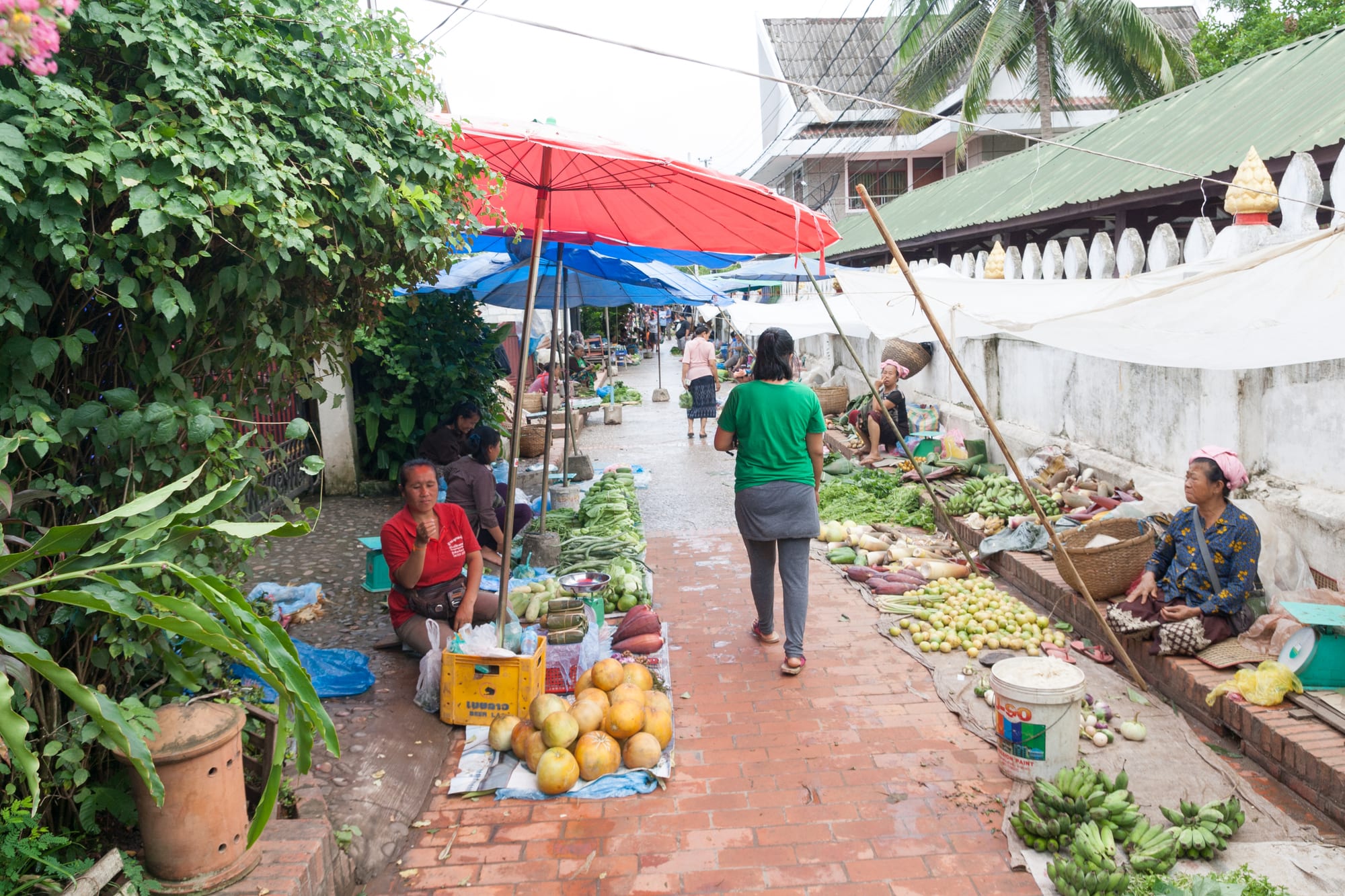
Laos eats more glutinous "sticky" rice per person than any other country in the world, and that rice shapes the entire structure of a Lao meal: served in a small woven basket, torn off by hand, and used to scoop up other dishes rather than eaten with a spoon or fork. Plates of fresh raw herbs and greens, fermented fish, savoury dishes that are never sweet and a fondness for bitter flavours, which sets Lao food apart from many neighbouring cuisines, round out the Lao table.
The national dish: larb
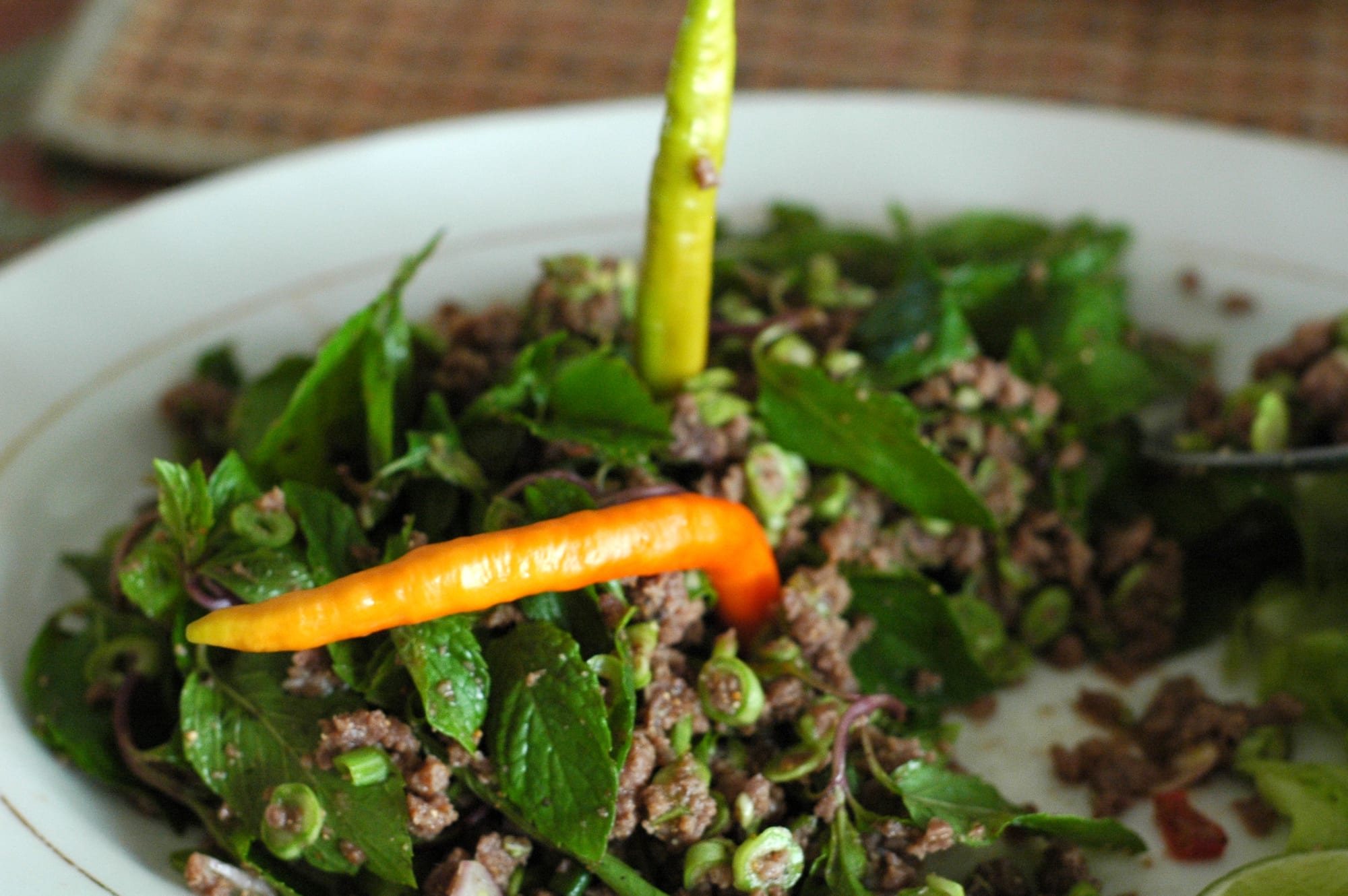
Larb, minced meat (commonly chicken, pork, beef or fish) tossed with lime juice, fish sauce, chilli, fresh herbs and toasted rice powder, is Laos's national dish, sharing that status with green papaya salad and sticky rice. The toasted rice powder, khao khua, is stirred through near the end and gives larb a distinctive nutty crunch. Eaten with sticky rice and fresh vegetables on the side, larb is served everywhere from home kitchens to street stalls.
Sticky rice, herbs and the everyday pantry
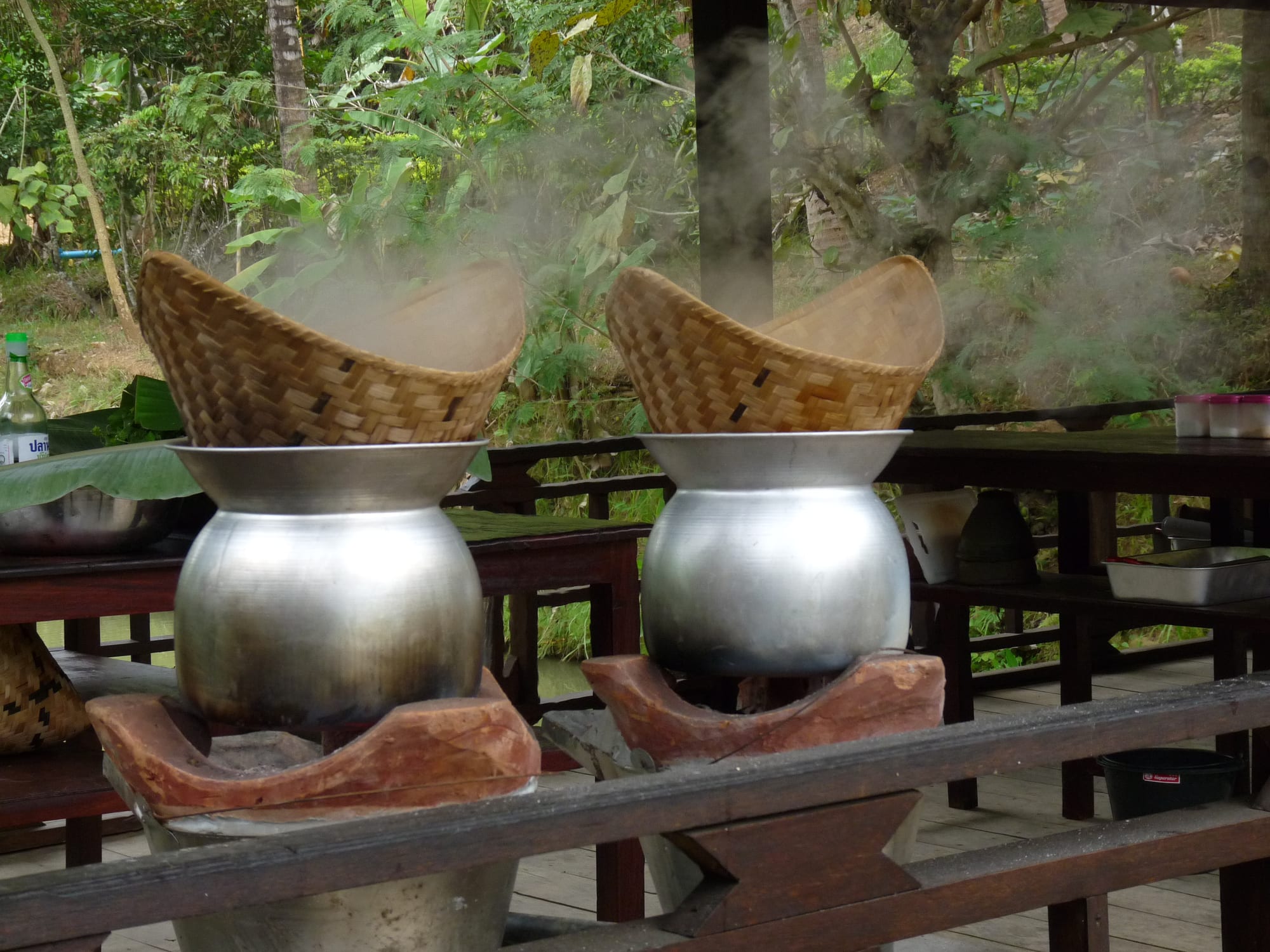
Sticky rice, steamed in tall bamboo or woven baskets rather than boiled, is so central to Lao identity that the people of Laos have traditionally referred to themselves as "children of sticky rice." Fresh herbs, dill, mint, coriander and lemongrass among them, fermented fish sauce, and freshwater fish from the Mekong River round out a pantry built on brightness and balance rather than heavy sauces.
History behind the plate
Lao cuisine developed along the Mekong River, which supplied fish and shaped settlement patterns for centuries, and carries close culinary ties to neighbouring Isaan, the ethnically Lao region of northeastern Thailand, where dishes like larb and sticky rice are equally central. French colonial rule left its culinary mark mainly in the baguettes sold on Vientiane's streets and in coffee, which the French planted on the Bolaven Plateau in the early 20th century.
Dishes to know
Five more to recognise across Laos:
- Tam mak hoong — a spicy pounded green papaya salad, believed to have
been created by Lao people and closely related to Thailand's som tam.
- Sticky rice (khao niew) — steamed glutinous rice, eaten by hand at
nearly every meal.
- Mok pa — fish steamed in banana leaf with lemongrass, dill, chilli
and other herbs.
- Khao soi — a Lao noodle dish with minced pork and tomato, distinct
from the curry noodle soup of the same name found in northern Thailand.
- Sai oua — a herb-packed grilled pork sausage that originated in
Luang Prabang.
Drinks
Beerlao, the state-owned brewery's lager, dominates the Lao beer market and is seen everywhere. Lao coffee, grown on the southern Bolaven Plateau and traditionally drunk from a glass over condensed milk with a chaser of green tea, has a strong regional reputation, and lao-lao, a rice whisky often distilled locally by women, remains a traditional spirit for celebrations and hospitality.
Eating as a traveller
Vegetarians will find fresh vegetable and herb dishes available, though fermented fish sauce appears in many dishes that otherwise look vegetarian, so asking is worth doing. Bottled or boiled water is the safer choice. Eating sticky rice by hand, rolling a small ball to scoop up other dishes, is the genuine local way to eat rather than a novelty for visitors.
What to take from the table
Larb, bright with herbs and lime, is the dish that best represents Lao food — but the basket of sticky rice sitting beside it is what actually defines a meal as Lao in the first place.