Attractions & Natural Wonders · Malta
Malta: Seven Attractions and Natural Wonders
A fortress capital built by crusading knights, temples older than Stonehenge and the pyramids, a walled medieval city gone quiet, and a lagoon the colour of glass
By Globeway Editorial · 30 September 2026
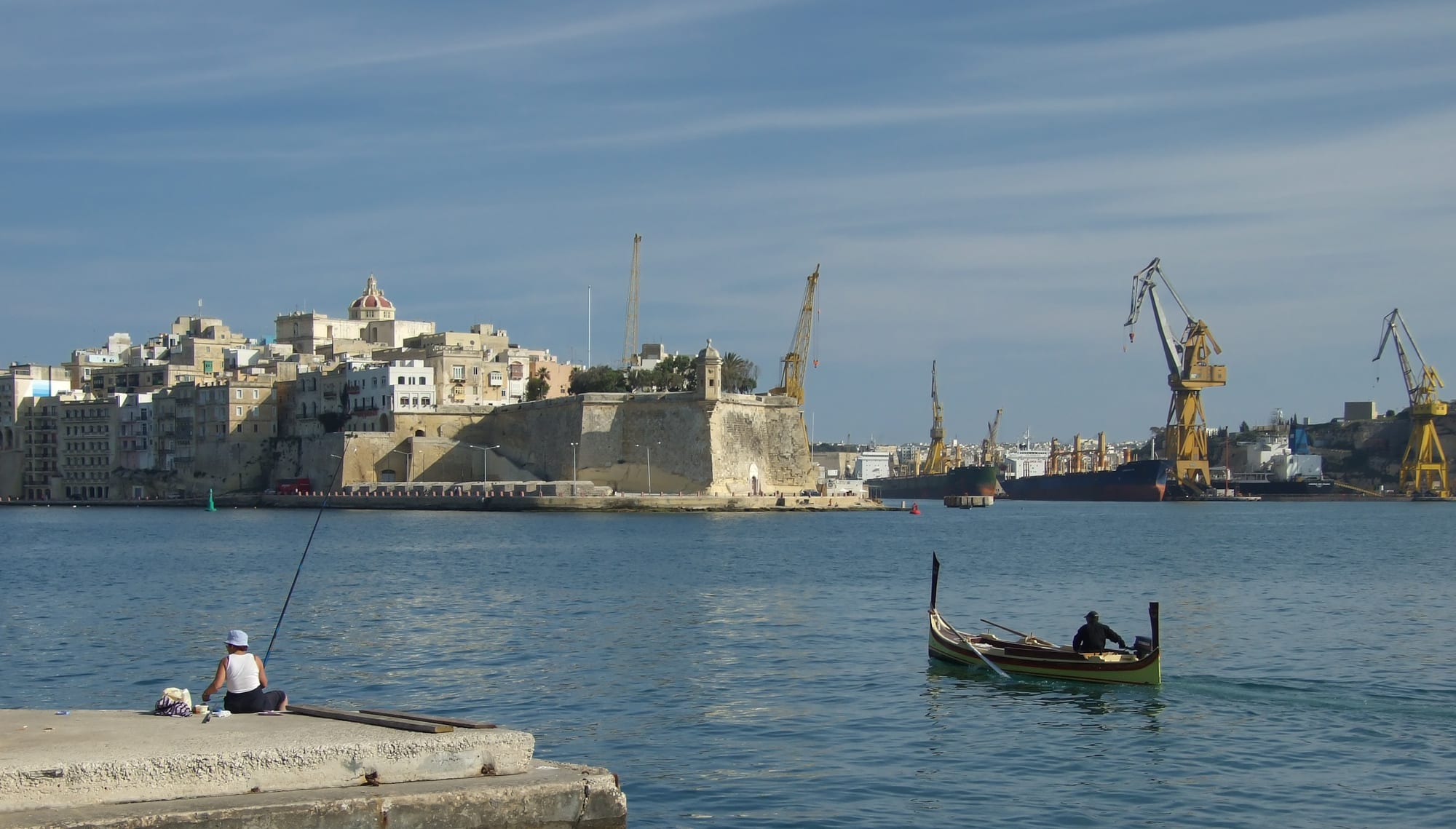
An island fortress in the middle of the Mediterranean
Malta, a small archipelago south of Sicily, has been fought over for its position astride the Mediterranean for millennia — Phoenicians, Romans, Arabs, Normans, the crusading Knights of St John, the French, and the British all held it, and it has some of the oldest free-standing stone structures on earth, predating both Stonehenge and the pyramids of Giza. It has about 590,000 people packed into 316 square kilometres, English as a co-official language, and a sunny, fortified, honey-coloured character all its own.
The seven below span the main island and Gozo and Comino. It is warm and dry for much of the year; spring and autumn are the most comfortable for sightseeing.
1. Valletta and St John's Co-Cathedral
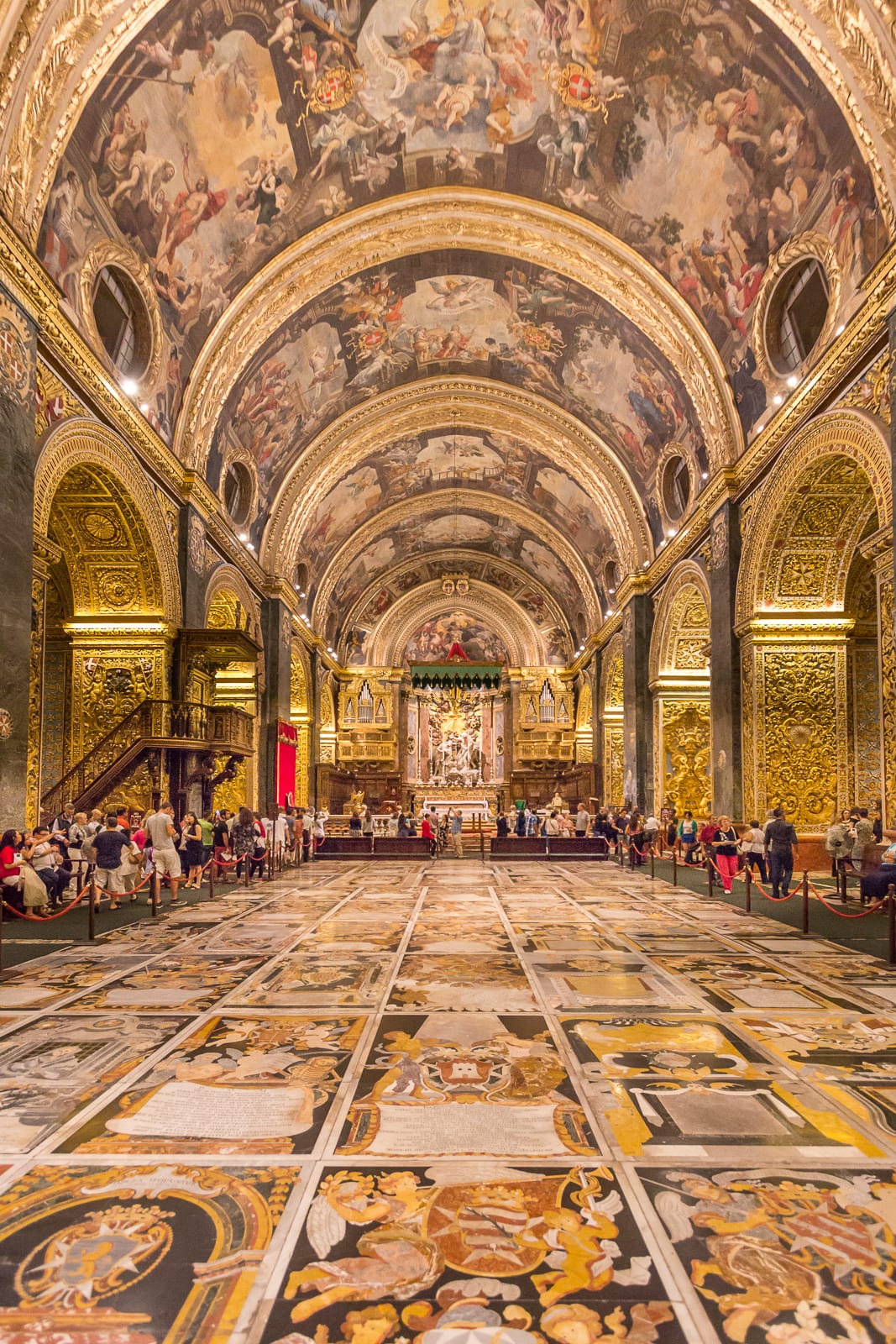
Valletta, the capital, was built by the Knights Hospitaller after they survived the 1565 Great Siege by Ottoman forces — a compact, fortified, entirely planned Renaissance city, now a UNESCO World Heritage Site. Behind its plain outer walls, St John's Co-Cathedral hides one of the most opulent baroque interiors in Europe, floored wall to wall with the marble tombs of knights and holding two Caravaggio paintings. The Upper Barrakka Gardens give the classic view over the Grand Harbour.
Two days covers the compact old city comfortably.
2. Mdina
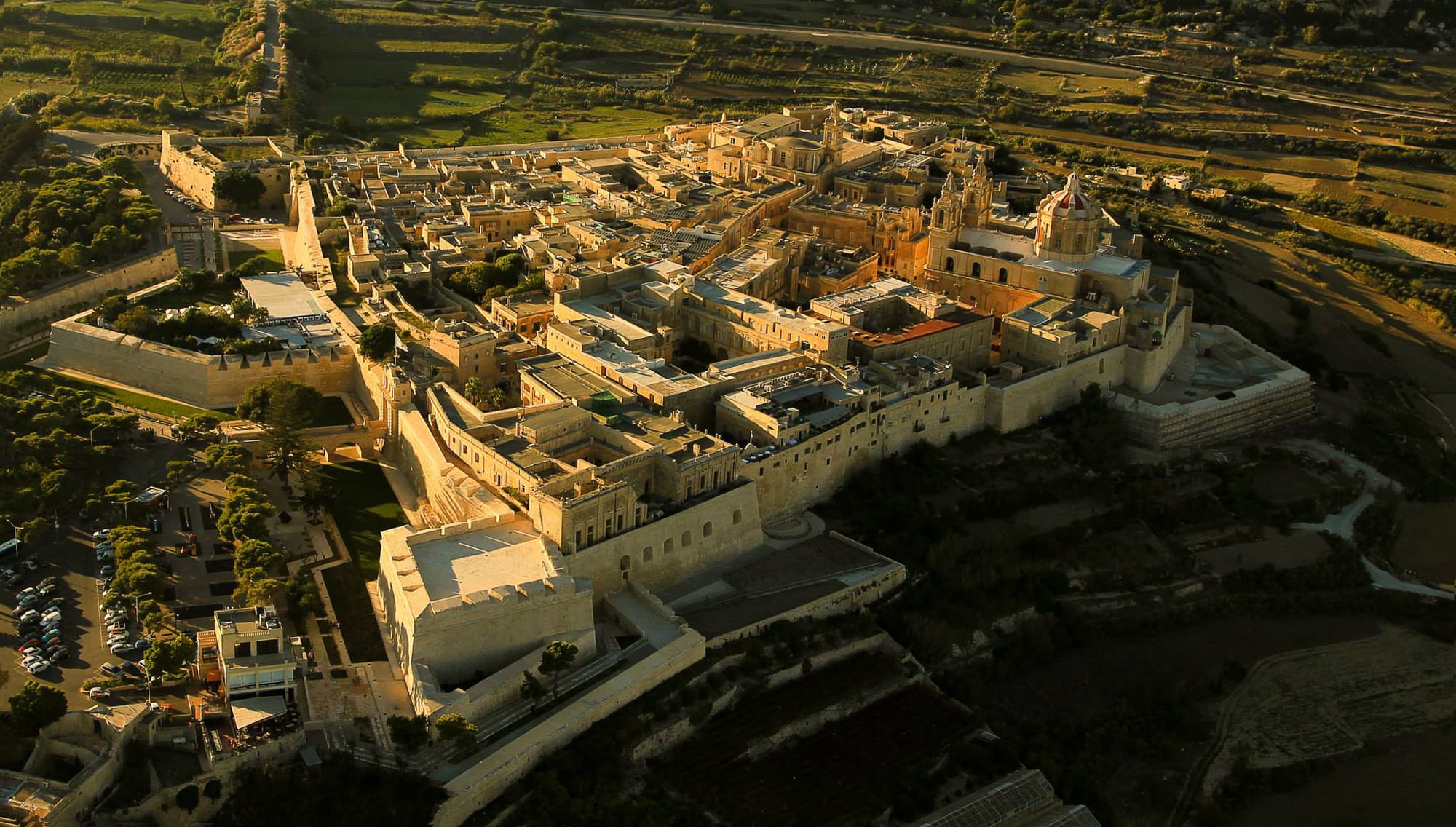
Mdina, Malta's walled capital from antiquity until the Knights arrived in 1530, sits on a hilltop in the island's centre — narrow lanes, palazzo facades, and a baroque cathedral, home now to only a few hundred residents and largely closed to traffic, which gives it its nickname. Its bastion walls look out over much of the island. It doubled for King's Landing in the first season of Game of Thrones, drawing a new wave of fans.
The neighbouring town of Rabat has the remains of a Roman town house and early Christian catacombs.
3. Ħaġar Qim and the megalithic temples
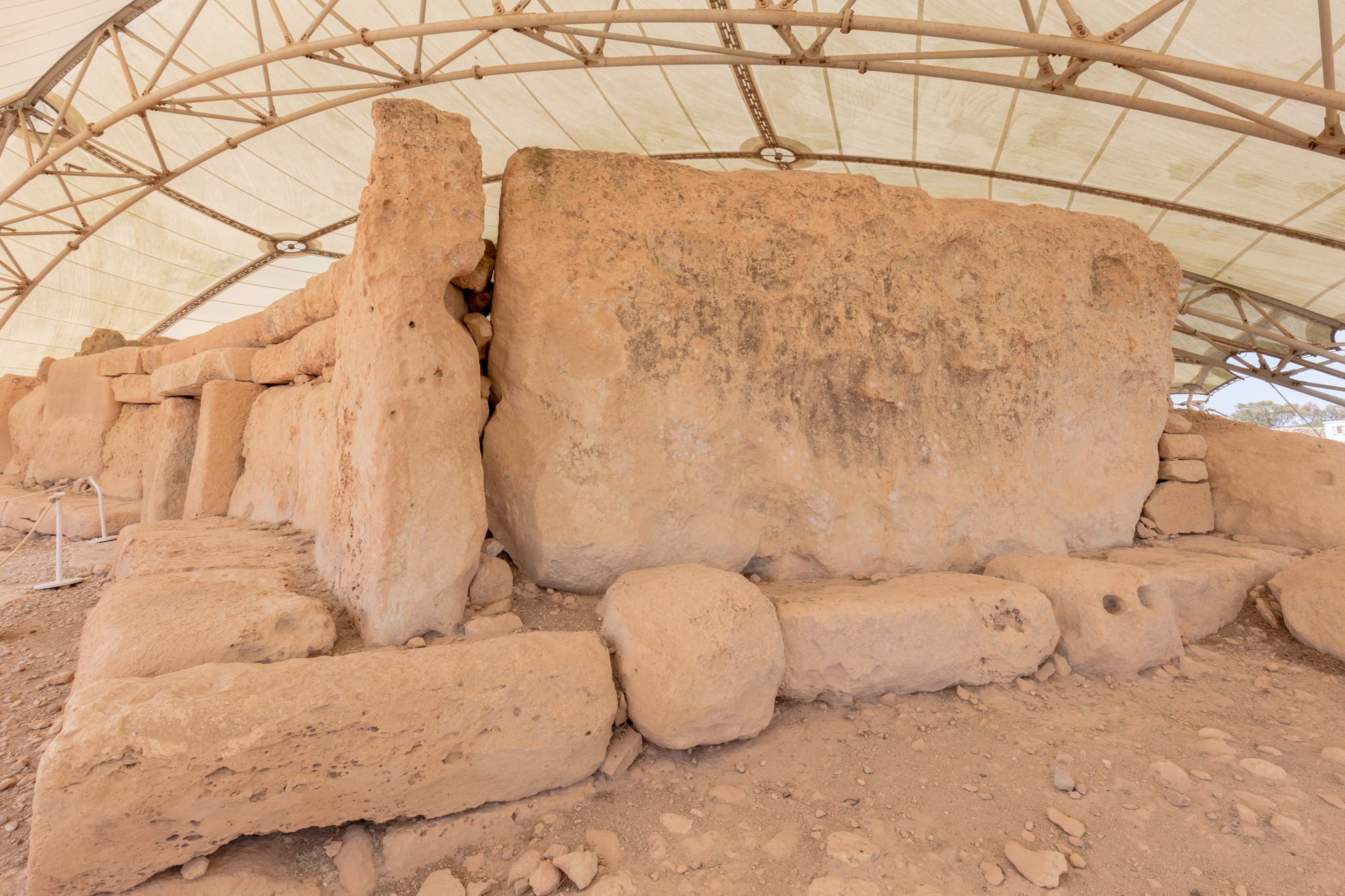
Malta's megalithic temples, built between roughly 3600 and 2500 BC, are among the oldest free-standing stone structures in the world — older than Stonehenge and the Egyptian pyramids. Ħaġar Qim and nearby Mnajdra, on a dramatic clifftop above the sea, are among the best known, protected since 2009 under purpose-built shelters; both are part of a UNESCO World Heritage Site spanning several sites across the islands.
Their exact purpose — astronomical, religious, or both — remains debated.
4. Comino and the Blue Lagoon
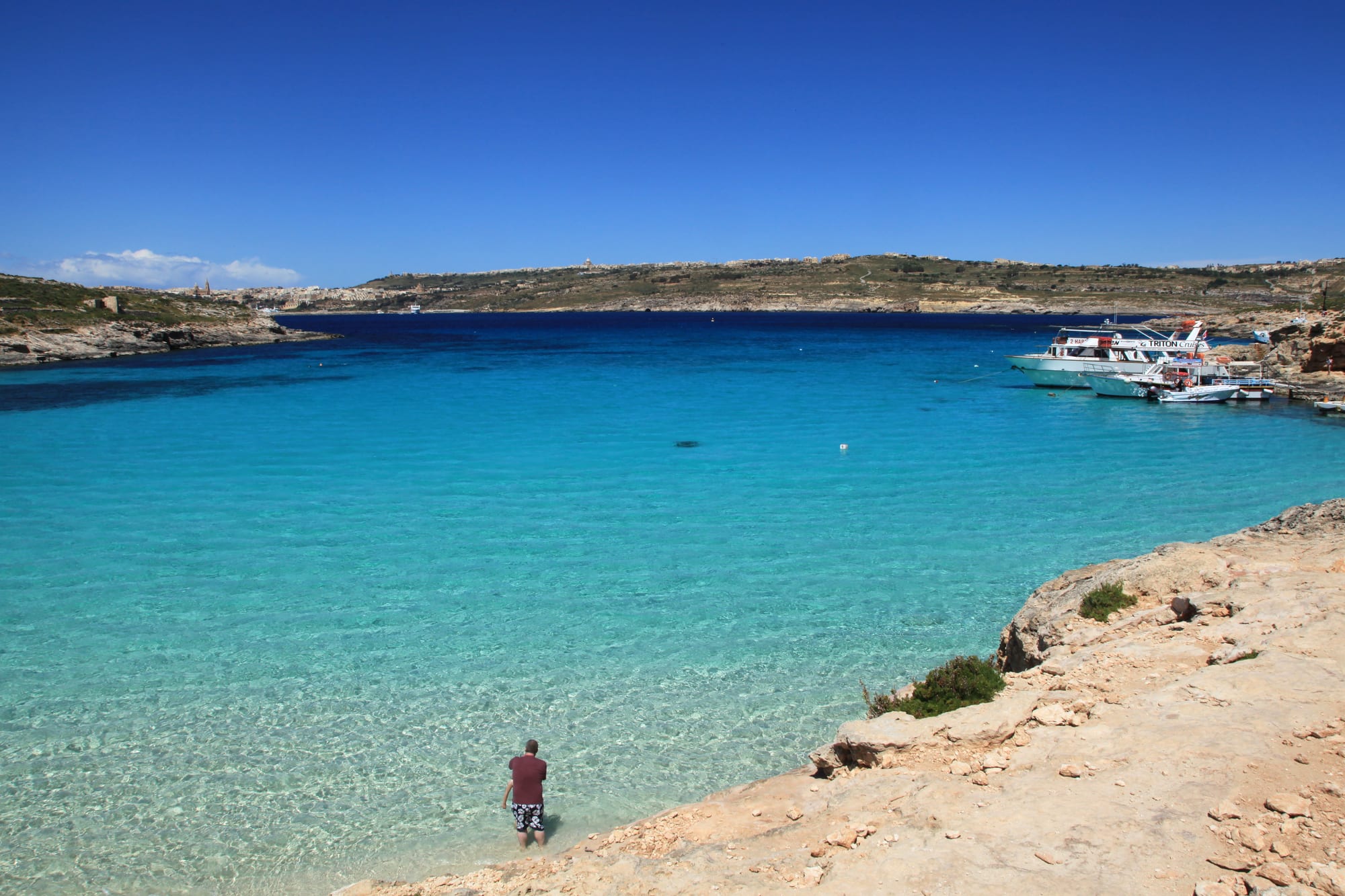
Comino, a tiny island between Malta and Gozo with almost no permanent population, is ringed by some of the clearest water in the Mediterranean. Its Blue Lagoon, a shallow channel between Comino and the islet of Cominotto, glows an almost artificial turquoise over white sand — spectacular, and correspondingly crowded with day-trip boats in summer.
Early morning or a shoulder-season visit gives a much better chance of a quieter swim.
5. Gozo and Dwejra
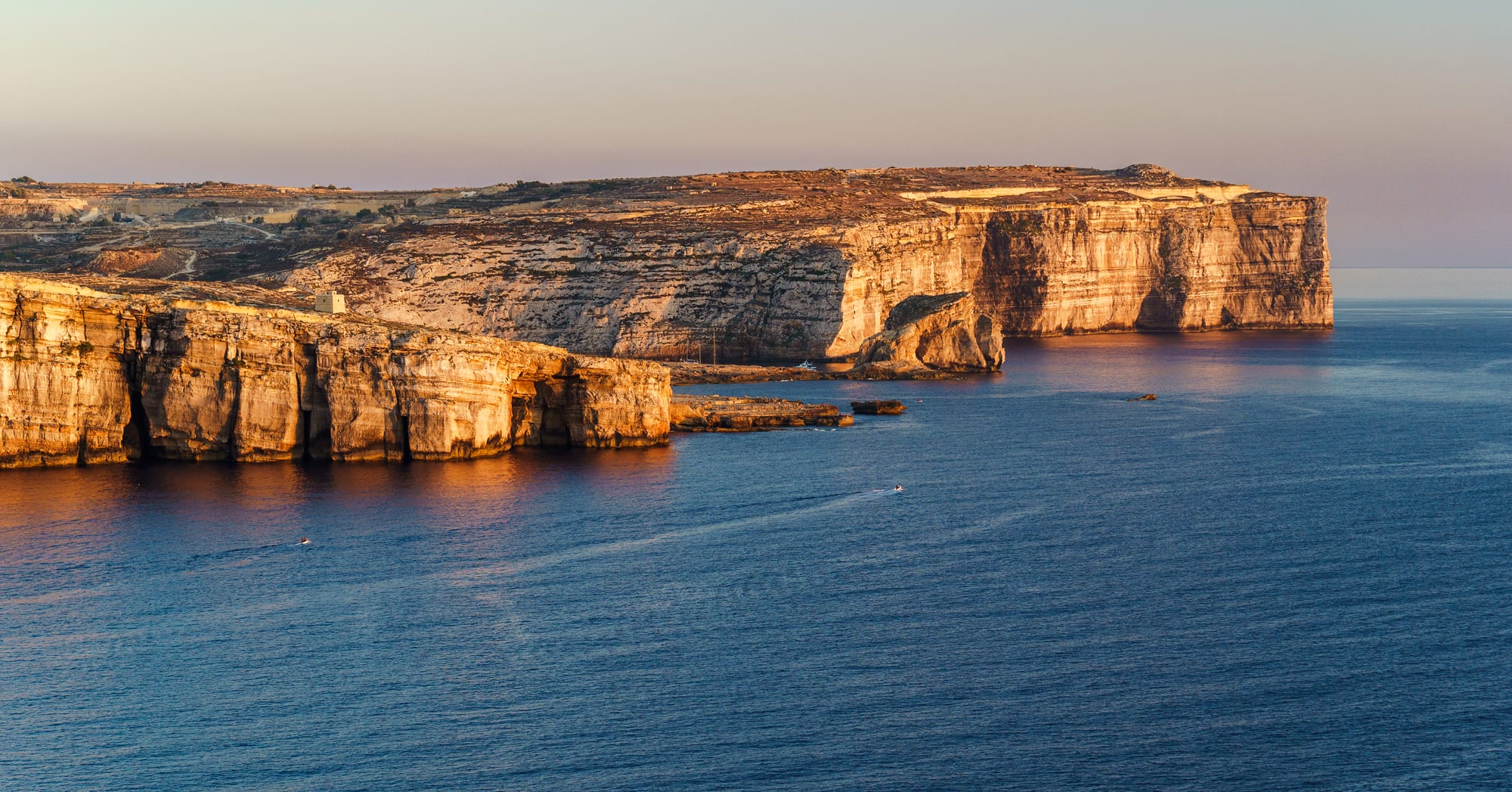
Gozo, Malta's more rural, quieter sister island, has its own walled citadel (Victoria/Rabat), salt pans cut into the coastal rock on its north coast, and the dramatic Dwejra coastline — once home to the natural sea arch known as the Azure Window, which collapsed into the sea in 2017 but is still dived and boated around for the "Inland Sea" tunnel and the rock formations that remain.
A ferry from Cirkewwa on the Malta mainland reaches Gozo in about 25 minutes.
6. Popeye Village
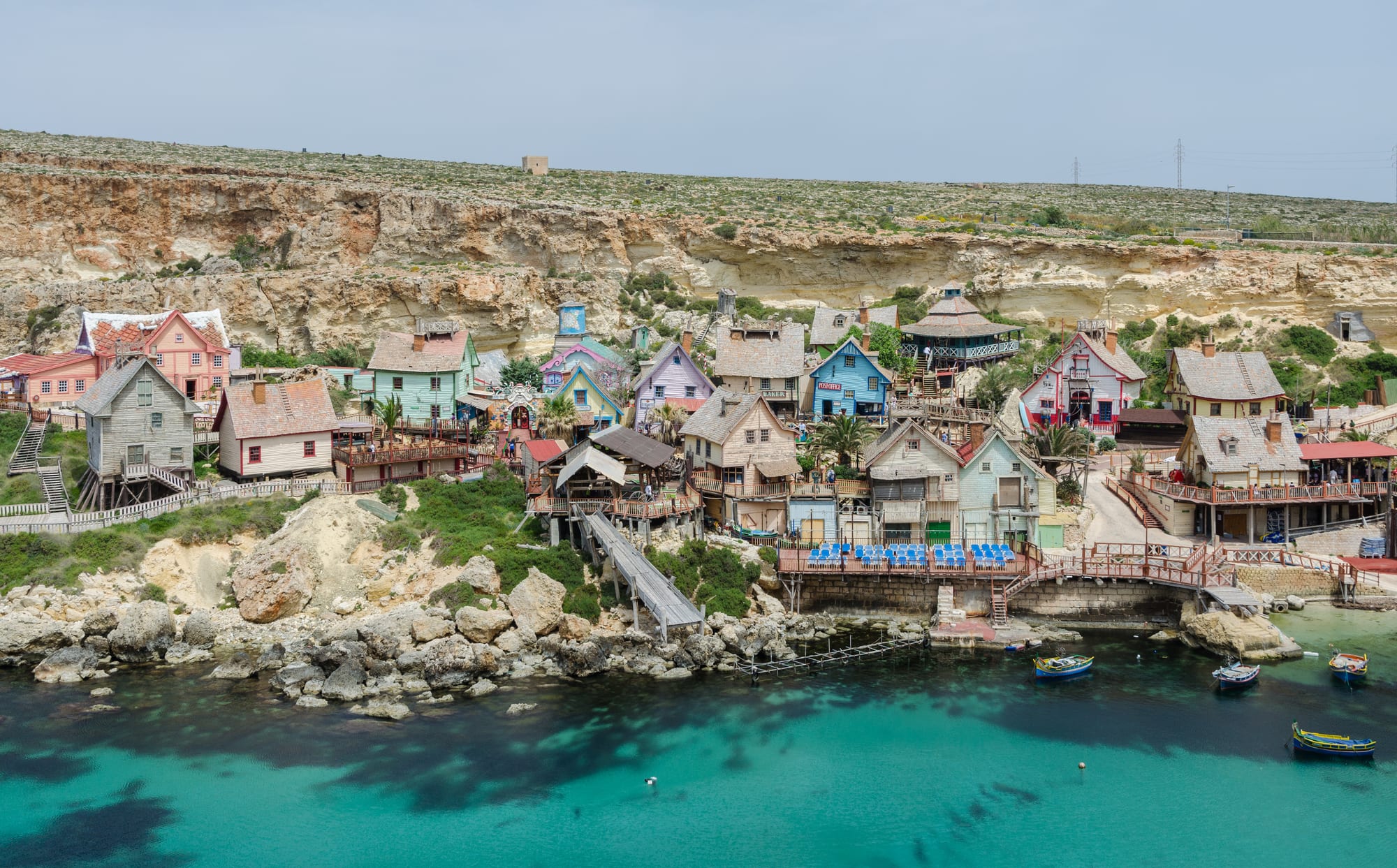
Popeye Village, at Anchor Bay near Mellieħa, was built as the film set for the 1980 Robin Williams musical Popeye and has been kept on as a quirky low-key attraction — a cluster of ramshackle wooden houses on a scenic bay, with a small museum, boat trips, and a swimming spot. It is unabashedly kitsch, and popular with families.
It sits in the north-west of the main island, about 3 kilometres from Mellieħa and not far from the Gozo ferry terminal at Ċirkewwa.
7. The Three Cities and the Grand Harbour
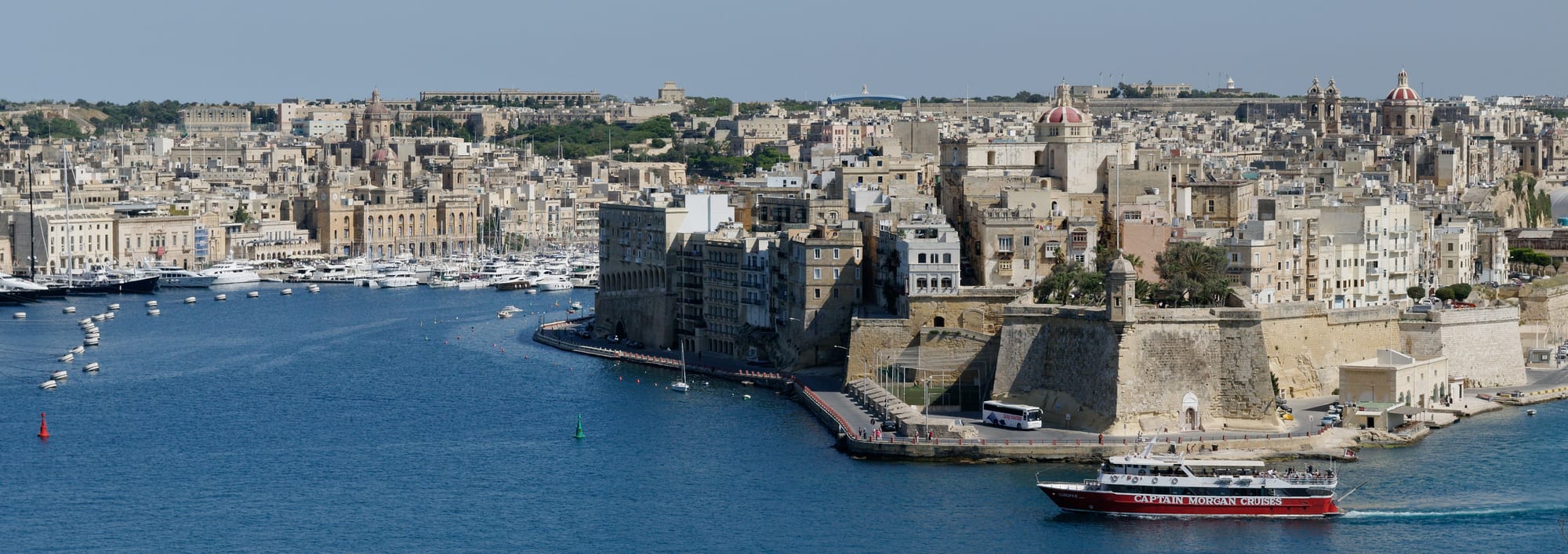
Across the Grand Harbour from Valletta, the "Three Cities" — Vittoriosa (Birgu), Senglea, and Cospicua — grew up around Birgu, the Knights' first capital before Valletta was built, and keep an older, quieter, more lived-in fortified character, with narrow lanes and the Inquisitor's Palace in Birgu. A few traditional water taxis (dgħajjes) still ferry visitors across the harbour, a craft that dates back to the 17th century.
They make an easy, less crowded contrast to a day spent in Valletta itself.
Malta is compact: a week comfortably covers Valletta, Mdina, the temples, and a day each on Gozo and Comino, with short distances between everything.