History · Monaco
Monaco: The Rock and the Casino
A fortress seized by a Genoese exile in 1297 and held by the Grimaldis ever since — shrunk to two square kilometres in 1861, rescued by a gambling concession, and reinvented as an enclave of extraordinary wealth
By Worldlore Editorial · 30 September 2026
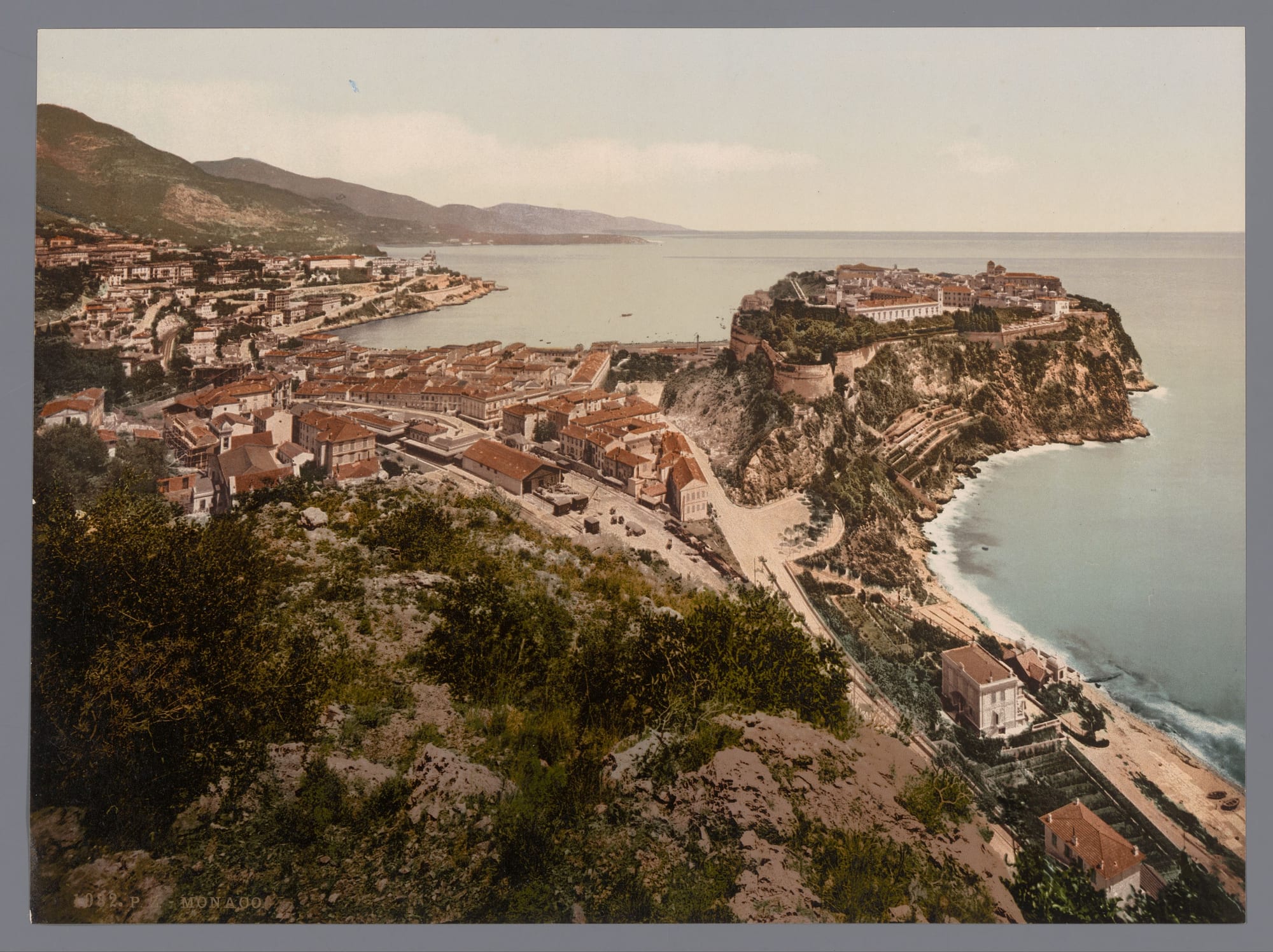
A country of two square kilometres
Monaco is a city-state on the French Riviera, entirely surrounded by France, about two square kilometres in size — the second-smallest country in the world after Vatican City, and the most densely populated. Of its roughly 38,000 residents, fewer than 10,000 are Monégasque citizens; many of the rest are wealthy foreigners, drawn by the fact that Monaco has levied no income tax on individuals since 1869. It has been ruled by one family, the Grimaldis, for more than seven centuries.
A short history
- antiquity
Monoikos
A Ligurian and Greek site, with a temple to Hercules.
- 1297
The Grimaldis
François Grimaldi seizes the fortress disguised as a monk.
- 1612
Principality
The Lords of Monaco become Princes.
- 1641
French protection
Monaco places itself under France by treaty.
- 1793–1814
French annexation
Revolutionary France absorbs Monaco.
- 1861
The partition
Monaco sells Menton and Roquebrune to France, keeping only its core.
- 1863
Monte Carlo
The Monte Carlo casino opens; the district is soon named for the prince.
- 1869
No income tax
Casino revenue covers the budget.
- 1918
The treaty with France
France guarantees Monaco's independence.
The Rock
The headland was a Ligurian settlement and then a Greek trading post — Monoikos, "the solitary one", a Greek name for Hercules and the source of the name — and a Roman port. In 1297 François Grimaldi, a Guelph exile from Genoa, took the fortress of Monaco disguised as a Franciscan friar, with a sword hidden under his robe; the monk with the sword is still on Monaco's coat of arms. The Grimaldis held the rock thereafter, a tiny lordship surviving by playing Genoa, France, Spain and Savoy against one another. It came under Spanish and then, from 1641, French protection.
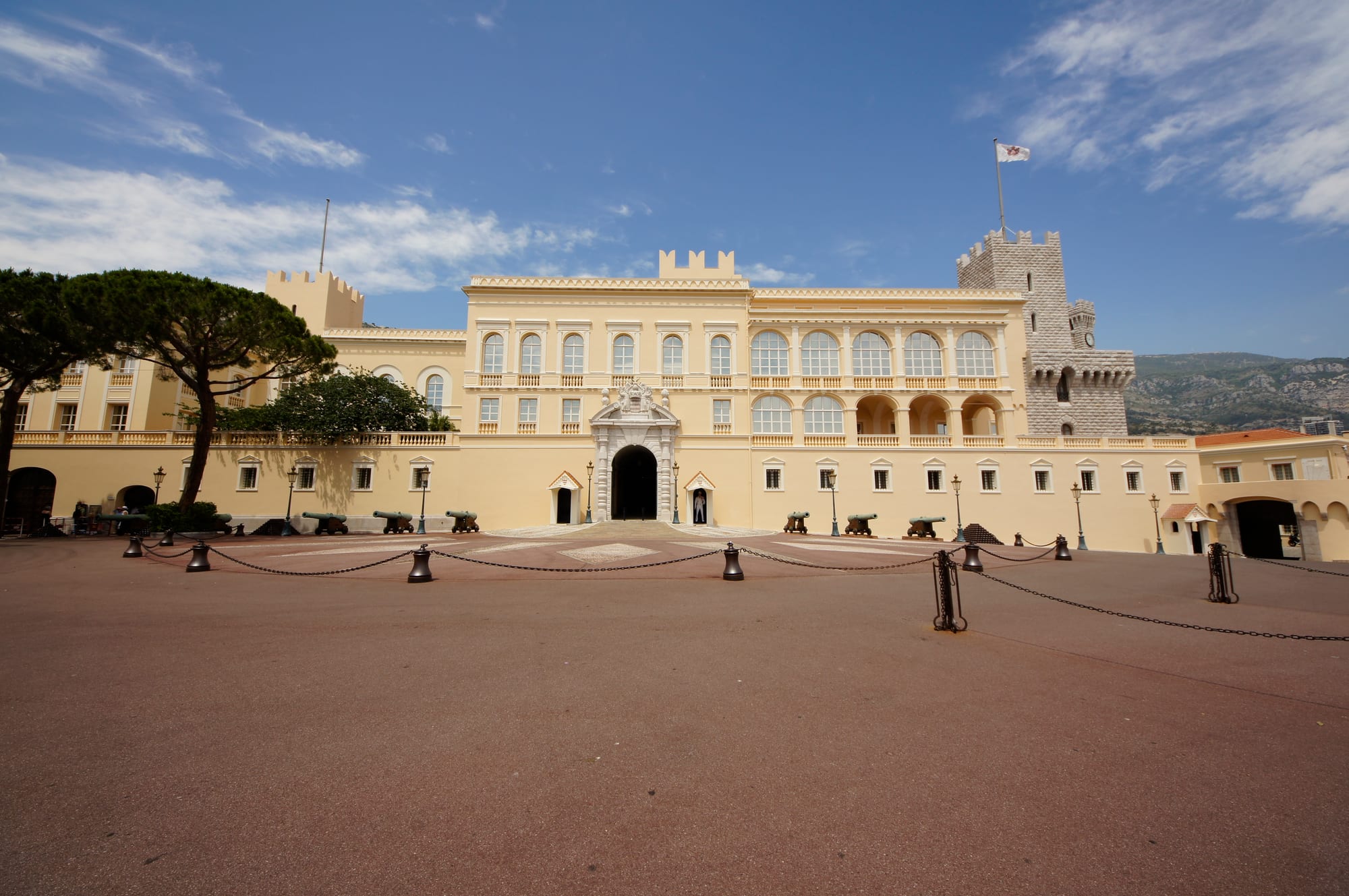
The partition, and the casino
Revolutionary France annexed Monaco in 1793; the Grimaldis were restored in 1814 and in 1815 placed under the protection of the Kingdom of Sardinia. In 1848 the towns of Menton and Roquebrune — some 95 per cent of Monaco's territory — revolted against Grimaldi taxes and broke away. In 1861 Prince Charles III sold his claim to them to France for four million francs, leaving Monaco with only the small territory it has today, and a treaty confirming its independence under French protection.
Nearly bankrupt, Monaco gambled on gambling. Charles III and his mother granted a casino concession to a private company, built the Monte Carlo casino — in a new district named "Mount Charles" — and a railway soon linked it to the rest of France. With the casino and a mild climate, Monte Carlo became a winter resort for Europe's wealthy. It was so profitable that in 1869 the prince abolished income tax entirely.
The modern principality
A 1911 constitution ended absolute rule. A 1918 treaty with France guaranteed Monaco's independence and sovereignty in exchange for Monaco aligning its foreign policy with French interests. Italy and then Germany occupied Monaco in the Second World War, and the German occupiers began deporting Jewish residents.
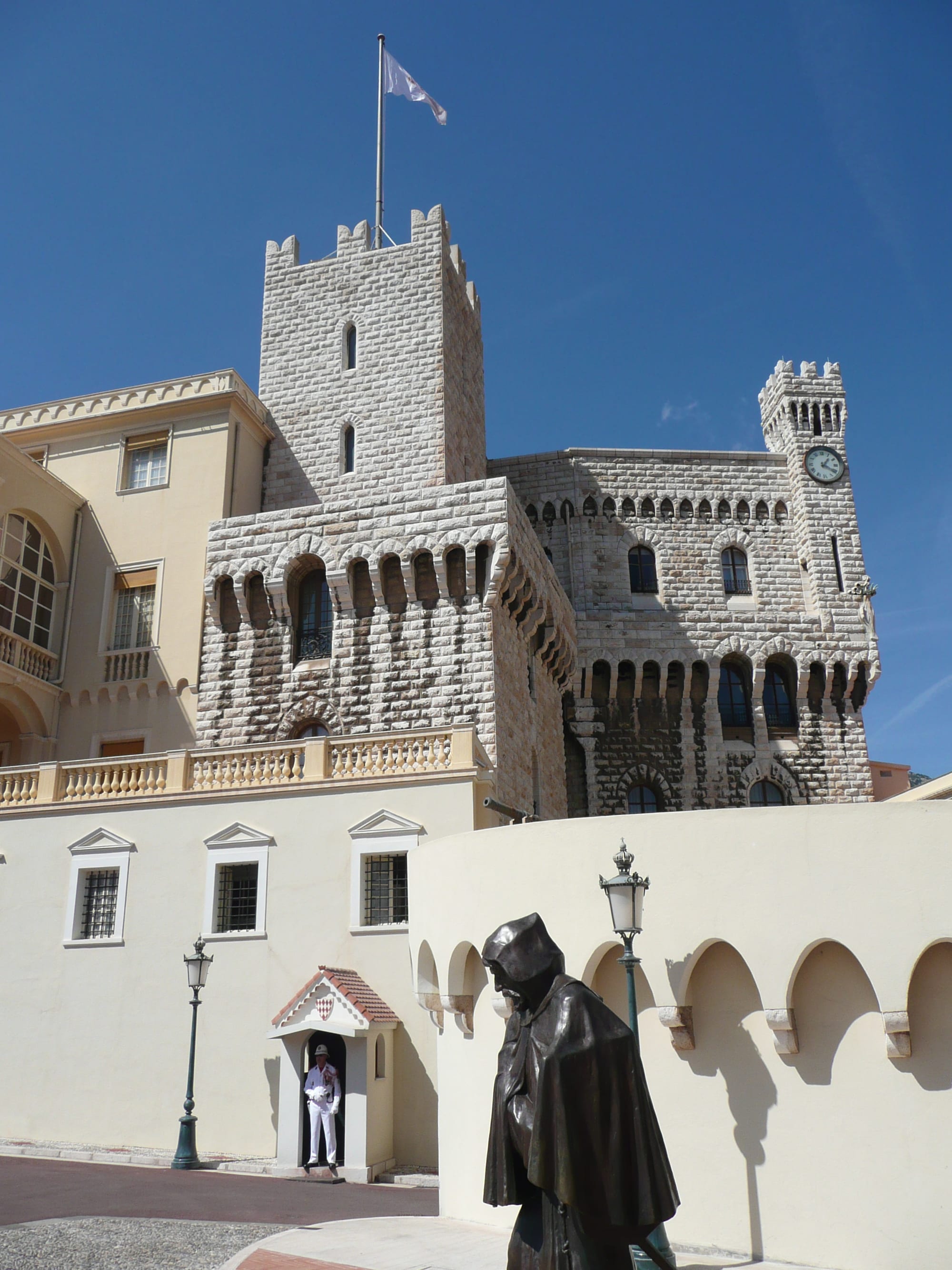
Prince Rainier III, who reigned from 1949 to 2005, pushed banking, congresses and huge land-reclamation projects, and his 1956 marriage to the Hollywood star Grace Kelly fixed Monaco's image of glamour. A 1962–63 crisis with France over Monaco's use as a tax haven for French citizens was settled by a 1963 convention under which most French citizens living there pay French tax. Monaco joined the UN in 1993 and uses the euro; it remains outside the EU but inside a customs union with France; in 2024 the Financial Action Task Force placed it under increased monitoring over money laundering. Rainier's son, Albert II, has reigned since 2005.
What Monaco carries
Monaco's independence is an accident that the Grimaldis have defended for 700 years — a rock too small to matter, held onto through every reshuffling of European power. The 1861 partition nearly finished it; the casino saved it and set its course. The result is a genuine country whose defining features — no income tax, a citizen minority, an extraordinary concentration of wealth — all trace back to that 19th-century wager.