Attractions & Natural Wonders · Oman
Oman: Seven Attractions and Natural Wonders
A mosque of hand-woven carpet and Swarovski crystal, a canyon locals call the Grand Canyon of Arabia, and turquoise pools hidden inside limestone gorges reached only on foot or by wading
By Globeway Editorial · 30 September 2026
The quiet corner of the Gulf
Oman, on the southeastern tip of the Arabian Peninsula, has followed a notably different path from its Gulf neighbours — less flash and vertical skyline, more deliberate preservation of forts, old souks, and a rugged desert and mountain landscape, under the long, cautious modernisation steered by the late Sultan Qaboos. It offers some of the Arabian Peninsula's most striking natural scenery: red dune seas, deep wadis lined with palm groves and pools, and the Hajar Mountains rising over 3,000 metres.
The seven below run from the capital, Muscat, inland to the desert and mountains. Late autumn through spring (roughly October to April) is by far the most comfortable season; summer heat is intense, especially inland.
1. The Sultan Qaboos Grand Mosque
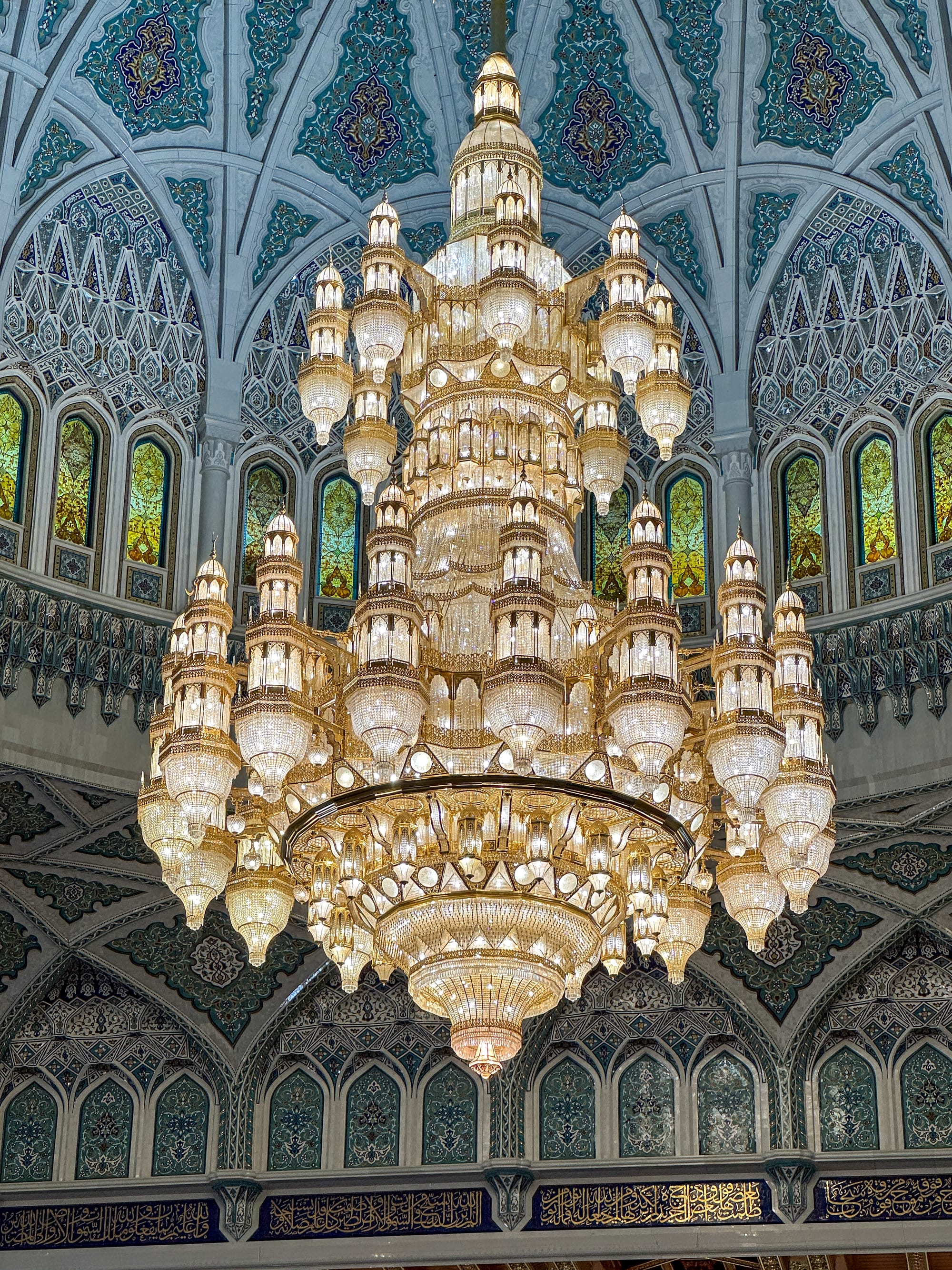
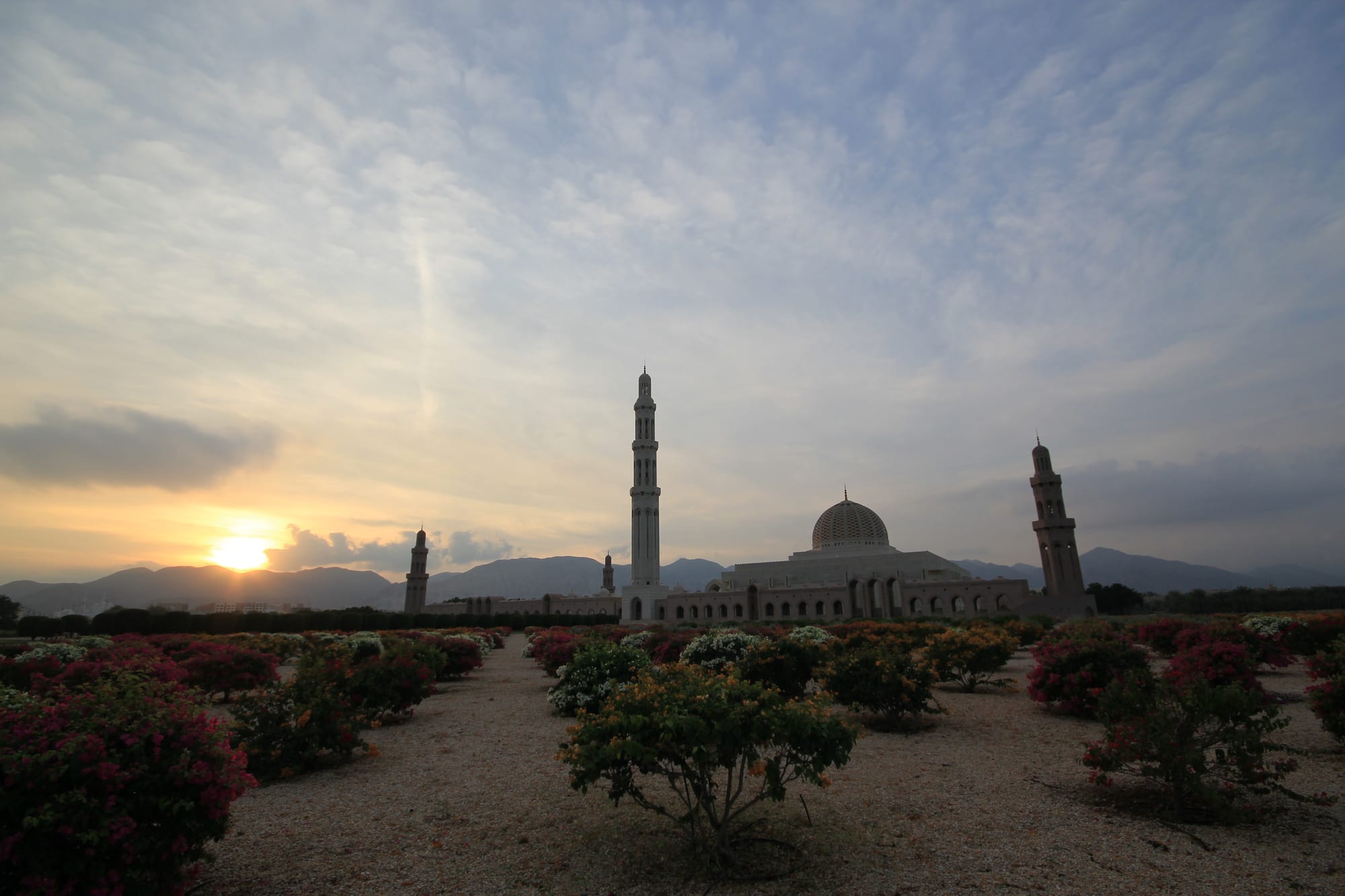
Muscat's Grand Mosque, completed in 2001, holds a prayer carpet woven as a single piece by more than 600 weavers (the largest single-piece carpet in the world at the time) beneath a vast Swarovski crystal chandelier, all set within manicured gardens and marble courtyards. Open to non-Muslim visitors outside prayer times, with a modest dress code, it remains one of Oman's most visited landmarks.
The mosque is best visited in the morning, before the midday heat and before tour groups arrive in force.
2. The Wahiba Sands
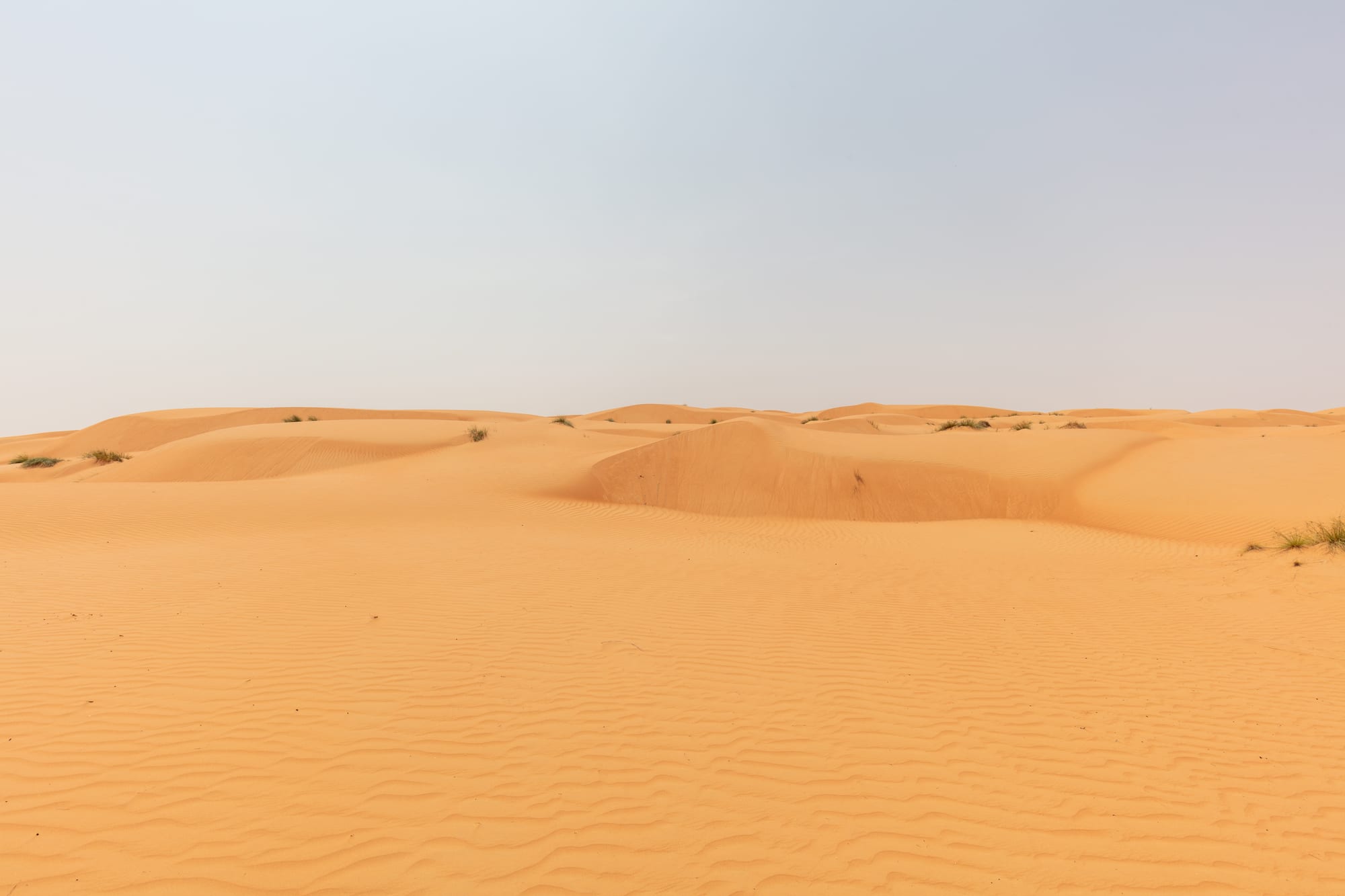
The Wahiba Sands (Sharqiya Sands), a roughly 180-kilometre belt of dunes reaching 100 metres or more in height, is one of Oman's classic desert experiences — dune-bashing by 4x4, camel treks, and overnight desert camps run in part by Bedouin families who still herd livestock across the sand. Nights in the desert bring dramatic star visibility, far from any city light.
Guided camps are the standard way to visit; driving the soft sand independently requires real off-road experience.
3. Jebel Shams
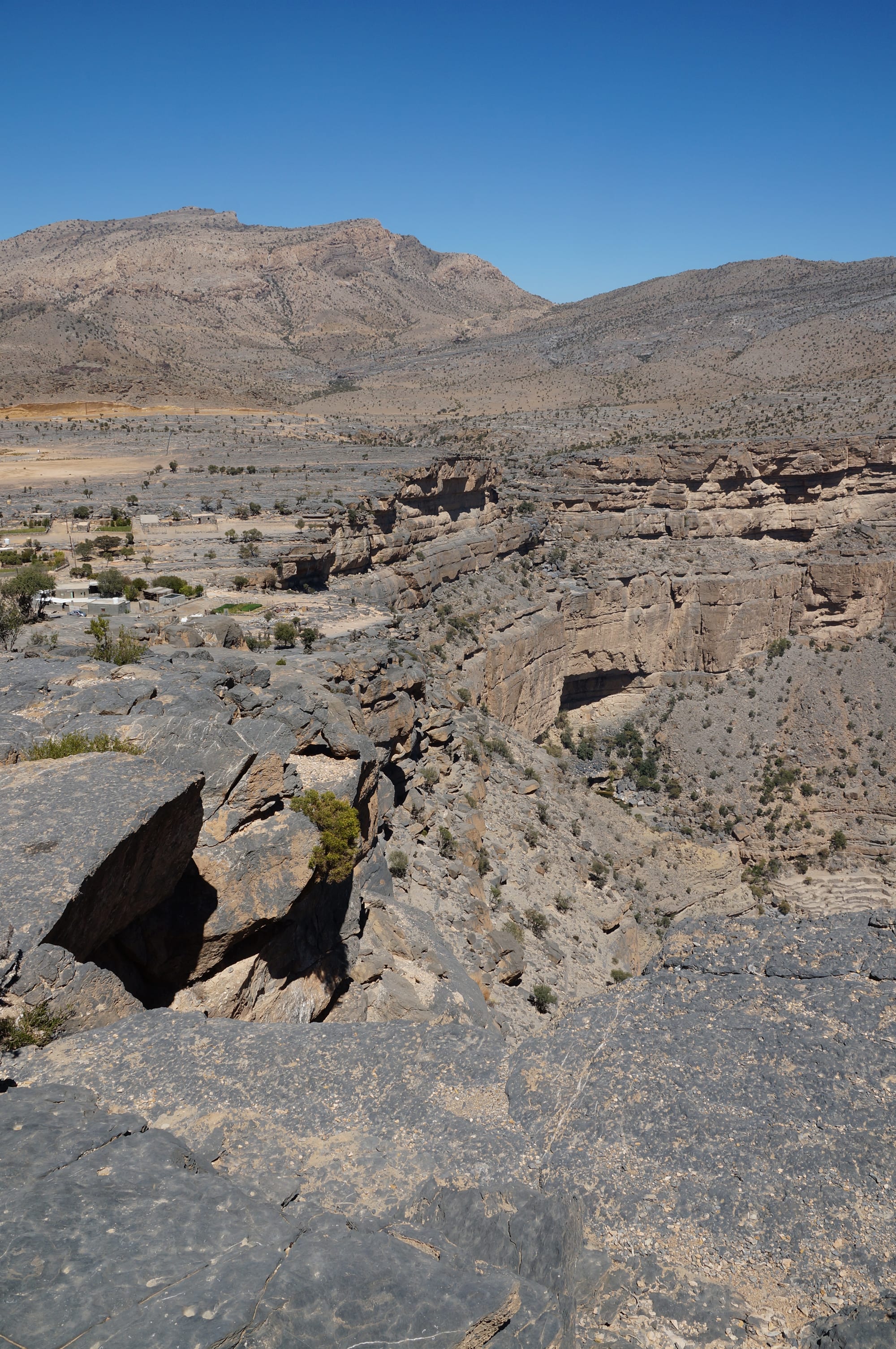
Jebel Shams, Oman's highest peak at just over 3,000 metres, holds a canyon along its flank deep and sheer enough to have earned the nickname "Grand Canyon of Arabia." The Balcony Walk, a relatively flat trail along the canyon rim past the ruins of an abandoned village, gives dramatic views without requiring a summit attempt, while the surrounding Hajar Mountains offer cooler air than the coast in summer.
The mountain road up is steep and partly rough, so a 4x4 is advisable; conditions can be checked locally before attempting it.
4. Nizwa Fort and Souk
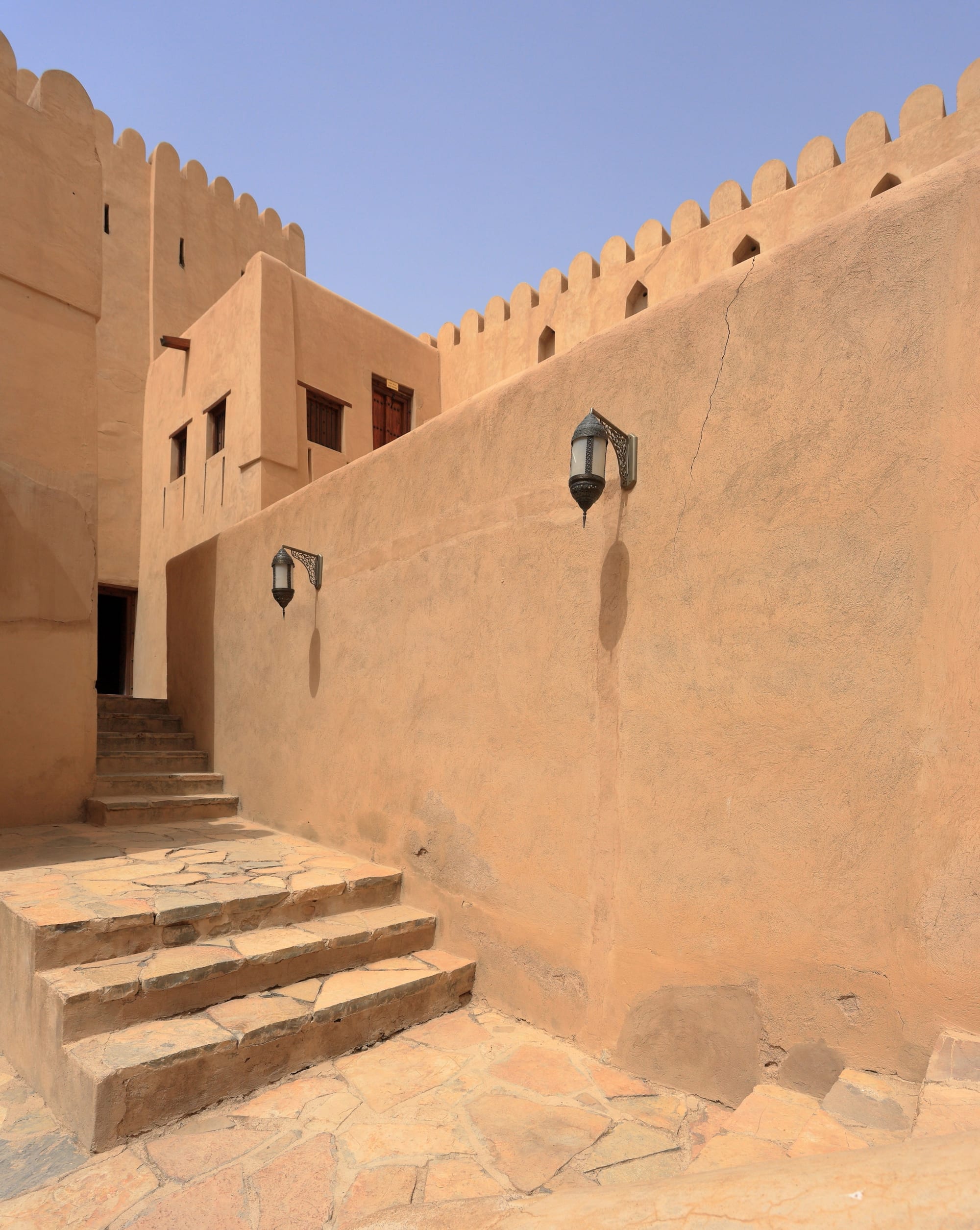
Nizwa, once Oman's capital and still considered its cultural heart, is dominated by a 17th-century fort with a distinctive drum-shaped tower, 30 metres high and once armed with 24 cannons, surrounded by a lively traditional souk known for silver jewellery, dates, and (on Fridays especially) a long-running livestock and goat market. The town sits at the edge of the Hajar Mountains, making it a natural base for exploring Jebel Shams and nearby villages.
5. Wadi Shab
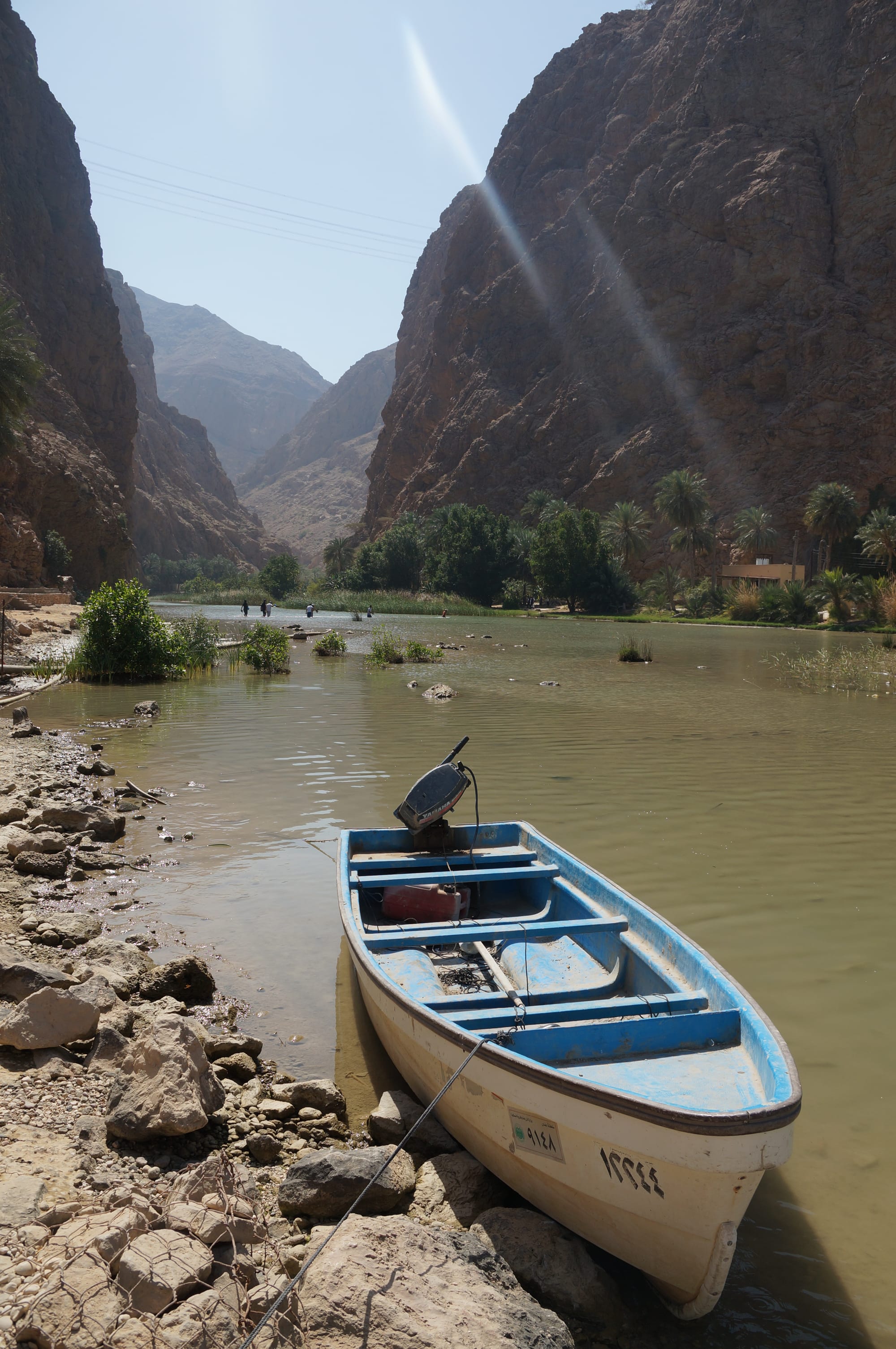
Wadi Shab, on the coast southeast of Muscat, is one of Oman's most-loved natural sights — a series of clear turquoise pools between limestone cliffs, reached by a walk of about an hour along the gorge followed by a swim through a narrow rock passage into a hidden cave with a small waterfall inside. Local boatmen ferry visitors across the river at the entrance for a small fee.
Water shoes and a dry bag for phones/cameras make the swim-in section much easier.
6. The Bimmah Sinkhole
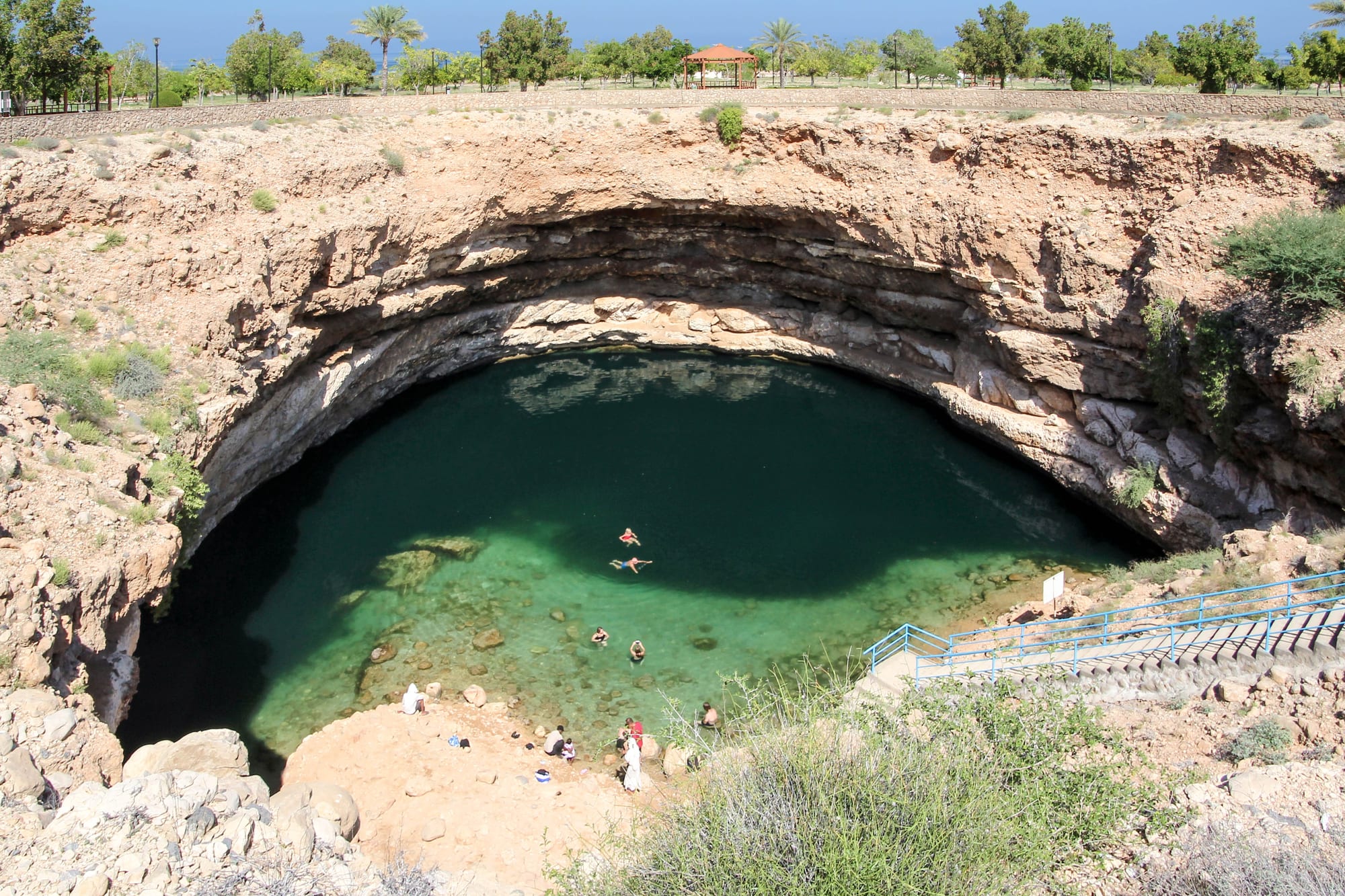
The Bimmah Sinkhole, set within a small coastal park on the coast road between Muscat and Wadi Shab, about 600 metres from the sea, is a collapsed limestone cavity filled with water of an unusually vivid turquoise-green colour. Steps lead down to the water for swimming, making it an easy stop to combine with a longer coastal day trip.
7. Muscat's Corniche and Old City
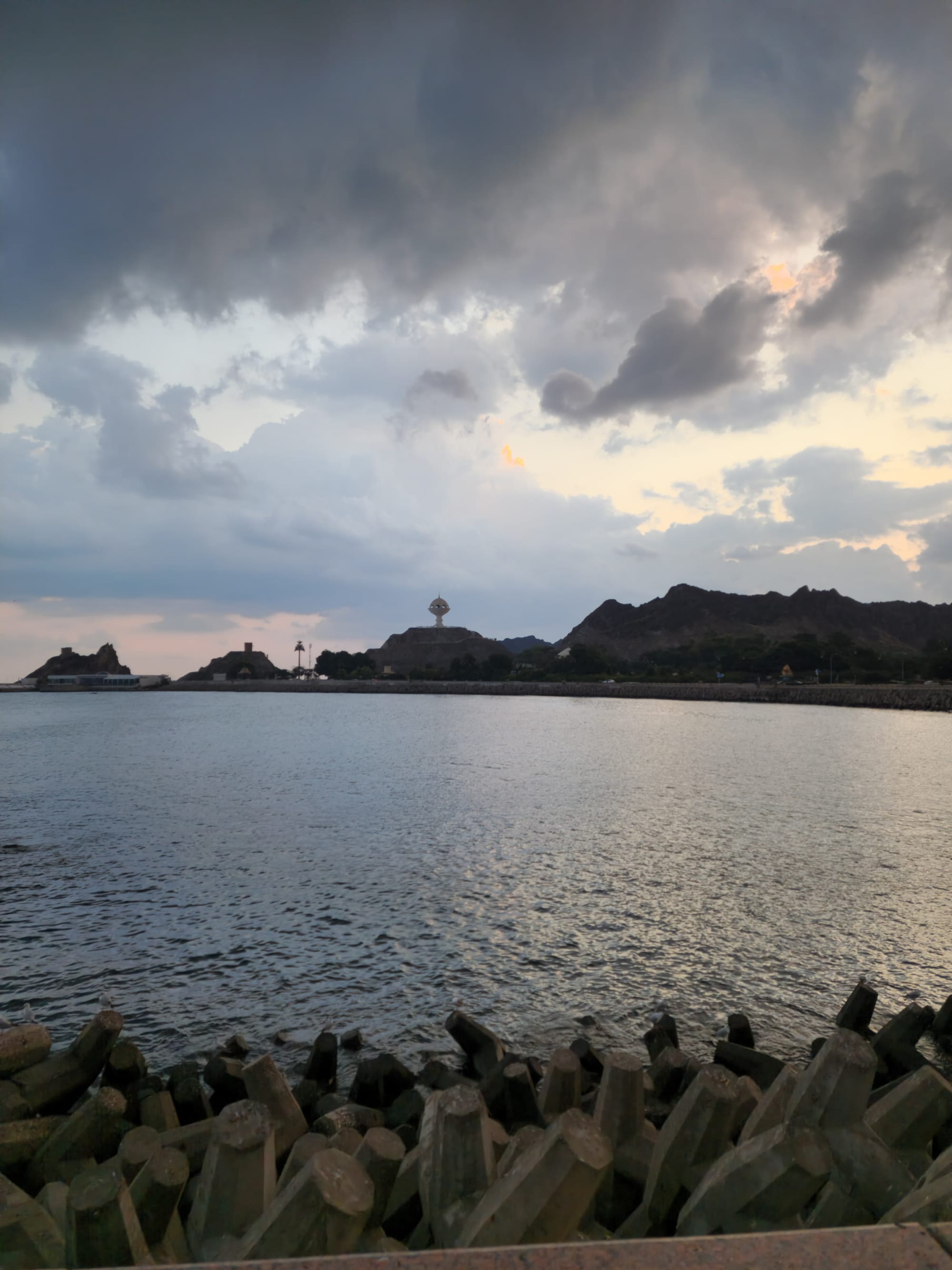
Muscat's Corniche runs along the harbour at Muttrah, and the coast road leads on to the old walled city and the Sultan's Al Alam Palace with its distinctive blue-and-gold columns, flanked by two Portuguese-built forts. On the Corniche itself is the Mutrah Souk, one of the oldest markets in Oman, known for frankincense, textiles, and Omani silver. Unlike much of the modern city further along the coast, this stretch has changed relatively little in character.
An evening walk along the Corniche, when the heat has faded, is a good way to end a day in the capital.
Oman rewards a loop rather than a single base: Muscat, Nizwa and the Hajar Mountains, and a stretch of the eastern coast together make a comfortable week to ten days, with the desert and mountain legs generally needing a rented 4x4 or a guide.