Culture & Customs · Suriname
Suriname: The Headscarf That Speaks
Churches, temples, mosques and a synagogue within a few streets of one another, a calendar that makes room for every community, and a folded cotton headscarf that once carried messages only insiders could read
By Globeway Editorial · 30 September 2026
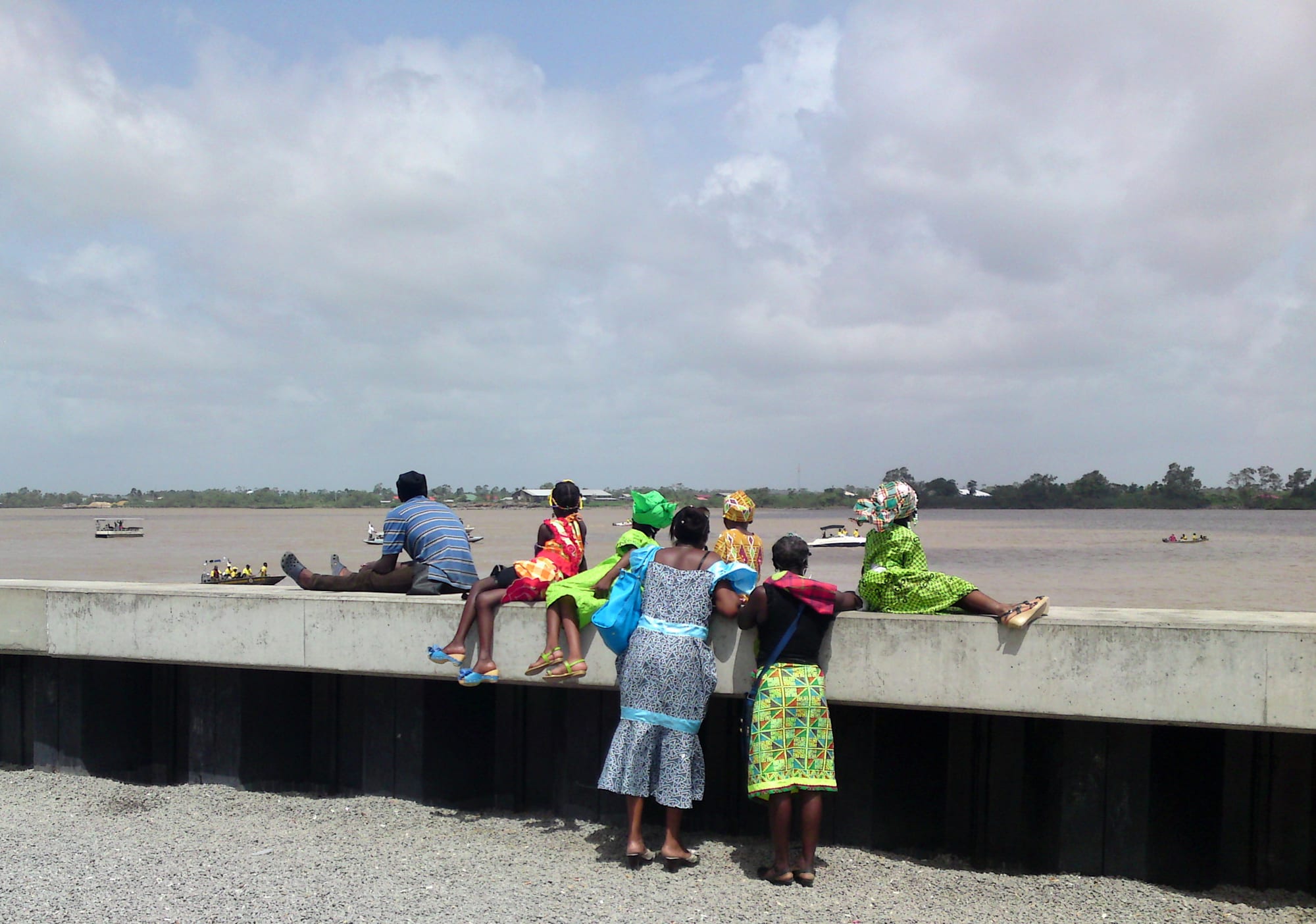
On the first of July, Afro-Surinamese women put on the koto: layered, starched skirts, a wide jacket and, on top, the angisa, a cotton headscarf folded into stiff points and wings. The day is Keti Koti, "broken chains" in Sranan Tongo, marking the abolition of slavery in 1863, and it is celebrated with music, dancing and the Bigi Spikri, or "big mirror", a parade in which the finest costumes are shown off. The costume is a statement in itself, generous in fabric and impossible to overlook. Keti Koti belongs above all to the Creole community, yet it is a national holiday in a country whose calendar also makes room for Hindu, Muslim, Javanese, Chinese, Maroon and Indigenous observances. In Suriname, living alongside other people's festivals is not a special effort. It is simply how the year runs.
Faith, identity and values
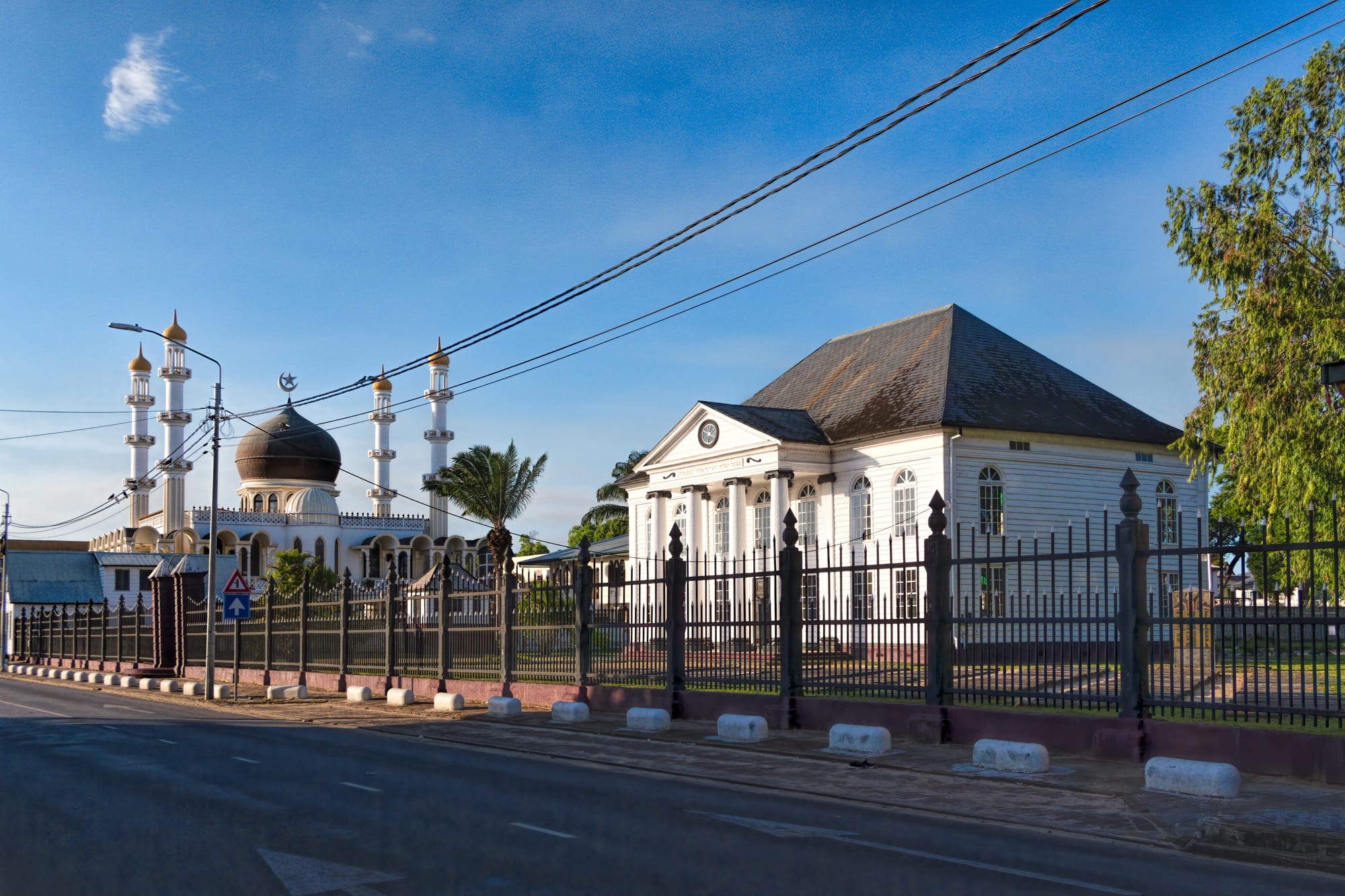
Suriname is among the most plural societies anywhere. Its people are of Hindustani (Indian), Creole, Javanese, Maroon, Indigenous, Chinese, European and mixed descent, and no single group forms a majority. Faith follows much the same pattern. According to the 2012 census, just under half the population is Christian, with Pentecostal, Moravian and Catholic churches the largest; a little over a fifth is Hindu, including followers of the Sanatan Dharm and Arya Dewaker movements; and around one in seven is Muslim, Sunni and Ahmadi among them, and a small Jewish community worships in the capital's historic synagogue. The government is openly supportive of religious diversity, and an interreligious council brings organisations of several faiths together to work on shared activities.
Alongside these world religions sits Winti, the Afro-Surinamese religion that took shape on the plantations as enslaved people from many parts of West and Central Africa combined their knowledge and rituals. Winti centres on a creator, a host of spirits and, above all, the ancestors, who are believed to take a continuing interest in the lives of the living. The colonial government criminalised it in 1874 under a law against so-called idolatry, and it survived largely out of sight until the ban was repealed in 1971. Today it is practised openly, and the state has even appointed Winti marriage officers. Many Creoles combine Christianity with respect for Winti, and the six Maroon peoples of the interior keep religions that are woven through their clan and family life.
Several values run across these communities. Politeness and respect for elders are taught early, and children are expected to use formal forms of address with adults. A relaxed manner is prized too: a common Creole expression, "no span", means roughly "keep cool, don't worry". Sranan Tongo serves as a shared tongue between groups who each keep a language of their own, and many families have close relatives in the Netherlands, so that identity stretches comfortably across the Atlantic.
Greetings and meeting people
A handshake is the normal greeting on meeting someone, in formal and informal settings alike. Close friends and relatives often exchange a hug, known as a brasa. In Sranan Tongo a friendly "Fa waka?", roughly "How's it going?", opens many conversations, though a long answer is not expected. Surinamese manners lean towards the formal with strangers and older people: the polite Dutch "u" rather than the familiar "jij" is widely used, and "sir" or "madam" is a courteous way to address someone. Although Dutch is the official language, Surinamese Dutch differs considerably from the Dutch of the Netherlands, and visitors are advised to speak slowly and clearly and check that they have been understood.
Customs vary between communities, and a guest will soon notice that each brings its own courtesies into public life, from the Hindustani temple to the Javanese community hall. What unites them is an expectation of warmth, good manners and due respect for older people.
In the Maroon villages of the interior, authority is structured and respected. Each Maroon people has a paramount chief, the granman, supported by captains who oversee villages and clans and by assistants beneath them. Visitors normally arrive through a lodge or a local guide, and it is courteous to greet the village authorities and to follow their lead. Photographs of people should only be taken with their consent.
Hospitality and being a guest
Surinamese homes are known for their hospitality, and a guest who drops in is usually expected to share a meal or at least something to eat and drink, so accepting at least a little is the polite response. Homes have traditionally been open and informal places, and shoes are generally taken off at the door, and people then go barefoot or in house slippers indoors.
Dress is taken seriously. Surinamese people like to look neat when they pay a visit or go to a party, and turning up to someone's home or a family occasion in scruffy beachwear sends the wrong message. Birthdays, and especially the milestone birthdays known as bigi yari, are occasions for dressing up, and at weddings and jubilee parties great quantities of food are served. Guests are expected to eat well, and a generous table is a matter of pride for the host.
Festivals and life's big moments
Suriname's public holidays read like a map of its population. Keti Koti on 1 July commemorates the end of slavery; commemorations typically include speeches, libations poured for the ancestors, songs and a silence for those who suffered, followed by music, dancing and the Bigi Spikri. Holi Phagwa, the Hindu spring festival held around the full moon of the month of Phalguna, is a national holiday on which people wear old white clothes and throw coloured powder and water at one another in the streets. Diwali and the Muslim festival of Eid al-Fitr are also public holidays, as is Chinese New Year. Indigenous Peoples Day on 9 August recognises the country's Indigenous nations, and Maroons Day on 10 October marks the peace treaty of 1760 in which the Dutch colonial authorities recognised the autonomy of the Ndyuka Maroons. Independence Day falls on 25 November.
The year ends with Owru Yari, "old year", the most exuberant day on the calendar. On 31 December, pagara, long strings of red firecrackers, are set off in clouds of smoke and red paper, building to a climax at midnight. The custom is associated with chasing away the bad luck of the old year, and today it belongs to everyone, and the day turns into a street party with music and dancing.
Family milestones are marked within each community's traditions. Among Maroons, coming of age is recognised with gifts of adult dress: a wrapped cloth, or pangi, for a girl and adult clothes for a boy. Javanese families bring out the gamelan for weddings and birthdays, and Creole women wear the koto to birthdays, weddings and koto dances.
Funerals show Suriname's customs most distinctly. At Creole funerals it is customary to wear white, or white combined with black, rather than black alone. Before the burial comes the dede oso, the "house of the dead", a wake where relatives and friends gather, usually at the home of the person who has died, to share memories, sing and say goodbye. On the way to the grave, pallbearers may carry the coffin with dancing steps, sudden feints said to stop the spirit from lingering among the living. The mood can mix grief with laughter, in the belief that where there is death, there must also be joy. Among the Maroons, funerals are the most complex rituals of all, stretching over many months with singing, dancing and drumming.
Arts, crafts and music
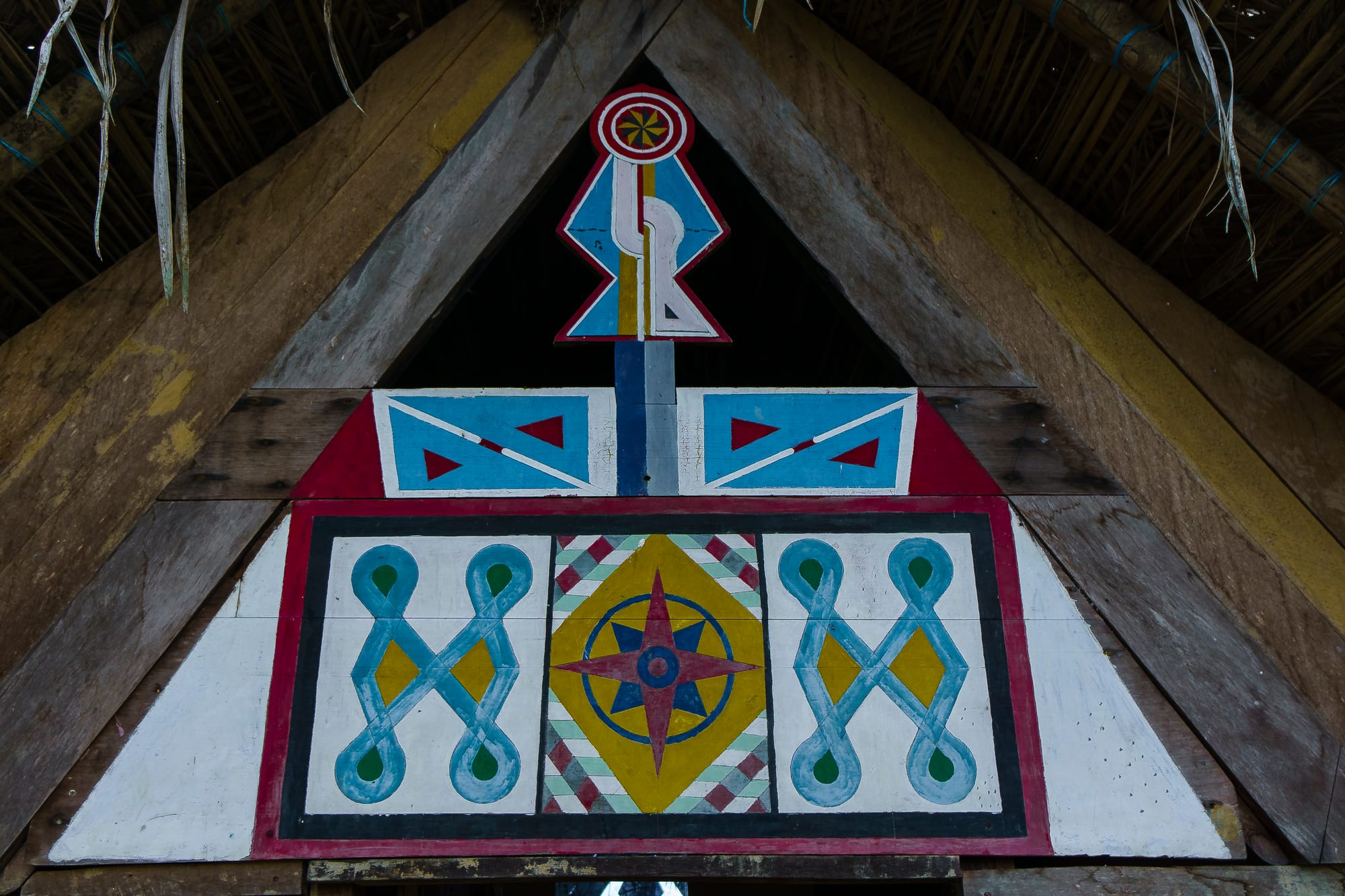
The Maroons have a long reputation as artists, and daily life in their villages is unusually rich in artistic work and in discussion of what makes something beautiful. Woodcarving is traditionally men's work, and combs, paddles, stools and house fronts are covered with interlacing designs; the motifs are known as tembe, and on some buildings they are painted in bright colours as well as carved. Women's arts include patchwork, embroidery and the carving of calabash bowls.
Music is the most popular art form of all. Kawina, a Creole folk music played in Paramaribo since at least the early 1900s, is closely tied to Winti; its call and response songs, backed by Surinamese percussion, deal with everyday life, relations between men and women and public scandals. Kaseko, the Creole dance and party music, grew out of kawina in the 1930s, when large brass bands played it at festivities, and later absorbed jazz and calypso.
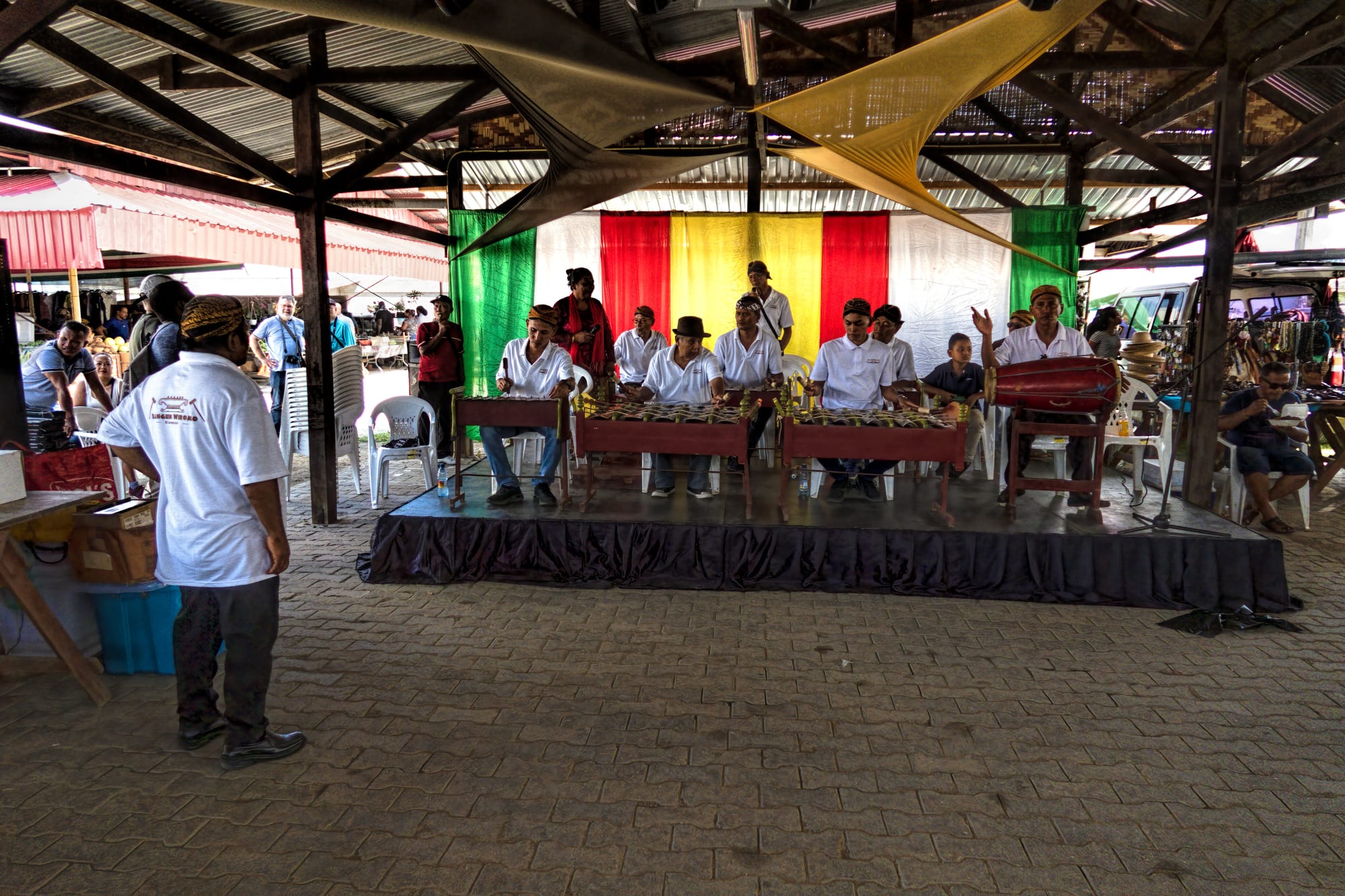
The Javanese community brought the gamelan, an ensemble of gongs, metallophones and drums. In Suriname it accompanies dance, theatre and puppetry, and it is played at community festivities as well as weddings and birthdays. Socio-cultural organisations also stage gamelan performances to mark the anniversary of the first Javanese contract workers' arrival. The koto, meanwhile, remains one of the country's most recognisable forms of wearable art: Dutch museum collections hold many angisa headscarves, and some Surinamese see the costume as a painful reminder of slavery while others wear it as something truly Surinamese and a source of pride.
Dos and don'ts for visitors
- Do shake hands with each person when arriving, and use formal address with older people and anyone met for the first time.
- Do take shoes off at the door of a home unless the host says otherwise.
- Do dress neatly when invited to someone's home, a party or a family celebration.
- Do accept at least a little of the food and drink offered as a guest.
- Do wear old white clothes if joining Phagwa, and expect to be covered in coloured powder.
- Do wear white, or white with black, to a Creole funeral rather than black alone.
- Do greet the village authorities when visiting a Maroon or Indigenous village, and ask before photographing anyone.
- Don't treat Keti Koti as only a party: it is also a commemoration of the victims of slavery.
What to take away
Suriname's many communities keep their own faiths, languages and festivals, yet share each other's holidays with ease, and a visitor who greets people properly, dresses with care and joins in respectfully will find a welcome in all of them.