Food · Tajikistan
Tajikistan: Food and the National Dish
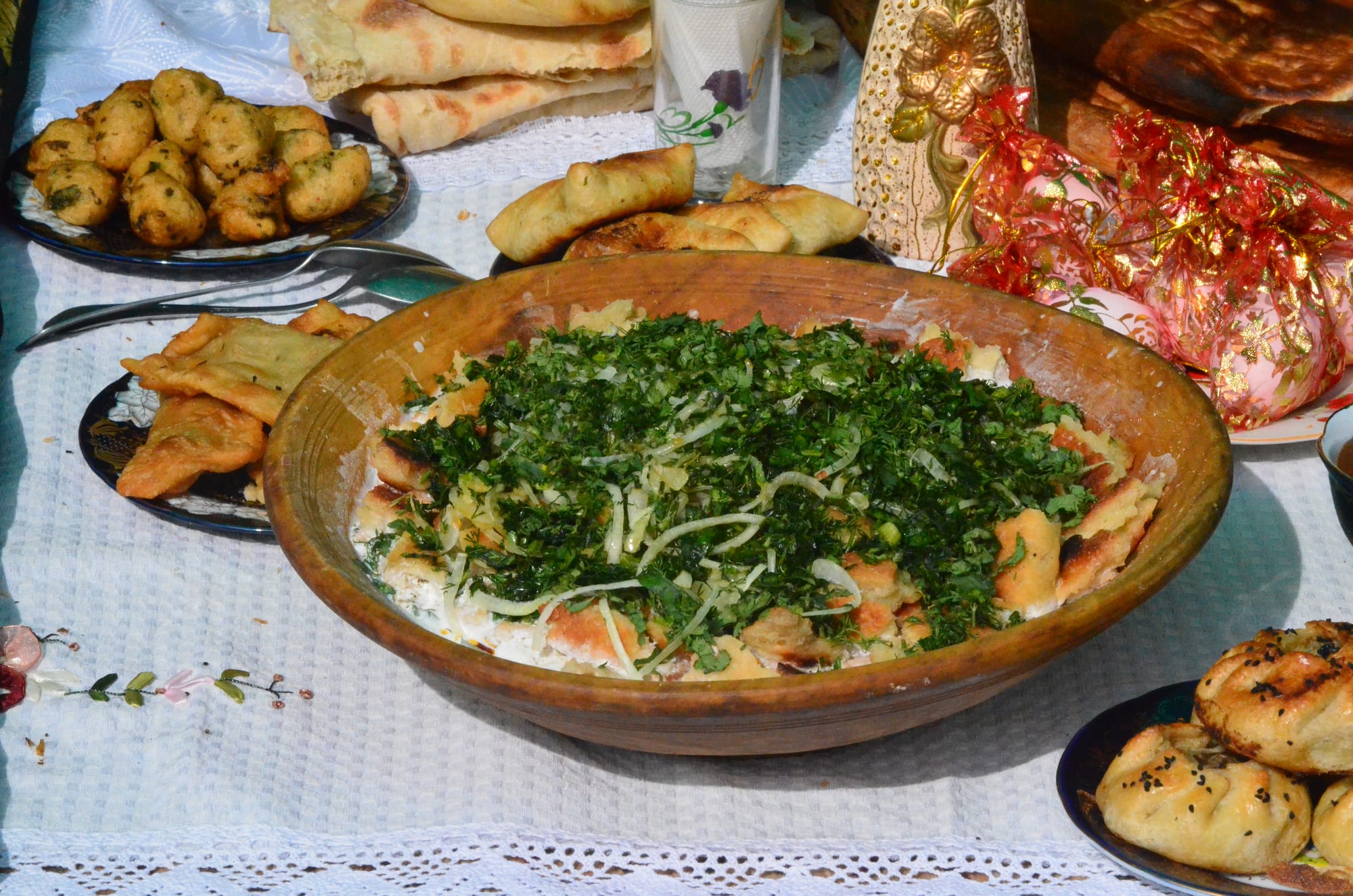
Crumbled flatbread soaked in yoghurt and topped with onion, a Tajik national dish eaten by hand from a shared plate
By Worldlore Editorial · 30 September 2026
A cuisine shared across Central Asia, with one dish genuinely its own
Tajik food shares much with the wider Central Asian table. Palov (plov, or osh), the region's rice, carrot and meat dish, is described as the national dish of Tajikistan as of other countries in the region, and in 2016 UNESCO inscribed Oshi Palav, a traditional meal and its social and cultural contexts in Tajikistan, on its Intangible Cultural Heritage list. Qurutob, also considered a national dish, is more closely associated with Tajikistan itself.
The national dish: qurutob
Qurutob, torn pieces of thin, flaky flatbread called fatir soaked in a sauce made from qurut (a dried, fermented dairy product diluted with water), topped with onion, tomato and herbs, is considered a national dish of Tajikistan, eaten above all in the south of the country. Traditionally eaten by hand from one large shared plate, it is more specifically tied to Tajikistan than the region-wide palov.
Rice, dairy and a genuinely mountainous pantry
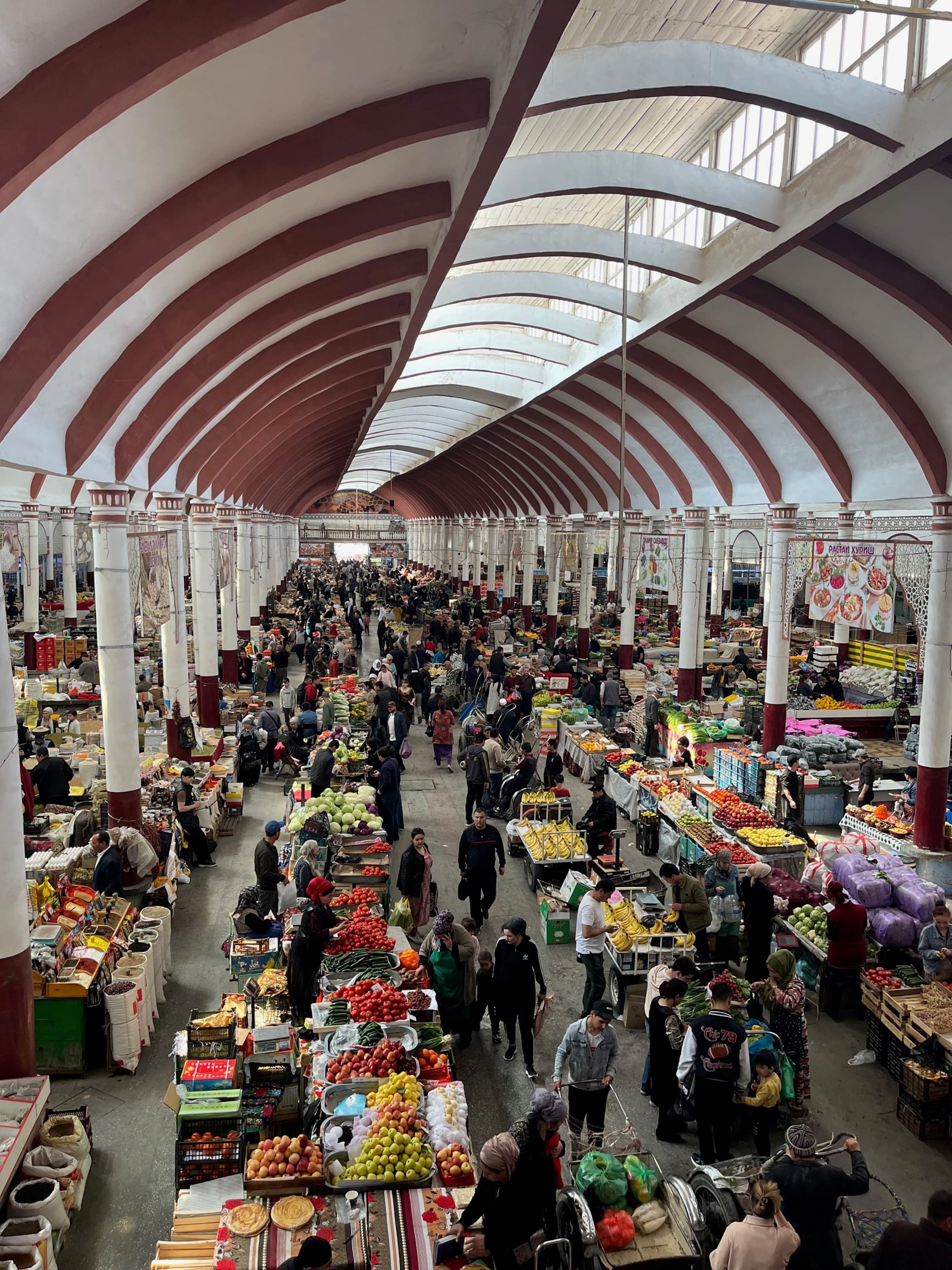
Rice, used across the region-wide plov, and qurut, a dried fermented dairy product with deep roots in Tajikistan's pastoral herding tradition, anchor much of the country's cooking. Bread, particularly fatir and other flatbreads, and dried fruit and nuts, reflecting the country's mountainous terrain and orchard farming, round out a pantry shaped by both regional trade and local herding tradition.
History behind the bowl
Qurut, the dried fermented dairy product at the centre of qurutob, has deep roots in the pastoral and nomadic herding traditions of Central Asia's mountain regions, developed as a way to preserve milk for long periods without refrigeration. Qurutob's name describes its method: qurut is dissolved in water (ob) and poured over strips of flatbread, a dish that reflects that pastoral history more directly than palov, which is shared across many neighbouring countries.
Dishes to know
Five more to recognise across Tajikistan:
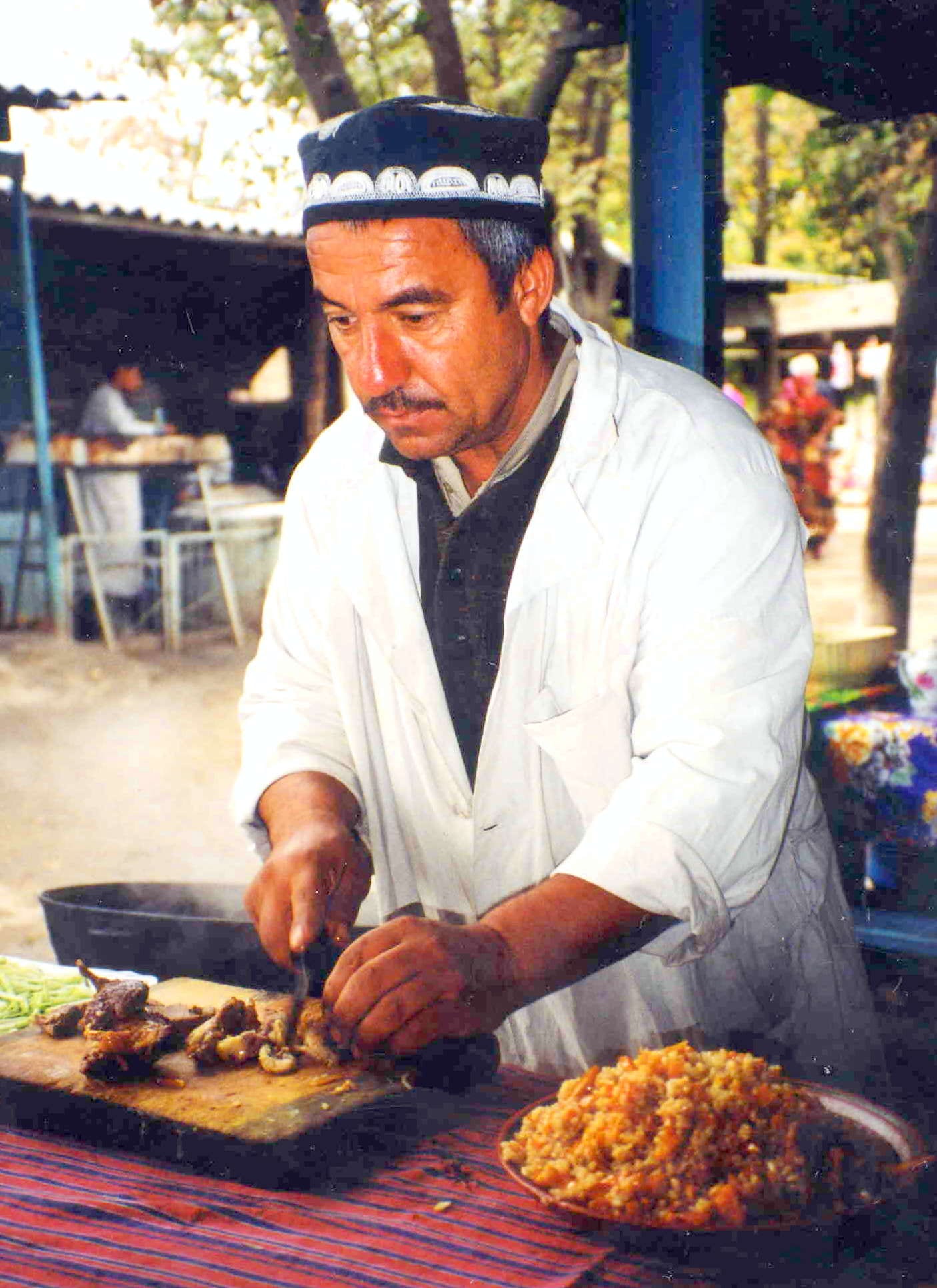
- Plov (osh) — spiced rice with meat and carrots, shared across
Central Asia and cooked for celebrations; widely described as the national dish and listed by UNESCO in 2016.
- Laghman — hand-pulled noodles served with a meat and vegetable
sauce, reflecting shared regional Silk Road influence.
- Sambusa — triangular pastries filled with meat and onion, or
pumpkin and onion, baked in a tandoor oven.
- Manti — steamed dumplings filled with meat, shared across the
region.
- Non — traditional round bread, baked in a tandoor-style oven and
treated with genuine cultural respect in Tajik households.
Drinks
Green tea, the common national drink, accompanies meals and is offered between them as a gesture of hospitality, and the choykhona, or teahouse, is a common gathering place. Kompot, a sweet drink made from fruit, is often drunk as well.
Eating as a traveller
Vegetarians will find bread, dairy and vegetable-based dishes like qurutob's base manageable, though meat is central to plov and much of celebratory cooking. Tap water is not reliably safe outside major hotels; bottled water is the safer default. Eating qurutob by hand from a shared bowl, the traditional way, is a genuine and welcoming way to experience Tajik hospitality.
What to take from the table
Qurutob, eaten by hand from a shared plate, is the dish most closely tied to Tajikistan itself, standing beside the palov it shares with its neighbours.