Culture & Customs · Tajikistan
Tajikistan: Forty Years of Respect
A secular state with a deeply Muslim people, a room that rises for every guest, bread that is never turned face down, and an ancient musical and poetic heritage kept alive at home and on the stage
By Globeway Editorial · 30 September 2026
A guest steps into a Tajik home, and the room rises. Everyone present stands to greet the newcomer, the host lays a hand over the heart and gives a slight bow, and the oldest person in the room keeps the place of honour. When the tea arrives, the first bowl is poured for the host, an old courtesy meant to show that what is being offered is safe to drink. Bread is set down face up and handled with care, and its crumbs are gathered rather than wasted. None of this is elaborate, but it holds the qualities that Tajik tradition treats as essential to good manners: hospitality, humility and respect, above all for age.
Faith, identity and values
Tajikistan's constitution is secular, but the great majority of its people are Muslim. According to the US State Department, more than 90 per cent of the population is Muslim, most following the Hanafi school of Sunni Islam, while around 3 to 4 per cent are Ismaili Shia Muslims, most of whom live in the mountainous east. Small Christian, Jewish and other communities also exist. The law gives the Hanafi school a special place in the country's culture and spiritual life.
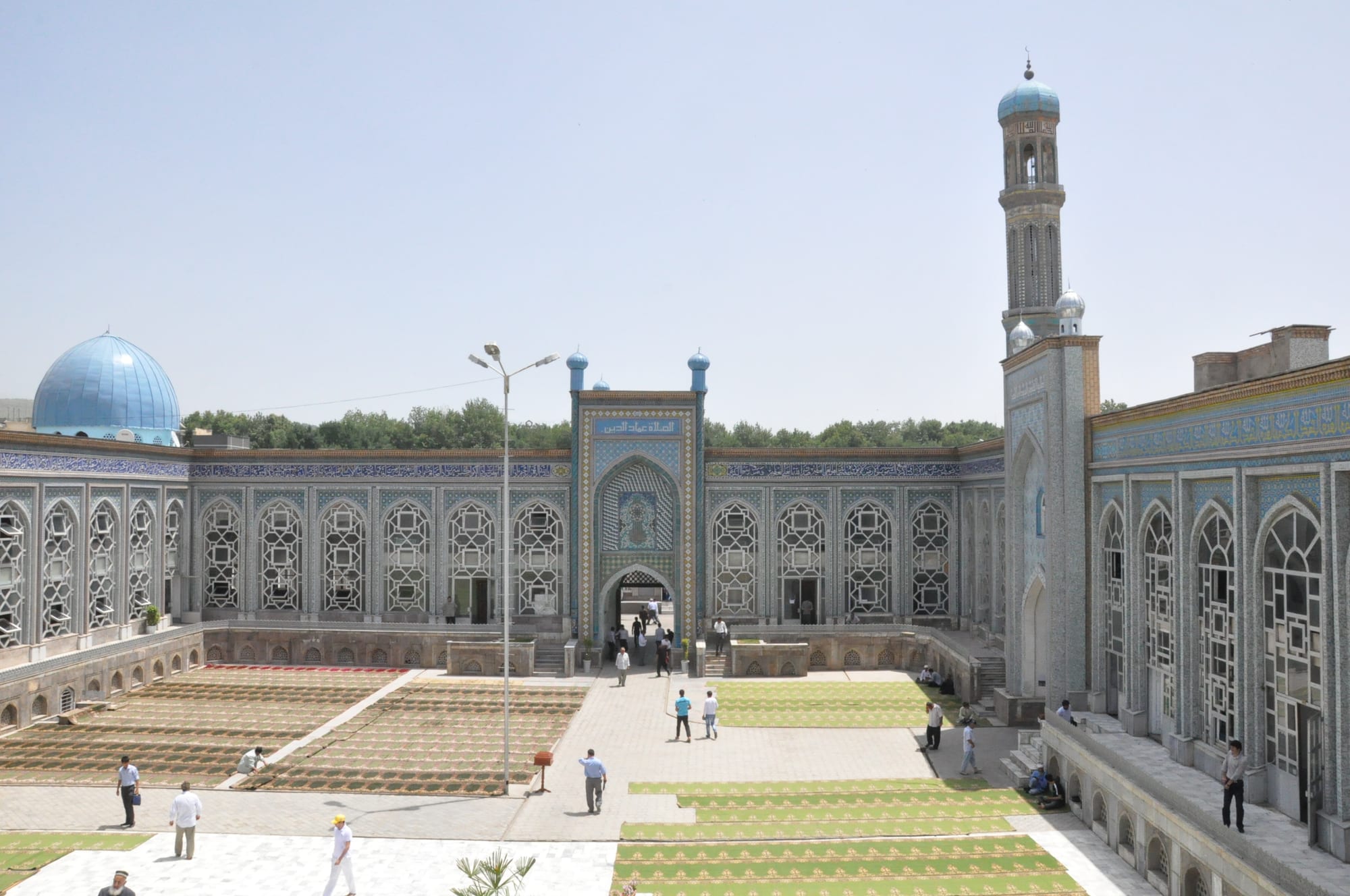
Religion and the state are closely intertwined. The government selects the topics of Friday sermons, and a law on parental responsibility bars anyone under 18 from taking part in public religious activities, including services at the mosque, although worship at home under a parent's guidance is allowed. In 2024 amendments to the law on traditions banned the wearing, import and sale of clothing described as alien to the national culture, widely understood to target the Islamic headscarf, and banned idgardak, the children's celebrations of the two Eid festivals. Beards are officially discouraged, and there have been repeated reports of police forcing men to shave. For many families, faith is therefore practised quietly, at home and at the great moments of life, rather than displayed in public.
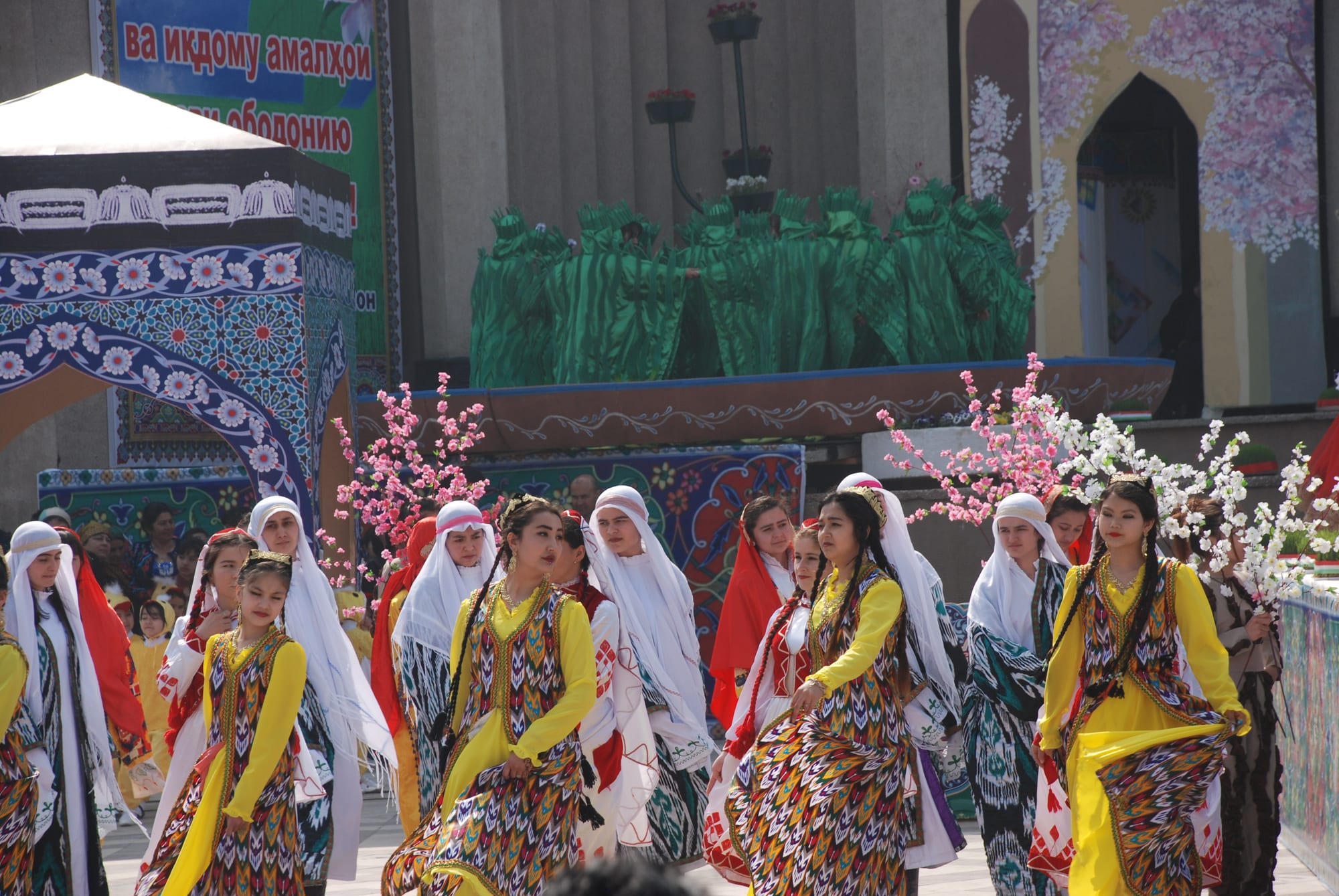
Beneath religion lies an older sense of identity. Tajiks speak a form of Persian, and their culture is Persianate, sharing a great deal with Iran and Afghanistan: the poetry of Rudaki, Hafez and Ferdowsi, the spring festival of Navruz, and a similar code of courtesy. Hospitality, humility and respect are regarded as essential to any successful dealing between people. The elderly are always given the place of honour, and deference to age runs through family and public life alike. Most people are conservative in outlook, particularly in the countryside, and the UK government asks visitors to respect local traditions and customs at all times.
Greetings and meeting people
The most characteristic Tajik greeting is a hand placed over the heart, accompanied by a slight bow. It is a gesture of respect, and a visitor who returns it in kind is showing good manners.
Standing is itself a form of greeting. When a guest enters a room, those already there rise to acknowledge the arrival, and the same courtesy is shown to the old. The place of honour in any gathering goes to the eldest, and it is for them, not the youngest or the newest arrival, to take it.
Relations between the sexes are more reserved than in much of Europe. At many gatherings men and women sit apart. By tradition a man must never enter a home where only women are present, and a girl should not be left alone with a boy. Public displays of affection are not the norm, and the UK government notes that showing affection in public may draw unwanted and negative attention; although same-sex relations are not illegal, attitudes are conservative. In this setting, restrained behaviour and modest dress are simply part of courtesy.
Hospitality and being a guest
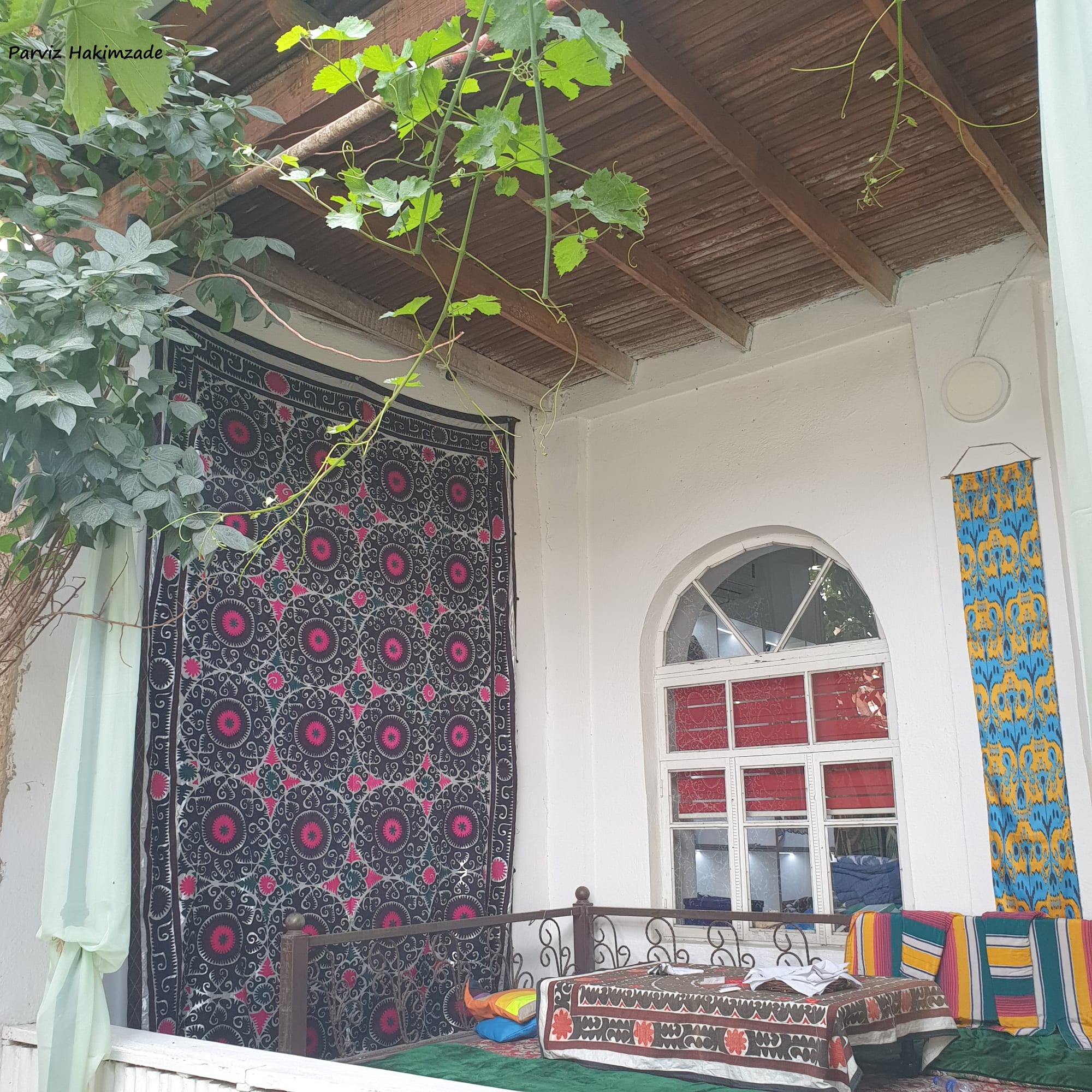
A guest in Tajikistan is treated with great ceremony. The honoured place is prepared on cushions around a low table, and the visitor is offered tea, bread and fruit and pressed, again and again, to eat more. The elderly receive the same honour, and the seating reflects the standing of everyone present.
Tea is at the heart of every visit, and the order in which it is served carries meaning: the host is served first, as a sign that it is safe to drink, before it is offered to the guests. Bread, known as non, carries a respect close to reverence. It may never be placed upside down, and the crumbs are collected and disposed of with ceremony rather than swept away with the rubbish. Dropping bread or throwing it out would be taken as a sign of disrespect.
Some meals carry social meaning beyond the food itself. Oshi palav, the rice dish that marks weddings, births, funerals and holidays, is often cooked by groups of men or women together, at home or in teahouses, amid talk, music and song, and UNESCO describes it as an inclusive practice that brings people of different backgrounds together. A popular saying, "no osh, no acquaintance", captures the idea that friendship begins with a shared meal.
Festivals and life's big moments
The biggest celebration of the year is Navruz, the Persian New Year at the spring equinox, which is a public holiday of several days from 21 March and is on UNESCO's list of intangible cultural heritage alongside the celebrations of neighbouring countries. Two older seasonal festivals are listed too. Sadeh, held on 30 January, marks the moment when fifty days and fifty nights remain until spring, with singing, dancing and prayers around a fire and gifts of fresh and dried fruit. The Ceremony of Mehregan is also on the list. The two Eid festivals, Idi Ramazon at the end of Ramadan and Idi Qurbon, the Feast of the Sacrifice, are public holidays, as are Independence Day on 9 September and the Day of National Unity in June. During Ramadan itself, cafés and restaurants may change their menus, and the streets around mosques grow busy at prayer times.
Family milestones are marked with care. A newborn is traditionally not shown to the wider world until forty days after birth, when a cradle ceremony may be held with a feast. Boys are circumcised between the ages of one and seven, an occasion of religious and family importance. Weddings are joyful, crowded affairs of music, dancing and the recitation of poetry. In one old custom, the bride's family carries an iron tray of burning herbs to chase away illness and the evil eye. At funerals the body is washed and wrapped in white cloth before burial.
The scale of these events has become a matter of law. A law regulating traditions and celebrations, first adopted in 2007 after the president said lavish weddings and funerals were putting a financial strain on families, limits the number of guests and the length of celebrations. Later amendments restricted funeral feasts, outlawed several customary memorial gatherings, such as those held on the seventh day or at six months after a death, and banned celebrations for naming ceremonies, a baby's first haircut and infant circumcision, with families encouraged to open savings accounts for their children's education instead. Fines can run to thousands of dollars, and officials can lose their posts if members of their families break the rules.
Arts, crafts and music
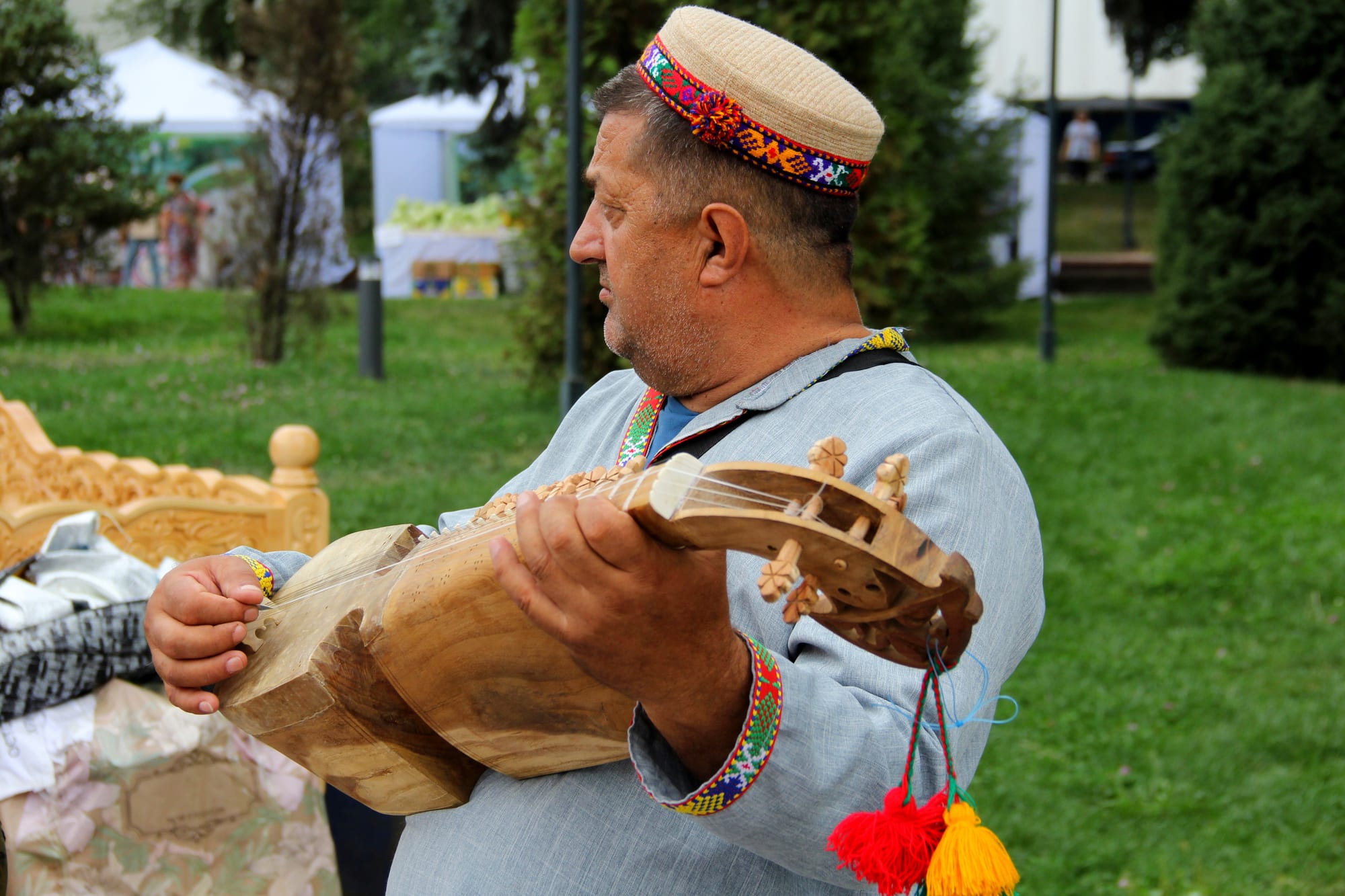
Music is one of the great Tajik arts. Shashmaqom, meaning "six maqoms", is a classical tradition shared with Uzbekistan that grew up in the cities of Central Asia over more than ten centuries. Played on lutes, fiddles, frame drums and flutes, it sets poetry to intricate melodies and is still passed on mainly by ear, from master to student. Falak, whose name means "heaven", "fortune" and "universe", is its rural counterpart: the folk music of the mountain people, sung at festivities and ceremonies, in the fields and while herding, with songs of love, pain, separation, the homeland and the hope of reunion. Its singers and players, the falakkhons, may perform alone and unaccompanied or with an ensemble and dancers. The rubab, a stringed instrument whose making and playing is on UNESCO's list, and the karnai, a long trumpet, belong to the same world of sound.
Textiles are the other great living craft. Chakan, a style of embroidery practised mainly by women and girls, covers cotton or silk with flowers and symbolic images drawn from nature and the cosmos, expressing wishes and hopes. It decorates women's dresses and headscarves, curtains and bedding, and men wear embroidered skullcaps at celebrations. The skill passes from mothers, grandmothers and older sisters, and through the ustod-shogird, or master and apprentice, system, and embroidered pieces sold in bazaars and shops give many women an income. Atlas, woven from silk, and adras, woven from silk and cotton, are spun, dyed and woven by hand, and women wear them at festivals, ceremonies and family gatherings, as well as at work and at home, as part of their cultural identity. Silk production, the art of manuscript illumination and the telling of anecdotes about Nasreddin Hodja are also on UNESCO's list, a sign of how many traditional skills are still practised.
Poetry, too, remains close to everyday life. The recitation of poems is a normal part of weddings and other celebrations, and the great names of Persian verse are claimed with pride as part of the national heritage.
Dos and don'ts for visitors
- Do stand when a guest or an elder enters, and leave the place of honour to the oldest person present.
- Do return a greeting with a hand over the heart and a slight bow.
- Do dress and behave conservatively, especially in rural areas, and carry a passport or notarised copy at all times, as the law requires.
- Don't put bread upside down, drop it or throw it away; it is treated with great respect.
- Don't photograph military or security sites, which is prohibited, or government buildings, and don't possess or fly a drone without official permission.
- Don't smoke in the street; it is illegal and punishable by a fine.
- Don't make public displays of affection, which may draw negative attention.
- Don't post anything online that could be seen as disrespecting religion, culture or national symbols; it is against the law.
What to take away
In Tajikistan the smallest gestures, a hand on the heart, a bowl of tea poured in the right order, a loaf set down the right way up, carry the weight of an old and courteous culture, and visitors who honour them will find hospitality returned many times over.