Culture & Customs · Tanzania
Tanzania: Respect Begins with Shikamoo
Churches and mosques on the same streets, a greeting for every elder, meals eaten with the right hand, and a nation that speaks through cloth, drums and bright paint
By Globeway Editorial · 30 September 2026
A young woman passes an older neighbour in the street and stops. "Shikamoo," she says, and the reply comes back, "marahaba". The words are old: shikamoo is usually traced to a Swahili phrase meaning "I touch your feet", and marahaba, from Arabic, has been explained as "you have my blessings". A handshake may follow, and only then does either of them move on. Few exchanges say more about Tanzania. Respect for age, courtesy before business, and a strong sense that no one lives entirely on their own run through daily life across the mainland and the islands alike.
Faith, identity and values
Tanzania is a deeply religious country with two large faiths. A 2020 Pew survey cited by the US State Department found that about 63 per cent of the population identifies as Christian and 34 per cent as Muslim, with the rest following other religions or none. Christians include Roman Catholics, Lutherans, Anglicans, Pentecostals, Seventh-day Adventists and many others. Sunnis are the largest group of Muslims, with Ismaili, Twelver Shia, Ahmadi and Ibadi communities as well, and on the islands of Zanzibar almost the entire population is Muslim. Older beliefs have not disappeared: a 2010 Pew survey found that more than half of Tanzanians hold beliefs drawn from African traditional religion alongside their faith.
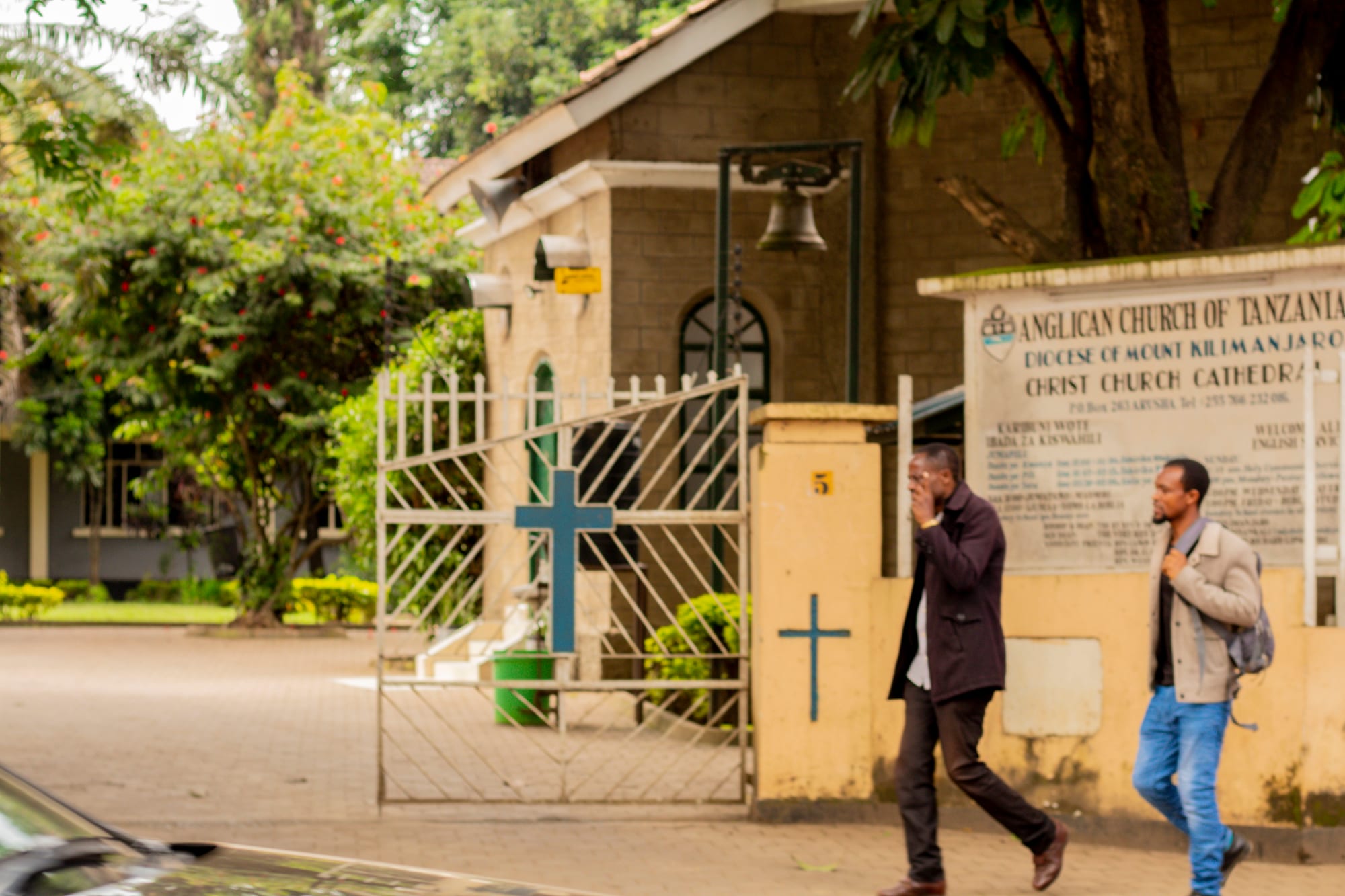
Religion is woven into ordinary life and is visible on every street, in signs for churches, mosques and Quranic schools and in religious slogans stuck on the backs of cars. Morning greetings often include thanks to God, in the Swahili "Namshukuru Mungu" or the Arabic "Alhamdulillah", and visitors who stay for any length of time are likely to be invited to church, to break the fast in Ramadan, or to attend the burial of an elder.
Tanzania is home to well over a hundred ethnic groups, bound together by Swahili, the shared language of daily life. Much of the culture is collectivist rather than individual. Privacy and personal space in the Western sense are neither expected nor always understood; neighbours, colleagues and children drift in and out of each other's homes as a matter of course. Self-control is admired, and the ability to keep one's temper and emotions in check in public is widely regarded as a virtue. Age brings authority, and deference to elders and to those in positions of responsibility shapes both speech and gesture.
Greetings and meeting people
Greetings come first. Shikamoo is the greeting a younger person offers to anyone older, and to those in authority, and marahaba is the gracious reply. Some Tanzanians find the custom too formal, and it is sometimes debated in the press, but it remains the standard mark of respect. Among equals, the everyday exchange is "hujambo?", roughly "are you well?", answered with "sijambo", "I am well". Greetings that ask after the news of the morning or the afternoon, beginning with "habari", are heard throughout the day, and friends use casual forms such as "mambo" and "vipi". The word karibu, "welcome", greets a guest at the door, and the answer is "asante", "thank you".
Handshakes are common. When greeting an elder or an official, many people shake with the right hand while laying the left hand under the right arm as a mark of extra respect, and women and girls may add a slight curtsy when greeting elders.
Public behaviour between the sexes is reserved, especially in the countryside, where young men and women traditionally avoid showing affection to each other in public in daylight, although the custom is increasingly ignored in the towns. Friendship between people of the same sex is shown more openly, and boys may hold hands as a sign of companionship. In rural areas women have traditionally been expected not to smoke, raise their voices or cross their legs.
Dress matters as a form of respect. Clothes that are dirty, torn, too revealing or too casual are taken as a slight, and a foreigner in ragged clothing may be seen as disrespectful rather than relaxed. Nose and tongue piercings, and earrings on men, are frowned upon, especially in rural areas. The UK government advises visitors to dress modestly throughout the country.
Hospitality and being a guest
A visitor to a Tanzanian home is greeted with karibu and made welcome. Guests who arrive with a small token of friendship, such as something for the house, pictures from home or sweets that will not melt in the heat, are appreciated, though nothing grand is expected.
Food is traditionally eaten with the right hand, including rice and dishes with sauce, and children learn from an early age not to eat with the left, which is associated with washing after using the toilet. The same hand is offered in greeting, and using the left for either can cause quiet offence.
During Ramadan, Muslim households fast from dawn to dusk, and the UK government asks visitors to avoid eating or drinking in public outside hotels and restaurants, and to take particular care not to cause offence in religious areas. Visitors may well be invited to share the meal that breaks the fast, a gesture of inclusion in the religious life of the community.
Festivals and life's big moments
Tanzania's calendar honours both its faiths and its founders. Good Friday, Easter Monday, Christmas and Boxing Day are public holidays, as are the Muslim festivals of Iddi el Fitr at the end of Ramadan, Iddi el Haji, the Feast of the Sacrifice, and Maulid, the Prophet's birthday. National days include Union Day on 26 April, which marks the union of Tanganyika and Zanzibar, Independence Day on 9 December, Karume Day in April, Nyerere Day on 14 October, which also sees the climax of the Uhuru Torch Race, and two holidays named after their dates: Saba Saba, the seventh of the seventh month, and Nane Nane, the eighth of the eighth, a day dedicated to farmers.
Weddings are major undertakings that draw in whole networks of relatives and friends. Before a marriage, the groom's family often pays bride price, or mahari, to the bride's parents. Traditionally this took the form of livestock, and in some communities it is still counted in cattle; its meaning is often described as thanks to the family for raising the bride, and the amount is negotiated between the families. In Muslim marriages the dowry is a gift to the bride herself, which her family is not meant to use. To pay for the celebrations, wedding committees collect mchango, contributions from relatives, colleagues and neighbours, often by circulating invitation cards, and a separate card may arrive for the kitchen party, a distinct celebration with its own collection. Church weddings commonly feature a white gown and a veil.
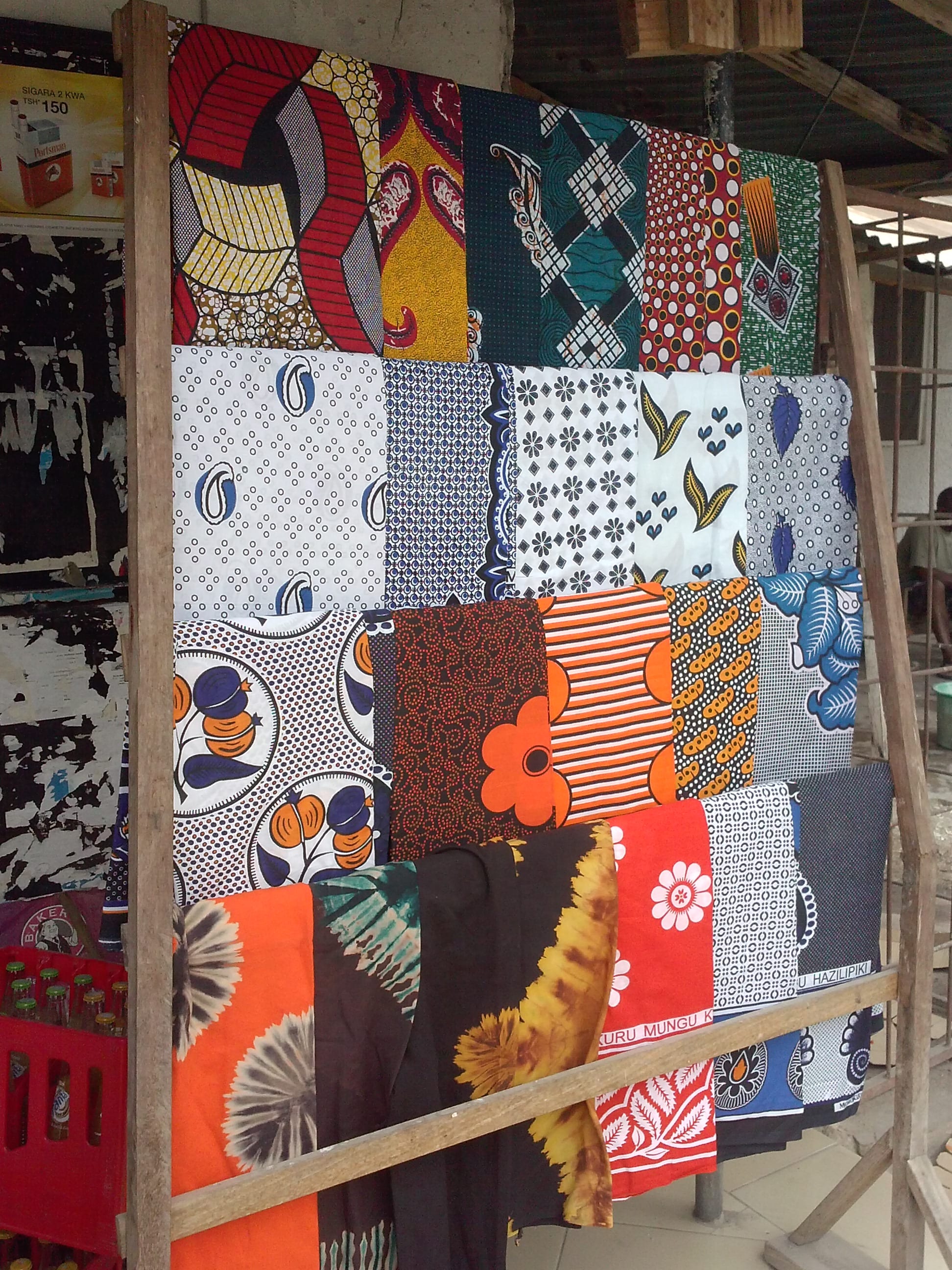
Cloth marks many of these moments. Kanga, the printed cotton wraps worn across East Africa, are given to brides at weddings, to mothers when a child is born and to young women leaving home, and they may be handed down between generations as an inheritance.
Where a person is laid to rest matters deeply. Burial in the home village is a strong custom, and even national leaders, including the founding president Julius Nyerere, have been buried in their home villages rather than in a national cemetery. In many Tanzanian communities, where a person is buried is understood to carry consequences for the family left behind, and the graves of prominent people continue to draw visits from relatives, friends and well-wishers long afterwards.
Arts, crafts and music
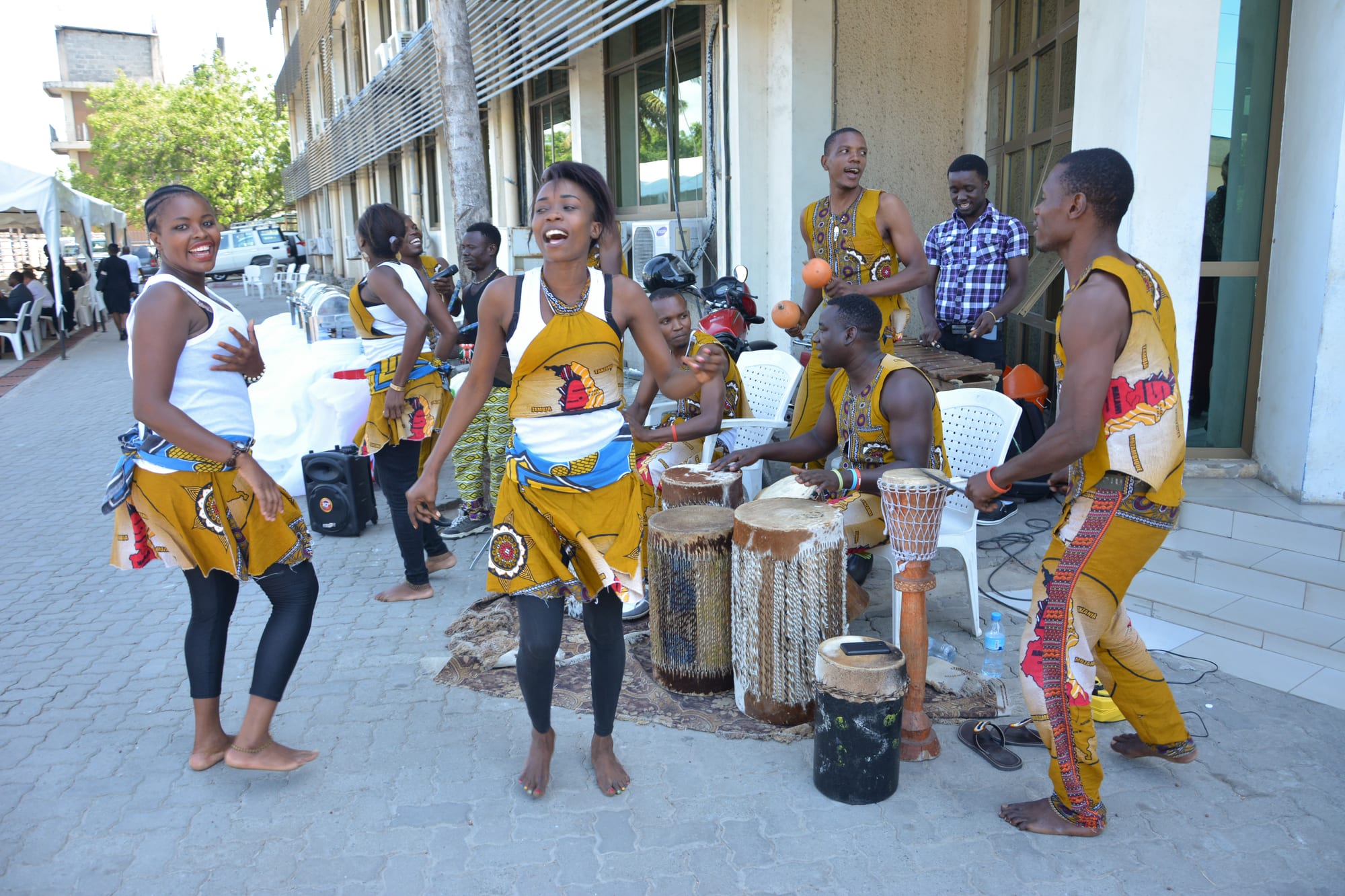
Music and dance accompany celebrations of every kind, and traditional ngoma is still taught and performed alongside newer styles. On the coast, taarab developed as a sung poetry of love, its name drawn from an Arabic word linked to joy in music. Its classic ensembles blended African, Arab and South Asian influences, using accordions, xylophones, flutes and drums, and its songs traditionally veiled their meaning in euphemism. Taarab was long a mainstay of family gatherings; modern groups have brought in keyboards and dancers. Bongo Flava, a homegrown urban style, has become a national genre, and Tanzania has put forward singeli, another urban sound, for UNESCO's list of intangible cultural heritage.
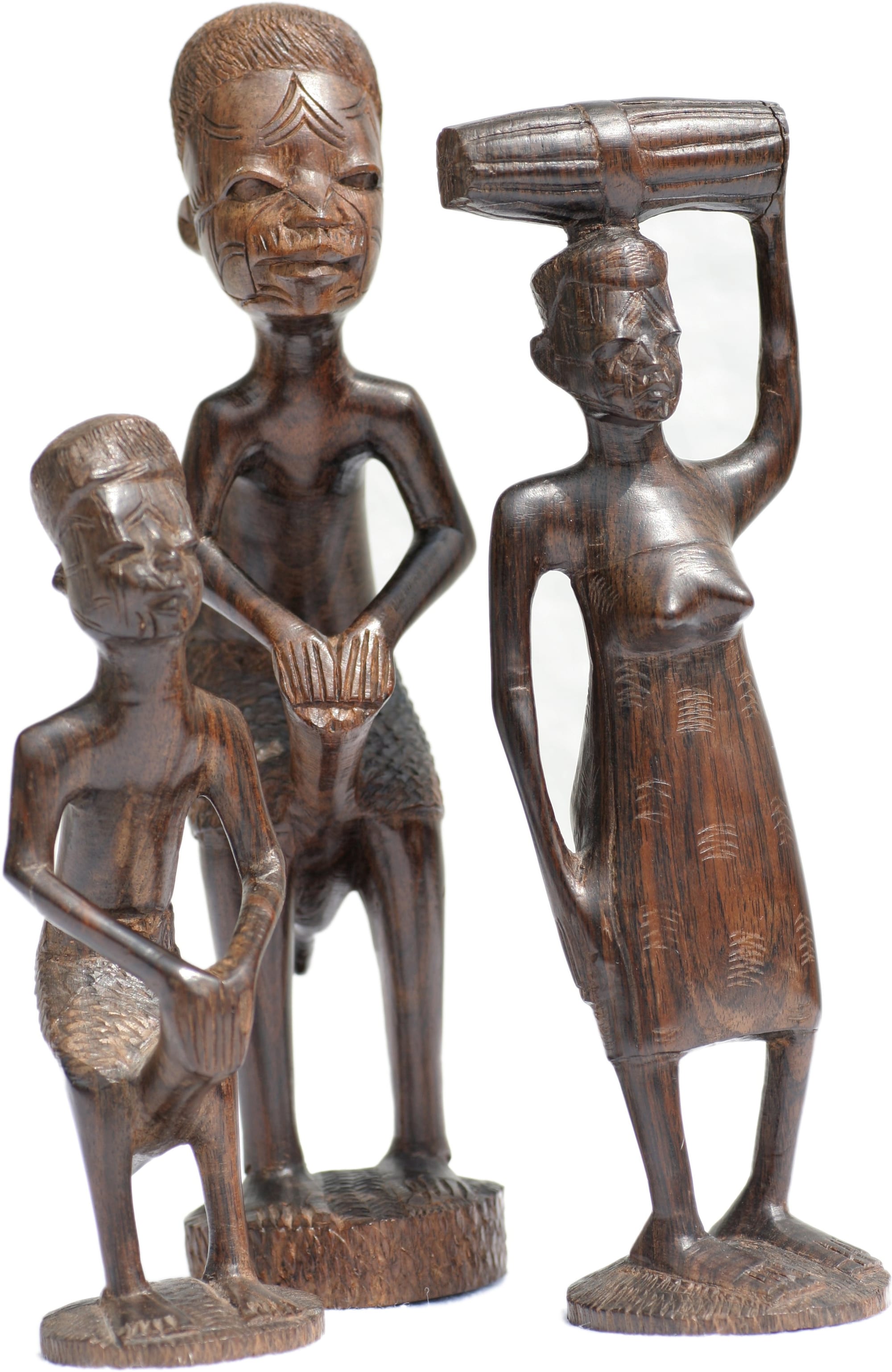
Visual art has two celebrated names. The Makonde are renowned for their carving in dark ebony. Tingatinga painting takes its name from Edward Said Tingatinga, born in 1932 in the south of the country, who began painting in Dar es Salaam in 1968. Drawing on the mural traditions of his home region, he painted animals in bold, flat colour. His life was cut short in 1972, but painters still work in the style that bears his name, and his own paintings are now sought by collectors around the world.
The kanga carries a language of its own. Each cloth has three parts: a border, a central design and a written message, known as the jina. Inscriptions, usually in Swahili and printed first in Arabic script and later in Roman letters, arrived in the early twentieth century, and they often use a proverb or a religious saying to share an idea or make a point, sometimes with several layers of meaning. Kanga are worn as skirts, shawls and turbans, and used as blankets and to carry babies, and during election seasons they can carry political messages too.
Dos and don'ts for visitors
- Do check the latest government travel advice before any trip; the UK advises against all but essential travel within 20 km of the border with Mozambique's Cabo Delgado province.
- Do greet people before anything else, and greet anyone older with shikamoo.
- Do eat and shake hands with the right hand.
- Do dress modestly and neatly throughout the country; clean, tidy clothes are read as a sign of respect.
- Do avoid eating or drinking in public outside hotels and restaurants during Ramadan.
- Don't show affection in public; same-sex sexual activity is illegal, including in Zanzibar, and same-sex couples who show affection in public risk arrest.
- Don't photograph or share images of protests, and avoid political discussions in public or online; since the unrest around the October 2025 election, posts about elections or protests have led to arrests.
- Don't bring plastic bags into the country; they are banned and may be taken on arrival.
What to take away
In Tanzania respect is spoken aloud, in shikamoo to an elder and karibu at the door, and visitors who take the time to greet, to use the right hand and to honour age will find themselves welcomed with remarkable warmth.