Culture & Customs · Tokelau
Tokelau: Every Household Called by Name
Three atoll villages governed by councils of elders, a catch shared out to every family, introductions made through one's parents, and songs that begin slowly and end at a gallop
By Globeway Editorial · 30 September 2026
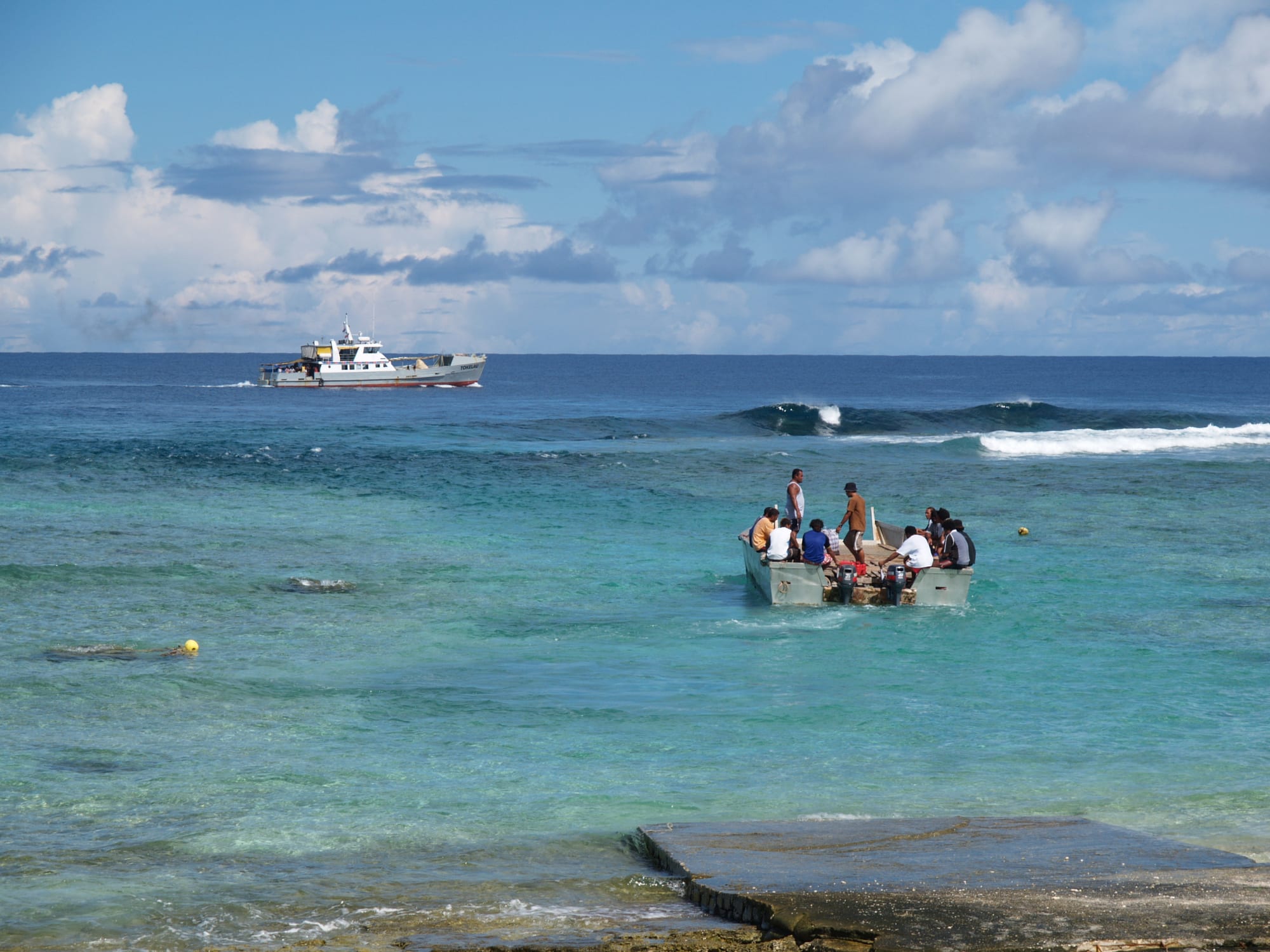
At first light the boats come down the channel after twelve hours at sea. The men unload every fish they have caught onto a single pile, and the pile is divided into smaller ones laid out on the ground set aside for the purpose. A man with a pen and paper reads out the names of the households while an elder and other men count the fish, and a truck drives round the village with a crier calling the children to come and collect. One by one they step forward as their family's name is called. The ritual of the inati, the equal share, captures faka-Tokelau, the Tokelauan way of life: family and community first, and no one left out.
Faith, identity and values
Tokelau is a territory of New Zealand made up of three small atolls, Atafu, Nukunonu and Fakaofo, each with its own village. The Tokelau government describes faka-Tokelau as centred on family and community, with a complex social and economic order built on the values of community and sharing that has held firm despite outside pressures. Culturally the atolls keep ties with Samoa and strong links with Tuvalu, including ties of language and family.
Authority rests with the villages. Each atoll's village is governed by its own Taupulega, or council of elders, which is described as the source of pule, authority, and whose members represent the families. Each village also has a Faipule and a Pulenuku, or village mayor, who together form Tokelau's governing council between sittings of its parliament, and the custom of Tokelau is itself recognised as a source of law. Respect for the elders and for the council's decisions is therefore not merely good manners but the way village life is run.
Christianity is at the centre of community life, and each atoll has its own pattern of faith. On Atafu most people belong to the Protestant church known as the Ekalehia Fakalapotopotoga Kelihiano Tokelau, or EFKT; on Nukunonu most people are Roman Catholic; and on Fakaofo both churches are present, with the EFKT the larger.
Tokelau's people reach well beyond the atolls. Tokelauans have free right of access to New Zealand, where the community is now several times the size of the population at home, numbering more than 9,800 at the 2023 census. Keeping the culture alive across that distance is a constant concern. Only about a quarter of Tokelauans in New Zealand report speaking the Tokelauan language, and fewer still among children. Tokelau Language Week is celebrated in New Zealand every year, and its 2025 theme was "Tokelau, unleash your culture for future generations".
Greetings and meeting people
The everyday greeting is "mālō ni". Tokelauan is the main language on the atolls, followed by Samoan, English and Tuvaluan, and English is taught as a second language and widely understood.
Introductions matter more than names alone. The Tokelauan way of introducing oneself is to let people know who one's parents are, and learners of the language are taught to name their grandparents as well. One teacher of the language in New Zealand describes Tokelauan conversation as full of introductions and gesture.
Hospitality and being a guest
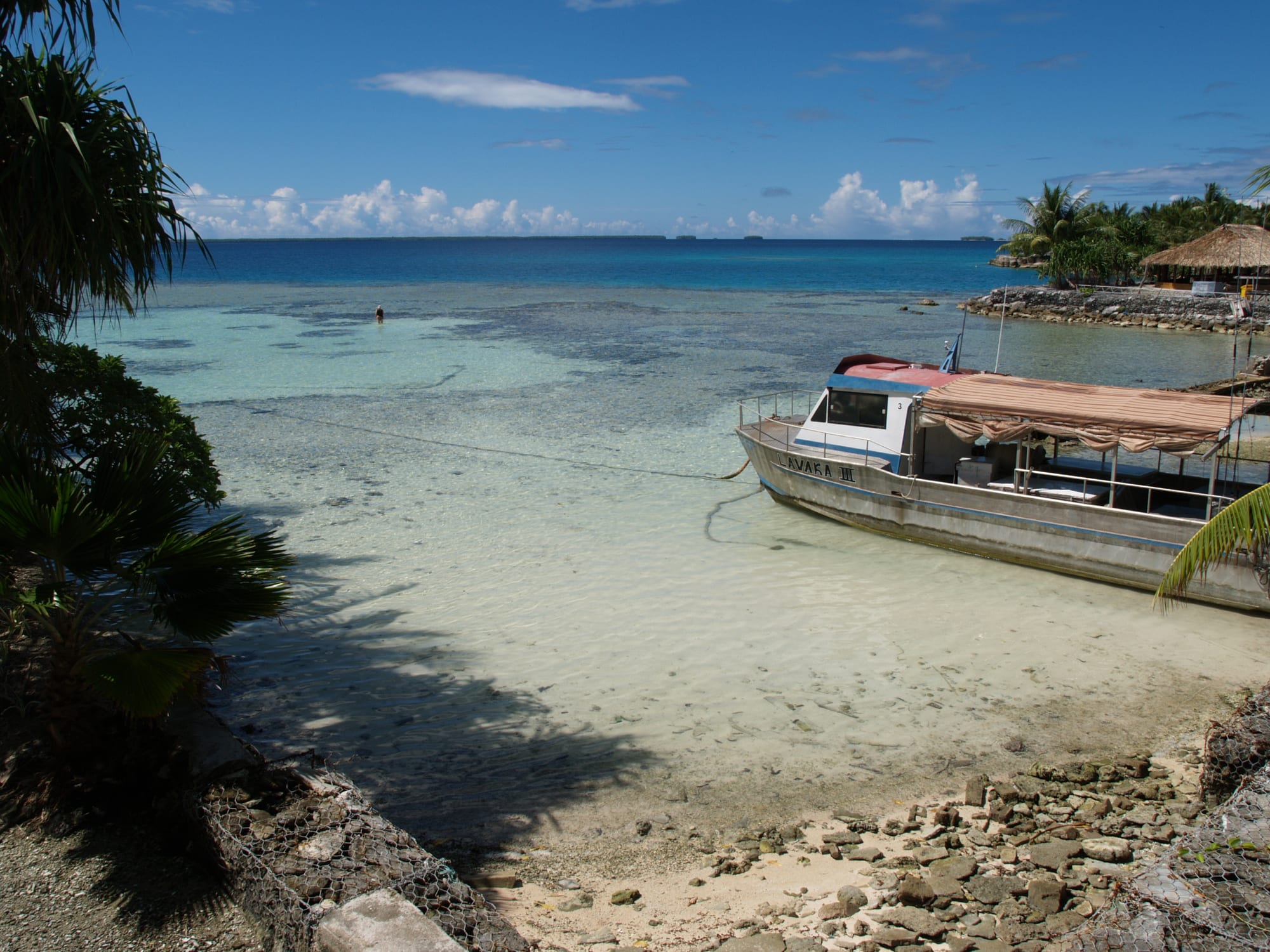
Tokelau has no established tourist industry, and most visitors are Tokelauans. There is no airport; the atolls are reached by boat from Samoa, a voyage of a day or more. Visitors stay in village guest houses or in people's homes, and the government advises arranging accommodation beforehand through the office of the relevant Taupulega.
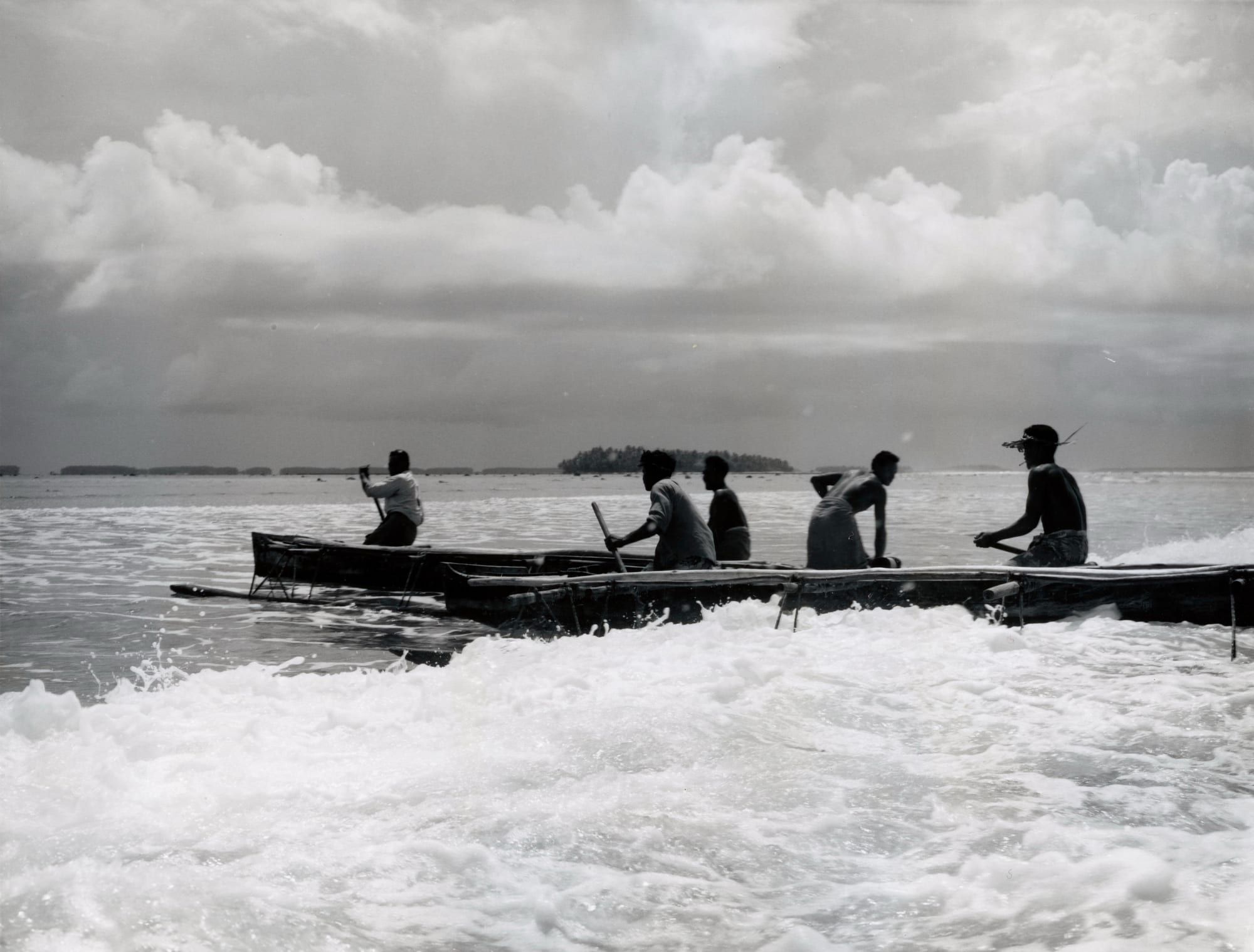
The inati is the clearest expression of hospitality. When the men of a village go out together on a Faiva Fakamua, a communal fishing expedition, every fish brought back is shared out. The portions are sized to the number of people in each household, and the system deliberately covers those with no one to fish for them: families without an able-bodied man, children whose fathers are away from the atoll, and tamā manu, foreigners who do not fish. While the catch is being prepared, girls carry breakfast down to the wharf for the fishermen. Each family keeps its own fishing methods and knowledge, handed down from earlier generations, including where it is safe to fish with each tide and current, and the ocean is treated with respect for both its generosity and its dangers.
Alcohol is available only in limited quantities, with beer bought in bulk from Samoa through the cooperative stores.
Festivals and life's big moments
Tokelau's public holidays combine church feasts with family days and a date of its own. Under its rules they are New Year's Day, Good Friday, Easter Monday, Mother's Day, Father's Day, White Sunday, Tokehega Day on 3 September, Christmas Day and Boxing Day, along with any day a village declares a holiday. Some New Zealand dates, such as Waitangi Day and Anzac Day, are also marked, though they are not official holidays.
Communal fishing expeditions can be called at any time, depending on the needs of the community. One was held on Good Friday to make sure that every household had food to celebrate Easter, a village leader explaining that it is tradition to look after one another.
Sport, too, marks the calendar. Many Tokelauan men and women regard kilikiti, island-style cricket, as their national sport, and a match can involve almost an entire village. The bat is a three-sided piece of wood resembling a war club, the ball is made of rubber, and teams may be drawn up by village boundaries, committees or associations. Kilikiti is sometimes played to mark special days, and rugby, netball and volleyball are played at the annual inter-island competitions, especially by the young.
Song and dance accompany village gatherings and major events, and in the New Zealand community the fatele has been danced at Tokelauan and Tuvaluan weddings.
Arts, crafts and music
The fatele is Tokelau's most common form of dance, performed at village gatherings and major events and believed to have been introduced from Tuvalu. It is danced in a group. Each song begins with a stanza that is repeated up to half a dozen times, then rises in pitch and tempo, and the singing is often accompanied by a wooden box, the pokihi, and a biscuit tin, the apa, played as drums. Other forms of song and dance have been adopted from Samoa. In New Zealand, fatele dance-offs are a popular way of celebrating Tokelau Language Week.
Stories handed down from generation to generation remain a source of inspiration, with the elders regarded as the keepers of that knowledge. The New Zealand group Te Vaka, whose name means "the canoe", has toured the world with songs sung mostly in Tokelauan, combining modern melodies with traditional instruments and above all the pate, the Pacific log drum. Its songwriter, Opetaia Foa'i, of Tokelauan and Tuvaluan descent, has drawn on the tales of the Tokelau people for his lyrics.
Dos and don'ts for visitors
- Do apply for Tokelau's entry permit well ahead of any visit (the government asks for about a month's notice) and confirm a host and the boat passage both ways before leaving Samoa; there is no airport.
- Do arrange accommodation in advance through the village Taupulega office; guests stay in guest houses or family homes.
- Do greet people with "mālō ni".
- Do be ready, when introduced, to say who one's parents are; it is the Tokelauan way of placing a newcomer.
- Do respect the authority of the Taupulega, the council of elders that governs each village.
- Do accept a share of the inati graciously if one is offered; the system includes visitors who do not fish.
- Do keep Sundays quiet and dress modestly, as village custom expects.
- Don't expect alcohol to be freely available; it is sold only in limited quantities.
What to take away
In Tokelau no household is forgotten when the catch is shared, and visitors who arrive through the proper channels, respect the elders and accept what the village offers will find themselves counted in as well.