Culture & Customs · Tunisia
Tunisia: The Red Chechia and the Andalusian Song
A Muslim country with an ancient Jewish community and a secular streak, where guests are pressed to eat more, weddings run for days, and a red felt cap and a centuries-old song still carry the memory of al-Andalus
By Globeway Editorial · 30 September 2026
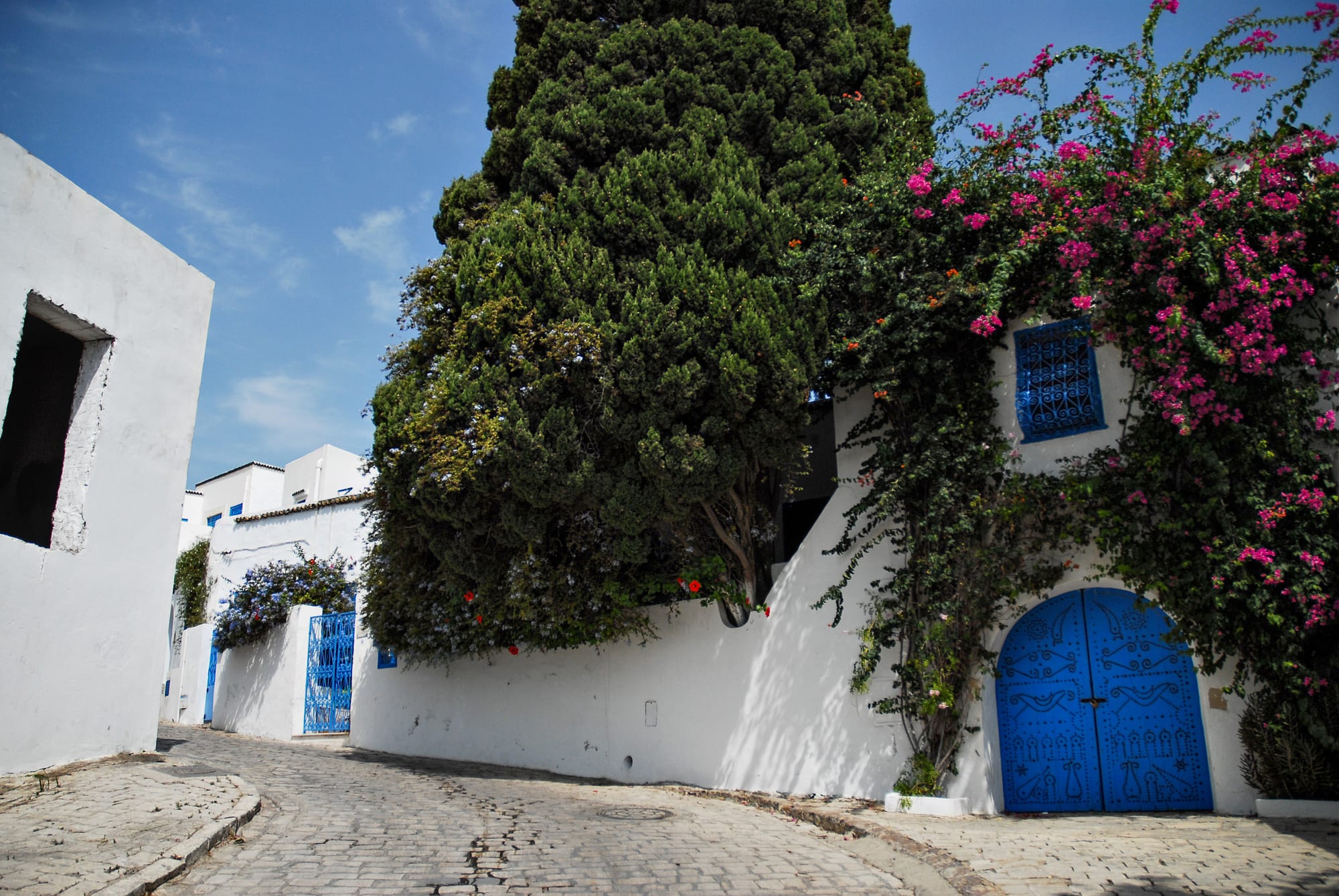
The sun sets, the fast of Ramadan is broken over a family meal, and then the evening begins in earnest. In music halls, arts centres and old palaces the concerts start: the classical Andalusian songs known as malouf, the insistent rhythms of stambali, and the chants of Sufi hadhra. One young man at such a concert told a reporter from The New Arab that the nights had something to do with memory, religious education and custom, and with a wish to regain some spirituality after years of drifting away from tradition. It is a very Tunisian scene, devout and sociable at once, rooted in Islam and in a much older Mediterranean past, and carried along by an easy pleasure in company.
Faith, identity and values
Tunisia is overwhelmingly Muslim. According to the US State Department, around 99 per cent of its roughly 12 million people are Sunni Muslims. The constitution describes Tunisia as part of the Islamic community, or umma, commits the state to working towards the purposes of Islam, and requires the president to be a Muslim. Everyday religious life follows the familiar shape of the five daily prayers, Friday prayers at the mosque and the great annual observances of Ramadan and the Feast of the Sacrifice. The anthropologist Nicholas Hopkins also points to an older layer of popular belief: respect for people thought to possess baraka, or divine grace, who may be sought out to heal, interpret dreams or intercede with God, and the Sufi brotherhoods, which remain part of religious life even if they are less prominent than they once were.
Faith sits alongside a strongly secular strand in public life, a legacy of reforms after independence, including the 1956 Personal Status Code, which prohibited polygamy and the forced marriage of girls. The country also keeps a small but ancient Jewish community, estimated by the State Department at around 1,500 people, some 1,100 of them living on the island of Djerba and in nearby Zarzis. Each spring, for the festival of Lag B'Omer, pilgrims traditionally gather at Djerba's El Ghriba synagogue; since a deadly attack there in 2023 the pilgrimage has been held under heavy security and with far fewer visitors. There are also some 30,000 Christians, most of them foreign residents.
Beneath both runs a set of family values that shape behaviour. Respect for parents and elders is expected, and Hopkins notes traditional courtesies such as a man not smoking in front of his father. Relations between men and women outside the family have long been handled with discretion: a man was not expected to show curiosity about the women of a friend's household, although Hopkins observes that such rules are relaxed among the urban upper classes. He also notes a traditional reticence about a man carrying his own child in front of his father, another small sign of the weight given to the older generation.
Greetings and meeting people
A handshake is the usual greeting between people of the same sex. When a man meets a woman, the accepted courtesy is to wait for her to offer her hand first; if she does not, a smile and a spoken greeting are enough.
Titles matter. In the country's etiquette tradition, men are respectfully addressed as Si or Sidi and women as Lella, followed by the name, and these forms of address are kept until the other person invites something more casual. Dress is part of the same courtesy: official travel advice asks visitors to dress conservatively and to respect religious and social traditions in order to avoid giving offence.
Hospitality and being a guest
Hospitality is generous, and guests are pressed with food and drink. A visitor to a home usually brings something modest, such as pastries, fruit, flowers or a small item from home; the thought counts for more than the price, and very expensive gifts can create an uncomfortable sense of obligation. Alcohol is best avoided as a gift unless it is certain that the host drinks. Gifts may be set aside rather than opened straight away. Shoes are taken off if the host asks or if the household clearly does so, and sincere compliments on the home and the food are always welcome.
At a traditional table, the right hand is used for eating. Where a dish is shared, each person eats from the section directly in front of them rather than reaching across. The host will keep encouraging guests to eat more, which is a mark of hospitality rather than mere politeness, and showing appreciation for the meal and for the effort that went into it is the guest's part of the bargain. Taking a small portion at first, and leaving room for the second helping that will almost certainly be offered, is the graceful course.
Festivals and life's big moments
Ramadan changes the rhythm of the whole country. Official travel advice asks visitors to be discreet about eating, drinking and smoking in public between sunrise and sunset, and the day's energy shifts into the evening, when families gather for the meal that breaks the fast and cafés and concert halls come alive. The month ends with Eid al-Fitr. Around two months later comes Eid al-Adha, the Feast of the Sacrifice, when families traditionally gather at bustling livestock markets to choose a sheep for the feast. Rising prices have made the animal a heavy expense in recent years, but when calls were made to suspend the sacrifice, Tunisia's Mufti declared it one of God's sacred rites and refused to cancel it.
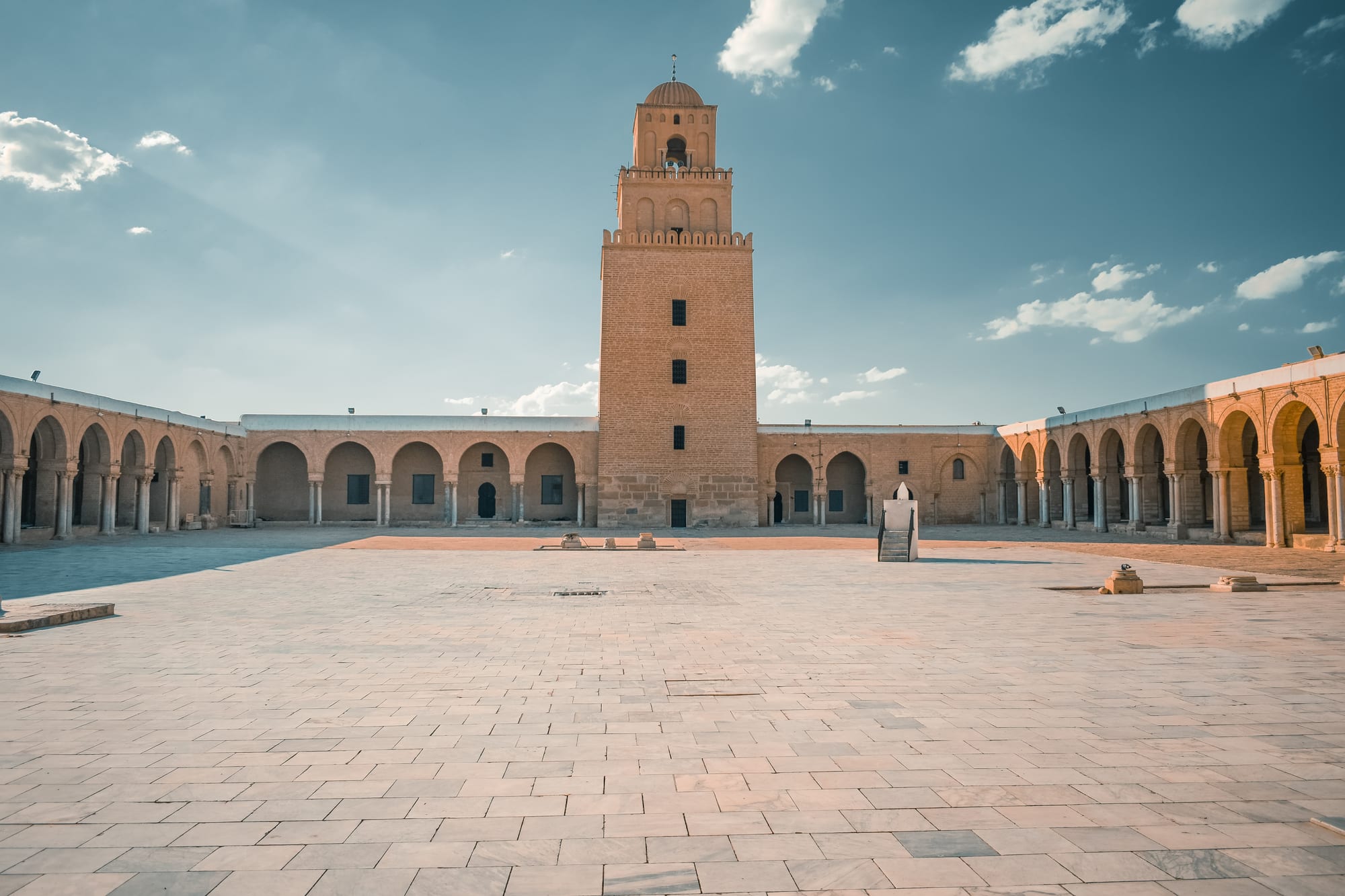
Mouled, the Prophet's birthday, has its own character. The national tourism office describes Sufi troupes converging on the old medina of Tunis from across the country, before the main celebrations move to Kairouan, one of Islam's holy cities, where a week of events draws visitors in their hundreds of thousands. The secular calendar is just as full: Fanack observes that there is hardly a day in the year without a celebration somewhere, from the Carthage film and theatre festivals to the International Festival of the Sahara.
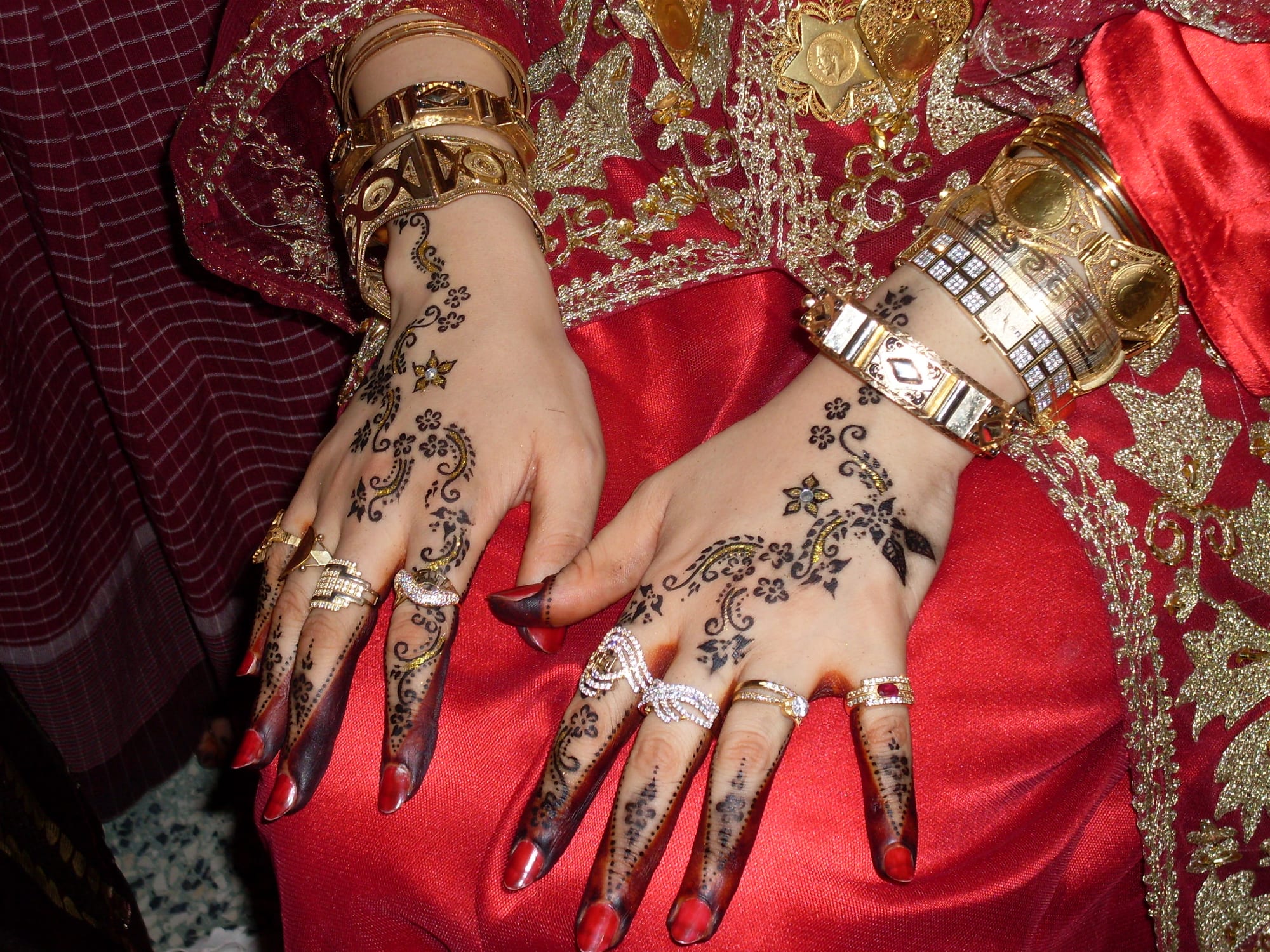
Weddings are the great family occasions, and summer is their unofficial season. According to Fanack, celebrations typically span three days, and in some regions seven or more. The bride's family may spend weeks or even years gathering the furniture, textiles, carpets and household goods for her new home, and presents them to music that announces the start of the festivities. The couple sign the marriage papers, and that evening comes the henna night: the bride, dressed in elaborate clothes and inherited or borrowed gold jewellery, has her hands and feet decorated with henna and fine black designs called harkous, while guests wish her prosperity and tuck gifts of money between her fingers or at her neckline. The groom has his own, far simpler, henna ceremony, and the festivities end with a wedding feast for the guests. Henna marks many other joyful moments too, and its rituals, shared by Tunisia with fifteen other Arab countries, are on UNESCO's list.
Funerals follow Islamic practice and move quickly. Hopkins describes the body being washed, wrapped in a shroud and carried to the cemetery by a group of mourners, usually on the day of death or the following morning, and buried facing Mecca. Further gatherings to remember the dead are held after seven days and after forty.
Arts, crafts and music
Tunisia's best-known classical music is malouf, the Arab-Andalusian tradition whose roots, as Fanack notes, lie in Muslim Spain. It is played by an ensemble of strings, flutes and drums, with clapping and passionate voices, and over the centuries it has absorbed a distinctly Berber flavour in its rhythms and forms. Its great institution is the Rachidia, founded in Tunis in 1934 and described by The New Arab as a veritable conservatory of Arab-Andalusian music, where most of today's leading musicians studied. Alongside it thrive the Sufi hadhra and stambali, a rhythmic music inspired by sub-Saharan African traditions, whose players now have their own cultural association.
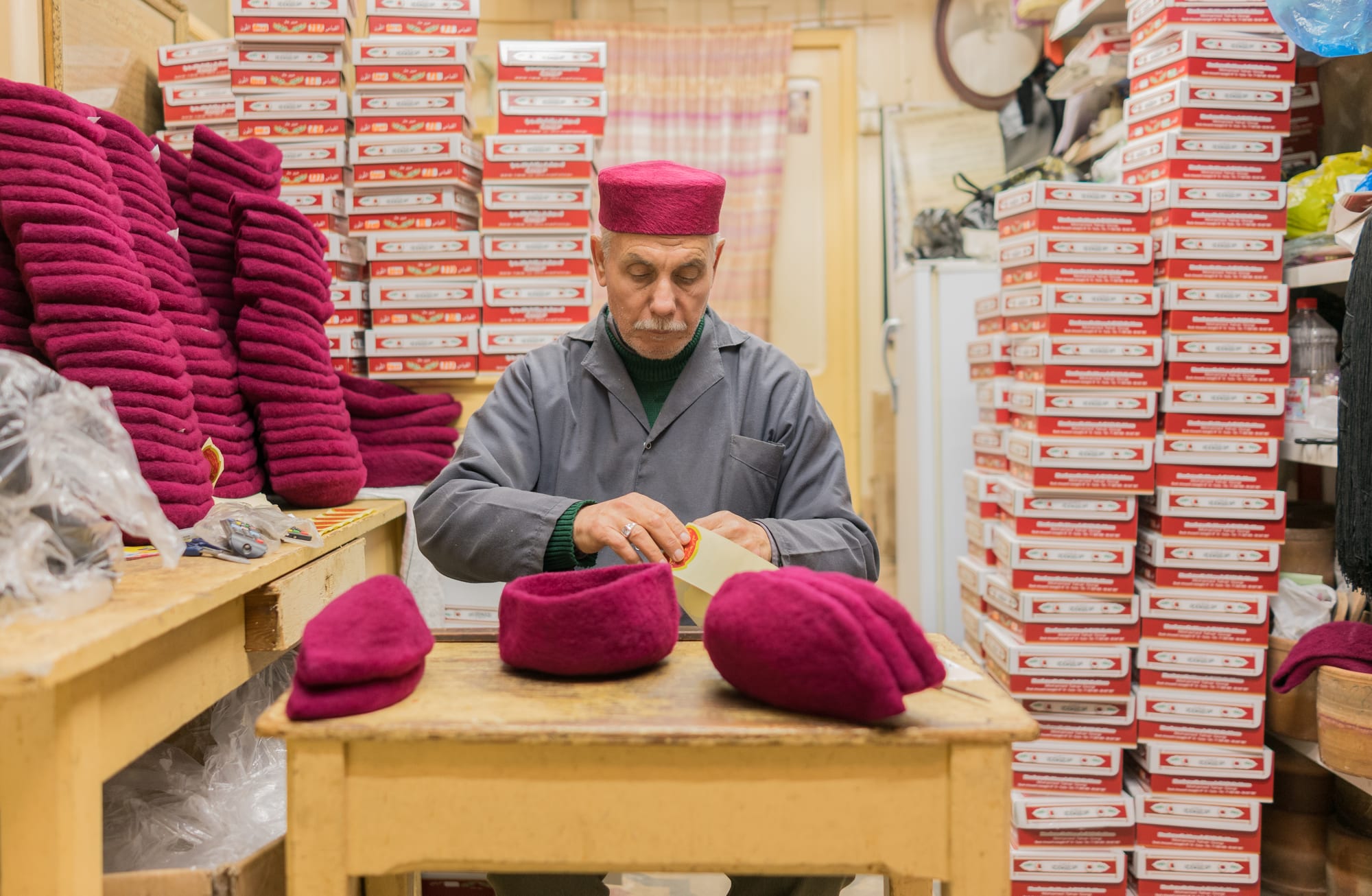
The chechia, the brimless red felt cap that is a Tunisian emblem, has a contested ancestry. Middle East Eye traces it to Central Asia by way of Baghdad and medieval Kairouan, while Carthage Magazine finds the most persuasive link in the Andalusian Muslims who fled Spain in the early seventeenth century and brought their felting skills with them; the chechia makers' market in the old medina of Tunis was built around 1691. Its making is a long chain of skills. Women knit loose white caps, which are then felted, brushed with thistle heads to raise a soft nap, dyed a deep red and finished by hand. Today the cap is worn mostly by older men and on holidays and at weddings, most of the output is exported, and only a small number of master makers remain.
Other crafts are just as rooted. The national tourism office calls Kairouan the country's carpet capital, known for rugs with a central medallion framed by a garden of flowers, while the short-pile mergoum of the south carry warm colours and geometric Berber patterns. In the north, the women of Sejnane shape pottery by hand from clay dug from river beds, making cooking pots, dolls and animal figures decorated with two-tone geometric patterns that UNESCO likens to traditional tattoos and Berber weaving; every stage of the work is done by women, daughters learn it alongside their schooling, and it was added to UNESCO's list in 2018. Engraved metalwork and Arabic calligraphy are also inscribed, and Hopkins notes that Tunisia has earned a reputation for experimental theatre and for thoughtful films rooted in the country's recent history.
Dos and don'ts for visitors
- Do check the latest government travel advice before any trip; governments advise against travel to the mountainous Chaambi area on the Algerian border and to the far south near Libya.
- Do dress conservatively, as official travel advice recommends, and especially when visiting a mosque courtyard where non-Muslims are admitted.
- Do eat, drink and smoke discreetly in public during daylight hours in Ramadan.
- Do use the right hand for eating, and eat from the part of a shared dish in front of you.
- Do wait for a woman to offer her hand before shaking it, and use Si, Sidi or Lella until invited to be less formal.
- Don't photograph people without asking, or photograph military sites, government buildings or embassies at all.
- Don't bring alcohol as a gift unless certain the host drinks.
- Don't preach or hand out religious material; Canadian official travel advice warns that proselytising is prohibited.
What to take away
Tunisia's customs blend devotion, discretion and an unhurried delight in company, and visitors who accept the second helping, return the greeting and respect the rhythms of the faith will find a welcome as generous as the table.