Culture & Customs · Turkey
Turkey: A Kiss for the Elder's Hand
A Muslim-majority republic built on a secular constitution, where elders are greeted first, a compliment can turn into a gift, the whole country falls silent for one minute each November, and a whirling prayer is on UNESCO's list
By Globeway Editorial · 30 September 2026
On the first morning of the holiday that ends Ramadan, the youngest members of a Turkish family set out to visit the oldest. At each door the ritual is the same. A grandchild takes the elder's right hand, kisses it and touches it gently to their own forehead, and is rewarded with sweets or a little money; later in the day children go from door to door collecting treats from the neighbours. "İyi bayramlar", good holiday, is said with a handshake or a kiss on both cheeks, and old grudges are meant to be forgotten. The gesture of the hand to the forehead sums up a great deal about Turkey: a deep respect for age and family, a faith woven into the calendar, and a warmth towards guests and neighbours that runs through everyday life.
Faith, identity and values
Turkey is a Muslim-majority country with a secular constitution. Official records list almost the entire population as Muslim, although Cultural Atlas cautions that the figure overstates actual belief, since identity documents record citizens as Muslim by default. Most Turkish Muslims are Sunni, following the Hanafi school, while Alevis form the largest religious minority, estimated at many millions; Alevis worship in cemevis rather than mosques and do not generally fast during Ramadan, marking the month of Muharram instead. Small Christian and Jewish communities are also part of the country's fabric. In the 1920s Mustafa Kemal Atatürk ended Islam's status as the state religion and made secularism, laiklik, a founding principle of the republic. The place of religion in public life has been debated ever since, and practice varies widely: Cultural Atlas notes that head coverings are a personal choice, worn by around six in ten women, and not required in public.
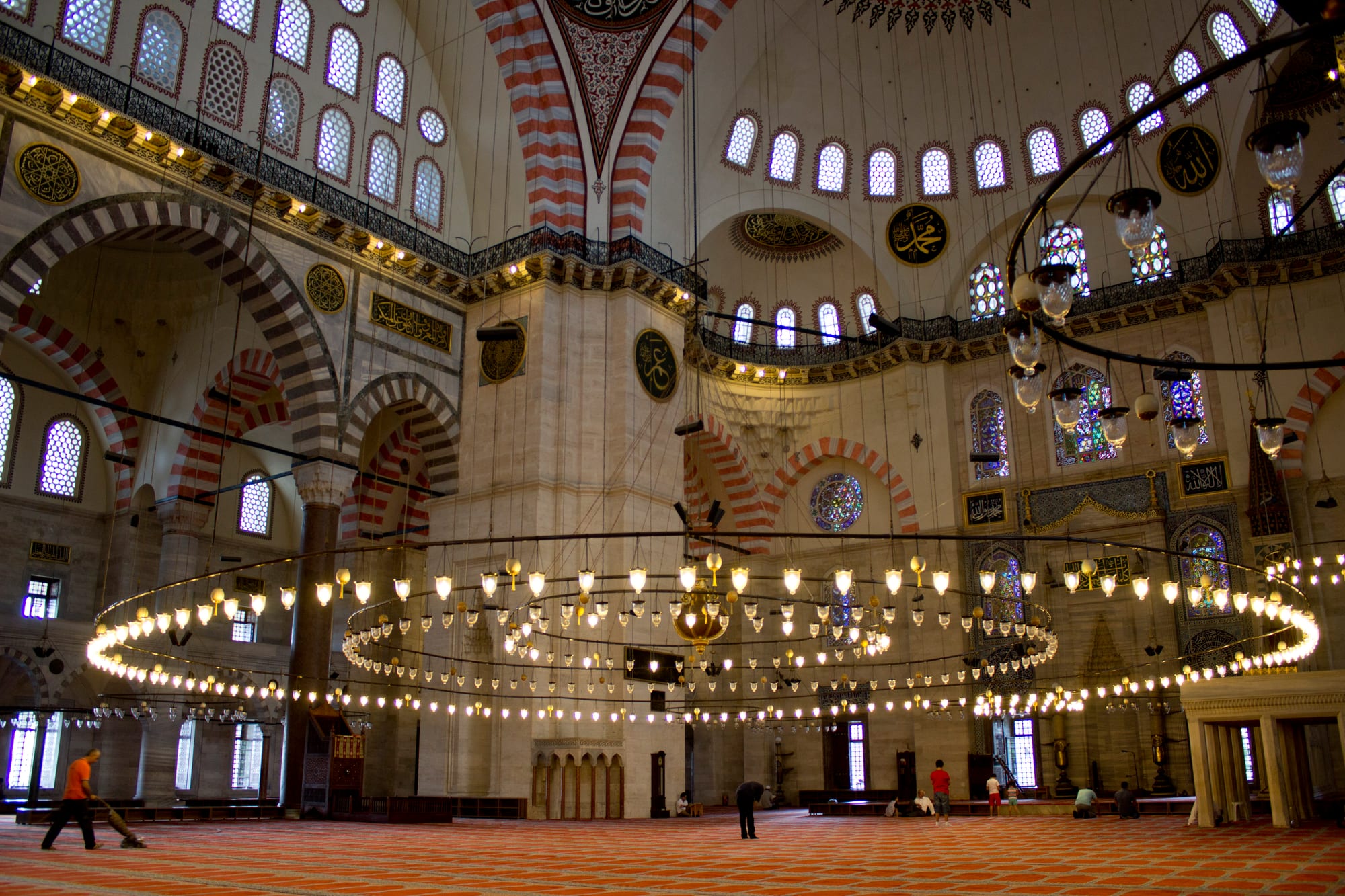
Mosques welcome respectful visitors outside prayer times. Shoes come off at the entrance, so clean socks are useful. Men wear long trousers; women cover their legs to below the knee and their arms to the elbow, and wear a headscarf, which larger mosques often lend. The guidebook author Tom Brosnahan advises avoiding the prayer times themselves and the half hour after each call to prayer, and staying away on Fridays from late morning to early afternoon, when the congregational prayer is held. Inside, voices are kept low, no one walks in front of people at prayer, and worshippers are not photographed.
Beneath the faith lie values that shape daily conduct. Cultural Atlas describes a strongly collective society, with fierce loyalty to family and a close network of relatives relied on for support, and a keen sense of honour, in which a person's standing reflects on their whole family and community. Elders are treated with deference and are not openly contradicted. National pride runs deep, and the founder of the republic remains revered: insulting Atatürk's memory is a crime, and the British government's travel advice notes that it is also illegal to insult the Turkish nation or its flag, including online.
Greetings and meeting people
A handshake is the usual greeting on first meeting, though some devout Muslims prefer not to touch people of the opposite sex, and Cultural Atlas notes that women may give a physical greeting only to other women. Close friends and family exchange a kiss on one or both cheeks. Elders are greeted first, and the kiss on the hand raised to the forehead is the classic sign of respect for them. "Merhaba" is the everyday hello; the Islamic greeting of peace is also heard.
People are addressed by first name followed by Bey for a man or Hanım for a woman, and professional titles such as doctor or professor are used where they apply. Friends often call one another abla, older sister, or abi, older brother. Farewells tend to be long, and a polite way to bring a conversation to a close is "İzninizle", with your permission.
Body language has its own grammar. Communication tends to be indirect at first, softened with words such as perhaps or probably. An informal no is signalled by raising the eyebrows, tilting the head back and making a short "tsk" sound, which is not considered rude, while a shake of the head may simply mean that something has not been understood. Direct eye contact is expected, and people stand closer together than in much of northern Europe; stepping back can give the wrong impression. Some gestures are best avoided entirely: showing the soles of the feet, the fist with the thumb between the fingers, and the circle made with thumb and forefinger that elsewhere means OK.
Hospitality and being a guest
Hospitality, misafirperverlik, is a point of honour, and Cultural Atlas records that some Turks regard even an unexpected visitor as sent by God. Shoes are usually removed on entering a home, and the host may offer slippers. Tea or coffee arrives almost as soon as a guest sits down. Gifts, though not obligatory, are given and received with both hands, are usually not opened in front of the giver, and should not contain alcohol or pork unless the host's preferences are known. Admiration needs a light touch: a Turkish host may feel bound to give away an object that a guest has praised.
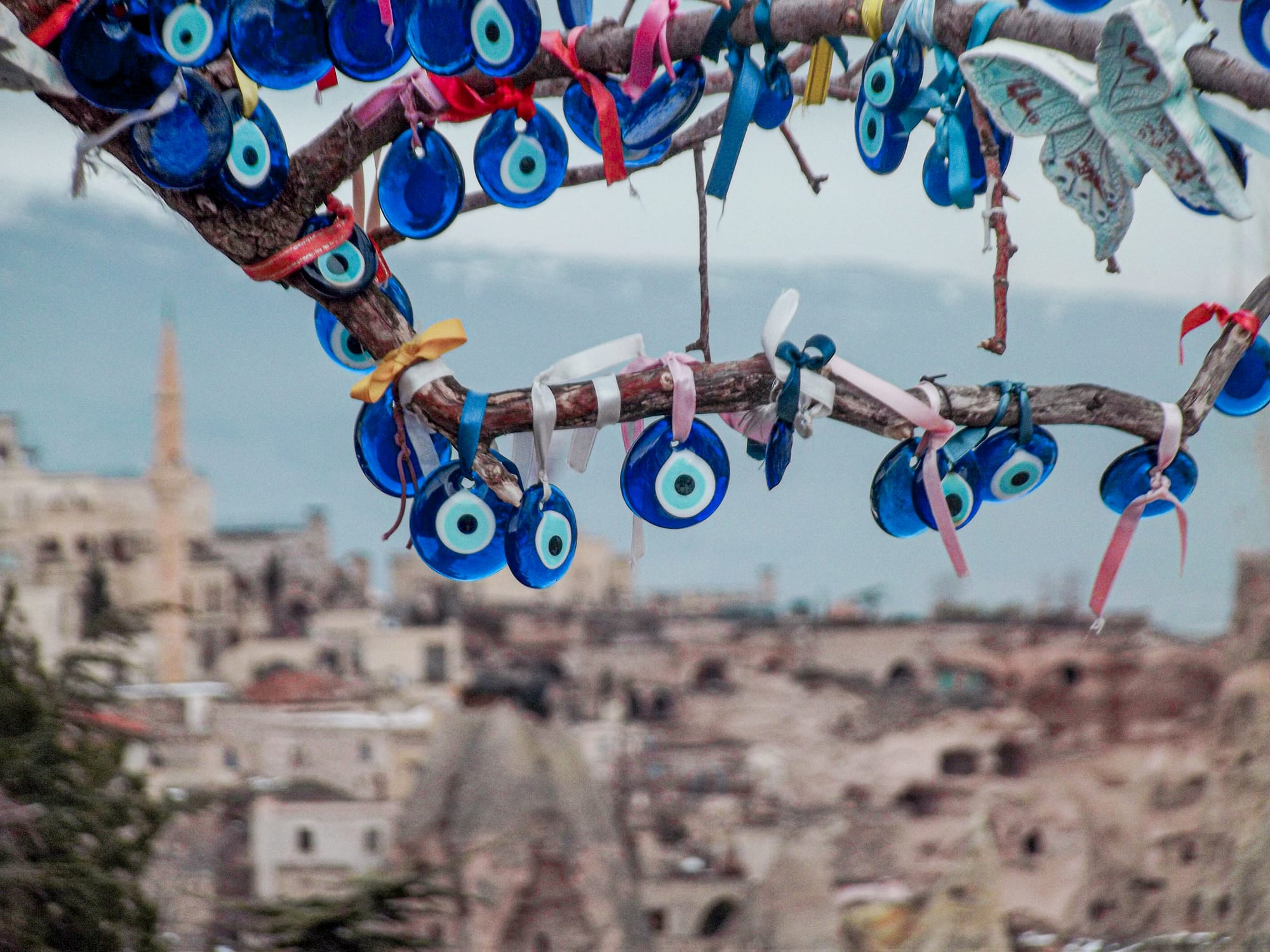
At the table, food is handled and passed with the right hand. A first refusal of a second helping is taken as mere politeness, and the host will usually serve more anyway; a guest who genuinely wants to decline should do so firmly and give a reason. Blowing the nose or picking the teeth at the table is frowned upon, and feet stay out of sight. Meals are unhurried. When the bill comes, the host, and often the man, pays, and if the offer is repeated several times it is gracious to accept. A small blue glass eye, the nazar boncuğu, is likely to be hanging somewhere in the house or restaurant, to ward off the evil eye.
Festivals and life's big moments
The Islamic calendar shapes the year. During Ramadan, observant Muslims do not eat, drink or smoke in daylight, and visitors are asked to avoid eating, drinking, smoking or chewing gum in public during the day and to dress with extra care. The month ends with Ramazan Bayramı, also called Şeker Bayramı, the Sugar Feast: three days, preceded by an eve of cleaning and shopping for new clothes, in which relatives are visited in order of age, oldest first. Some two months later comes Kurban Bayramı, the Feast of the Sacrifice. Turkey's breaking of the Ramadan fast, the iftar, is itself on UNESCO's list of intangible heritage, as are the spring festival of Hıdrellez and Nevruz, the new-year festival Turkey shares with its neighbours.
The republic keeps its own calendar alongside. National Sovereignty and Children's Day falls on 23 April, the commemoration of Atatürk and Youth and Sports Day on 19 May, Victory Day on 30 August and Republic Day, marking the founding of the republic in 1923, on 29 October, while 15 July is observed as Democracy and National Unity Day. On 10 November the country mourns Atatürk with its minute of silence.
Weddings usually combine the legally required civil ceremony with a religious service led by an imam. Before them comes the kına gecesi, the henna night, held a day or two ahead. According to the official GoTürkiye guide, folk songs are sung and henna is applied to the bride's palm and to the groom's little finger, while unmarried women circle the seated bride holding candles and the guests wait for her tears at leaving her family; she keeps her hand closed until she is given a gold coin. At the wedding itself, guests pin gold and jewellery onto the couple to help them start their new life, and after the vows each tries to step on the other's foot, since whoever manages it first is said to have the final say in the marriage.
Funerals are swift, usually within a day or two. As Daily Sabah explains, the body is washed and wrapped in a white shroud, the kefen, and the funeral prayer is said after the noon or afternoon prayer, with the coffin resting on a stone slab in the mosque courtyard; burial is in the shroud alone. Mourners offer condolences with "başınız sağ olsun", health to your head. For about a week the bereaved family does not cook, and neighbours bring food, and a final prayer gathering is held on the fortieth day.
Arts, crafts and music
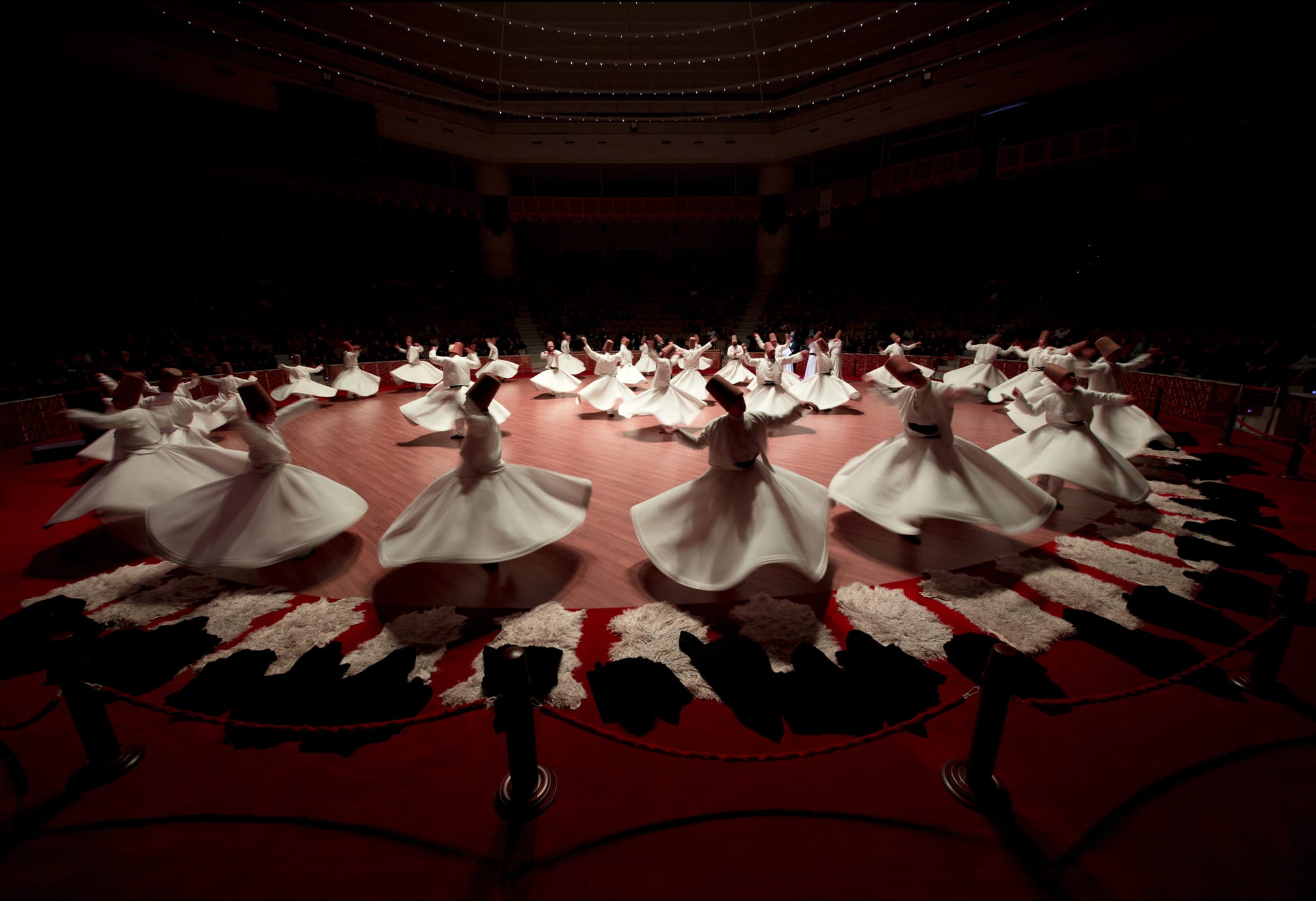
Turkey has more than 30 elements on UNESCO's lists of intangible cultural heritage, and the best known is the Mevlevi Sema ceremony. The Mevlevi order was founded in Konya by Rumi's followers after the death of the poet and mystic in 1273, around his teachings. In the Sema, dervishes turn on the left foot, driving the body round with the right, eyes open but unfocused, to a sacred musical repertoire called the ayin, played by singers, a ney flute, kettledrums and cymbals. The order's lodges were closed in 1925 and public performances resumed only in the 1950s; UNESCO notes that many ceremonies are now staged in commercial settings, sometimes shortened.
The folk poet also endures. Âşıks, minstrel poets who accompany themselves on the long-necked saz, perform at weddings, in coffeehouses and at festivals, singing rhymed verses, usually of love, that end with a quatrain in which the poet names himself by his pen name. Their contests include verbal duels of wit and, at their most virtuosic, recitals with a needle held in the mouth, which forces the singer to avoid certain sounds.
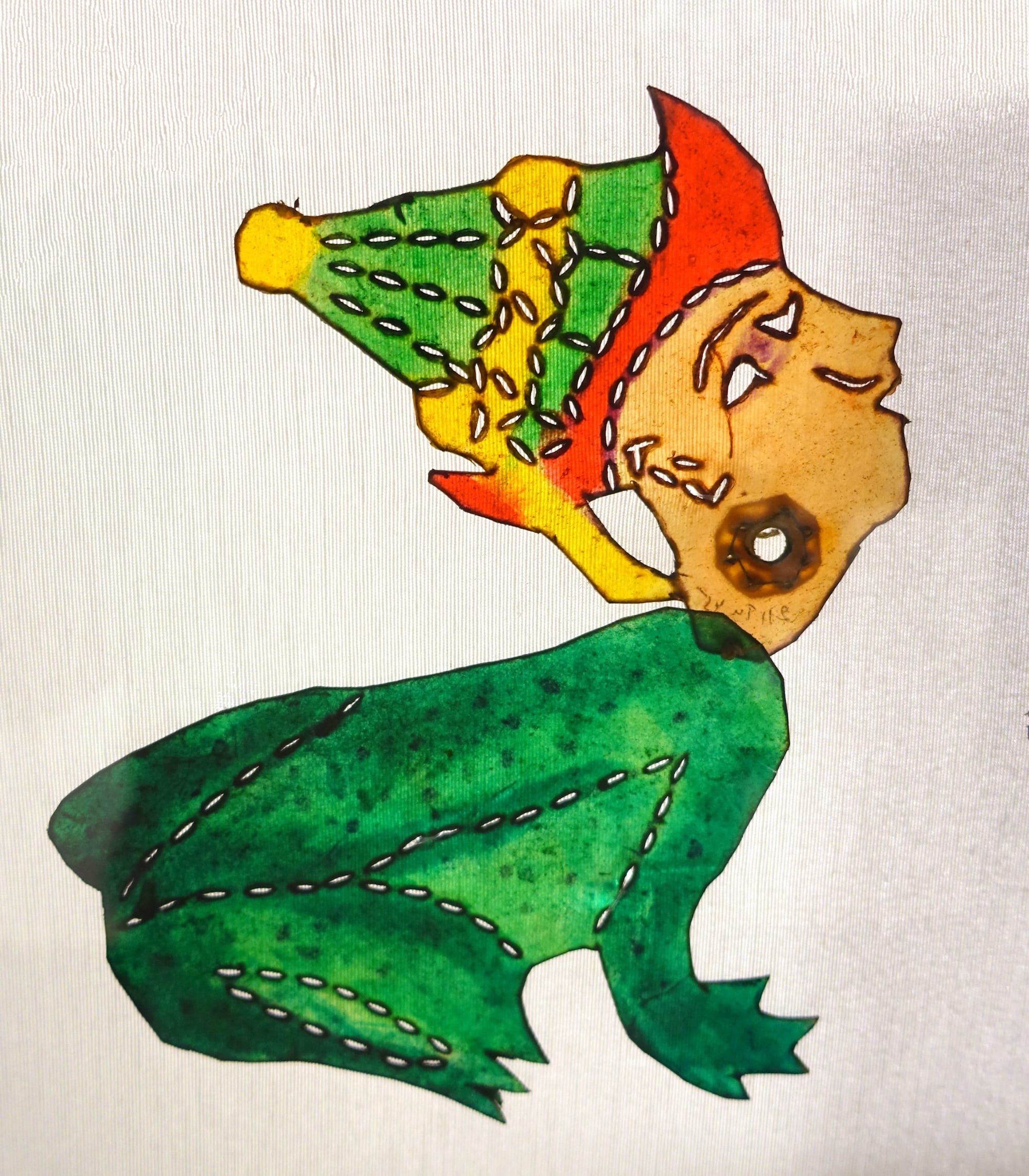
Karagöz, the shadow theatre, has entertained audiences for centuries. Translucent figures cut from camel or other animal hide are pressed against a lit screen by a single master puppeteer, who voices the bluff, plain-spoken Karagöz and his educated, pompous friend Hacivat, along with a cast of characters mimicking the country's regional accents. The plays mix songs, riddles, tongue-twisters and satire, and were traditionally staged in coffeehouses during Ramadan and at circumcision celebrations. Crafts from marbled ebru paper and çini tile-making to calligraphy, miniature painting and mother-of-pearl inlay are likewise on UNESCO's list, a sign of how many of the old Ottoman arts are still taught and practised today.
Dos and don'ts for visitors
- Do check the latest government travel advice before any trip; governments advise against travel to the areas near the Syrian and Iraqi borders, a strip of the southeast, and since the regional war began in 2026 Iranian missiles have been intercepted over Turkish airspace.
- Do cover up and take shoes off in mosques, avoid prayer times and Friday midday, and never photograph people at prayer.
- Do greet elders first, and use Bey or Hanım after a first name.
- Do eat, drink, smoke and chew gum discreetly in public during daylight hours in Ramadan.
- Do carry photo ID at all times, as the law requires.
- Don't insult Atatürk, the Turkish nation or the flag, even in jest or online; it is against the law.
- Don't photograph military or official installations.
- Don't show the soles of the feet or make the OK hand sign, both of which can offend.
What to take away
Turkey's customs rest on respect given upwards, to elders, to faith and to the nation, and generosity given outwards to guests, and visitors who honour the first will find themselves on the receiving end of the second.