Attractions & Natural Wonders · Ukraine
Ukraine: Seven Attractions and Natural Wonders
A thousand-year-old cathedral covered in Byzantine mosaics, a grand neo-baroque opera house built by Viennese architects, and the abandoned exclusion zone around a nuclear disaster that has become an unlikely wildlife refuge — described here for reference amid an ongoing war
By Worldlore Editorial · 30 September 2026
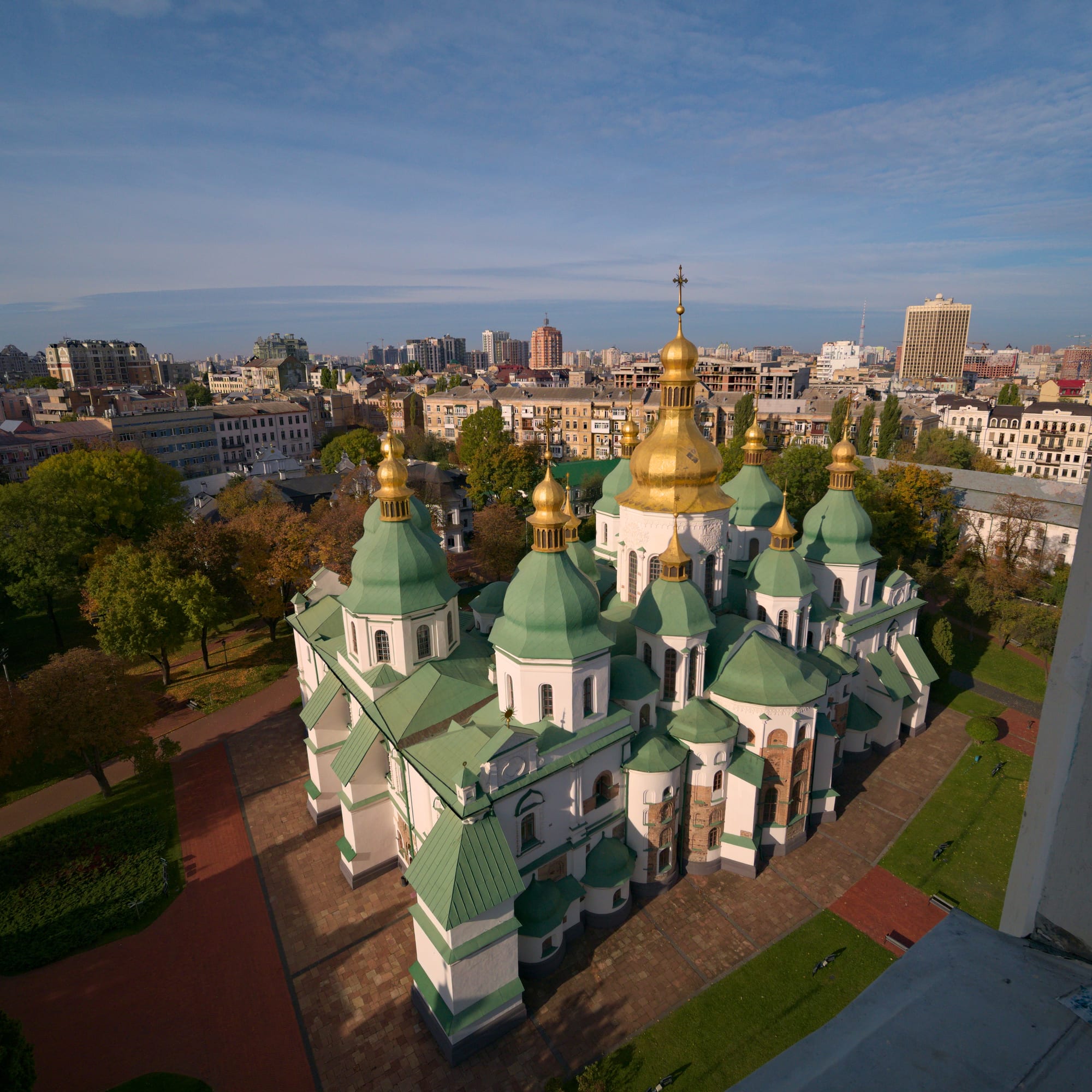
A deep cultural history, and a country at war
Ukraine holds one of Eastern Europe's richest architectural and cultural legacies — an 11th-century cathedral covered in Byzantine mosaics, a grand neo-baroque opera house, and a historic old town built by generations of merchants along Central European trade routes. This history now sits alongside Russia's full-scale invasion, which began in February 2022 and remains ongoing, having caused enormous loss of life and displacement and left the country's security situation highly serious and unpredictable.
The seven sights below are described for reference and cultural context, not as a current travel recommendation — read the note at the end before treating any of this as a travel plan.
1. Saint Sophia Cathedral, Kyiv
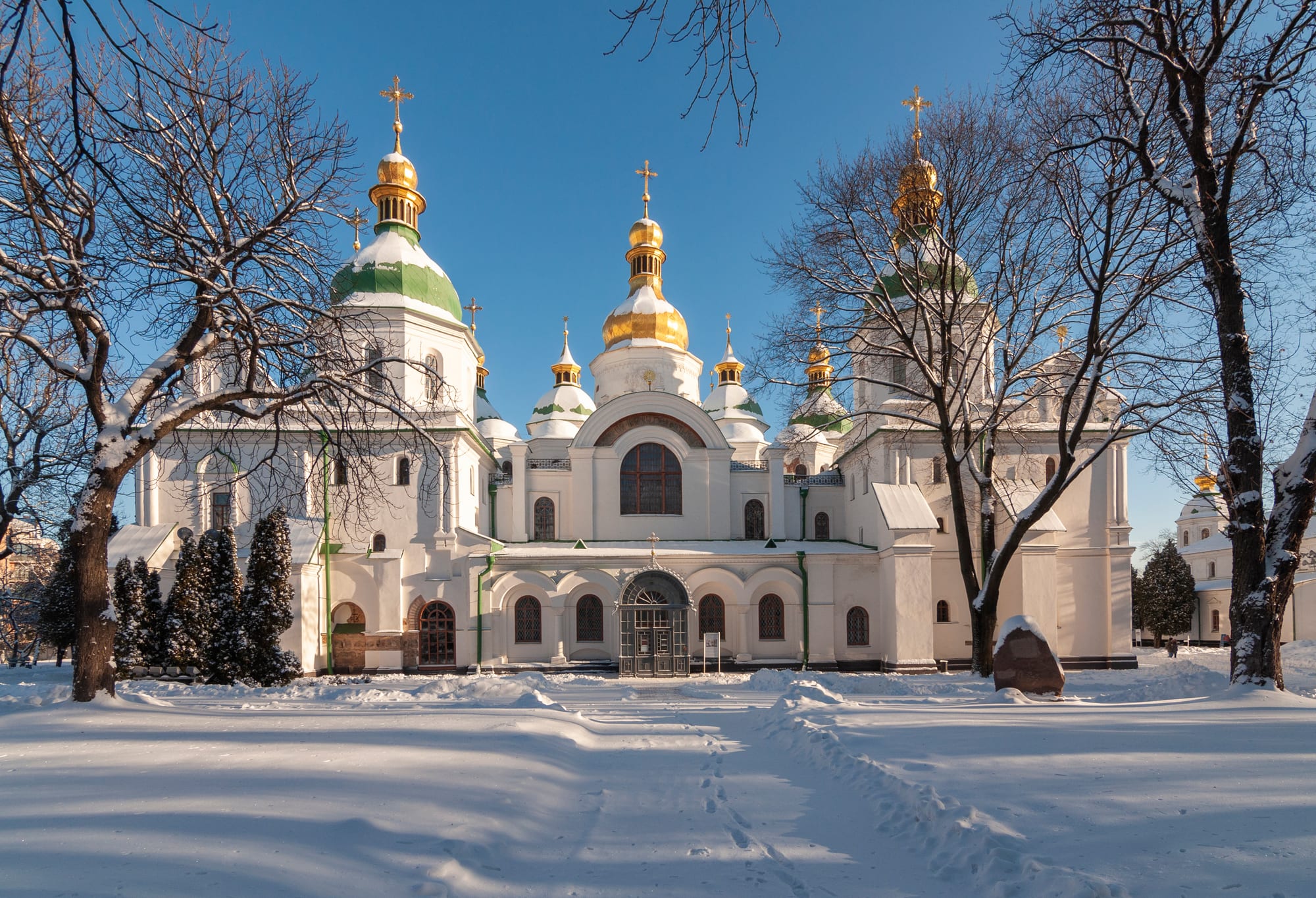
Saint Sophia Cathedral, built in the early 11th century (UNESCO accepts a founding date of 1011) and closely tied to Yaroslav the Wise, holds the world's greatest surviving collection of early 11th-century mosaics and frescoes, in an interior preserved almost unchanged, though the exterior was remodelled in Baroque style in the 17th century. A UNESCO World Heritage Site, it stands as one of the oldest and most significant surviving monuments of Kyivan Rus, the medieval state that Ukraine, Belarus and Russia all claim as a cultural ancestor. In 2023 UNESCO placed the Kyiv site on its List of World Heritage in Danger because of the war, and a blast wave from a 2025 attack on Kyiv damaged part of the cathedral's apse.
2. Lviv's old town
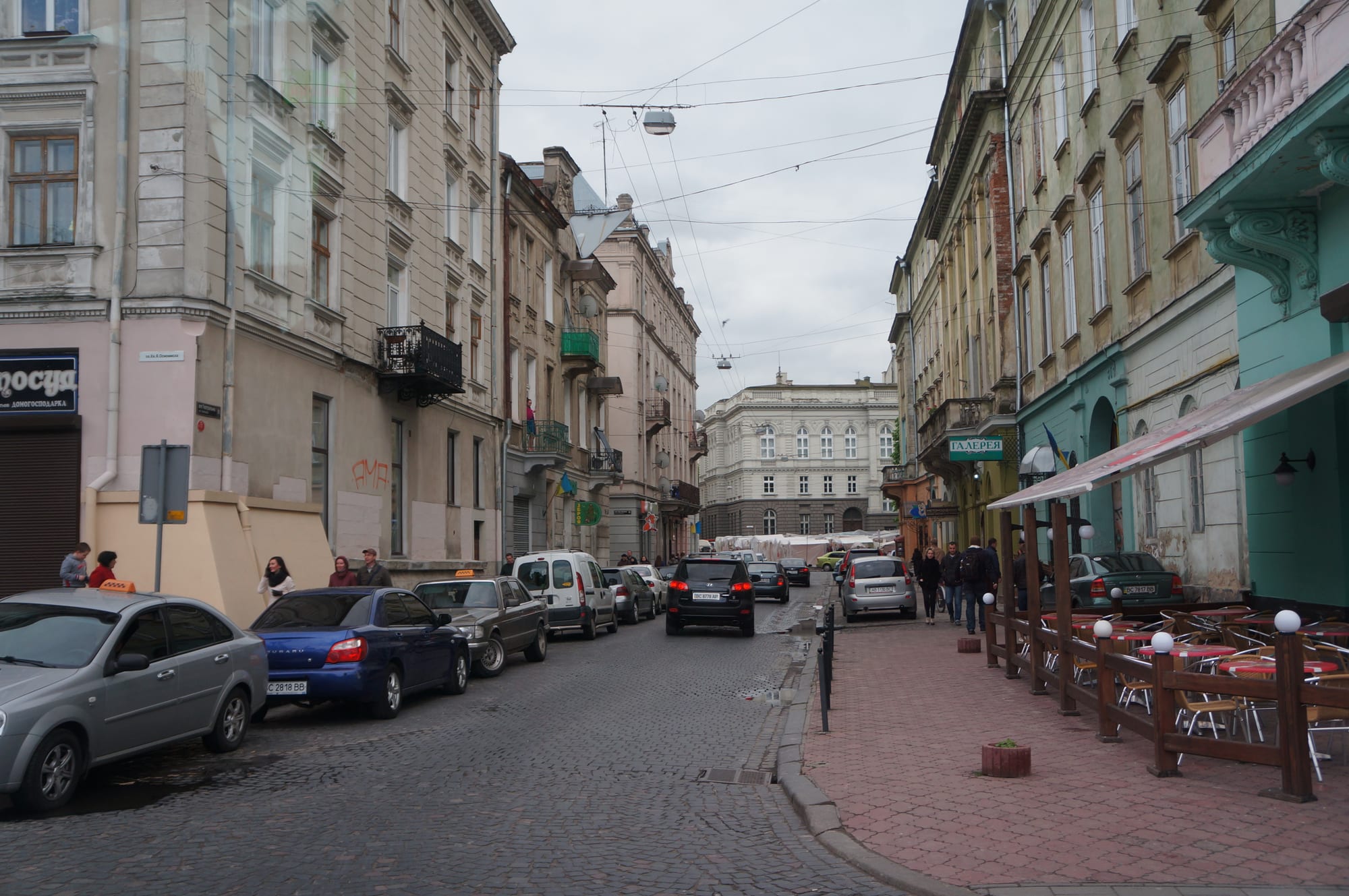
Lviv, in western Ukraine, preserves one of the best-maintained historic Central European city centres anywhere in the region, its architecture reflecting centuries under Polish, Austro-Hungarian, and later Soviet rule. A UNESCO World Heritage Site (placed on the danger list in 2023), its relative distance from the most intense fighting has, at various points during the war, made it a comparatively calmer part of the country, though it has not been immune from missile and drone strikes.
3. The Chernobyl Exclusion Zone

The Chernobyl Exclusion Zone, established after the catastrophic 1986 nuclear disaster, has been almost empty of people for four decades (only a few hundred elderly returnees live there), during which time wildlife — including wolves, lynx, European bison and introduced Przewalski's horses — has notably reclaimed the area in the near-total absence of human presence. Organised tours from Kyiv ran before the current war; the zone was occupied by Russian forces from February to early April 2022, and Ukrainian authorities have kept it closed to tourists while hostilities continue.
4. The Carpathian Mountains
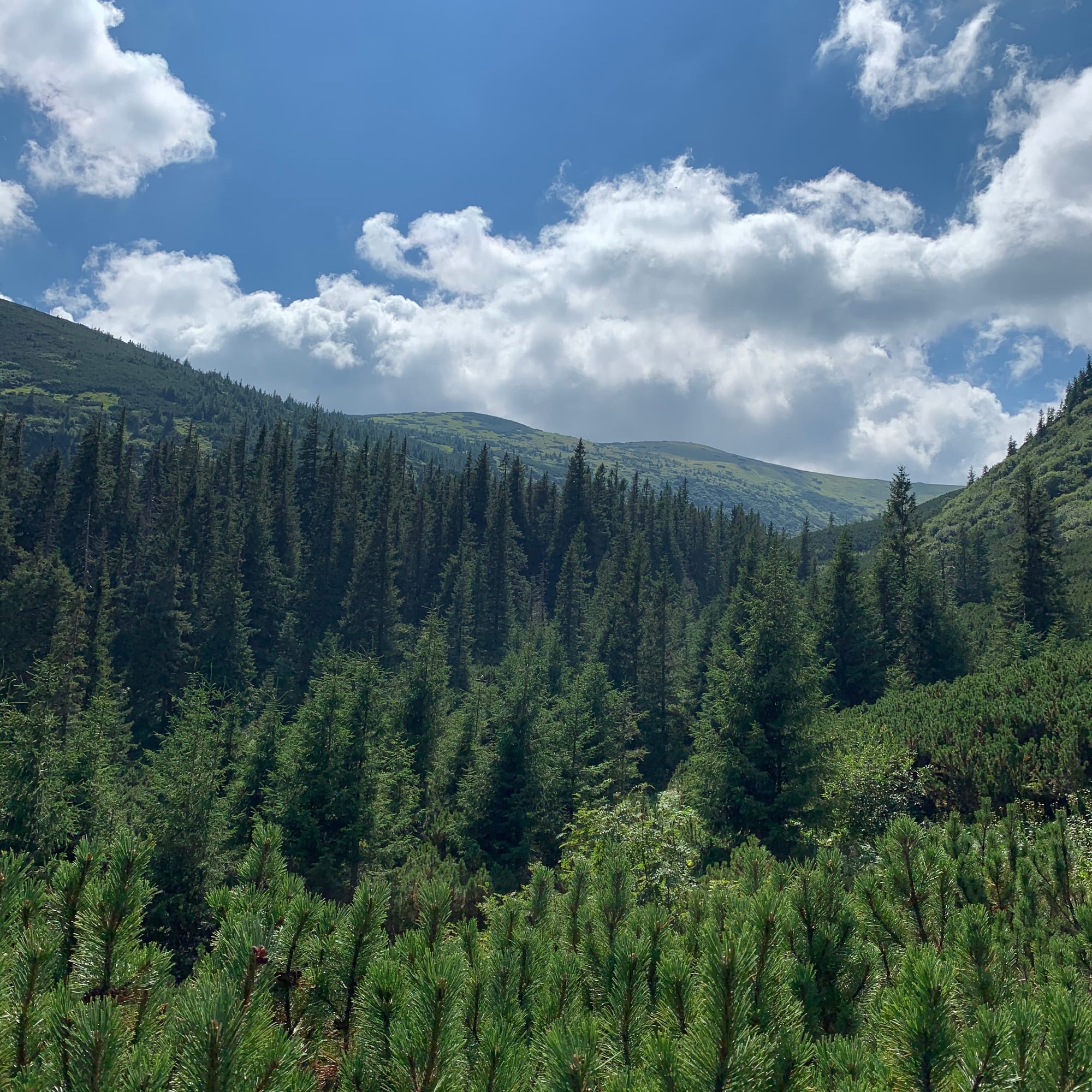
Ukraine's Carpathian Mountains, in the country's far west, hold some of Europe's most significant remaining primeval beech forest, part of a transnational UNESCO World Heritage Site shared with 17 other European countries, whose original Carpathian core lies mostly in Ukraine. The region's traditional Hutsul culture, distinct wooden church architecture, and hiking and skiing terrain have long made it one of the country's most popular domestic tourism destinations.
5. The Odesa Opera House

The Odesa Opera House, rebuilt in ornate Viennese neo-baroque style by Fellner and Helmer after an 1873 fire destroyed the original building, opened in 1887 and is one of the city's best-known landmarks. Odesa, a historic Black Sea port city, has faced repeated missile and drone attacks during the current war given its strategic coastal significance, and its historic centre was inscribed on the UNESCO World Heritage List in 2023 under an emergency procedure and placed at once on the List of World Heritage in Danger.
6. Kamianets-Podilskyi
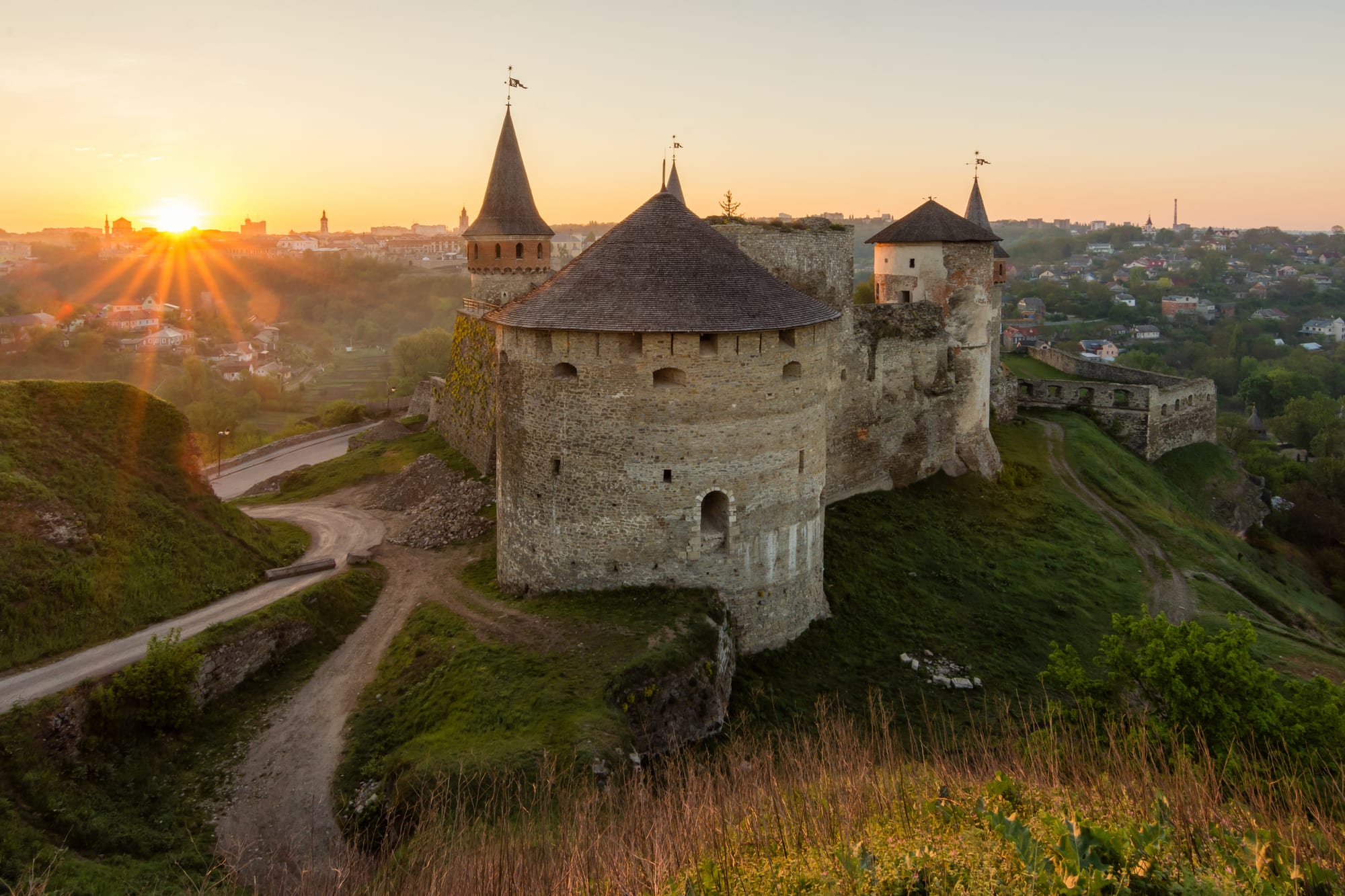
Kamianets-Podilskyi, in western Ukraine, is built almost entirely inside a loop of the Smotrych River canyon, with its castle guarding the bridge that links the old town to the surrounding plateau. One of Ukraine's best-known medieval fortresses, it has passed between Lithuanian, Polish, Ottoman and Russian rule over the centuries.
The canyon itself, cut deep into the limestone, rings almost the entire old town, and its cultural landscape is on Ukraine's UNESCO tentative list.
7. The Kyiv Pechersk Lavra
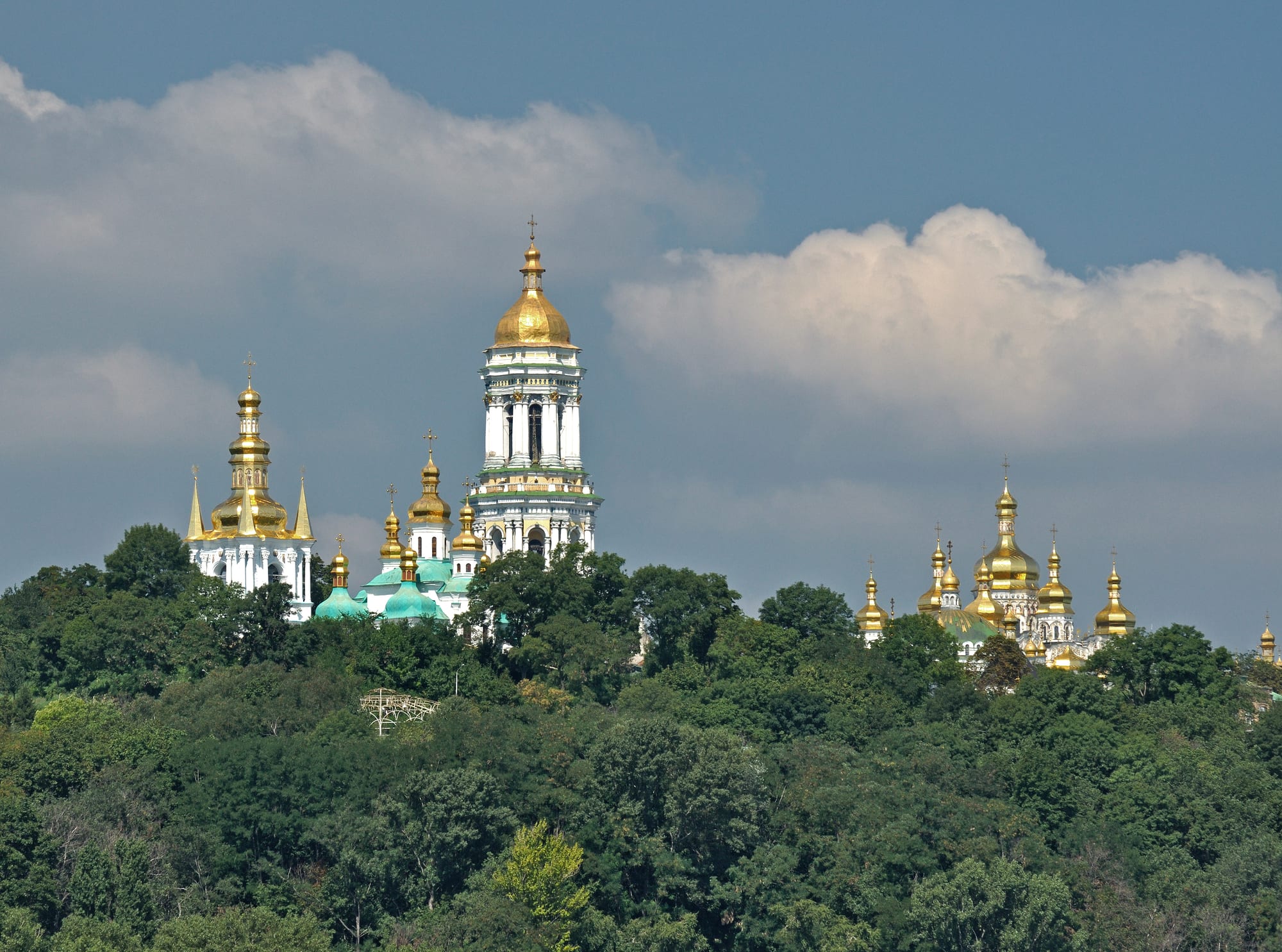
The Kyiv Pechersk Lavra ("Monastery of the Caves"), founded in the 11th century (the chronicles give 1051 or 1074), is one of the oldest and most significant monasteries in Eastern Orthodox Christianity — a hilltop complex of gold-domed churches above the Dnieper River, honeycombed beneath by catacombs where the mummified remains of monks and saints are venerated.
A UNESCO World Heritage Site, it is both a place of pilgrimage and a state museum preserve; in 2023 the government ended the Ukrainian Orthodox Church (Moscow Patriarchate)'s lease of its main churches.
Before you go: a serious note
This article describes sites of deep historical and cultural significance for reference — it is not a travel recommendation. Since Russia's full-scale invasion of Ukraine began in February 2022, the war has caused massive loss of life, displacement, and destruction, and remains ongoing. Most Western governments continue to advise against all travel to Ukraine, citing the risk of missile and drone strikes across the entire country (including areas far from the front line), active combat zones, and landmines and unexploded ordnance in previously occupied or contested territory. Anyone considering travel to Ukraine should rely on current, detailed government advice rather than on the description above, and should recognise that the situation on the ground continues to change, sometimes rapidly and without warning.