Culture & Customs · Ukraine
Ukraine: The Wheat Sheaf and the Embroidered Shirt
A mostly Orthodox country with a Greek Catholic west, where guests are given the best of everything, bread and embroidery carry old meanings, and the calendar of saints, carols and midsummer fires has taken on new weight since 2022
By Globeway Editorial · 30 September 2026
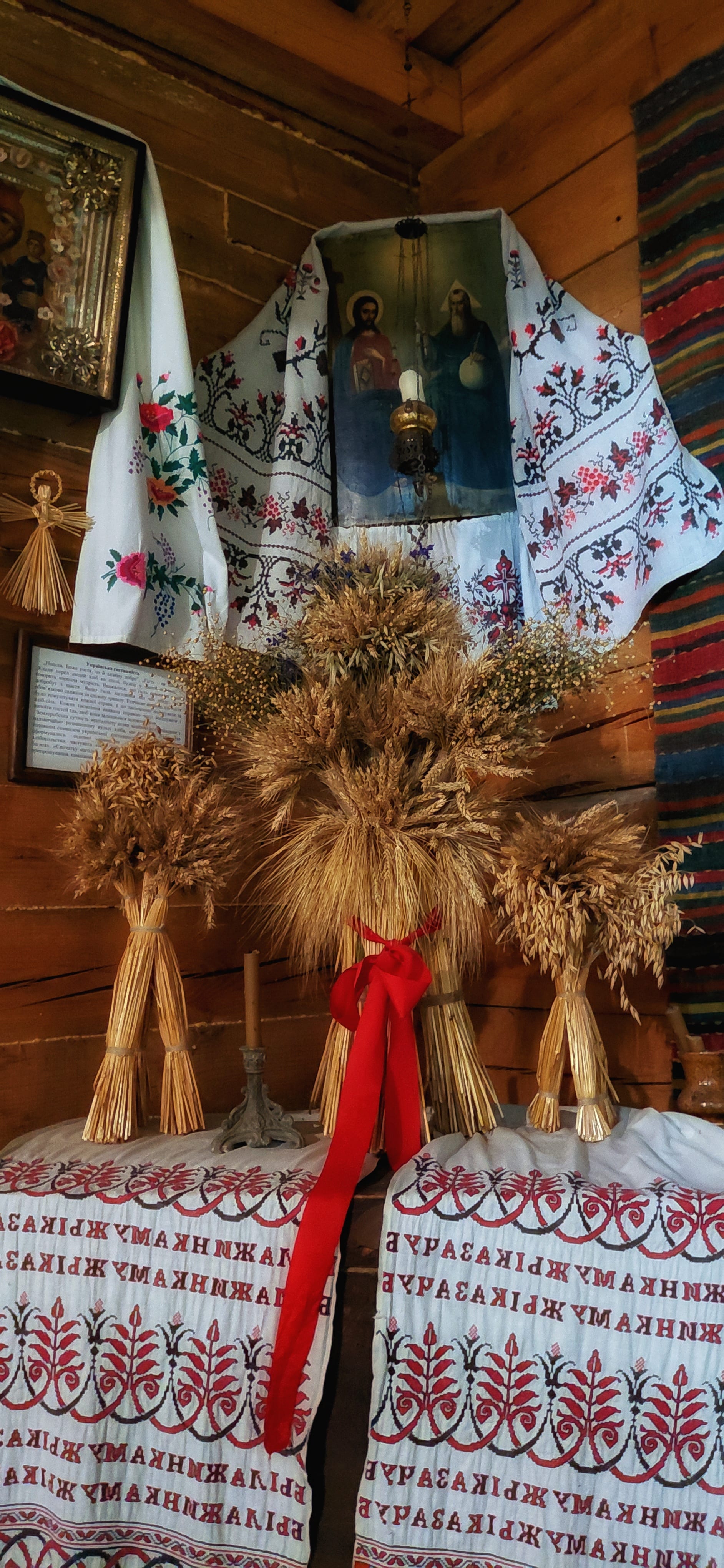
On Christmas Eve the family has fasted all day, and the meal cannot begin until someone, often the youngest child, spots the first star in the evening sky. The table has been prepared with care: wisps of hay lie beneath the embroidered cloth in memory of the manger, the dishes contain no meat, dairy or eggs, and one extra place is set, for the ancestors believed to return that night or for any lonely visitor who might knock. In the place of honour stands the didukh, a decorated sheaf of wheat whose name means roughly "grandfather spirit". The evening sums up much of Ukrainian culture: deeply Christian yet older than Christianity, centred on family and the land, and kept with a seriousness that has only deepened in recent years.
Faith, identity and values
Most Ukrainians are Orthodox Christians. In a 2022 survey by the Kyiv International Institute of Sociology, around seven in ten identified with Eastern Orthodoxy, with Greek Catholics, who follow the Byzantine rite but are in communion with Rome, making up about 8 per cent of the population and concentrated in the west. Smaller Protestant, Roman Catholic, Jewish and Muslim communities also exist. The Orthodox landscape has changed sharply. The Orthodox Church of Ukraine, formed in 2018 and recognised as independent from Moscow by the Ecumenical Patriarch in 2019, has grown rapidly since 2022, while the share identifying with the church historically linked to the Moscow Patriarchate has fallen steeply, to about 4 per cent in the same survey. Religion for many is a matter of custom as much as regular attendance: many Ukrainians go to church mainly on major holidays, but icons, candles and holy water are part of ordinary homes.
Identity is bound up with language and with a long history of pressure from larger neighbours. Ukrainian is the sole state language, and since 2022 many people have made a deliberate shift towards speaking it in daily life. Since February 2022 the country has been resisting a full-scale Russian invasion, which Ukraine and most other states regard as an unprovoked war of aggression; Russia describes it as a "special military operation". The war has given folk customs, from embroidery to carols, a sharper meaning as statements of who Ukrainians are. This guide is written to explain the culture rather than to encourage travel while the war continues.
Everyday values include a strong sense of family, generous hospitality and a warm but careful politeness. Cultural Atlas describes Ukrainians as relatively indirect communicators who take pains to stay polite, becoming more direct with people they know well, and fond of wordplay and humour. Personal space is a little closer than in much of western Europe, and steady eye contact signals sincerity. A polite refusal of an offer is common and is often part of the ritual before accepting.
Greetings and meeting people
A firm handshake with direct eye contact is the usual greeting between men, especially at a first meeting, and male friends may hug with a pat on the back. Women often greet with words alone at first, while close female friends may kiss on the cheek or hug; men do not kiss one another in greeting. "Dobryi den" ("good day") is the standard polite greeting, and "Pryvit" ("hi") is kept for friends.
Forms of address matter. Older Ukrainians and formal settings call for the first name together with the patronymic, a name derived from the father's first name, while younger people in cities more often use first name and surname. Respect is also carried by grammar: the formal plural "vy" is used for "you" with elders, strangers and superiors, and the familiar "ty" only when invited or among friends. A question such as "How are you?" tends to be taken literally, and may be answered with a genuine account of how someone is.
A few gestures are best avoided: the fig, a fist with the thumb pushed between two fingers, is obscene, the circle made with thumb and forefinger can be read as offensive, and pointing at people with one finger is impolite.
Hospitality and being a guest
Hospitality is a point of pride, and the best food and belongings are reserved for guests. Shoes come off at the door of a home, and slippers are often offered. A guest usually brings a cake or a bottle as thanks, and flowers for the woman of the house, handed over on arrival. The number of flowers matters: bouquets for the living contain an odd number of stems, since even numbers are for funerals, and yellow flowers are generally avoided. Gifts are usually opened straight away, in front of the giver. Guests do not help themselves from the fridge or cupboards without being asked.
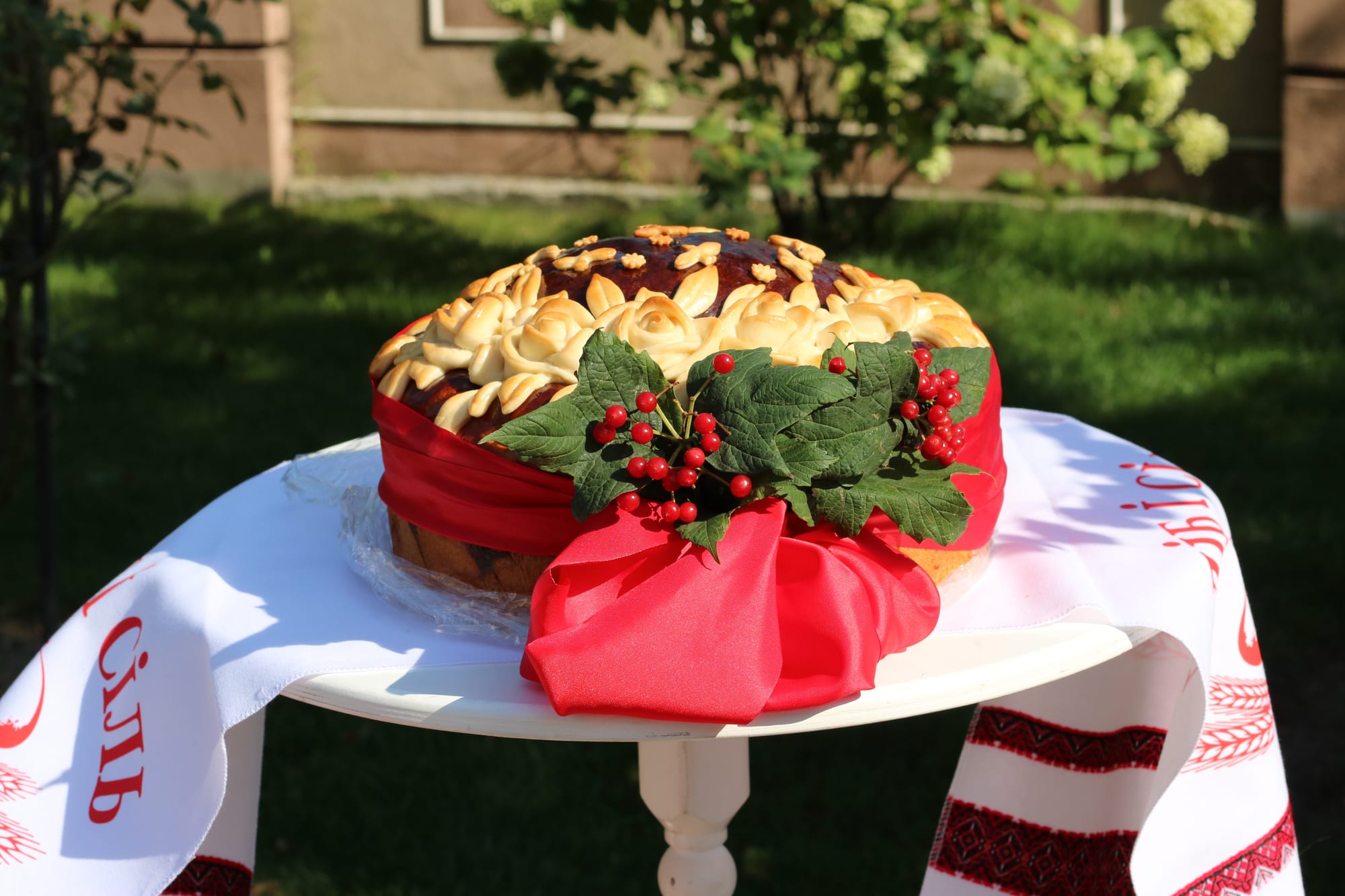
Meals are eaten seated at the table, and no one begins until everyone has sat down. Bread holds a special place as a symbol of well-being and plenty, and a clean plate is taken as a compliment to the cook. Toasts are an art. Ukrainians are earnest toast-makers who pay attention to what is said, and a newcomer may be expected to raise a glass and say a few words. The standard toast is "Budmo!", "let us be!", and the last of the evening is traditionally "Na konya!". According to Cultural Atlas, someone who does not drink after a toast may be regarded with a little suspicion. Leaving can take time: goodbyes are drawn out, sometimes over several attempts and one more toast at the door. In restaurants a tip of at least 10 per cent is the norm.
Festivals and life's big moments
The religious year remains the backbone of the calendar. Christmas is now officially celebrated on 25 December: a law signed in July 2023 moved the public holiday from 7 January, the date kept under the old Julian calendar, as a deliberate break with Russian practice, although some Orthodox believers still keep the January date. Christmas Eve, Sviat Vechir, is the most intimate evening of the year, with its twelve meatless dishes and the didukh in the place of honour, and afterwards groups of carollers go from house to house singing koliadky. At New Year come shchedrivky, songs that praise the household and wish it plenty.
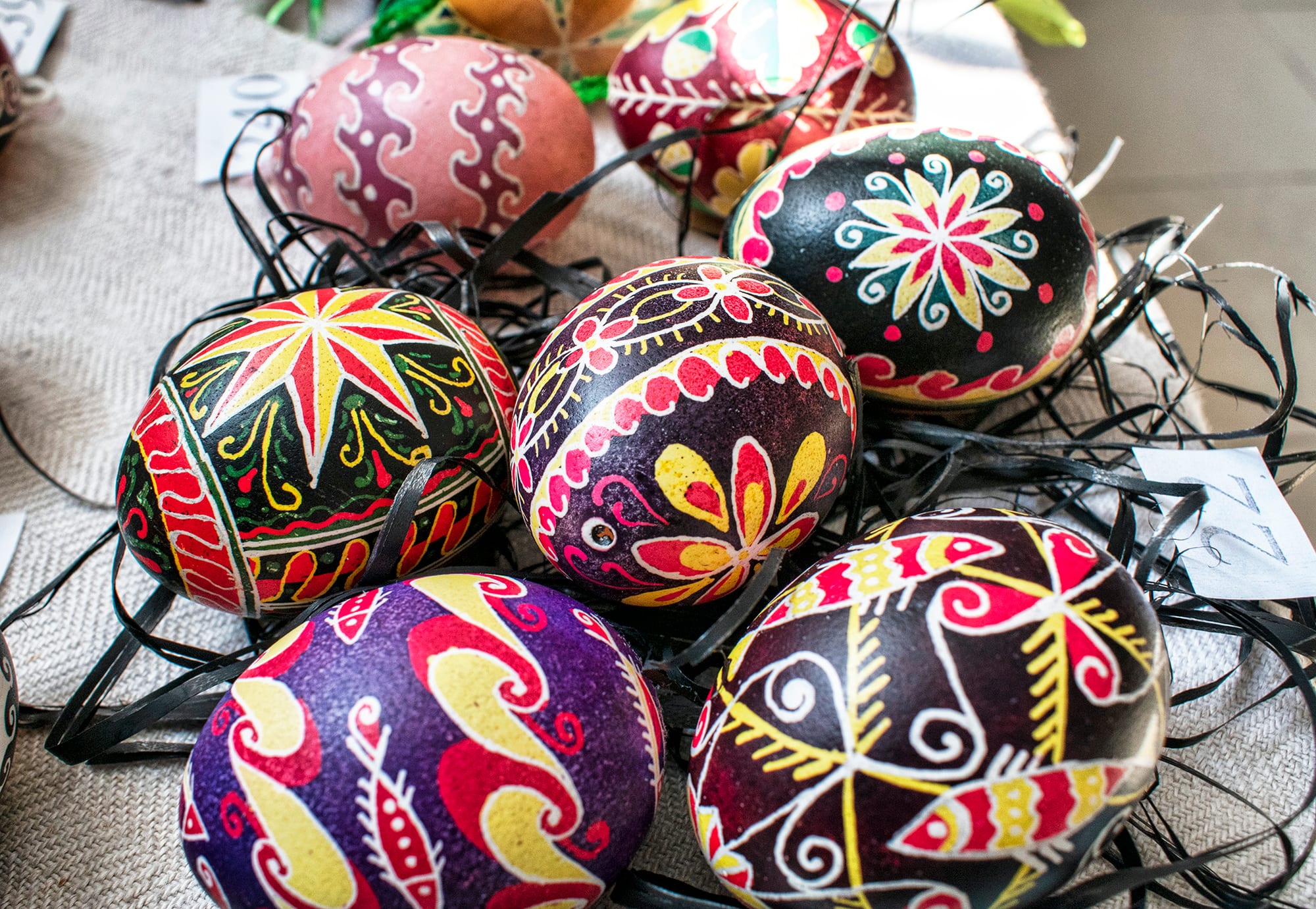
Easter is the other great feast, and the season of the pysanka, an egg decorated by drawing on the shell in melted wax and dipping it into successive dyes. The practice predates Christianity, when the egg stood for the rebirth of nature in spring, and it later absorbed Christian symbolism; in December 2024 the pysanka tradition was added to UNESCO's Representative List of the intangible heritage of humanity. At midsummer comes Ivana Kupala, an ancient solstice festival later linked to the feast of St John the Baptist: flower wreaths with candles are floated down rivers, couples leap over bonfires with hands joined, and young people go into the woods in search of the legendary fern flower said to bring luck to whoever finds it.
A newer date has become one of the most visible. On Vyshyvanka Day, the third Thursday of May, begun by university students in 2006, people wear the embroidered shirt to work, school and on the street. It was deliberately placed on a weekday to show that the vyshyvanka belongs to everyday life rather than a museum.
Weddings draw on a rich body of ritual. The embroidered ritual cloth, the rushnyk, is central: during the ceremony the couple traditionally stands on one, and brides once prepared rushnyky as part of their dowry. The korovai, a tall round wedding bread decorated with dough birds, flowers and braids, is given to the couple as a blessing, and bread and salt are the traditional gifts of welcome.
Funerals follow Orthodox or Greek Catholic rites, and the dead are remembered at memorial meals held on the third, ninth and fortieth days after a death. Since 2022 new rituals of remembrance have taken shape. A presidential decree in March 2022 established a nationwide minute of silence at nine o'clock every morning for those killed as a result of the Russian invasion, when many people stop what they are doing and, in places, traffic halts. In towns and villages, according to the government's own account, people kneel at the roadside as the flag-draped funeral convoys of fallen soldiers pass.
Arts, crafts and music
Embroidery is the most personal of Ukraine's arts. The vyshyvanka is traditionally made of linen, and its patterns were once so local that they could identify a wearer's village. Colours and motifs carry meaning: black, red and white are the basic colours of Ukrainian embroidery, with yellow, blue and green as supplementary ones, and certain patterns were believed to protect the wearer from harm. Once everyday wear, the shirt is now kept for national holidays, weddings and special occasions, and its popularity has surged since the protests of 2013 and 2014.
Ukraine has seven entries on UNESCO's lists of intangible heritage. Alongside the pysanka, inscribed in 2024, and the culture of Ukrainian borscht cooking, added to the list in need of urgent safeguarding in 2022 through an emergency procedure, they include Petrykivka decorative painting, a bright folk style of flowers, birds and plants; the tradition of Kosiv painted ceramics; the Cossack songs of the Dnipropetrovsk region, on the list in need of urgent safeguarding; Ornek, the ornamental art of the Crimean Tatars; and a programme to safeguard the tradition of the kobza and the wheel lyre, recognised in 2024 as an example of good safeguarding practice.
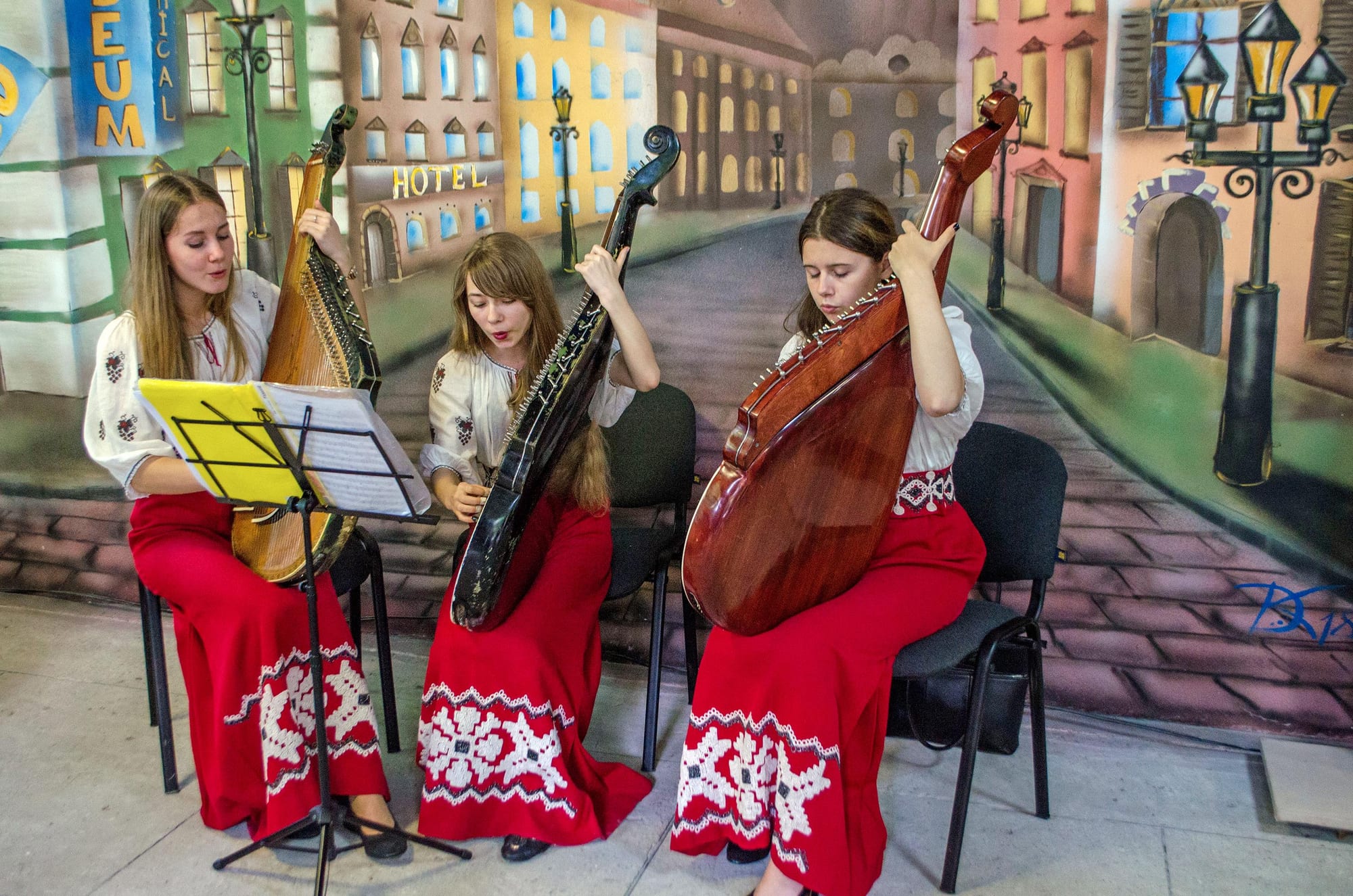
Music runs through all of this. The bandura, a large many-stringed folk instrument, is closely associated with Ukrainian identity, and polyphonic village singing, carols and choral music remain widely loved. Leontovych's "Shchedryk" is only the best-known example of a choral tradition in which Ukrainians take great pride.
Dos and don'ts for visitors
- Do check the latest government travel advice before any trip; most governments advise against all travel to Ukraine while the war continues, and martial law is in force throughout the country.
- Do carry a passport at all times, and never take photographs near government or military sites.
- Do take shoes off in homes, and bring flowers in an odd number, never an even one, which is for funerals.
- Do greet people with "Dobryi den", and use the formal "vy" and full names with older people until invited to be less formal.
- Do wait until everyone is seated before eating, and be ready to offer a short toast.
- Do respect the daily minute of silence at nine in the morning, when many people pause wherever they are.
- Don't drink alcohol or smoke in public places, including public transport, stops, parks and playgrounds; it is illegal.
- Don't use the fig or the thumb-and-forefinger circle, or point at people with a finger.
What to take away
Ukrainian customs, from the wheat sheaf on Christmas Eve to the embroidered shirt on a Thursday in May, are acts of continuity with family, land and ancestors, and today they are also a quiet, determined way of saying that a culture endures.