Culture & Customs · Vanuatu
Vanuatu: A Single Line Drawn in the Sand
A constitution founded on Melanesian values and Christian faith, land that belongs by law to its custom owners, a shell of kava drunk in quiet at dusk, and more languages per head than anywhere on Earth
By Globeway Editorial · 30 September 2026
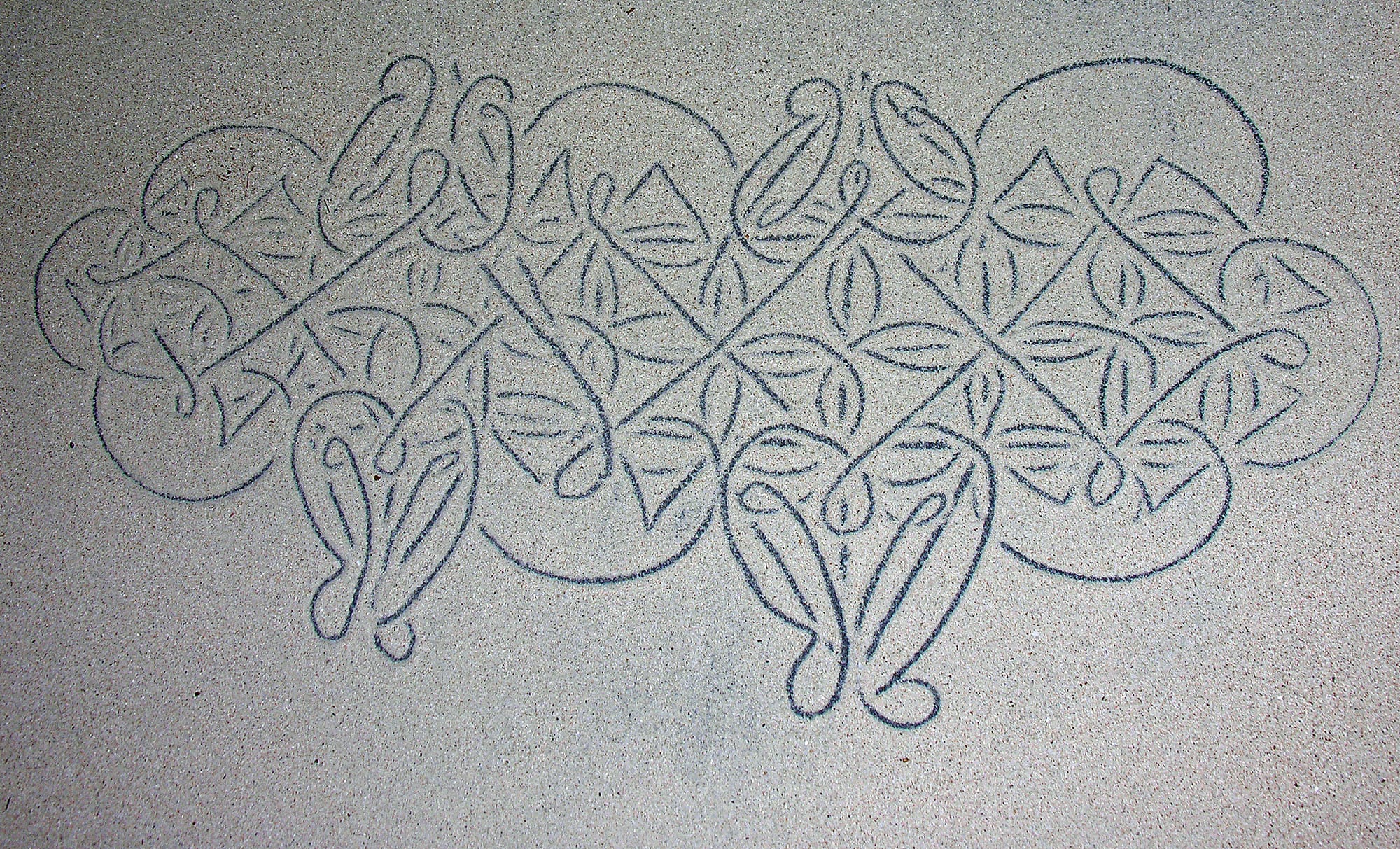
A man crouches beside a smoothed patch of sand, marks out an imaginary grid with his fingertip, and begins to draw. His finger never leaves the ground. The line loops and doubles back, crossing itself again and again, until a single continuous stroke has become an intricate, symmetrical pattern: perhaps a story, perhaps a message, perhaps the signature of a place or a clan. According to UNESCO, sand drawing developed among some 80 different language groups in the central and northern islands of Vanuatu as a way of communicating across them, and each design carries knowledge that goes far beyond its beauty. It is a fitting image for a country of many peoples and many tongues, where custom, known as kastom, is still the thread that holds community life together.
Faith, identity and values
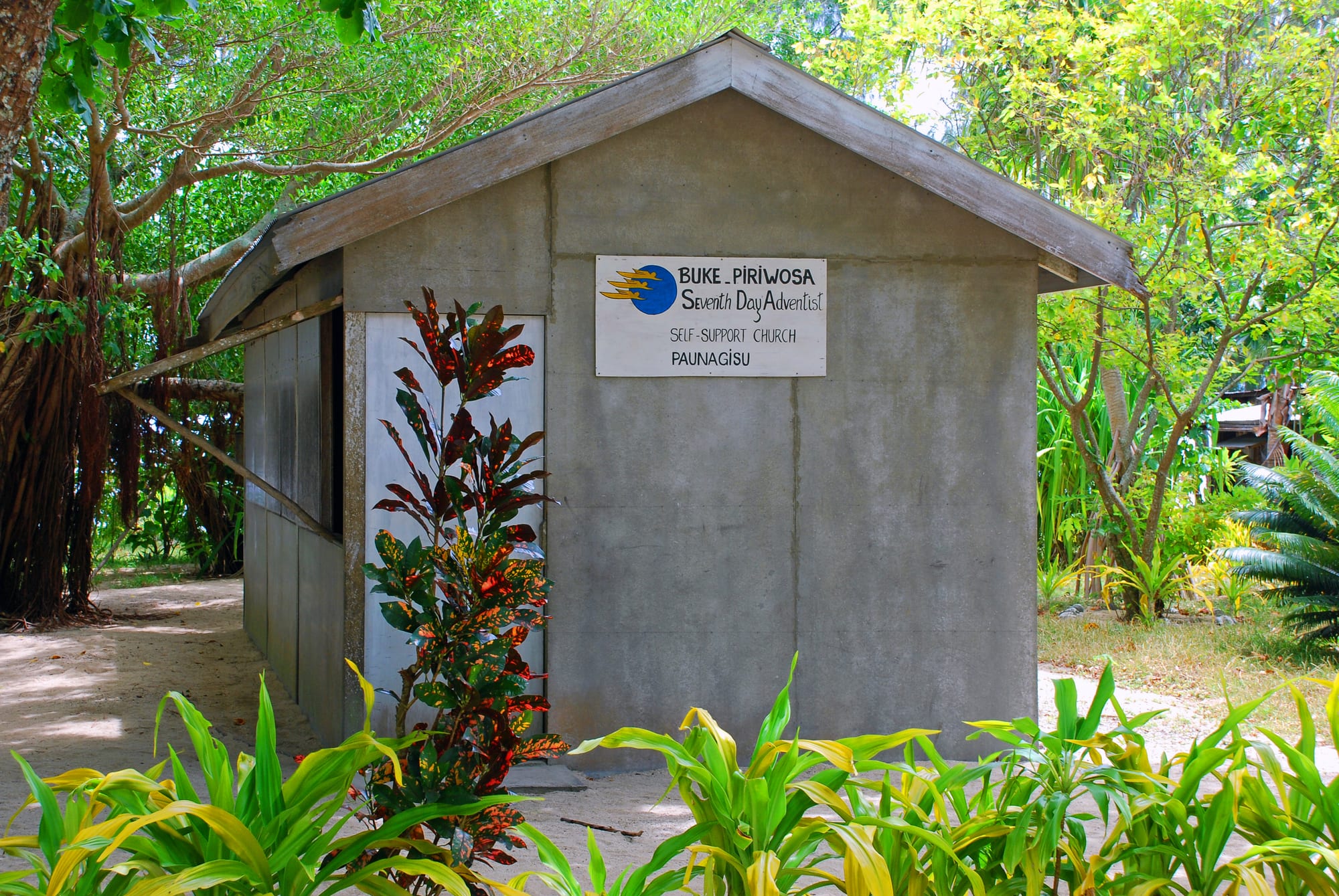
Vanuatu's constitution describes the republic as founded on "traditional Melanesian values, faith in God, and Christian principles", and both halves of that phrase are lived every day. The great majority of ni-Vanuatu are Christians. According to 2020 census figures cited by the US State Department, Presbyterians make up about 27 per cent of the population, Seventh-day Adventists about 15 per cent, and Anglicans and Catholics about 12 per cent each, with many smaller churches besides. There is no state religion, and freedom of religious and traditional belief is protected. Sunday is kept as a day for church and rest, and visitors are asked to respect Sunday closures and services.
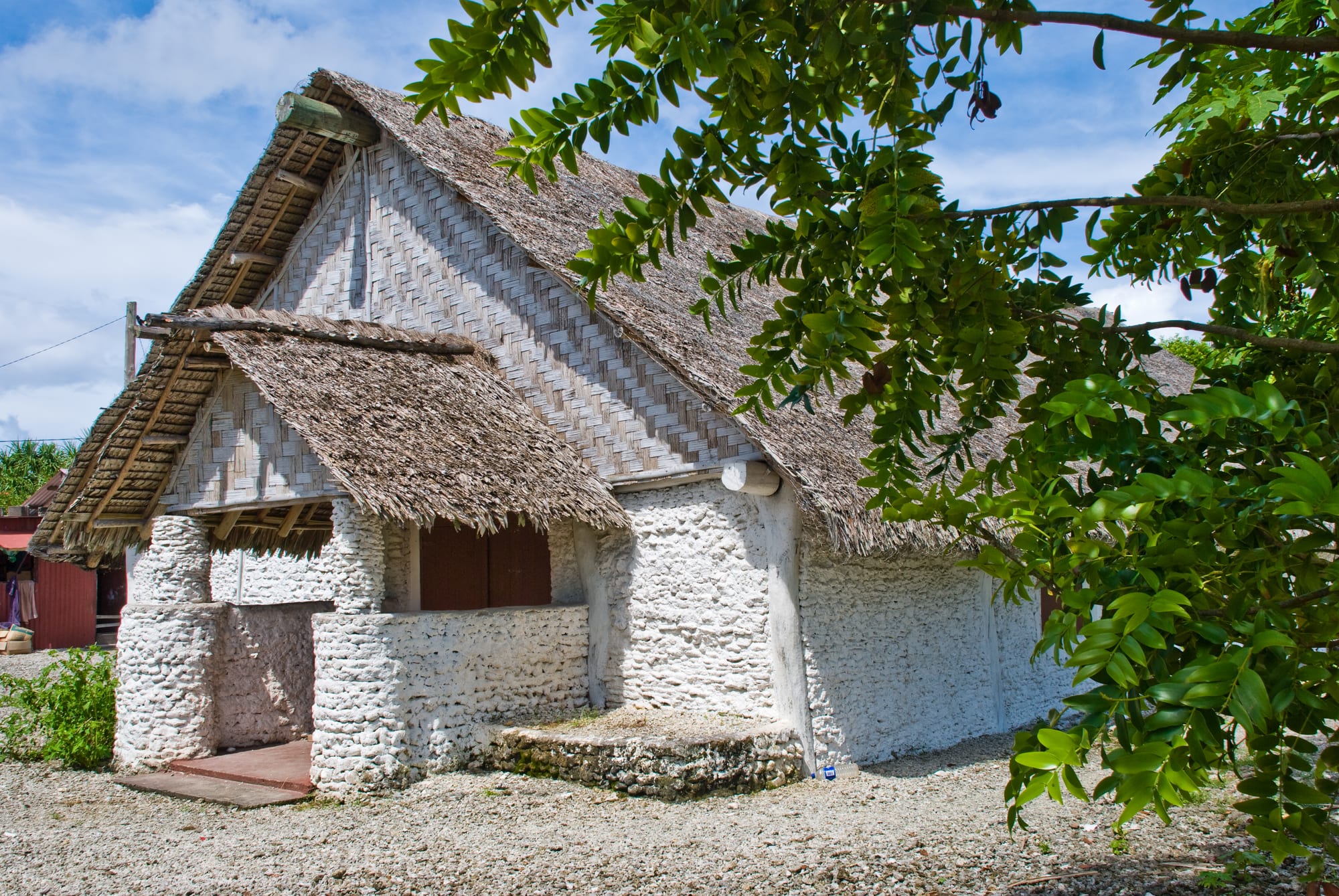
Alongside the church stands kastom, which the Vanuatu Tourism Office describes as a way of life: the customs, beliefs and ancestral practices passed down through generations, shaping ceremonies, art, leadership and the organisation of society, with distinct variations from island to island. Its authority is written into the state itself. The Malvatumauri Council of Chiefs, made up of custom chiefs elected by their peers in district councils, may discuss any matter relating to land, custom and tradition, makes recommendations for the preservation of ni-Vanuatu culture and languages, and must be consulted on bills that touch on land, tradition and custom.
Wealth and standing are measured in kastom terms as well as in money. Pigs represent wealth, power and prestige, and their curved tusks serve as a form of cultural currency, exchanged at weddings, reconciliation ceremonies and the appointment of leaders. Above all, land is never simply property. Every beach, reef, waterfall and garden belongs to a family or clan, and communities may charge a fee to enter their land or visit its natural attractions.
Greetings and meeting people
A gentle handshake is the usual greeting, and a relaxed, friendly manner goes a long way. Vanuatu has three official languages, Bislama, English and French, and well over a hundred indigenous languages besides, so Bislama, the national creole, is the common tongue between islands. A few words of Bislama are warmly received.
Arriving in a village has its own protocol. Visitors should ask the permission of the chief of the community and introduce themselves before exploring, and in many places areas cannot be visited independently at all, only with a local guide who knows which places are tabu, or forbidden. Photographs of people, and of children in particular, should only be taken with permission; people who are photographed without being asked may request payment, while those who agree often like to see the pictures afterwards. Confrontational behaviour and swearing are frowned upon, and patience with "island time", when schedules shift, is part of being a good guest.
Hospitality and being a guest
The nakamal is at the heart of social life, part meeting place and part kava house. Kava is made from the pounded or ground root of the kava plant mixed with water, and served in half a coconut shell or a small bowl. The tourism office's advice is to drink each shell in one go, since the taste is earthy and bitter, and to go slowly with the next, because the calming effects take a few minutes to arrive. Nakamals are quiet places where people come to unwind at the end of the day, often marked by a dim light or lantern after dark, and the calm atmosphere should be respected. Traditionally, only men sat and drank in the nakamal, and in the past women drank kava in only a few communities; women are generally welcome at kava bars in the towns today, but some traditional nakamals remain for men only.
Kava's significance runs deeper than relaxation. Cultural Survival describes it as a gift to the gods and a way of reaching the ancestors, and as a gift exchanged between communities at the feasts that mark births, circumcisions, marriages and deaths, where it serves to reconcile and harmonise relationships. Preparation, too, has traditionally followed kastom: in parts of the south, young men chewed the root and infused it for their elders, while town nakamals now grind it by machine.
Being a guest also means dressing and behaving with care. Modest clothing is expected in towns and villages alike: bikinis and see-through clothes belong on the beach, with cover-ups worn over swimwear, and women visiting villages are advised to wear a long skirt or tie a sarong over shorts, and to swim in a T-shirt near communities. Fruit growing beside a path almost certainly belongs to someone and should not be picked without asking, and gifts should not be handed out without first asking a guide what is suitable and who should receive them. Neither tipping nor bargaining is practised in Vanuatu.
Festivals and life's big moments
The national calendar combines church, kastom and nationhood. Public holidays include Father Lini Day on 21 February, Chiefs Day on 5 March, Good Friday, Easter Monday and Ascension Day, Children's Day on 24 July, Assumption Day on 15 August, Constitution Day on 5 October, Unity Day on 29 November, which celebrates national unity among a very diverse population, and Family Day on 26 December. The greatest national celebration is Independence Day on 30 July, marking the end of the Anglo-French Condominium in 1980 with ceremonies, cultural performances and flags flown across the country.
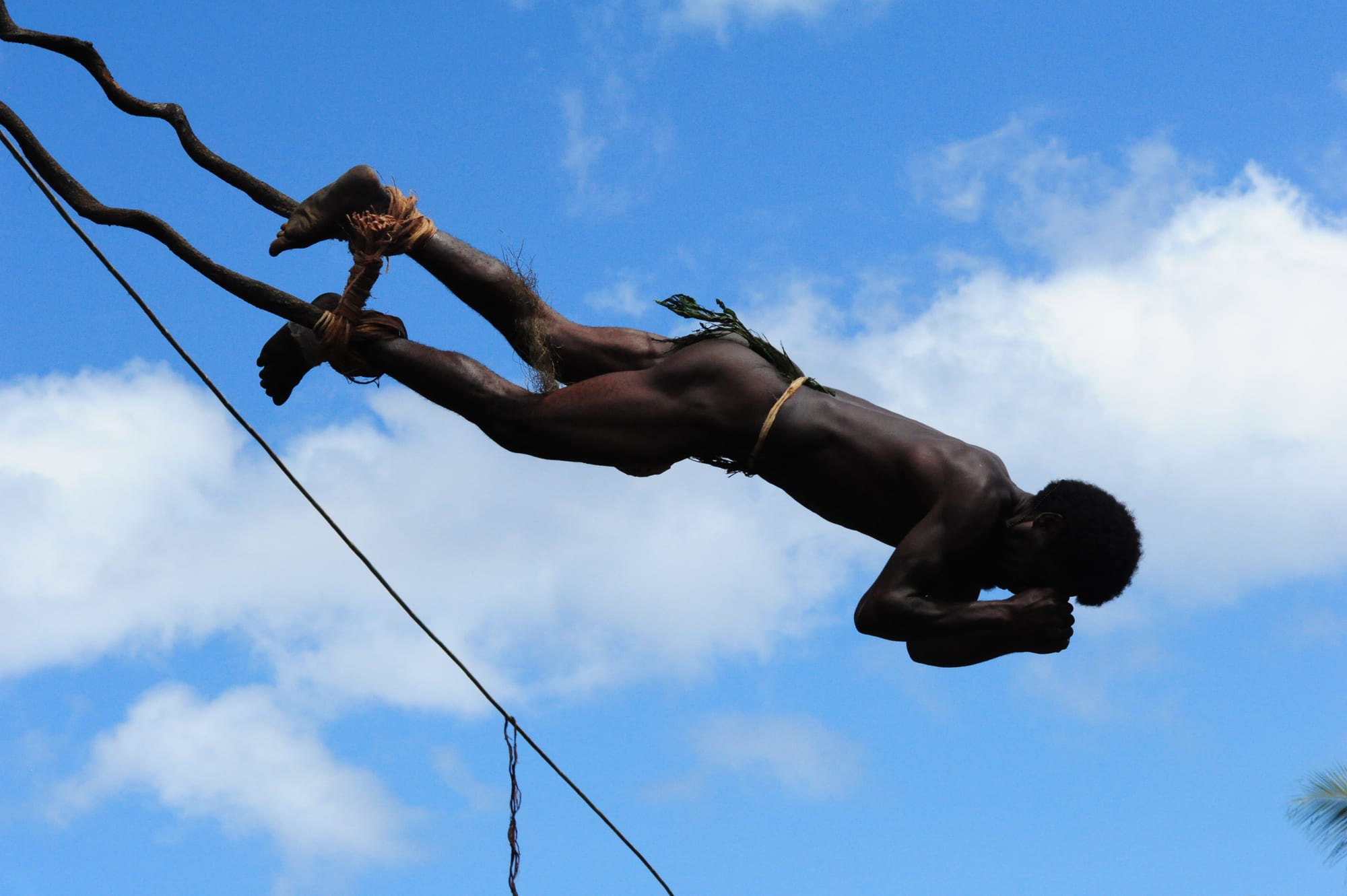
Kastom ceremonies mark the turning points of life. Weddings conducted in kastom involve a bride price paid in pigs, woven mats and kava, and ritual dances express spiritual beliefs and commemorate the past. The best known of all rituals is the naghol, or land dive, performed on one island each year between April and June, when men and boys leap head-first from tall wooden towers with vines tied to their ankles. The tourism office describes it as a ritual to ensure a good yam harvest and a rite of passage into manhood.
Arts, crafts and music
Sand drawing is Vanuatu's only element on UNESCO's list of intangible cultural heritage, and one of its most sophisticated arts. A drawer traces a continuous meandering line on an imagined grid to produce a graceful, often symmetrical pattern, directly on sand, volcanic ash or clay. The drawings can be read as works of art, stores of information, illustrations for stories, signatures or messages, and they preserve knowledge of rituals, myths, kinship systems, farming techniques and dance patterns. A true master must know not only the patterns but their meanings, and be able to explain them to an audience. UNESCO warns that enjoying the drawings purely for their looks, as tourism increasingly encourages, risks losing their deeper significance.
Carving reaches monumental scale in the slit gongs of the northern islands, which the Metropolitan Museum of Art describes as among the largest musical instruments in the world. Carved from the trunks of breadfruit trees, each is a hollowed cylinder with a long, narrow slit, its lip struck with a club-like wooden beater to produce a deep, resonant tone, and the tallest are topped with carved faces. Several gongs stand together on a village dancing ground like an informal orchestra, and played in concert by a number of drummers they produce rhythms of great variety and complexity at grade-taking ceremonies, funerals and dances.
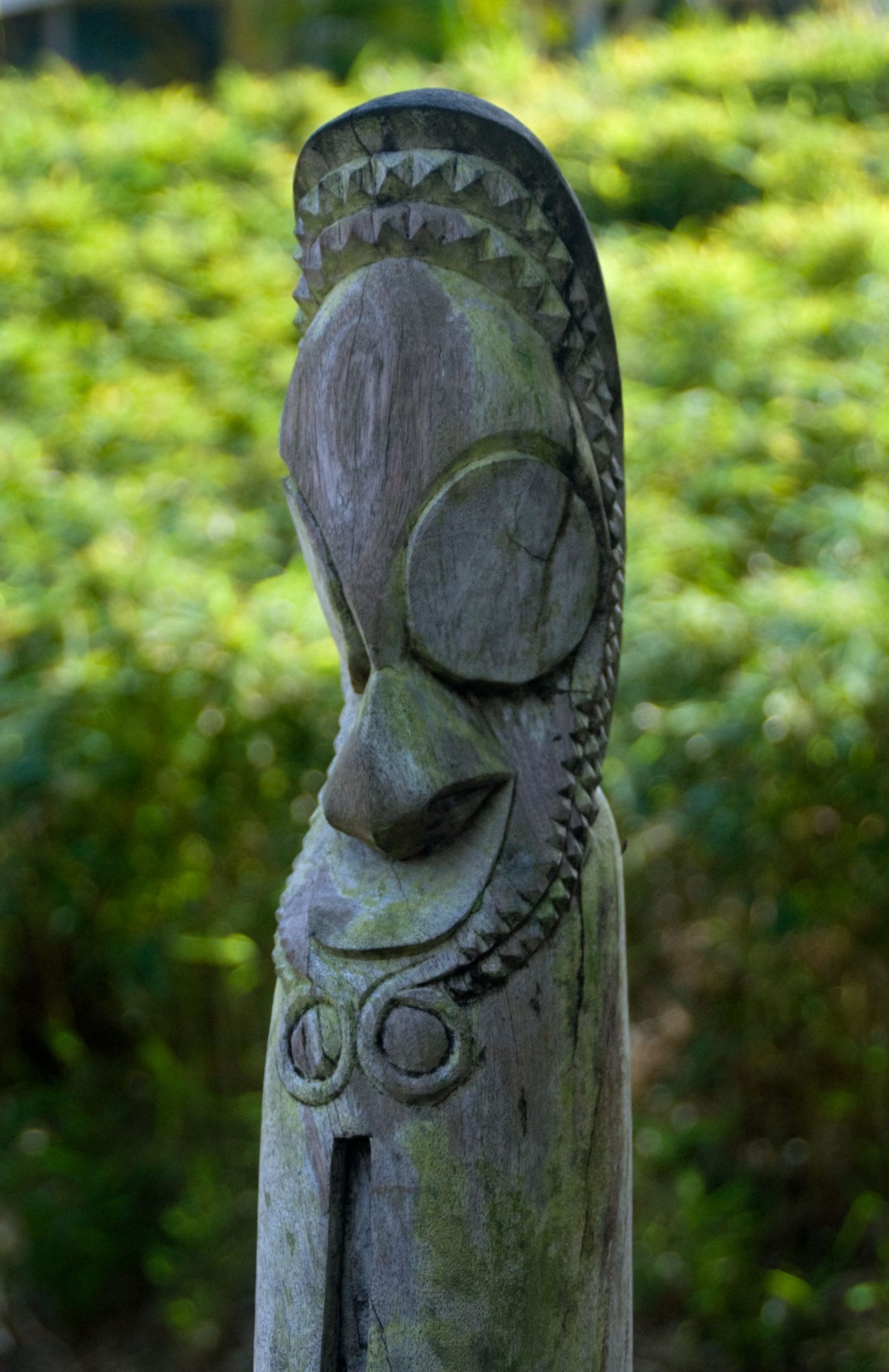
Dance, music, weaving and carving remain living parts of kastom, performed and made for ceremonies as much as for display. Woven mats carry real value as wealth in exchange, and ceremonial dances are held to mark important occasions. Because each island has its own traditions, the arts of Vanuatu vary enormously from place to place, and visitors who attend a performance or ceremony are guests of the community that owns it.
Dos and don'ts for visitors
- Do ask the chief's permission on arriving in a village, and make introductions before exploring.
- Do ask before photographing anyone, especially children.
- Do drink a shell of kava in one go if offered, and keep voices low in the nakamal.
- Do dress modestly away from the beach; women visiting villages should wear a long skirt or a sarong over shorts.
- Do expect to pay land entry fees, and follow a local guide's advice on tabu places.
- Don't tip or bargain; neither is part of local custom.
- Don't hand out gifts or pick fruit without asking first.
- Don't enter a traditional nakamal uninvited; some are for men only.
What to take away
Vanuatu asks visitors for little more than respect, but that respect has a particular shape: every piece of land has an owner, every village a chief and every tradition a meaning, and those who ask first will be made welcome.