Culture & Customs · Vietnam
Vietnam: Incense for the Ancestors
A country where the dead are invited home for the New Year, the oldest person in the room is greeted first, and a quiet concern for face and harmony shapes almost every encounter
By Globeway Editorial · 30 September 2026
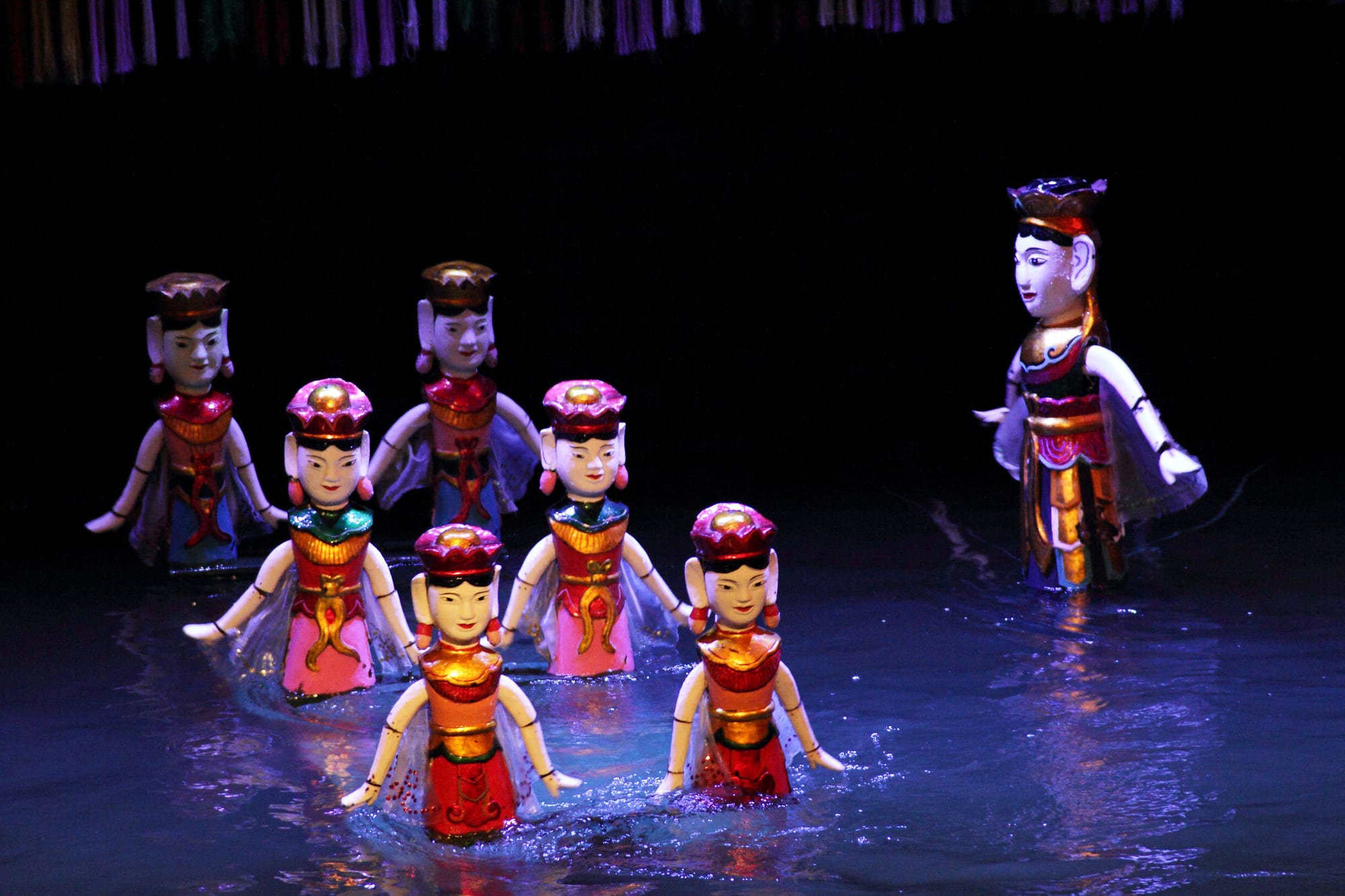
It is the last evening of the lunar year. In the main room of a family home, the ancestral altar has been cleaned and dressed: photographs of grandparents and great-grandparents, a tray of five kinds of fruit, flowers, candles and fresh incense. Days earlier, the family visited the graves to invite their dead to come home and celebrate the New Year with the living, and now the whole household gathers for the meal that sees the old year out. Once midnight has passed, they will pay close attention to who is the first to step over the threshold, because that first visitor is thought to set the household's luck for the year ahead. Between the altar and the doorway lies much of what matters in Vietnamese culture: duty to family, respect for age, and an unbroken sense that the ancestors are still part of the household.
Faith, identity and values
Vietnam has no state religion, and official figures can mislead. In the 2019 census only about 14 per cent of people named a religious affiliation, and more recent government data put the figure somewhat higher, with Buddhism the largest group, followed by Catholicism, Protestantism and two faiths founded in Vietnam in the twentieth century, Cao Đài and Hòa Hảo. Yet most estimates suggest that the great majority of Vietnamese take part in some form of religious practice, registered or not. Much of it rests on the Tam Giáo, or Three Teachings — Buddhism, Confucianism and Daoism — woven together with a folk religion of spirits and ancestors. Mahayana Buddhism is the most influential tradition, and pagodas are places for offerings, chanting and prayers for good fortune. Catholicism arrived in the sixteenth century, and Catholic families today may also honour their ancestors, a practice the Church now permits.
Ancestor veneration is the thread that runs through almost every home. Most households of the Việt majority keep an altar holding photographs of the dead, incense, flowers and offerings, and the most important family occasions are the ngày giỗ, the anniversaries of a relative's death, when the family gathers to make offerings and share a meal. The practice is an expression of filial piety, the Confucian duty of respect and care owed to parents and elders, living and dead. Alongside it, many people turn to the Mother Goddesses of Three Realms, whose worship, recognised by UNESCO, includes festivals, temple ceremonies and a spirit possession ritual in which mediums in traditional costume, accompanied by musicians, embody the deities.
The same values shape everyday behaviour. Face, or thể diện, stands for a person's reputation, dignity and honour, and it is given through respect and compliments and lost through open criticism. Harmony is prized above winning an argument, and modesty and self-restraint, khiêm tốn, are admired. Society is clearly ordered by age, status and education, and age above all decides how much deference someone is owed. Families are close and interdependent, often with three generations under one roof, and the eldest son traditionally carries responsibility for his parents in old age. Beneath all this runs a strong national pride and a stoic resilience, born of a long history of hardship that has touched most families.
Greetings and meeting people
Greetings follow seniority: the oldest person present is greeted first, and standing when an elder enters is polite. Men usually shake hands with a slight nod, while women more often greet with a small bow or nod, so it is courteous to wait for a woman to offer her hand. Younger people in the cities increasingly shake hands with everyone. A bow from the shoulders shows respect, and a deeper one is kept for those of higher standing; lowering the gaze slightly when greeting someone senior is a sign of deference rather than evasiveness.
"Xin chào", hello, suits anyone, and it is often followed by a question about health. The Vietnamese language has no neutral word for "you". Instead, people address one another with kinship terms — older brother, older sister, younger sibling, uncle, grandmother — chosen according to each person's age, gender and position. That is why new acquaintances often ask each other's age early on: the question is not nosy but necessary, since it tells each speaker which form of address to use.
Communication is indirect and understated. A "yes" may simply mean "I understand" rather than "I agree", and a refusal is often signalled through hesitation instead of a flat no. A smile can mean pleasure, but also embarrassment, apology or discomfort. Silence before an answer shows thought and respect. The head is regarded as spiritually significant and should not be touched, even on a child, and nothing should be passed over someone's head. The feet are the lowest part of the body, so pointing them at people or at an altar is rude. People and things are indicated with an open hand rather than a finger, and public displays of affection between men and women are frowned upon.
Hospitality and being a guest
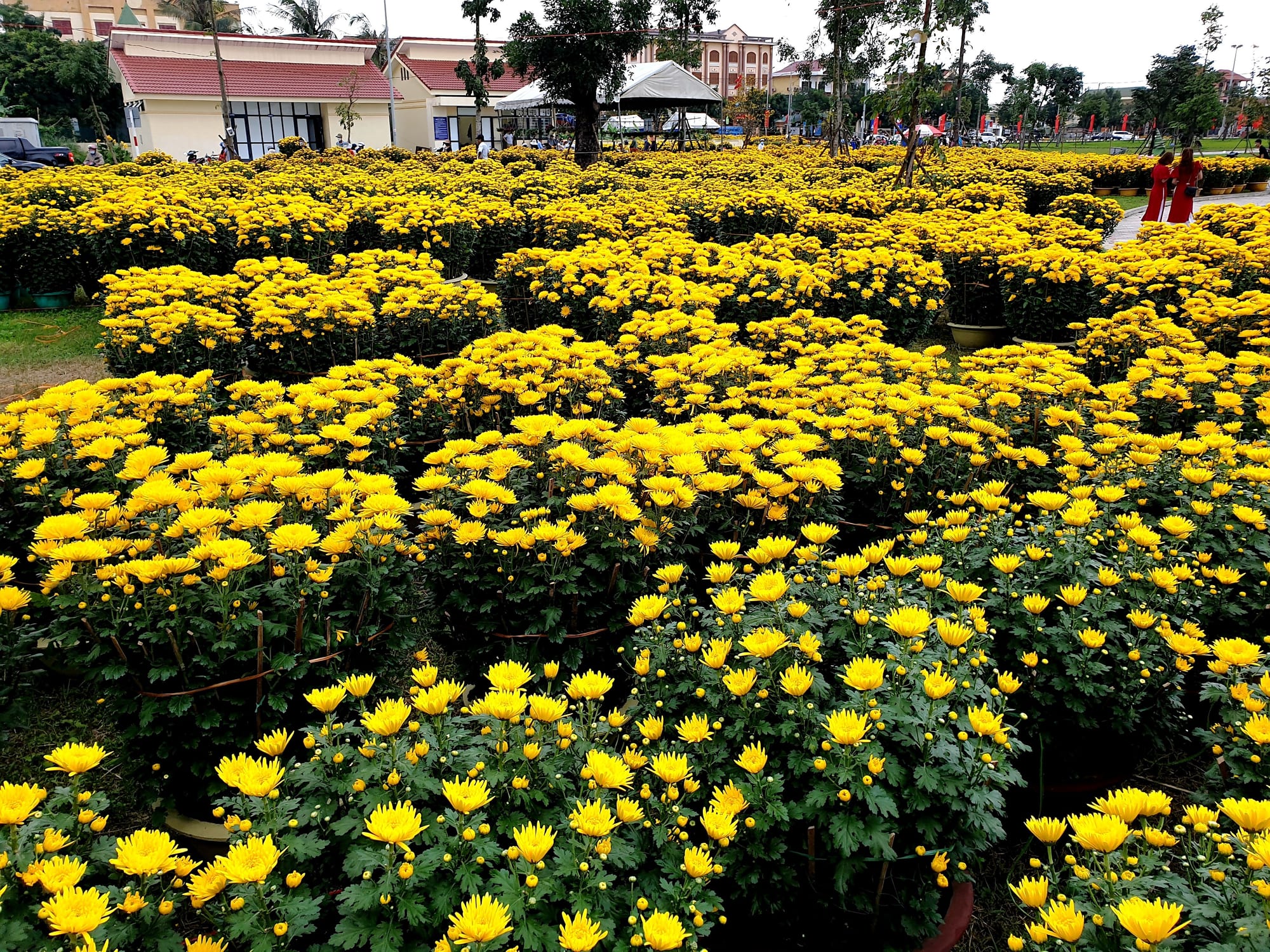
Shoes come off at the door of a home, as they do before entering temples and pagodas. A guest usually brings something small, such as fruit, biscuits or flowers, and greets the older members of the family first. Gifts are offered and received with both hands, and the giver often plays down their value as a mark of humility. A few items are avoided because they are associated with bad luck or mourning: black wrapping or black objects, handkerchiefs, and yellow flowers, particularly chrysanthemums. Anything, from a cup of tea to a business card, should be passed with the right hand or both hands, never the left alone.
At meals, dishes are set in the centre of the table and everyone helps themselves from them. Chopsticks should never be left standing upright in a bowl of rice, since they resemble the incense sticks burned for the dead. Drinks tend to come after the meal rather than before it. It is polite to praise the cooking even when the host modestly insists it is nothing special, and to decline a further helping by saying one is already very full. When eating out, the host generally pays for everyone. Tipping is optional in restaurants, and more common for guides and in spas.
The oldest gesture of welcome is betel and areca. For centuries a betel quid, a betel leaf with areca nut and lime paste, has been offered as a way to open a conversation and bring people closer, and betel and areca remain indispensable gifts at engagements and weddings.
Festivals and life's big moments
Tết, the Lunar New Year, falls in January or February and is by far the most important celebration of the year. Preparations begin a week or more beforehand with the send-off of the Kitchen Gods. Families visit their ancestors' graves to invite them home for the holiday, clean and decorate the house, buy peach blossom or kumquat trees, and set out a tray of five fruits on the altar in gratitude to the ancestors. Families reunite for meals on New Year's Eve and the first day of the year. After midnight comes xông đất, the first visit of the year, believed to decide the household's fortune, so families take care over who is first through the door. Children receive lì xì, lucky money in red envelopes, and many people visit pagodas and temples to pray for the year ahead, some asking for a piece of calligraphy to take home.
Other dates punctuate the year: Buddha's Birthday, Wandering Souls Day, the Mid-Autumn or Moon Festival, and the national holidays. Early in the third lunar month, the festival of the Hùng Kings, revered as the nation's founders, draws millions of pilgrims to their temple in Phú Thọ province to acknowledge the nation's origins and pray for good harvests and health; the worship is on UNESCO's list, as is the Gióng festival held at the Phù Đổng and Sóc temples.
Marriage involves both families as much as the couple. Certain years are considered luckier than others for a wedding, and families often postpone a wedding for a period of mourning after a death. Betel leaves and areca nuts are presented at the engagement, and after the wedding the bride traditionally moves into her husband's family home. Funerals follow a long sequence of rites. The body is usually kept at home for several days before burial, in front of an altar with a photograph, candles and incense, while the family keeps a constant vigil. Visitors come to burn incense and pay their respects, and bring money, flowers or wreaths according to their means. Mourners wear small pieces of black or white cloth, and for the first hundred days food is placed on the altar before family meals. Memorial gatherings follow every seven days until the forty-ninth day, then on the hundredth day and the first anniversary, after which the death anniversary is observed each year.
Arts, crafts and music
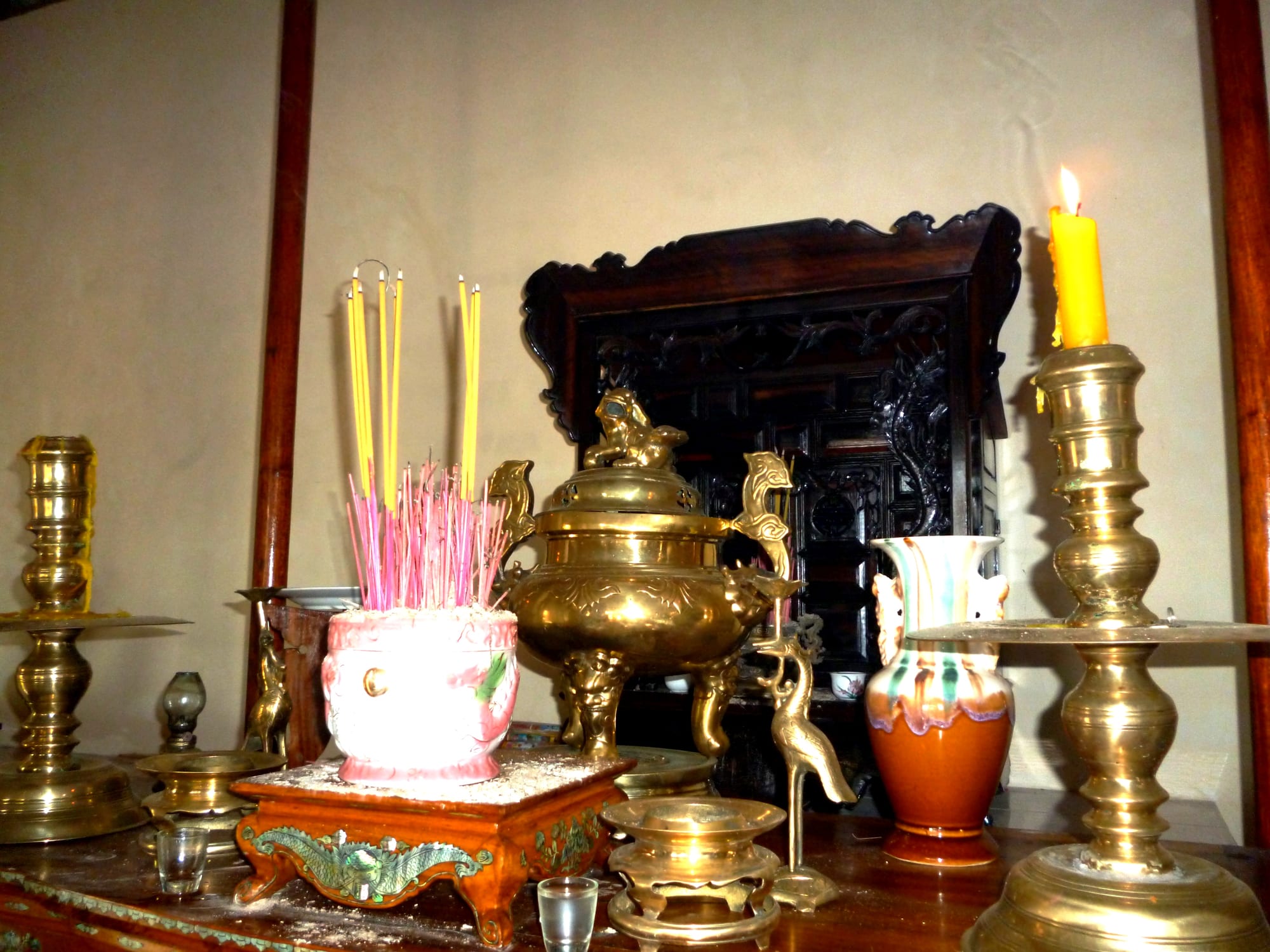
Water puppetry, múa rối nước, is Vietnam's most distinctive performing art. It developed in the villages of the Red River Delta around a thousand years ago, when performances were staged on village ponds and flooded paddy fields during festivals. The puppets are carved from wood and lacquered to protect them from the water. The puppeteers stand waist-deep in the pool, hidden behind a bamboo screen, and move the figures with long rods and strings concealed beneath the surface, so that the puppets seem to glide and dance across the water by themselves. A small traditional orchestra accompanies the action, and the scenes draw on rural life, legend and folk tales, often introduced by Chú Tễu, a cheerful narrator figure.
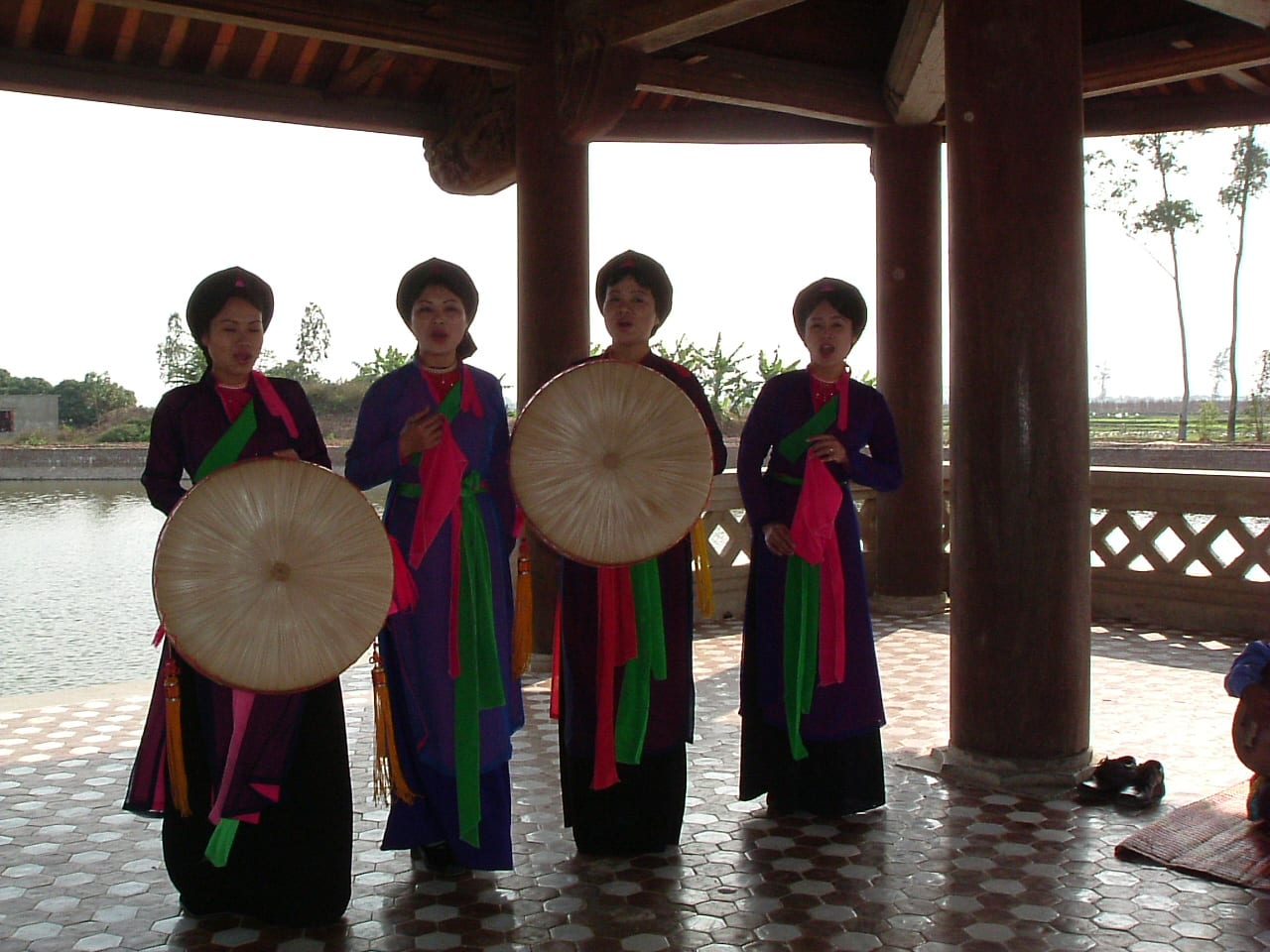
Vietnam has more than a dozen elements on UNESCO's lists of intangible heritage. Quan họ folk songs are sung in alternating verses between pairs of women from one village and pairs of men from another, with hundreds of lyrics about longing, parting and the joy of meeting again; the women traditionally wear large round hats, and custom forbids marrying a singing partner. Ca trù, a refined sung poetry, and the craft of Đông Hồ woodblock printing are on the list of heritage in need of urgent safeguarding. The list also includes Nhã nhạc court music, the gong culture of the Central Highlands and the đờn ca tài tử music of the south.
Dos and don'ts for visitors
- Do greet the oldest person first, and wait for a woman to offer her hand before shaking it.
- Do take off shoes when entering homes, temples and pagodas, remove hats, and cover shoulders and knees at places of worship.
- Do give and receive things with the right hand or both hands, never the left alone.
- Do bring a small gift such as fruit or biscuits when visiting a home, but avoid anything black, handkerchiefs and yellow chrysanthemums.
- Do read hesitation carefully; a "yes" may mean "I understand" rather than "I agree".
- Don't touch anyone's head, including a child's, or point the feet at people or altars; avoid stepping over or directly in front of altars set at ground level.
- Don't leave chopsticks standing upright in a bowl of rice.
- Don't photograph people without asking first, and keep public displays of affection to a minimum.
What to take away
Vietnamese customs rest on a simple principle — respect flows towards age, and the family includes those who have died — and visitors who greet the eldest first and treat an altar with care will find that courtesy warmly returned.