History · Sudan
Why does Sudan have more pyramids than Egypt?
The kings of Kush revived the pyramid long after Egypt gave it up, kept building for a thousand years, and built them small, steep and for more than just kings.
By Globeway Editorial · 2 November 2026
The short answer
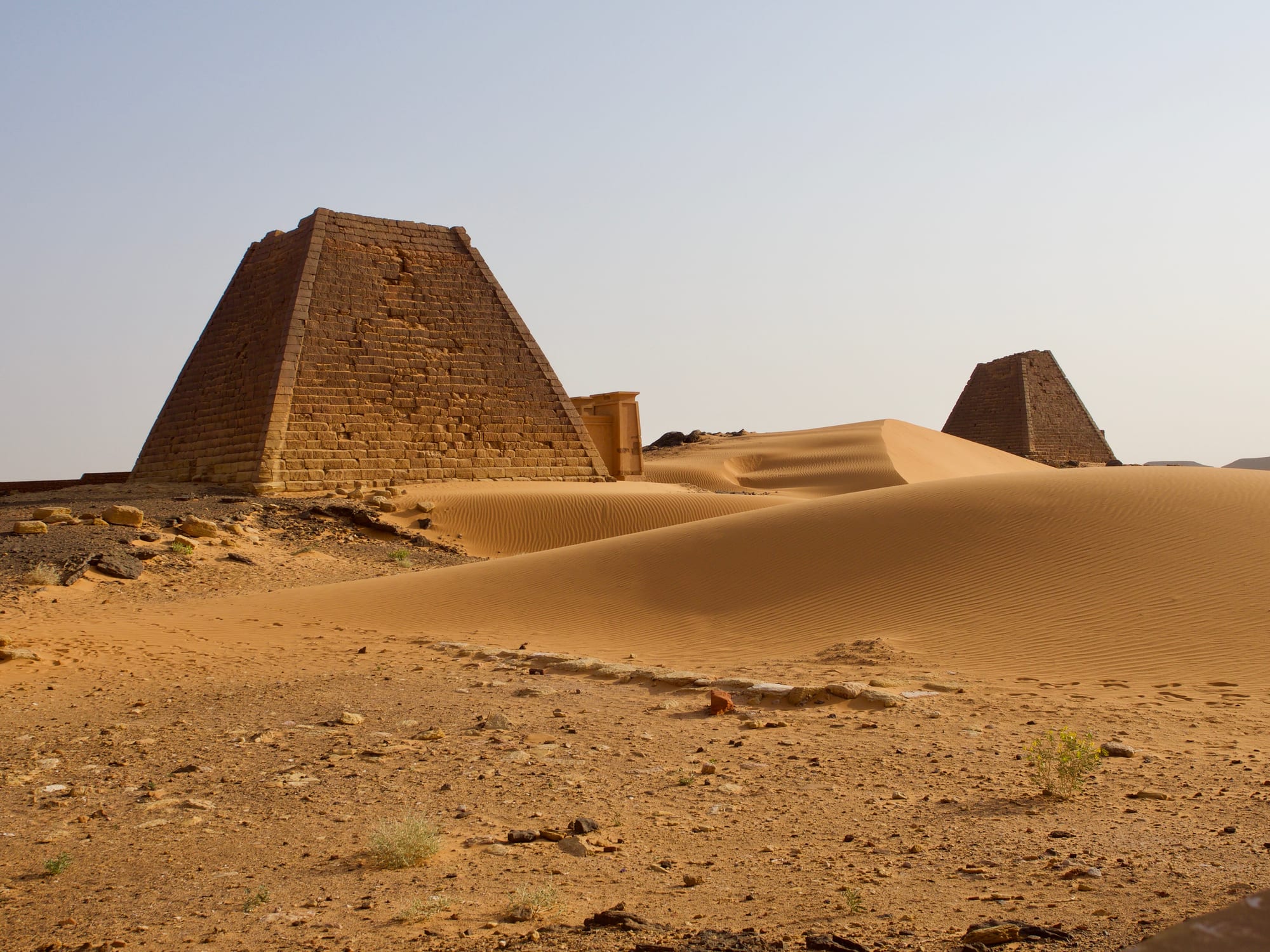
Around 255 pyramids are known to have been built in Nubia, the stretch of the Nile Valley that is now northern Sudan, against at least 118 to 138 identified in Egypt. The Sudanese pyramids were built by the rulers of the Kingdom of Kush, Egypt's southern neighbour, and the count is higher for three reasons. The Kushites started late, around 750 BC, long after Egypt had largely stopped building pyramids, and then kept going for about a thousand years, until the middle of the 4th century AD. They built them not only for kings but also for queens, princes and wealthy citizens. And they built them small.
Sudan wins on number, not on size. A Nubian pyramid stands roughly 6 to 30 metres high on a narrow base, with sides as steep as 70 degrees, and an Egyptian pyramid of the same height usually covered at least five times as much ground. Most of Egypt's pyramids were built in the Old and Middle Kingdoms, many centuries before Kush took up the idea.
Neighbours, rivals and rulers of Egypt
Kush was no Egyptian province. The Nile Valley south of Egypt was an early cradle of civilisation, and the city-state of Kerma dominated it between about 2450 and 1450 BC, controlling a territory as large as Egypt itself. During the New Kingdom, from 1550 to 1070 BC, Egypt conquered much of Nubia and brought its gods, temples and burial customs south. When Egypt fell apart at the end of the Bronze Age, the Kushites set up a new kingdom centred on Napata, near the modern town of Karima.
In the 8th century BC the tables turned. King Kashta became king of Upper Egypt, and his successor Piye invaded Lower Egypt and founded the Twenty-fifth Dynasty, the line sometimes called the Black Pharaohs, which ruled part or all of Egypt from 744 to 656 BC. These kings were devoted to Egypt's religious and artistic traditions, and they revived its most famous royal monument. Under them the Nile Valley saw the first widespread construction of pyramids since the Middle Kingdom, most of it in what is now Sudan.
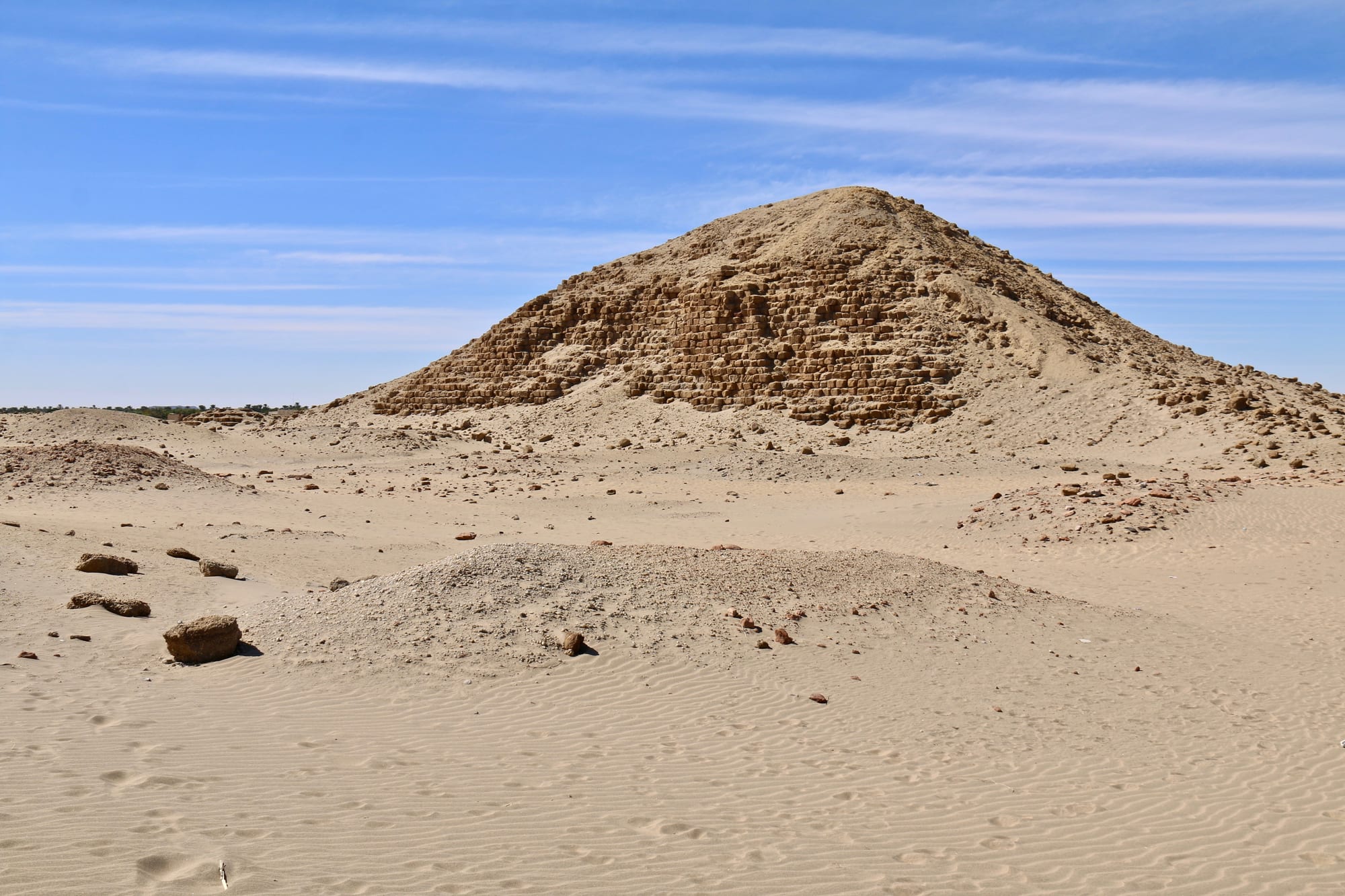
Taharqa's pyramid measures 51.75 metres along each side and rose some 40 to 50 metres, far larger than the typical Nubian royal tomb.
From burial mounds to pyramids
Before then, Kushite rulers were buried under tumuli, low round mounds of earth and stone. At El-Kurru, the first royal cemetery near Napata, the earliest tombs are tumuli; then, by the time of Piye, whose tomb dates to about 750 BC, the kings were buried under pyramids. Kashta, Piye, Shabaka and Tanwetamani all lie there, and some of the tombs are painted with scenes of the Egyptian underworld.
When El-Kurru ran out of space, the royal cemetery moved 26 kilometres upstream to Nuri. The first and largest pyramid there belongs to Taharqa, and for more than three centuries, until King Nastasen around 310 BC, his successors followed him: Nuri holds the burials of 21 kings and 52 queens and princes, and may once have had 80 or more pyramids, of which more than 20 still stand. A further 25 pyramids rise beside the sacred mountain of Jebel Barkal.
A thousand years of building at Meroë
The Kushites lost Egypt to the Assyrians in the mid-7th century BC, but the kingdom carried on in the south. After an Egyptian army under Psamtik II sacked Napata, possibly around 591 BC, King Aspelta moved the capital to Meroë, much farther south, in country rich in iron ore and hardwood for smelting. From about 270 BC the kings were buried at Meroë itself, and building went on there for more than six centuries. The site of the city is now marked by more than 200 pyramids in three cemeteries, many of them ruined.
The last pyramids at Meroë, along with the last non-royal burials, date to the mid-4th century AD, the conventional end of the kingdom, which broke apart amid drought, rebellion and invasion; the Aksumites captured Meroë and looted its gold. They were the last pyramids built anywhere in Africa, ending a tradition that had lasted about a thousand years.
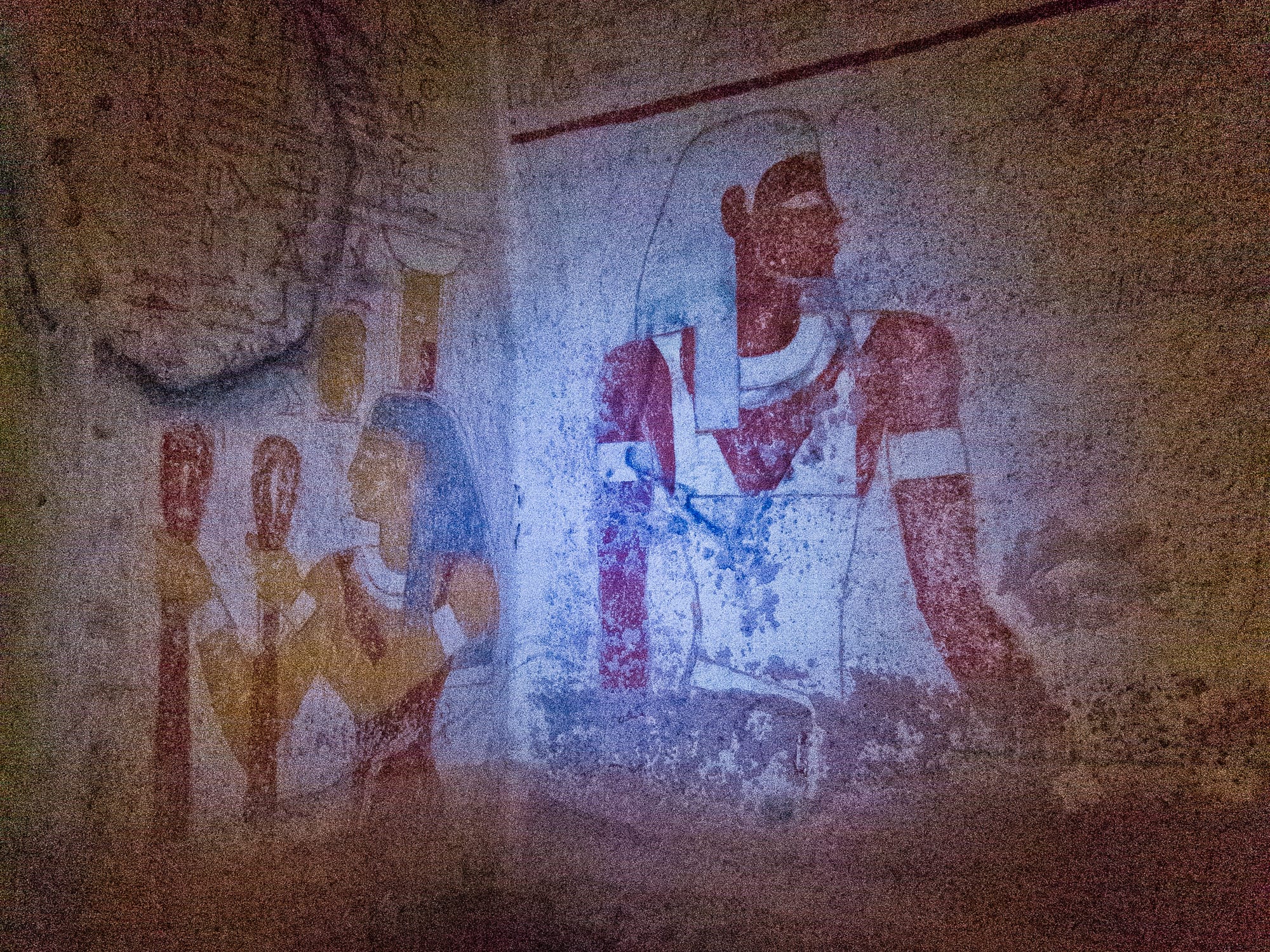
The tomb is reached by a stairway that angles down into the ground, below where the pyramid stood rather than inside it.
Small, steep and built for many
The Kushites did not copy the giant royal pyramids of Giza. Their model was a humbler type: the small private pyramids that elite Egyptian families had built over their tombs during the New Kingdom. That choice explains much of the count. A modest pyramid was something a queen, a prince or a rich citizen could also afford, and in Kush pyramids became part of the burial customs of royalty and other wealthy people alike. Near Sedeinga, archaeologists working between 2009 and 2012 found at least 80 small pyramids built around 1 BC, some only 75 centimetres wide.
The design also differs. Nubian pyramids are built in stepped courses of horizontal stone blocks on small footprints, giving them their tall, narrow look; an Egyptian pyramid of similar height usually had a base at least five times larger and sloped at 40 to 50 degrees. Most have an offering chapel against one side. And while Egyptian pyramids hold their burial chambers inside, Nubian ones stand on top of them, over rock-cut chambers whose entrances were filled in and hidden after the funeral, so that the pyramid served as a grand tombstone. The Harvard archaeologist George Reisner, who mapped more than 80 royal burials at Nuri between 1916 and 1919, was the one who solved that long-standing puzzle.
The treasure hunter who toppled pyramids
Not all of the damage is ancient. In the 1830s the treasure hunter Giuseppe Ferlini came to Meroë and pulled down a number of pyramids that had been found in good condition only a few years earlier. He dismantled the pyramid of Queen Amanishakheto from the top and found dozens of pieces of gold and silver jewellery, and he is held responsible for destroying more than 40 pyramids. Back in Europe few would believe that such fine work had been made in Africa south of the Sahara; the pieces ended up in museums in Munich and Berlin.
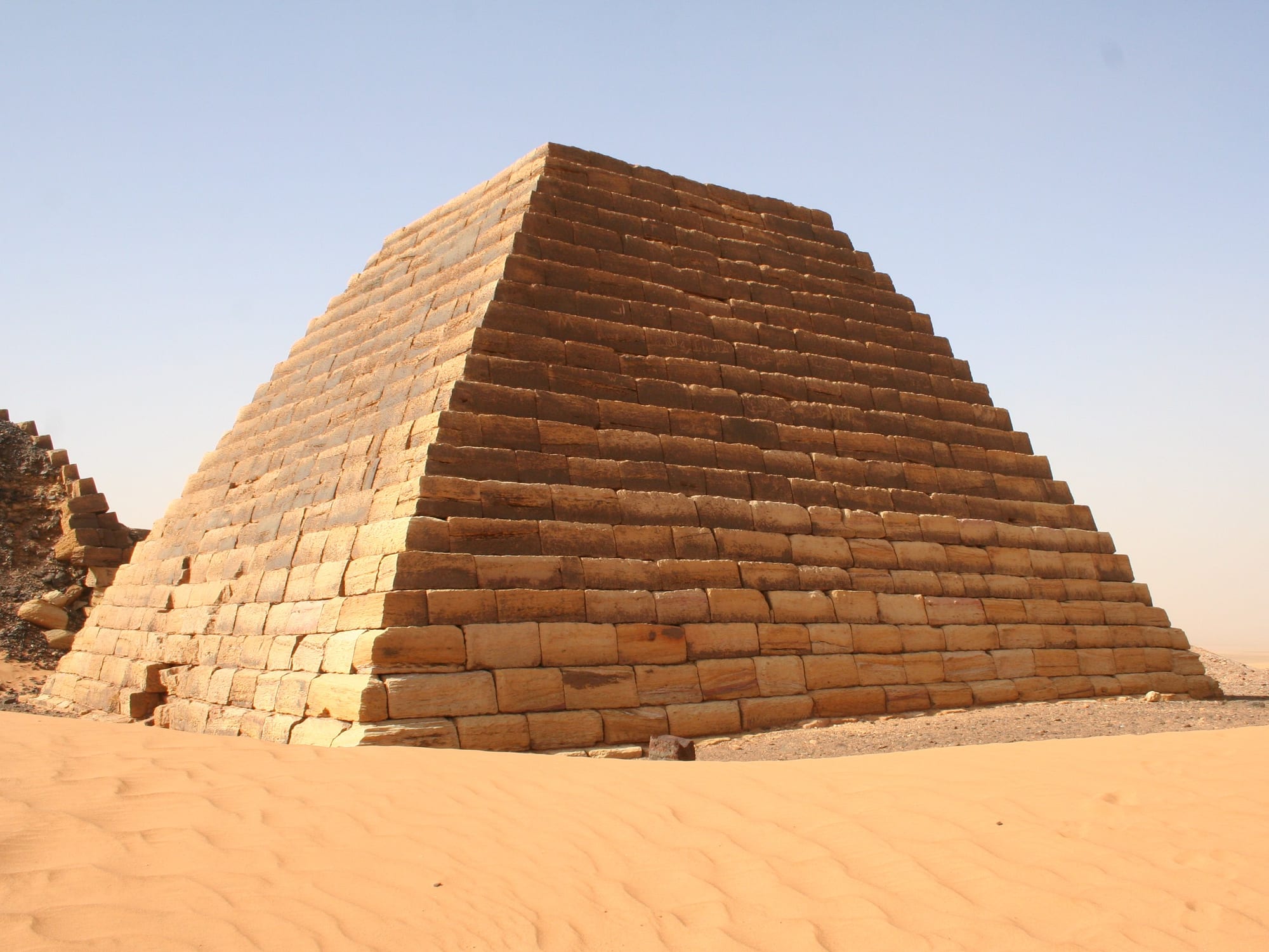
Nubian pyramids range from about 6 to 30 metres high and lean at roughly 70 degrees.
The sites of Meroë were listed by UNESCO as a World Heritage Site in 2011, and Jebel Barkal with the Napatan sites in 2003. Since April 2023 Sudan has been torn apart by a war between the army and the paramilitary Rapid Support Forces, and in January 2024 air strikes hit the nearby Meroitic sites of Naqa and Musawwarat es-Sufra; most governments advise against all travel to the country.