Attractions & Natural Wonders · Svalbard
Why is there a seed vault buried in a mountain in the Arctic?
The Svalbard Global Seed Vault is a backup copy of the world's crop diversity, placed in frozen rock where seeds stay cold even if the power fails.
By Globeway Editorial · 2 November 2026
The short answer
The Svalbard Global Seed Vault is an insurance policy for the world's food crops. Around the world, about 1,750 seed banks (also called genebanks) store seeds of crop varieties so that farmers and plant breeders can draw on them in future. Those banks can be lost to fire, flood, war, accidents or a simple lack of money. The vault keeps a duplicate of their seeds, so that if the original is lost, the depositor can come and take its copy back.
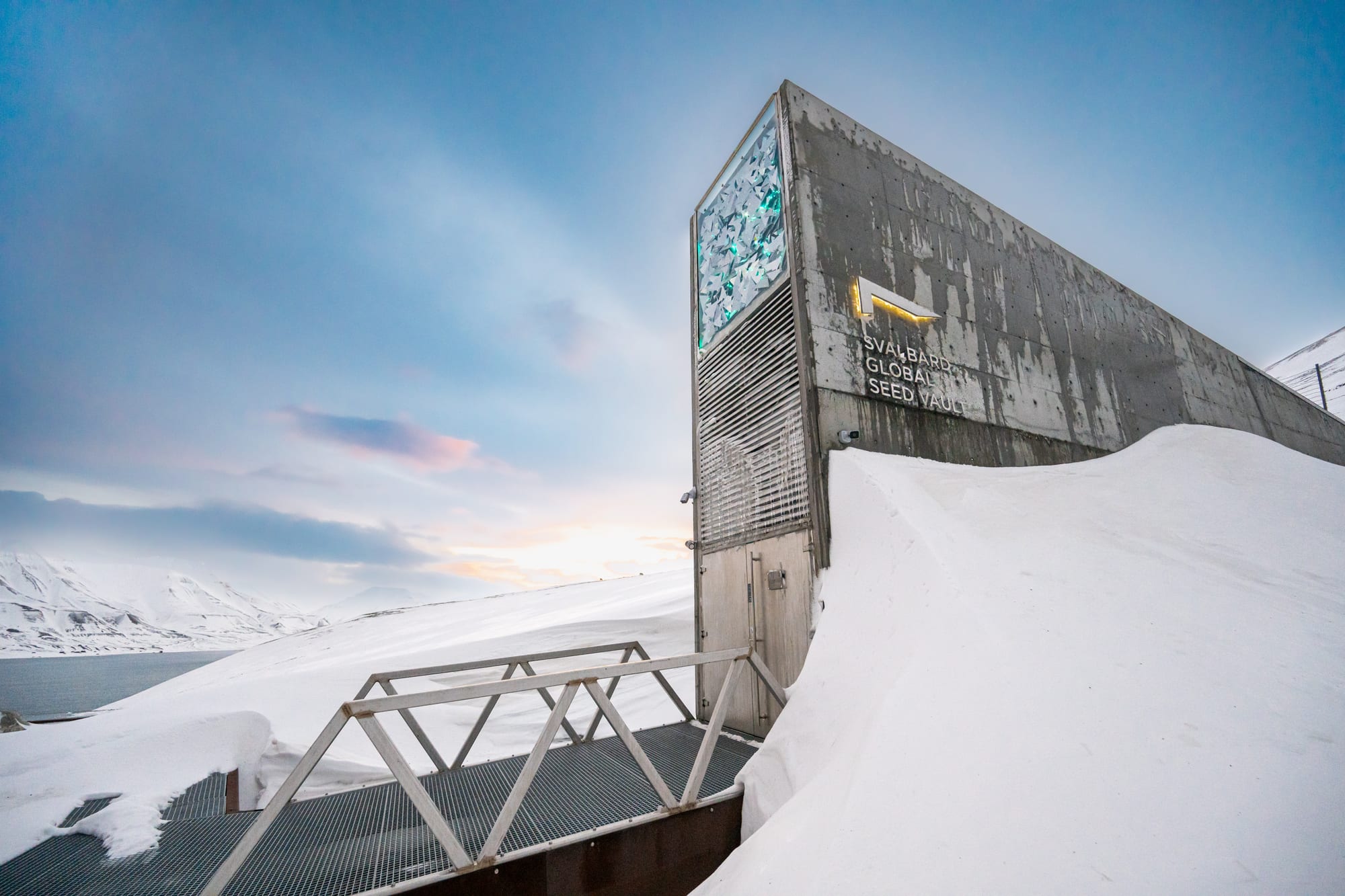
It is buried in a mountain on the Arctic island of Spitsbergen because the place itself helps protect the seeds. The surrounding rock is permanently frozen, the area has little tectonic activity, and the vault sits well above sea level. Freezers keep the seeds at −18 °C, but if they ever failed, the frozen mountain would keep the vault cold for a long time.
Seed banks are more fragile than they look
A seed bank is a library of plant life: seeds kept dry and cold so that they stay alive for decades. Its main job is to preserve the genes that plant breeders need to give crops higher yields, disease resistance, drought tolerance, better nutrition or taste, including genes in varieties that people once relied on but rarely grow today.
Yet seed banks lose samples with some regularity. Mismanagement, equipment failures, funding cuts and natural disasters all take their toll, and war has destroyed several. The national genebank of the Philippines was damaged by a flood and later destroyed by a fire. The genebanks of Afghanistan and Iraq were lost completely. The popular press has called Svalbard a "doomsday vault", built for global catastrophe, but its everyday purpose is more modest: a backup against these ordinary losses.
Why a frozen mountain on Spitsbergen
The idea grew out of a smaller experiment. From 1984 the Nordic Gene Bank kept backup seeds frozen in an abandoned coal mine outside Longyearbyen, the main town of Svalbard. A team led by the conservationist Cary Fowler later campaigned for a global vault and, after a feasibility study in 2004, concluded that Svalbard was the right place for long-term storage.
The reasons were physical. Spitsbergen has permafrost, ground that stays frozen all year, and it lacks tectonic activity. The seed bank lies about 130 metres inside a sandstone mountain and about 130 metres above sea level, high enough to stay dry even if the ice caps melt.
Inside, the seeds are sealed in three-layer foil packets, packed into boxes on metal shelves and kept at −18 °C, the internationally recommended standard. The cold and the limited oxygen keep the seeds' metabolism low and delay their ageing. If the refrigeration ever broke down, it would take at least several weeks for the vault to warm to the temperature of the surrounding rock, about −3 °C, and an estimated two centuries to reach 0 °C. Stored like this, the seeds of most major food crops should remain alive for hundreds of years, and some grains possibly for thousands.
A safe deposit box, not a bank
The vault works like a safe deposit box. Norway owns the building, but each depositor keeps ownership of its own seeds, and only the depositor can take them out. Researchers and breeders cannot order seeds from Svalbard; they apply to the original genebanks instead. Storage is free. The Norwegian government paid the full construction cost of about 45 million Norwegian kroner, and Norway and the Crop Trust, an international fund for crop diversity, share the running costs. The Nordic Genetic Resource Center (NordGen) operates the vault, and there are no permanent staff on site.
The arrangement has been tested once, by war. The International Center for Agricultural Research in the Dry Areas (ICARDA) kept a major genebank at Tel Hadya, south of Aleppo in Syria. During the Syrian civil war it could no longer maintain it, and in 2012 it moved its headquarters to Beirut. In 2015 ICARDA withdrew some of its backup samples from Svalbard, followed by a larger withdrawal in 2017. The seeds were planted in fields in Lebanon and Morocco and multiplied; some went back into the vault, and the rest into ICARDA's new genebanks in those two countries. As of May 2024 these were the only withdrawals ever made.
- 1984
The Nordic Gene Bank begins storing backup seeds in a disused coal mine near Longyearbyen.
- 2004
A feasibility study backs Svalbard, and Norway commits to funding a global vault.
- 19 June 2006
The prime ministers of the five Nordic countries lay the first stone.
- 26 February 2008
The Svalbard Global Seed Vault officially opens.
- 2015
ICARDA makes the first withdrawal, to rebuild collections it can no longer maintain in war-torn Syria.
- October 2016
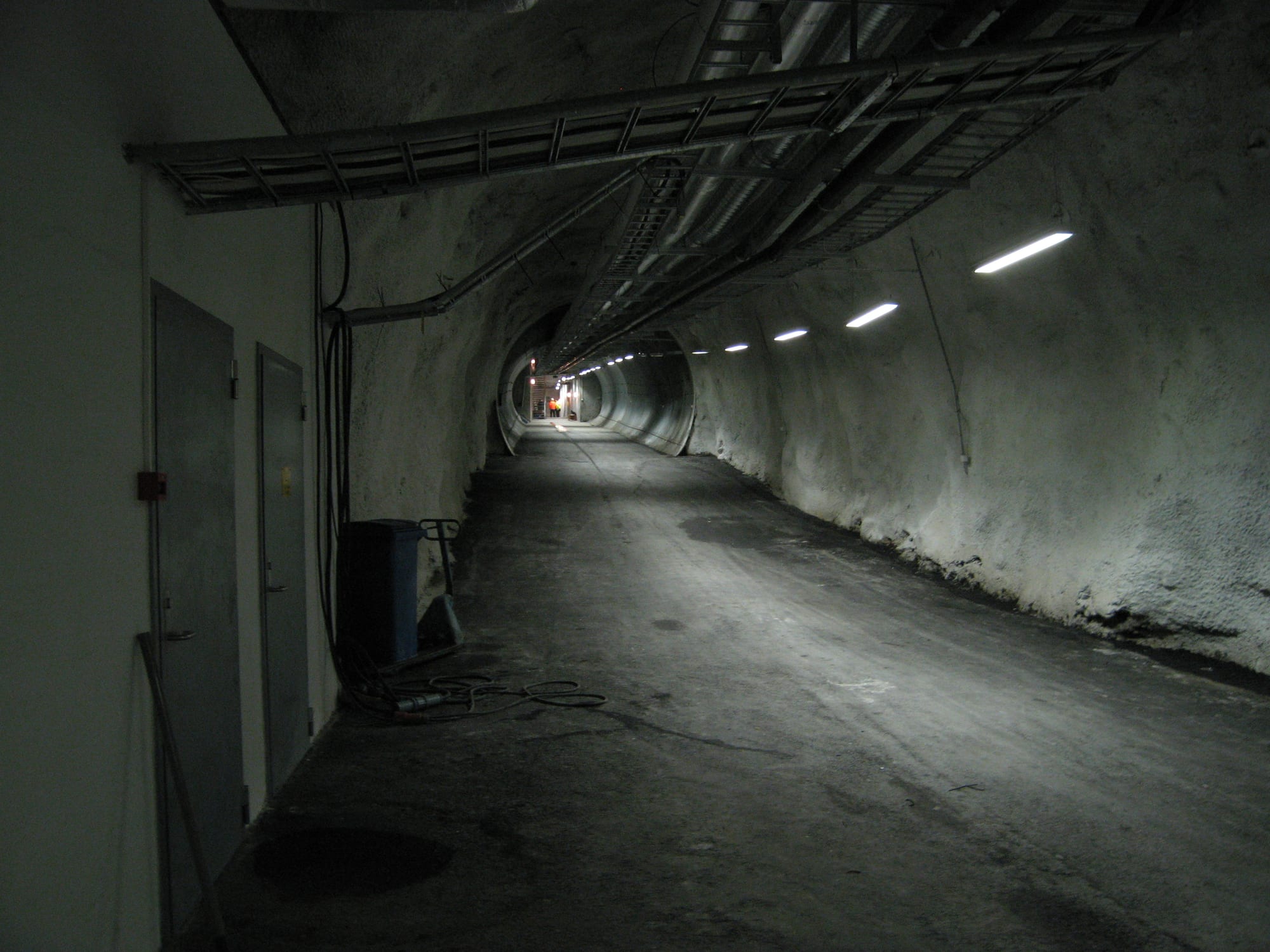
Unusual warmth and rain push meltwater 15 metres into the entrance tunnel.
- 26 February 2018
Samples received pass one million.
- June 2025
The vault holds 1,355,591 samples.
Not immune to a warming Arctic
The site was chosen for its cold, but Svalbard is warming fast. As of 2021, Longyearbyen was described as the fastest-warming town in the world. Some meltwater had always seeped into the vault's 100-metre entrance tunnel during the spring thaw. In October 2016, after higher than average temperatures and heavy rain, water reached 15 metres into the tunnel before freezing. The seeds, deep inside, were never at risk, but Norway's public works agency Statsbygg waterproofed the tunnel walls, removed heat sources and dug drainage ditches outside, work completed in 2019.
Seeing the vault today
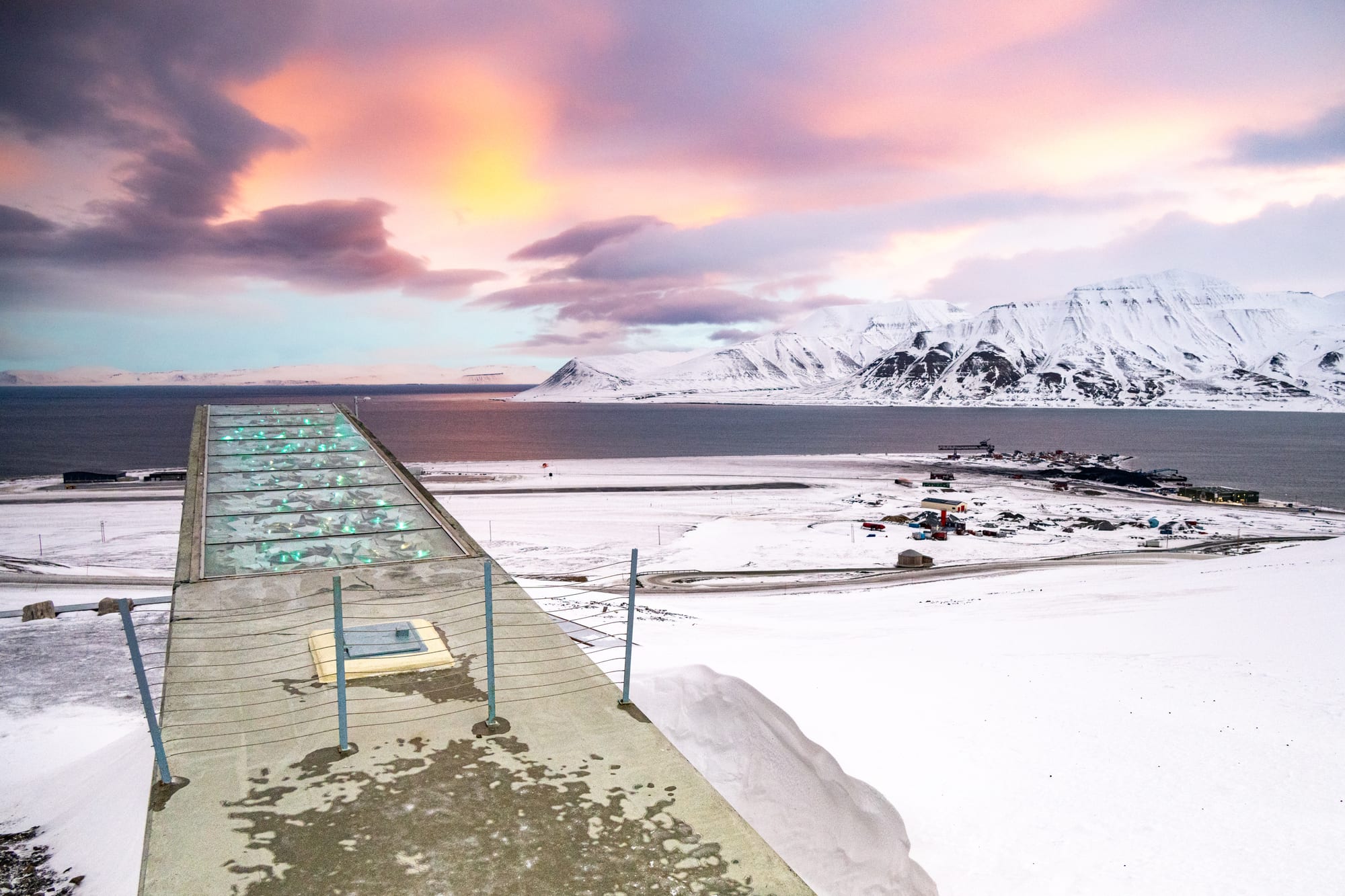
The vault stands near Longyearbyen's airport, a narrow concrete wedge rising out of the mountainside. Visitors can see it only from outside. Along its roof and front runs an artwork by the Norwegian artist Dyveke Sanne, Perpetual Repercussion, made of steel, mirrors and prisms that reflect the polar light in summer, while in the dark winter months 200 fibre-optic cables make it glow a muted greenish-turquoise and white.
Depositors now number more than 120, including some Indigenous communities. In 2015 representatives of the Parque de la Papa in Peru deposited 750 samples of potatoes. The facility has room for 4.5 million samples, so the vault has filled less than a third of its space.