💰 Budget
Svalbard is very expensive — everything except duty-free alcohol and tobacco is shipped or flown in, and guided trips (the only way to leave the settlements safely) are the main cost. Longyearbyen has a hostel and guesthouses alongside hotels, and self-catering from the well-stocked supermarket helps.
- Daily Budget Midrange
- NOK 3,000–6,000 / USD 280–560 (hotel, restaurant meals, a full-day guided snowmobile, boat, or glacier trip)
- Daily Budget Shoestring
- NOK 1,200–2,000 / USD 110–190 (guesthouse or hostel, self-catering, town walking, one short tour)
Book guided excursions well ahead for the season you want, self-cater where you can, and note that the tax-free regime makes alcohol and outdoor gear relatively cheap.
✈️ Visa Requirements
Svalbard is part of Norway but sits outside the Schengen Area and the EEA. Under the 1920 Svalbard Treaty, no one needs a visa or a residence permit for Svalbard itself, whatever their nationality — but there is no onward free movement: flights connect only through mainland Norway, so you pass through Schengen (Oslo or Tromsø) to get there, and non-visa-exempt nationals need a double-entry Schengen visa for that transit.
- Typical Stay
- No time limit under the treaty, but you must be able to support yourself; transit is via mainland Norway (Schengen)
If you need a Schengen visa, get a double-entry one so you can re-enter mainland Norway on the way back from Svalbard.
🛡️ Safety
Longyearbyen is safe from crime, but the environment is not forgiving. Polar bears range across the whole archipelago; anyone moving outside the settlements is required to carry appropriate devices for scaring a bear off, and carrying a rifle is officially recommended. Going out unguided is strongly discouraged. Avalanches, crevasses, thin sea ice, extreme cold, and rapid weather changes are all serious hazards, and rescue can be far away. Stricter environmental rules have applied since 1 January 2025: you must keep at least 300 metres from polar bears (500 metres from 1 March to 30 June), ships calling in the national parks may carry at most 200 passengers, landings in protected areas are limited to mapped sites, drones are banned there, and motorised traffic is banned on the sea ice of selected fjords after 1 March.
- Health
- The Longyearbyen hospital handles emergencies and stabilisation only; anything serious, and childbirth, means evacuation to the mainland; frostbite and hypothermia are the everyday risks
Only leave the settlements with a licensed guide, follow all polar-bear and avalanche advice, dress for extreme cold, and carry travel insurance that explicitly covers Arctic and guided-activity evacuation.
🌦️ Climate
High Arctic, but milder than its latitude thanks to a branch of the Gulf Stream. Summers are cool, with daily means of about 4–7°C and the midnight sun from 20 April to 23 August; winters are cold and dark, with January means of about −13 to −9°C and colder spells inland, and the polar night from 26 October to 15 February. Svalbard is warming much faster than the global average.
- Summer
- Cool, midnight sun 20 Apr–23 Aug
- Winter
- Cold and dark; polar night 26 Oct–15 Feb
🚆 Transportation
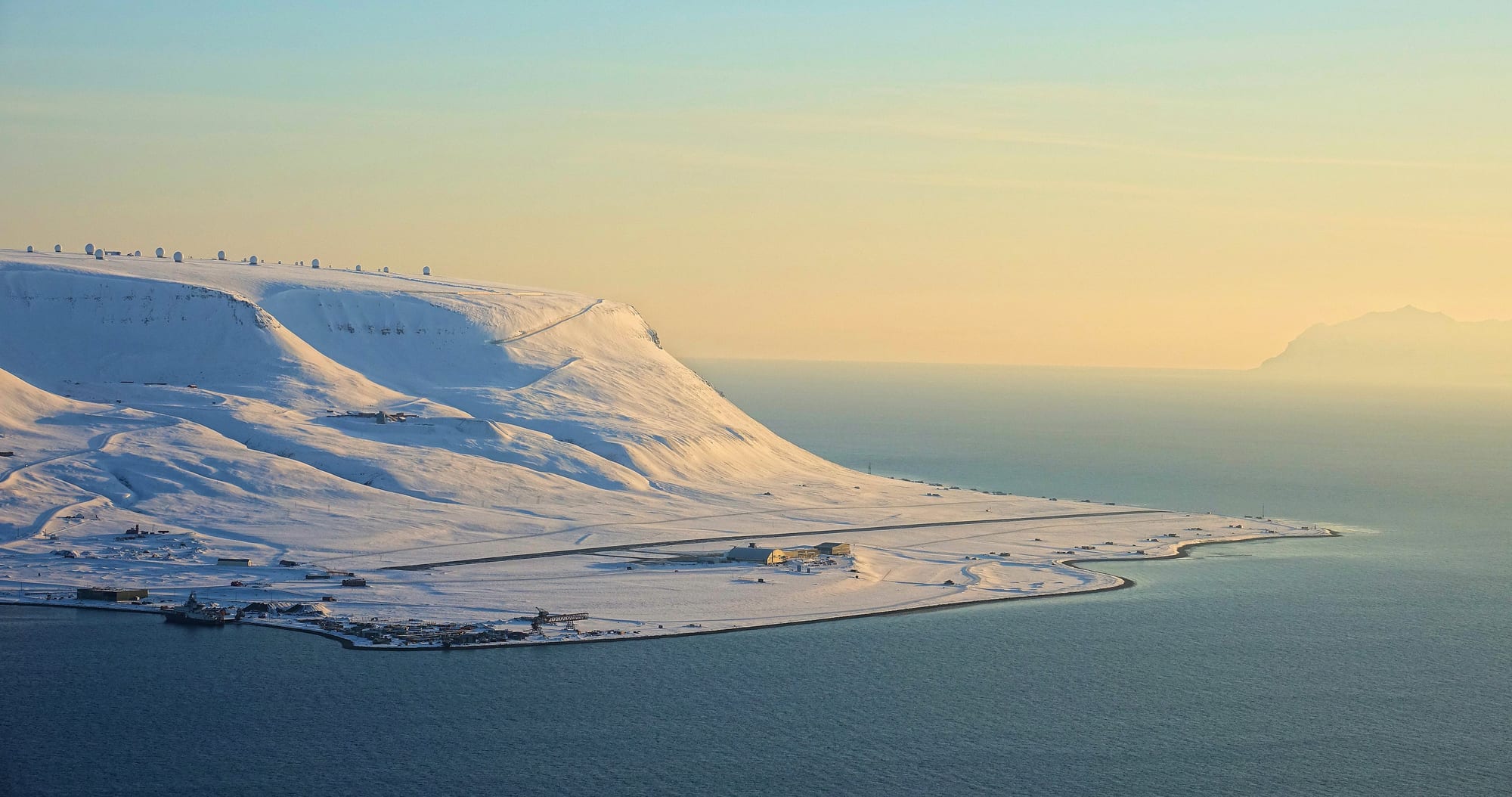
Svalbard Airport, 5 km from Longyearbyen and the northernmost airport in the world with scheduled public flights, has daily Scandinavian Airlines services to Oslo and Tromsø. There are no roads between settlements: getting around means snowmobiles in winter, boats in summer, and organised excursions, all typically guided. Longyearbyen itself is walkable, with taxis and a bus to the airport.
Everything outside Longyearbyen is done by guided snowmobile, dog-sled, or boat trip; book these before you arrive, especially in the spring peak.
📅 Best Time to Visit
March to May is the classic season — returning light, deep snow, and snowmobile and dog-sled touring, plus ice caves. June to August has the midnight sun, open water for wildlife cruises, and hiking. The dark months offer the northern lights (including in daytime) and a stark "polar night" experience.
- Events
- Polarjazz (February, held since 1998); Solfestuka, the sun-festival week around 8 March, celebrating the sun's return; the Spitsbergen Marathon and the Svalbard Skimaraton; the Arctic Film Festival
💱 Currency
The currency is the Norwegian krone. Cards and contactless payment are used almost everywhere, including for tours, and Longyearbyen has a bank.
- Symbol
- kr
- Currency Code
- NOK — Norwegian krone
💬 Language
Norwegian is the main language in Longyearbyen and the other Norwegian settlements, and Russian in Barentsburg. English is spoken by virtually everyone in the tourism and research sectors, and a large share of residents are international.
- English
- Spoken almost universally in tourism and research
- Main Languages
- Norwegian (and Russian in Barentsburg)