Culture & Customs · Svalbard
Svalbard: Waiting for the Sun to Return
A young, international Arctic community with no indigenous population, where outdoor shoes stay in the hallway, the church never locks its doors, and the whole town gathers to greet the first sunlight after the polar night
By Globeway Editorial · 30 September 2026
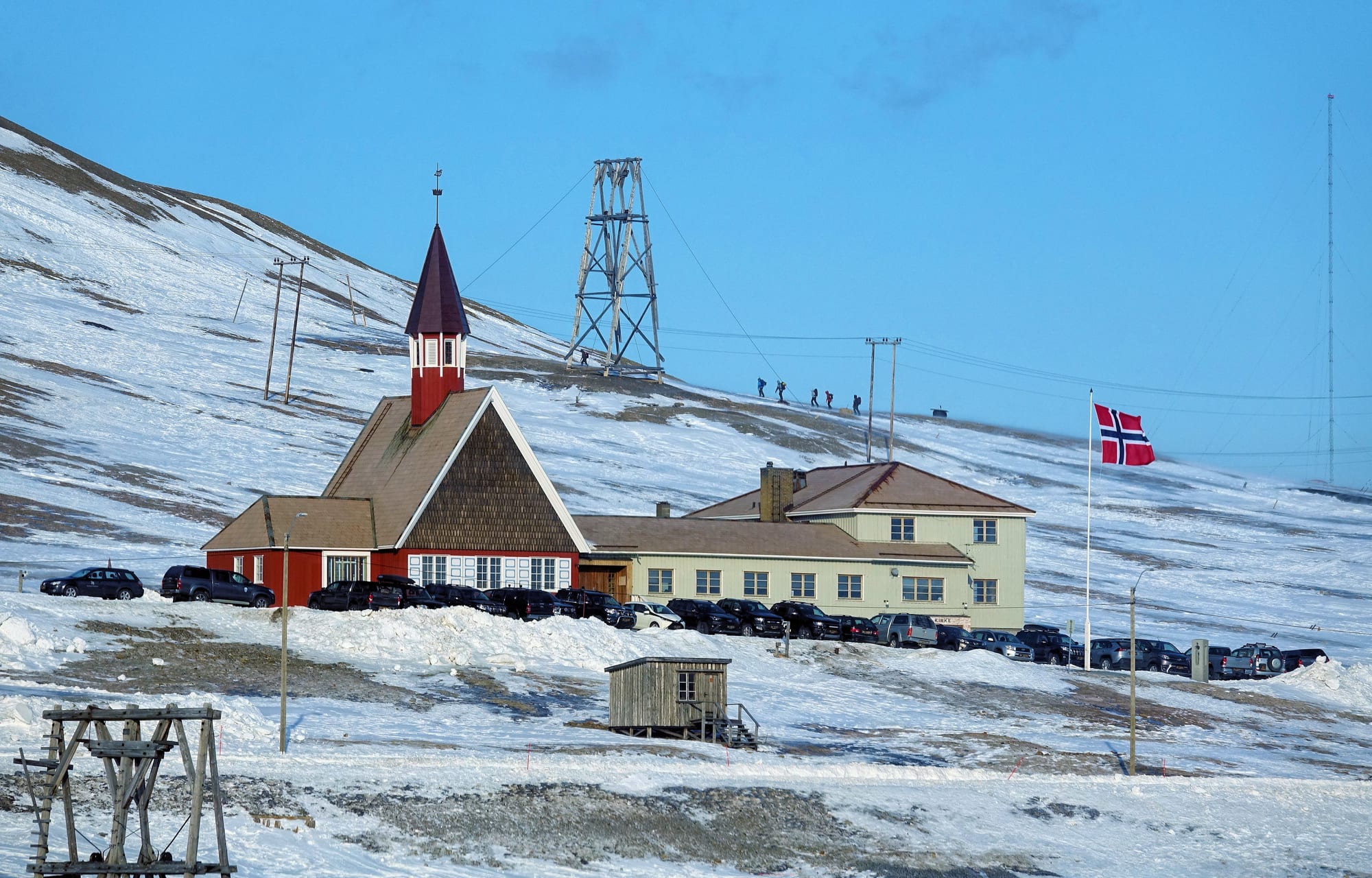
On 8 March, people in Longyearbyen gather at the steps of the old hospital and wait. For months the sun has stayed below the mountains, and the settlement has lived through the polar night by lamplight. Local tradition holds that the sun is declared back only when its rays reach those steps, and when they do, the crowd celebrates together. The moment is the high point of Solfestuka, the sun festival week, filled with concerts, revues and an outdoor church service. It says a good deal about Svalbard, a place where there is no ancient folklore to draw on, so the community has built its customs around the things everyone shares: the light, the cold, the mining past and the need to look after one another.
Faith, identity and values
Svalbard has never had an indigenous population. Its people are almost all newcomers, and most expect to leave again after a few years. About 2,500 people live in the Norwegian settlements of Longyearbyen and Ny-Ålesund, and at the start of 2025 around a third of them were foreign citizens; the largest groups came from the Philippines, Thailand, Germany and Russia. Norwegian culture sets the tone, but the town is deeply international, and English is spoken almost everywhere in tourism and research.
That mixture produces a practical, egalitarian outlook, and in a place where help can be hours away, relying on one another is a matter of common sense. The old company-town past still shapes daily habits, from the mining relics left standing on the hillsides to the custom of taking off outdoor shoes indoors.
Svalbard Church, part of the Church of Norway, is the main religious institution, but it describes its mission as serving everyone on the archipelago regardless of nationality or church affiliation, and it forms part of the local emergency preparedness. The church is normally open around the clock. Visitors are welcome to sit quietly, light a candle, or help themselves to coffee or tea in the lounge, leaving a donation for the cost. Many people come each week for choirs, scouts, baby song groups, confirmation classes, services and concerts, which makes the church as much a community centre as a place of worship.
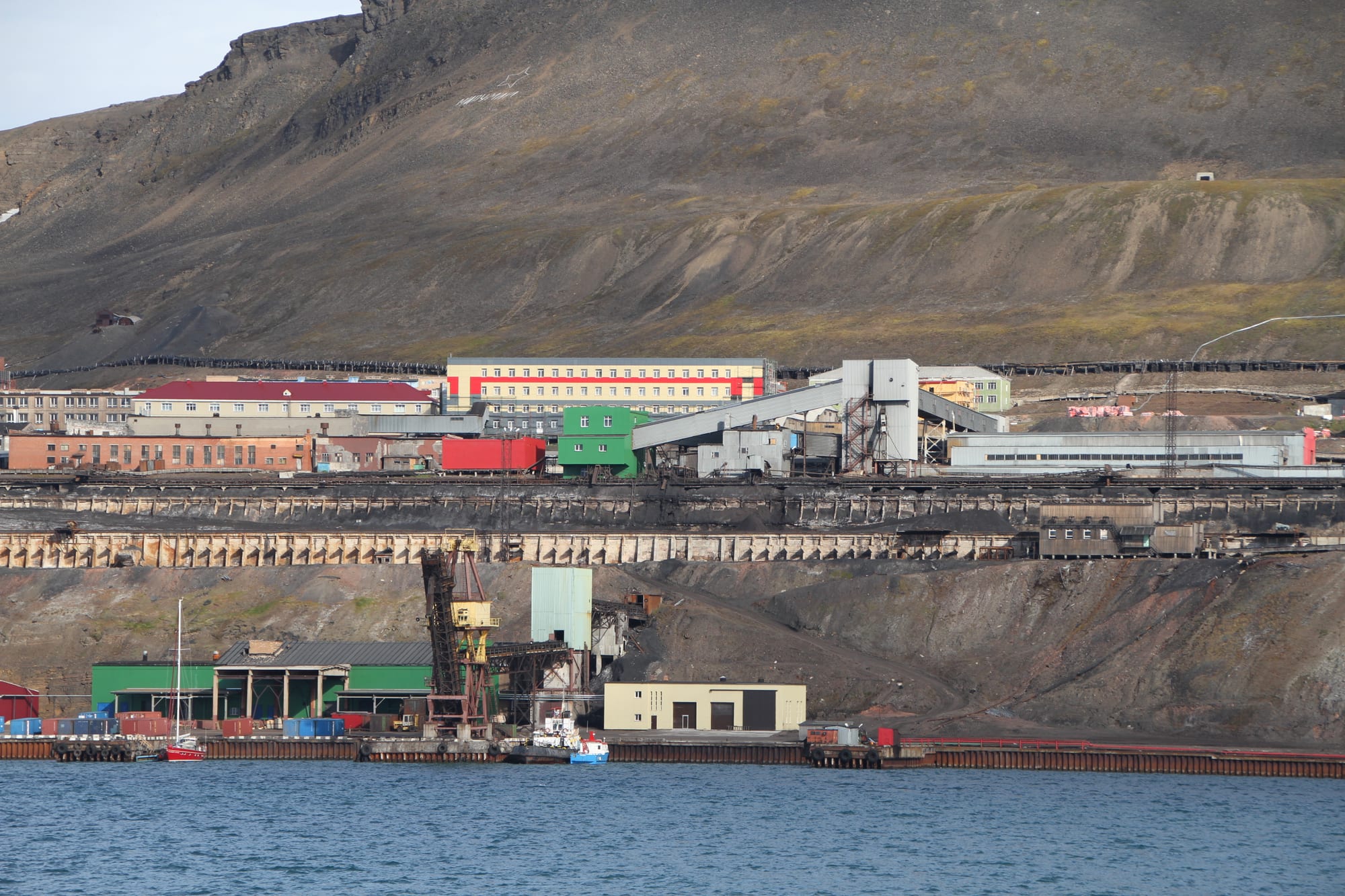
Some 60 kilometres away lies Barentsburg, a Russian coal-mining settlement of a few hundred people run by the state-owned company Trust Arktikugol under the equal-access terms of the Svalbard Treaty. Its residents speak Russian, and the town has its own school, kindergarten, hospital and cultural centre, with a bust of Lenin still looking out over the fjord. Relations have been shaped by events elsewhere, and have grown more strained since Russia's full-scale invasion of Ukraine in 2022.
Greetings and meeting people
Social life in Longyearbyen follows mainland Norwegian norms. "Hei" serves as a greeting in almost any setting, and a firm handshake with eye contact is usual on meeting someone for the first time. Norwegians generally use first names, even with older people and managers, and the informal pronoun "du" is the normal polite form rather than a sign of disrespect. Titles are rarely used. Because so many residents are from abroad, English is the working language of much everyday conversation, and nobody expects a visitor to speak Norwegian.
The community guidelines drawn up for visitors are a good guide to local feeling. Residents are happy to chat, but visitors are asked always to ask before taking photos of people, to respect privacy and never to photograph children. Local products are sold at a fixed price, and the guidelines note that bargaining is not part of the culture.
Hospitality and being a guest
The custom visitors notice first is the removal of shoes. It dates from the mining era, when workers came home with boots covered in coal dust, and it has survived long after the mines. In several restaurants and hotels, the tourist information centre, and public buildings such as museums, the hospital and the library, people take off their shoes and boots in the hallway, and slippers are often provided. The church follows what it calls the old Svalbard tradition of leaving outdoor shoes in the cloakroom before going upstairs.
At a Norwegian table, it is polite to thank the host with "takk for maten", "thank you for the food", on finishing a meal. At formal dinners, a guest may even give a short speech of thanks for the meal. Svalbard's long winter also gives shared meals special weight: a communal Christmas dinner is a long-standing local tradition.
Alcohol has its own rules, another legacy of the mining era. Residents buy it on a ration card with a monthly quota, and visitors buying beer or spirits in the shop must show an airline ticket.
Festivals and life's big moments
The year's festivals follow the light. PolarJazz, held every February since 1998, brings music into the depths of the polar night. Solfestuka runs in early March, with the return of the sun on 8 March at its heart. On 17 May, Norway's Constitution Day, the whole town gathers for the customary parade, with hurrahs and as much ice cream as anyone can manage, usually under the midnight sun and against snowy mountains; in the evening, many share a festive meal with friends. In late October, the Dark Season Blues festival marks the beginning of the dark months with four days of concerts across the town's venues, including an old coal mine and the church.
Christmas has grown its own Arctic customs. On the first Sunday of Advent, the Christmas tree in the town square is lit, and residents walk by torchlight to a letterbox in Nybyen, where children post their letters to Father Christmas, who is said locally to live in the "Santa Claus mine", Mine 2B. On Christmas Eve and Christmas Day, many people attend services at the church dressed in the colourful bunads of their home regions across Norway. Some families roast a leg of reindeer from the autumn hunt; others take snowmobiles out to celebrate in a wilderness cabin.
Life's milestones are shaped by the archipelago's unusual conditions. Confirmation is held on Palm Sunday, making it one of the busiest days of the church's year, and the church also holds baptisms and weddings. Because the permafrost prevents bodies from decomposing, coffin burials are not allowed, but urns may be buried for people who were living in Svalbard at the time of their death.
Arts, crafts and music
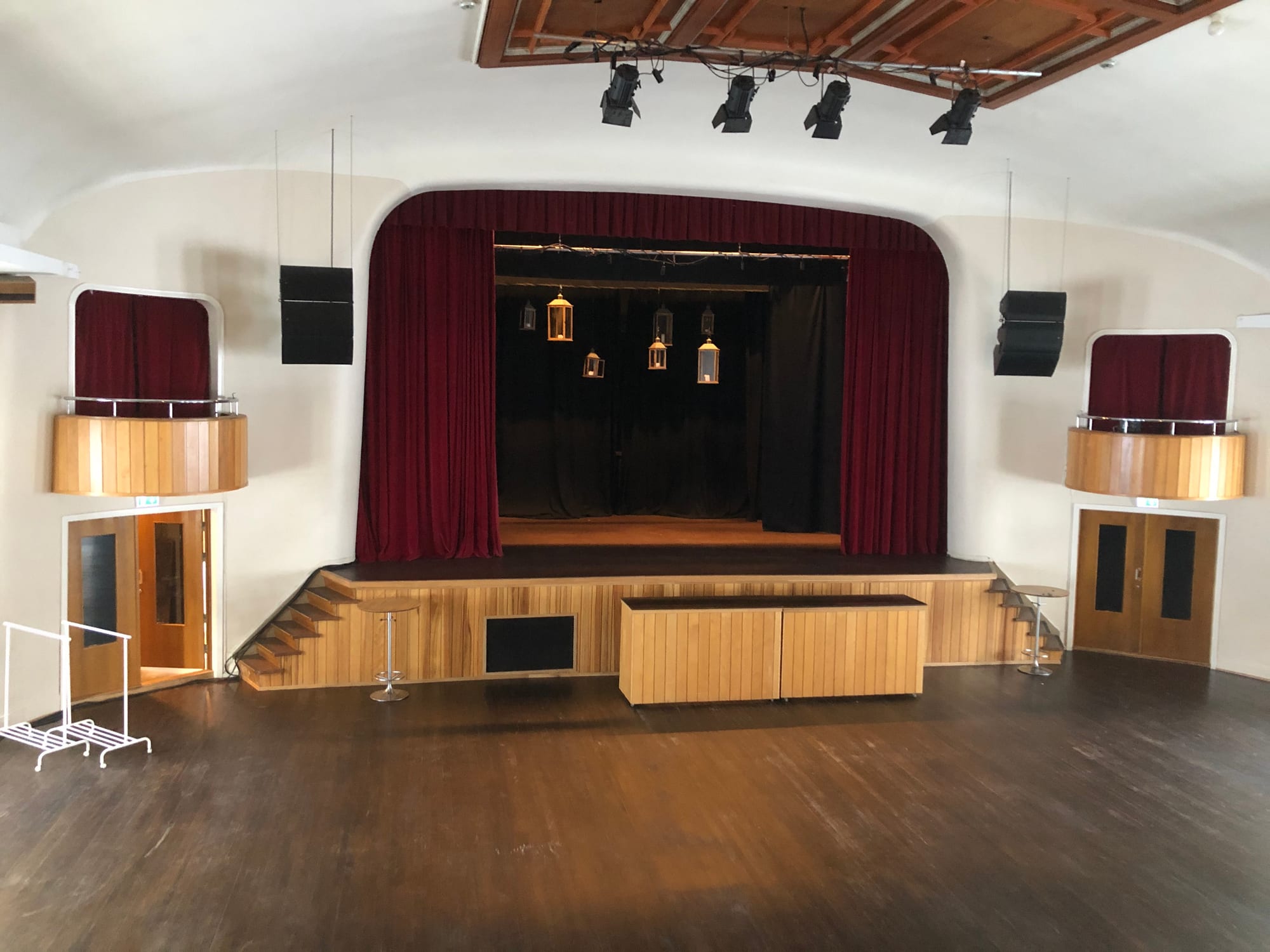
For a town of its size, Longyearbyen has an unusually full cultural life. Alongside PolarJazz and Dark Season Blues, the calendar includes other festivals through the year, and the church, the culture house and Huset, a historic venue in Nybyen, all host concerts. PolarJazz, the world's northernmost jazz festival, has grown into an eclectic programme for young and old alike.
The visual art most associated with Svalbard is that of Kåre Tveter (1922–2012), the Norwegian painter known as "the painter of the light". He first came to Longyearbyen in 1984 and returned again and again, yet he never painted or sketched on the islands, working instead from memory in his mainland studio. His subtle, pastel studies of the polar winter and the golden summer are exhibited at the Nordover art centre in Longyearbyen.
Svalbard's older heritage is treated with real seriousness. Trappers' huts, whaling remains, mining installations and other traces of human activity from before 1946 are automatically protected by law, as are graves and grave markers of any age, and each protected site has a protection zone of 100 metres around it.
Dos and don'ts for visitors
- Do take off outdoor shoes in the hallway wherever others are doing so.
- Do ask before photographing people, and never photograph children.
- Do say "takk for maten" to thank the host after a meal.
- Do wear a reflector or high-visibility clothing outdoors during the polar night.
- Don't leave the settlement without a local guide who has the right knowledge and training.
- Don't touch, move or take away cultural relics; anything from before 1946 is protected by law.
- Don't feed, touch or disturb dogs, and don't pick the protected Arctic flowers.
- Don't try to bargain in shops; it is not part of the local culture.
What to take away
Svalbard's customs are young and practical, born of coal dust, cold and darkness, but they share one purpose: to turn a shifting group of newcomers at the edge of the Arctic into a community that looks after its people, its heritage and its fragile surroundings.