Daily Life · Tuvalu
Why is Tuvalu building a digital copy of itself before the sea rises?
A country barely two metres above the sea is digitising its land, records and culture so that Tuvalu can go on existing as a state even if its islands do not.
By Globeway Editorial · 2 November 2026
The short answer
Tuvalu is one of the lowest countries on Earth, a scatter of coral atolls whose average height is less than 2 metres (6.6 feet) above the sea, and scientists have long warned that rising seas could make it uninhabitable within a century. In November 2022 its foreign minister announced that Tuvalu would become the first digital nation: a copy of the country in the online world, holding its land, history, culture and the workings of its government, so that Tuvalu could keep functioning even if its islands were lost.
The digital copy is not a substitute for the real islands. In 2023 the government described staying and adapting as its Plan A; a digital duplicate belonged to Plan B, alongside evacuation. It also serves a legal argument: that a state can remain a state, with its seas and its rights, even after its land has gone.
A country two metres high
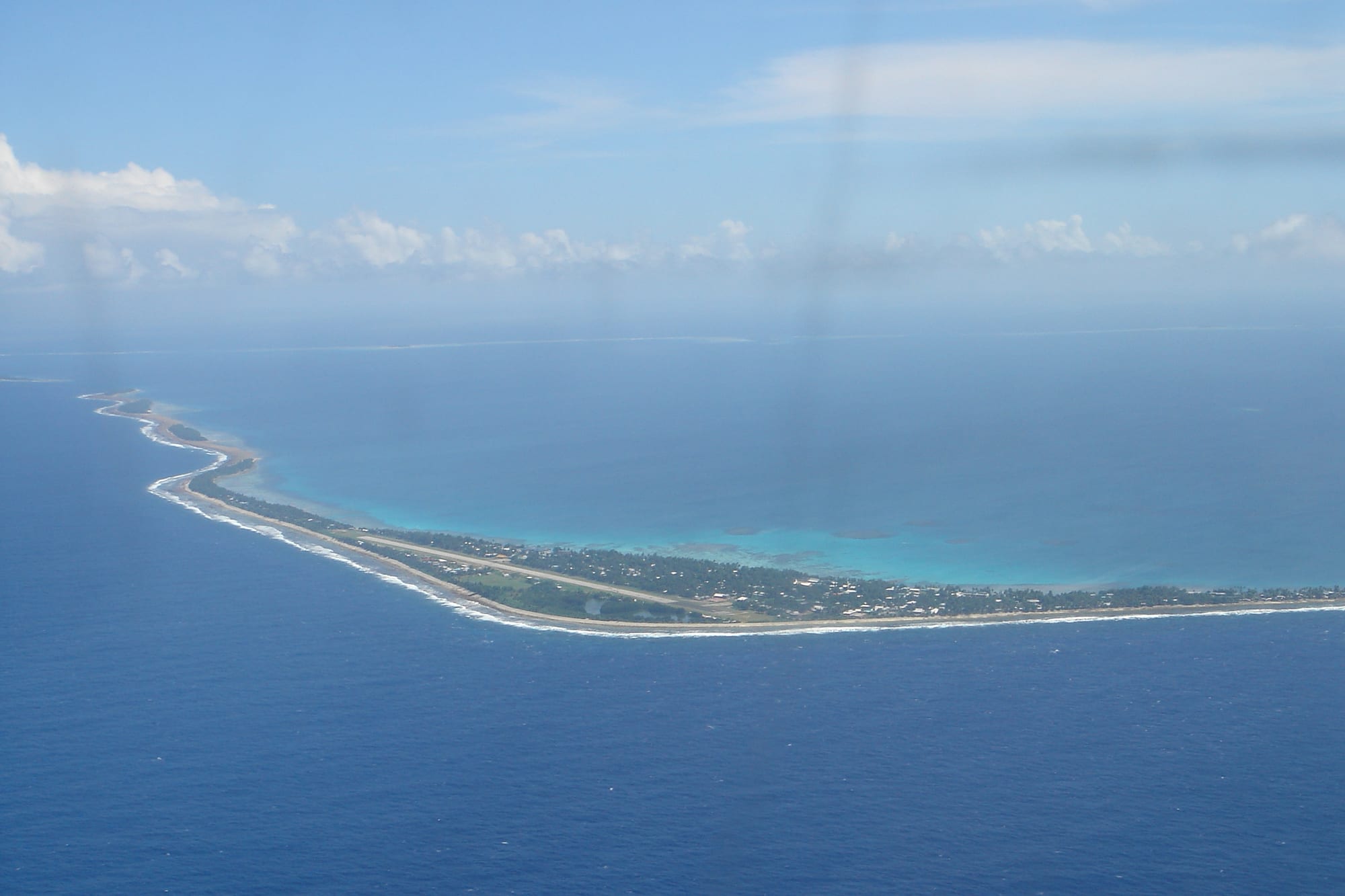
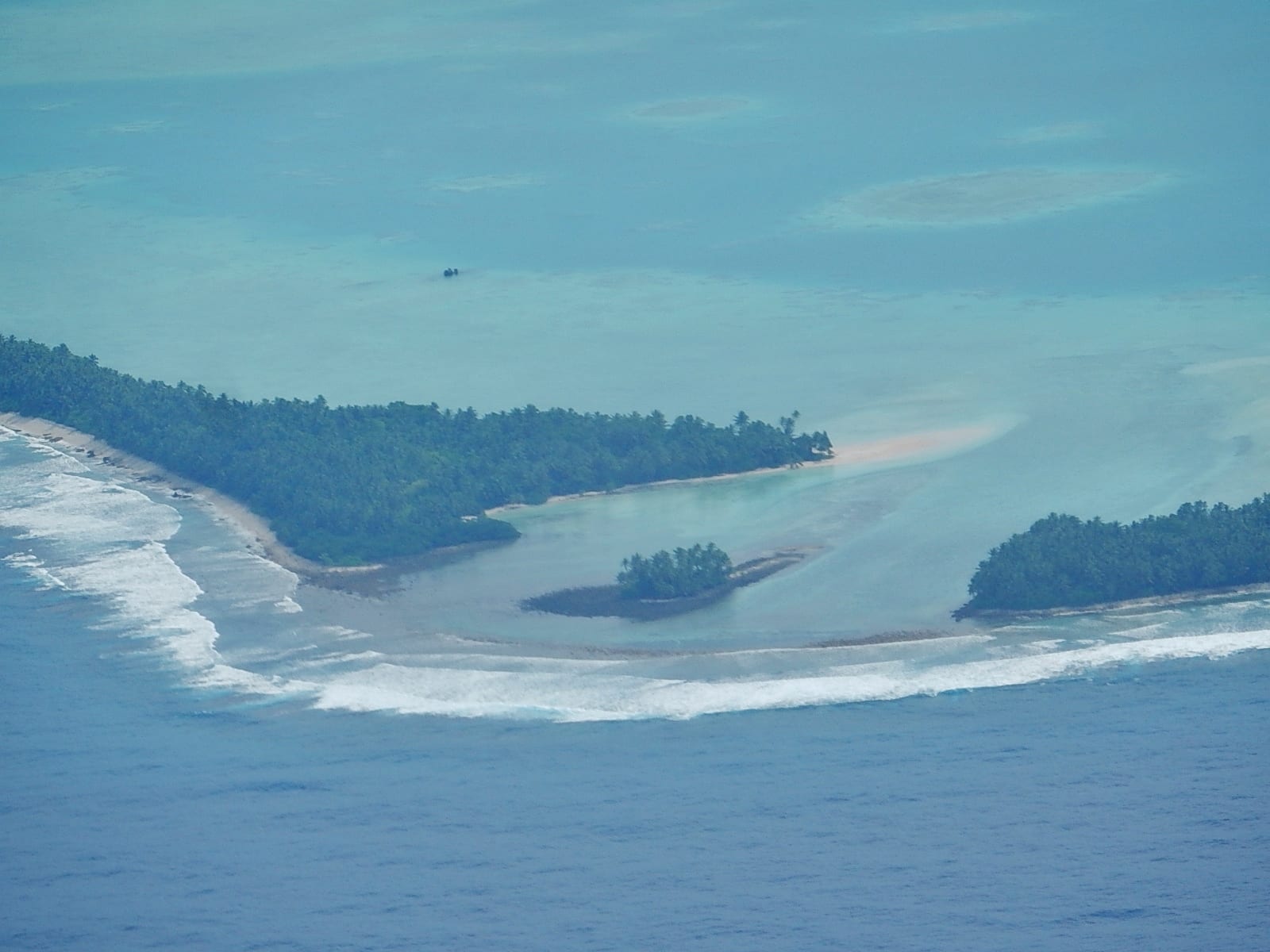
Tuvalu's nine islands, three reef islands and six atolls, have a total land area of about 25 square kilometres. The highest point, on Niulakita, is just 4.6 metres (15 feet) above sea level, the second-lowest maximum height of any country after the Maldives. The capital, Funafuti, is a narrow sweep of land between 20 and 400 metres wide wrapped around a lagoon, and more than half of the 10,643 people counted in the 2022 census live there.
The sea is already higher than it was. The tide gauge at Funafuti shows a rise of 3.9 millimetres a year, roughly twice the global average. King tides, the highest tides of the year, now flood low-lying ground, especially when La Niña or storms push the water higher still, and salt water seeps into the underground fresh water. Estimates suggest a rise of 20 to 40 centimetres over the next 100 years could make the country uninhabitable. The picture is not simple: a 2018 University of Auckland study found that the islands had gained more area in recent decades than they had lost, as storms pile up sand and coral. Tuvalu's prime minister replied that a growing shoreline is not the same thing as habitable land.
From knee-deep in the sea to the metaverse
The idea came from Simon Kofe, then Tuvalu's minister for justice, communication and foreign affairs. In October 2021 he launched the Future Now Project, known in Tuvaluan as Te Ataeao Nei, to prepare the country for the worst. A month later he recorded his speech to the COP26 climate summit standing knee-deep in seawater, to show that Tuvalu was on the front line of climate change.
In November 2022, speaking to COP27, he went further. Tuvalu would replicate itself in the metaverse, the shared virtual worlds of the internet. "Our land, our ocean, our culture are the most precious assets of our people," he said, and "no matter what happens in the physical world, we will move them to the cloud." The plan was wider than a 3D map. It meant digitising government functions, historical records and cultural material, so that Tuvalu's identity and its government could carry on even if the territory vanished entirely.
Can a country exist without land?
International law has no settled answer. Statehood is normally tied to a territory and a population, and no international agreement says what happens when a state loses its land to the sea. Nor does the United Nations Convention on the Law of the Sea deal with climate change, and Tuvalu has a great deal at stake: its huge ocean zone brings in the fishing fees that are one of its main sources of income.
So Tuvalu changed its own constitution. Amendments passed on 5 September 2023 and in force from 1 October 2023 declare that the State of Tuvalu will remain in perpetuity, "notwithstanding the impacts of climate change or other causes resulting in loss to the physical territory of Tuvalu", and fix its area and maritime zones as permanent. In 2021 the leaders of the Pacific Islands Forum had already declared that their maritime zones should continue without reduction whatever the sea does. Through the Future Now Project, Tuvalu has asked other governments one by one to recognise its statehood as permanent, and a number of countries have done so. The digital nation is the practical half of the argument: proof that the state's institutions and memory can continue somewhere.
Plan A: holding on to the islands
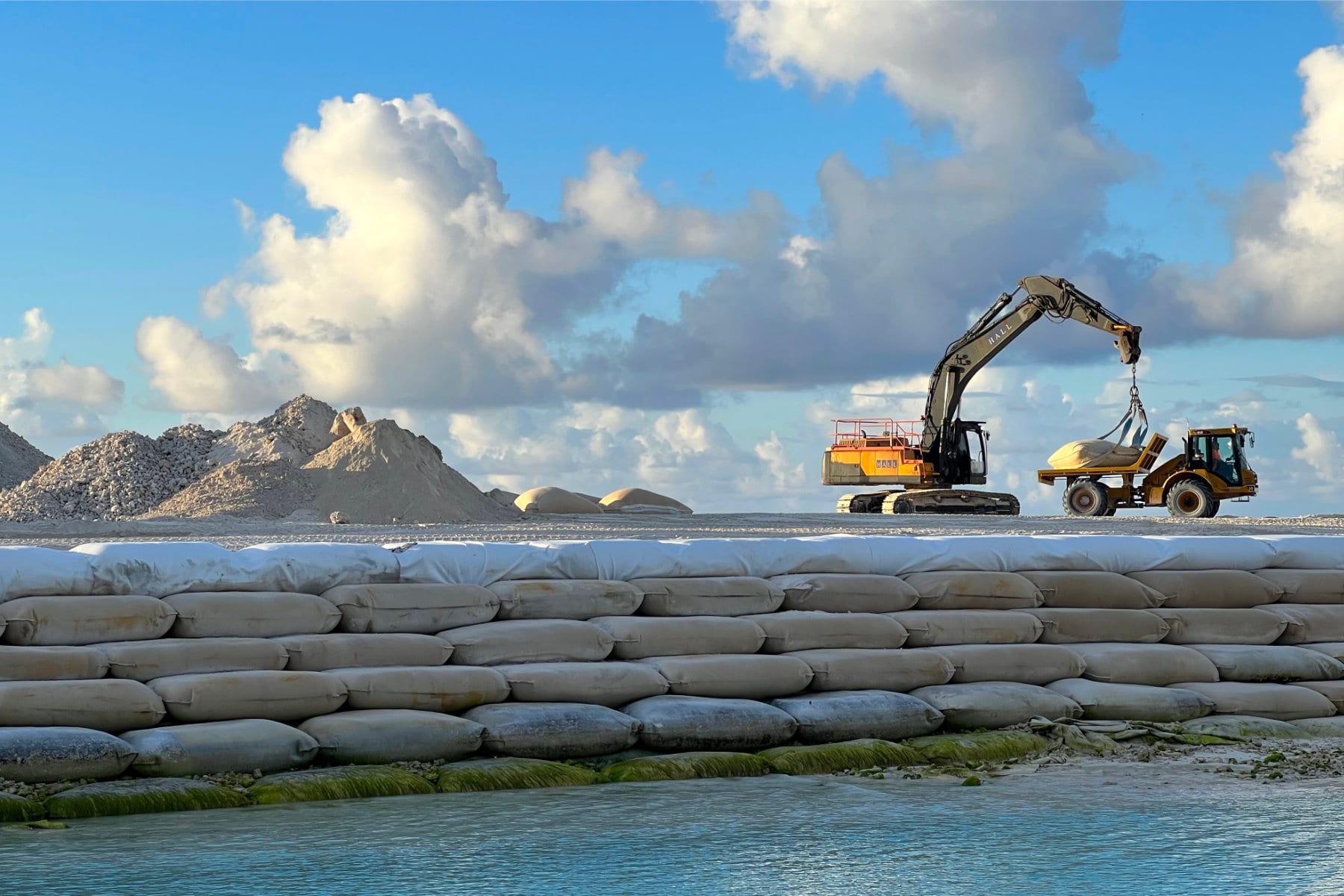
None of this means Tuvalu is packing up. Former prime minister Enele Sopoaga said in 2013 that relocation "should never be an option", and when Feleti Teo became prime minister in February 2024 he named climate change his government's top priority. Under the Tuvalu Coastal Adaptation Project, launched in 2017, sand dredged from the lagoon is building a raised platform on Fongafale, 780 metres long and 100 metres wide, designed to stay above the sea and storm waves beyond 2100. By 2026, reclamation had added more than 10 per cent to Tuvalu's land area.
The other path is people. In November 2023 Tuvalu signed the Falepili Union with Australia, named for the Tuvaluan value of good neighbourliness, care and mutual respect. Australia offers permanent residency to up to 280 Tuvaluans a year, alongside climate funding. In 2025, around 8,700 Tuvaluans applied and 280 visas were granted. The treaty was debated at home, with critics arguing it undermined Tuvalu's sovereignty, but the new government confirmed in 2024 that it wanted to proceed.
Taken together, the pieces explain the digital copy. Sea walls and new land buy time; migration gives families a safe way out; the constitution claims the country forever; and the digital nation holds what cannot be packed in a suitcase, the map of home, the records of a state and the culture of a people, in case the islands themselves cannot be held.