History · Saint Helena
Why was Napoleon exiled to a rock in the middle of the Atlantic?
After Napoleon escaped from Elba, Britain chose Saint Helena, a cliff-walled island more than 1,100 miles from Africa, so that he could never return.
By Globeway Editorial · 2 November 2026
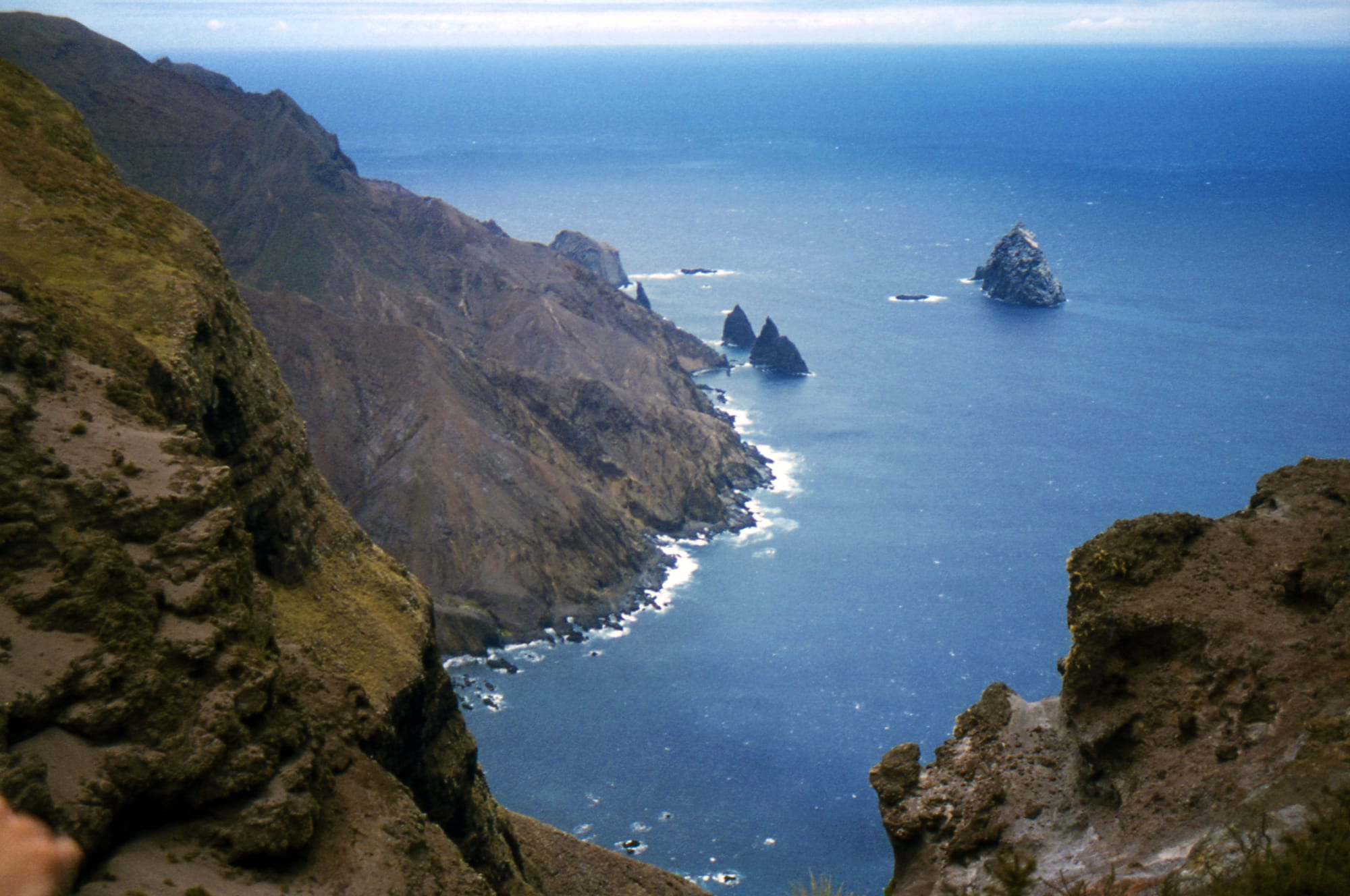
The short answer
Napoleon was sent to Saint Helena because his first exile had failed. In 1814 the allies who defeated him put him on Elba, a Mediterranean island off the coast of Tuscany, and made him its sovereign, with a small army and navy of his own. Within ten months he had sailed back to France, retaken power and plunged Europe into war again, until his defeat at Waterloo in June 1815. This time Britain, which held him, wanted a prison he could not leave, so that he could never again "disturb the peace of the world".
Saint Helena was the answer. It is a volcanic island in the South Atlantic, about 1,160 miles (1,860 km) west of Angola and 2,040 miles (3,280 km) east of Brazil, only some 10 miles long and 5 wide. Its steep black cliffs rise 200 to 300 metres, and it has only three points of access from the sea, which made it easy to watch and to defend. Napoleon arrived in October 1815 and never left. He died there on 5 May 1821.
The island that was too close
The lesson came from Elba. Under the Treaty of Fontainebleau of 11 April 1814, Napoleon was given the island as an independent principality, "in complete sovereignty and as personal property". He threw himself into running it, developing its iron mines, building roads and reforming its laws and schools, but he also watched events in France closely. As the victorious powers quarrelled at the Congress of Vienna, every scrap of news seemed to favour a comeback. After nearly ten months on the island he slipped away, and on 20 March 1815 he was back in Paris.
The powers at Vienna had already declared him an outlaw, and Austria, Prussia, Russia and the United Kingdom each pledged 150,000 men to end his rule. The campaign of the Hundred Days ended at Waterloo. On 22 June 1815 Napoleon abdicated for the second time and made for the Atlantic coast, hoping to sail for the United States, but British warships were blockading the ports around Rochefort.
Surrender, and a sentence
On 15 July 1815 Napoleon gave himself up to Captain Frederick Maitland of HMS Bellerophon, near the Île d'Aix. He seems to have expected to live quietly in the English countryside, and the ship carried him to Torbay and then Plymouth. On 31 July he learned that the British government had decided otherwise. On 7 August he was moved to HMS Northumberland for a voyage of more than two months.
Saint Helena suited the government for several reasons beyond its distance. It lay far from Europe yet on the route that ships between Europe and Asia used to round Africa. It belonged not to the British state but to the East India Company, which had governed it since the 1650s; the government leased it for the purpose. Above all, its isolation and its cliffs were what made it secure. To make doubly sure, Britain placed a garrison on Ascension Island from 22 October 1815, and in August 1816 annexed Tristan da Cunha, so that neither could be used as a base for a rescue.
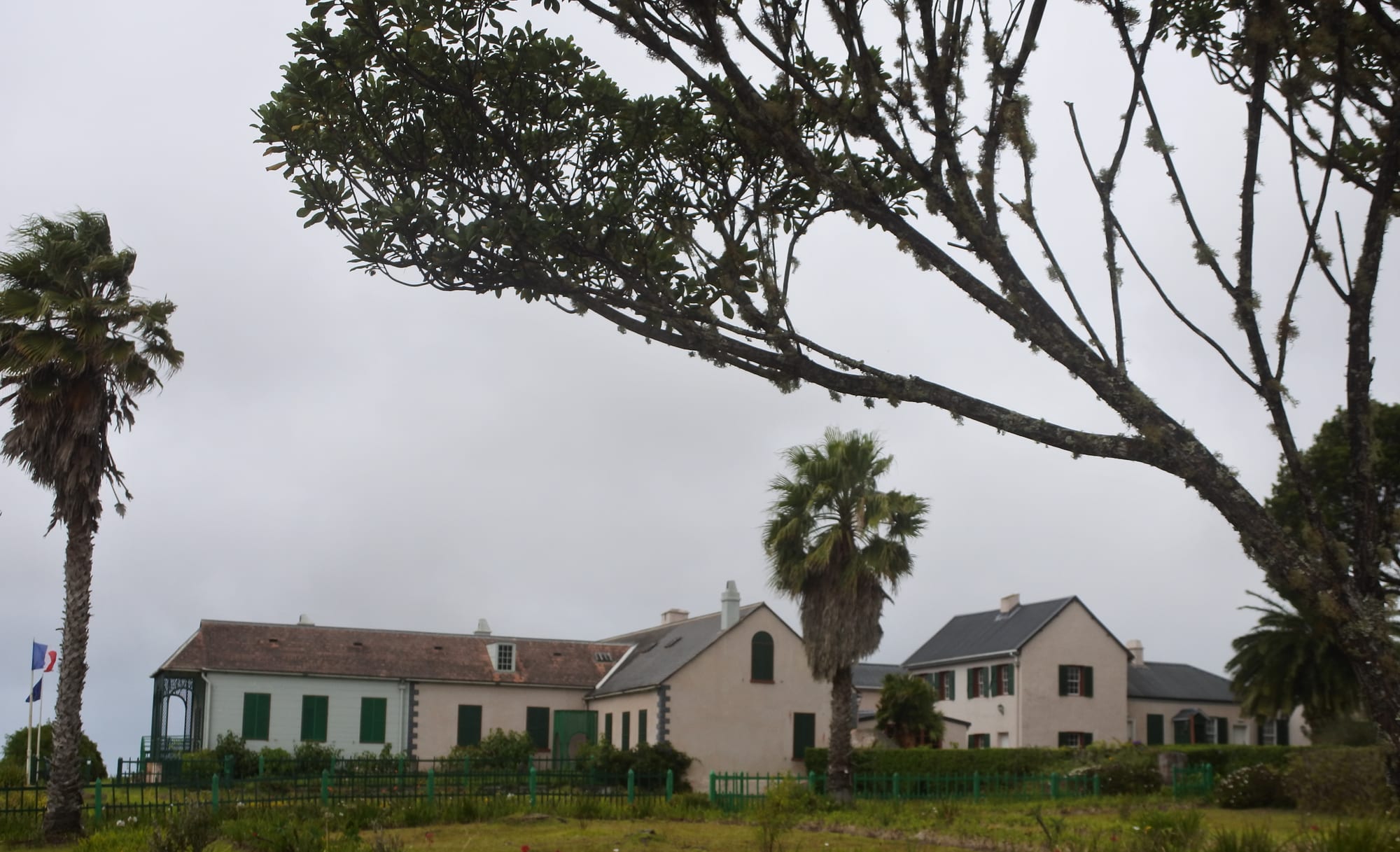
Longwood began as an East India Company farm. Termites later did so much damage that only the stone steps at the front are original fabric.
Life at Longwood
The Northumberland anchored off Saint Helena on 15 October 1815, and Napoleon landed the next day with a small household that included the Grand Marshal Henri Bertrand, Generals Gourgaud and Montholon, and Emmanuel de Las Cases. While his permanent home was prepared, he lived for about two months in a pavilion at The Briars, the home of the Balcombe family. On 10 December he moved to Longwood House, a converted farmhouse on a high plateau chosen because it was easy to guard. It was exposed to the trade winds and often wrapped in fog and damp.
The governor who arrived in 1816, Sir Hudson Lowe, became his gaoler in all but name. On London's instructions Lowe refused to call him emperor, addressing him as Napoleon Bonaparte. Napoleon's weapons were taken, his letters opened and his movements around the island restricted. He passed the time dictating his memoirs; Las Cases, who left at the end of 1816, published his own record of those conversations in 1823 as the Memorial of Saint Helena. Lowe once proposed moving him to a more sheltered house, but London decided that Longwood, where escape was harder, was safer. A new house was begun nearby in 1818; Napoleon never lived in it.
Hope faded slowly. In November 1818, at the Congress of Aix-la-Chapelle, the allies agreed that he would stay on the island until he died. His companions drifted away, and he went out less and less. In 1821, suffering from what his doctors found to be stomach cancer, he fell gravely ill, dictated his will and died at Longwood at 5:49 in the evening of 5 May 1821.
- 11 April 1814: the Treaty of Fontainebleau sends Napoleon to Elba
- 20 March 1815: after escaping from Elba, he is back in Paris
- 22 June 1815: after Waterloo, he abdicates for the second time
- 15 July 1815: he surrenders aboard HMS Bellerophon
- 16 October 1815: he lands on Saint Helena
- 5 May 1821: he dies at Longwood House
- 1840: his remains are returned to France
- 1858: France buys Longwood and the valley of his tomb
A grave without a name
Napoleon was buried on 9 May in the Valley of the Geranium, a spot he had chosen in case his body was not returned to Europe. The tomb carried no name, because Lowe would not allow it to say either "Napoleon" or "Emperor Napoleon". In 1840, with British agreement, King Louis-Philippe sent the frigate Belle Poule to bring him home. When the coffin was opened, witnesses found the body remarkably well preserved and the face immediately recognisable. Napoleon now lies at Les Invalides in Paris.
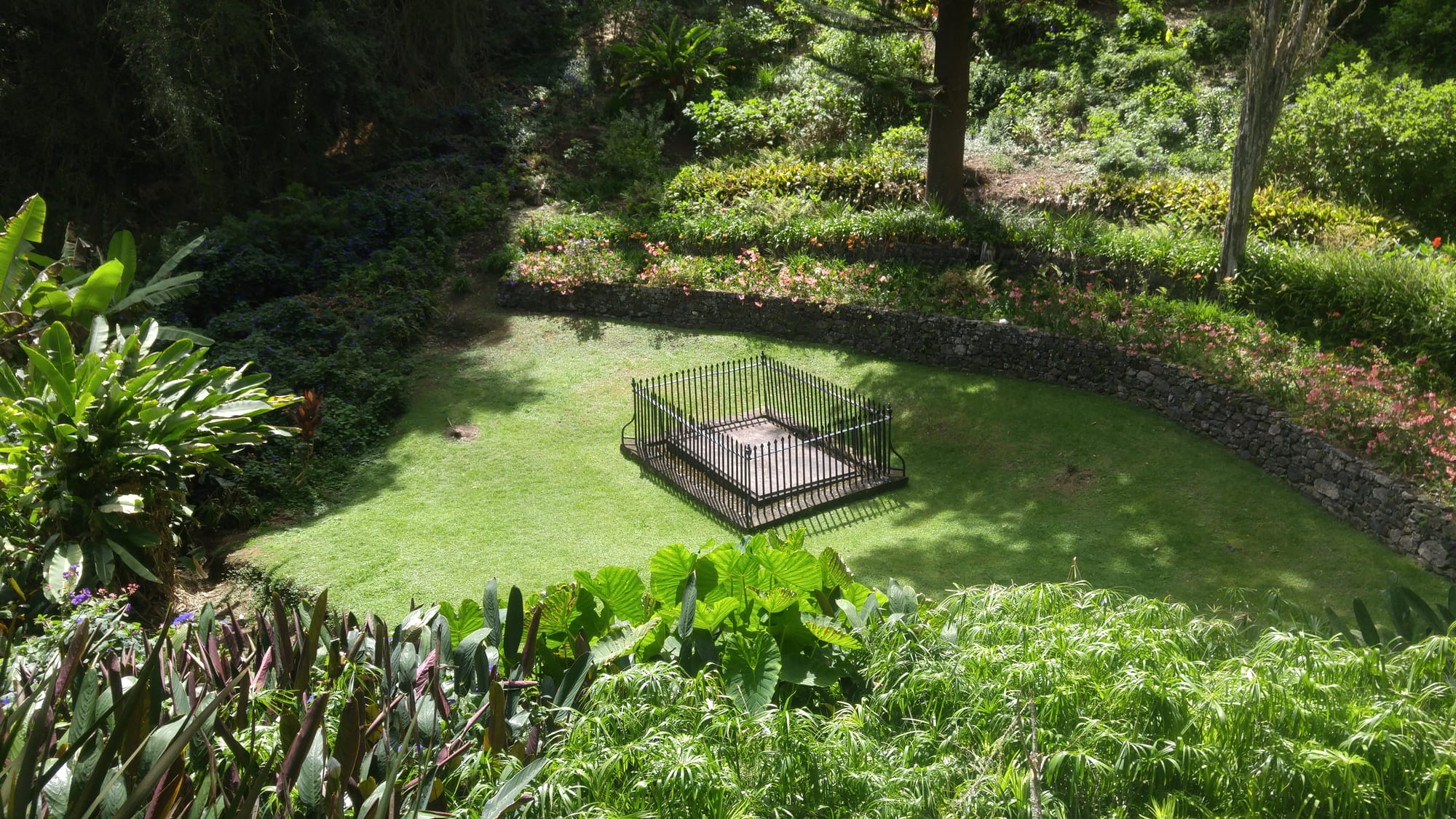
The grave site is one of the French-owned properties on the island, still tended as a place of memory.
Napoleon's island today
Saint Helena's link with the emperor has outlasted him. In 1858 Napoleon III bought Longwood House and the Valley of the Tomb for the French government for £7,100, and in 1959 The Briars pavilion was given to France as well. They are still French property, looked after by a French representative on the island, and Longwood is now a museum. Napoleon's captivity is the centrepiece of the island's tourism, alongside hiking, diving and swimming with whale sharks.
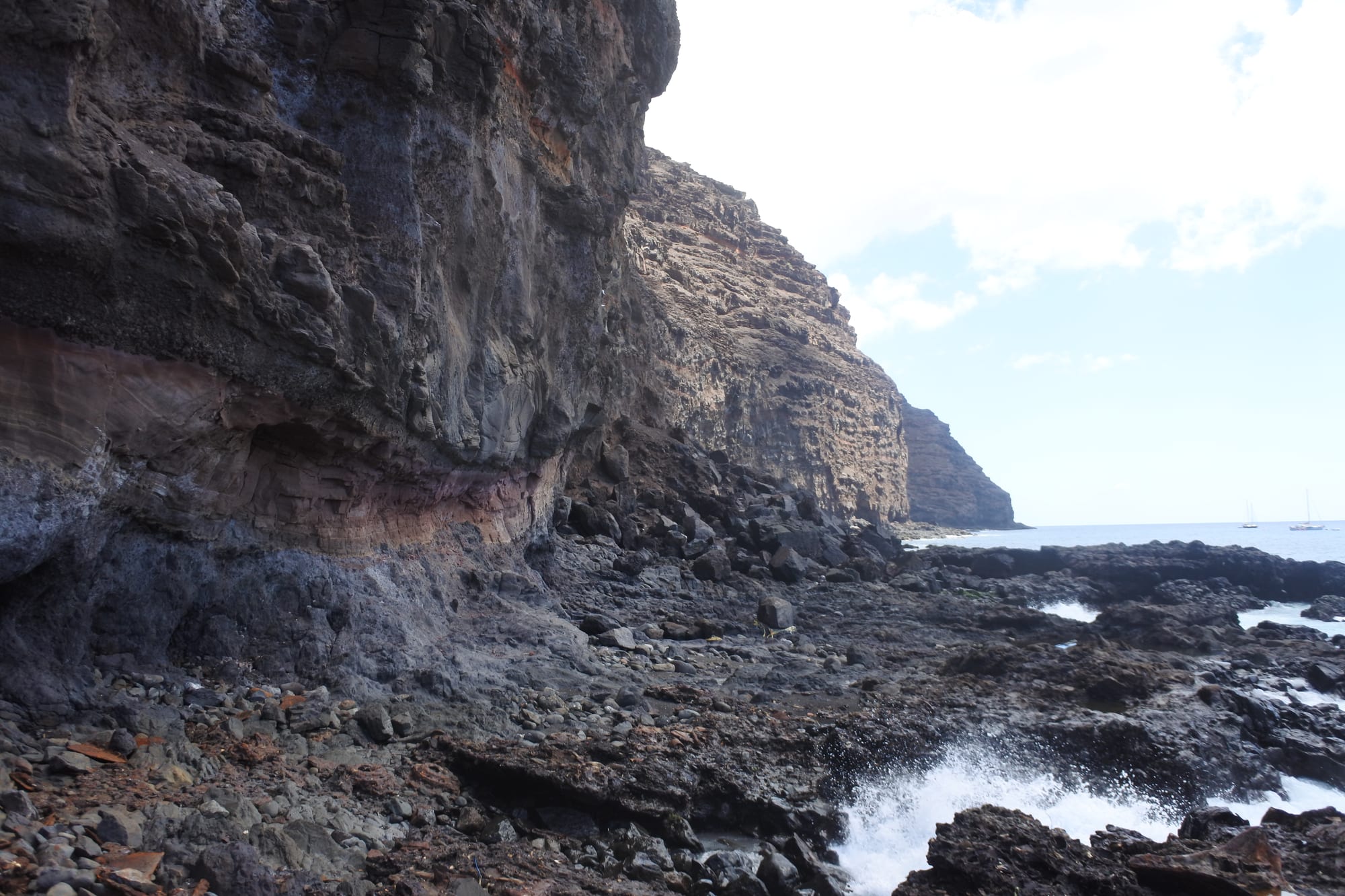
Many of Jamestown's Georgian buildings date from the East India Company's 18th-century rule; above them Jacob's Ladder, a staircase of 699 steps from 1829, climbs to Ladder Hill.
Until recently, reaching the island meant a voyage of five days each way on the RMS St Helena. Since October 2017, when its airport received its first scheduled flight, most visitors to the island where Britain once hid Napoleon from the world have arrived by air.