Culture & Customs · Zambia
Zambia: One Nation, Many Ceremonies
A Christian nation that still honours its chiefs and ancestors, greetings that begin with a clap or a supported handshake, and a calendar crowded with the traditional ceremonies of more than seventy peoples
By Globeway Editorial · 30 September 2026
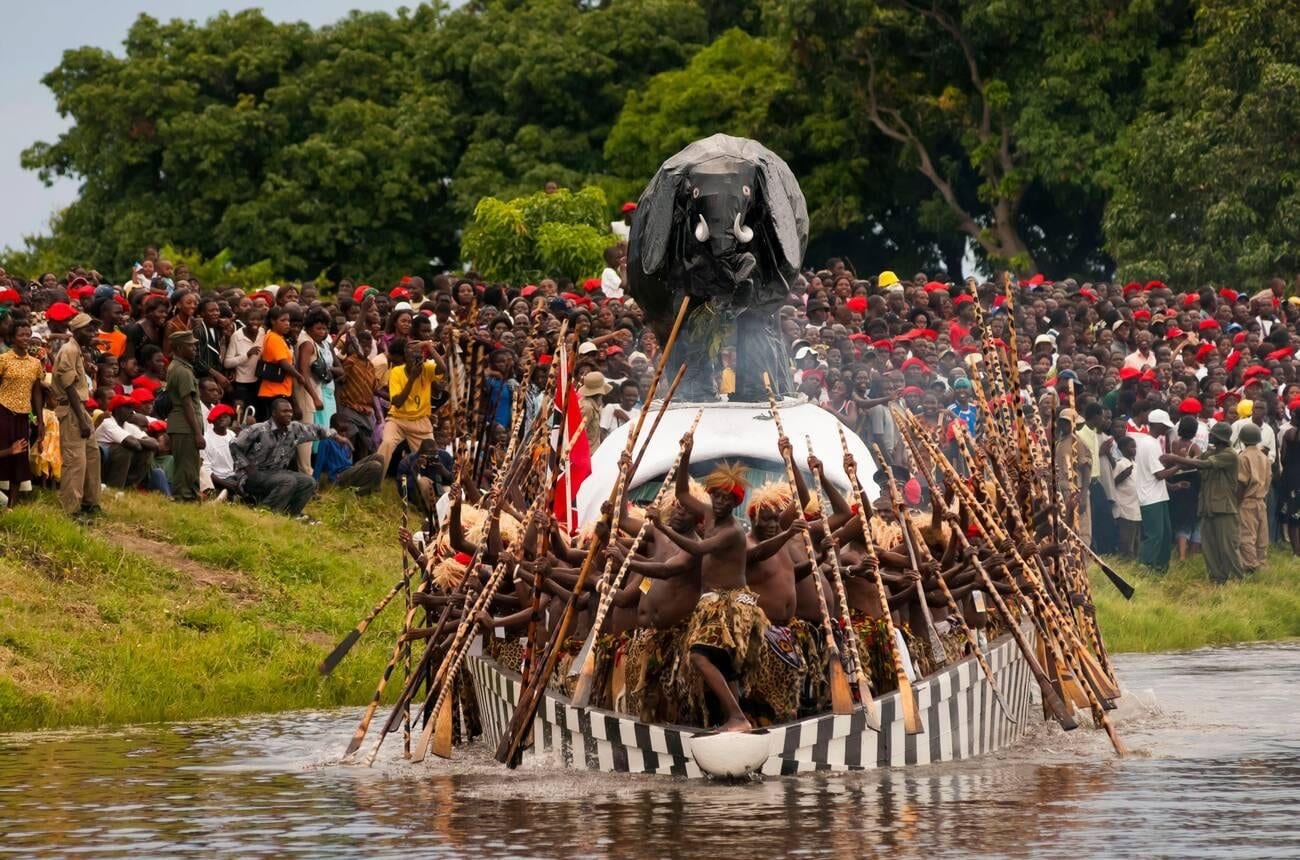
As the Zambezi spreads across its floodplain at the end of the rains, the royal maoma drums begin to sound. The Litunga, king of the Lozi people, boards the Nalikwanda, a great barge painted in black and white stripes and crowned with the figure of an elephant, and is paddled away from his flooded home towards a palace on higher ground. Rows of paddlers in scarlet berets drive the barge forward, singing as they go, while vast crowds follow along the banks. This is the Kuomboka, a name meaning "to move out of the water", and it is only one of the many traditional ceremonies held across Zambia every year. Together they reveal a country that is proud of its unity yet deeply attached to the customs of its many peoples, and in which respect for elders, chiefs and ancestors still shapes everyday manners.
Faith, identity and values
Zambia is home to more than seventy ethnic groups. English is the official language, used in government, business and schools, while seven Zambian languages, Bemba, Nyanja, Tonga, Lozi, Lunda, Luvale and Kaonde, have official regional status. The independence motto "One Zambia, One Nation" is still widely quoted, and ethnic politics is muted by the standards of the region. Chiefs keep real authority over customary land, and the traditional ceremonies over which they preside remain among the best-attended events in the country.
Christianity is the dominant faith. Estimates from the Zambia Statistics Agency, cited by the US State Department, put Christians at around 95 per cent of the population, with roughly three quarters of all Zambians belonging to Protestant churches, including the Anglican Church, evangelical and Pentecostal groups, and about a fifth to the Roman Catholic Church. Muslims make up under 3 per cent, and there are smaller Hindu, Bahá'í, Buddhist, Jewish and Sikh communities. Sunday services draw large congregations in towns and villages alike, and churches are at the centre of community life.
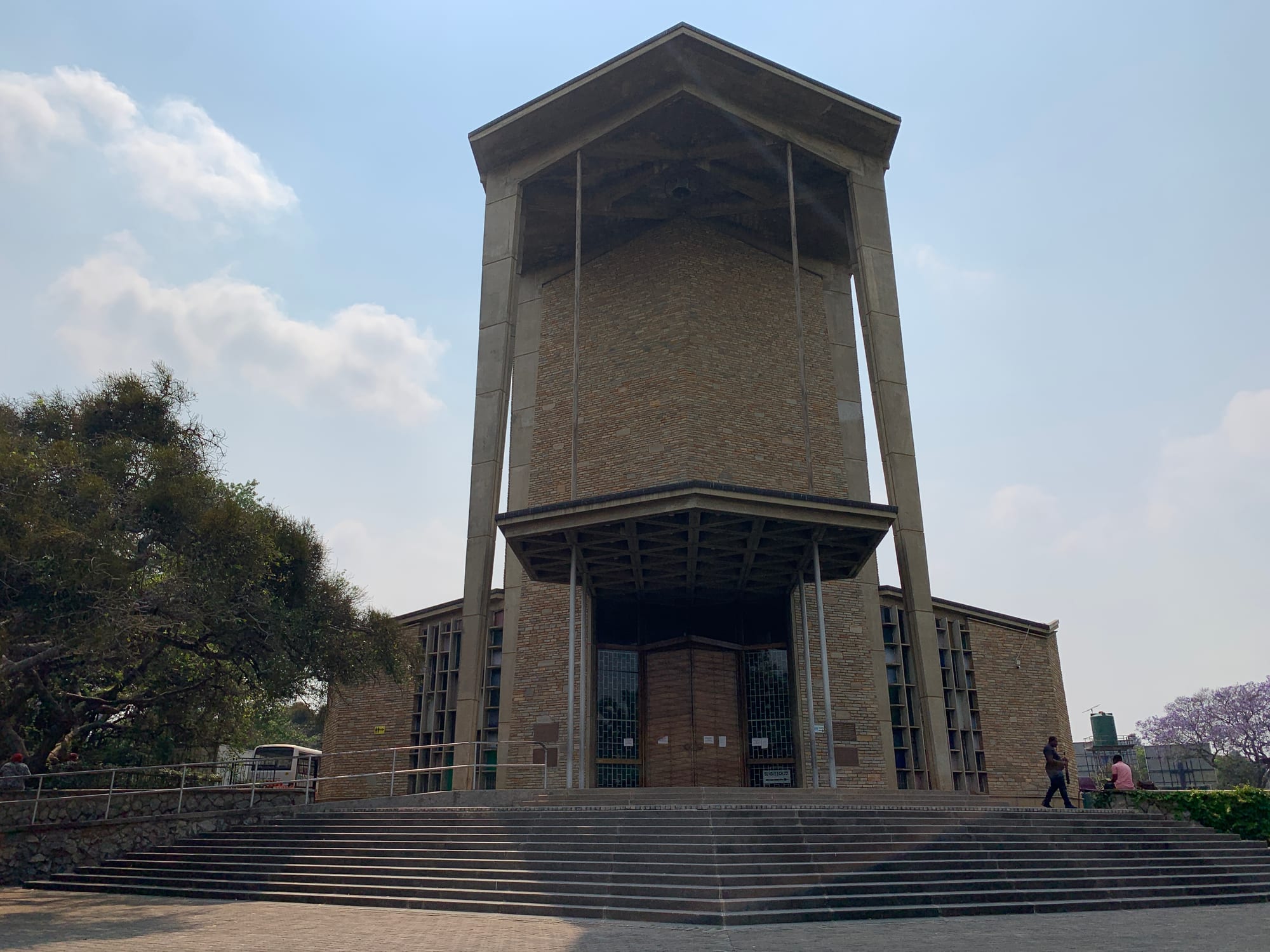
Church membership does not always replace older beliefs. Many Zambians also hold to ideas about the power of the ancestors and of the natural world, and some waterfalls and other natural sites are regarded as places where spirits live. Traditional healers, who work with medicinal plants, remain widely consulted, particularly in rural areas. Beneath both sets of beliefs lie shared values: loyalty to the extended family, deference to age and rank, and a courteous, unhurried sociability in which relationships count for more than efficiency.
Greetings and meeting people
A greeting is the essential first step of almost any encounter, and launching straight into business can seem abrupt. The usual pattern is to ask how the other person is, then to enquire after their family, and often their crops or the weather, before turning to the matter in hand. Zambians greet one another in English and in their own languages, such as mulibwanji in Nyanja or mwapoleni in Bemba, and a visitor who tries even a word of a local greeting is usually met with delight.
The handshake is the most common greeting, and it carries a gesture of respect: the left hand is placed on the right forearm or elbow while shaking. In some communities people also clap their hands softly as part of a greeting. Elders receive particular deference. Women and children often kneel or bow slightly when greeting or addressing an older person or someone of high status, and respectful terms of address are used rather than first names. In formal settings, people are addressed by title and surname.
The right hand is used for greeting, for eating and for passing money, gifts or anything else to another person, and using the left hand alone can seem careless or rude. Physical contact between men and women in public tends to be more reserved than between friends of the same sex, so it is sensible to let the other person set the tone.
Hospitality and being a guest
Hospitality is taken seriously, and anyone who arrives while a family is eating should be invited to share the meal. At a traditional meal, hands are washed at the table before eating, and the order follows seniority: guests first, then elders, older adults, younger people and finally children. The youngest person present or the host pours water from a jug over each diner's hands, and the used water is caught in a basin.
Meals are eaten with the right hand only; using both hands is regarded as a sign of disrespect towards the hosts. It is good manners to remain seated until everyone has finished rather than getting up as soon as one's own plate is empty. Younger people are expected to listen while elders talk, joining in when they are asked a question. In many traditional households, men and older boys are served and eat separately from women and young children, although this varies from family to family and is less common in towns.
Dress is another way of showing respect. Many women wear a chitenge, a length of brightly printed cloth wrapped around the waist as a skirt, and in public, and especially in villages, modesty is valued, with women generally avoiding clothing that shows the thighs. A chitenge is often simply tied over other clothes as an extra layer when the occasion calls for it.
Festivals and life's big moments
The national calendar combines religious and patriotic holidays. Independence Day on 24 October, marking independence from Britain in 1964, is the main national celebration. Heroes' Day, on the first Monday of July, honours those who died in the struggle for independence, and it is followed immediately by Unity Day, which celebrates the coming together of Zambia's many peoples. Africa Freedom Day falls on 25 May. On 18 October, the National Day of Prayer, Fasting, Repentance and Reconciliation, first held in 2015 and an annual public holiday since 2016, churches hold services across the country; entertainment is often postponed, and bars and food outlets have been directed to close during the day.
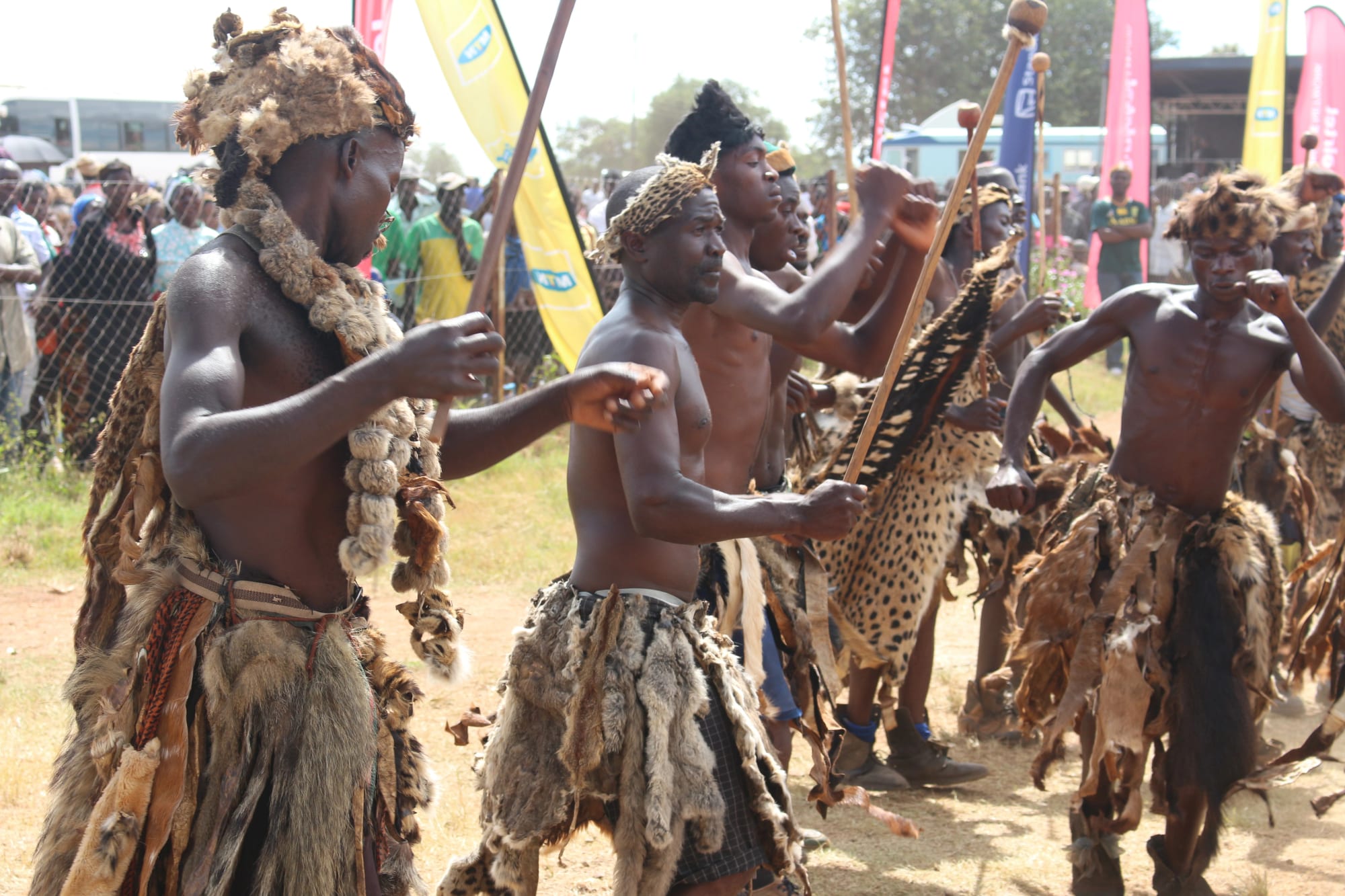
The traditional ceremonies are the country's great cultural spectacles, and many attract visitors from across Zambia and beyond. The Kuomboka is held when the floods rise at the end of the rainy season, usually around March or April, and a second royal journey returns the Litunga to the plain later in the year. Alongside the royal barge travels a second vessel for the queen. In February, the Ngoni people hold Ncwala, a first fruits ceremony at which they honour their god, their ancestral spirits and their paramount chief for the gift of the harvest. The paramount chief ritually tastes the first produce of the season, a bull is slaughtered, and warriors in animal skins dance before the crowds. Revived in 1980, the ceremony also commemorates victories won during the Ngoni's migration north from what is now South Africa. In July, the Lunda and Luba peoples celebrate Umutomboko, whose name means "a dance of victory", marking their ancestors' arrival from Kola, in what is now the Democratic Republic of the Congo.
Marriage brings two families together through a sequence of customs. It traditionally begins with a small betrothal token from the man's side, and lobola, the payment made to the bride's family, is negotiated through go-betweens; once paid in livestock, it is now usually given in money. Many couples also marry in church. Among the best-known pre-marriage rites is chilanga mulilo, "showing the fire", which began among the Bemba but is now practised far more widely, especially where couples come from different peoples. Women from the bride's family bring cooked dishes to the groom, a ritual that traditionally lifted the taboo on his eating food prepared by his in-laws. Amatebeto, sometimes held years after a wedding, is a feast by which the bride's family thanks the son-in-law for treating their daughter well. Female marriage counsellors, banachimbusa, have long guided brides through these rites and their meaning.
Funerals are among the most important events in Zambian life and draw in the whole community. When someone dies, relatives travel from across the country to the house of the deceased, and in towns the burial usually takes place around the third day so that distant family can arrive. Women prepare meals and receive gifts of food and money towards the costs, while men arrange transport, the coffin and firewood for the fire around which mourners keep vigil. Mourners dress plainly, and close relatives stay with the bereaved family for days or even weeks after the burial. Christian services are usually held at the graveside.
Arts, crafts and music
Masked performance is one of Zambia's most striking traditions, and two masquerades are on UNESCO's list of intangible cultural heritage. The Makishi masquerade belongs to the Luvale, Chokwe, Luchazi and Mbunda peoples and is performed at the end of mukanda, an initiation for boys aged roughly eight to twelve. The boys spend one to three months in a camp in the bush, where they are circumcised, face tests of courage and are taught about their future roles as men and husbands. Each boy is assigned a masked character who stays with him throughout, among them a powerful and wealthy man, the "lord" and protective spirit of the initiation, an idealised woman, and the makishi figure itself, the spirit of an ancestor returning to help the boys. When the initiates come back as men, the whole village gathers for the masked dances that celebrate their graduation.
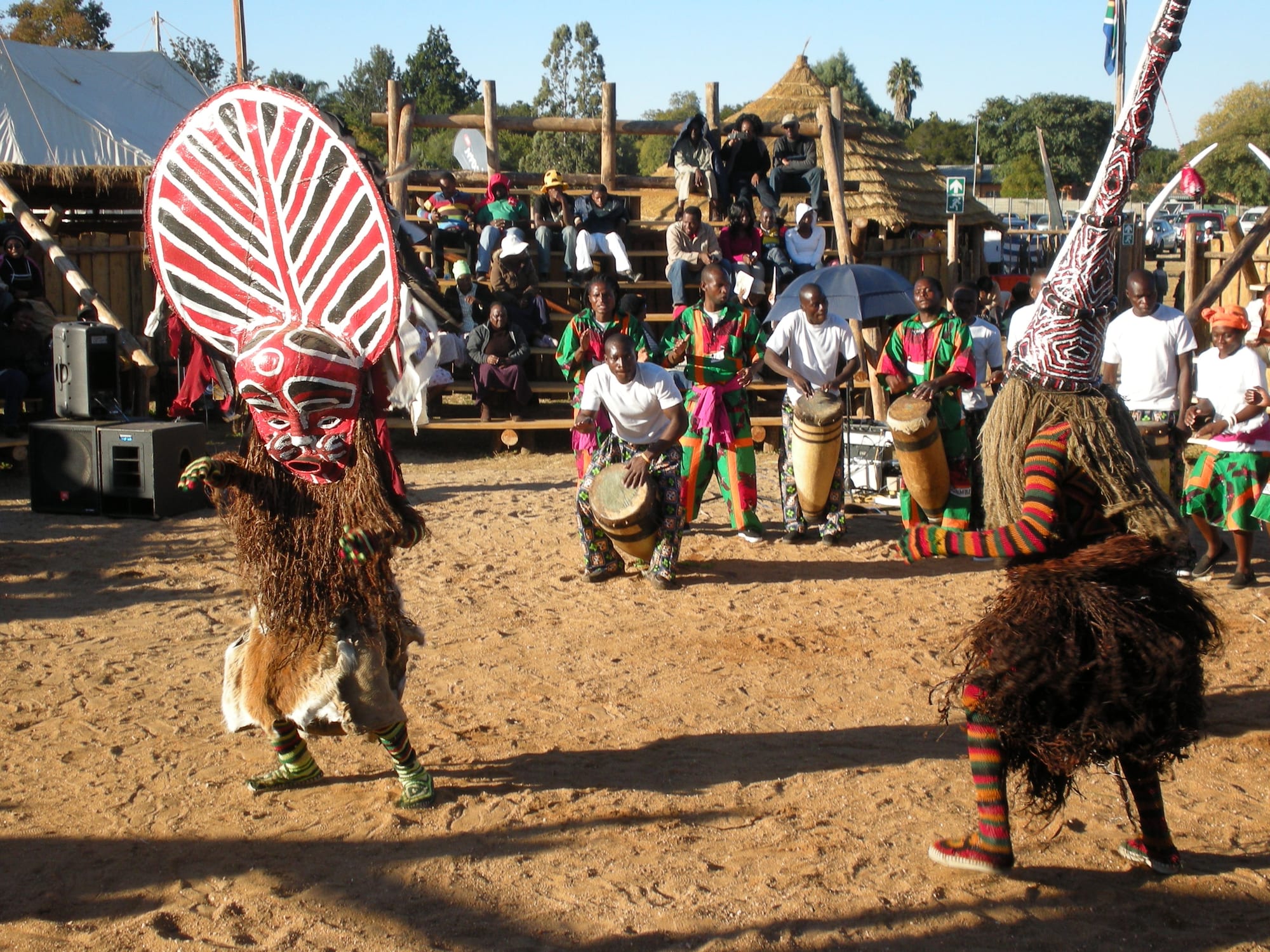
Gule Wamkulu, shared by the Chewa of Zambia, Malawi and Mozambique, is performed by members of the Nyau brotherhood, a society of initiated men, at the end of young men's initiation, after the harvest, and at weddings, funerals and the installation or death of a chief. Its dancers wear masks of wood and straw depicting wild animals, spirits of the dead and even modern figures, and each character's misbehaviour carries a moral lesson for the audience. Zambia has also added several traditional dances to the UNESCO list, including the Mooba, Budima, Kalela and Mangwengwe dances.
Music is everywhere, from church choirs to village gatherings, and drums, xylophones and the thumb piano accompany traditional dance. Popular music has a long history too. From the 1950s, the broadcaster and musician Alick Nkhata and his band were bringing Zambian rural songs to radio, and in the 1970s young bands in the mining towns created Zamrock, mixing psychedelic rock, blues and funk with local rhythms; its best-known pioneers, WITCH, have toured again since the 2010s. As Zamrock faded with the economic troubles of the late 1970s, kalindula, a lively popular style named after a local bass instrument, rose to the fore. Among the crafts, Zambian basket weaving from grasses and reeds is highly regarded, and wood carving, pottery and the masks made for masquerades continue long traditions of skill.
Dos and don'ts for visitors
- Do greet people properly before asking for anything, and take time to ask after their health and family.
- Do show respect to elders: greet them first and, when shaking hands, support the right forearm with the left hand.
- Do use the right hand to give or receive money, gifts and food, and to eat.
- Do wash hands before a shared meal when the water jug comes round, and stay seated until everyone has finished eating.
- Do dress modestly, especially in villages, at churches and at traditional ceremonies.
- Don't photograph army barracks, government buildings or other sensitive sites, which is illegal and can lead to arrest.
- Don't buy souvenirs made from protected animals, which is against the law.
- Don't count on bars or restaurants being open during the day on 18 October, the National Day of Prayer.
What to take away
Zambia's customs, from a supported handshake to a king's journey across the floodwaters, share a single thread of respect — for elders, for chiefs, for the ancestors and for the unity of many peoples — and visitors who show the same courtesy will find a warm and patient welcome.