💰 Budget
Independent travel in Zambia is inexpensive, but the wildlife — the point of most trips — is not: park fees, a vehicle and guide, and the safari lodges of South Luangwa and the Lower Zambezi add up quickly, and many are remote fly-in camps. Livingstone, for Victoria Falls, has budget backpackers alongside luxury hotels.
- Daily Budget Safari
- USD 300–700+ per day for a guided South Luangwa or Lower Zambezi safari, all in
- Daily Budget Shoestring
- USD 40–70 off-safari (guesthouses, nshima and relish, buses and shared taxis)
Base in Livingstone for a low-cost Victoria Falls trip; book safari camps as packages, and consider the green season (Nov–Mar) for lower rates.
✈️ Visa Requirements
Zambia has waived tourist visas for citizens of a long list of countries, including many in Europe, the Americas and Australasia, who enter visa-free for up to 90 days in a year as tourists; others use the e-visa or, for some nationalities, a visa on arrival. The KAZA UniVisa, valid 30 days for both Zambia and Zimbabwe and for day trips to Chobe in Botswana at Kazungula, suits a Victoria Falls trip that crosses the border.
- Typical Stay
- Visa-free for many Western passports for up to 90 days; KAZA UniVisa for cross-border Falls trips
Check whether your nationality is on the visa-waiver list; if not, use the e-visa and consider the KAZA UniVisa for Zimbabwe-side visits.
🛡️ Safety
Zambia is one of the safer countries in the region, politically stable and generally calm for visitors. Petty theft in Lusaka and around bus stations, road accidents on long intercity drives, and the usual hazards of wildlife areas and the Zambezi are the main risks. Drought caused severe electricity load-shedding in 2024 and 2025; in June 2026 ZESCO, the state power company, said nationwide load-shedding was not expected to return, though local outages still happen.
- Health
- Malaria is a year-round risk countrywide — take prophylaxis; bilharzia is present in lakes and slow rivers; tap water is best avoided in favour of bottled or filtered
Take malaria precautions everywhere, don't swim in still fresh water except at managed sites, carry a torch and power bank for power cuts, and follow your guide on foot in the parks.
🌦️ Climate
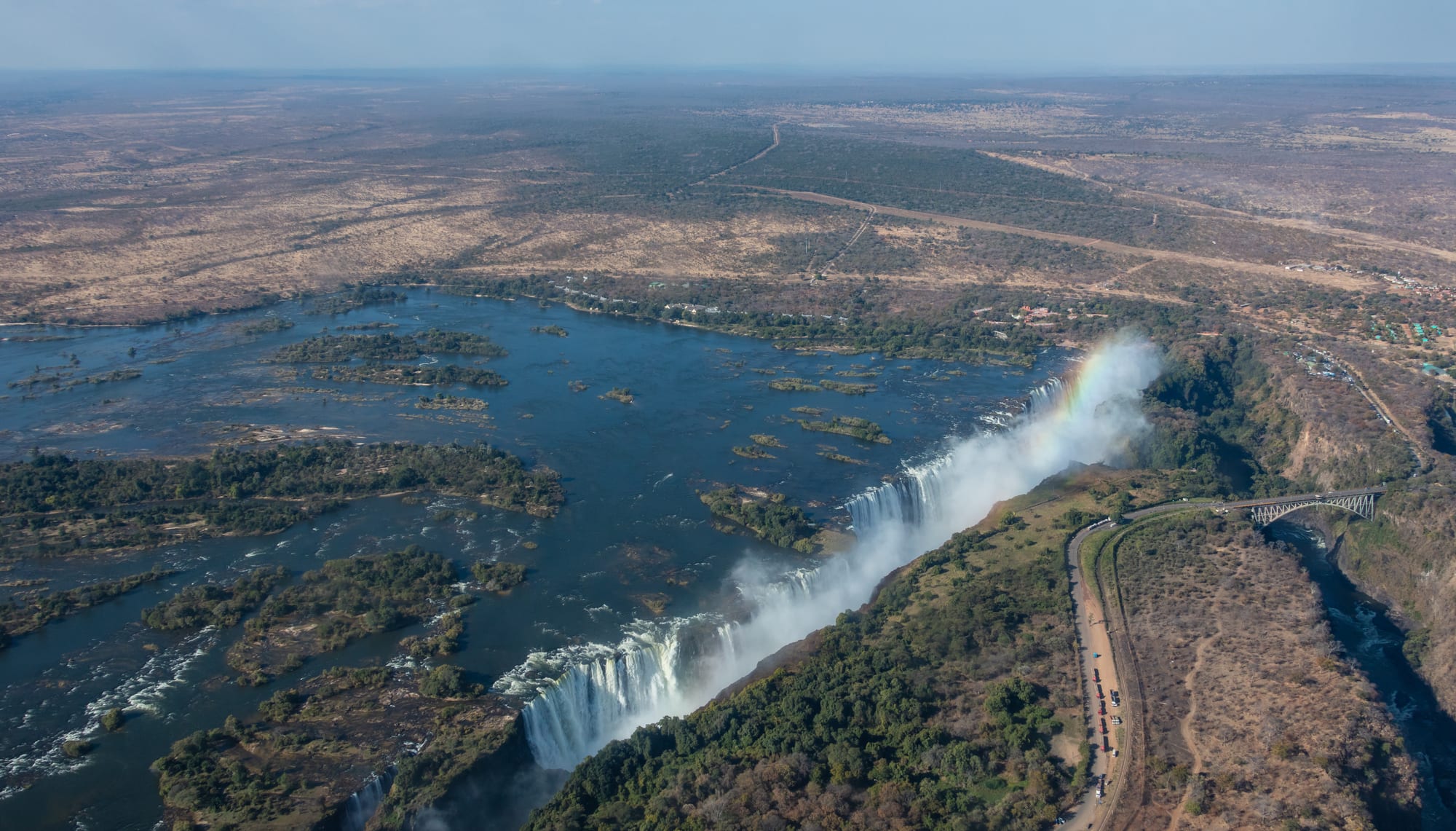
Subtropical, moderated by altitude. There are three seasons: cool and dry (May–August), hot and dry (September–October), and warm and wet (November–April), when afternoon storms green the bush. The Zambezi and Victoria Falls are at their fullest around March–May and at their lowest, clearest, and most swimmable around September–December.
- Dry Season
- May–October (cool then hot)
- Wet Season
- November–April
🚆 Transportation
Kenneth Kaunda International Airport in Lusaka is the main gateway, with Livingstone and the Copperbelt also served, and light aircraft flying into the safari areas. Intercity buses link the main towns on a limited paved network; distances are long and roads to the parks are rough. Self-driving is possible for the confident, but most visitors fly or transfer with a lodge.
Fly into the remote parks rather than enduring long drives on poor roads; use a lodge transfer or a reputable operator for South Luangwa and the Lower Zambezi.
📅 Best Time to Visit
June to October is prime safari time — thin bush, animals concentrated at water, and the best walking conditions — with September and October hot and excellent for game but uncomfortable by day. Victoria Falls thunders after the rains (March–May) and allows swimming at Devil's Pool when the river is low (usually September–December).
- Events
- Independence Day (24 October); the Kuomboka ceremony of the Lozi people (moving the king's barge as the floods rise, at the end of the rainy season); N'cwala harvest festival of the Ngoni
💱 Currency
The currency is the Zambian kwacha. US dollars are used for park fees, lodges, and Victoria Falls activities; ATMs are reliable in Lusaka, Livingstone, and the Copperbelt towns. Carry kwacha cash for markets, fuel, and rural areas.
- Symbol
- K
- Currency Code
- ZMW — Zambian kwacha
💬 Language
English is the official language, used in government, business, and schooling. Seven Zambian languages have regional official status — Bemba, Nyanja, Tonga, Lozi, Lunda, Luvale, and Kaonde — and Nyanja is the common language of Lusaka while Bemba dominates the Copperbelt and north.
- Widely Spoken
- Bemba, Nyanja, Tonga, Lozi and others
- Official Language
- English